






Published date:
03/09/2026
Share




The ISPM 15 mark stamped on pallets bound for the US is a mandatory legal requirement, but it is not sufficient to guarantee that a consignment will avoid quarantine issues at the port of discharge. US quarantine authorities (USDA APHIS) and US Customs and Border Protection (CBP) conduct physical inspections covering the condition of the timber, documentation, and the overall efficacy of pest control.
1. Why an ISPM 15 Mark on Pallets Is Not Enough When Exporting to the US
The ISPM 15 mark certifies that the wooden pallet itself has undergone the initial treatment process. However, if the timber becomes re-infested with pests, develops mold during storage, or displays a smudged stamp with documentation discrepancies, the container still faces the risk of detention at US ports.
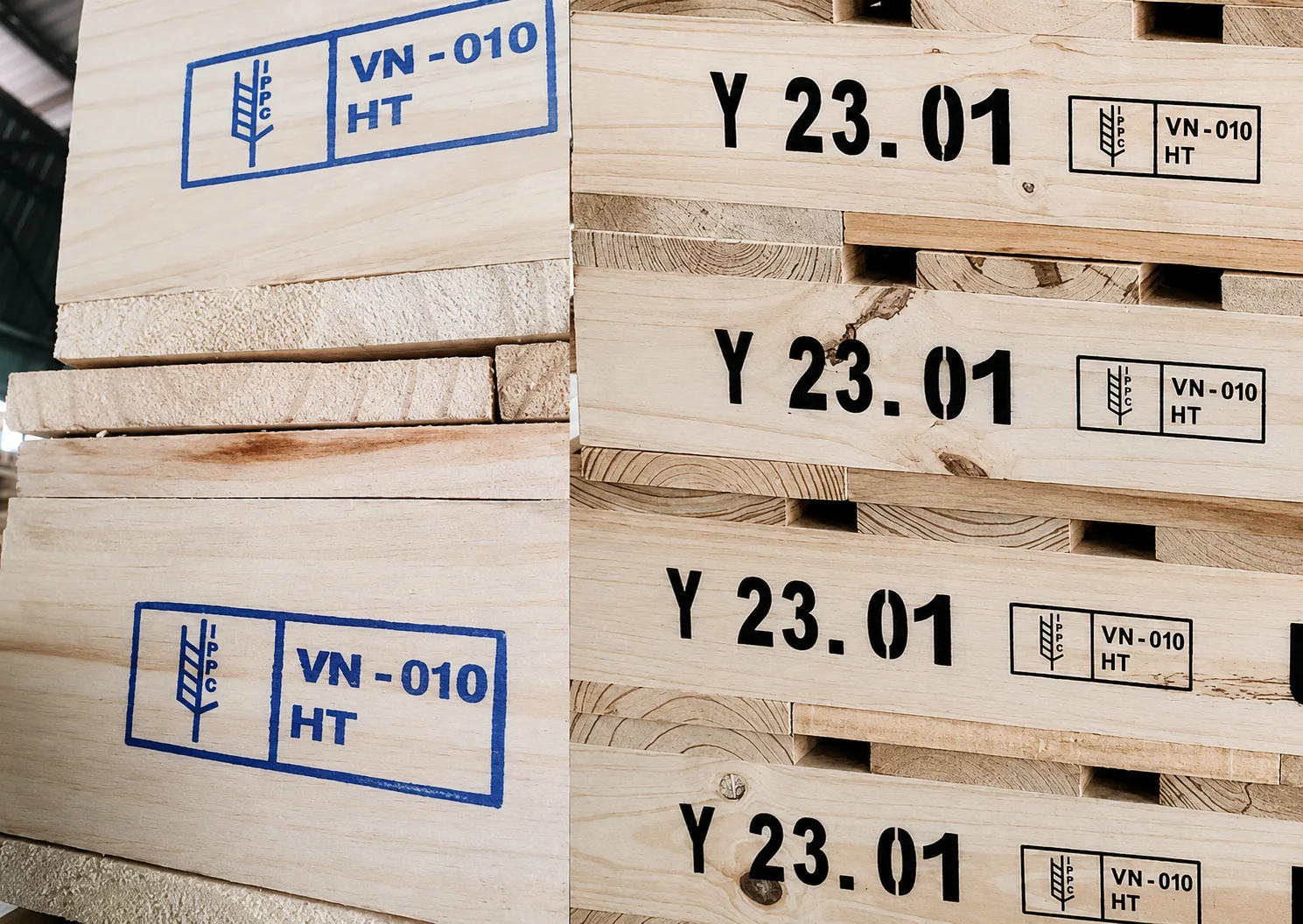
ISPM 15 Mark on Wooden Pallets
The Difference Between a Physical Stamp and Actual Quarantine Safety
Even though wooden pallets bear a valid ISPM 15 mark, warehousing, inland transit, and container stuffing still carry latent risks. If the storage environment is damp or situated near adjacent sources of infestation, pests can easily re-infest the timber.
Inspection Mechanisms of US Quarantine Authorities
- Applicable regulatory framework: The US applies the general ISPM 15 standard to both wood packaging material and wooden dunnage.
- Biosecurity inspection at the port of destination: Quarantine procedures are now streamlined through advanced scanning technology. Containers are routed directly into scanners without breaking the seal; the scan imagery accurately detects whether the consignment harbors pests, allowing quarantine authorities to cross-reference findings against treatment certificates to render a clearance decision.
2. 5 Mandatory Checks for Wooden Pallets Bound for the US
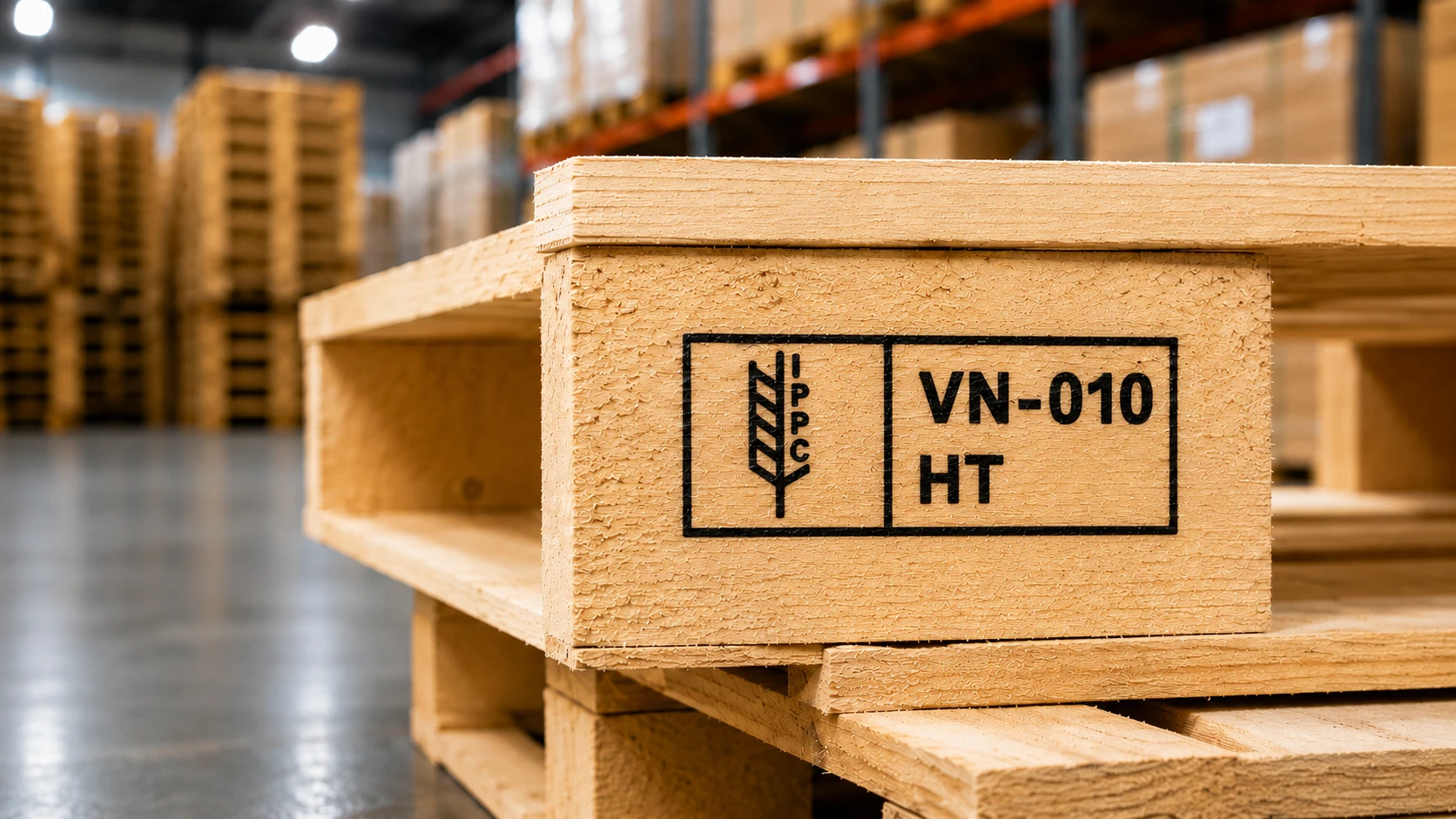
Specifications for Valid ISPM 15 Marking on Export Wooden Pallets
Point 1: Validity and Stamping Specifications of the ISPM 15 Mark
- The mark must be branded or stamped with permanent, non-fading ink, sharp and clearly legible, without blurring or smudging.
- Positioned in readily visible locations, appearing on at least two opposite sides of each pallet or wooden dunnage item.
- Contains all mandatory components: the IPPC symbol, country code (VN), treatment provider registration code assigned by the quarantine authority (e.g., VN-009), and treatment method code (MB) or VN-010 with HT.
Point 2: Processing Condition of the Wood
- Completely debarked: Raw timber used for pallet manufacturing must be thoroughly debarked to eliminate the natural harborage for bark-boring insects.
- Surface condition: Wood surfaces must be free from fresh borer holes, show no mold growth, and be dried to an appropriate moisture content prior to packing.
Point 3: Permeability and Ventilation Requirements for Cargo Wrapping Film
- When using PE/PVC stretch wrap on cargo, do not wrap over or seal the wooden pallets and dunnage, ensuring that fumigants can penetrate deeply into the timber.
- Where protective wrapping must be completely sealed: wooden dunnage must be treated prior to cargo packing, or compliant ventilation holes must be perforated to allow uniform gas circulation and diffusion.
Point 4: Technical Specifications for Consignment Fumigation
- Method and dosage: Apply Methyl Bromide (CH3Br) fumigant at the standard dosage rate (80 g/m³ for consignments containing wooden dunnage bound for the US).
- Thời gian ủ thuốc: Duy trì thời gian ủ thuốc tối thiểu 24 giờ.
Point 5: Synchronization and Consistency of Shipping Documentation
- Information on the fumigation certificate (container number, seal number, commodity description, vessel name, voyage number, port of loading, port of discharge, and chemical dosage) must match the Bill of Lading (B/L) and Invoice/Packing List.
3. Financial Consequences of Container Holds at US Ports
When a phytosanitary non-compliance is detected at a US port, the container is subjected to enforcement actions such as re-treatment, WPM destruction, or re-exportation. Financial losses include daily demurrage and storage fees (accumulating in USD/day), round-trip freight costs, and severe risk to brand reputation.
Consolidated Summary Table: Regulatory Barriers and Incurred Costs
| US Enforcement Actions | Financial & Operational Impact |
|---|---|
| Mandatory Re-treatment | Incurs exorbitant treatment fees at US ports and significantly extends container dwell time. |
| Destruction of Wood Materials | Destruction fees for pallets/WPM designated by US quarantine authorities incur substantial costs. |
| Mandatory Re-exportation | Bearing two-way ocean freight costs, late customs clearance penalties, and the risk of being placed on an increased inspection list. |
4. Frequently Asked Questions (FAQs) Regarding ISPM 15 Markings for the US Market
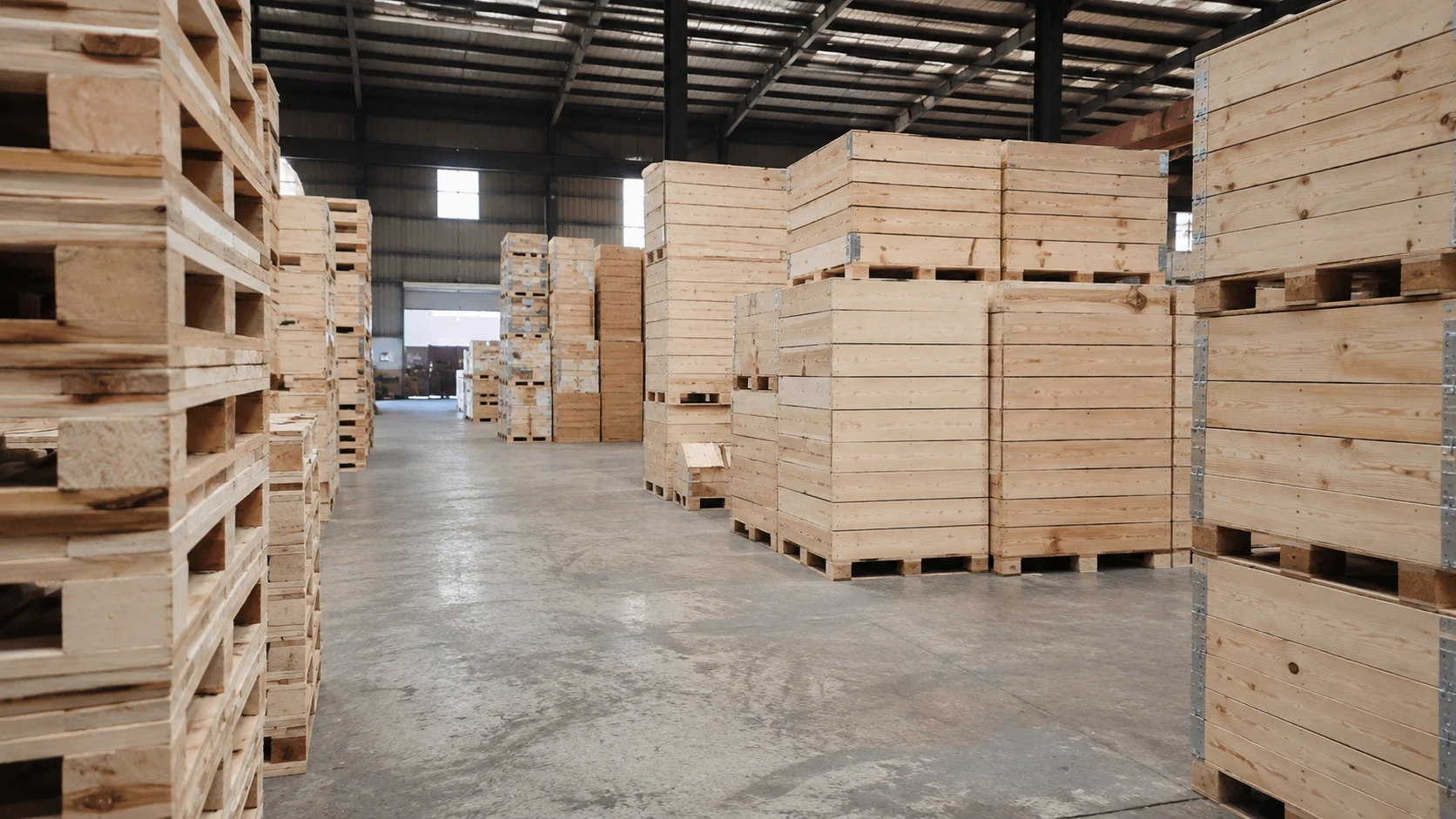
The Importance of the ISPM 15 Mark in International Trade
Q1: Can the ISPM 15 mark stamped on wooden pallets replace a fumigation certificate?
Answer: No. The ISPM 15 mark merely confirms that the wooden pallet or timber component itself has undergone initial technical treatment; it can under no circumstances replace a fumigation certificate.
In actual import-export documentation practice:
- At origin (Vietnam): When businesses apply for a phytosanitary certificate, the plant quarantine authority requires a valid fumigation certificate issued by a licensed treatment provider as the regulatory basis before issuing the certificate for the consignment.
- At the import destination: The official fumigation certificate remains an essential legal document within the customs dossier to cross-check information and facilitate biosecurity inspection at the port of arrival.
Q2: Do processed wood pallets require an ISPM 15 mark when exporting wood products to the US?
Answer: Processed wood packaging materials, such as plywood and engineered wood, undergo manufacturing processes involving glue, high temperature, and pressure. Consequently, these materials are exempt from ISPM 15 standards and are not required to bear the mark.
However, pests may still be present within the cargo itself or pre-exist inside the container. Therefore, container fumigation is highly recommended to minimize the risk of live pest interceptions at the destination port.
Q3: What is the minimum Methyl Bromide fumigation exposure time for US-bound wooden containers?
Answer: The minimum mandatory exposure time when using Methyl Bromide (CH3Br) fumigation for US-bound cargo and dunnage materials is 24 hours.
Q4: How can one verify the authenticity of a fumigation certificate issued by VFC Fumigation?
Answer: Exporters or US importing partners can directly scan the QR Code printed on the electronic certificate issued by VFC Fumigation to access the online record verification system, ensuring the details match the original data.
5. Solutions to Ensure Smooth and Secure Clearance for US-Bound Wooden Consignments
Proactively verifying these five technical checkpoints right from the preparation stage at the origin facility enables businesses to minimize quarantine risks, protect logistics schedules, and ensure seamless customs clearance into the US market.
To support wood product exporters, VFC Fumigation implements the 2-layer transparent fumigation solution: managing field operation data via the FumiApp application and issuing electronic certificates integrated with QR codes for online authentication. This solution enables supply chain stakeholders to easily cross-reference original certificates, enhancing credibility with international quarantine authorities.

-
Blog-old (23)
-
Regulation updates (4)
-
Partnerships & Collaborations (4)
-
General News (15)
Featured News


Related Knowledge