





Published date:
18/11/2026
Share




A consignment of wind turbine blades from Europe once had to transit through Vietnam for BMSB treatment prior to continuing its shipment to Australia. With out-of-gauge and overweight components, the challenge lay in treating hard-to-reach areas, fulfilling phytosanitary quarantine requirements, and maintaining the shipping schedule. VFC Fumigation successfully executed this specialized project, demonstrating its capability to engineer technical protocols and organize phytosanitary treatments within the international logistics supply chain.
1. How must out-of-gauge cargo bound for Australia meet BMSB requirements?
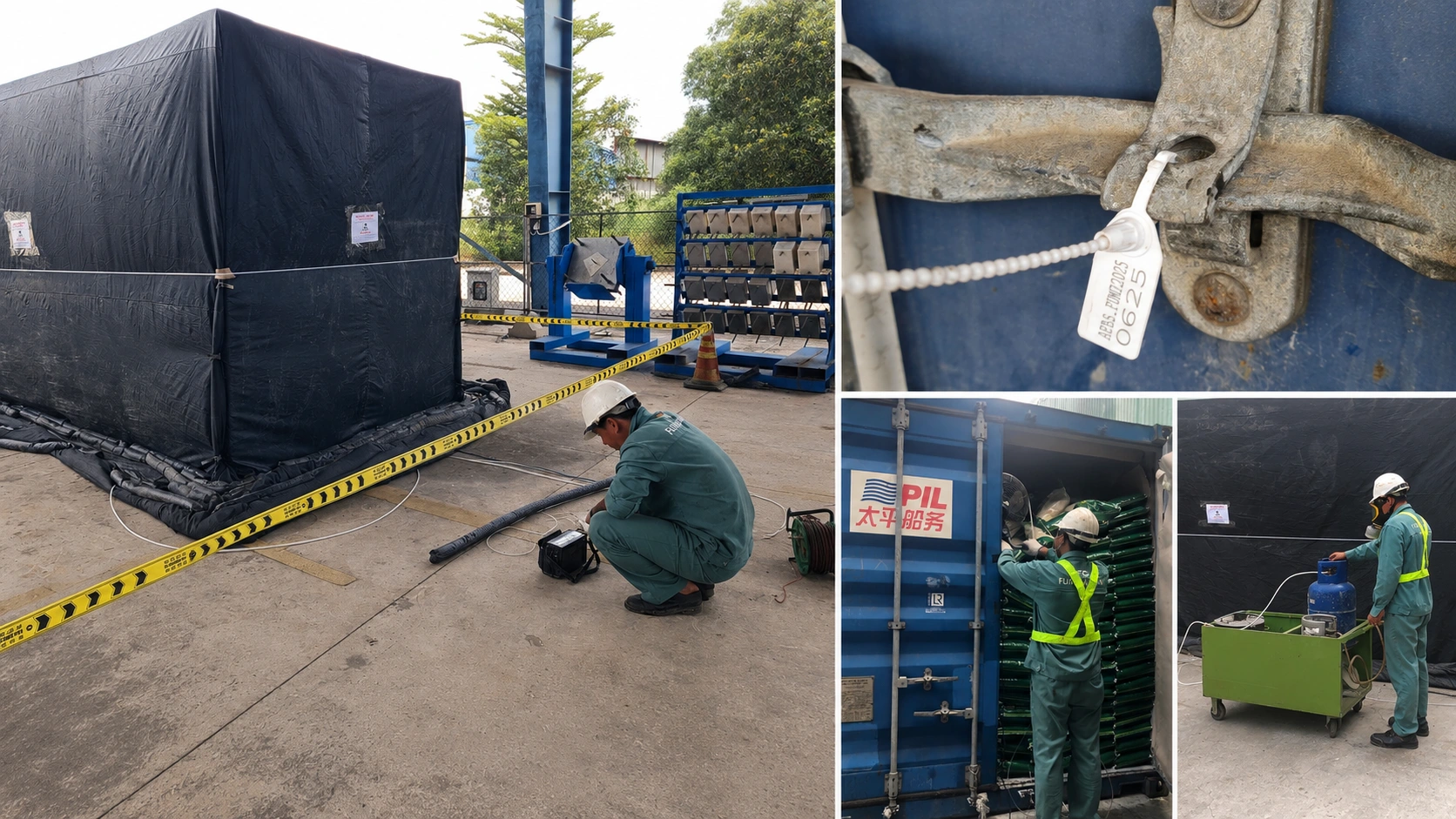
Mandatory standards in the fumigation process for cargo exported to Australia
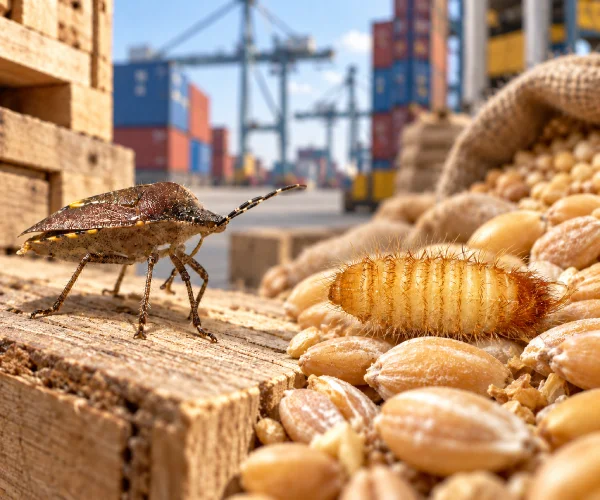
BMSB (Brown Marmorated Stink Bug) is a target quarantine pest strictly regulated on a seasonal basis by Australia. The insect can shelter inside crevices of machinery and equipment and travel with cargo across multiple countries.
According to regulations from the Australian Department of Agriculture, Fisheries and Forestry (DAFF), the 2026–2027 BMSB risk season applies from September 1, 2026, to April 30, 2027. Determining treatment requirements depends on the tariff category of the goods, the country of manufacture or export, and the date the cargo is shipped on board.
Specifically, target high-risk goods shipped as break bulk, flat rack, or open top must be treated prior to arriving in Australia if subject to mandatory measures. DAFF does not permit onshore treatment at Australian ports for break bulk cargo subject to mandatory BMSB treatment.
For wind turbine blades and oversized components, satisfying this regulation requires meticulous preparation. Large dimensions, curved surfaces, and numerous concealed cavities render site surveys, treatment enclosure setup, and technical controls highly complex.
For project owners and forwarders, the critical priority is determining early whether the consignment is subject to BMSB treatment and identifying which protocol is feasible. Conducting an initial evaluation empowers enterprises to proactively select treatment locations, coordinate transport schedules, and prepare documentation dossiers.
Enterprises can refer to the Australia BMSB regulations for the 2026-2027 season to review requirements for their shipments.
2. How did VFC Fumigation resolve the BMSB fumigation challenge for wind turbine blades?
The wind turbine blade project from Europe to Australia serves as a prime demonstration of VFC Fumigation’s capabilities in treating specialized cargo. According to published project records, at the time of execution, VFC was the sole entity in ASEAN capable of meeting the treatment specifications for this consignment.
Faced with rigorous technical and quarantine mandates, the selected approach was to route the consignment through Vietnam in transit for BMSB treatment. VFC Fumigation focused on resolving three core aspects: treatment coverage, transit turnaround time, and certification documentation.
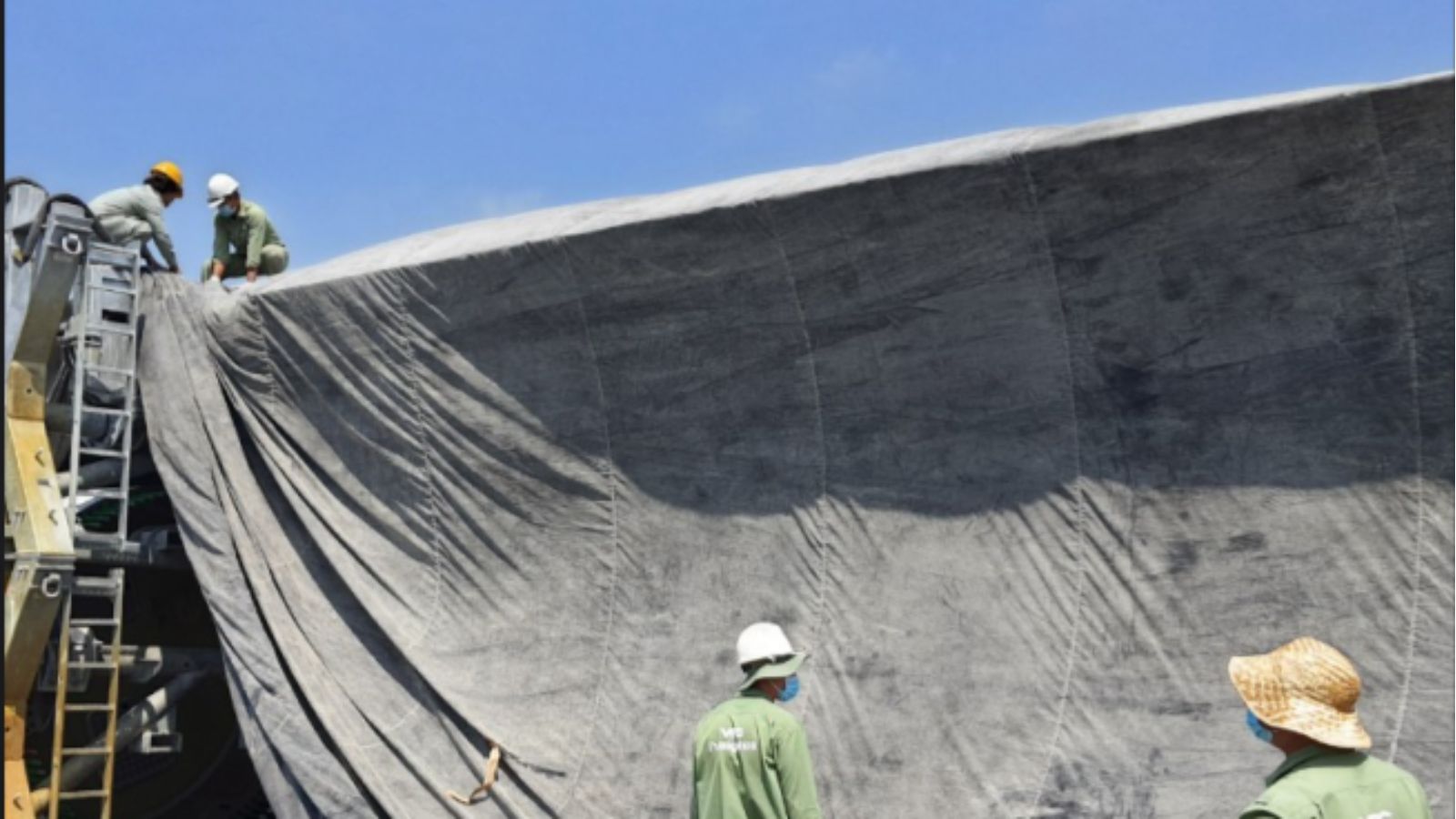
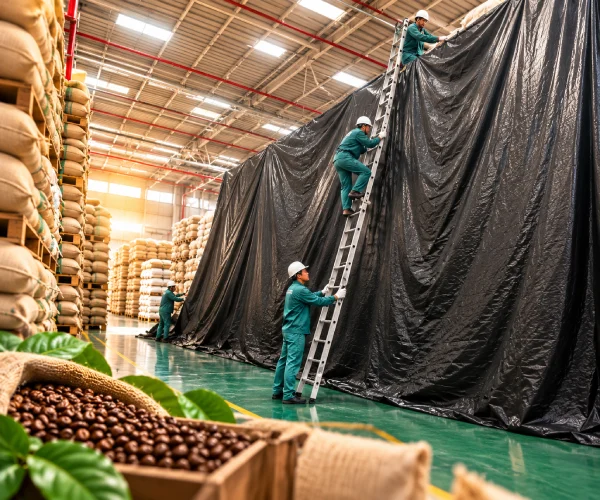
VFC Fumigation implements BMSB treatment for wind turbine blades transshipping through Vietnam
2.1. Engineering a protocol tailored to the structure of out-of-gauge blades
Wind turbine blades feature curved surfaces, multiple grooves, and recessed cavities where insects can harbor. Therefore, the treatment protocol had to be engineered based on actual structural geometry rather than applying standard container fumigation (FCL/LCL) methods.
VFC Fumigation assessed dimensions, surface characteristics, and potential BMSB harborage sites prior to finalizing the technical plan. The technical team concurrently evaluated treatment site parameters and relevant safety requirements.
Based on assessment findings, VFC formulated a protocol emphasizing comprehensive gas coverage across all target zones and strict on-site quality controls. This was a pivotal factor in preventing untreated blind spots on the components.
For enterprises transporting oversized equipment, this experience carries practical significance. The phytosanitary treatment plan must align with the exact component being shipped and the operational parameters at the treatment site.
2.2. Coordinating fumigation aligned with the transit schedule in Vietnam
Alongside technical specifications, treatment duration is critical for equipment serving energy projects. Shipping schedules typically involve specialized transport vessels, strict handover milestones, and installation timelines at the destination.
VFC Fumigation mobilized resources and coordinated the treatment schedule during the consignment's transit window in Vietnam. Operational phases were structured around on-site conditions and the transit schedule agreed upon with relevant stakeholders.
Through thorough preparation and coordination, VFC completed the treatment on schedule, enabling the wind turbine blade consignment to continue its voyage to Australia. Simultaneously, the solution mitigated risks of incurring demurrage/storage delays or unscheduled transport revisions.
The value for project owners lies in integrating the technical protocol seamlessly into practical logistics plans. This is also a key criterion when selecting a fumigation provider for components subject to tight delivery schedules.
2.3. Controlling the treatment process and finalizing certification for import clearance
VFC Fumigation established quality control checkpoints before, during, and after the BMSB fumigation process. Continuous monitoring enabled the technical team to oversee protocol execution and verify all prescribed treatment parameters.
Upon completion, VFC issued the Fumigation Certificate / Certificate of Treatment and handed over the compliance dossier for use throughout the transport chain. Treatment data was compiled to support verification during import clearance procedures in Australia.
According to published project results, VFC's protocol enabled the consignment to maintain its transit schedule and reduced the risk of mandatory onshore re-treatment. Client representatives also positively acknowledged VFC Fumigation’s technical expertise and transparency in executing BMSB treatments.
The project's success was demonstrated by simultaneously satisfying technical specifications, transit timelines, and quarantine documentation requirements. These are the three pillars cargo owners, importers, and forwarders must evaluate when selecting a partner for specialized consignments.
View details of the VFC Fumigation project handling BMSB treatment for wind turbine blades exported to Australia.
Does your enterprise have a consignment of oversized equipment requiring BMSB treatment prior to arriving in Australia?
VFC Fumigation receives component specifications, transport routes, and quarantine requirements to evaluate treatment conditions. Enterprises can submit engineering drawings or cargo photographs along with projected schedules for feasibility consultations.
Submit an evaluation request for BMSB fumigation protocols for out-of-gauge cargo.
3. What value do VFC Fumigation's capabilities create for enterprises transporting specialized cargo?
With over 50 years of experience, VFC Fumigation possesses a solid technical foundation in import-export commodity phytosanitary treatment. For out-of-gauge and overweight cargo, this capability is most clearly demonstrated through experience treating complex structures and managing compliance documentation.
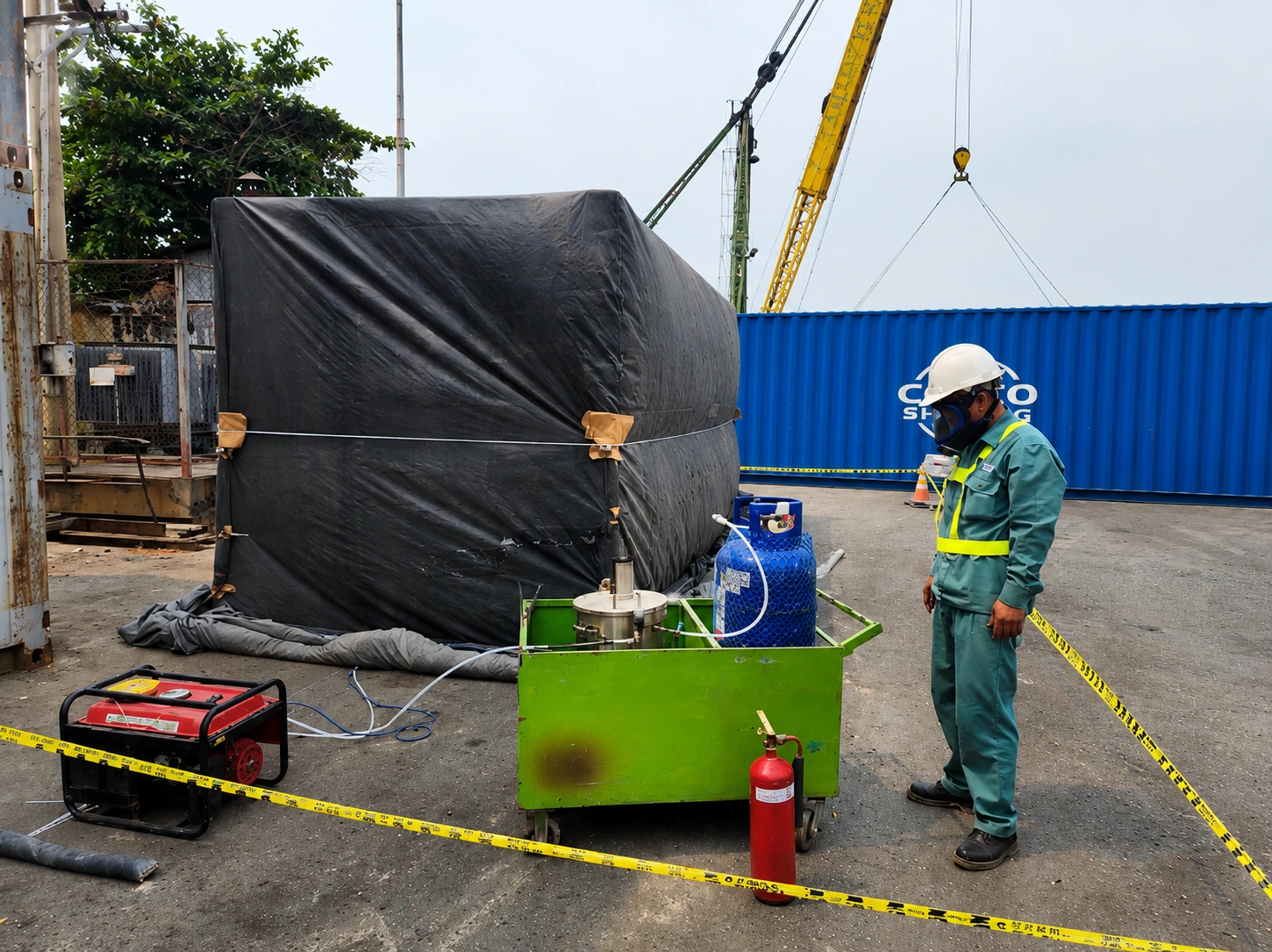
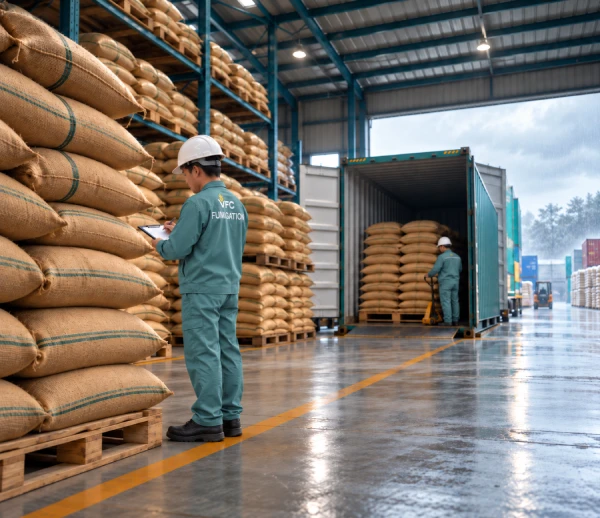
Technicians carry out container fumigation for Australia in accordance with AFAS requirements.
3.1. Fumigation solutions engineered for each specific component type
VFC Fumigation advises on protocols based on commodity characteristics, materials, structural design, and real-world operational conditions. This approach is suited for industrial equipment featuring massive dimensions or numerous hard-to-reach cavities.
Alongside evaluating target quarantine pest risks, the technical team assesses cargo protection requirements and safety conditions during deployment. Consequently, enterprises have a reliable basis to select a treatment method prior to finalizing transport plans.
Learn more about VFC Fumigation's fumigation solutions for industrial goods and specialized cargo.
3.2. Two-tier transparent fumigation supporting information control and certificate authentication
VFC Fumigation deploys the Two-Tier Transparent Fumigation model, combining operational data management on FumiApp with QR Code certificate authentication.
FumiApp is an internal platform supporting the VFC team in recording field imagery, operational data, and service execution workflows. Meanwhile, certificates integrated with a QR Code allow clients and partners to authenticate issued details online.
For cargo owners and forwarders, documentation verification capabilities are particularly valuable when dossiers pass through multiple parties in the transport chain. Concurrently, operational data assists VFC in auditing information whenever verification requests arise.
This model represents VFC Fumigation’s current service governance capability. The application of specific features to an individual consignment is determined according to the scope and execution conditions of each project.
Refer to VFC Fumigation's 2-layer transparent fumigation model.
4. What must enterprises prepare to receive BMSB fumigation consultations for out-of-gauge cargo bound for Australia?
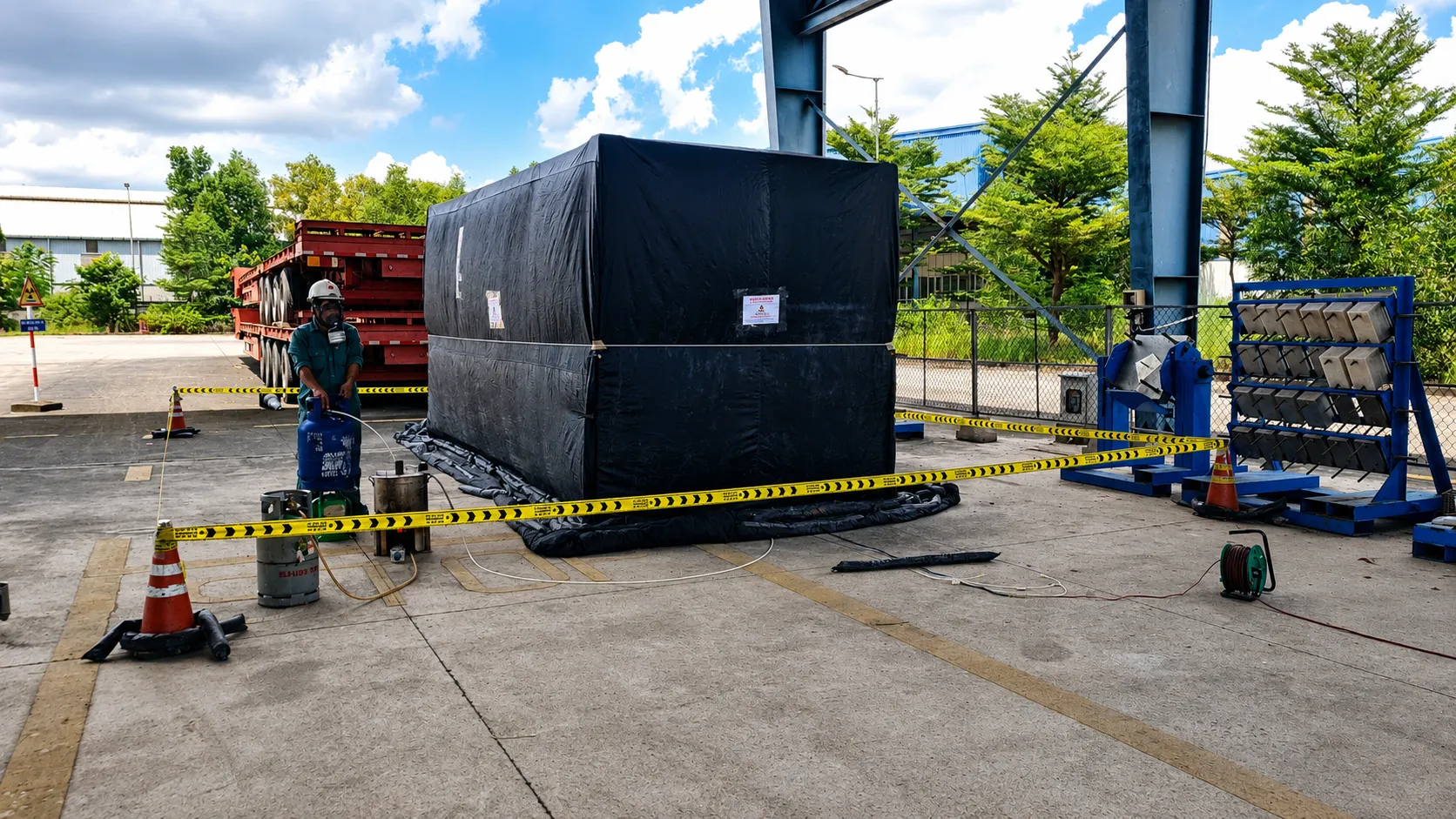
Container Fumigation Procedure for Goods Exported to Australia at the Yard
For out-of-gauge and overweight cargo, VFC Fumigation must evaluate both component specifications and the transport itinerary prior to proposing a protocol. The clearer the provided information, the smoother the assessment of quarantine requirements and treatment feasibility.
Enterprises should prepare the following four groups of information:
- Cargo specifications: Equipment type, dimensions, weight, materials, structural design, and photographs or engineering drawings.
- Origin and itinerary: Country of manufacture, country of export, transit points, and destination port in Australia.
- Mode of transport: Break bulk, flat rack, open top, or projected transport modality.
- Execution schedule: Feasible treatment locations, consolidation timelines, vessel loading schedules, and partner documentation requirements.
Based on this information, VFC Fumigation discusses BMSB regulatory mandates, on-site field conditions, and applicable technical protocols. Concurrently, the team evaluates resource allocation capabilities and quotation scopes tailored to each project.
Enterprises should establish contact during the transport planning phase, particularly for oversized cargo or consignments transiting multiple countries. Early consultation provides all parties with sufficient time to assess feasibility and prepare treatment operations.
Learn more about fumigation solutions for cargo exported to Australia or contact directly for tailored consultation from VFC Fumigation based on your shipment details.
5. Frequently Asked Questions regarding BMSB treatment for oversized cargo bound for Australia
5.1. Is BMSB treatment mandatory for all out-of-gauge and overweight cargo bound for Australia?
Not every out-of-gauge and overweight consignment is subject to mandatory BMSB treatment. Requirements depend on the tariff group, countries involved, shipping dates, and exemption conditions under DAFF regulations.
5.2. Can European-origin cargo transiting through Vietnam undergo BMSB treatment in Vietnam?
Cargo can be evaluated for BMSB treatment in Vietnam when technical conditions and applicable certificate acceptance regulations are satisfied. Enterprises must verify the status of the treatment provider and DAFF requirements prior to confirming the protocol.
5.3. Does a BMSB Fumigation Certificate guarantee customs clearance in Australia?
The certificate provides proof of the executed treatment process, but does not automatically guarantee customs clearance. Import clearance decisions remain subject to the physical condition of the consignment, compliance dossiers, and inspection assessments by Australian competent authorities.
6. VFC Fumigation - BMSB Phytosanitary Treatment Partner for Export Cargo Bound for Australia
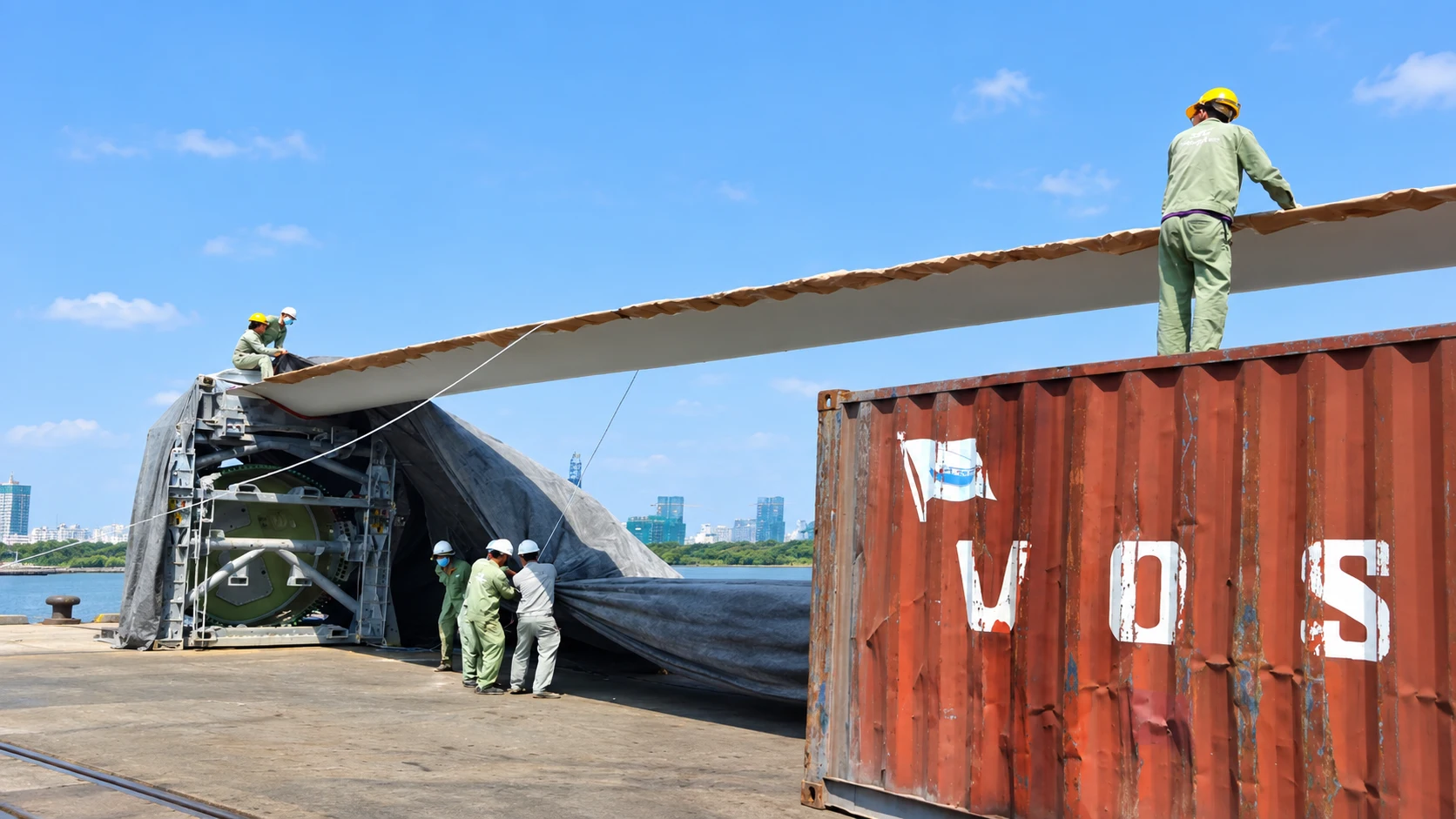
VFC Fumigation executes BMSB treatment for out-of-gauge and overweight cargo exported to Australia
Through the wind turbine blade project transiting Vietnam, VFC Fumigation has demonstrated proven experience executing BMSB treatments for cargo with complex structures. Technical expertise, field organization, and documentation governance serve as essential benchmarks for enterprises evaluating protocols for their consignments.
VFC Fumigation accepts requests for surveys and BMSB fumigation consultations for specialized machinery, equipment, and industrial components. Enterprises can submit cargo details and transport schedules for treatment condition evaluations and quotations.
Contact VFC Fumigation for consultation on BMSB fumigation protocols for cargo bound for Australia
- Hotline: 0914 773 300
- Email: contact@fumigation.vn
- Website: https://fumigation.vn/en/
-
Business & Services (18)
-
Practical Experience (11)
-
Exports & Markets (16)
Featured Blogs

Related Blogs