






Published date:
30/01/2026
Share




According to statistics from Vietnam Maritime Administration, during the first six months of 2022, cargo throughput via Vietnam’s seaport system was estimated at nearly 371 million tons, up 2% compared to the same period in 2021. Although growth was recorded year-on-year, the growth rate of import and export turnover in the first half of this year declined compared to the first six months of 2021.
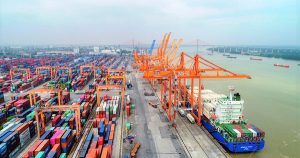
Import-export cargo
Notably, cargo throughput via seaports during the first months of the year declined across most port areas, including: Binh Thuan down 22%, Can Tho down 24%, Kien Giang down 16%; major seaport areas such as Vung Tau and Ho Chi Minh City also recorded decreases of 3–8% compared to the same period last year (in which Ho Chi Minh City reached 67.212 million tons, down 8%, while Vung Tau decreased by 3% year-on-year).
Only a few areas recorded increases in cargo volume, including Quang Ninh and An Giang with growth of 218%, Quang Tri up 20%, Dong Nai up 32% mainly due to dry bulk cargo and general cargo, Dong Thap up 9%, and Quang Nam up 16%.
The cause was attributed to complicated global developments and rising prices of raw materials and production fuel, which continued to negatively affect manufacturing and transportation business activities, resulting in lower-than-expected cargo throughput via seaports.
On the other hand, most seaports recorded profit growth in the first half of 2022, although growth levels varied significantly. SSI Research forecast that profits in the port industry could continue to grow positively during the second half of 2022 and throughout 2023.
Container shipping is forecast to continue facing supply chain disruptions throughout 2022. Congestion at ports in the United States and Europe is unlikely to be resolved before 2023, as bottlenecks remain across multiple stages of the supply chain, including shortages of berths, trucks, warehouses, and labor.
In addition, port infrastructure requires time to adapt to newly built vessels with larger capacities before congestion issues can be resolved. Global cargo circulation also depends heavily on China and its “Zero Covid” strategy. Therefore, port congestion is likely to gradually improve in the second half of 2023.
>> Read more: Import-export cargo turnover through Ho Chi Minh City ports decreased by usd 11 billion

-
Blog (23)
-
Regulation updates (4)
-
Partnerships & Collaborations (4)
-
General News (15)
Featured News



Related Knowledge