





Project Overview
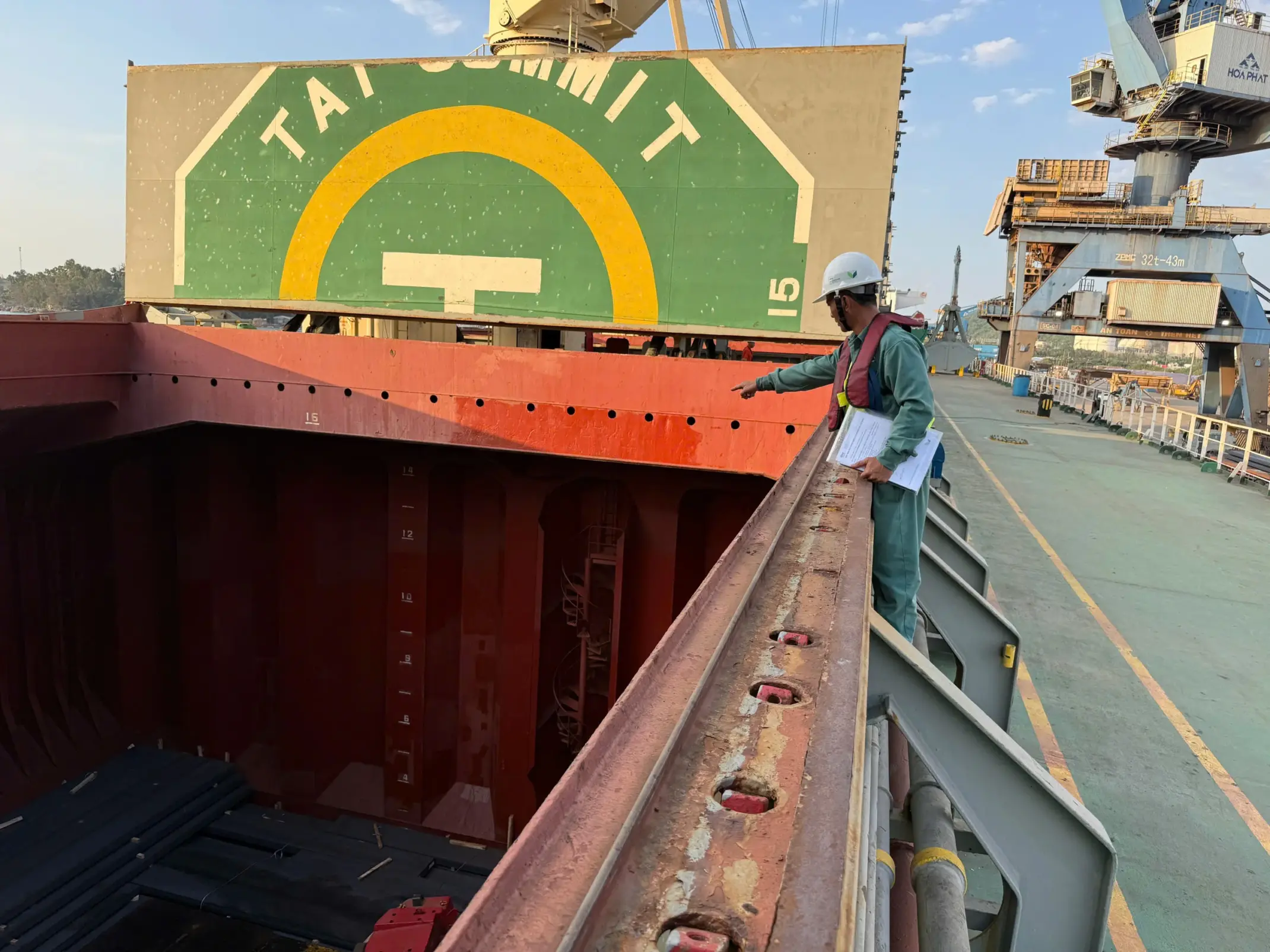
- Vessel / Voyage: Bulk Carrier TAI SUMMIT (M/V TAI SUMMIT)
- Treated Hold Volume: 74,904 m³
- Operational Location: Dung Quat Port, Quang Ngai Province
- Cargo & Associated Materials: Finished steel products along with a substantial volume of wooden dunnage (timber runners/lumber) used for cargo securing and bracing within the holds.
- Operational Challenge: During loading operations, live insect pests were intercepted inside the cargo holds; the primary risk source likely stemmed from improperly stored timber dunnage and ambient insect cross-infestation during loading.
- Mandatory Requirements: Eradicate and control insect pests; ensure maritime safety; and fully satisfy regulatory documentation to secure biosecurity clearance and cargo discharge authorization at the destination port.
- Key Execution Highlights: Extremely large hold volume (~75,000 m³) loaded with heavy steel cargo combined with wooden dunnage; meticulous gastight sealing of hatch covers, hold ventilation systems, adjacent bulkheads, and technical access hatches; accurate calculation of Methyl Bromide (CH3Br) dosage; utilization of specialized vaporizers to fully gasify the fumigant, facilitating uniform distribution throughout the holds.
Project challenges
-
Risk of Cross-Infestation from Environment and Storage
Although industrial commodities like steel do not inherently harbor pests and most wooden dunnage had undergone prior quarantine treatment, re-infestation risks persist. If staging yards lack adequate biosecurity isolation-especially during nighttime loading operations-ambient insect pests can easily penetrate the cargo holds. Proactive inspection and timely supplementary treatment are mandatory to ensure smooth customs clearance.
-
Colossal Cargo Hold Volume
With a total hold volume of nearly 75,000 m³, the volume of headspace and cargo void spaces requiring fumigation is exceptionally massive. To ensure efficacy, applying the fumigant through a specialized vaporizer unit is mandatory. This technique facilitates rapid gas diffusion and deep penetration into every crevice, effectively controlling target pests within the holds.
-
Complex Hold Structure with Multiple Leakage Points
Bulk carriers feature expansive hatch cover perimeters along with hold ventilators, access manholes, adjacent bulkheads, and technical piping conduits. Any minor void or breach causes gas leakage, which diminishes pest control efficacy while posing severe occupational safety hazards to the ship's crew.
-
Strict Departure Schedule Pressure at Dung Quat Port
The pest interception occurred directly during loading operations. The technical team had to conduct surveys, formulate an operational plan, and mobilize immediately upon completion of loading to avoid disrupting the port's berthing allocation and the international sailing schedule of the TAI SUMMIT.
Project Objectives
Totally eliminate all active insect pests and their developmental life stages (eggs, larvae, pupae, and adults) harboring inside the cargo holds and wooden dunnage.
Completely vaporize the injected Methyl Bromide dosage and maintain uniform gas concentrations across all cargo holds to ensure lethal efficacy.
Eliminate all mechanical voids across hatch covers, ventilation systems, access hatches, and adjacent bulkheads to ensure no fumigant leaks into external areas or living quarters.
Deliver a complete set of Fumigation Certificates, compliance documentation, and technical logbooks to the Master prior to departure from Dung Quat Port, facilitating immediate cargo discharge upon arrival.

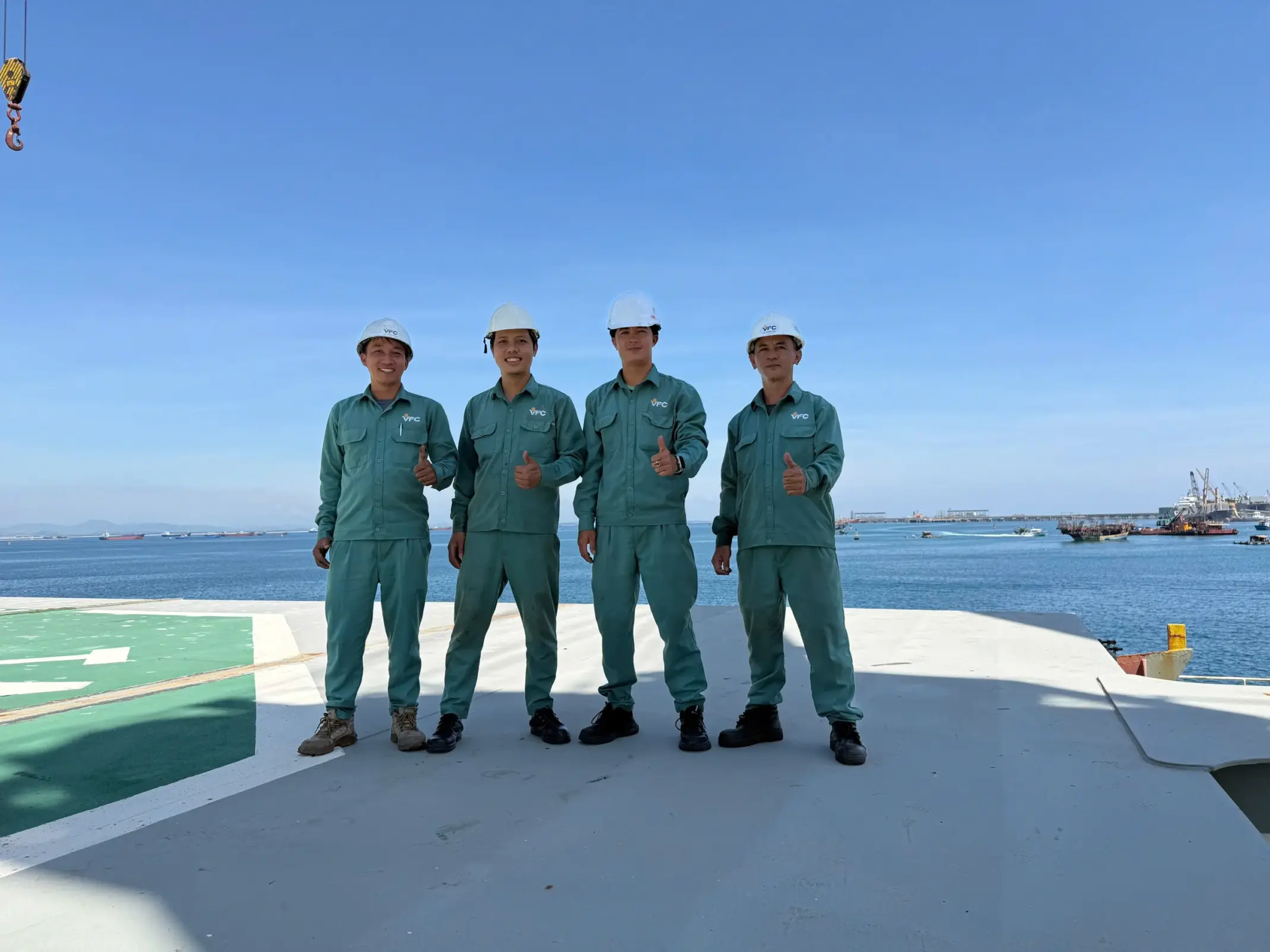
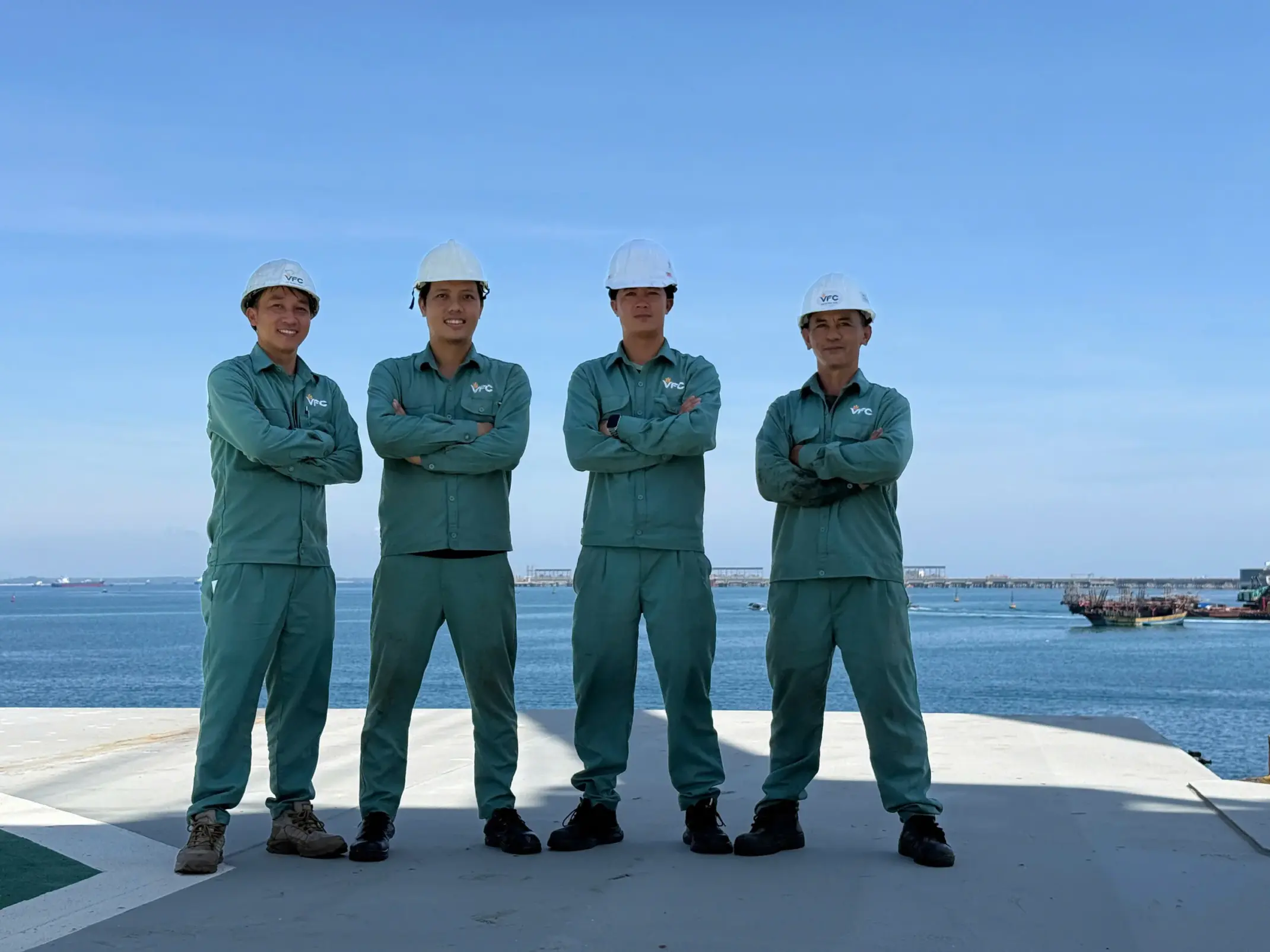
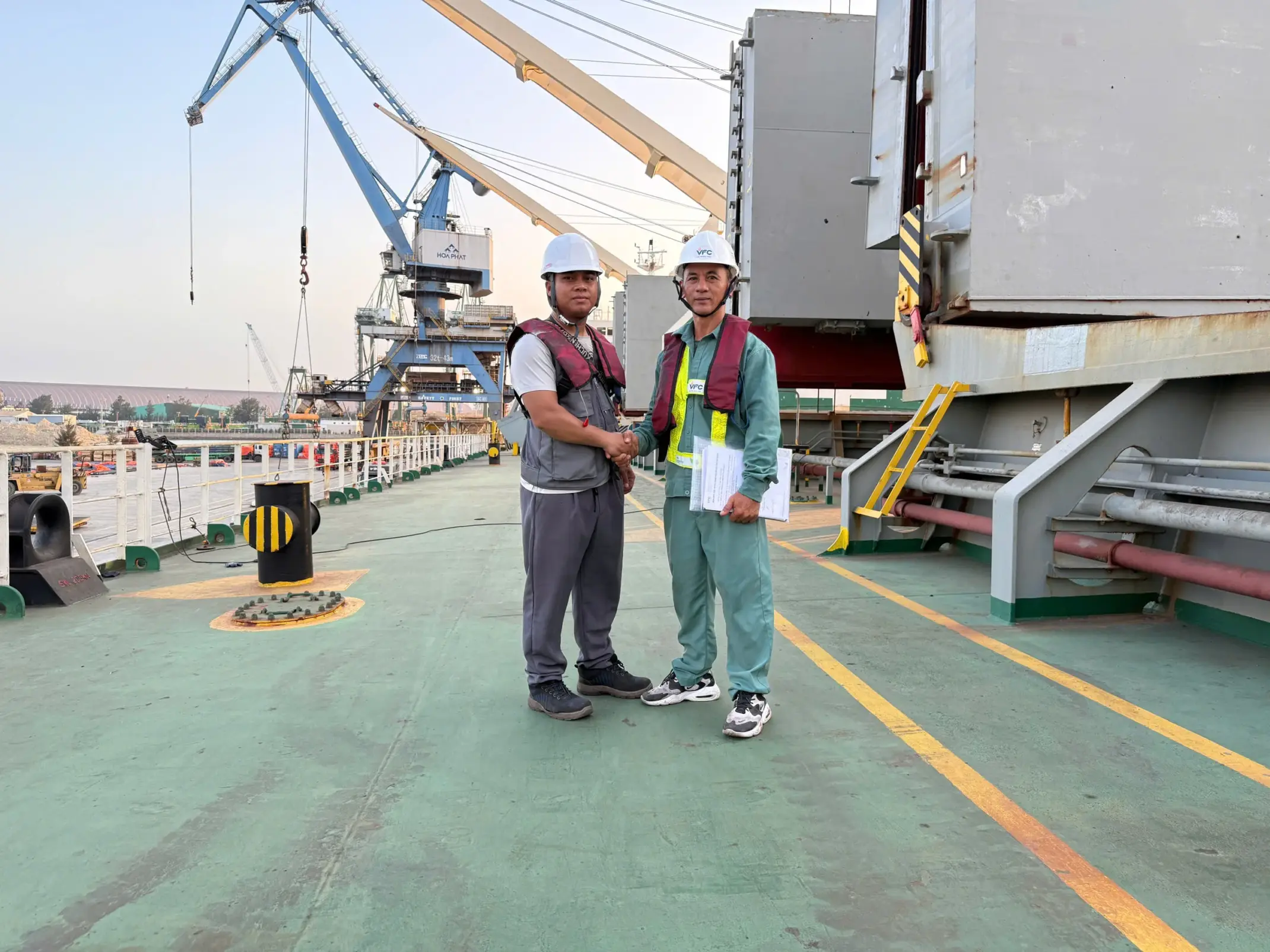
In response to the critical requirement for pest control and eradication to secure smooth clearance at the destination port, VFC Fumigation – Da Nang Branch dispatched technical specialists on board to conduct an on-site survey and formulate a comprehensive Methyl Bromide (MB) fumigation plan for all cargo holds of the M/V TAI SUMMIT.
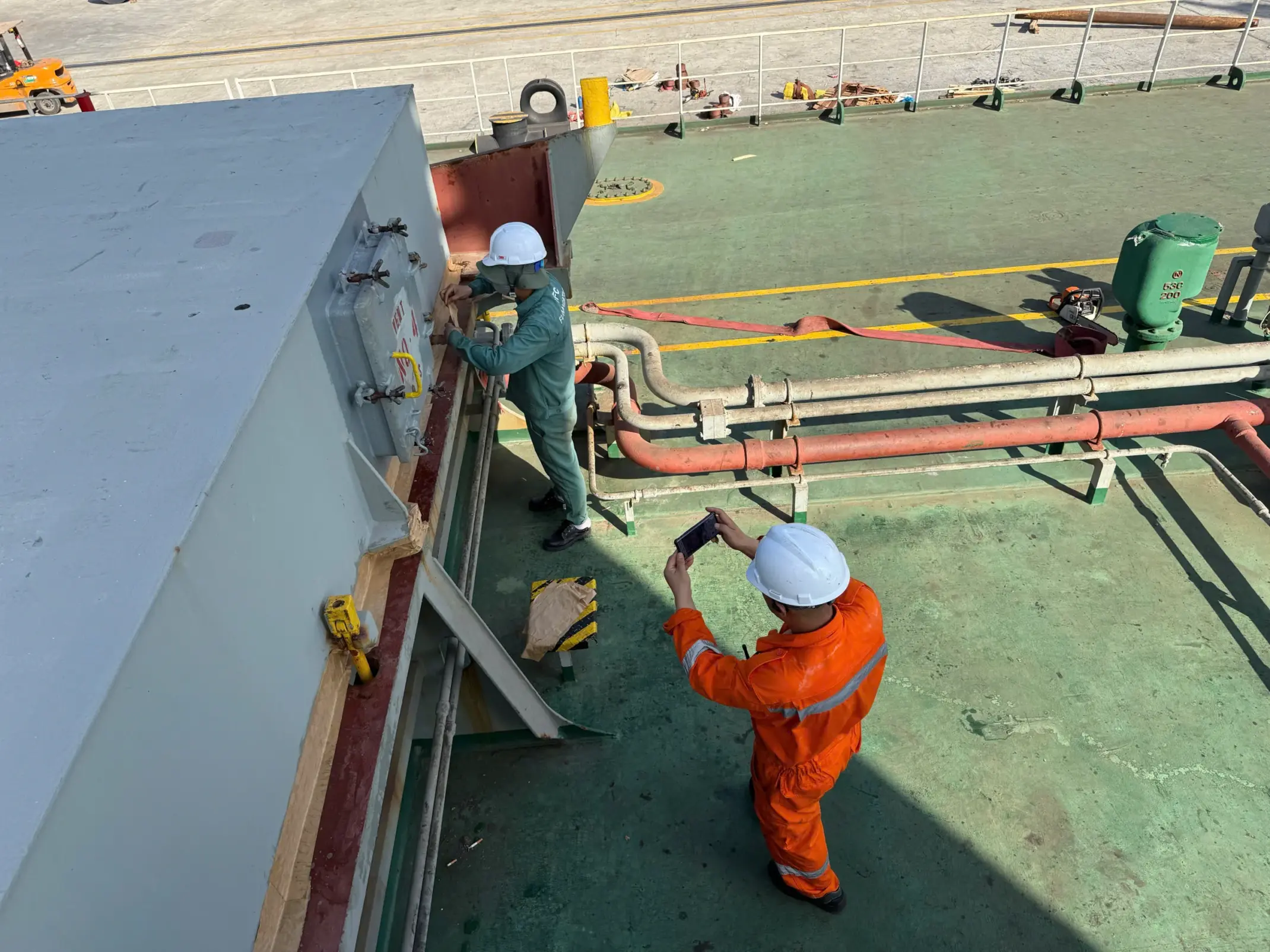
VFC Fumigation – Da Nang Branch technicians boarded the M/V TAI SUMMIT to conduct a comprehensive survey of the cargo hold structures, hatch covers, ventilation systems, technical access hatches, and adjacent bulkheads. Based on the actual volume (74,904 m³) and the specific characteristics of the steel cargo and wooden dunnage, the team formulated a tailored plan for fumigant application line placement and gastight sealing.
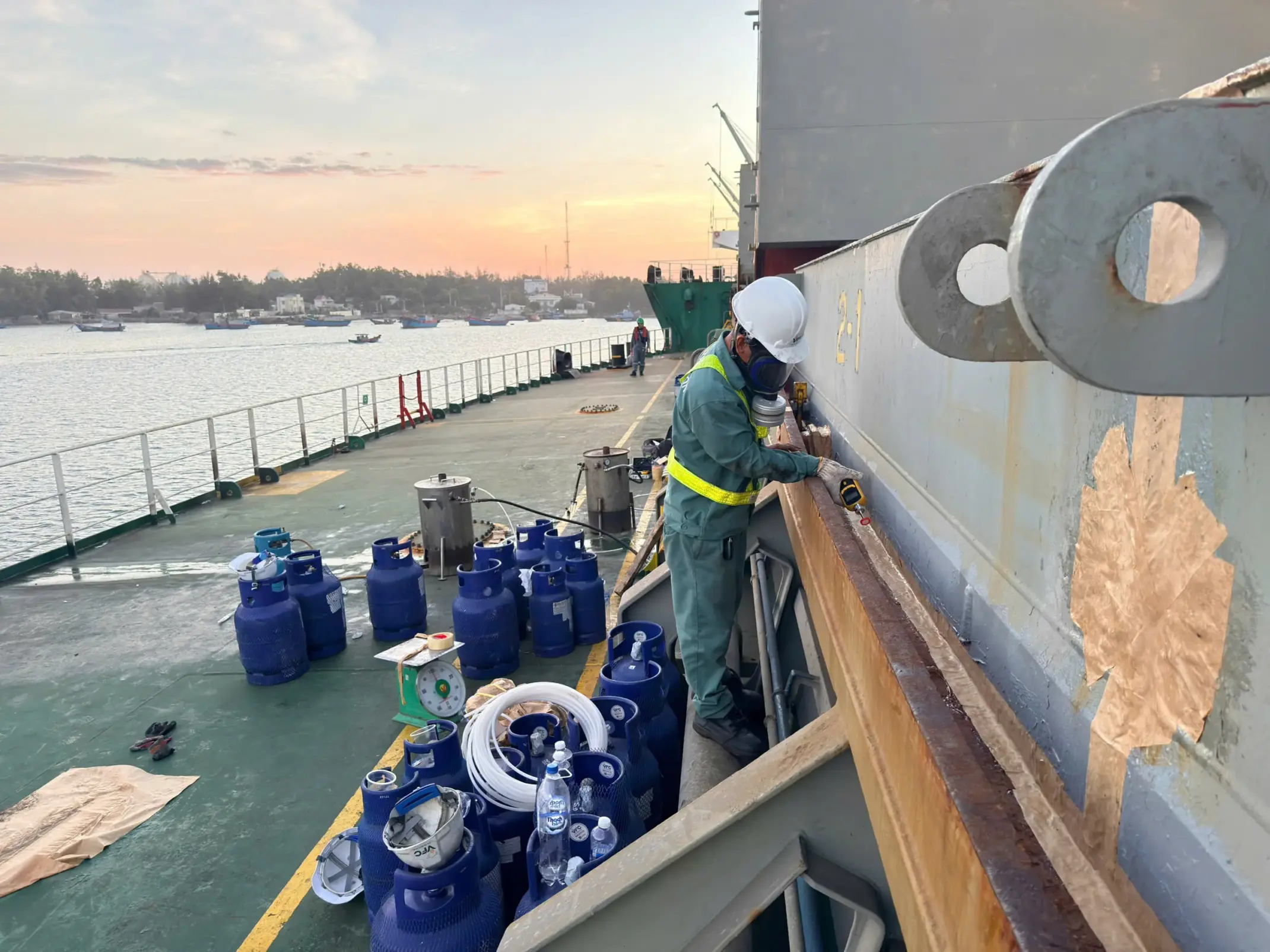
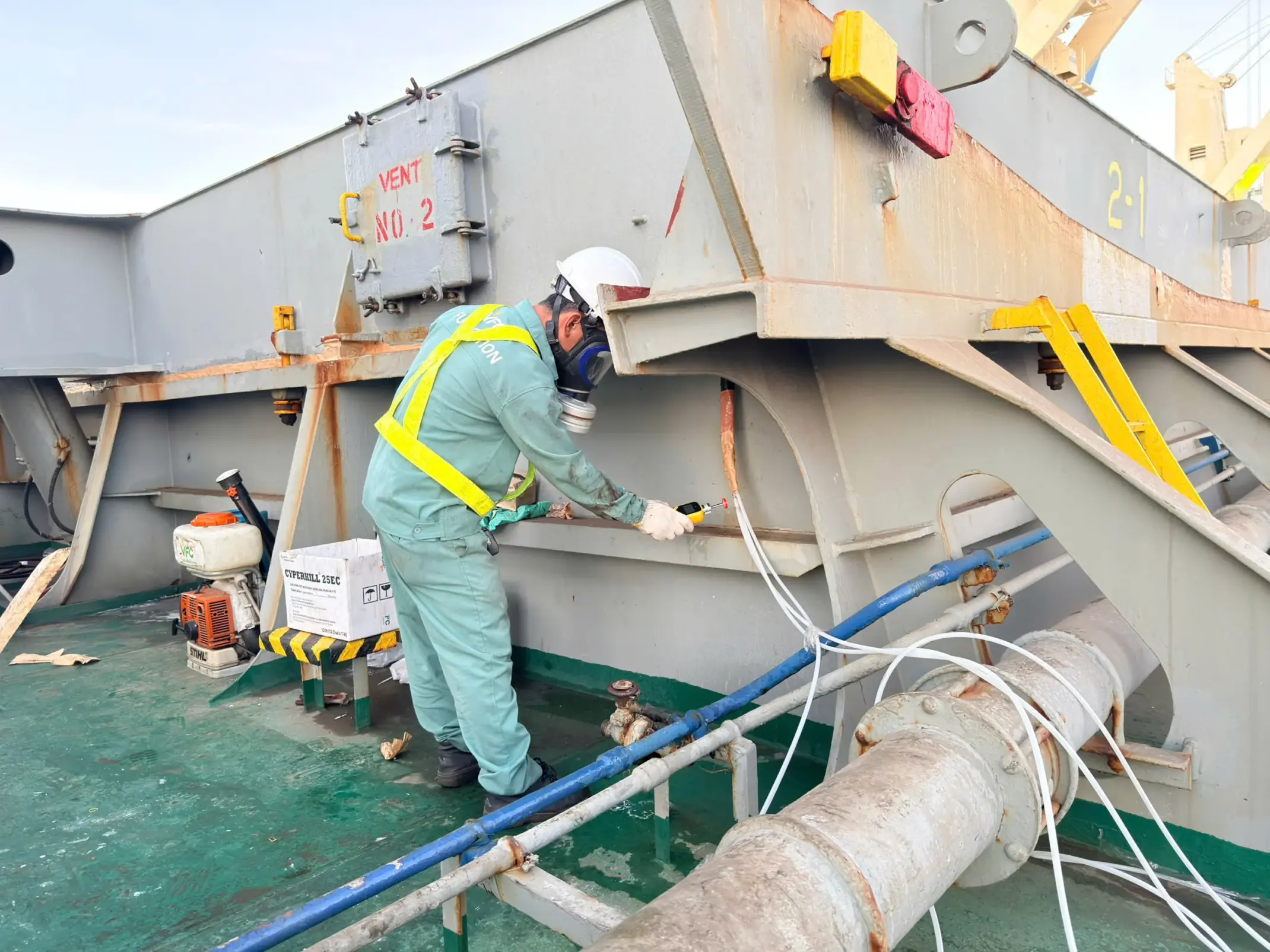
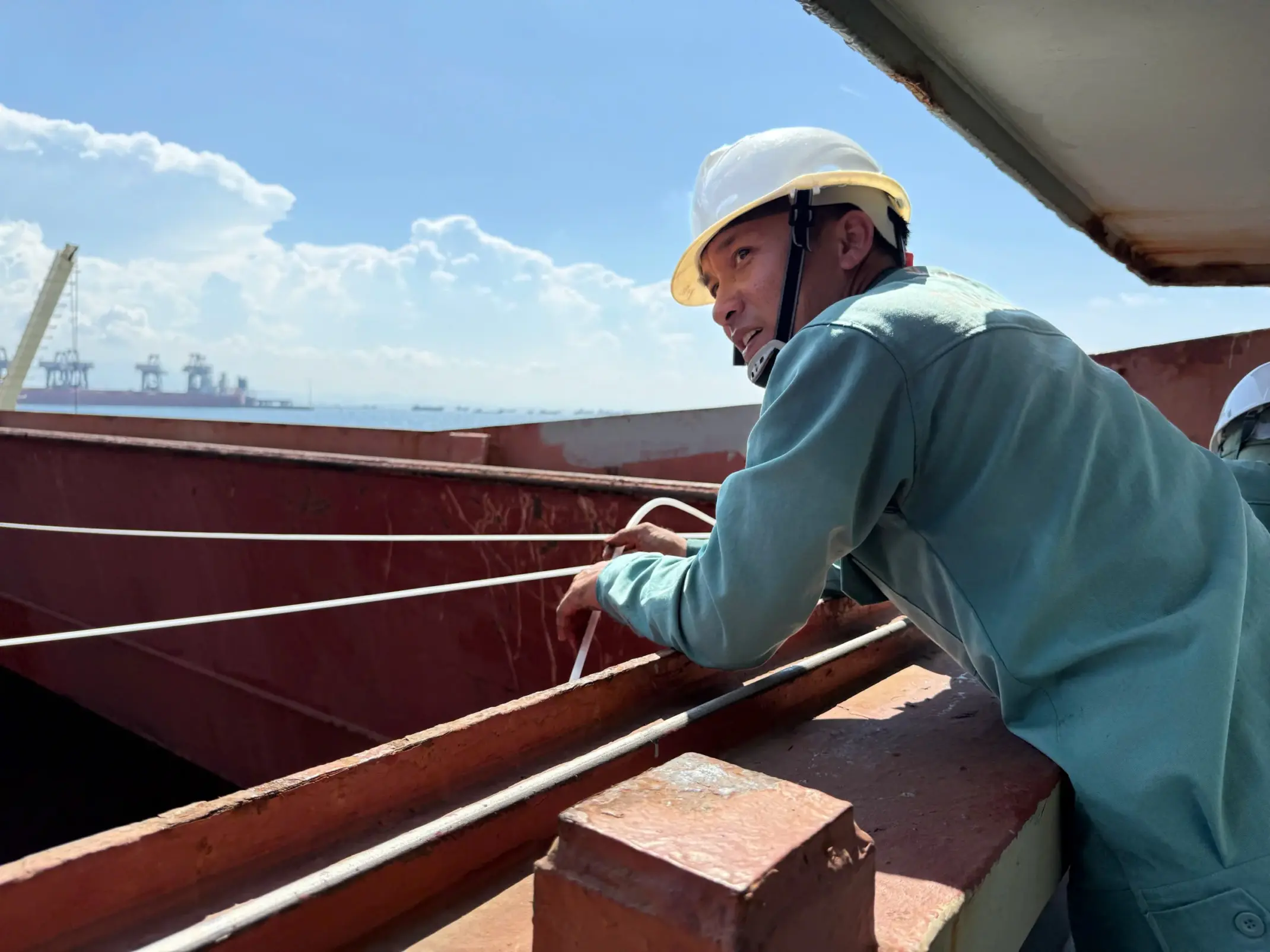
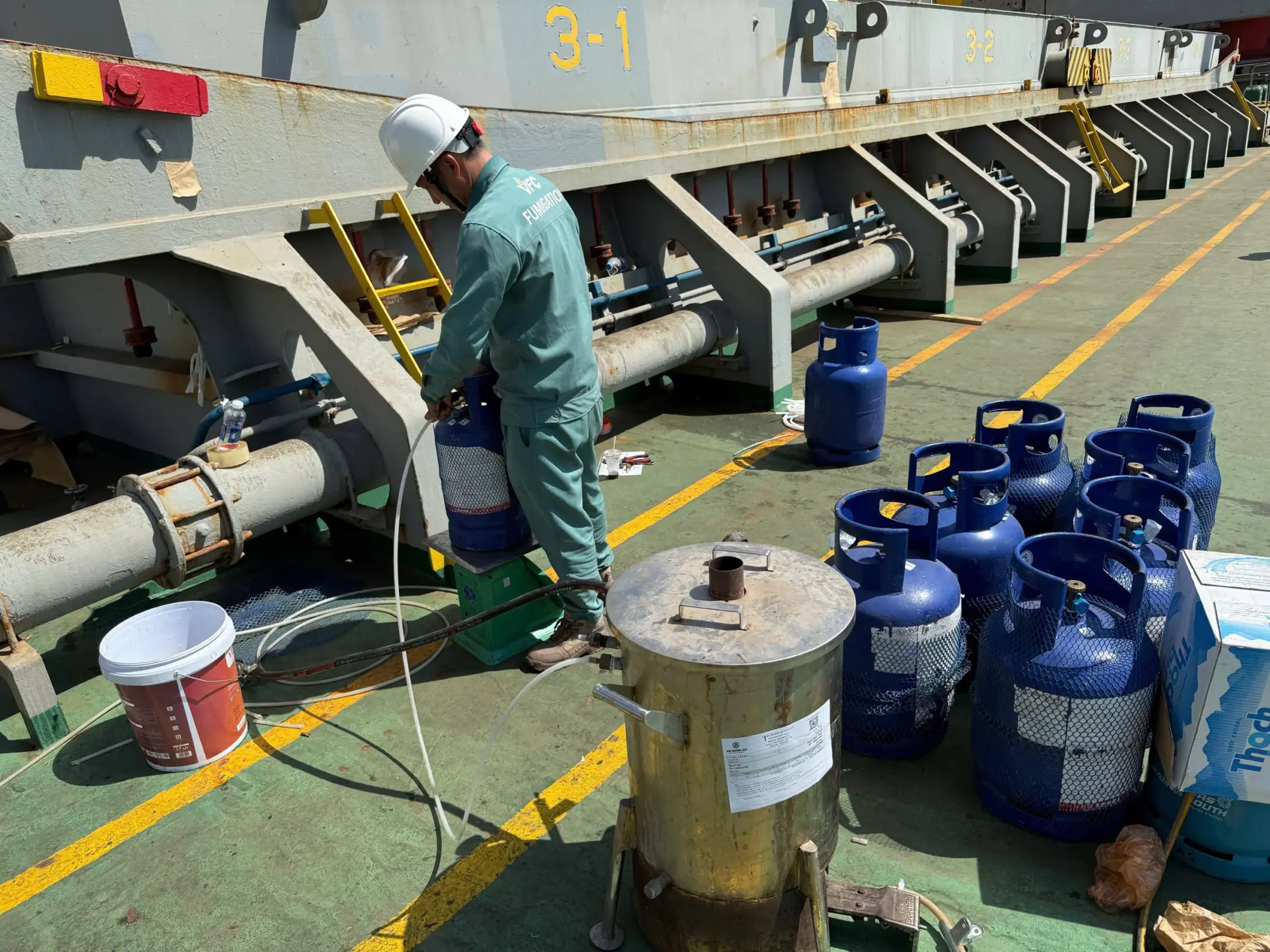
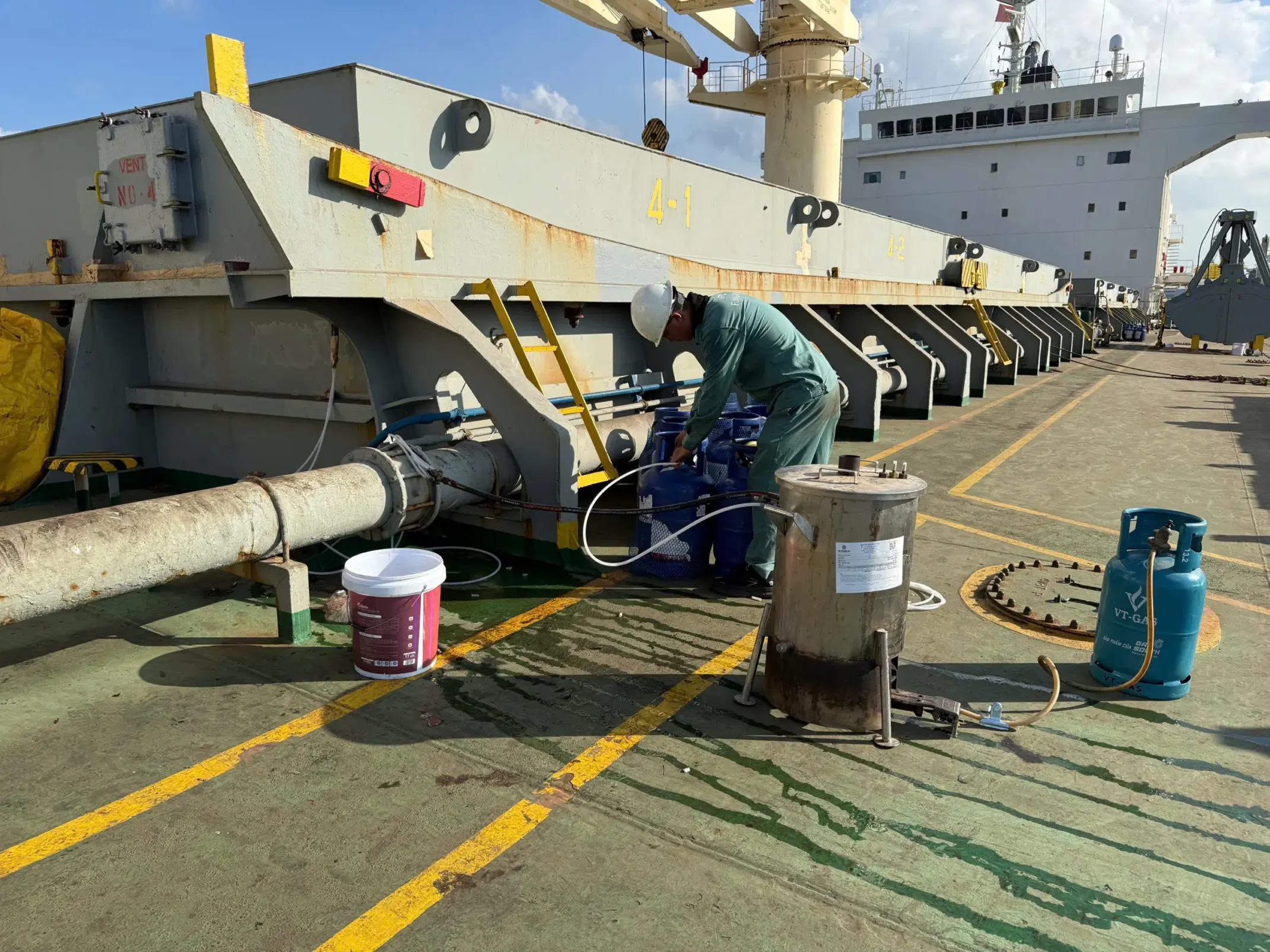
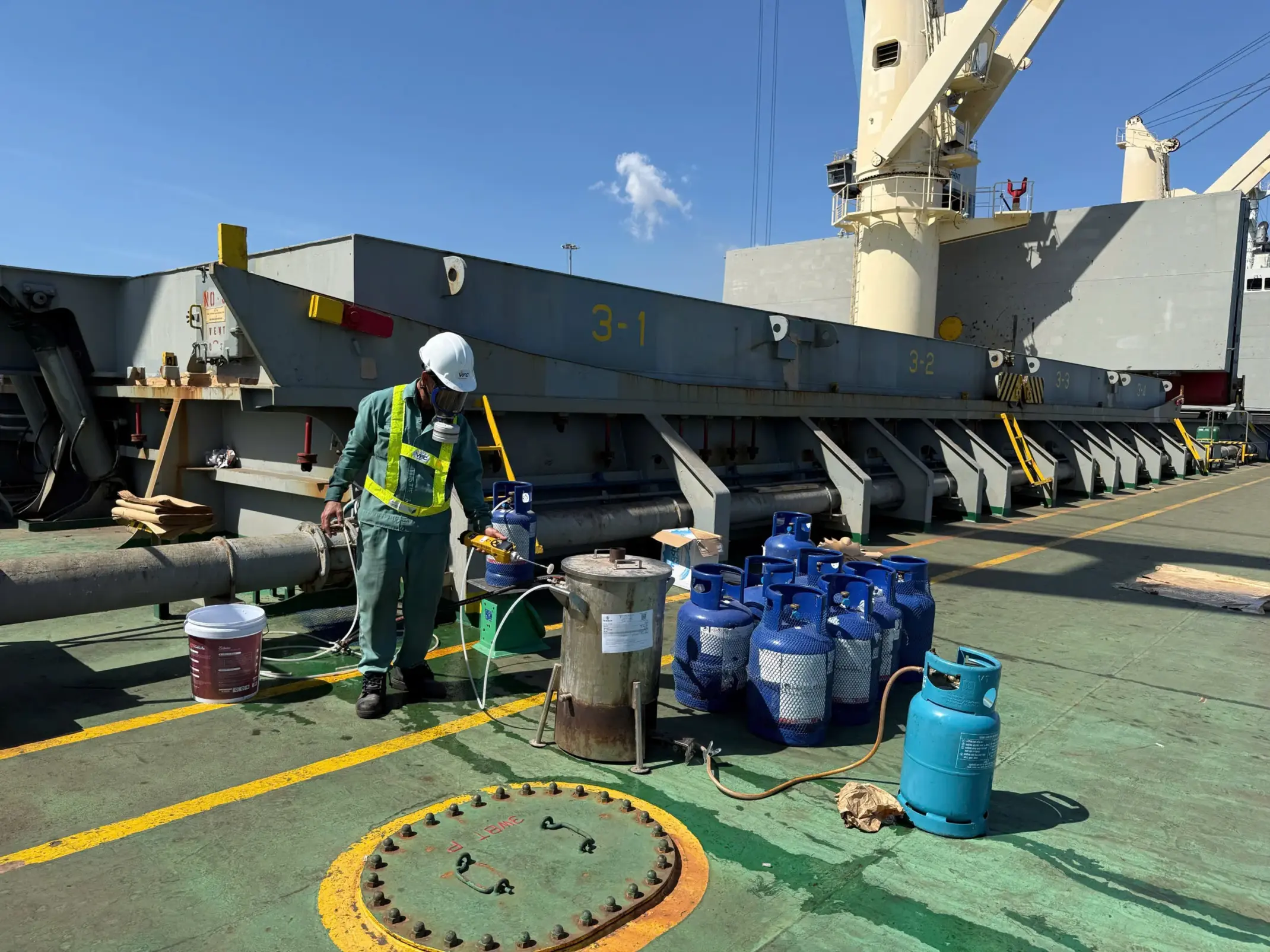
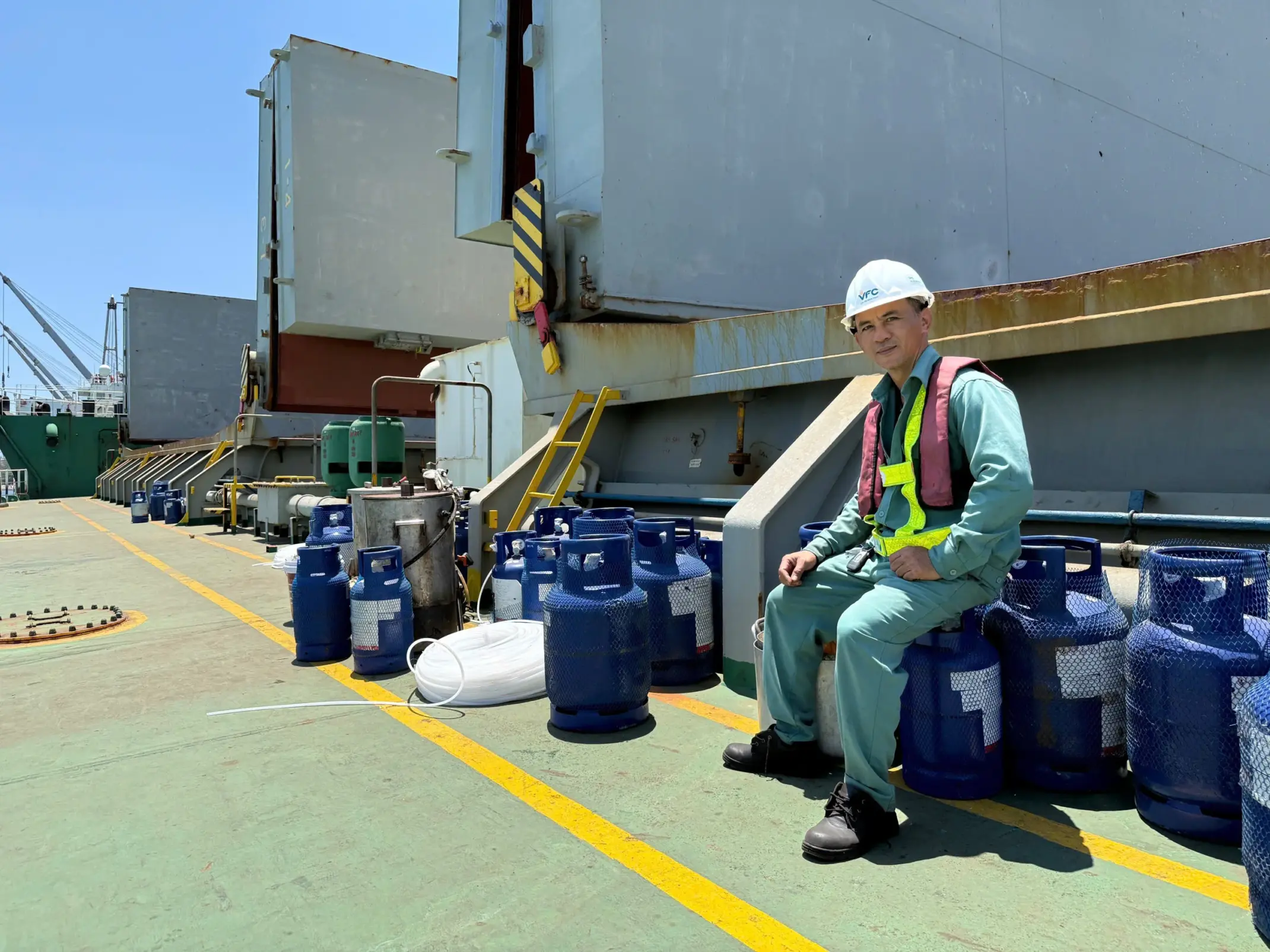
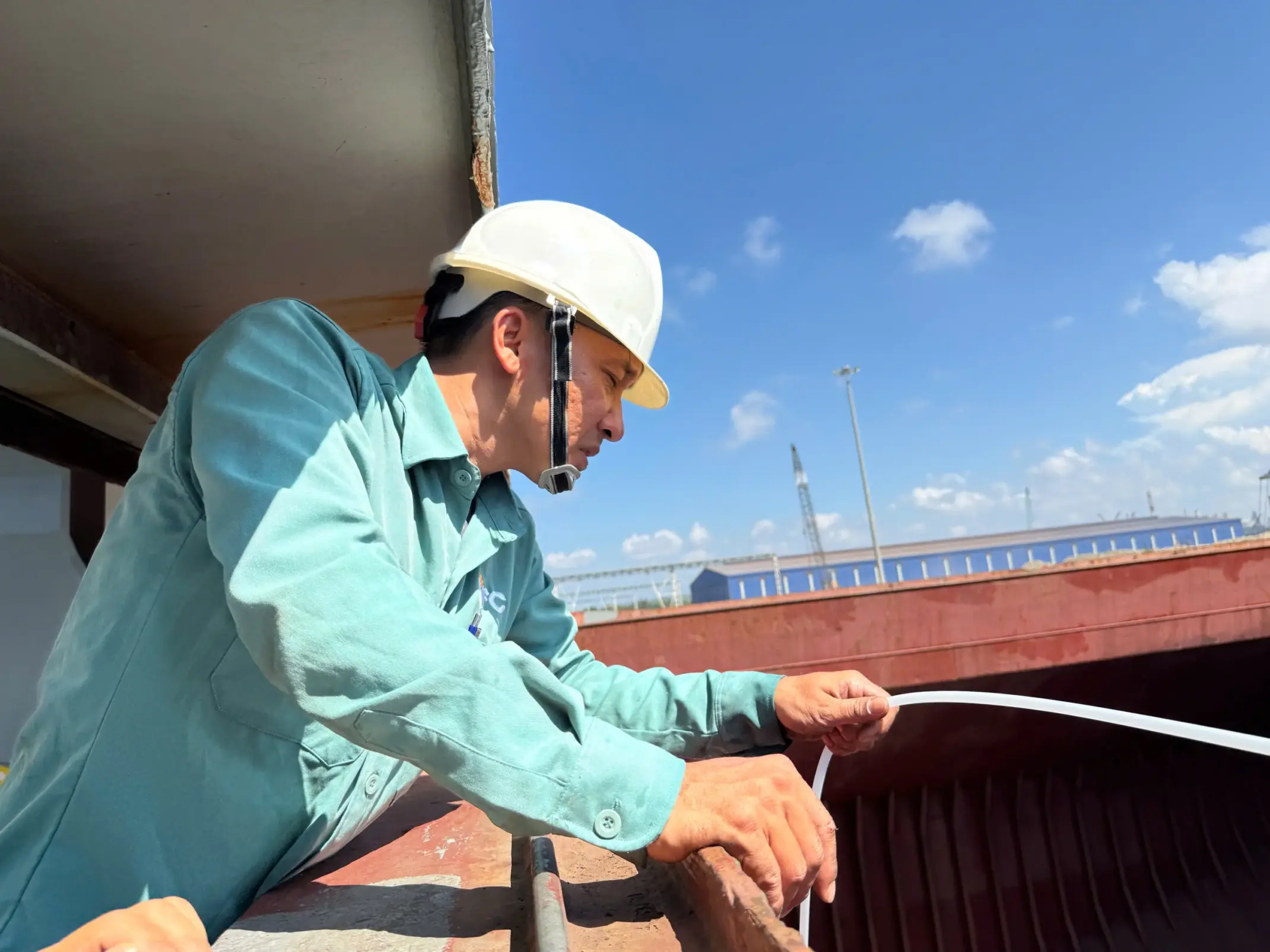
Installed dedicated fumigant injection lines and gas sampling/monitoring lines throughout each hold, ensuring the fumigant vapors penetrate uniformly across the entire stow and timber dunnage.
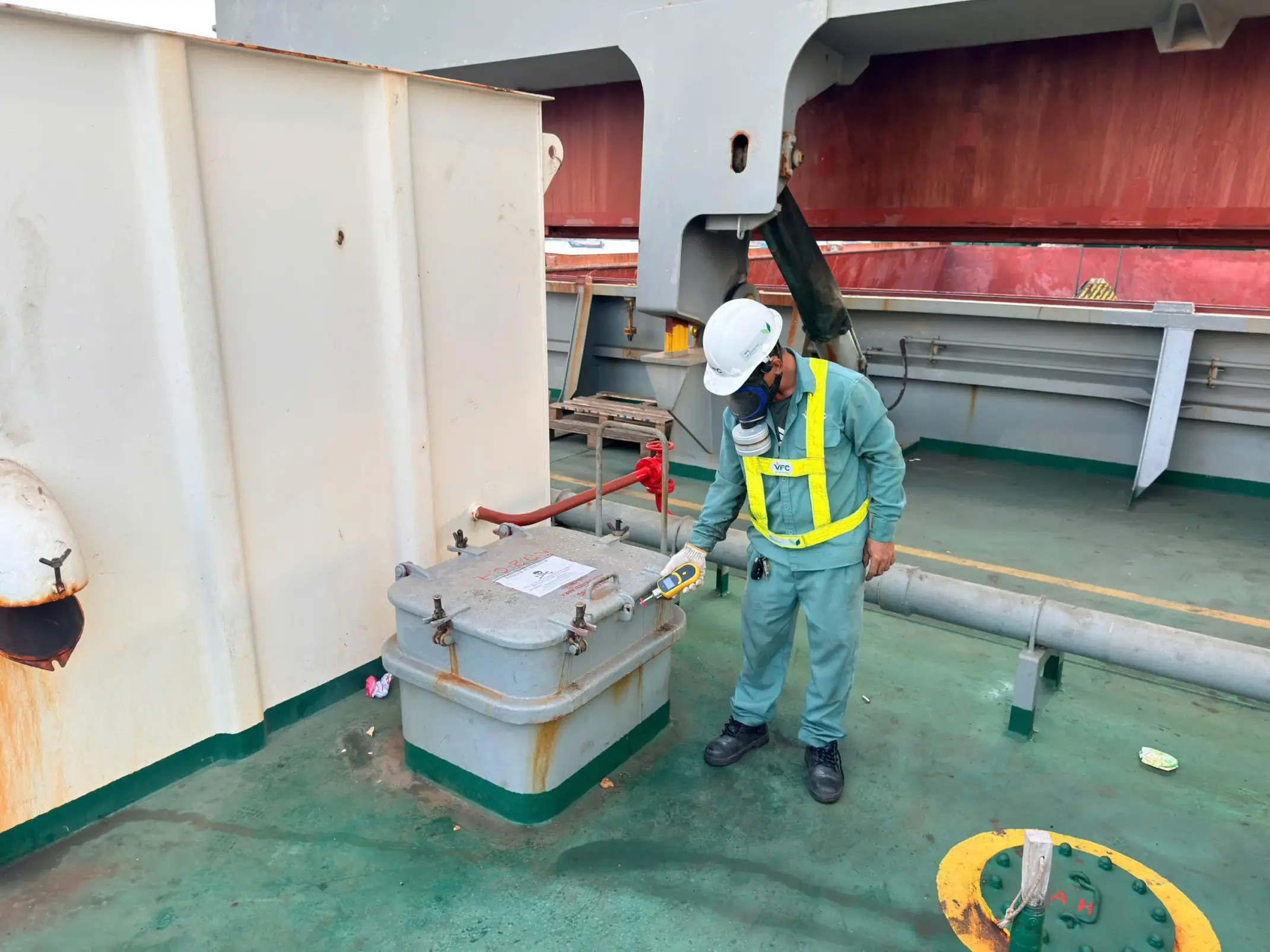
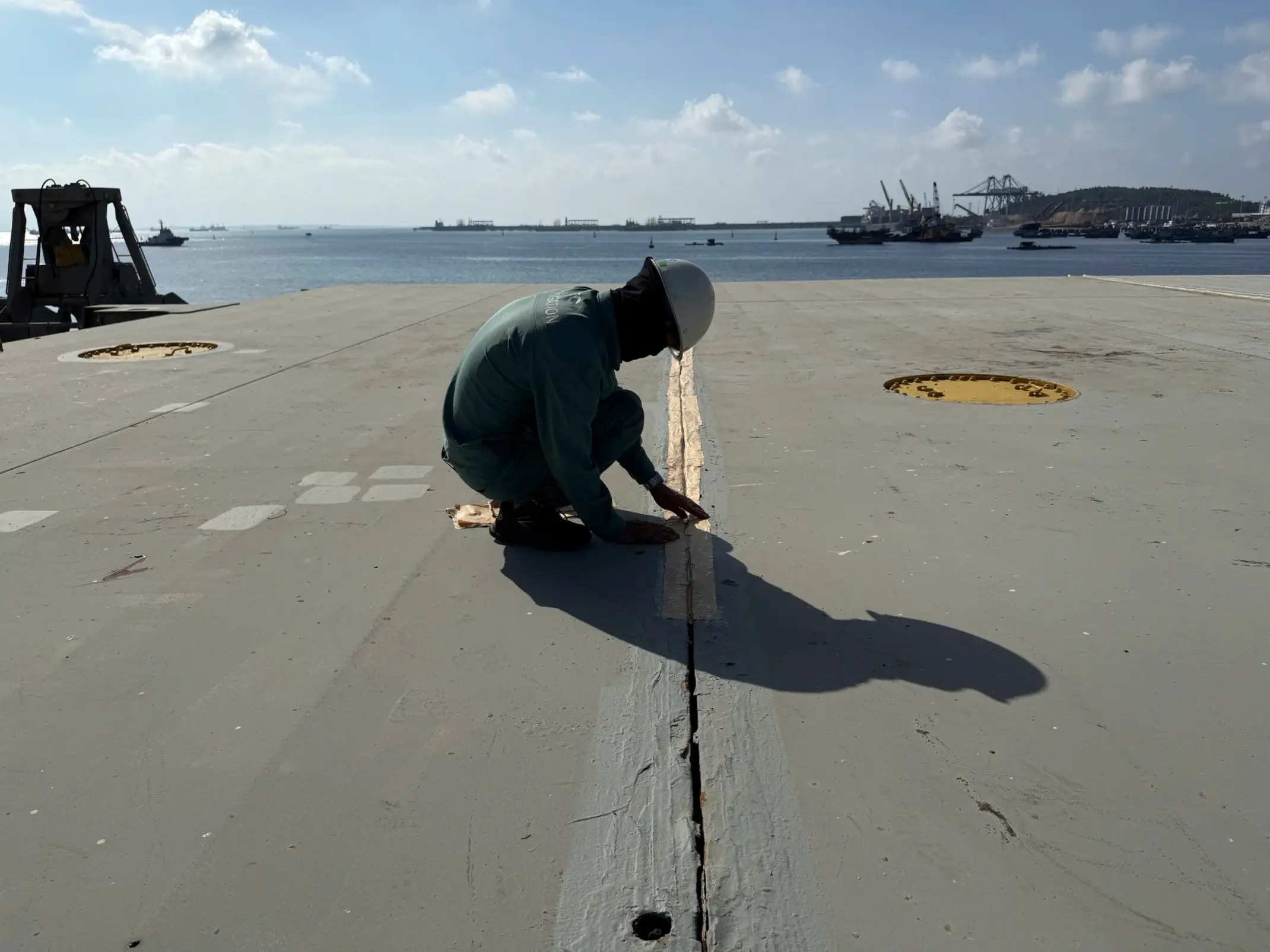
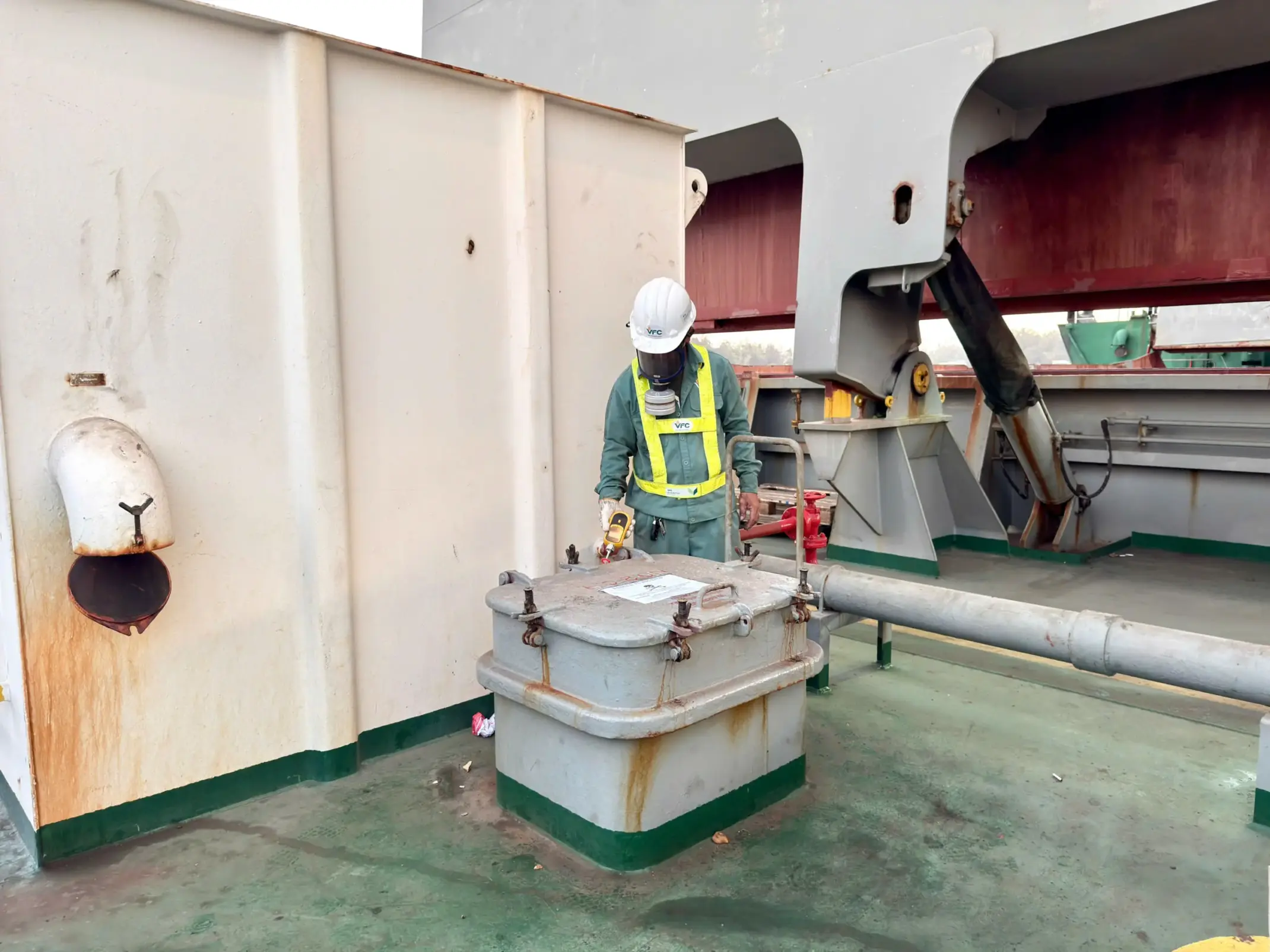
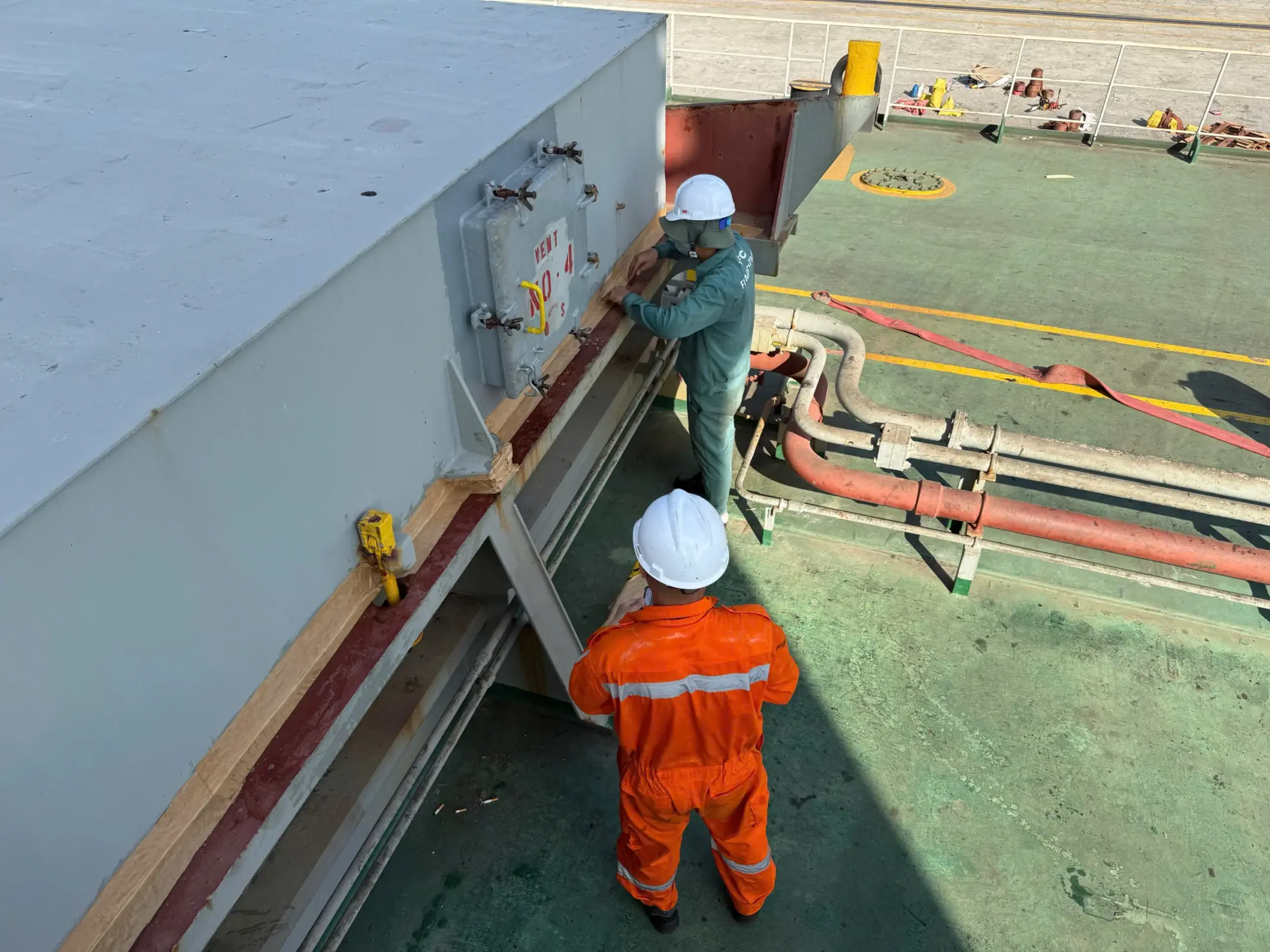
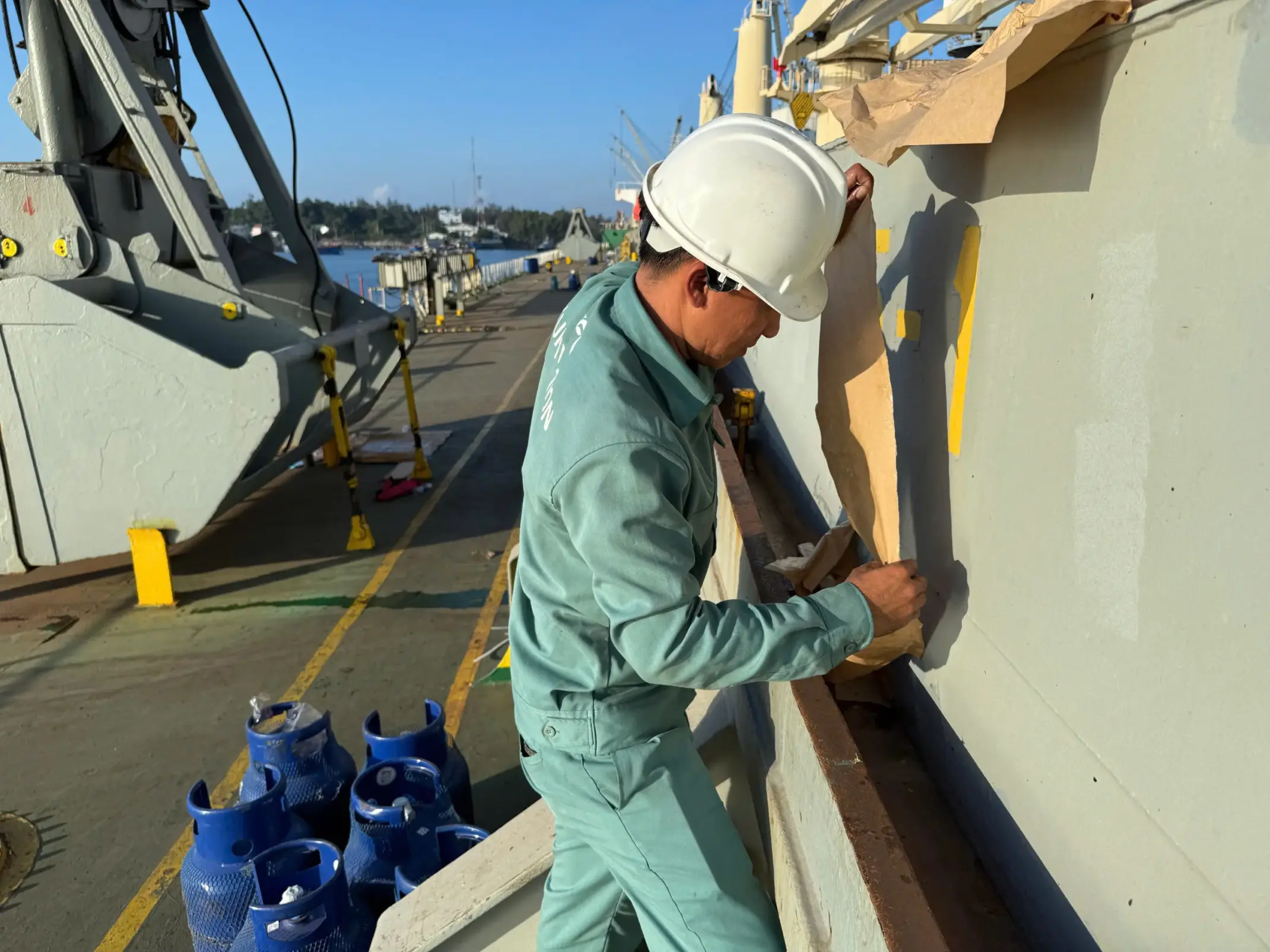
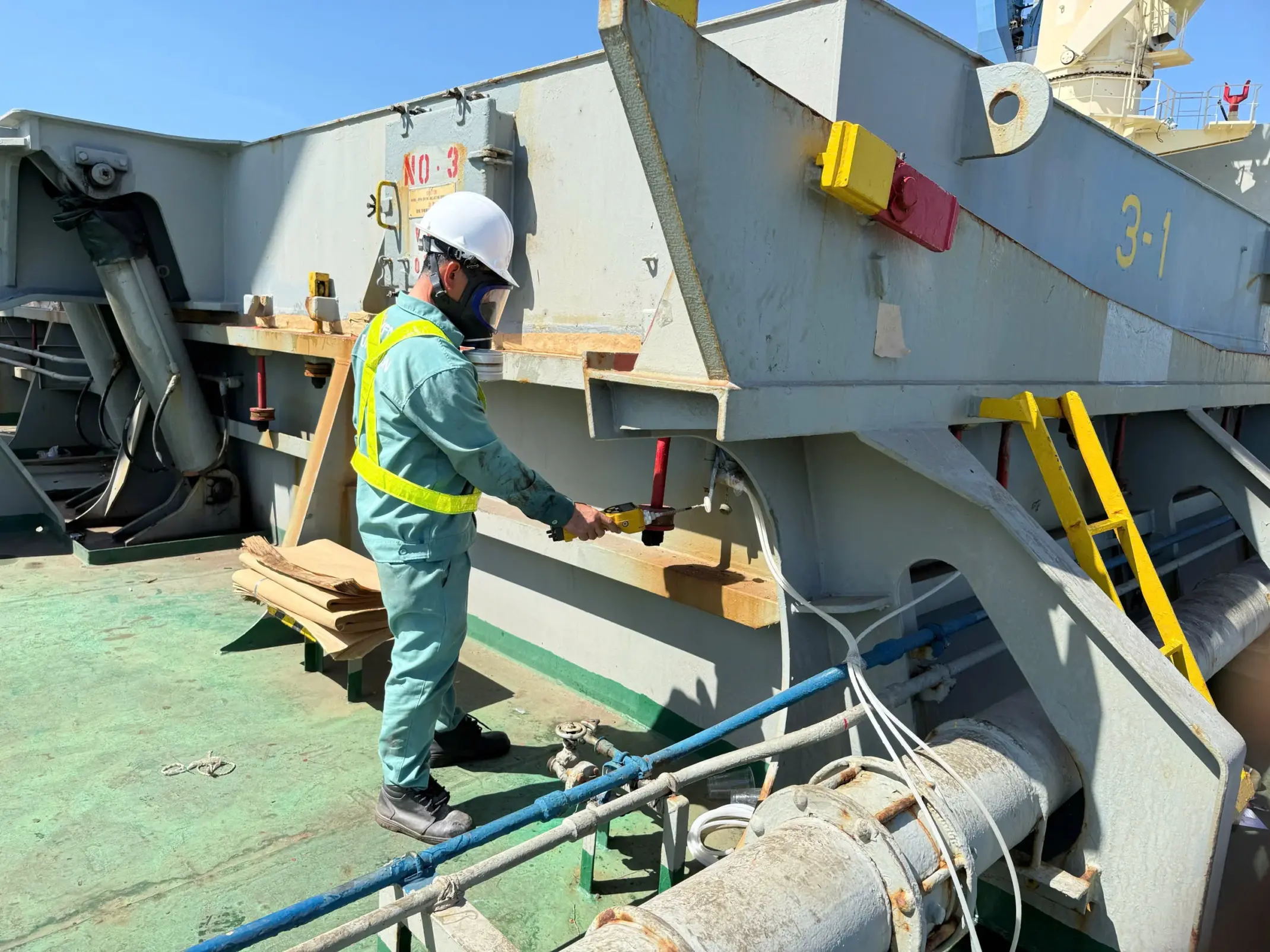
Hatch covers, ventilators, and all potential leakage points were inspected and sealed using specialized gastight materials to prevent gas loss and maintain required gas concentrations throughout the exposure period.
The entire Methyl Bromide dosage was vaporized using specialized heat-exchange vaporizers prior to injection into the holds. This method accelerates gas diffusion and achieves uniform concentration throughout the holds.
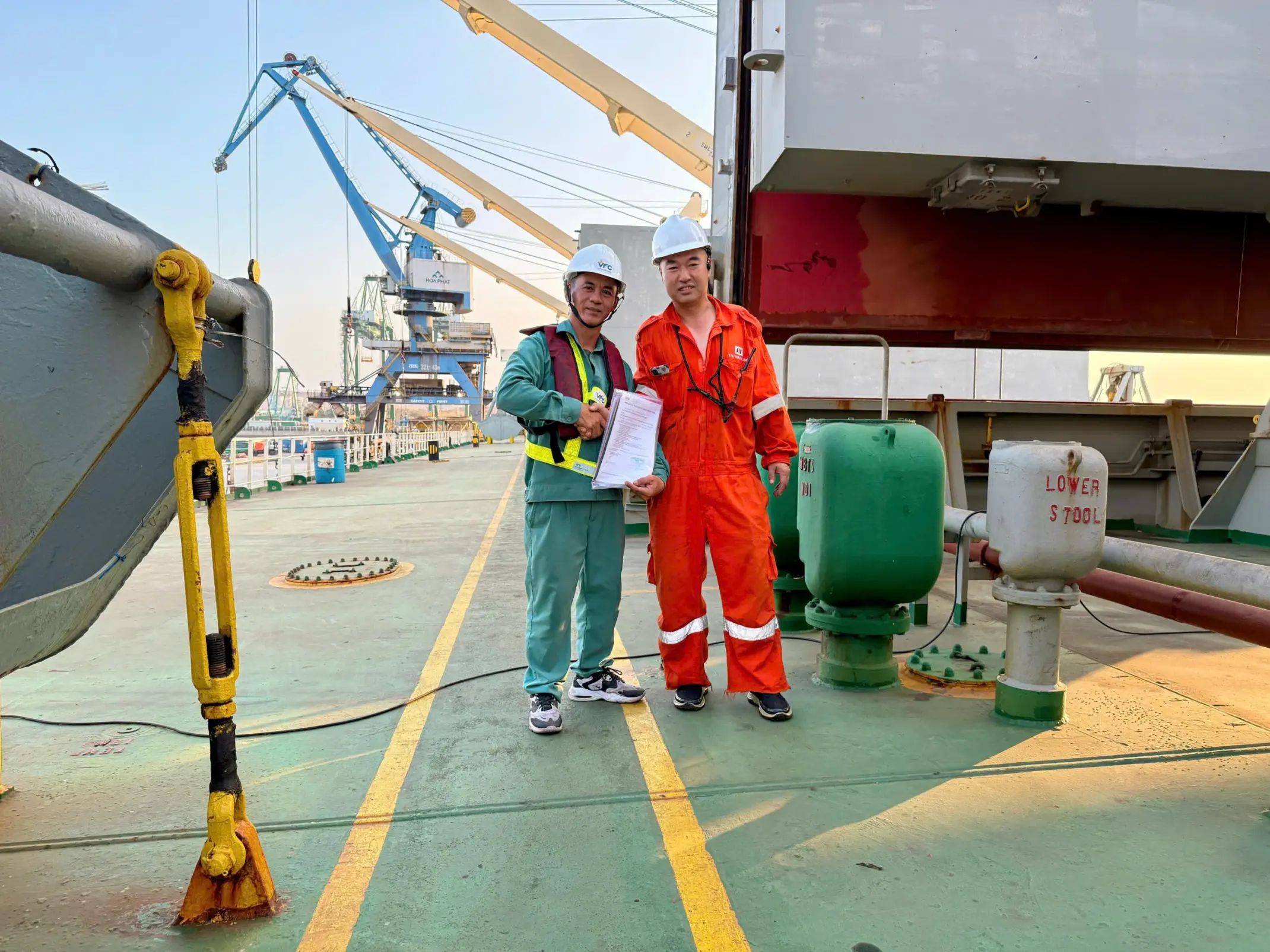
Upon completion of the fumigation process, specialized detection equipment was deployed to measure gas concentrations and ensure safety compliance. Once all safety conditions were fully verified, VFC Fumigation – Da Nang Branch finalized the compliance dossier and handed it over to the Master, clearing the vessel to resume its voyage.
Results
All live insect populations inside the cargo holds and on the wooden dunnage were completely eradicated; zero surviving specimens were detected.
Upon arrival of the TAI SUMMIT at the US destination port, local phytosanitary and biosecurity authorities inspected the dossier and hold conditions, granting rapid clearance and authorizing cargo discharge without delays or queries.
All treatment operations synchronized precisely with the vessel's loading schedule, enabling the ship to depart Dung Quat Port on schedule and eliminating demurrage or incidental costs.