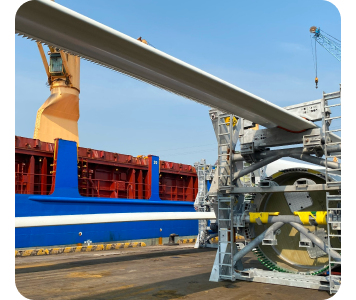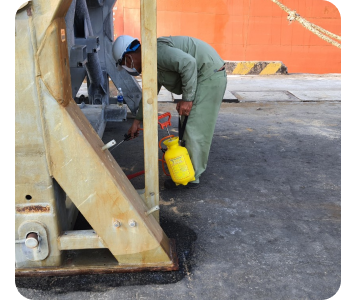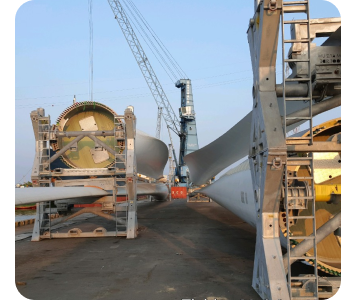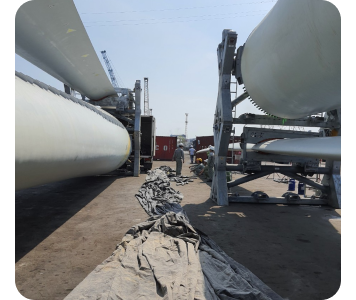







Project Overview
- Customer / Supply Chain: Wind turbine blades originating from Europe and destined for Australia.
- Mandatory Requirement: Comply with Australia’s stringent quarantine standards for BMSB (Brown Marmorated Stink Bug) — a high-risk seasonal quarantine pest subject to strict control at destination ports.
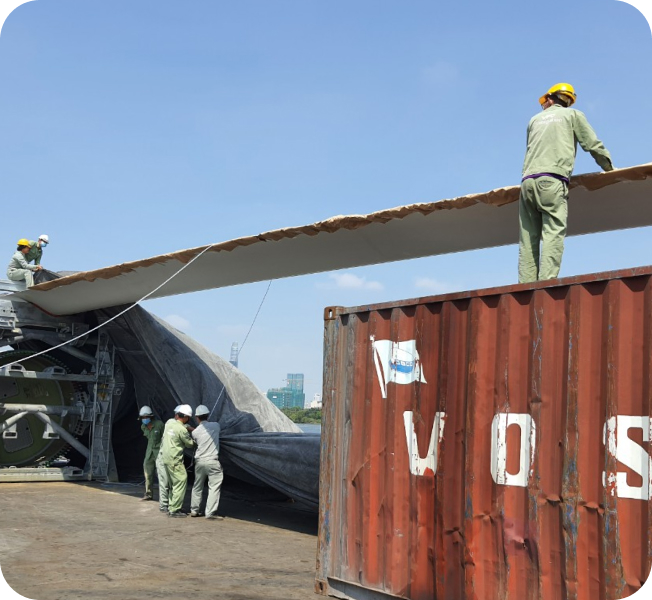
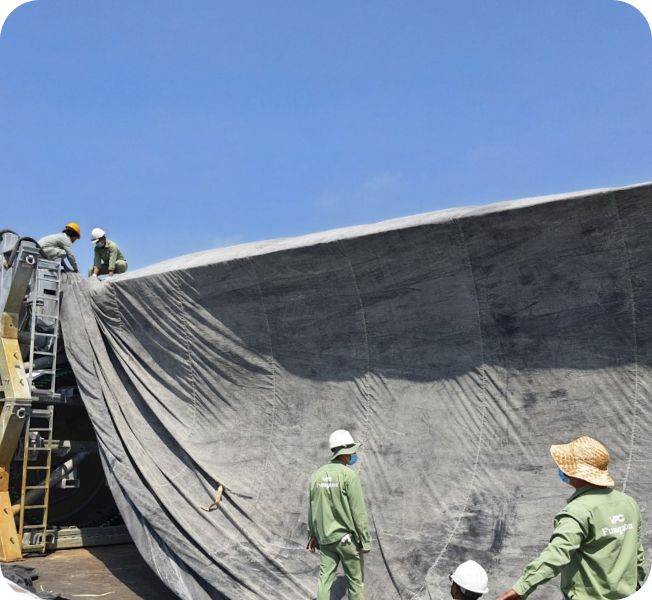
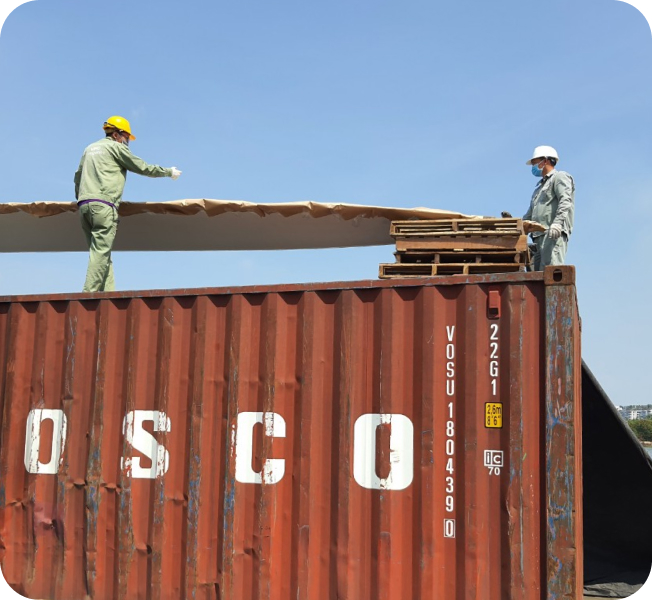
- Operational Challenge: At the time of execution, no company in ASEAN had the capability or qualifications to fully perform treatment for oversized specialized structures such as wind turbine blades. As a result, the only feasible solution was to transit the shipment through Vietnam for quarantine treatment.
- Key Success Factor: In Vietnam, only VFC had the operational capability to perform BMSB treatment for this type of oversized heavy cargo and issue the required certification for customs clearance.
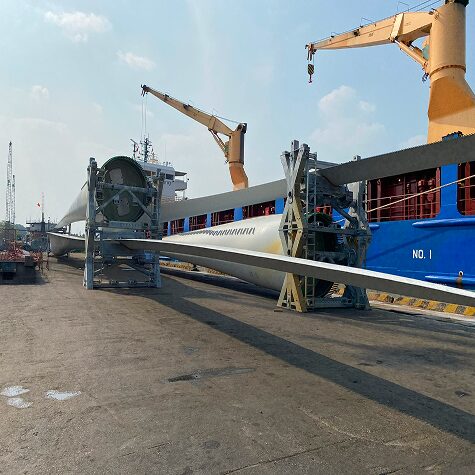
Wind Turbine Nacelle
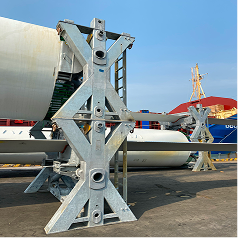
Wind Turbine Tower Section
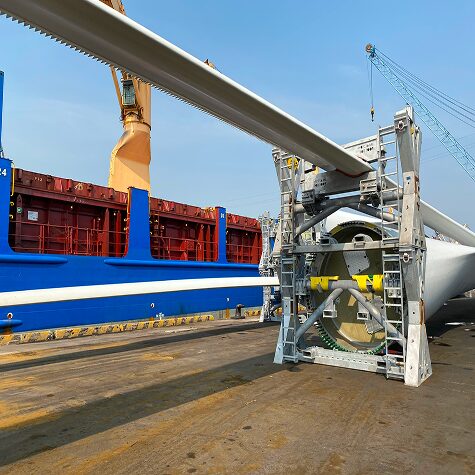
Wind Turbine Blade
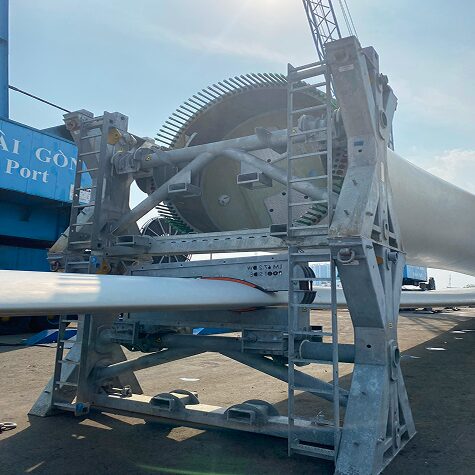
Turbine Tail Section
Customer Challenges
For wind turbine blades, the challenge is not just fumigation, but compliant and verifiable treatment across a complex international supply chain.
-
Risk of Cargo Detention
Australia enforces strict BMSB controls. Inadequate treatment documentation may lead to cargo detention or extended customs clearance procedures, resulting in delays and additional costs.
-
Treatment Coverage Challenges
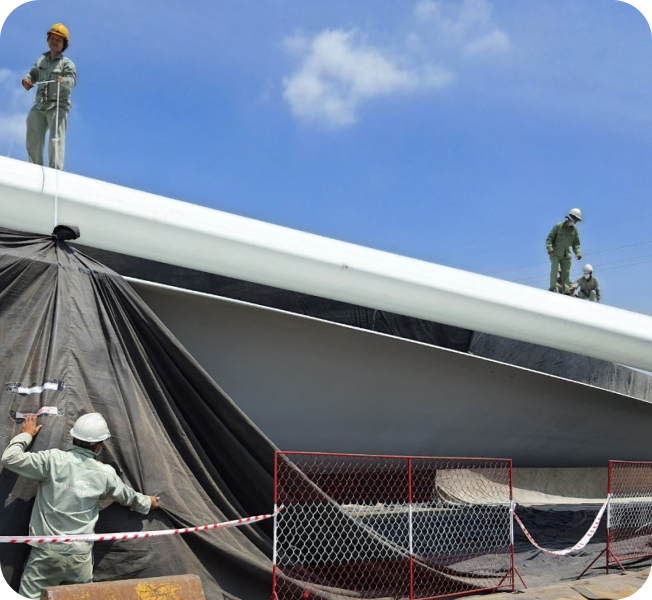
Wind turbine blades are oversized structures with curved surfaces and multiple crevices, making uniform treatment difficult. Insufficient coverage may leave potential BMSB hiding spots and increase quarantine risks.
-
Project Schedule Delays
Wind energy projects operate on tightly scheduled installation and transportation timelines. Delays can disrupt the entire supply chain and quickly increase storage, transportation, and labor costs.
-
Compliance Documentation Risks
Clear treatment records and certification are required to demonstrate BMSB compliance for Australian import regulations. Incomplete or inconsistent documentation may lead to rejection, disputes, or re-treatment requests.
Project Objectives
Performed BMSB treatment tailored to the structure of wind turbine blades, ensuring full coverage and compliance with Australia’s strict quarantine requirements.
Treatment was carried out during the transit stage in Vietnam, with controlled storage time to keep the shipment on schedule for transport to Australia.
Provided clear and consistent treatment certificates and documentation to demonstrate BMSB compliance and reduce the risk of cargo detention at Australian ports.

VFC implemented a “supply chain risk control” approach, going beyond technical treatment alone.
Assessed cargo characteristics including size, surface structure, and potential hiding spots. Developed a treatment process focused on coverage and traceability to meet quarantine requirements.
Deployed operational capabilities suitable for oversized heavy cargo. Coordinated the process to optimize yard time and reduce storage and demurrage costs.
Completed treatment documentation required for the customer’s logistics chain and customs clearance. Issued certification confirming that the shipment had undergone BMSB treatment as required.
Established quality control points before, during, and after treatment to ensure the process was properly executed and consistently applied across the entire blade surface.
Results
Clearance Risks
Significantly reduced the risk of cargo detention or re-treatment at destination ports through compliant treatment and clear supporting documentation, helping customers manage customs clearance more proactively.
Project Schedule
Protected project timelines by closely controlling transit time and treatment schedules, minimizing transport delays and ensuring timely delivery and installation in Australia.
Optimized supply chain costs by reducing unplanned storage, relocation, and re-treatment expenses, while minimizing the risk of surcharges, contractual penalties, and operational disruptions.
Strengthened trust with partners and logistics providers through transparent documentation and complete certification records that are easy to verify, enabling faster customs coordination and reducing liability disputes.