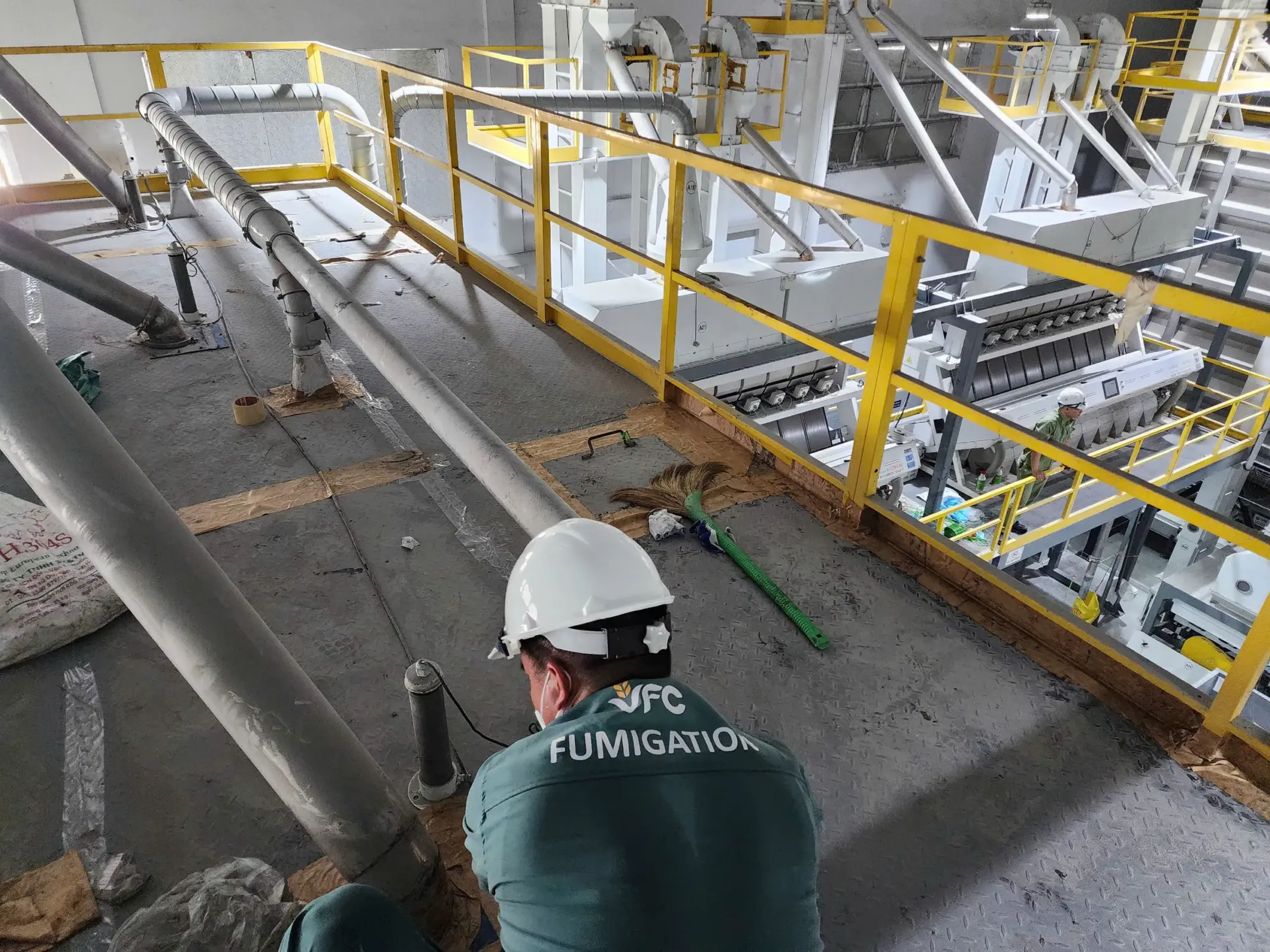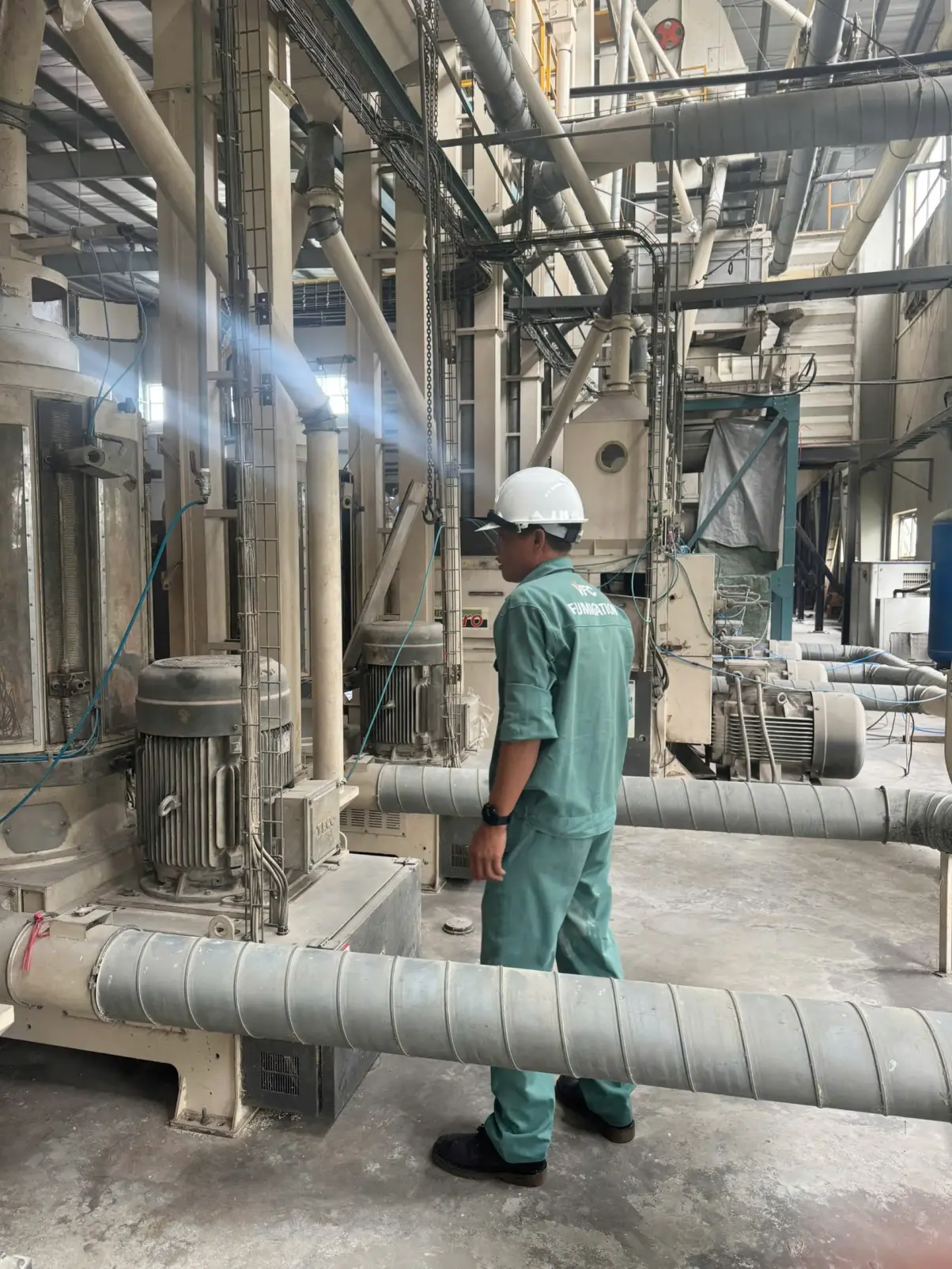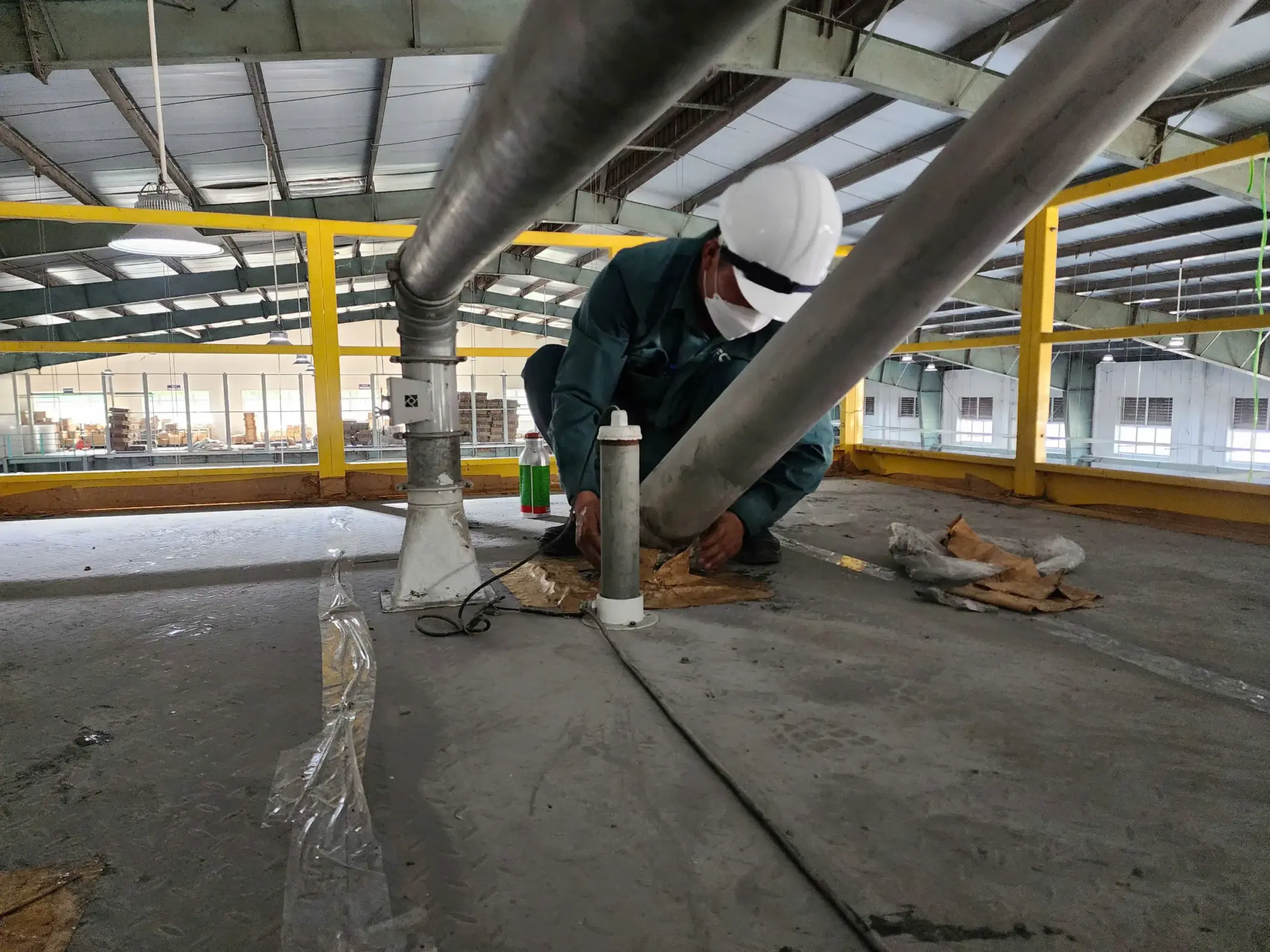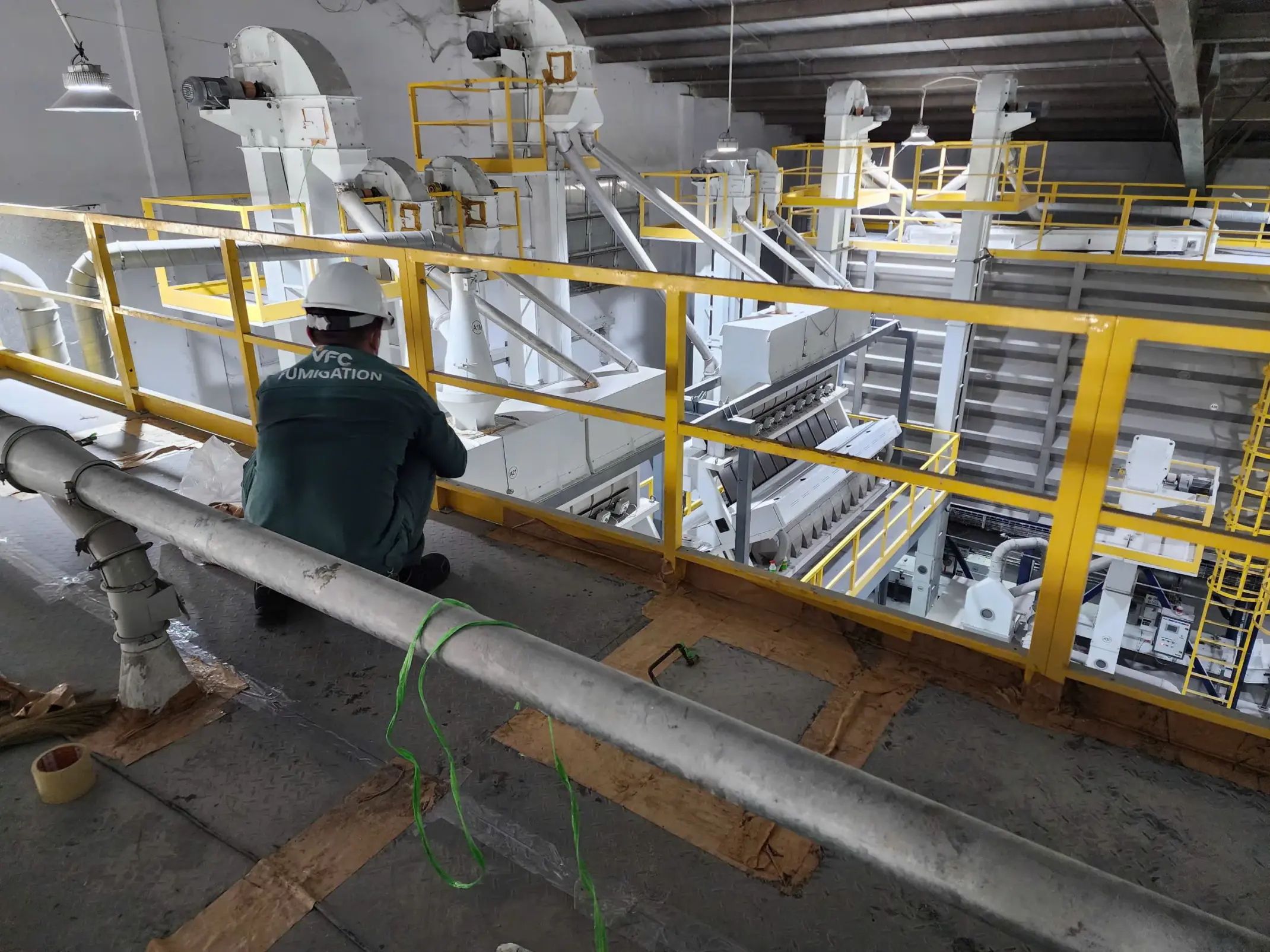






Project Overview
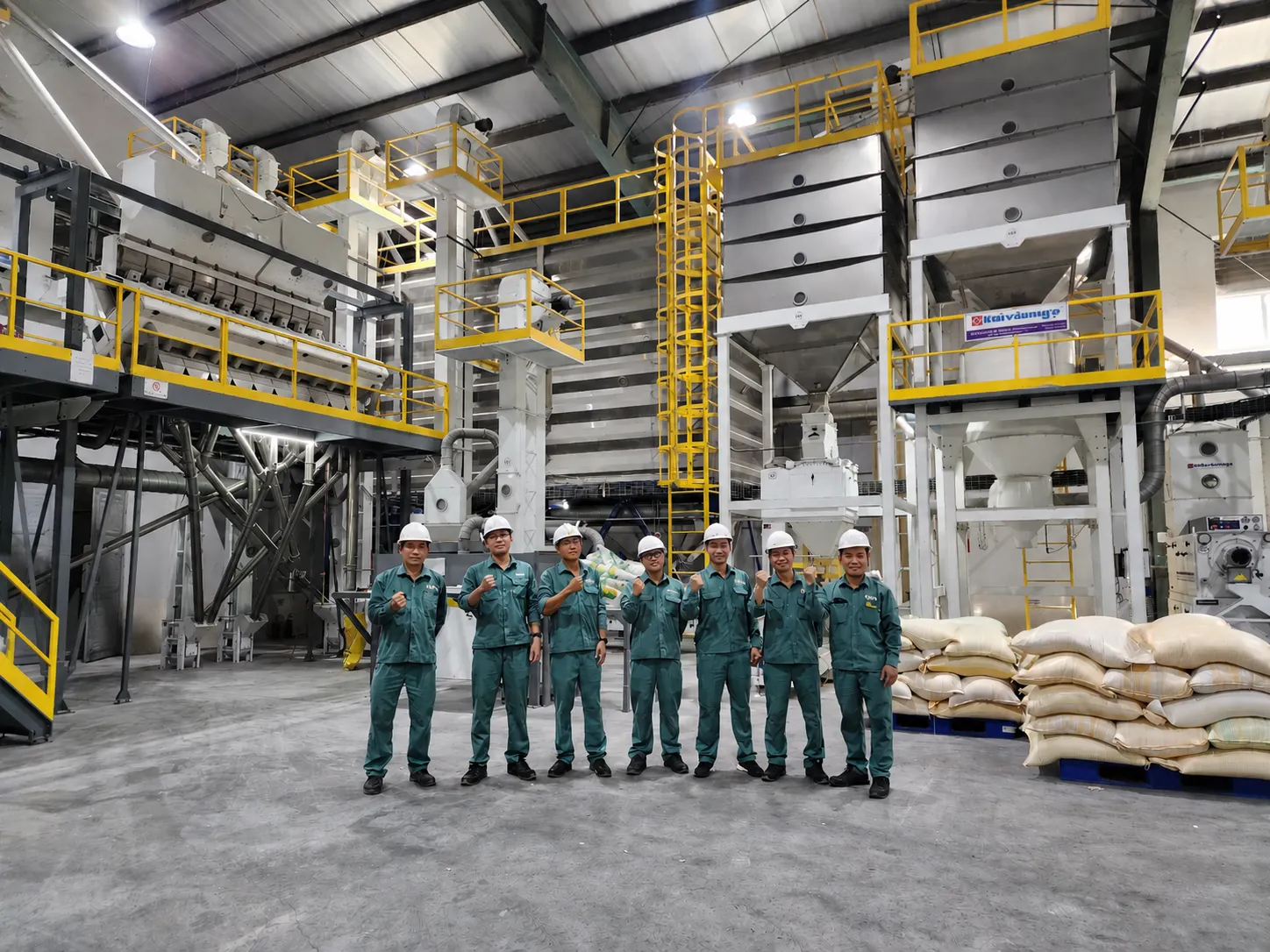
- Client: A large-scale rice production and processing company operating two branches in Hung Yen and Ha Nam.
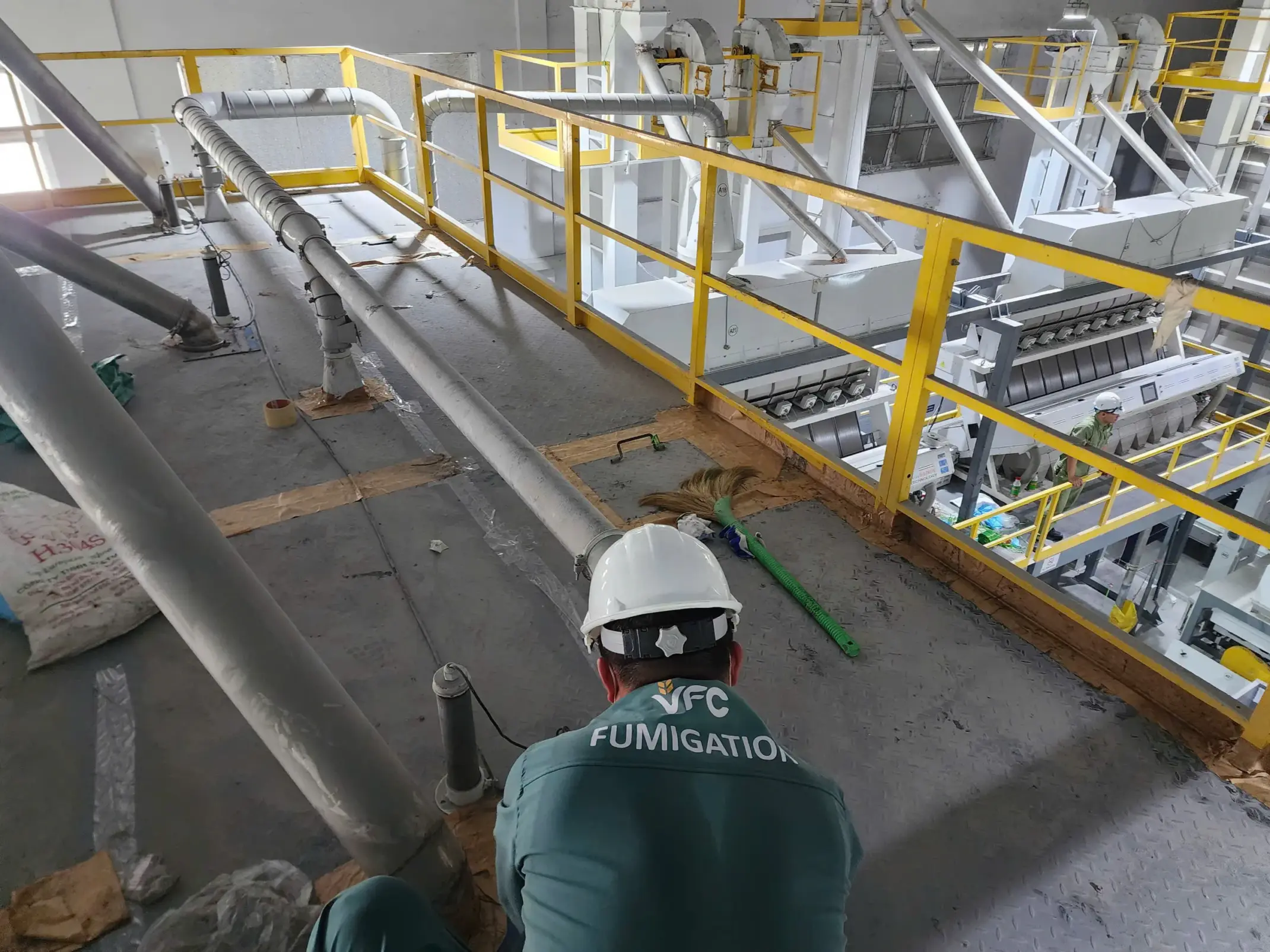
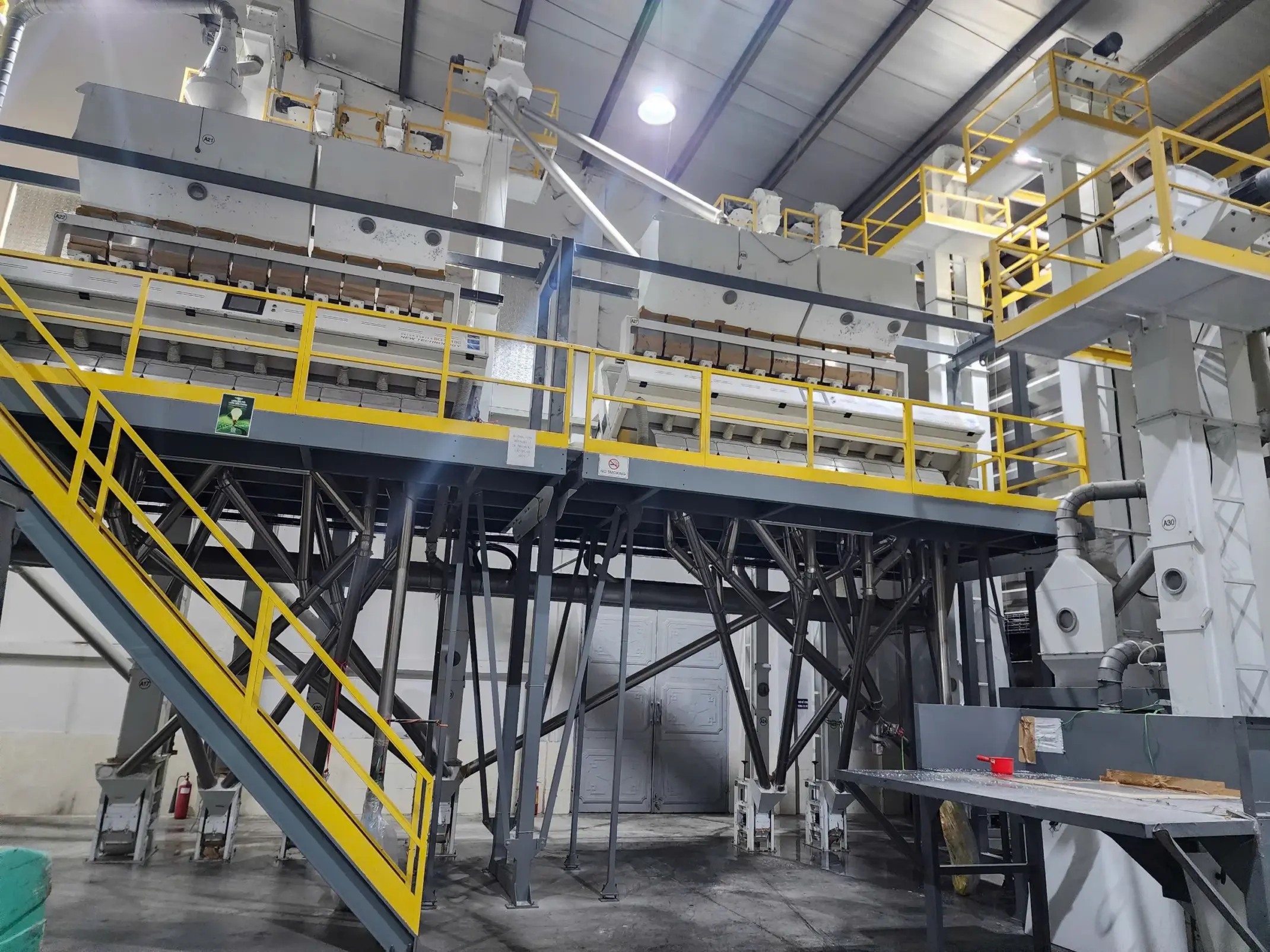
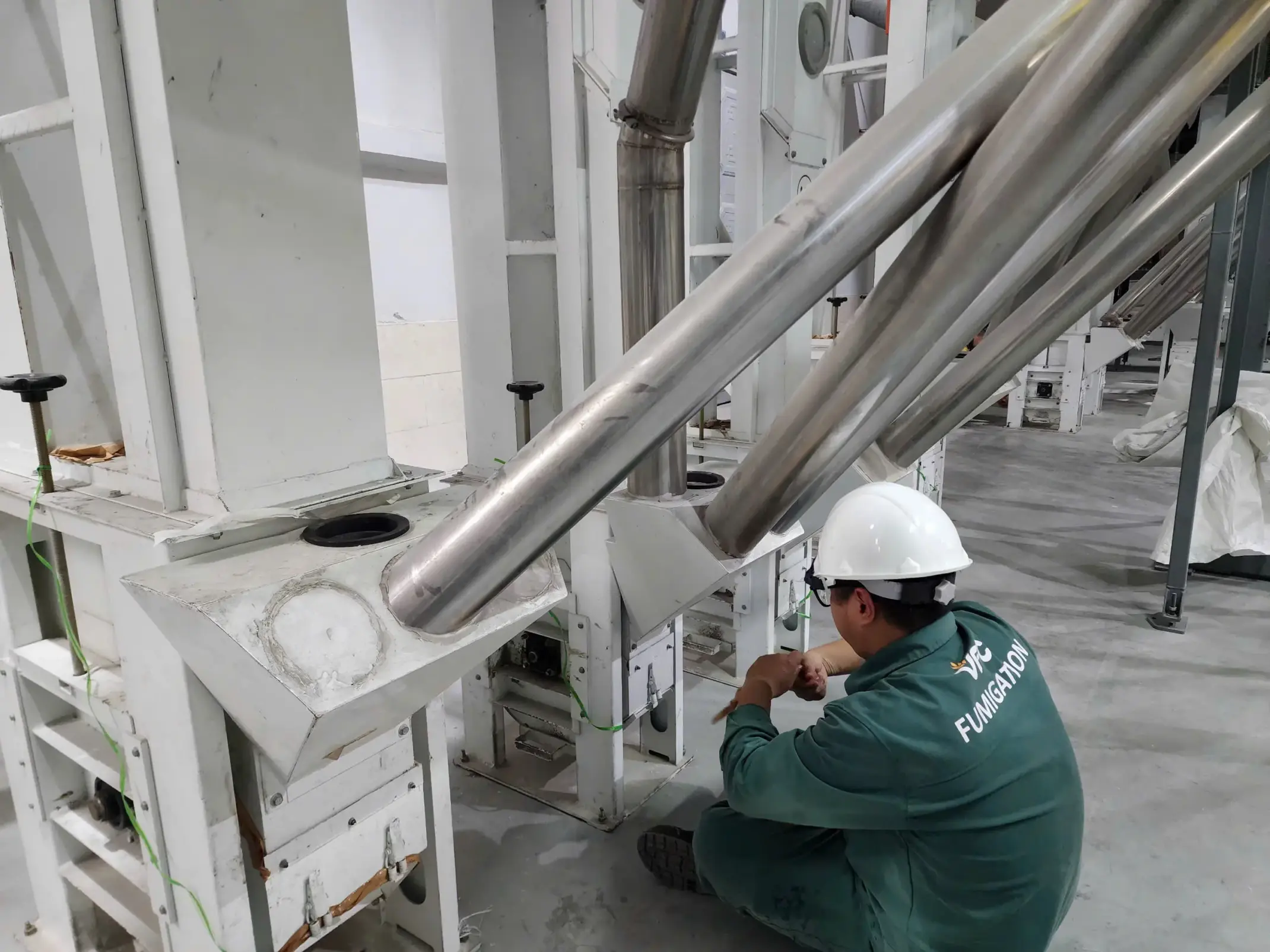
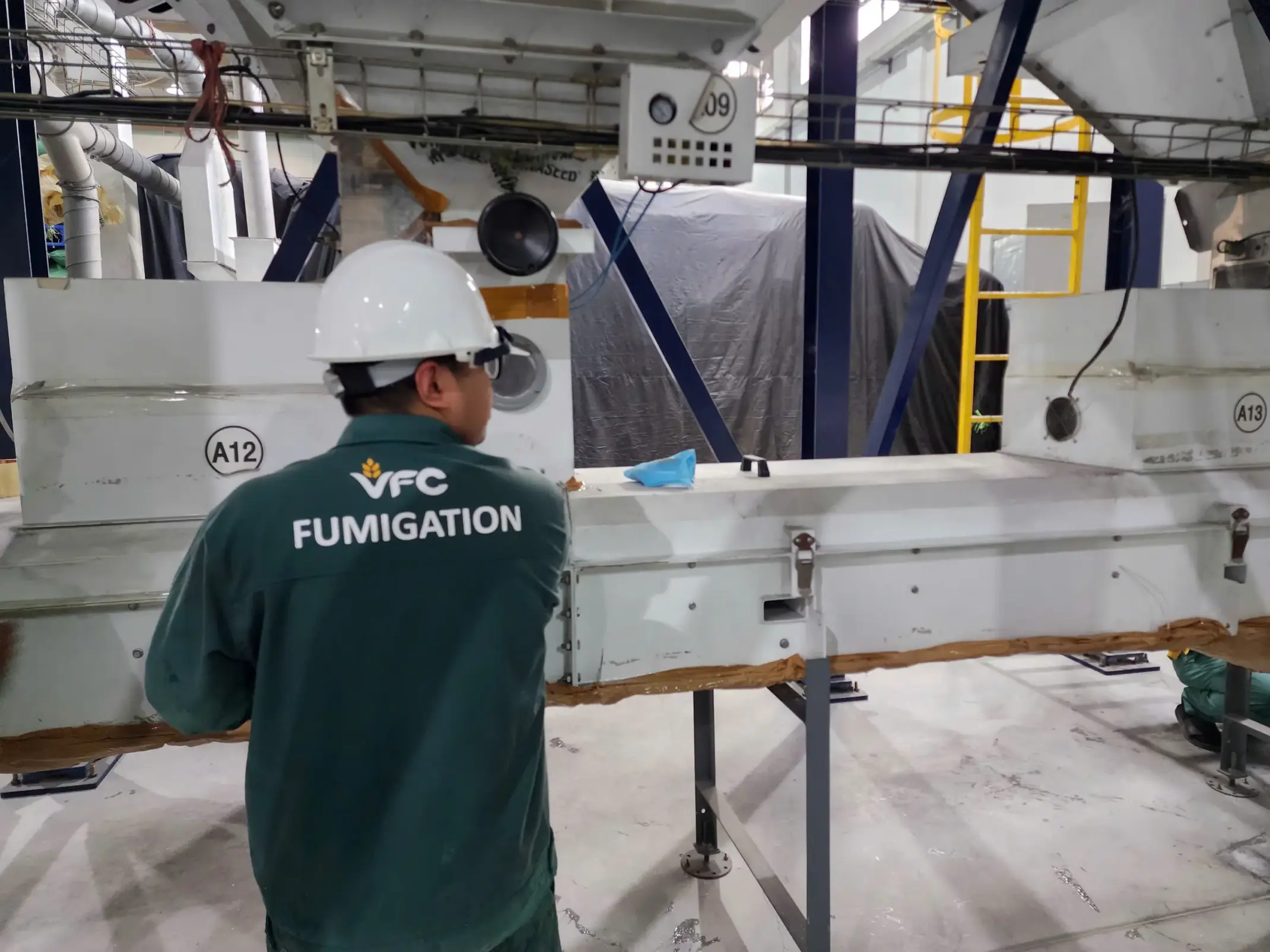
- Treated equipment: Rice processing machinery, including processing lines, conveyor systems and multi-level operating platforms.
- Mandatory requirement: Control and eliminate hidden pests and prevent weevil breeding throughout the entire machinery structure.
- Operational Challenge: Agricultural residues had accumulated in crevices and concealed areas within the machinery. Although the factory had been thoroughly cleaned before production, certain hard-to-reach areas could not be completely addressed, allowing insects to develop and emerge from inside the equipment and creating a risk of cross-contamination to stored rice and export consignments.
- Key consideration: Develop an optimal technical sealing solution for a complex, non-gastight machinery system; strictly control fumigant leakage to protect workers and avoid affecting the factory’s overall operations.
Customer Challenges
-
Complex machinery structure with multiple concealed areas
The rice processing line featured a complex structure comprising multiple operating levels, hundreds of equipment components and interconnected bucket elevators and conveyor systems. Small rice residues that had accumulated over time in narrow crevices were extremely difficult to remove using conventional mechanical cleaning methods, creating ideal harbourage and breeding conditions for weevils and other insects.
-
Sealing work and maintenance of fumigant concentration
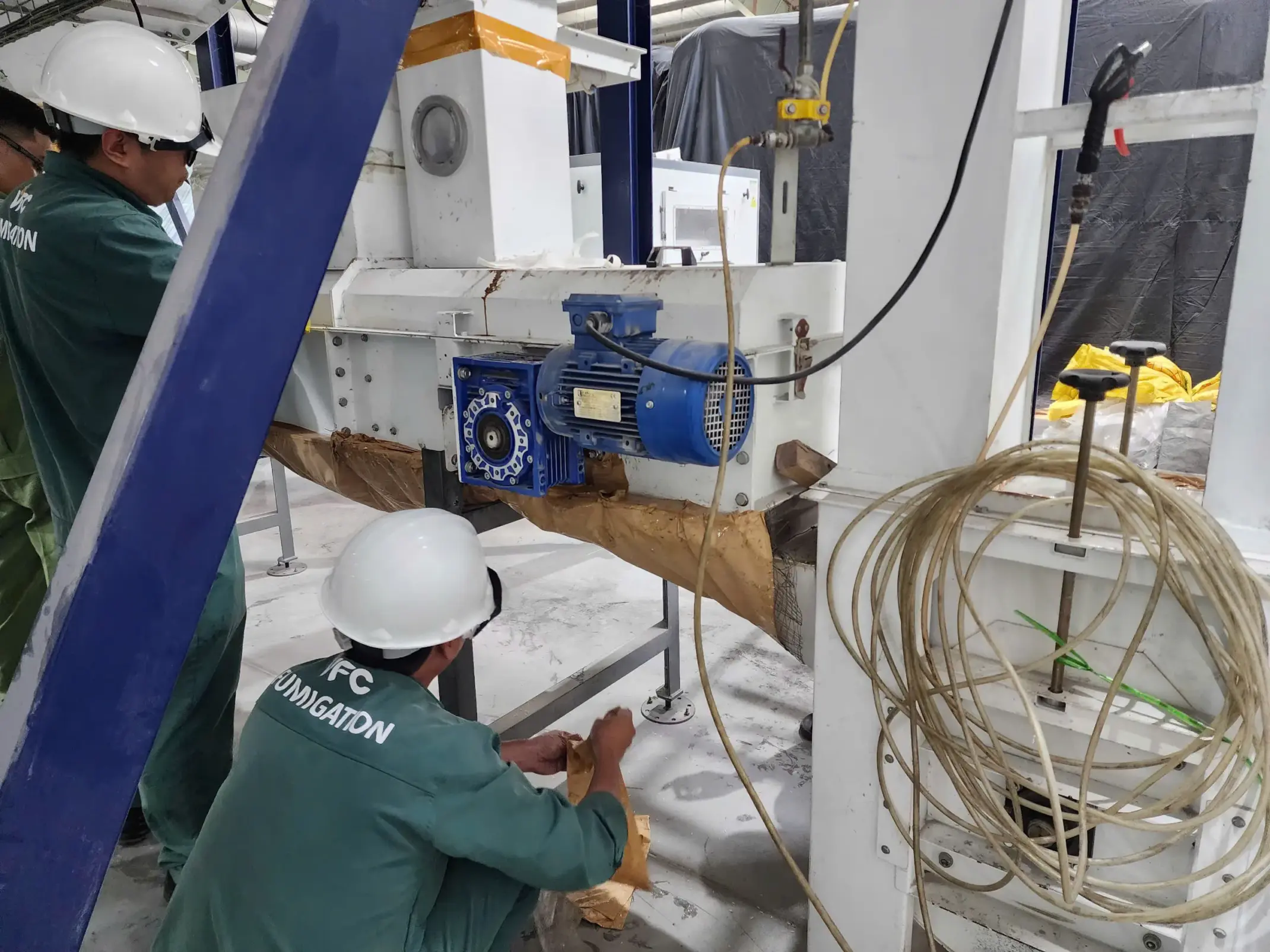
Rice processing machinery is not a completely gastight system. Sealing each individual equipment section required an exceptionally detailed technical approach. Inadequate sealing could allow the fumigant to escape, preventing the required concentration from being maintained for effective insect control and, more importantly, creating safety risks within the factory area.
-
Strict Safety Requirements
As the treatment area was located inside the factory, extremely strict fumigant leakage control procedures were required to protect warehouse personnel and the surrounding environment.
-
Risk of economic losses and reputational damage
Insects originating from the processing machinery could quickly spread to rice consignments stored in the warehouse or being prepared for export, causing quality deterioration, weight loss and the risk of shipment rejection or return by buyers.
Project Objectives
Eliminate insects, particularly weevils, located deep within the crevices, grooves and hard-to-reach areas of the rice processing machinery
Establish effective sealing barriers and leakage control measures to ensure safety without disrupting other supporting operations at the factories in Hung Yen and Ha Nam
Establish a sampling and inspection procedure conducted under the direct supervision of the factory management representatives

With support from the client, the VFC Northern Region team conducted a comprehensive survey of the entire production line and assessed the structure of each equipment section at both the Hung Yen and Ha Nam branches. Based on the survey findings, VFC developed an optimal fumigation plan using Aluminium Phosphide (AlP) combined with a technically advanced sealing procedure.
When exposed to moisture in the air, Aluminium Phosphide (AlP) releases Phosphine gas (PH₃), which has excellent diffusion and penetration properties and can reach deep into narrow spaces and concealed areas within the treated structure. This enables pests to be effectively controlled at all stages of their life cycle.
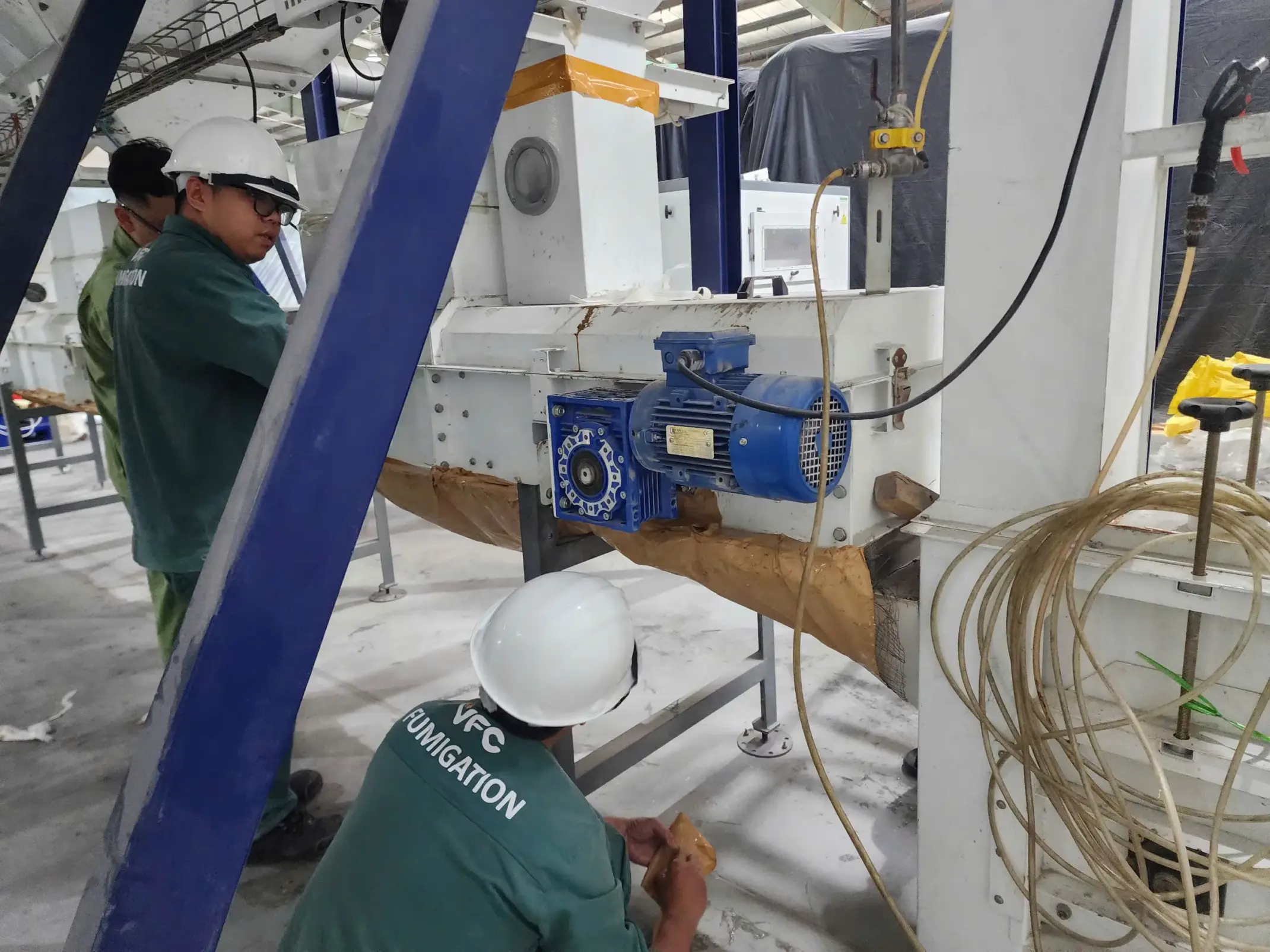
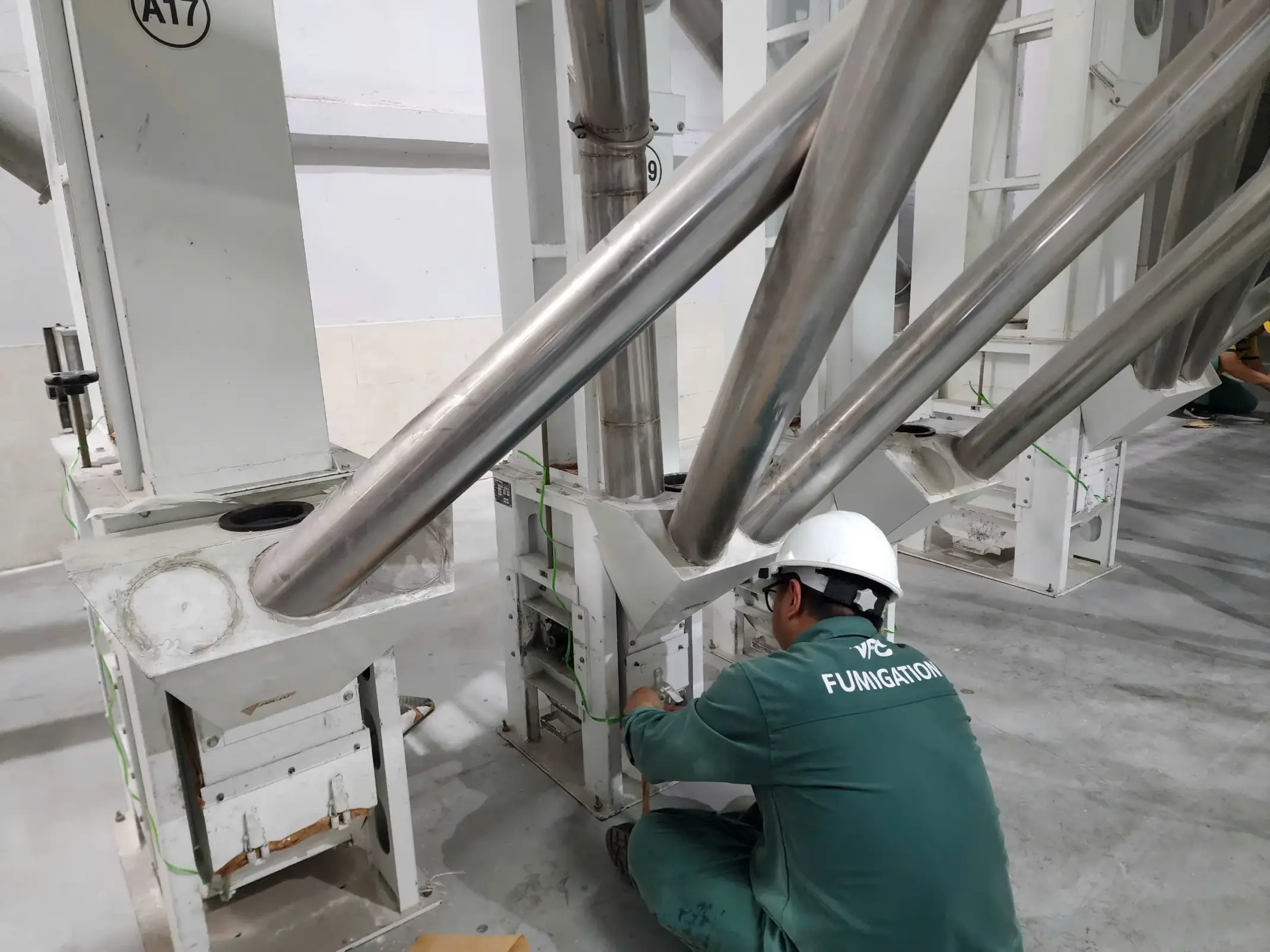
VFC’s technical team conducted a detailed inspection of each operating level, conveyor system and machinery section to accurately identify potential leakage points and crevices where residues had accumulated.
Specialised sealing materials were used to seal individual openings, crevices and machinery components
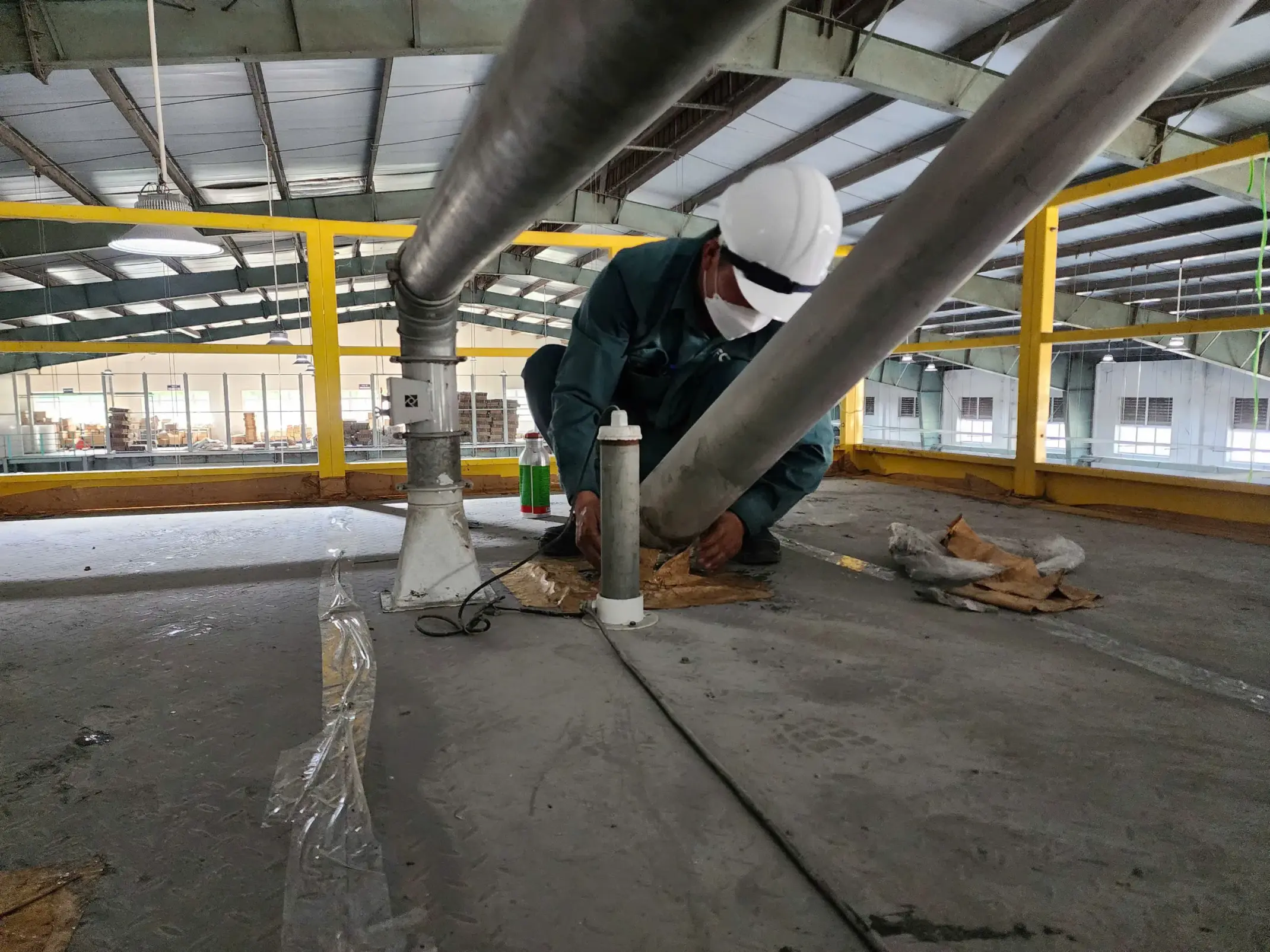
Aluminium Phosphide tablets were applied. When exposed to moisture in the air, the product releases Phosphine gas (PH₃). PH₃ has excellent diffusion and penetration properties, allowing it to reach deep into narrow grooves, pipelines and even the smallest machinery components.
Specialised gas detection equipment was used to check for fumigant leakage, ensuring the safety of workers and the surrounding environment.
The treated area was safely aerated, and gas concentrations were measured to confirm that they had decreased to the permissible Threshold Limit Value (TLV) before final acceptance was conducted.
Results
Inspection and sampling results from all hard-to-reach areas and crevices within the machinery at both the Hung Yen and Ha Nam branches found no surviving live insects.
Fumigant leakage control procedures were implemented rigorously, protecting all warehouse personnel and workers in the surrounding production areas throughout the treatment process.
VFC Fumigation and the customer jointly conducted the post-ventilation pest inspection process. Both parties confirmed compliance and signed the acceptance report directly on site.