





Project Overview
- Client: A large-scale agricultural export enterprise in Vietnam.
- Vessel / Shipment: Vessel RICH LAND (transporting export cassava chips).
- Operational Location: Quy Nhon Port, Binh Dinh Province.
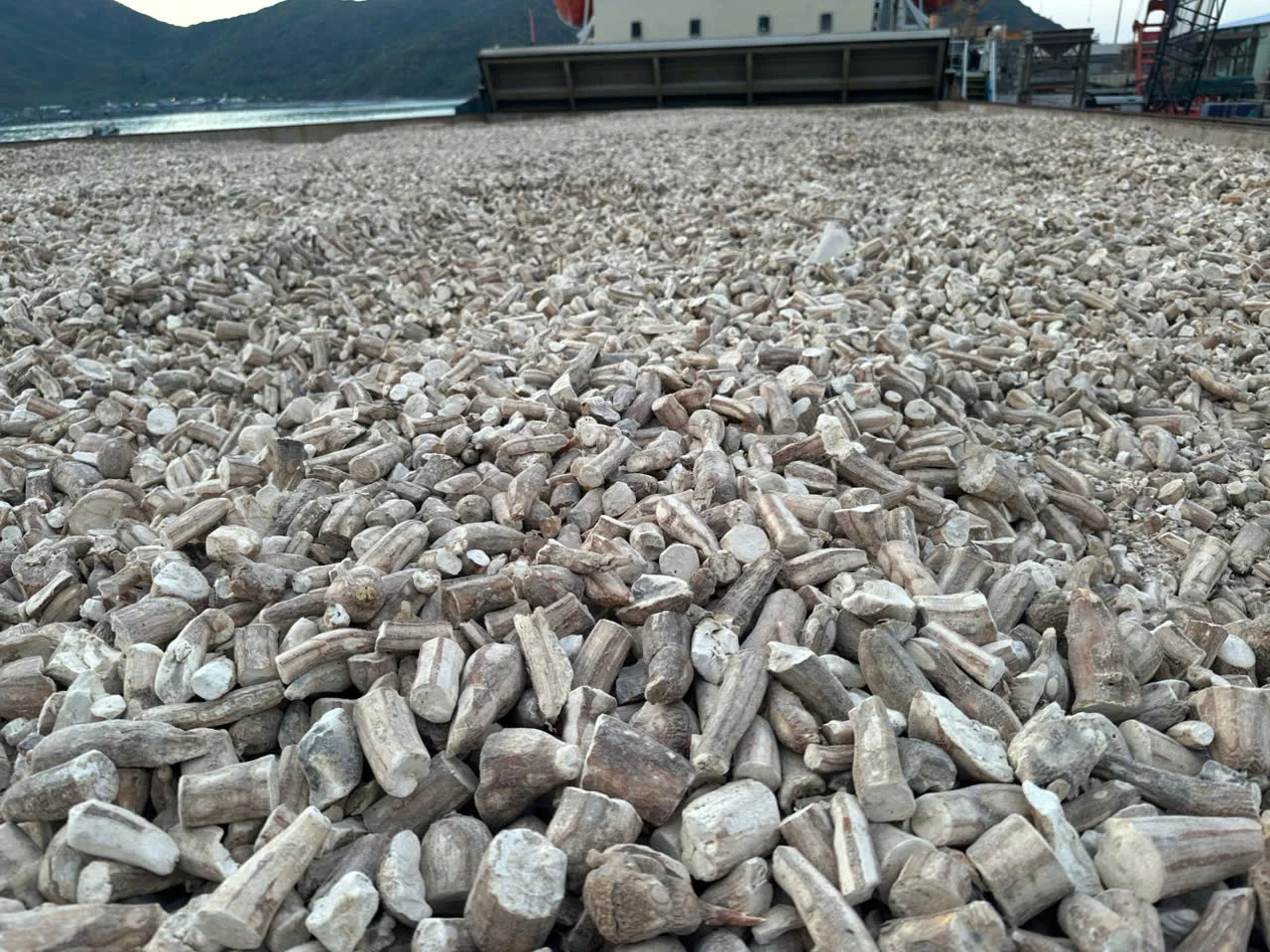
- Cargo: Export cassava chips stowed directly in cargo holds.
- Mandatory Requirements: Eradicate pests across all developmental stages (eggs, larvae, pupae, adults); strictly comply with South Korea's phytosanitary regulations.
- Operational Challenge: Cassava chips are susceptible to pest infestation during collection, storage, and transit. Once stowed in bulk within the vessel's holds, the fumigation protocol must ensure effective gas penetration throughout the bulk cargo, maintain target gas concentrations, and mitigate the risk of leakage.
- Key focus: Formulate a fumigation plan tailored to the vessel's hold structure and the bulk characteristics of the cassava chip cargo; seal potential leakage points to maintain target gas concentration, while ensuring safety management for crew members and relevant personnel during the exposure period.
Customer Challenges
-
Large volume of cassava in the vessel's holds
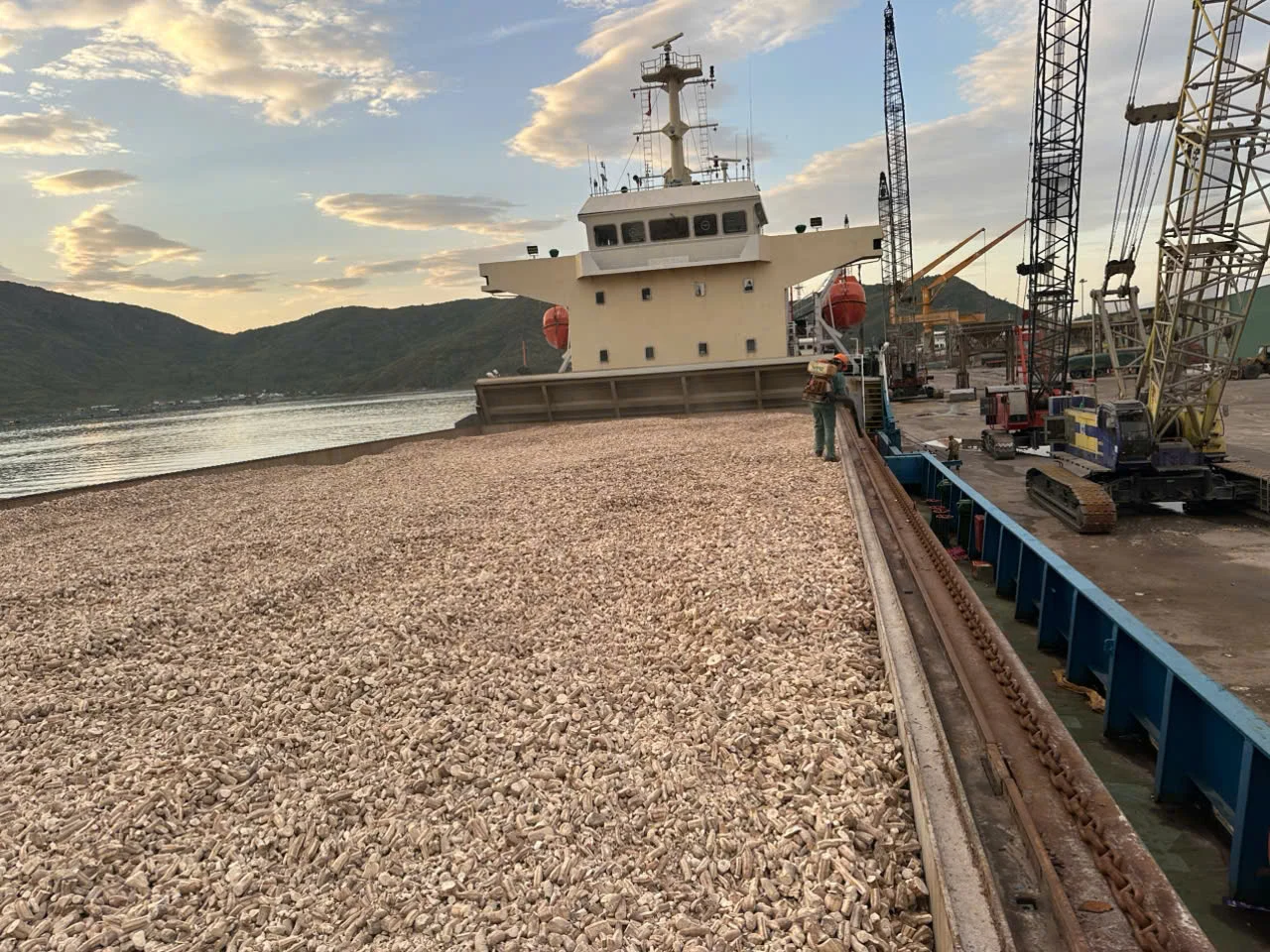
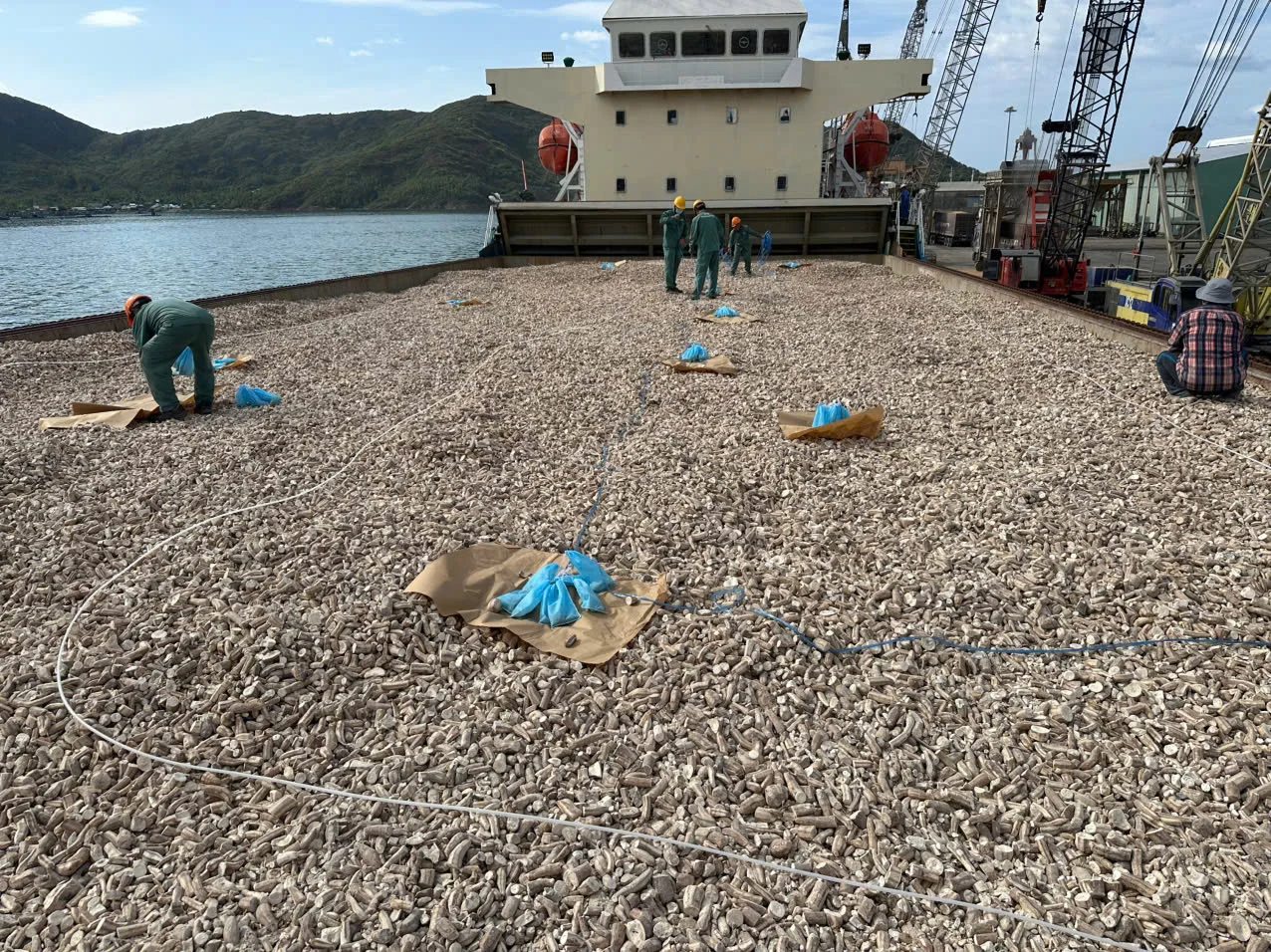
Cassava chips were stowed in large bulk volumes within the cargo holds of vessel RICH LAND. Once the cargo is loaded in bulk into the holds, ensuring effective fumigant penetration throughout the inner regions of the bulk commodity becomes a critical requirement of the treatment protocol.
-
Risk of insect presence within the bulk cargo
Cassava chips are a dry agricultural commodity susceptible to insect infestation during collection, storage, and transit. If the treatment protocol is inadequate, insects located deep within the bulk cargo may not be effectively controlled.
-
The challenge of vessel hold sealing
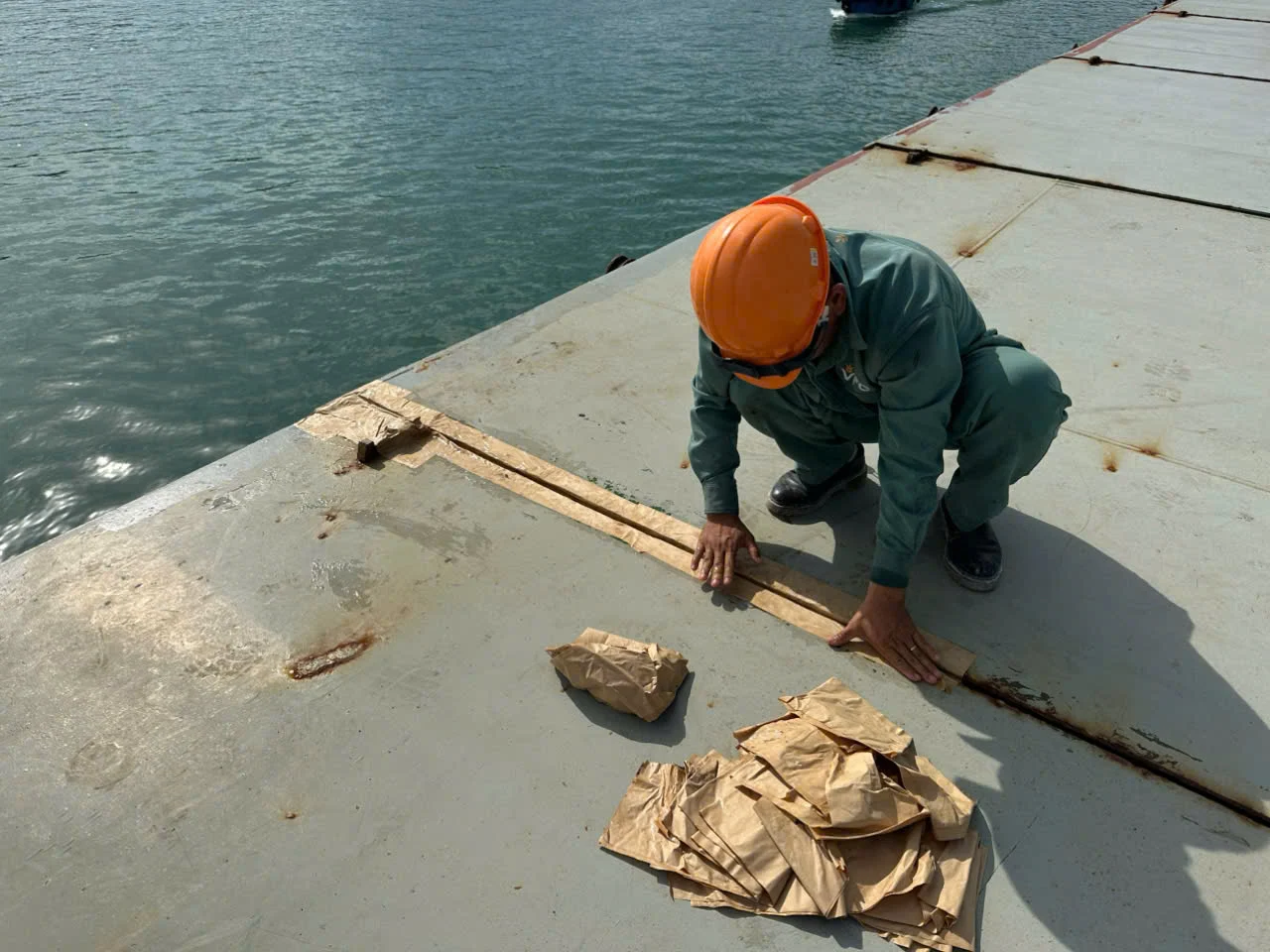
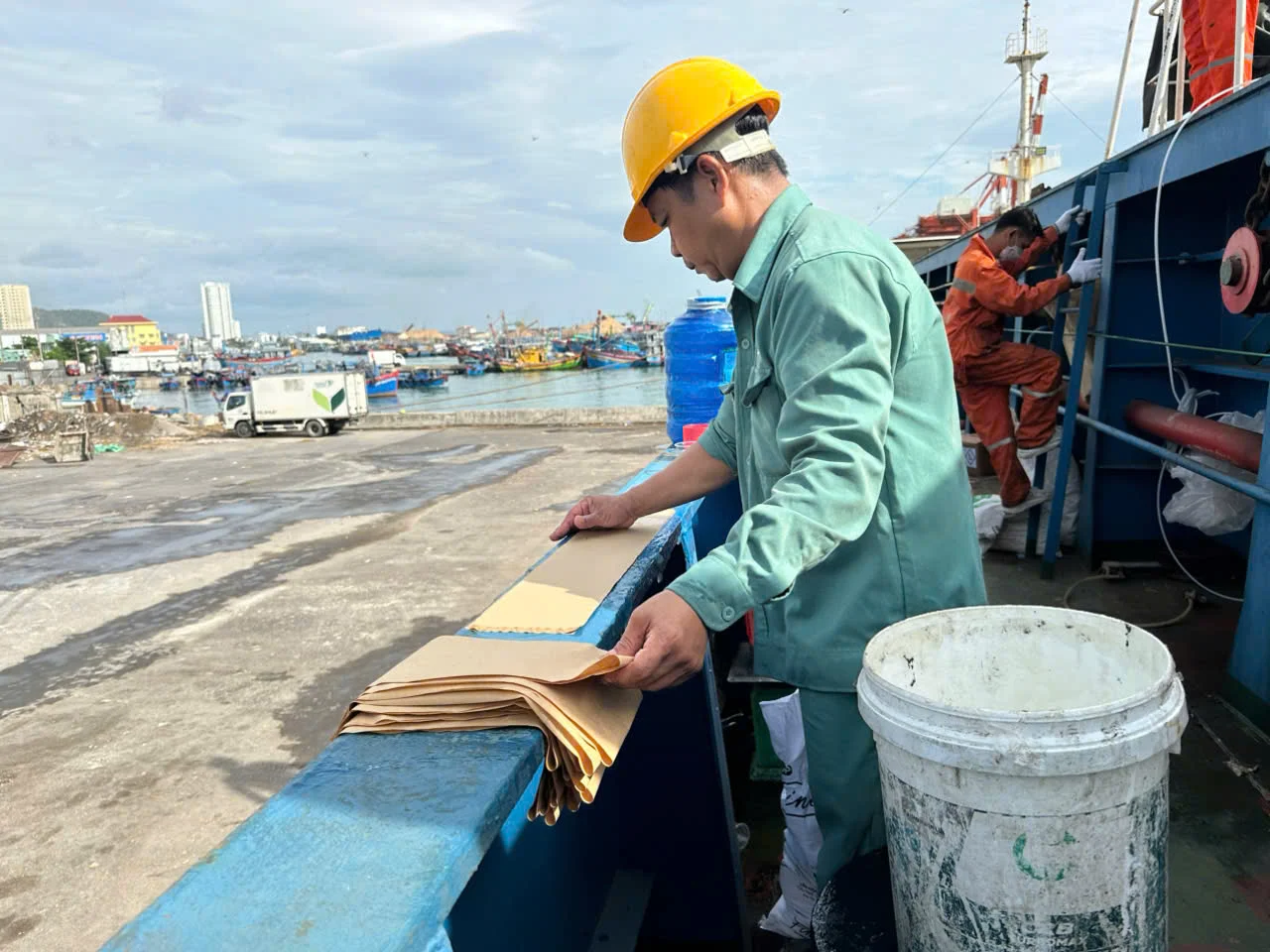
Treatment efficacy depends heavily on maintaining proper fumigation conditions within the cargo holds. Potential leakage points at hatch covers, ventilation systems, and connecting structures must be inspected and effectively sealed prior to and during the fumigation process.
-
Strict safety requirements during the exposure period
Fumigation is performed directly on board the vessel, while the cabin and crew living quarters are located in close proximity to the treatment area. Therefore, in addition to pest control efficacy, the protocol must manage gas leakage risks and guarantee crew safety throughout the exposure period.
-
Pressure on vessel schedule
Fumigation operations must be coordinated with the vessel's operational plan and schedule. Procedures for fumigant application, sealing, safety checks, and handover must be executed strictly according to plan to minimize any impact on the departure schedule.
Project Objectives
Execute fumigation of all bulk cassava chips in the cargo holds of vessel RICH LAND, controlling insect pests prior to the export voyage.
Seal cargo holds and potential leakage points to maintain target fumigant concentration in accordance with the technical protocol throughout the exposure period.
Coordinate fumigation procedures with the operational plan to complete treatment and handover on schedule for vessel RICH LAND.

For the cassava chip cargo aboard vessel RICH LAND, VFC Fumigation focused on two primary requirements: insect pest control within the bulk commodity and safety assurance throughout the fumigation process. The treatment protocol was formulated based on the vessel's actual conditions, cargo hold structure, and cassava chip stowing characteristics.
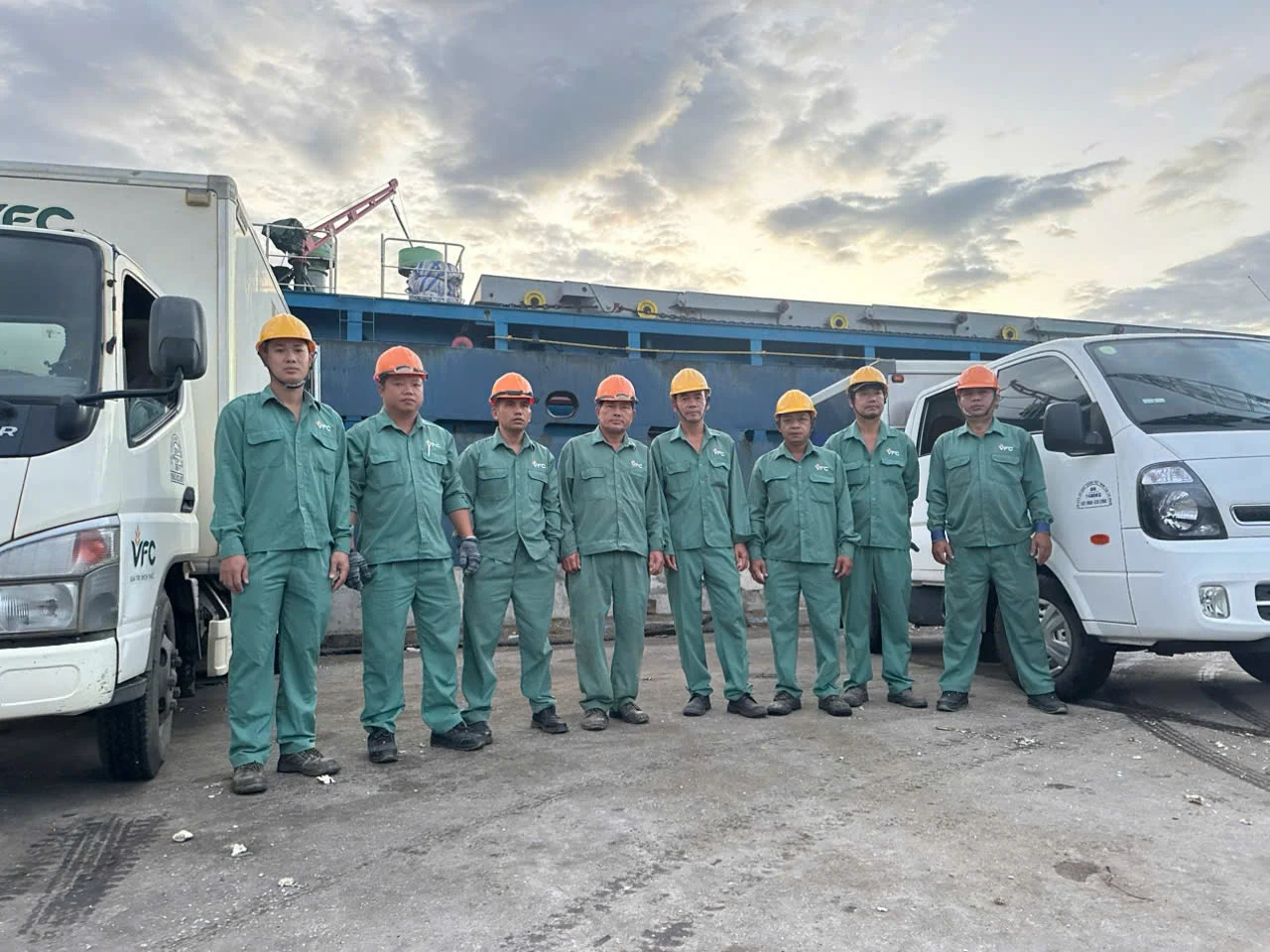
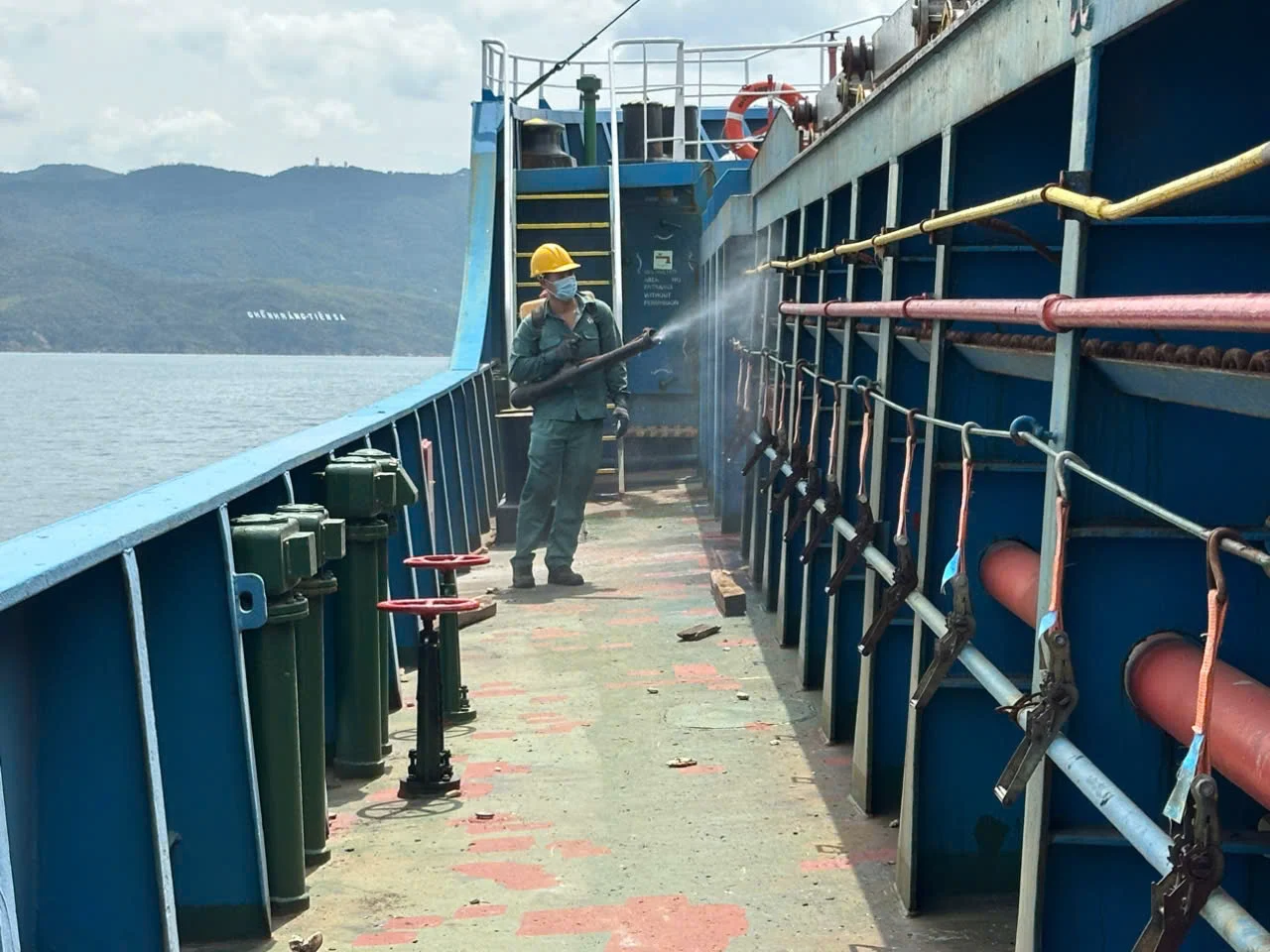
The VFC Fumigation technical team surveyed the cargo hold structure, cassava chip stowing conditions, areas requiring sealing, and potential leakage zones. On this basis, the team formulated a plan for fumigant application, dosing line systems, and appropriate monitoring points.
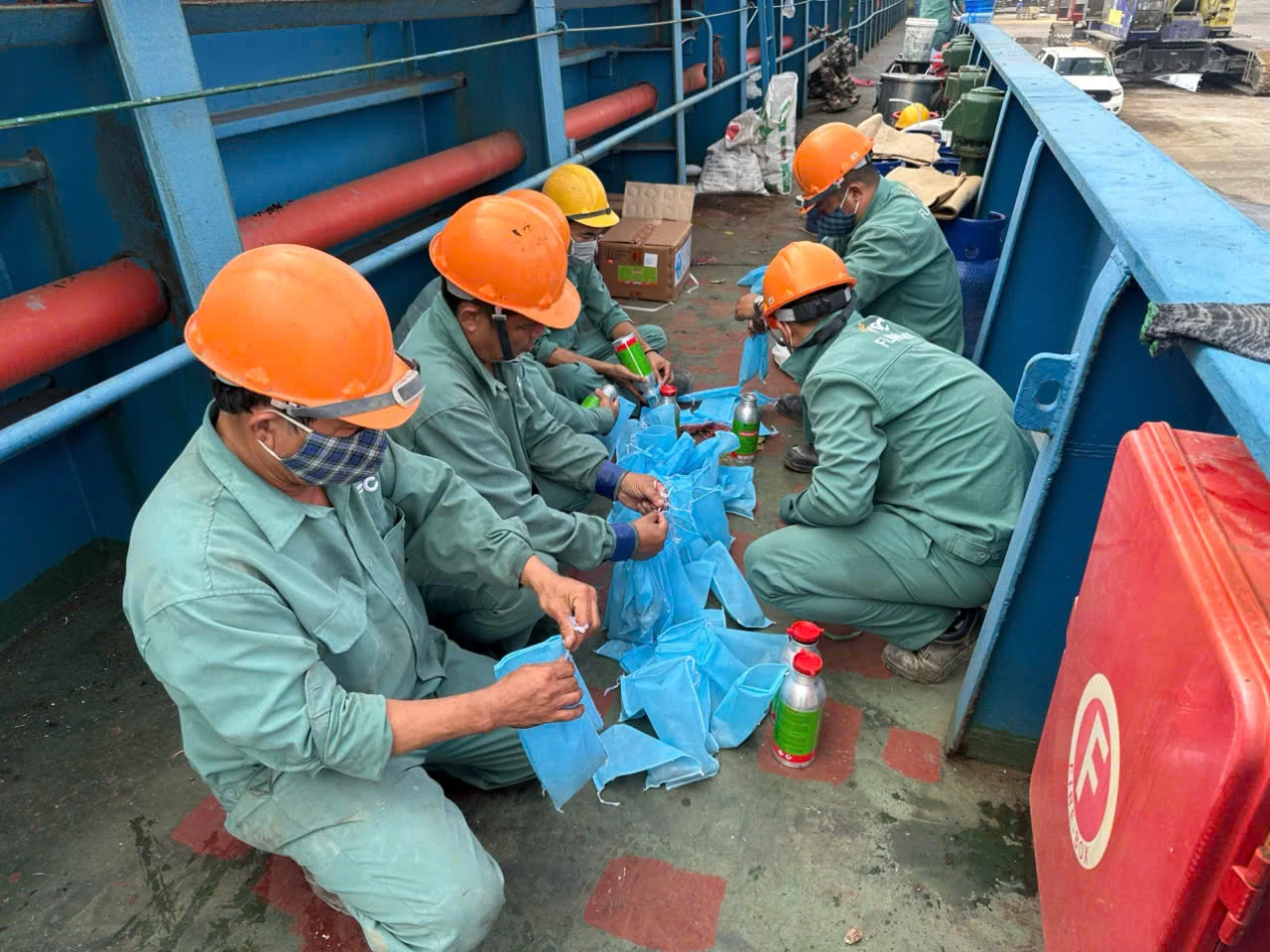
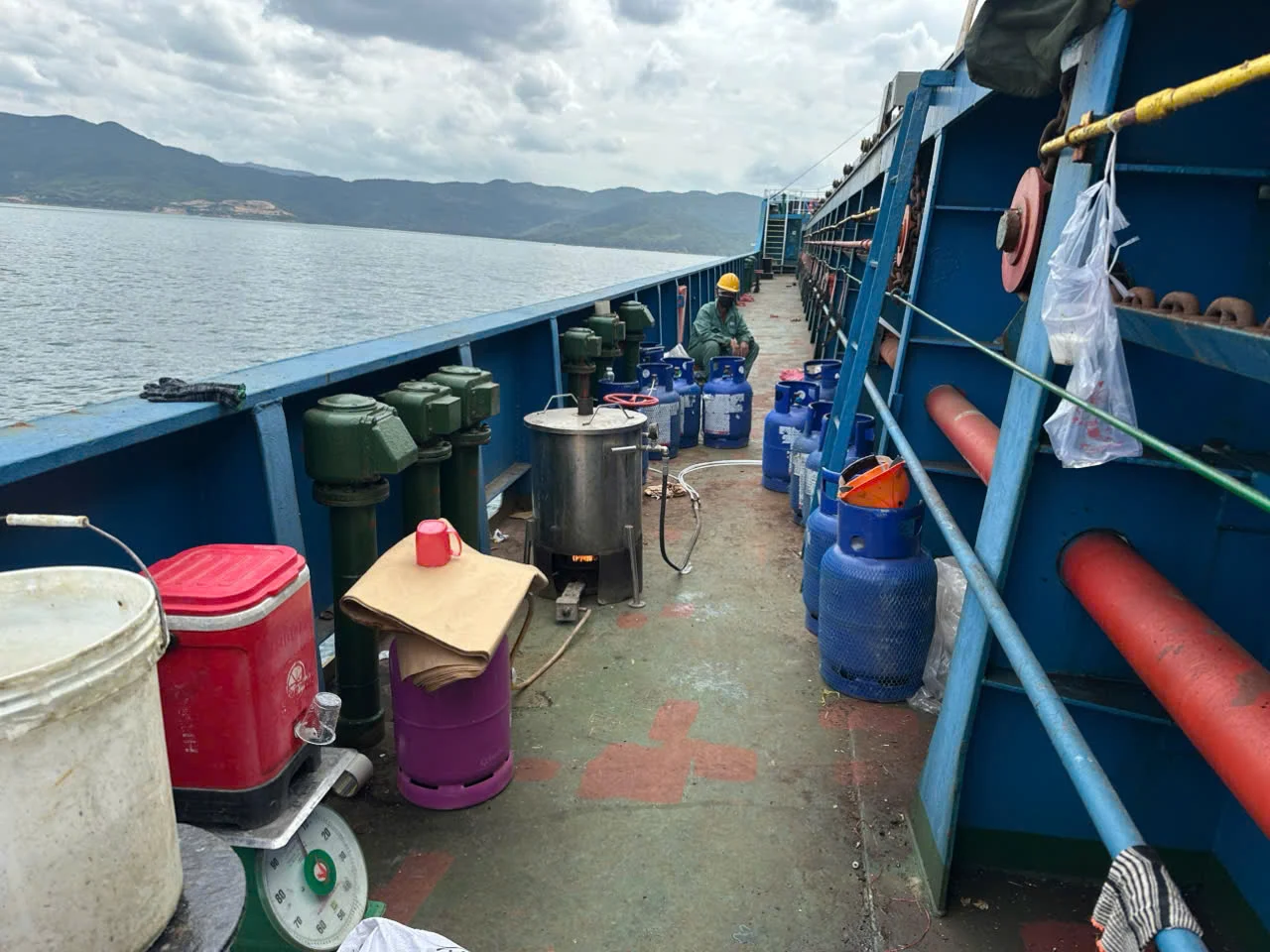
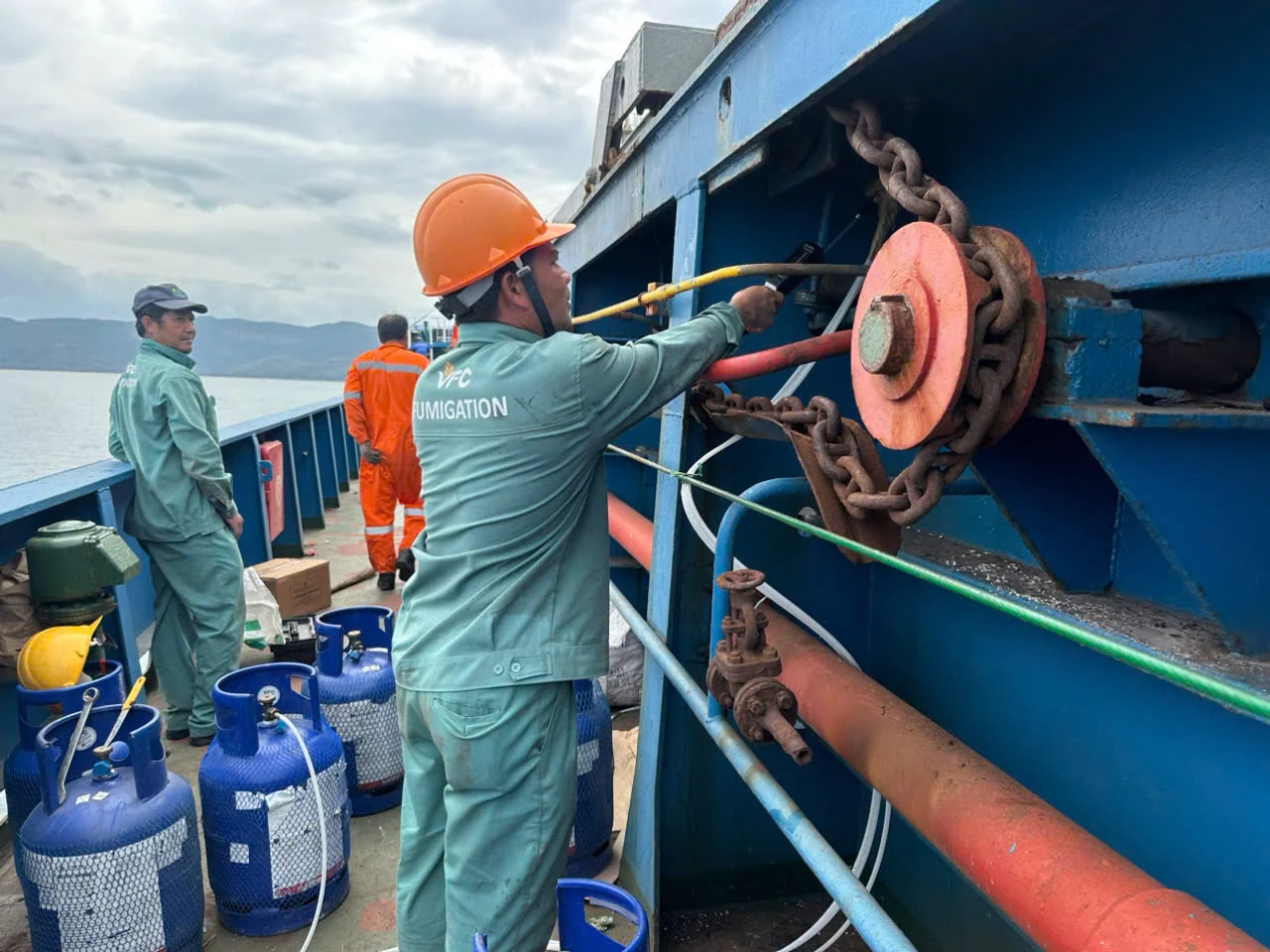
Aluminium Phosphide (ALP) fumigant is deployed in accordance with the technical protocol to release phosphine gas (PH₃) during the exposure period, controlling insect pests within the bulk cassava chips.
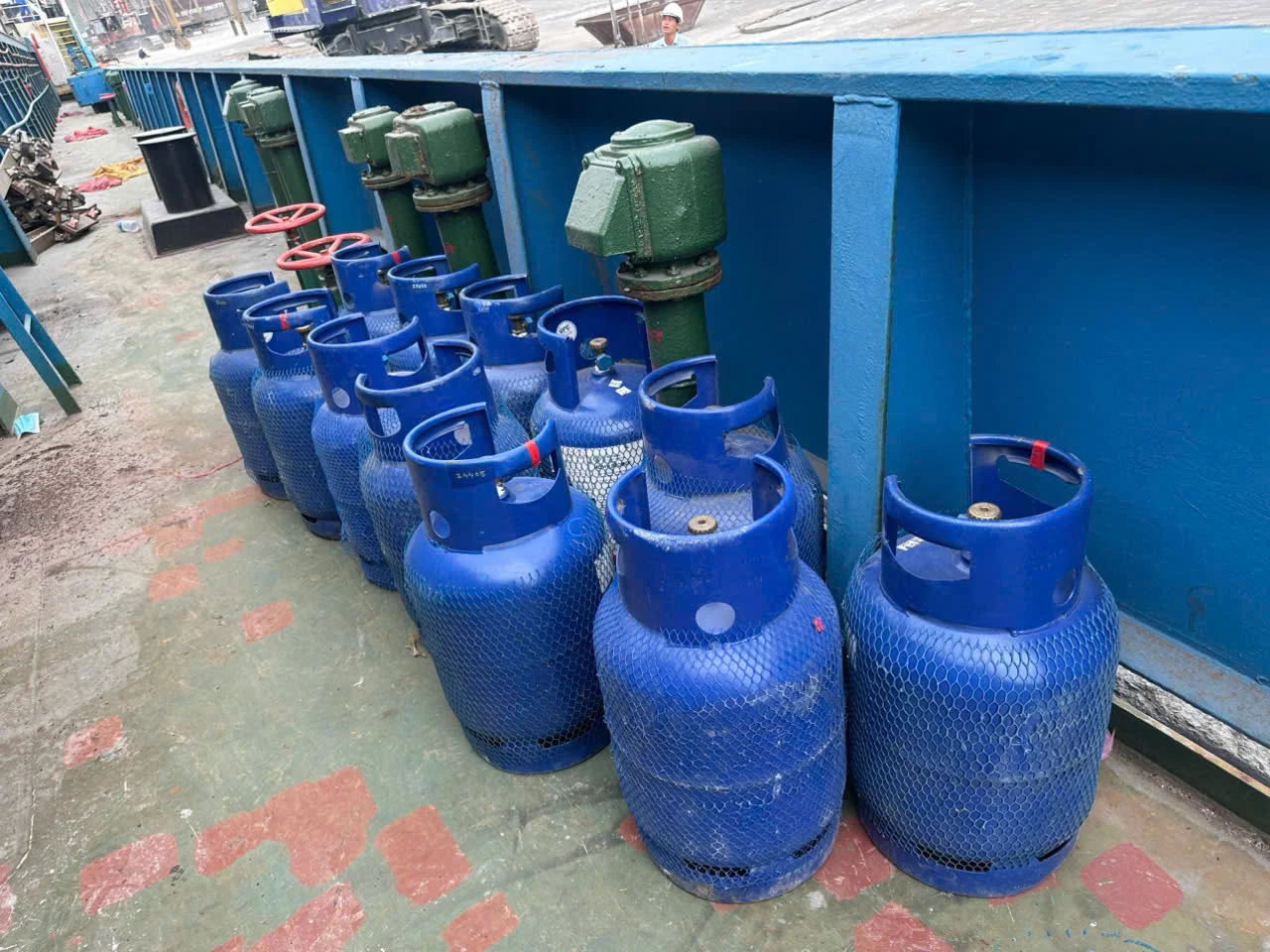
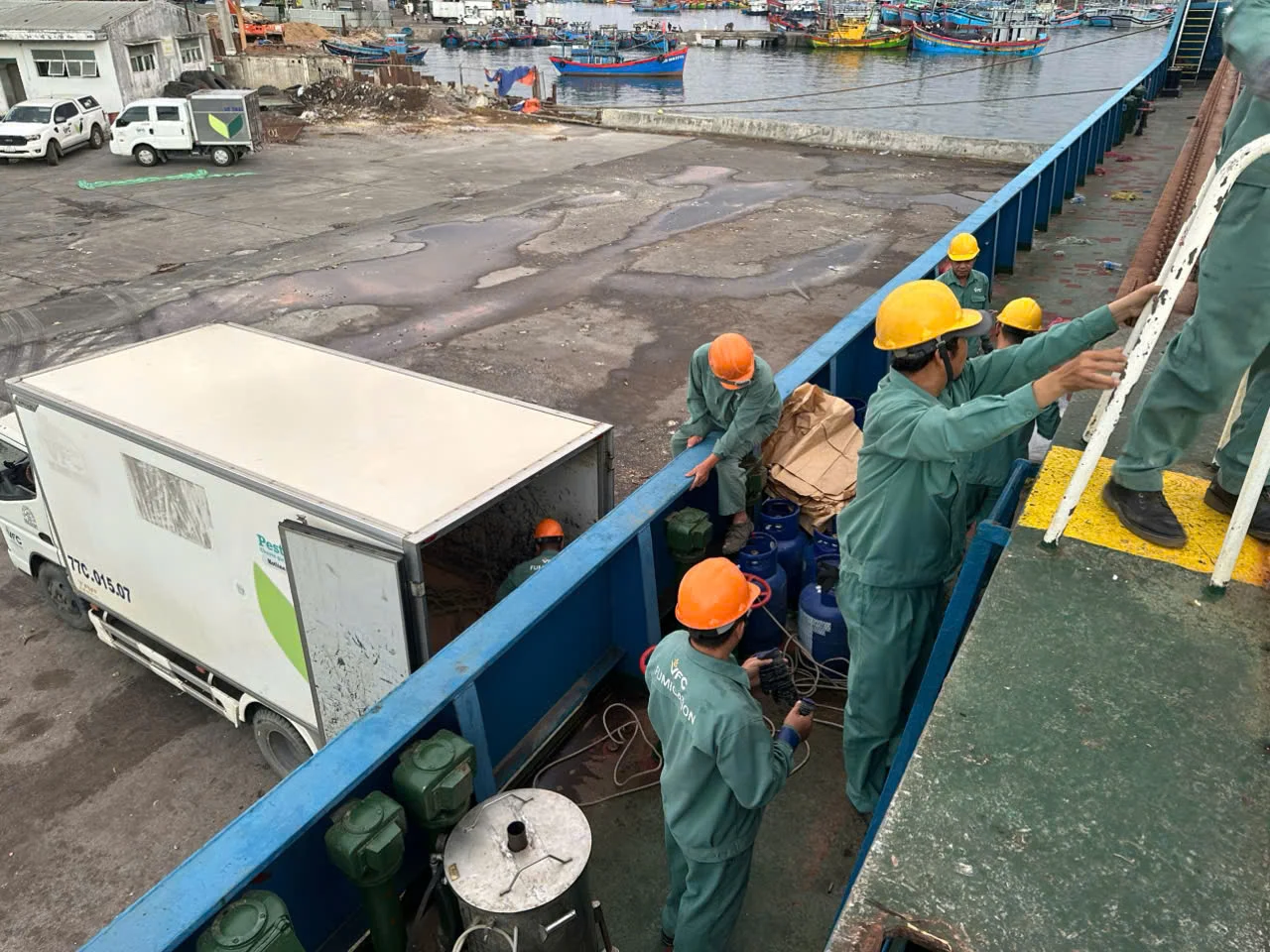
Methyl Bromide (MB) is introduced into the cargo holds through the dosing line system arranged in accordance with the protocol. The combination of PH₃ and MB is implemented to meet the treatment requirements of the cargo aboard vessel RICH LAND.
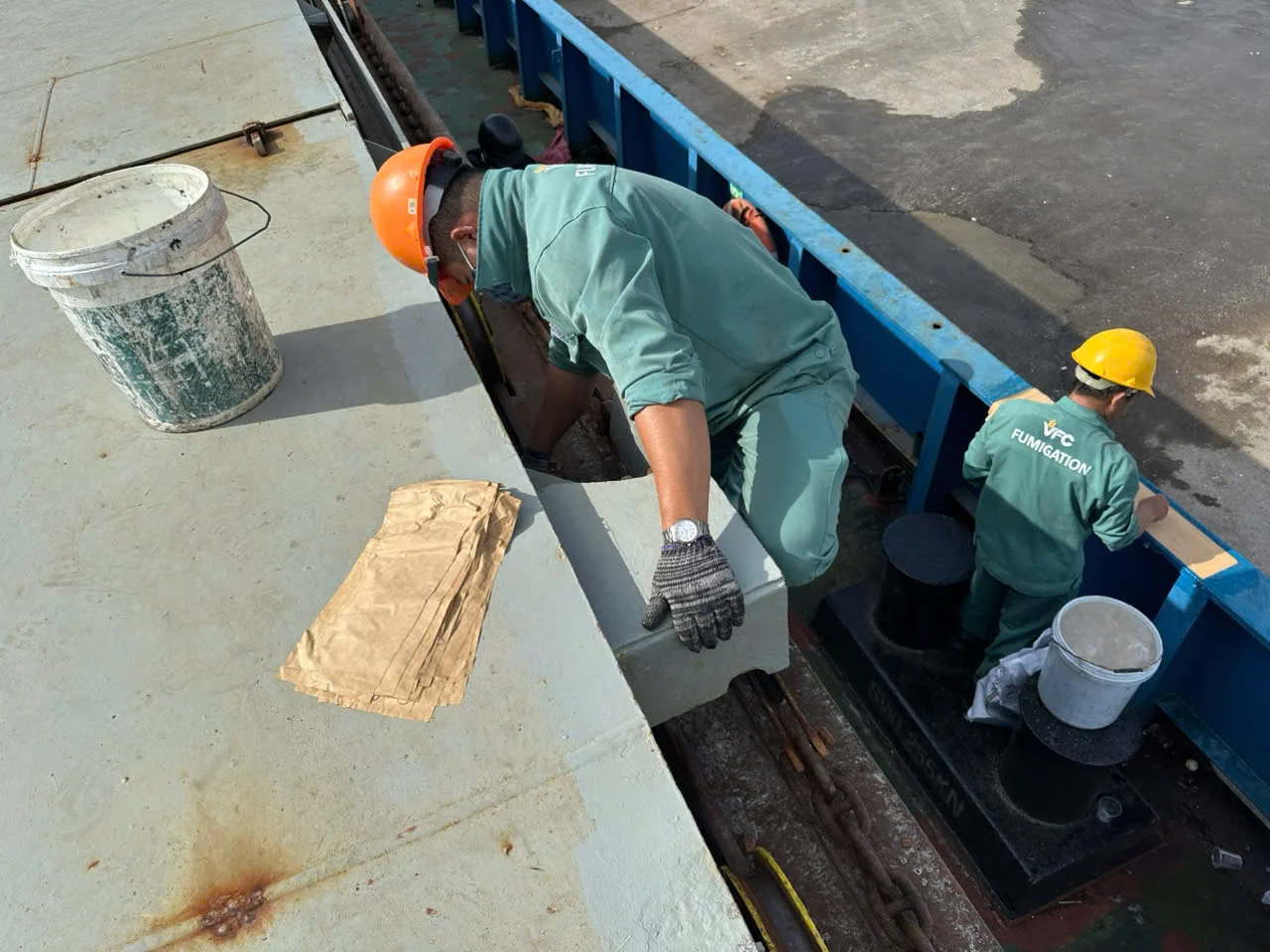
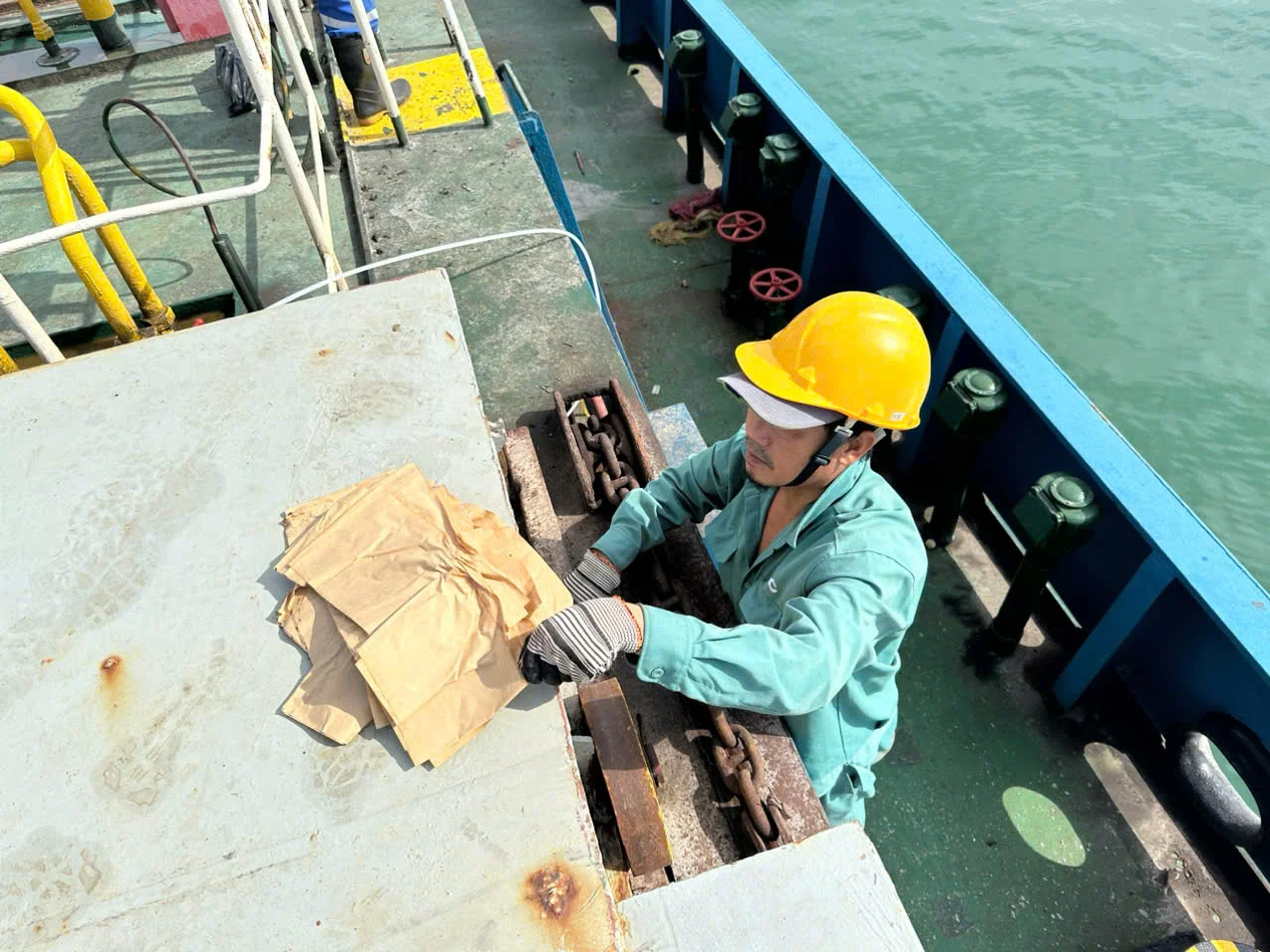
Hatch covers, ventilation systems, and potential leakage points are inspected and sealed to minimize fumigant loss to the outside and maintain treatment conditions within the cargo holds throughout the exposure period.
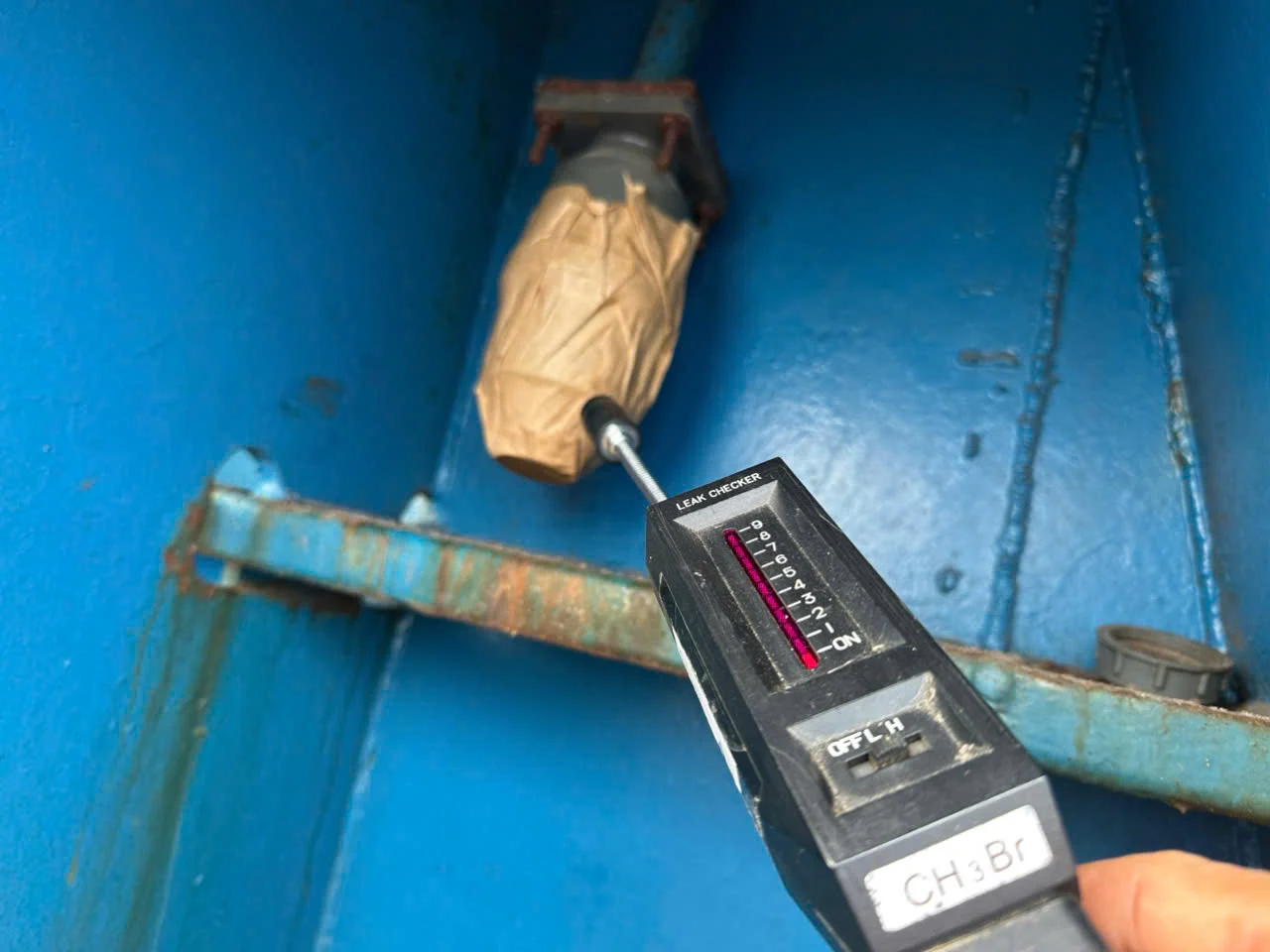
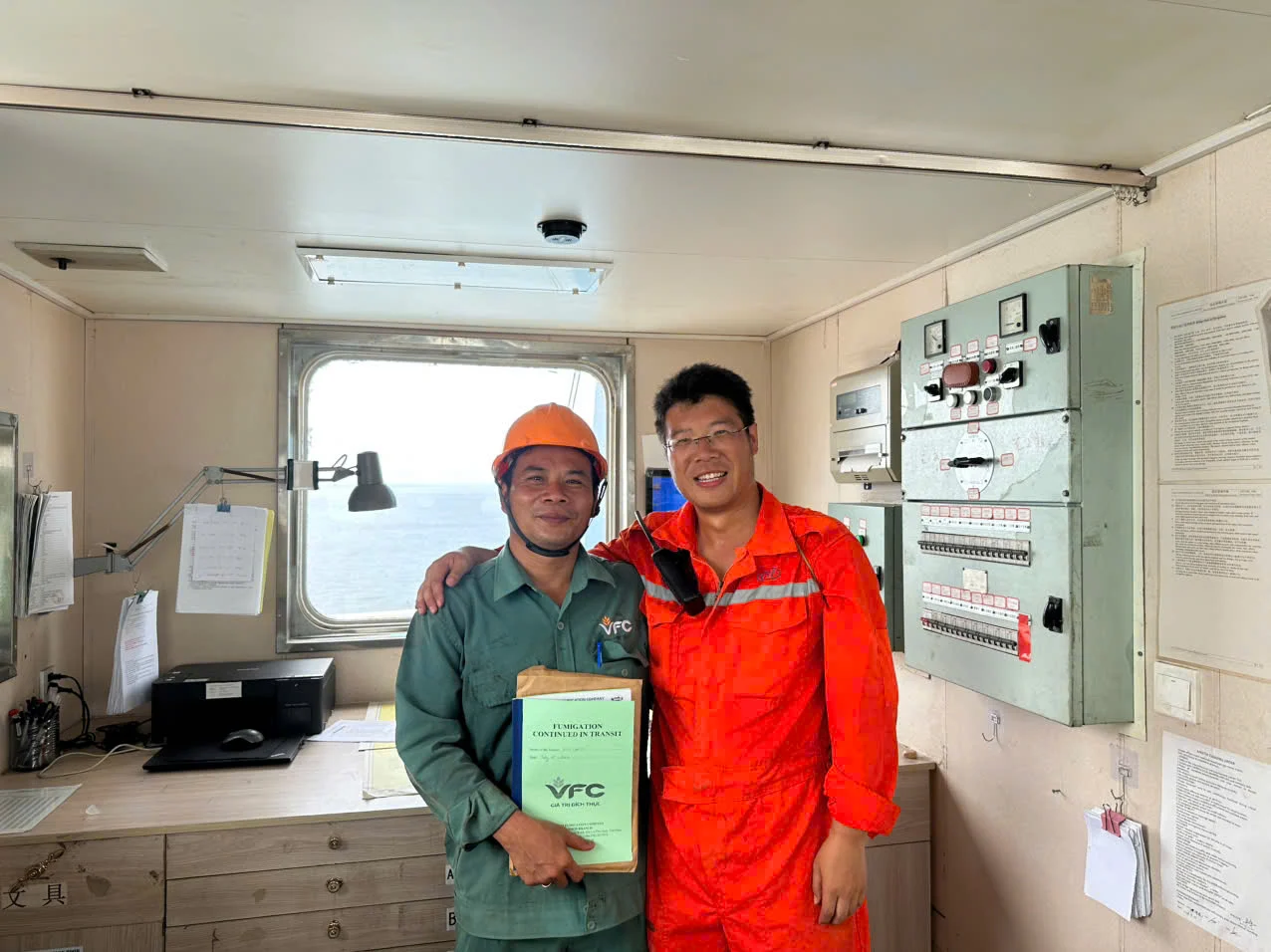
VFC Fumigation utilizes specialized equipment to test for leakages in relevant areas, particularly around the cabin and crew living quarters. After confirming safety conditions in accordance with procedures, the team finalizes the documentation and hands over the necessary instructions to the vessel representative.
Results
VFC Fumigation completed the combined Phosphine and Methyl Bromide fumigation protocol for the cassava chip cargo aboard vessel RICH LAND in accordance with the implementation plan.
Professional operational procedures enabled vessel RICH LAND to complete fumigation and depart Quy Nhon Port on schedule, helping the business optimize logistics costs.
Fumigation, safety inspection, and handover procedures were coordinated with the operational plan, enabling vessel RICH LAND to continue its voyage on schedule.