





Published date:
11/11/2026
Share




VFC Fumigation delivers coffee phytosanitary treatment solutions ranging from commodity lots currently preserved in warehouses to containers preparing for export, with protocols engineered according to actual operational requirements. For coffee enterprises, controlling weevils and borers in stored commodities, allocating operational treatment time, and finalizing certificates directly impact delivery schedules. Backed by over 50 years of experience, a nationwide service network, and a two-tier transparent fumigation model, VFC Fumigation partners with cargo owners, logistics enterprises, and freight forwarders in phytosanitary treatment, technical controls, and export documentation coordination.
1. At Storage Warehouses: VFC Fumigation Controls Insect Pest Sources Based on Coffee Consignment Baseline Conditions
For enterprises procuring and exporting green coffee beans, commodities may be stored across multiple intake and dispatch cycles prior to container stuffing. During this timeframe, weevils and borers can emerge from legacy inventory, raw material inputs, or structural zones that have not undergone thorough sanitation and control.
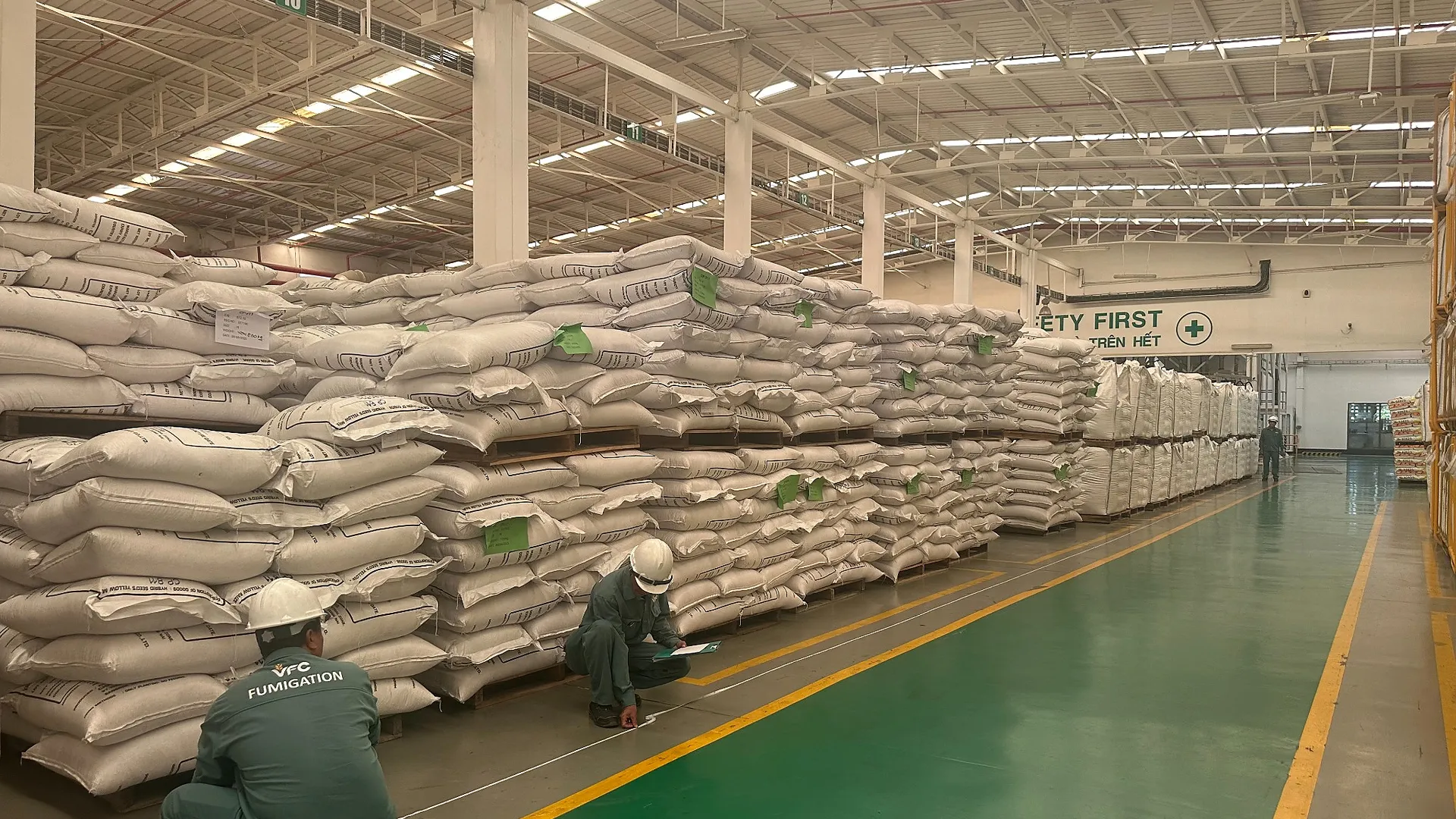
At storage warehouses, it is necessary to determine whether insects reside inside the coffee lots or within the warehouse environment prior to selecting a treatment protocol
When insects are detected, what businesses need to determine is whether the source of contamination lies within the coffee batches or in the storage warehouse environment. This is the basis for VFC Fumigation to assess the treatment scope, avoiding the selection of plans that do not match the actual condition.
1.1. Fumigation of Borer-Infested Coffee Lots
Prior to proposing a technical plan, VFC Fumigation surveys insect pest infestation levels, coffee volumes, bagging specifications, stacking configurations, and consignment enclosure gastightness capabilities. For coffee lots exhibiting internal weevil/borer infestation, warehouse lot fumigation under specialized gastight sheets (tarpaulins) is evaluated as a solution to eradicate pests within the commodity.
Depending on infestation severity and operational conditions, VFC Fumigation can advise on fumigating the entirety of stored coffee lots or focusing selectively on lots confirmed to harbor active pests. Where only designated lots undergo phytosanitary treatment, enterprises must maintain continuous monitoring of untreated lots to control latent infestation risks.
1.2. Controlling Insects within the Warehouse Environment, Mitigating Re-infestation Risks
Beyond pests inside commodities, infestation sources may also persist at pallet bases, structural crevices, wall bases, and raw commodity spillage zones. If left uncontrolled, insects from the warehouse environment can penetrate stored coffee lots.
Under the technical plans advised by VFC Fumigation, enterprises can execute mechanical sanitation combined with contact insecticide surface spraying and thermal fogging across warehouse and processing mill areas. These measures are designed to control insects within the warehouse environment and cannot eliminate pests concealed inside the commodity mass. In particular, for warehouses that have dispatched all coffee inventory and are preparing for new-crop intake, enterprises must prioritize sanitation, baseline structural inspections, and environmental treatments.
VFC Fumigation deploys warehouse and silo fumigation services according to the actual conditions of each facility. Businesses can also refer to the article Coffee Warehouse Fumigation and Preservation Services: Treatment Process and Essential Notes to learn in detail about the three insect control options in warehouses.
2. Export Coffee Container Fumigation: VFC Fumigation Synchronizes Technical Operations with Dispatch Schedules
VFC Fumigation provides export coffee container fumigation services according to the shipment's requirements and the stuffing plan agreed upon with the customer. The technical team receives information regarding the coffee type, volume, packaging specifications, container stuffing location, and fumigation requirements from the buyer or the importing market.
Utilizing this data, VFC Fumigation evaluates treatment parameters, prepares technical plans, and coordinates execution timelines with cargo owners, stuffing facilities, or freight forwarders.
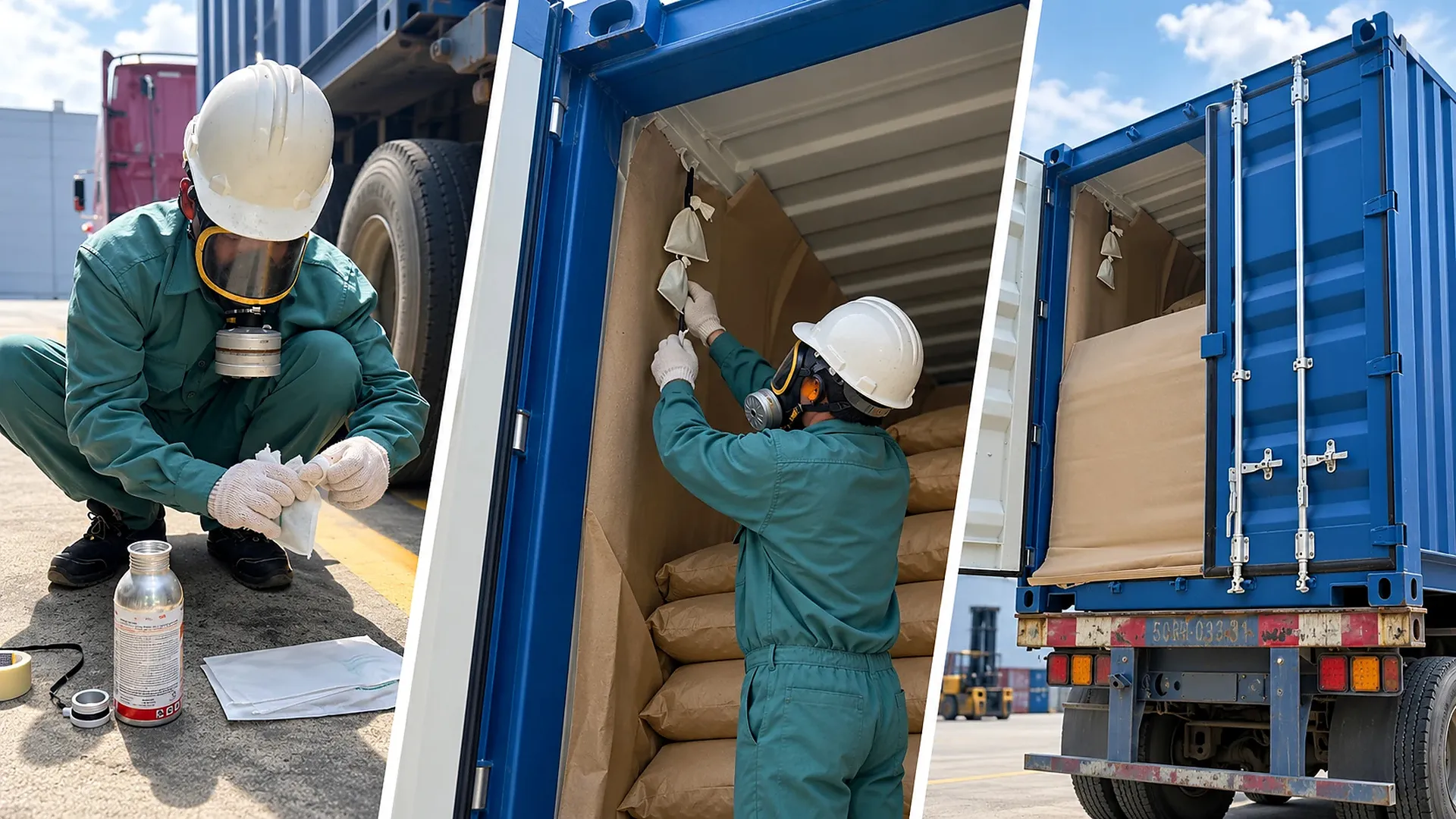
Coffee container fumigation must be synchronized with cargo stuffing schedules, depot drop-off times, and vessel departure plans
2.1. Accurately Identifying Treatment Mandates Prior to Container Stuffing
VFC Fumigation formulates protocols based on specific export voyage requirements, incorporating buyer conditions, applicable statutory regulations, and coffee lot baseline conditions. This establishes the foundation for selecting the treatment methodology and preparing the necessary data for phytosanitary documentation dossiers.
Warehouse commodity treatments and container fumigations serve distinct operational objectives. Enterprises must verify export voyage terms to determine the mandatory treatment protocol and the exact certificates to be compiled.
2.2. Engineering Fumigation Protocols Aligned with Stuffing Schedules and Vessel Cut-Off Times
VFC Fumigation synchronizes deployment schedules with import-export divisions, stuffing warehouses, and freight forwarders to schedule phytosanitary treatments within operational timelines. Execution windows are coordinated in advance to provide adequate time for technical workflows and safety parameters.
For bookings already formalized, information concerning container stuffing dates, depot drop-off timelines, and vessel cut-off deadlines provides the operational basis for coordination. The fumigation duration must strictly adhere to the technical protocol to ensure complete pest eradication.
For export enterprises, finalizing operational schedules early mitigates the risk of rescheduling logistics handovers due to unallocated fumigation windows. Freight forwarders also secure an operational basis to monitor treatment progress and proactively coordinate documentation with cargo owners.
After completing the work, VFC Fumigation coordinates inspection and handover, and issues a Fumigation Certificate according to service requirements. Certificate information is cross-checked with the actual data of the shipment before being transferred to relevant parties.
Explore VFC Fumigation's export cargo container fumigation services
Does your enterprise have an upcoming coffee export plan?
VFC Fumigation receives fumigation bookings from the stuffing preparation phase, supporting technical plan evaluations and operational condition audits aligned with projected departure schedules. Enterprises and freight forwarders can submit consignment parameters, stuffing depot locations, and buyer specifications to receive technical consultation and quotations.
Contact VFC Fumigation for consulting on export coffee container fumigation
3. Specialized Capabilities of VFC Fumigation in the Coffee Export Supply Chain
VFC Fumigation builds its technical fumigation capacity upon specialized industry experience, an extensive operational network, and advanced operational data management platforms. These pillars support service execution across storage warehouses and containerized cargo, satisfying coordination requirements among cargo owners, logistics enterprises, and freight forwarders.
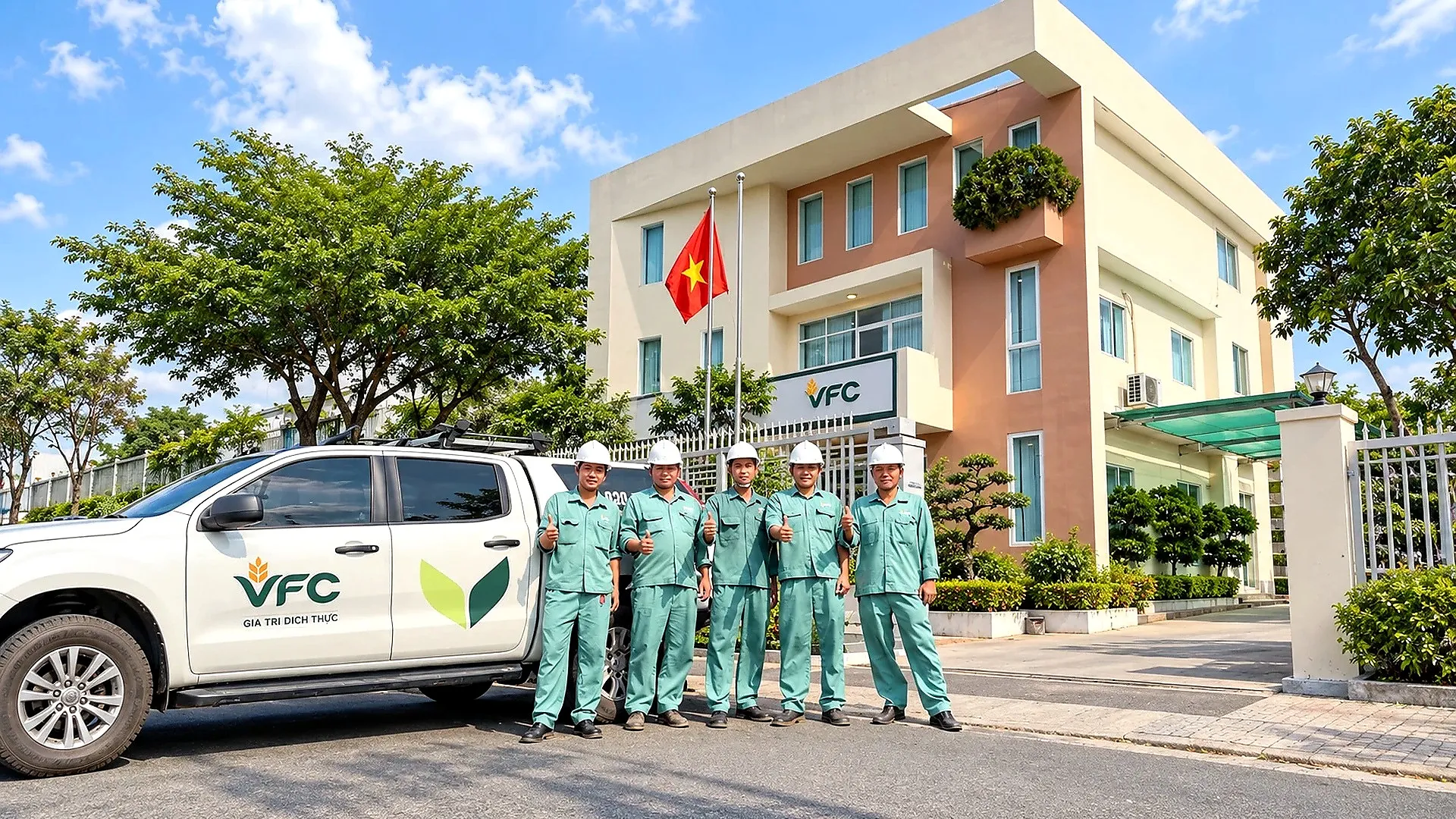
VFC Fumigation combines specialized experience, an operational service network, and digital data management to serve the coffee export chain
3.1. Over 50 Years of Experience and an Operational Network Spanning Raw Material Belts to Export Gateways
VFC Fumigation possesses over 50 years of specialized experience in phytosanitary treatment and fumigation, executing treatments for over 500,000 export containers annually. Throughout its operational tenure, the organization has served more than 15,000 corporate clients and developed a technical force of over 200 specialists with over 10 years of hands-on experience.
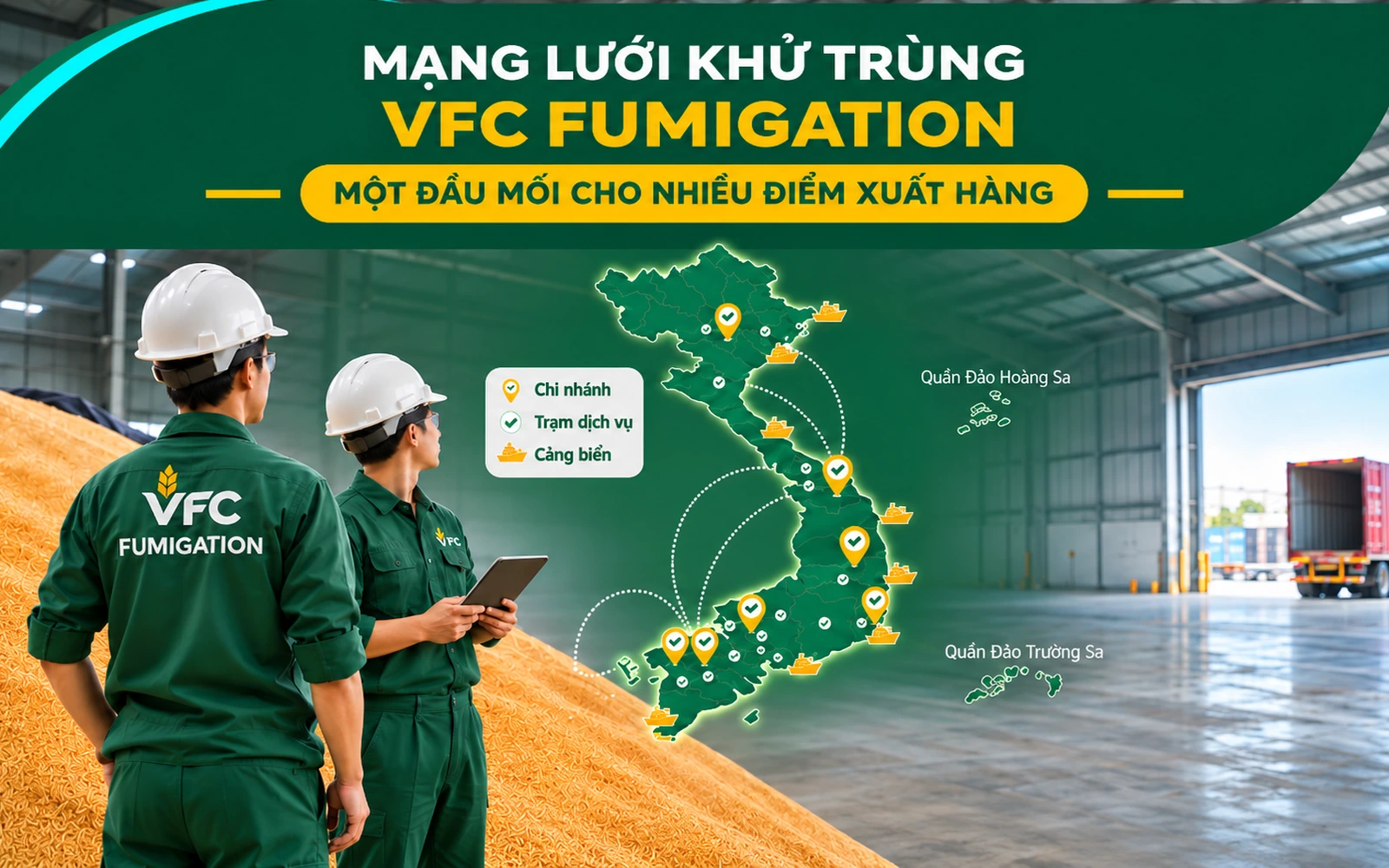
VFC Fumigation's network of branch offices and technical service stations spans across Vietnam, including the dedicated VFC Dak Lak Station in the Central Highlands raw material belt. The system also maintains operational stations across major seaports and international trade hubs.
For coffee enterprises operating storage facilities in growing regions while stuffing containers at external locations, this network facilitates request intake, technical communication, and service coordination. VFC Fumigation verifies deployment feasibility based on geographic locations, site conditions, and specific operational client schedules.
3.2. Two-Tier Transparent Fumigation: Field Management via FumiApp, Certificate Verification via QR Code
VFC Fumigation deploys a 2-layer transparent fumigation model to enhance operational data control and fumigation certificate authentication. The model combines two components with distinct functions, supporting service management and export document reconciliation.
- Tier 1 - FumiApp: An internal operational management application supporting VFC Fumigation in work dispatching, field photog
- Tier 2 - QR Code-Integrated Certificate: The Fumigation Certificate features a unique QR Code enabling clients and overseas partners to access a verified online version for data validation. When auditing is required, stakeholders can cross-reference the physical certificate in use against the official master record issued by VFC Fumigation.
For coffee export enterprises, the core benefit lies in streamlined certificate verification when documentation is transferred across multiple supply chain actors. For freight forwarders, this mechanism accelerates certificate audits prior to transmission to overseas agents or consignees, eliminating reliance on manual validation.
This represents a distinct operational hallmark in how VFC Fumigation governs service data. FumiApp serves internal operational controls, while the QR Code empowers all relevant stakeholders to verify issued certificates instantly.
4. What Information Must Enterprises Provide for VFC Fumigation to Deliver Proper Protocol Advisory?
When contacting VFC Fumigation regarding coffee phytosanitary treatment needs, enterprises do not need to predetermine the technical protocol. The primary inputs required are commodity baseline conditions, execution locations, and operational timelines to enable VFC Fumigation to assess the scope of work.
Enterprises can prepare:
- Coffee consignment particulars: Coffee variety, volume, bagging specifications, and stacking configurations.
- Storage condition: Warehousing duration, visible signs of borer infestation, infestation perimeter, and historical treatment logs, if available.
- Treatment location: Physical address of the storage warehouse or container stuffing yard, accompanied by site-specific conditions.
- Export schedule: Warehouse dispatch dates, container stuffing dates, and projected vessel cut-off deadlines.
- Buyer specifications: Destination country, buyer-mandated fumigation clauses, and the specific certificate formats required.
From these data, VFC Fumigation determines the content to survey and discusses appropriate solutions for each requirement. Quotations are built based on the scope of treatment, cargo volume, technical conditions, and implementation location, rather than applying a fixed plan for every batch of coffee.
5. VFC Fumigation - Coffee Phytosanitary Solutions Synchronized with Actual Export Logistics
As the new coffee harvest season transitions into procurement and export operations, enterprises must proactively control target pests from storage warehouses through to container stuffing completion. Identifying phytosanitary treatment requirements and coordinating schedules early enables warehousing, QA/QC, and import-export departments to collaborate effectively.
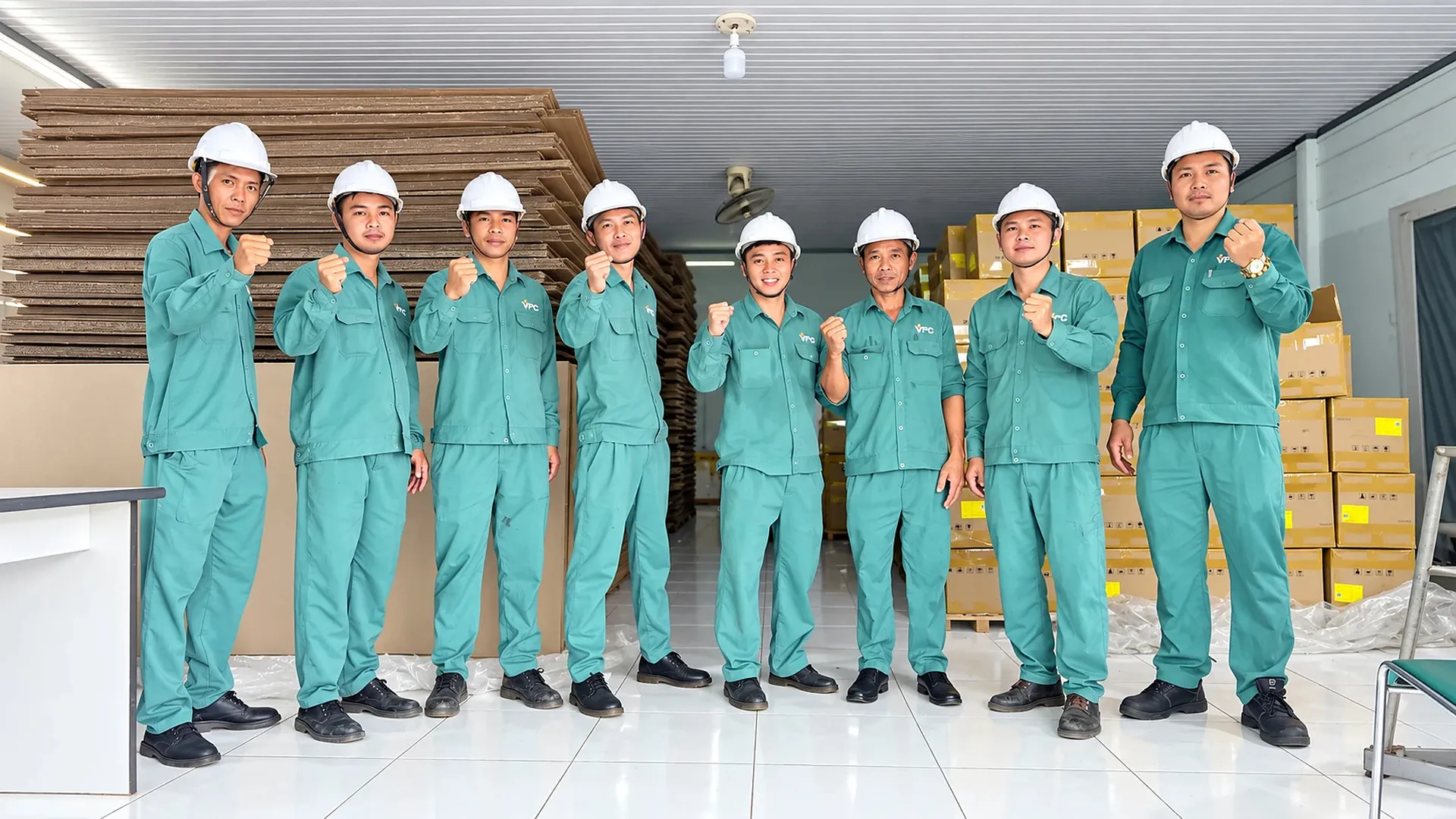
VFC Fumigation accompanies enterprises from warehouse pest control to export coffee container fumigation
With over 50 years of experience, a client base exceeding 15,000 corporate partners, and a nationwide operational footprint, VFC Fumigation partners with enterprises in export coffee phytosanitary treatments tailored to the practical conditions of each consignment. Technical execution capacity paired with the two-tier transparency model elevates operational governance and documentation verification.
Contact VFC Fumigation for survey consultations and export coffee fumigation quotations:
- Hotline: 0914 773 300
- Email: contact@fumigation.vn
- Website: https://fumigation.vn/en/
-
Business & Services (18)
-
Practical Experience (11)
-
Exports & Markets (16)
Featured Blogs

Related Blogs