





Category:
Fumigation by Industry Sector

Published date:
23/10/2026
Share




Coffee warehouse fumigation and preservation is a specialized solution to control and eliminate insect pests during storage, mitigating cross-infestation risks between cargo lots and safeguarding green coffee bean quality. To select an optimal treatment protocol, enterprises must evaluate warehouse structural design, packaging formats, stacking configurations, gas-tight sealing feasibility, pest infestation status, and operational schedules. This article details the coffee warehouse fumigation workflow, critical technical parameters, and essential prerequisites enterprises should prepare prior to commissioning services.
1. Why Should Enterprises Consider Coffee Warehouse Fumigation and Preservation?
Following harvest, wet/dry processing, and drying, green coffee beans are typically stored in bagged stacks within warehouses prior to secondary processing or export. During this phase, businesses confront multiple variables that threaten stored inventory quality, including relative humidity, warehouse sanitation conditions, stored-product pests, and cross-contamination risks.
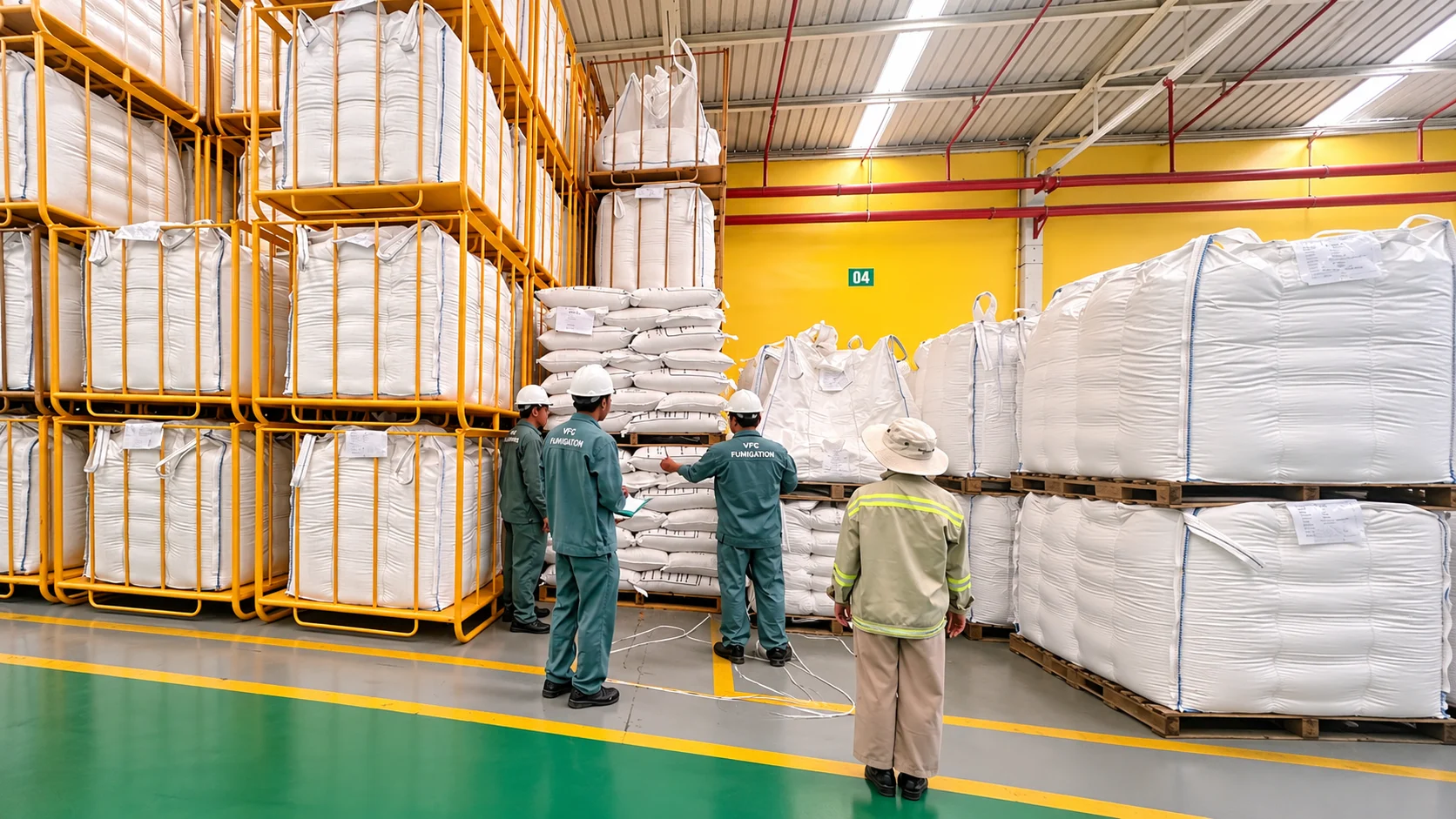
Direct factors impacting stored coffee quality
Gas fumigation represents the primary technical intervention when insect pests are detected within commodities or the storage environment. Its application must be determined directly by the actual condition of each cargo lot rather than executed as a default routine.
1.1. Pest Infestation Risks During Warehouse Storage
Stored-product pests originate from diverse vectors: residual populations within incoming raw materials, carryover stock from preceding crops, packaging bags, or dispersion from receiving docks and transport vehicles.
In bagged coffee warehouses, prime harborage sites for insects typically include:
- Wooden pallet bases and voids between cargo units.
- Inter-lot spaces between closely stacked commodity piles.
- Concealed warehouse corners and floor-wall expansion joints.
- Accumulation zones of organic dust and spilled coffee debris over time.
Crucially, when receiving new-crop coffee into facilities housing old stock, the absence of quarantine inspections and failure to isolate storage zones causes cross-infestation risks to surge.
1.2. Impact of Pest Infestations on Business Operations
Insect pest presence not only violates facility sanitation compliances but also inflicts direct supply chain disruptions:
- Deterioration of Bean Quality: Pest feeding fragments beans, bores channels through green coffee endosperm, generates insect frass, and leaves contamination markers, resulting in quality downgrades or outright cargo rejection.
- Wide-Scale Dispersal: Without prompt quarantine zoning and elimination of active infestation foci, insects disperse rapidly via handling operations, forklift traffic, and lot restacking within the facility.
- Escalated Remediation Costs: Enterprises incur substantial expenditures for re-cleaning, grading, sorting, facility sanitation, secondary fumigation, and extended demurrage or storage fees.
- Delivery Schedule Disruptions: Detecting live pests immediately prior to vessel loading cut-offs or processing shifts forces loading operations to halt for mandatory pest eradication, triggering commercial contractual defaults.
For export enterprises, stored-product pest management is a mandatory prerequisite to clear rigorous phytosanitary barriers across international import markets.
1.3. Critical Timelines to Consider Coffee Warehouse Fumigation
Fumigation interventions are typically commissioned under the following operational scenarios:
- Prior to Receiving New-Crop Coffee: Performing deep facility sanitation, risk evaluations, tarpaulin fumigation of infested carryover stock, and residual contact spraying across warehouse surfaces to eradicate pest reservoirs from past crop seasons.
- Upon Visual Detection of Pest Activity: Observing live insects, larvae, emergence holes on packaging, or laboratory analysis of retained composite samples revealing actionable pest densities.
- During Prolonged Warehousing: Cargo stored across multiple months requires systematic monitoring; identifying impending infestation risks demands timely technical treatment.
- Pre-Shipment / Export Clearance: Fulfilling commercial contract specifications, buyer mandates, or destination phytosanitary import authorities' requirements.
2. Three Technical Fumigation and Preservation Solutions for Coffee Warehouses at VFC Fumigation
Depending on pest density, lot volumes, and operational parameters, VFC Fumigation advises three tailored technical protocols offering distinct scopes of containment. A vital technical distinction must be maintained: gas-tight sheeted fumigation directly eradicates internal pests within the commodity, whereas residual contact spraying and thermal fogging are applied to suppress and control peripheral insect populations within the warehouse structure.
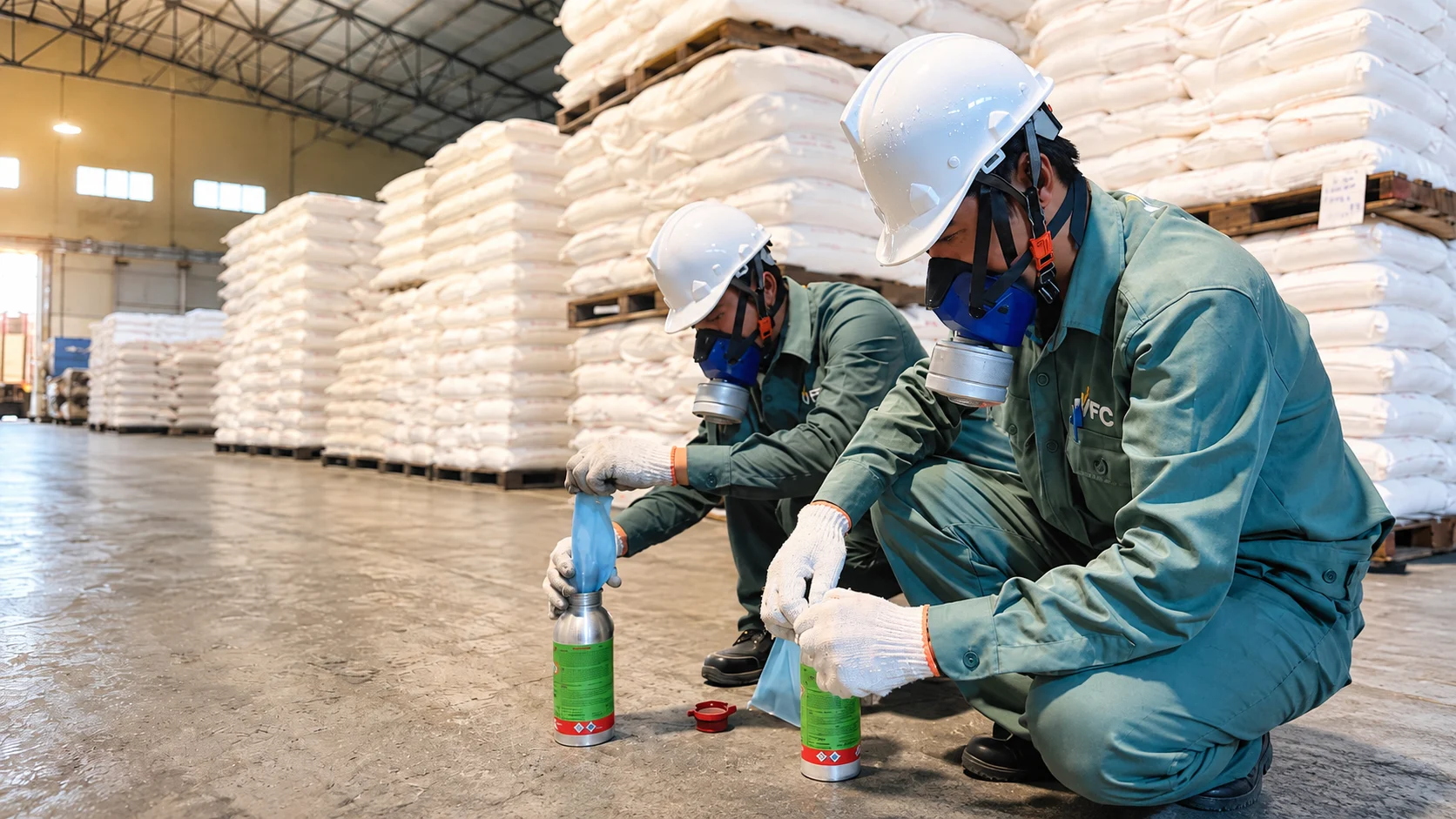
Coffee warehouse treatment schemes are selected based on pest severity, cargo scope, and facility operating conditions
2.1 Solution 1: Full-Warehouse Sheeted Stack Fumigation Combined with Structural Sanitation Spraying (Optimal Protocol)
Upon detecting pest activity within storage facilities, enterprises should implement gas-proof tarpaulin fumigation across all stored commodity stacks. Concurrently, technical personnel deploy residual contact spraying and thermal fogging across warehouse perimeters to suppress and eliminate flying and crawling insects within the storage environment.
This integrated approach fulfills dual technical objectives:
- Deep gas fumigation across all bagged coffee stacks.
- Space and surface insect suppression across warehouse structural surfaces via residual contact insecticides and thermal fogging.
This comprehensive scheme is recommended when enterprises must simultaneously eradicate pests harbored within commodities and sanitize the ambient facility. Implementation is coordinated alongside operational timelines and facility physical layouts.
2.2 Solution 2: Targeted Sheeted Fumigation of Infested Stacks Combined with Perimeter Sanitation (Operationally Flexible Protocol)
For operating facilities requiring uninterrupted inward and outward logistics flows, enterprises can deploy localized treatments focused strictly on active infestation zones.
Under this protocol, confirmed infested lots are isolated and treated under gas-proof sheets. Concurrently, technicians execute residual contact spraying and space fogging across adjacent warehouse sectors according to the mutually approved scope.
- Protocol Advantages: Enables targeted eradication on identified infested lots without halting broader warehouse operations, aligning with dynamic supply chain schedules.
- Operational Constraints: Non-fumigated stacks may harbor sub-clinical, undetected pest populations. Consequently, cross-reinfestation or pest re-emergence over time remains an inherent risk.
Enterprises must recognize these operational parameters rather than regarding facility surface spraying as an equivalent substitute for commodity fumigation.
2.3 Solution 3: Periodic Residual Contact Spraying Combined with Thermal Fogging (Preventive Perimeter Barrier Protocol)
To maintain environmental pest control across warehouse premises, enterprises can institute periodic residual contact surface spraying paired with thermal space fogging. Based on pest population dynamics and site variables, specialists advise standard application intervals or intensified application frequencies during peak infestation seasons.
This protocol targets the suppression of pest migration and harborage within the warehouse structural envelope. However, it must be emphasized: Residual contact spraying and thermal fogging cannot replace gas fumigation for pests harbored inside commodity bags.
Consequently, whenever stored-product pests are identified within coffee stacks, enterprises require comprehensive assessment and technical guidance to implement dedicated commodity fumigation.
3. Standard 5-Step Technical Workflow for Coffee Warehouse Fumigation
A rigorous coffee warehouse fumigation protocol initiates with structural site surveys, technical scheme development, and pre-treatment site preparation. Throughout execution, continuous concentration monitoring and strict gas-safety governance remain vital prior to issuing gas-free declarations and facility handover.
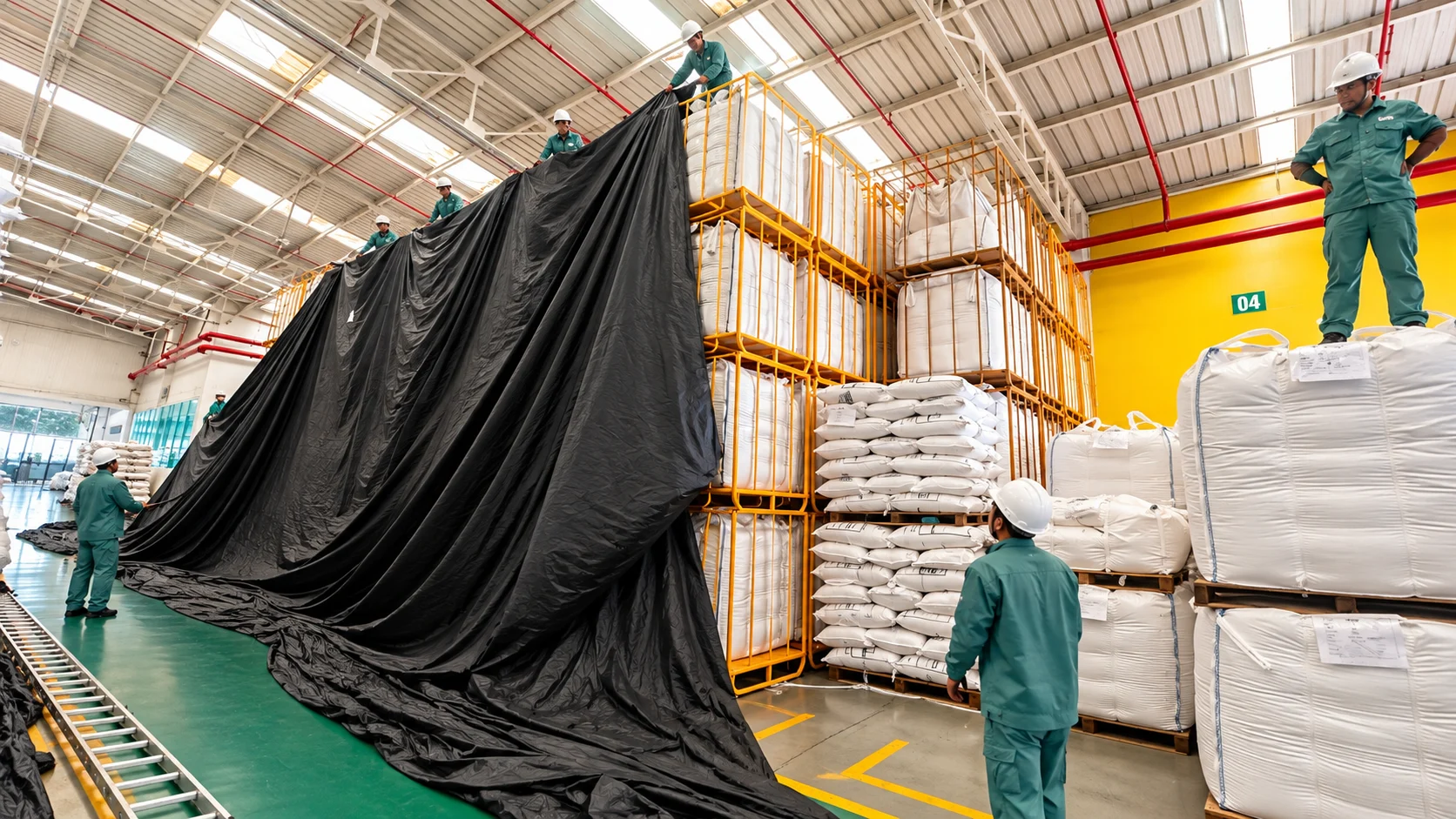
Coffee warehouse fumigation workflow includes survey, scheme formulation, treatment execution, monitoring, and safety clearance handover
At VFC Fumigation, warehouse fumigation operations are organized through a systematic workflow of intake, survey, preparation, execution, and final acceptance. From a technical engineering standpoint, the process is carried out across the following 5 steps.
Step 1: Information Intake and Warehouse Condition Assessment
Prior to formulating a technical scheme, the fumigation provider must audit the coffee warehouse's physical operating environment.
Standard survey parameters include:
- Warehouse geographical location and designated operational perimeter.
- Packaging specifications, gross tonnage, stacking configurations, and commodity status.
- Visible pest symptoms, identified pest species, and infestation density within the cargo.
- Feasibility of establishing gas-tight enclosure seals across commodity stacks.
- Pallet arrangements, clearance aisles, and active operational zones.
- Cargo dispatch schedules and targeted client handover deadlines.
Survey findings form the factual foundation to establish the treatment scope, technical feasibility, and site safety management plan.
Step 2: Technical Scheme Formulation
Post-survey, fumigation specialists design an engineering protocol tailored to facility parameters, target pest species, and treatment goals.
The technical scheme specifies:
- Commodity scope or cubic displacement subject to treatment.
- Selected active fumigant formulation.
- Enclosure gas-tight sealing protocol.
- Required minimum exposure (fumigation) period.
- Personnel deployment, personal protective equipment (PPE), safety perimeter security, and access control.
- Gas concentration monitoring schedules and sampling points.
- Aeration protocols, clearance testing, and final facility handover.
Operational durations and technical specifications are executed strictly in accordance with approved protocols and safety compliance requirements.
Step 3: Treatment Execution and Sealing
The technical team carries out operations according to the agreed scheme, encompassing primary tasks such as applying fumigants via the selected method, tarpaulin covering, and gas-tight sealing of commodity stacks.
Standardized danger warning placards are posted around the treatment zone, alongside physical perimeter cordons to enforce strict access control throughout the active exposure period.
Depending on the scheme, fumigant application and on-site chemical handling are conducted strictly by certified fumigation technicians equipped with full respiratory protective equipment.
Step 4: Exposure Period Maintenance and Gas Concentration Monitoring
The gas exposure duration is maintained to ensure deep lethal fumigant penetration throughout every bagged coffee matrix:
- Methyl Bromide (MB) Fumigant: The standard exposure period ranges from 24 to 48 hours.
- Phosphine Fumigant: The optimal exposure period ranges from 7 to 10 days to eradicate all developmental stages of pests.
Technicians deploy specialized gas detection devices throughout the exposure period to monitor concentration-time products, ensuring treatment efficacy.
Step 5: Aeration, Clearance Gas-Testing, and Site Handover
Following completion of the mandatory exposure period, technicians open the enclosures to commence controlled ventilation and degassing. The technical team conducts clearing measurements of residual gas levels and issues access authorization only when atmospheric readings fall strictly below the statutory Threshold Limit Value (TLV).
Where Aluminium Phosphide ($AlP$) formulations are utilized, spent chemical dust/residues are deactivated and recovered in strict compliance with hazardous material management regulations. All associated fumigation materials are systematically cleared from the site.
Upon completing safety inspections and satisfying all safety criteria, VFC Fumigation coordinates with the client to carry out formal acceptance, site handover, and issue the Fumigation Certificate in accordance with service requirements.
4. Factors Governing Coffee Warehouse Fumigation Cost and Treatment Duration
When seeking coffee warehouse fumigation services, two primary concerns for businesses are implementation costs and the operational turnaround time required for treatment. However, quotations and schedules must be determined based on actual field conditions rather than calculated solely by warehouse floor area or coffee tonnage.
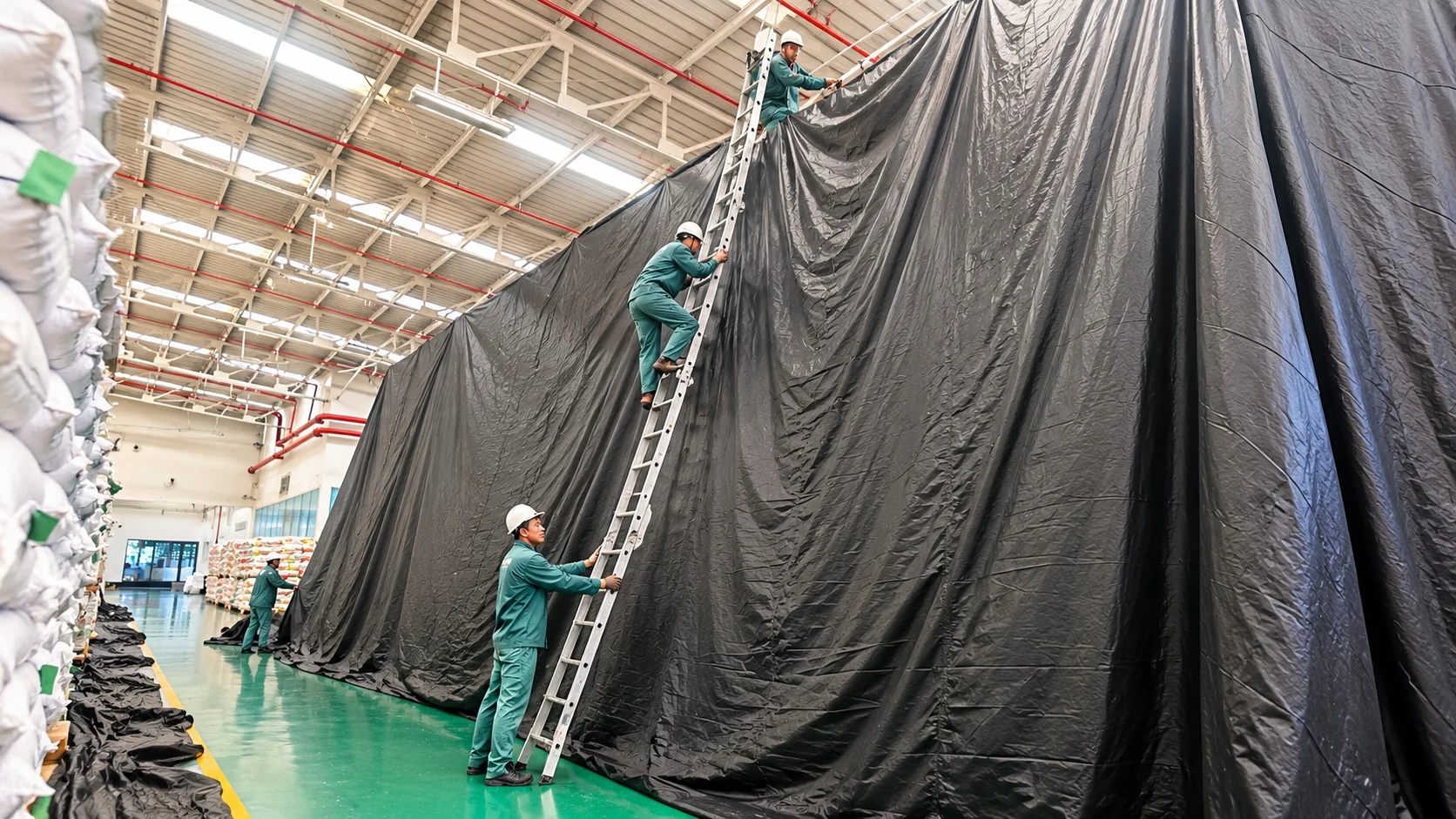
Fumigation costs and durations depend on cargo scale, warehouse structural conditions, and technical parameters
4.1. Key Variables Influencing Service Costs
- Commodity Scale and Enclosure Volume: Warehouse floor area, cubic volume requiring containment, and total stored tonnage dictate chemical dosage, equipment mobilization, and specialized labor deployment.
- Structural Layout and Sealing Requirements: Stacks presenting complex geometry, high dunnage voids, or requiring extensive surface prep and heavy-duty gas-tight sheeting demand additional preparatory labor and materials.
- Fumigation Methodology: Sheeted stack fumigation utilizing Aluminium Phosphide (AlP) versus Methyl Bromide (CH3Br) requires distinct operational procedures, dosage profiles, and equipment setups.
- Geographic Location and Logistics: Site accessibility, transportation distances, facility HSE compliance regulations, and localized staging requirements impact overall mobilization.
- Turnaround Schedules and Documentation: Expedited turnaround requirements, phased handover sequences, and specialized certification mandates tailored to customer contracts. Consequently, enterprises should obtain quotations based on an engineering protocol detailing explicit scopes of work and mutual operational deliverables.
4.2. How Long Does Coffee Warehouse Fumigation Take?
Total project duration encompasses several sequential phases beyond the active fumigant application moment.
Typically, enterprises should account for:
- Initial site survey and technical scheme finalization.
- Cargo lot preparation and operational staging.
- Enclosure covering and gas-tight sealing.
- Chemical introduction and active exposure maintenance.
- Controlled aeration, degassing, and atmospheric safety testing.
- Formal inspection, sign-off, and site handover.
Crucially, the exposure period must strictly satisfy the biochemical parameters of the selected fumigant.
Enterprises should furnish production schedules and planned facility re-commissioning deadlines to enable the fumigation provider to assess timeline feasibility.
4.3. How to Obtain an Accurate Coffee Warehouse Fumigation Quotation
To secure a precise, cost-effective quotation, enterprises should supply baseline data: facility location, storage area dimensions, cargo tonnage, packaging types, verified pest observations, and planned treatment windows.
For expansive facilities, multi-lot configurations, or continuous operational environments, a preliminary on-site survey is essential to establish gas-tight feasibility, technical methodology, and preparatory parameters.
A professional quotation must articulate the complete scope of service and operational prerequisites, rather than relying solely on a flat per-ton rate.
5. VFC Fumigation - Professional Fumigation Partner in Vietnam

VFC Fumigation partners with enterprises in stored-product pest control and coffee inventory preservation
VFC Fumigation is the trusted treatment partner for multinational corporations and premier coffee exporters across Vietnam:
- Over 50 Years of Specialized Heritage: Staffed by seasoned technical specialists possessing deep expertise in agricultural commodity pest biology and coffee preservation dynamics. Operating a pervasive network of regional branches and technical service stations across key coffee producing basins (Central Highlands, Southeast Region) and major sea export hubs. Vietnam's sole official member of the International Maritime Fumigation Organisation (IMFO).
- Transparent Field Governance via FumiApp: All on-site operations, gas measurements, and safety milestones are logged and updated digitally via the proprietary FumiApp management system, ensuring full traceability throughout the treatment life cycle.
- Digital Certificates Integrated with Unique QR Codes: Fumigation Certificates are issued with dedicated QR verification codes, enabling international trading partners and phytosanitary authorities to authenticate document validity online in real time.
Contact Information for Technical Consultations and Site Surveys:
- Hotline 24/7: 0914 773 300
- Service Call Center: 1800 577 788
- Email: contact@fumigation.vn
6. Frequently Asked Questions (FAQ) About Coffee Warehouse Fumigation and Preservation
6.1. Does coffee warehouse fumigation require evacuating all cargo off-site?
No. Treatment scope depends on the actual condition of commodity lots within the facility. Enterprises select schemes aligned with ongoing warehouse operations.
However, specific scenarios may require re-stacking bagged lots, shifting adjacent cargo, or establishing safety buffer zones to satisfy gas-tight sealing and personnel safety standards. Final determination is established following the on-site physical survey.
6.2. What factors dictate the fumigation duration for coffee stacks in storage?
Fumigation duration is determined by the selected active chemical compound, targeted pest species, and cargo temperature.
Beyond the chemical exposure period, enterprises must budget additional time for operational preparation, sealing, aeration, clearance gas testing, and administrative handover. Specific operational turnaround can only be confirmed following physical site assessments and technical scheme selection.
6.3. What details must an enterprise provide to receive a fumigation quotation?
Enterprises should supply the facility location, warehouse floor or volumetric dimensions, coffee tonnage, packaging format, and current pest observation status.
Additionally, information regarding inbound and outbound schedules, prospective treatment windows, and any specific requirements will assist the fumigation provider in assessing the scope of work. If complete technical specifications are not yet available, enterprises can contact VFC Fumigation to discuss their needs and arrange an on-site survey.
Stored-product pest control within coffee warehouses represents a critical component of inventory preservation, enabling enterprises to mitigate risks against bean quality and maintain commercial shipping schedules. Selecting an appropriate fumigation protocol must be rooted in verified warehouse conditions, gas-tight containment feasibility, gas concentration monitoring rigor, and uncompromising operational safety.
Backed by specialized industry heritage, systematic field survey procedures, and transparent digital documentation systems, VFC Fumigation partners with coffee processors and exporters to design warehouse fumigation protocols tailored to real-world preservation needs and commercial operational demands.

Tags
Featured Knowledge

Related Knowledge