





Category:
Standards & Regulations

Published date:
22/09/2026
Share




Methyl Bromide (CH3Br) is a broad-spectrum liquefied gas fumigant, distinguished by its ability to rapidly and completely eradicate harmful pests within just 24 to 48 hours. This active ingredient is utilized strictly for quarantine and pre-shipment (QPS) treatments or compliance with designated standards, such as: ISPM 15 for wood packaging and dunnage materials, cargo exported to Australia under AFAS and BMSB regulations, or consignments subject to mandatory phytosanitary requirements.
1. What Is Methyl Bromide (CH3Br) Fumigant?
Chemical Nature and Physical State of Methyl Bromide
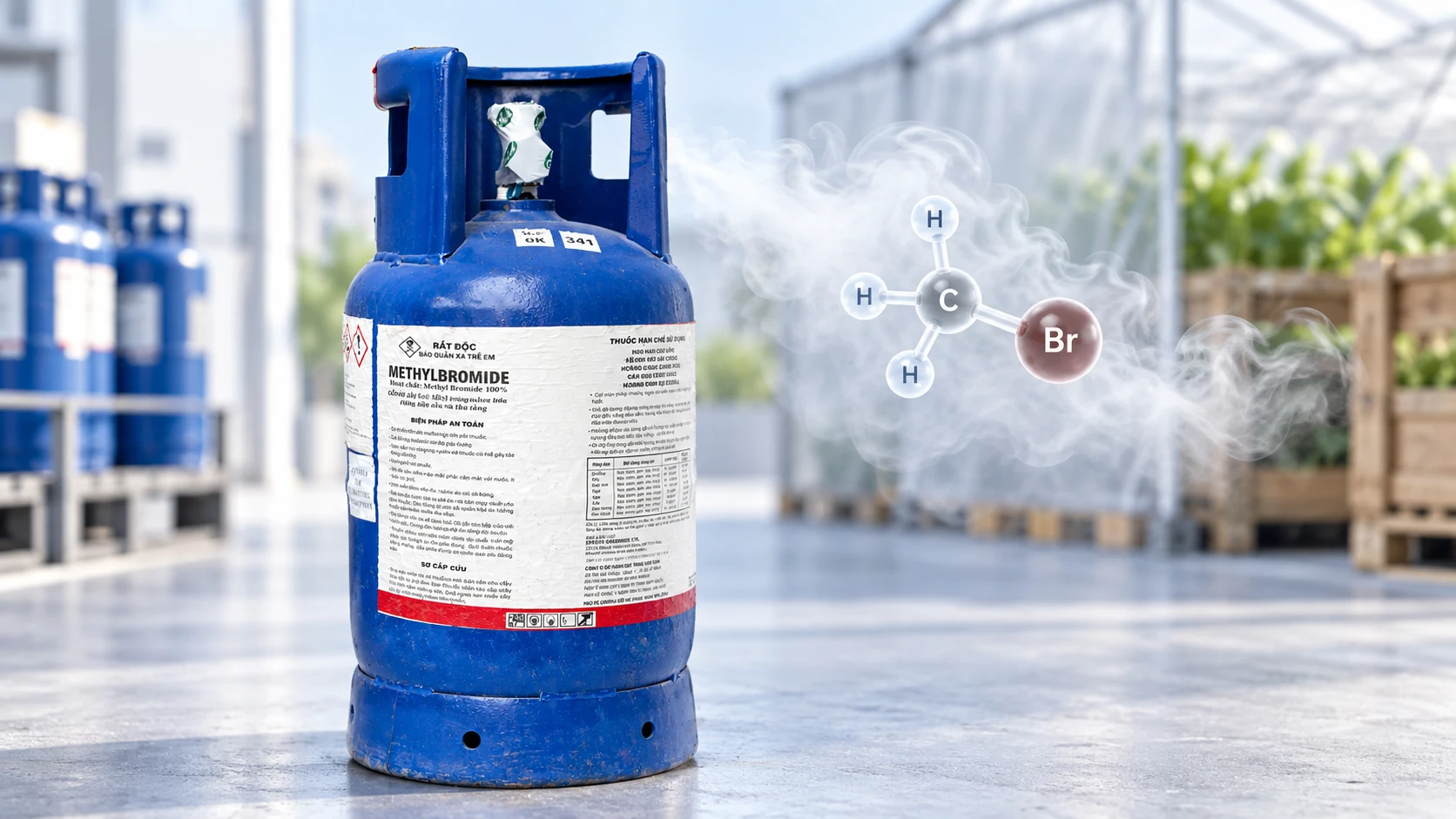
Methyl Bromide is stored as a liquefied gas and vaporized prior to introduction into the fumigation enclosure.
Methyl Bromide (bromomethane – CH3Br) is a colorless, odorless organic compound (often blended by manufacturers with Chloropicrin as a sensory warning agent—a lacrimator that causes eye irritation to facilitate rapid leak detection). The fumigant is packaged and stored in specialized steel cylinders as a liquefied gas under high pressure. During field operations, it is converted into a gaseous state through a specialized vaporizer before being delivered into the fumigation enclosure.
Pest Eradication Mechanism of Methyl Bromide
The fumigant directly attacks the nervous system and cellular respiration processes of target pests. CH3Br gas exhibits an exceptionally rapid diffusion rate, penetrating deeply into every crevice of wood structures and commodities to completely eradicate all insect life stages: from eggs and larvae to pupae and adults.
2. Mandatory and Prescribed Applications of Methyl Bromide (MB) Treatment
2.1 Fumigation of Wood Packaging Material and Dunnage (WPM) Under ISPM 15
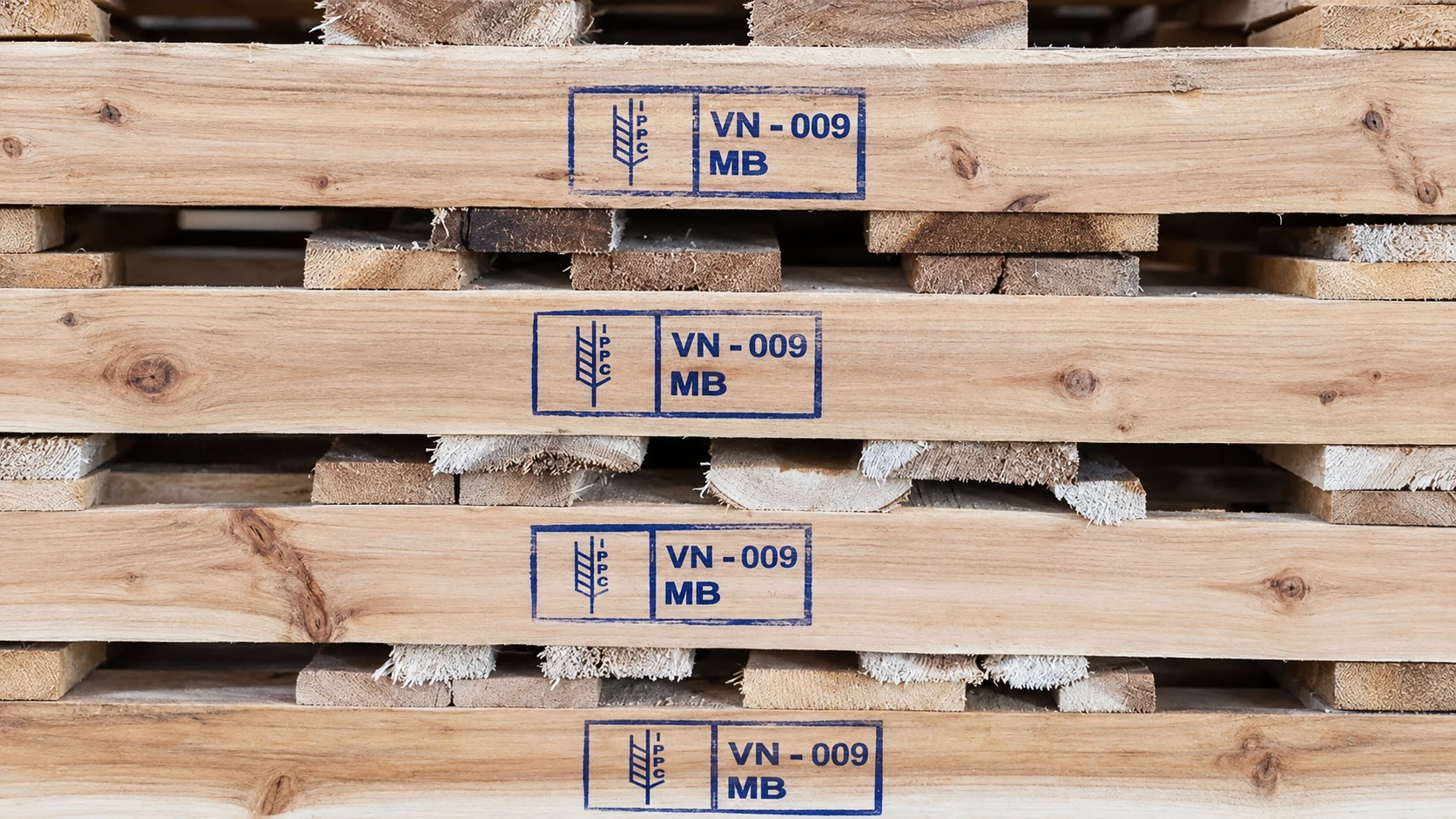
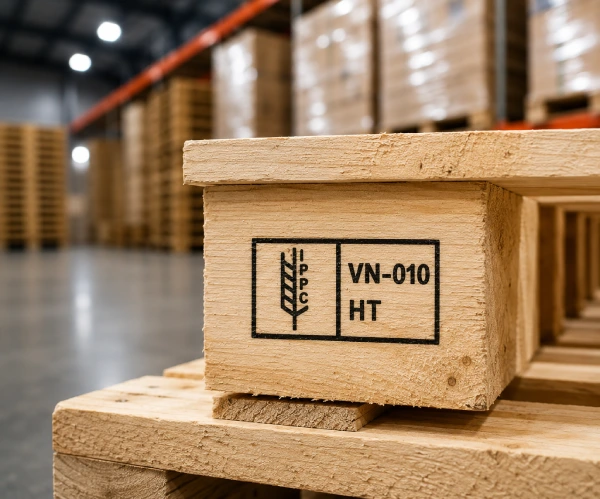
IPPC Mark with "MB" Treatment Code on Wood Packaging Material Following Methyl Bromide Fumigation
In accordance with the International Plant Protection Convention (IPPC) and ISPM 15 standards, all wooden pallets, dunnage, and timber crates must be treated with Methyl Bromide fumigant (designated MB) or heat treatment (designated HT). Upon compliant treatment, WPM must be stenciled or stamped with the official IPPC/ISPM 15 mark bearing the MB code directly on at least two opposite visible faces to prove legitimate compliance during international customs clearance. The MB code is merely one component within the overall mark structure; enterprises must also accurately interpret the country code, treatment provider code, and the IPPC symbol on the ISPM 15 mark to promptly detect missing or non-compliant stamp details.
2.2 Export Cargo Bound for Australia and New Zealand (AFAS and BMSB-AusTreat Standards)
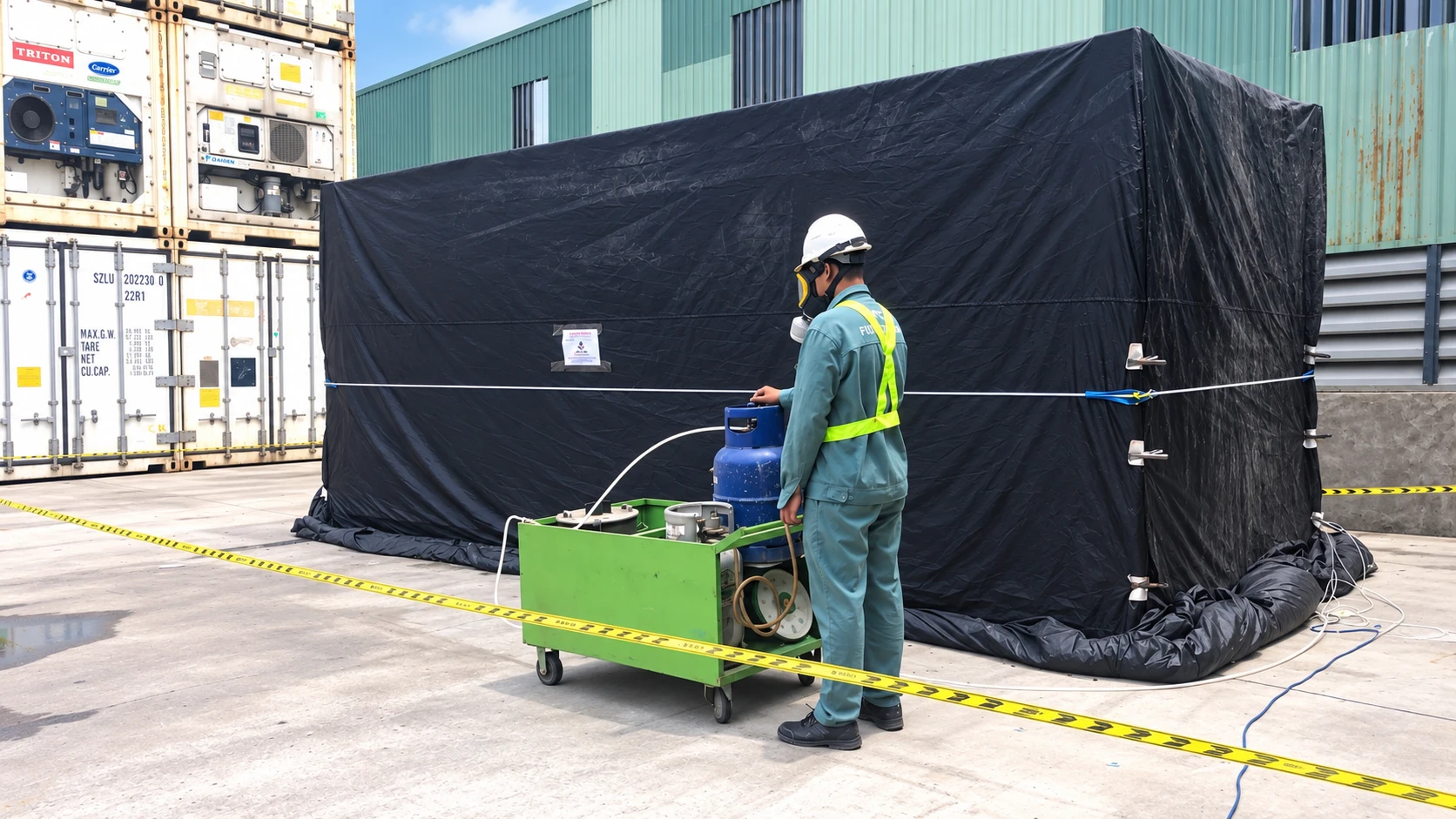
Methyl Bromide Fumigation for Australia-Bound Export Cargo Under AFAS Standards
- Australia's AFAS Standards: In Vietnam, cargo exported to Australia under AFAS standards may exclusively be treated using Methyl Bromide (MB) fumigant. The entire treatment process must be performed by a service provider holding an Entity Identifier (AEI) registered on the official approved list of the regulatory authority, DAFF.
- Seasonal BMSB Measures (September to April of the following year): Mandatorily enforced for Target High Risk Goods such as iron, steel, machinery components, and vehicles to completely eliminate the Brown Marmorated Stink Bug (Halyomorpha halys). The treatment provider must hold official certification and an approved Entity Identifier (AEI) registered with the Australian Department of Agriculture, Fisheries and Forestry (DAFF). In Vietnam, only VFC Fumigation handles BMSB treatments. Because BMSB requirements operate seasonally rather than year-round, container stuffing and vessel loading schedules should be cross-referenced against the annual BMSB season schedule right from the export planning stage.
Once a consignment is determined to fall within Australia's mandatory treatment scope, the technical protocols, documentation, and seasonal requirements are consolidated under our container fumigation service to Australia under AFAS/BMSB.
2.3 Export Routes to North America (USA, Canada, Mexico): Stringent Wood Pest Biosecurity Controls
Quarantine authorities at North American ports of entry (such as the U.S. USDA APHIS and CBP) conduct stringent inspections for live pests harboring within dunnage and wood packaging. Methyl Bromide fumigant remains an officially recognized, optimal solution to completely eradicate target insect pests in full compliance with international phytosanitary standards. For shipments bound for the United States, whether to apply MB treatment should be evaluated within the overarching context of current U.S. quarantine regulations, as importing border authorities simultaneously inspect both commodity pest status and WPM compliance.
2.4 Urgent Export Shipments Racing Against Tight Cut-Off Times
When cargo stuffing is delayed, the vessel departure is imminent, and enterprises lack the multi-day window required for Phosphine fumigation, Methyl Bromide provides the optimal solution thanks to its rapid exposure period of just 24 to 48 hours. This duration must be carefully factored in alongside Closing Time and container gate-in schedules, as container fumigation exposure time cannot be shortened merely to accommodate sailing schedules.
2.5 Quarantine Treatment: Import Cargo into Vietnam Detected with Live Pests
Bulk cargo vessels (carrying bulk corn, wheat, etc.) detained upon arrival by quarantine authorities due to the detection of live pests require rapid MB treatment to release the vessel, avoiding escalating berthing, anchorage, and demurrage costs that can reach hundreds of millions of VND.
3. Comparison of Methyl Bromide and Phosphine Fumigants
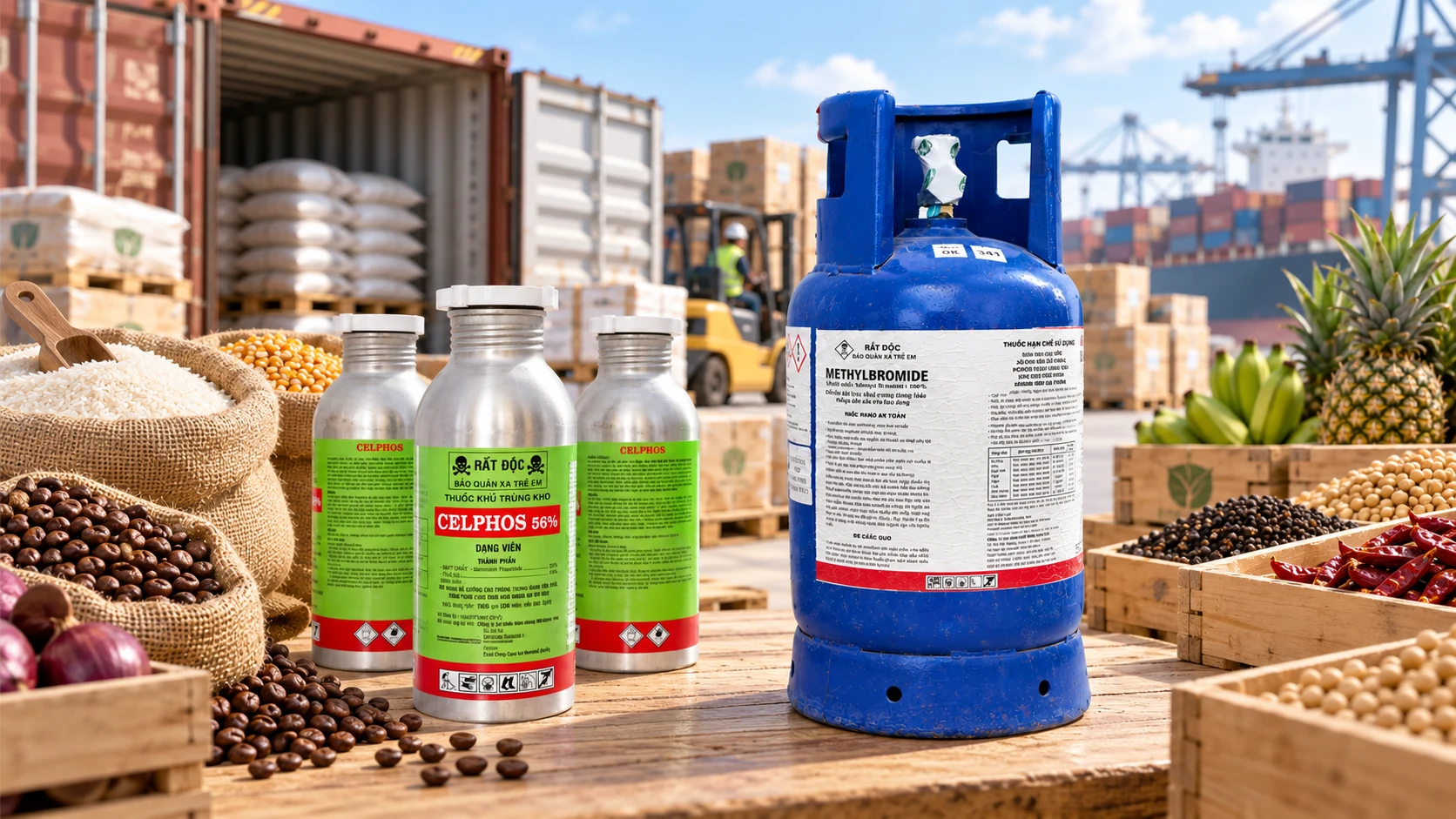
Comparison of Methyl Bromide and Phosphine in Cargo Fumigation
| Comparison Criteria | Methyl Bromide (CH3Br) Fumigation | Phosphine (PH3) Fumigation |
|---|---|---|
| Treatment time | Very rapid: 24–48 hours. | Typically extended: 7–10 days. |
| Physical State upon Application | Injected as gas via a specialized vaporizer. | Applied as solid Aluminium/Magnesium Phosphide. |
| Impact on Seed Germination | Adversely affects germination rates; not recommended for seed commodities. | Safe; minimal impact on seed germination rates. |
| Impact on Metals | Does not affect copper, silver, gold, or electronic equipment. | Highly corrosive to copper, silver, gold, and electronic circuit boards. |
| Recommended Commodities | Quarantine treatment (import cargo with live pests); pre-export treatment (agricultural commodities, goods unaffected by MB); wood packaging/dunnage fumigation under ISPM 15; export cargo subject to AFAS standards. | Stored commodities (agricultural products, seeds, animal feed raw materials, etc.); warehouse-stored timber; fumigation in silos, warehouses, or bulk vessel holds; export cargo fumigation. |
Commodity Groups Not Recommended for Methyl Bromide Treatment:
- Agricultural seeds: Directly affects seed germination rates.
- High-fat food products: Full-fat soy flour, butter, and dairy products (risk of odor retention and bromide residue accumulation).
- Leather, fur, and wool/textile fibers: Tanned leather, animal furs, Angora wool, and viscose rayon (reacts with sulfur compounds to produce persistent, unpleasant odors).
- Sponge and foam rubber products: Foam rubber mattresses and pillows, rubber stamps, and vinyl rugs (retains persistent chemical odors and causes material degradation).
- Strongly adsorbent materials and specific chemicals: Charcoal, graphite, iodized salt (containing sodium hyposulfite), sulfur-treated paper, and photographic chemicals.
For these commodity categories, switching to an alternative treatment must be guided by cargo characteristics rather than operational speed alone; utilizing a decision framework to determine whether MB or Phosphine suits each specific consignment is far more appropriate than defaulting to the fastest-acting active ingredient.
4. Mandatory Technical Requirements for Methyl Bromide Fumigation
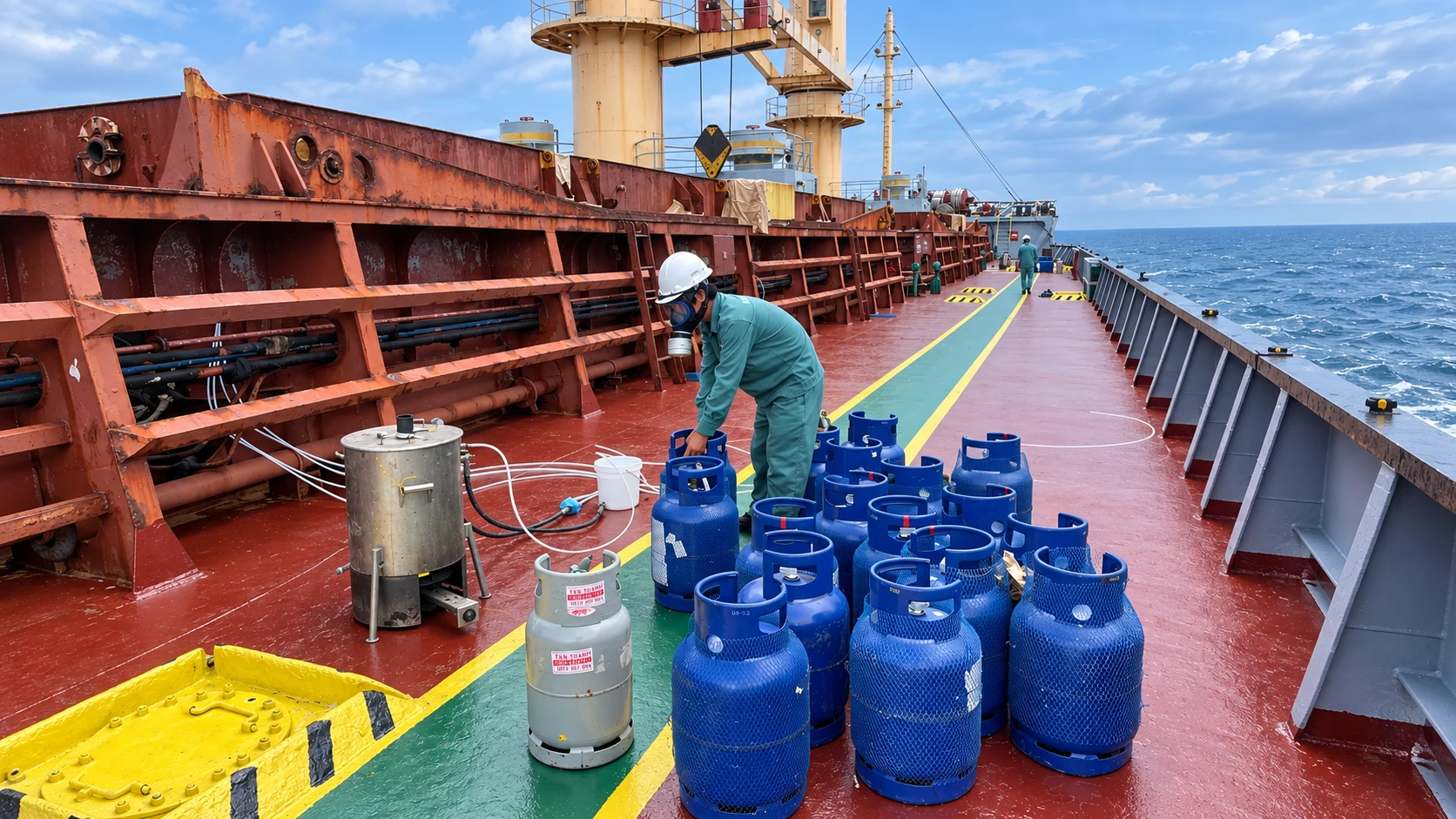
Methyl Bromide Cargo Fumigation Techniques
The Mandatory Role of Specialized Vaporizer Equipment
Under pressure within the supply cylinder, Methyl Bromide (MB) exists in liquid form and requires thermal energy absorption to vaporize completely. For stringent quarantine markets such as Australia under AFAS standards, or when specific technical protocols dictate, technicians integrate dedicated vaporizer equipment. This system accelerates fumigant volatilization and promotes uniform gas distribution throughout the container space or cargo hold, ensuring optimal treatment efficacy. The vaporizer represents just one link in the complete operational chain; introduction line setup, gastight sealing, gas injection, concentration monitoring, and aeration are detailed comprehensively in the container fumigation process with Methyl Bromide.
Enclosure Gastightness Control and Temperature-Dependent Dosage Calculation
As Methyl Bromide (MB) is a gaseous fumigant supplied under high pressure, establishing a gastight seal across the structure prior to chemical injection is mandatory. For shipping containers, this requires sealing ventilation flaps, inspecting and sealing door gaskets, etc., using specialized sealing materials. Furthermore, the dosage must be precisely calculated based on the actual ambient temperature recorded at the time of treatment.
Safe Aeration Procedures and Gas Clearance Monitoring to Threshold Limit Values (TLV)
Upon completion of the exposure period (a minimum of 24 hours), technicians proceed with aerating the fumigation enclosure, including cargo consignments, shipping containers, and related structures. Specialized gas detection instruments are utilized to verify that fumigant concentrations have dropped to or below the safe Threshold Limit Value (TLV), after which the enclosure is formally handed over and personnel are authorized to commence cargo unloading.
5. Representative Real-World Projects Applying Methyl Bromide by VFC Fumigation
Case 01: Emergency Treatment of a Bulk Vessel Carrying 21,500 Tons of Corn at Vung Tau Buoy Zero
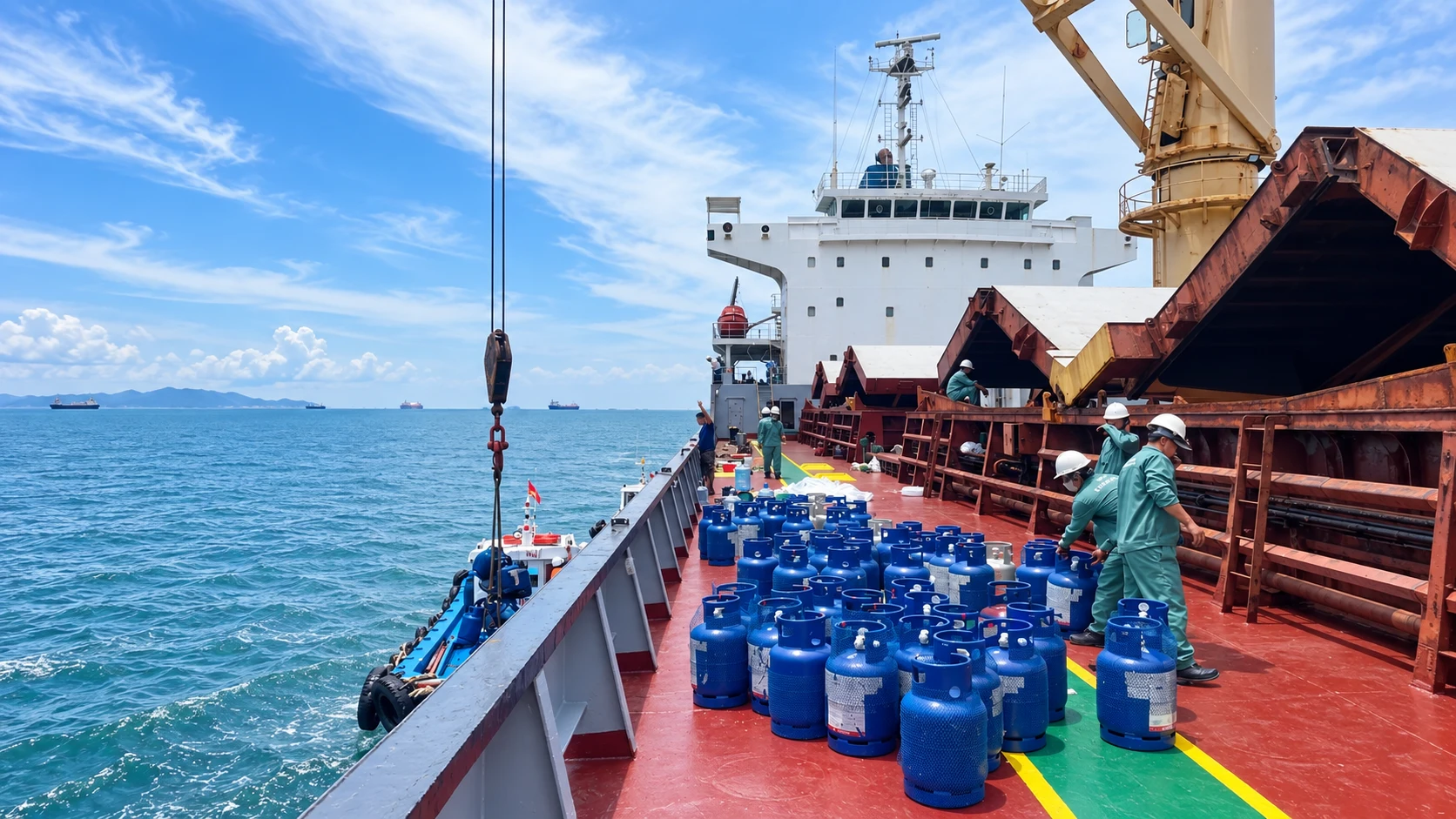
VFC Fumigation conducts Methyl Bromide treatment for a bulk vessel carrying 21,500 tons of corn in Vung Tau.
- Situation: An inbound vessel carrying imported corn was found with live pests while anchored at Buoy Zero.
- Solution: VFC Fumigation mobilized a technical team to inject nearly 3,500 kg of Methyl Bromide into the vessel's cargo holds via specialized vaporizer equipment. Gas concentrations were rigorously maintained and monitored throughout the 72-hour exposure period, ensuring absolute safety for the ship's crew.
- Outcome: Achieved complete eradication and control of all pests, allowing the vessel to safely clear quarantine customs and discharge cargo on schedule.
Case 02: BMSB-Compliant Fumigation of Oversized and Heavy-Lift Cargo Bound for Australia
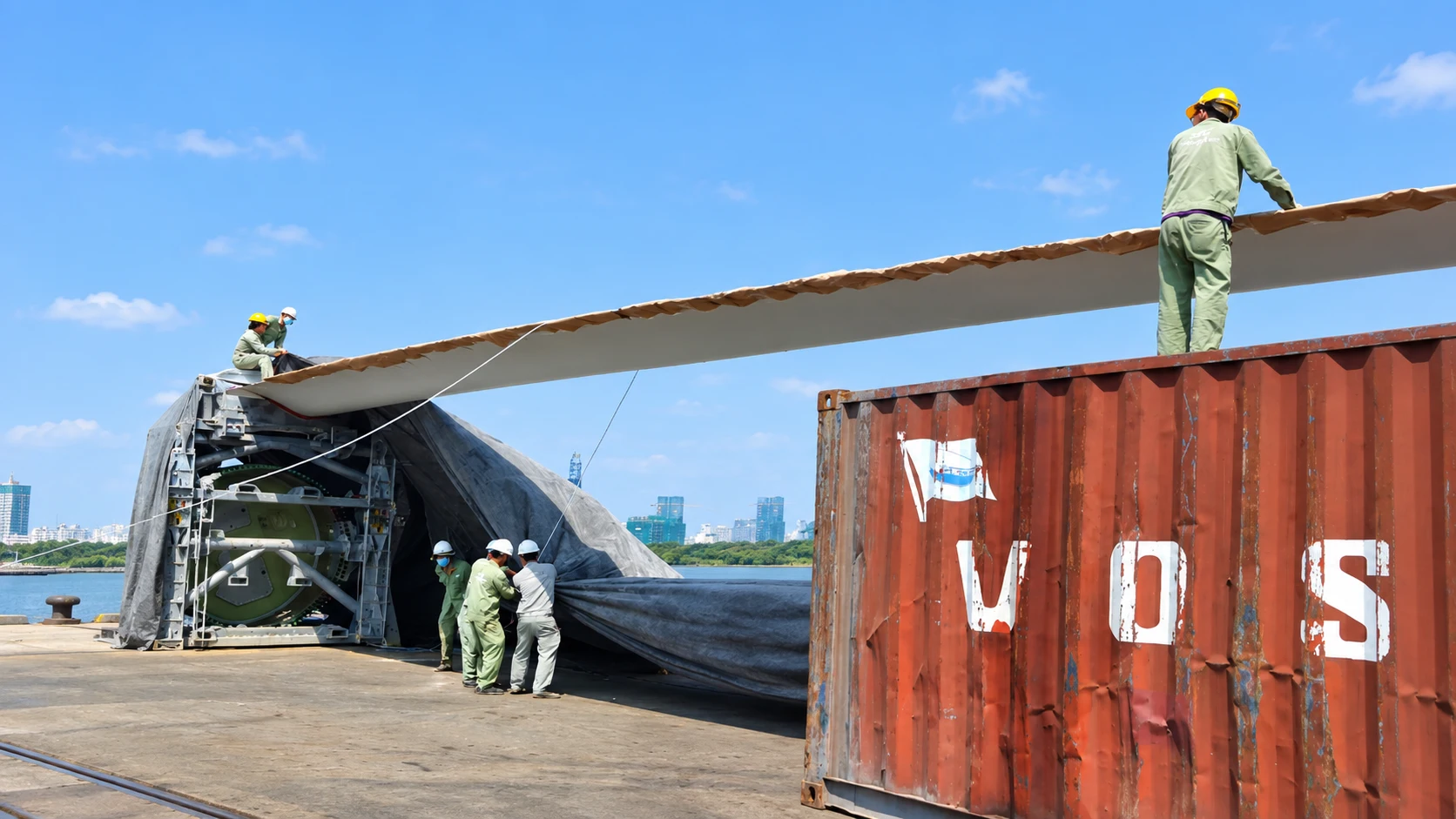
VFC Fumigation conducts Methyl Bromide treatment for oversized and heavy-lift cargo exported to Australia.
- Situation: A consignment of bulky structural components exported to Australia required strict compliance with stringent quarantine regulations under seasonal BMSB measures.
- Solution: VFC Fumigation implemented a specialized treatment protocol for oversized structures, comprehensively meeting all technical standards set by the Australian DAFF.
- Outcome: Successfully controlled target pests and issued an accredited certificate, enabling the consignment to clear customs immediately upon arrival at the destination port without incurring any additional costs.
6. 5-Step On-Site Container Methyl Bromide Fumigation Process at Port Terminals
To satisfy stringent international quarantine standards and ensure absolute safety, the entire operational workflow for port-side container fumigation using Methyl Bromide is rigorously executed by VFC Fumigation across five standardized steps:
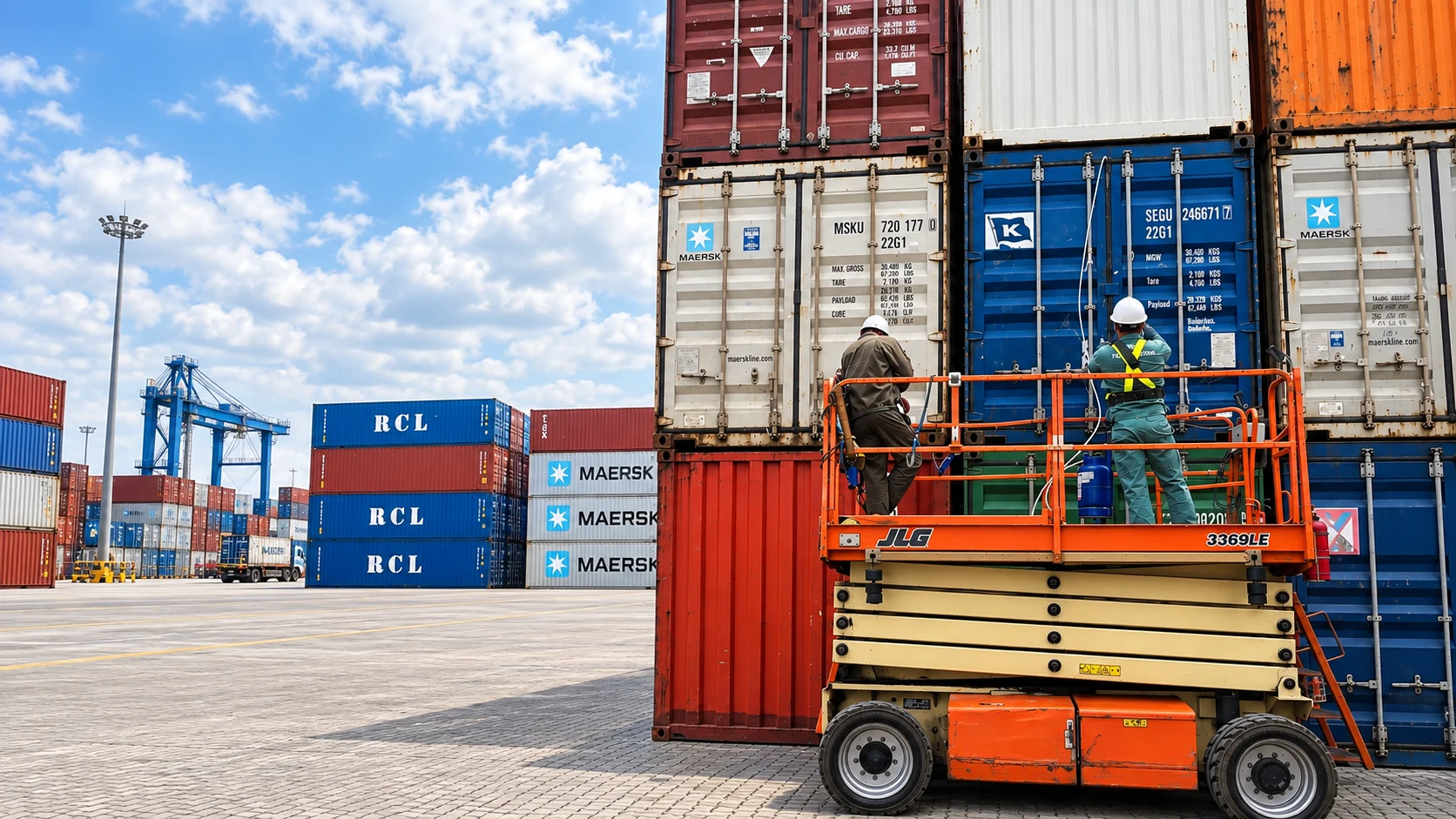
Standard Technical Procedure for Port-Side Container Fumigation
Step 1: Information Intake and Container Location Verification
The operations team receives and rigorously validates critical consignment data, including container type (20ft, 40ft), container number, seal number, commodity description, port of discharge (POD), the actual yard stacking position at the ICD or export terminal, along with the vessel's cut-off time, to formulate an optimal operational schedule.
Step 2: Fumigation Deployment and On-Site Gastight Sealing
- Deploy specialized fumigant introduction lines when implementing the Methyl Bromide treatment protocol.
- Install gas sampling lines at critical locations to facilitate concentration monitoring and verification throughout the treatment process.
- Securely close the container doors, then proceed to seal all ventilation vents and potential leakage crevices using specialized gastight materials.
- Execute the introduction of Methyl Bromide into the container in strict accordance with technical specifications.
- Affix warning signs at prominent, clearly visible locations to alert personnel and prevent unauthorized access to the treatment area.
Step 3: Fumigation exposure and gas concentration monitoring
- The standard minimum exposure period for Methyl Bromide is 24 hours.
- Throughout the exposure period, technicians conduct periodic gas concentration readings in strict accordance with the agreed treatment plan to effectively control and eradicate pests inside the container.
Step 4: Safe Aeration and Handover
- Upon completion of the exposure period, technicians proceed to open the container doors and remove the sealing materials from the ventilation vents to initiate aeration.
- Utilize calibrated gas detection equipment to verify that residual concentrations have reached safe levels below the Threshold Limit Value (TLV).
- Technical representatives from VFC Fumigation and the client jointly conduct a direct on-site inspection and confirm the fumigation results.
- Hand over the fully treated container to the client or port dispatch department to ensure timely loading onto the vessel.
Step 5: Issuance of the Container Fumigation Certificate
The complete on-site operational dossier is forwarded to the documentation department for data verification and cross-checking, culminating in the finalization and release of the official Fumigation Certificate in strict accordance with the registered consignment specifications.
This data reconciliation delivers maximum value when field operational data and certification are managed as a seamless, unified chain; this forms the cornerstone of the 2-layer transparent fumigation solution.
7. Frequently Asked Questions (FAQ) About Methyl Bromide Fumigation
Question 1: Does Methyl Bromide fumigation affect cargo quality?
Answer: Pure Methyl Bromide (MB) gas is colorless, odorless, and dissipates rapidly following proper aeration. However, certain sensitive commodities can react adversely to MB exposure. We strongly recommend consulting VFC Fumigation technical specialists to assess commodity compatibility prior to determining your treatment protocol.
Question 2: What is the minimum exposure period for Methyl Bromide container fumigation?
Answer: Under international standards and official biosecurity protocols, the minimum prescribed exposure period for Methyl Bromide is 24 hours. Strictly maintaining this full exposure window is essential to guarantee complete pest eradication and satisfy quarantine compliance.
Question 3: How can the authenticity of a Methyl Bromide fumigation certificate be verified?
Answer: Shippers, importers, or destination port biosecurity authorities can instantly scan the unique QR Code printed directly on the VFC Fumigation certificate to inspect and validate its authenticity directly against our centralized verification database.
Featured Knowledge



Related Knowledge