





Category:
Standards & Regulations

Published date:
11/07/2026
Share




When exporting goods that use pallets, wooden crates, wooden packages, or wooden dunnage materials, businesses often see the IPPC symbol on the surface of the material. This symbol is an important component of the ISPM 15 mark, indicating that the wood packaging material has been treated using an approved method and is part of the plant quarantine management system. Understanding the meaning of IPPC helps businesses check materials before loading cargo and reduce potential risks when containers arrive in the importing market.
What is IPPC?
IPPC stands for the International Plant Protection Convention. It is an international agreement aimed at protecting plant resources by limiting the introduction and spread of pests between countries.
International trade activities create many pathways for pests to move from one region to another. Besides crops and plant products, pallets, wooden crates, wooden boxes, and dunnage can also carry insects or pests if made from raw, improperly treated wood. To better understand why wood packaging materials fall under the international pest management system, see what plant quarantine is and the process applied to exported goods.
In import-export operations, IPPC is closely associated with international standards for phytosanitary measures. One of the standards that logistics and export businesses pay the most attention to is ISPM 15, which regulates wood packaging materials used in international trade.
What is ISPM 15?
ISPM 15 is the International Standard for Phytosanitary Measures No. 15, which regulates the management of wood packaging materials in international trade. The standard was developed to reduce the risk of pests moving through materials made from raw wood.
The scope of ISPM 15 includes many materials commonly used in export operations, such as pallets, crates, boxes, dunnage, cable drums, loading supports, and wooden structures used to protect or secure cargo. Some low-risk materials are exempt, such as wood no more than 6 mm thick, plywood, veneer, sawdust, and products that have undergone appropriate processing.
Materials within the scope of ISPM 15 must be made from debarked wood, treated using an approved method, and marked according to regulations. This mark helps competent authorities at export and import points identify the treatment status of the wood packaging material. The two common methods found on export pallets are Heat Treatment and Methyl Bromide fumigation.
See more: Distinguishing MB and HT under the ISPM 15 standard before choosing a treatment method
What does the IPPC symbol on wooden pallets mean?
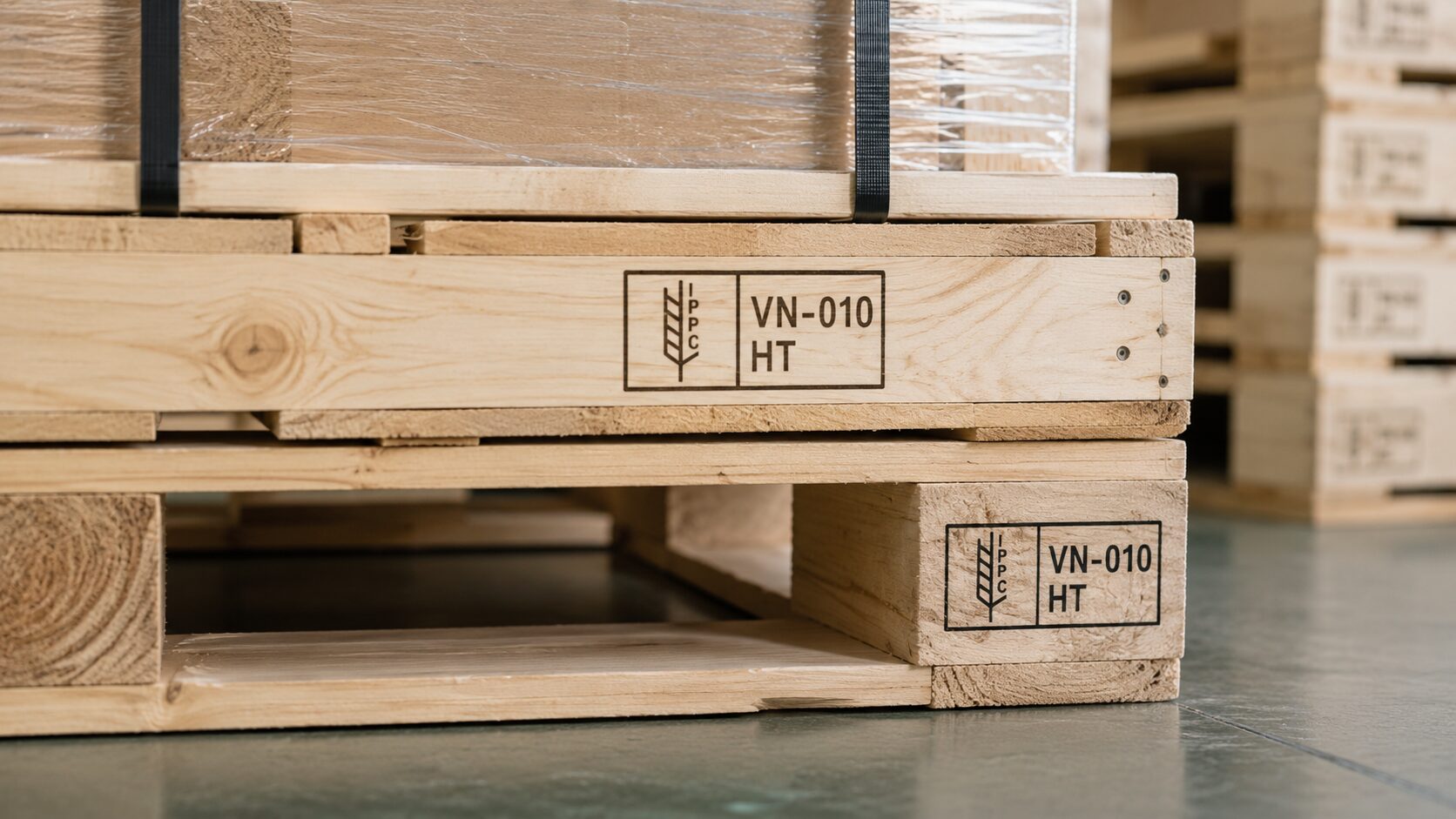
The IPPC symbol on a pallet is not simply the logo of an international organization. It is a mandatory identification component in the structure of the ISPM 15 mark.
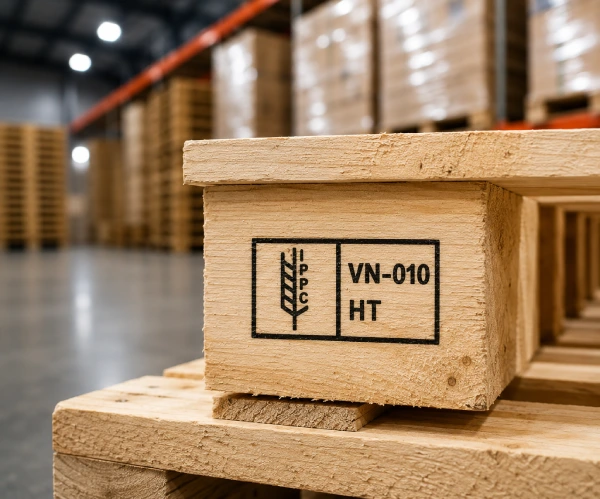
When it appears together with a complete country code, provider code, and treatment method code, the IPPC symbol indicates that the wood packaging material has been treated and marked under the system managed by the national plant protection organization. This gives quarantine authorities in the importing market a basis for recognizing that the material has undergone an internationally approved treatment method.
The ISPM 15 mark is often compared to the “passport” of wooden pallets. This comparison helps businesses visualize its role more easily, but it should be understood accurately: the mark only confirms the treatment status of the wood packaging material. It does not replace all quarantine documents or export documents for the cargo itself. Having a mark does not mean the pallet is always suitable for use. Errors such as unclear marks, remaining bark, moldy pallets, or signs of weevils can still create risks.
See more: 5 small pallet errors that may cause a container to encounter problems upon entry.
Are the IPPC mark and the ISPM 15 mark the same?
In practice, many businesses commonly refer to it as the “IPPC mark,” “IPPC stamp,” or “pallet quarantine mark.” These terms are widely used but are not entirely accurate from a technical perspective.
IPPC is the name of the International Plant Protection Convention, and the IPPC symbol is one component of the mark. ISPM 15 is the standard that regulates the structure, content, and use of the mark for wood packaging materials.
Therefore, the more appropriate term is the ISPM 15 mark with the IPPC symbol. An IPPC symbol standing alone, without a country code, provider code, and treatment method code, is not sufficient to confirm that a pallet has been validly marked under ISPM 15.
What information must a valid ISPM 15 mark include?
An ISPM 15 mark must show the required identification components. Businesses should check each item fully instead of only looking to see whether the pallet has the IPPC symbol.
IPPC symbol
The IPPC symbol is placed on the left and separated from the code section by a vertical line. This is the symbol specified in the identification system of the International Plant Protection Convention.
The symbol is usually stylized in a form similar to a wheat ear. Businesses should not accept marks with self-designed or distorted symbols, or symbols replaced simply by the text “IPPC.”
Country code
The country code consists of two letters under the international country code system. For materials treated and marked in Vietnam, the country code is VN.
This code helps identify the country responsible for managing the wood packaging material treatment and marking system.
Treatment or production provider code
The next part is the identification code issued by the competent authority to the provider responsible for treating or producing the wood packaging material.
This code serves to identify and trace the relevant entity. Businesses should be cautious with pallets that have missing, illegible, altered, or untraceable codes. A valid code is only part of the equation. Businesses should also evaluate implementation capacity, documentation, and coordination ability according to shipping schedules. See criteria for selecting an export cargo fumigation provider.
Treatment method code
The treatment method code indicates the method applied to the wood packaging material. Two common codes in Vietnam are:
- HT: Heat treatment
- MB: Methyl bromide fumigation
According to standards applied in Vietnam, wood packaging materials treated with appropriate methods shall be marked in clearly visible locations, on at least two opposite sides. In cases where the MB option is used, businesses can view details of the container fumigation process using Methyl Bromide to understand the steps of survey, sealing, gas injection, exposure, ventilation, and certificate issuance.
How should the ISPM 15 mark be displayed on pallets?
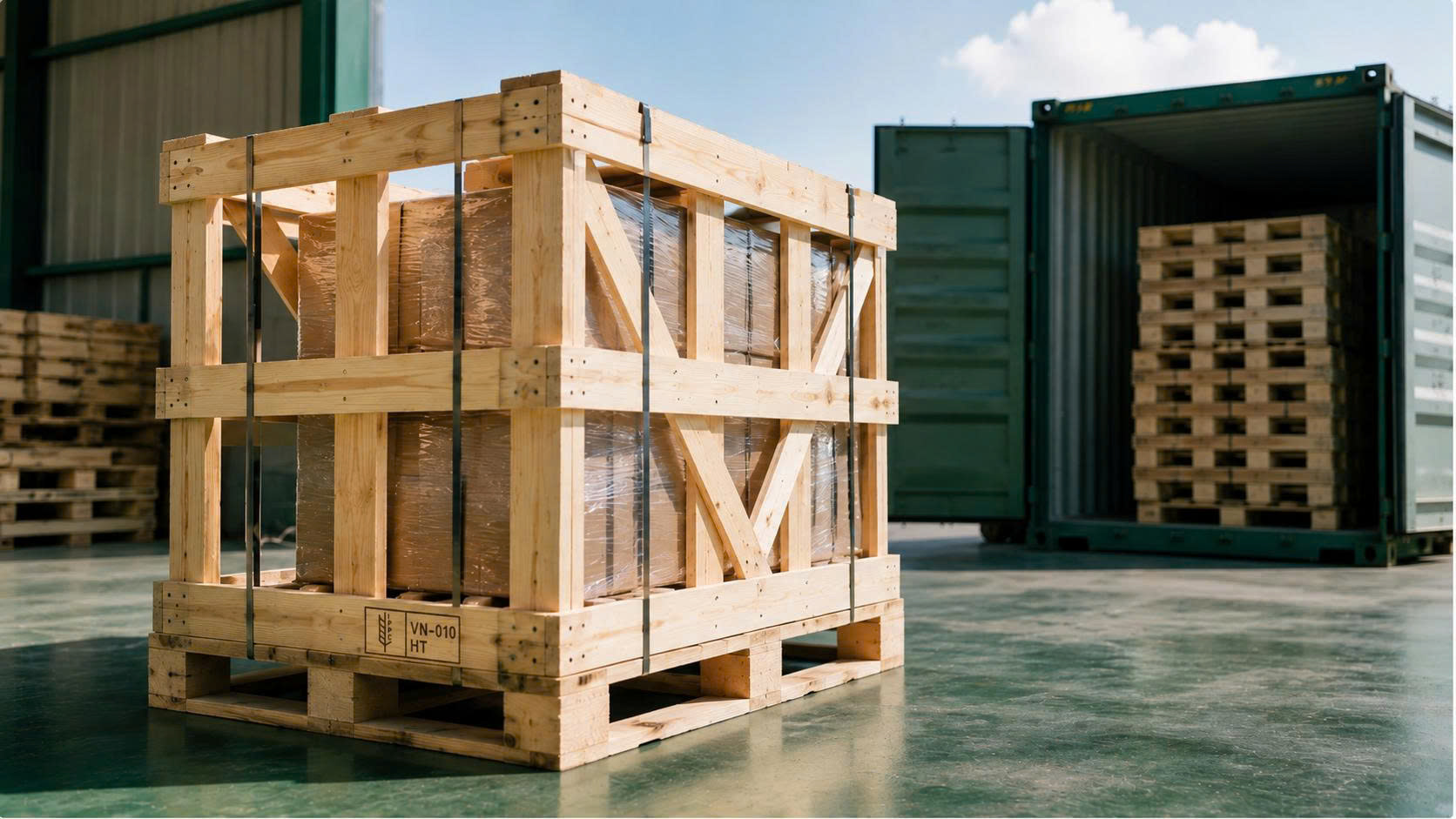
The mark must be clear, legible, durable, and placed in a position convenient for inspection. In Vietnam, regulations require the mark on wood packaging materials to be applied in easily visible positions and on at least two opposite sides of the package.
Businesses need to directly inspect the condition of the mark before container loading. Marks that are blurred, missing part of the code, cut through during pallet repair, or covered by cargo may make identification difficult at the import point.
The ISPM 15 mark must be applied to the material using an appropriate method and must not be created in a way that can be easily removed or transferred to another pallet. Ordinary paper labels or stickers should not be considered substitutes for marks applied in accordance with regulations.
Which wooden materials should businesses check for IPPC and ISPM 15?
ISPM 15 focuses on packaging materials made of raw wood that can act as pathways for the spread of pests. Common types include wooden pallets, crates, boxes, cases, dunnage, cable drums, and load boards used to secure goods in containers. If wooden pallets, crates, boxes, or dunnage are untreated or the current mark is difficult to verify, businesses can refer to the ISPM 15 treatment service for pallets and wooden crates.
Businesses should pay special attention to dunnage wood. This material usually has low value and is often added at the last minute to secure machinery, equipment, or packages. However, if the dunnage falls within the regulated scope and has not been properly treated and marked, the entire shipment may still face issues during inspection.
Some materials are exempt due to low risk, including wood no more than 6 mm thick, plywood, veneer, sawdust, wood chips, and products processed with glue, heat, or pressure during manufacturing.
Does having the IPPC symbol mean a pallet is always safe?
The ISPM 15 mark confirms that the material was treated under a recognized system at the time the mark was applied. It does not provide permanent protection for the pallet throughout its entire life cycle.
After treatment, pallets can still be reinfested if they are stored in damp areas, come into contact with untreated wood, or are placed near sources of harmful insects. Therefore, businesses need to check both the ISPM 15 mark and the actual condition of the pallet before loading cargo.
Signs such as fresh wood dust, bore holes, live insects, bark exceeding permitted limits, soil contamination, or mold should be taken seriously. A clear mark cannot replace visual inspection of the material.
Risks when the ISPM 15 mark is invalid
When wood packaging materials do not meet requirements, the competent authority in the importing country may apply measures in accordance with that market’s regulations. Depending on the condition and risk level, the shipment may be subject to closer inspection, additional treatment, removal of wooden materials, destruction, or re-export.
Blurred, missing, incorrectly structured, or untraceable marks can put pallets under suspicion. A more serious risk arises when quarantine authorities detect live pests on wood packaging materials. An invalid mark is only one of many reasons that can cause a shipment to incur additional costs. Businesses should review 7 common mistakes and risk costs when fumigating export goods.
These situations may lead to container detention charges, storage charges, pallet replacement, retreatment, and delivery schedule adjustments. For contracts with tight timelines, even a small error on a pallet can affect buyer relationships and business reputation.
What should businesses check before container loading?
Before loading, the warehouse or logistics team should check both the ISPM 15 mark and the actual condition of pallets, wooden packages, and dunnage materials. The inspection should cover all wooden materials placed into the container, including battens added at the last stage.
The mark must include the complete IPPC symbol, country code, provider identification code, and treatment method code. The information must be clear, legible, and placed in suitable positions on the material.
The wood surface also needs to be clean, dry, and free from signs of live pests. If replacing pallets, repairing wooden crates, or adding dunnage materials, businesses need to re-inspect from the beginning instead of assuming the new materials already meet the requirements. Pallets are only one part of the shipment preparation process. Businesses can view the 2026 export container fumigation guide to check additional cargo conditions, treatment options, implementation schedules, and certificates.
Why choose a qualified ISPM 15 treatment provider?
The ISPM 15 mark is only valid when used within a system managed by a competent authority. The code on the mark must be linked to a provider authorized to treat and mark wood packaging materials.
Businesses using pallets from unclear sources may encounter marks that look similar to ISPM 15 but cannot be traced or do not belong to the authorized system. When inspected, the lack of transparency regarding the treatment source may increase risks for the shipment.
Therefore, businesses should choose pallet suppliers and treatment providers with clear information, while retaining relevant documentation of the treatment process when needed. If you need new treatment, re-inspection of marks, or execution according to container loading schedules, see details of the ISPM 15 service for wooden pallets, crates, and dunnage materials.
VFC Fumigation supports wood packaging material treatment under ISPM 15
VFC Fumigation provides treatment solutions for pallets, wooden packages, and dunnage materials used for export cargo under ISPM 15 requirements. Before implementation, the technical team receives information about the materials, quantity, location, and loading plan to determine the appropriate method.
The process is carried out by qualified personnel, combined with control of treatment conditions, concentration monitoring according to technical requirements, and completion of relevant post-treatment items. In addition, VFC Fumigation supports businesses in checking common issues such as unclear marks, remaining bark on pallets, signs of reinfestation, or dunnage wood added close to the export date.
Understanding what IPPC is and knowing how to check the ISPM 15 mark helps businesses control risks from the material preparation stage. A pallet may be small in value compared with an entire container, but its compliance can directly affect the import progress of the whole shipment.

Featured Knowledge

Related Knowledge