






Category:
Fumigation by Industry Sector

Published date:
17/07/2026
Share




A shipment of furniture, mechanical goods, or agricultural products may fully meet product quality requirements but still encounter problems at the border simply because the accompanying wood packaging materials do not meet quarantine requirements. For markets that apply ISPM 15, such as the United States, pallets, wooden crates, wooden packages, and dunnage wood are not only used to protect cargo but are also items that need to be controlled. An improperly marked treatment stamp, remaining bark, or signs of live insects can all become risks for the entire container when it arrives in the importing market.
Why can wooden pallets affect the entire export shipment?
In export operations, businesses often focus most of their attention on the main cargo: product quality, packaging, documents, vessel schedules, and buyer requirements. Pallets and dunnage wood have much lower value than the cargo itself, so they are sometimes treated only as supporting materials.
However, wood packaging materials can carry pests from one country to another. This is precisely why the International Standard for Phytosanitary Measures No. 15 – ISPM 15 – regulates treatment measures and marks for wood packaging materials used in international trade. To better understand why these materials are controlled by authorities at destination ports, businesses can see what plant quarantine is and the application process for export goods.
Under ISPM 15, regulated wood packaging materials must be made from debarked wood, undergo an approved treatment method, and bear the required mark.
For exporters, checking pallets before container loading should therefore not stop at whether the pallet is strong enough. The condition of the wood, the ISPM 15 mark, and signs of harmful organisms should also be inspected before the cargo leaves the warehouse.
1. Using labels instead of the ISPM 15 mark on wood
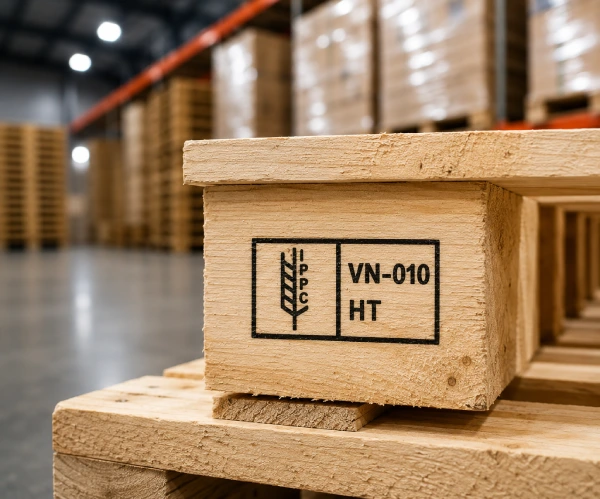
One of the errors businesses need to pay close attention to lies directly in the identification mark on the pallet. ISPM 15 requires the mark to be clear, legible, durable, non-transferable to other materials, and placed in a visible position, preferably on at least two opposite sides of the wood packaging material. The standard also states that the mark must not be hand-drawn and must not be applied in red or orange.
Therefore, businesses should not consider a paper label or sticker containing information similar to the ISPM 15 mark as a substitute. A mark that is unclear, missing mandatory components, or not applied according to the required format may cause issues when the packaging material is inspected.
Before using pallets, the warehouse or logistics department should check the mark on multiple sides rather than merely confirming that the pallet "is stamped." The legibility of the information on the mark is as important as the presence of the mark itself. If you need to check the full IPPC symbol, country code, treatment provider code, and HT/MB mark, see how to read and check the ISPM 15 mark before export.
2. Pallets still have bark
ISPM 15 requires wood packaging materials to be made from debarked wood. However, the standard still allows small amounts of remaining bark within certain limits: bark pieces less than 3 cm in width, or if wider than 3 cm, each individual piece must have a total surface area of less than 50 cm².
This means businesses should not simply assume that once a pallet has been treated, the wood surface condition no longer matters. Bark patches exceeding the permitted limits may still make the packaging material non-compliant with ISPM 15.
Especially for pallets purchased from multiple sources or reused pallets, businesses should conduct a visual inspection before loading cargo. A few minutes of checking at the warehouse can help detect unsuitable pallets before they are placed into the container.
3. Pallets show bore holes, wood dust, or live insects
A pallet that was once treated under ISPM 15 does not mean the material is protected from harmful organisms throughout its entire period of use. After treatment, pallets may still come into contact with the storage environment, other wooden materials, or insect-prone areas, creating a risk of reinfestation.
This is a point businesses often overlook when reusing pallets. The ISPM 15 mark may still be clear, but the actual condition of the wood may have changed after months of storage.
New bore holes, wood dust around the pallet, or signs of live insects should be treated as warning signs. ISPM 15 also states that when live harmful organisms are detected, the importing country may apply appropriate phytosanitary measures. When signs of live insects are found, businesses should not rely only on the old mark but should assess the actual pest condition.
See more: Lesser grain borer – a plant quarantine pest that export businesses should pay attention to.
For this reason, pallet inspection should be carried out as close to the loading time as possible. Businesses should not rely solely on the fact that a pallet was previously treated to assess its current condition.
4. Pallets are damp, moldy, or contaminated with soil and impurities
A pallet that is strong enough to carry cargo is not necessarily suitable for export container loading. Pallets stored outdoors, placed directly on damp ground, or kept in poorly ventilated areas may become damp, dirty, and develop mold.
This condition not only affects the hygiene of wood packaging materials. In a sealed container, moisture from pallets and cargo also contributes to the moisture balance inside the transit space. When temperatures fluctuate during ocean transit, moisture can condense on container surfaces or packaging, increasing the risk of staining, mold, and cargo deterioration. For long-distance sea shipments or moisture-sensitive cargo, businesses can consider container desiccant and paper lining services as an additional layer of control against condensation and mold risks.
Soil and dirt attached to pallets should be removed before loading. A clean container starts with the condition of the cargo and all materials placed inside it, including pallets and dunnage wood.
5. The ISPM 15 mark does not ensure traceability of the treatment source
A valid ISPM 15 mark does not only include the IPPC symbol and treatment method code. The mark structure also includes the country code and the identification code of the producer or treatment provider authorized by the competent authority.
This identification code links the wood packaging material to the party responsible for ensuring that the wood has been treated and marked under an approved system. Therefore, businesses need to be cautious with pallets that have unclear origins, incomplete information, or are supplied by providers not authorized to use the mark.
Especially when purchasing pallets from external suppliers, price should not be the sole criterion. The ability to supply pallets that meet ISPM 15 requirements and have a clear mark origin needs to be considered right from the supplier selection stage. If pallets, crates, or dunnage materials are untreated, or if the mark is blurred, incorrect, or difficult to trace, businesses can refer to the ISPM 15 treatment service for pallets and wooden crates.
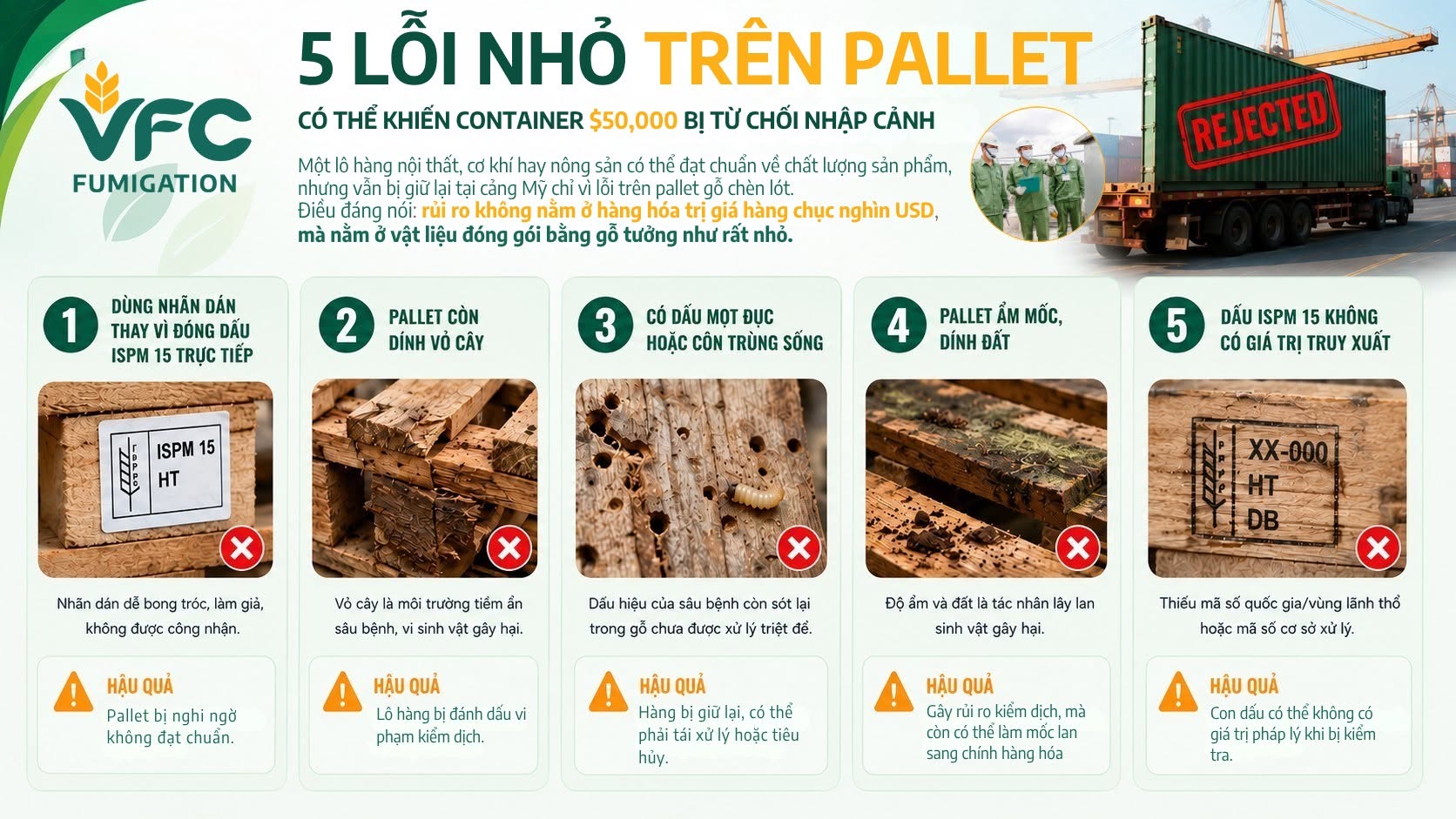
Do not only check the cargo, check the pallets before container loading as well
Many pallet errors are very small compared with the value of a container of goods. A patch of bark, a few newly appearing bore holes, or an unclear ISPM 15 mark can easily be overlooked when businesses are rushing to meet the loading schedule.
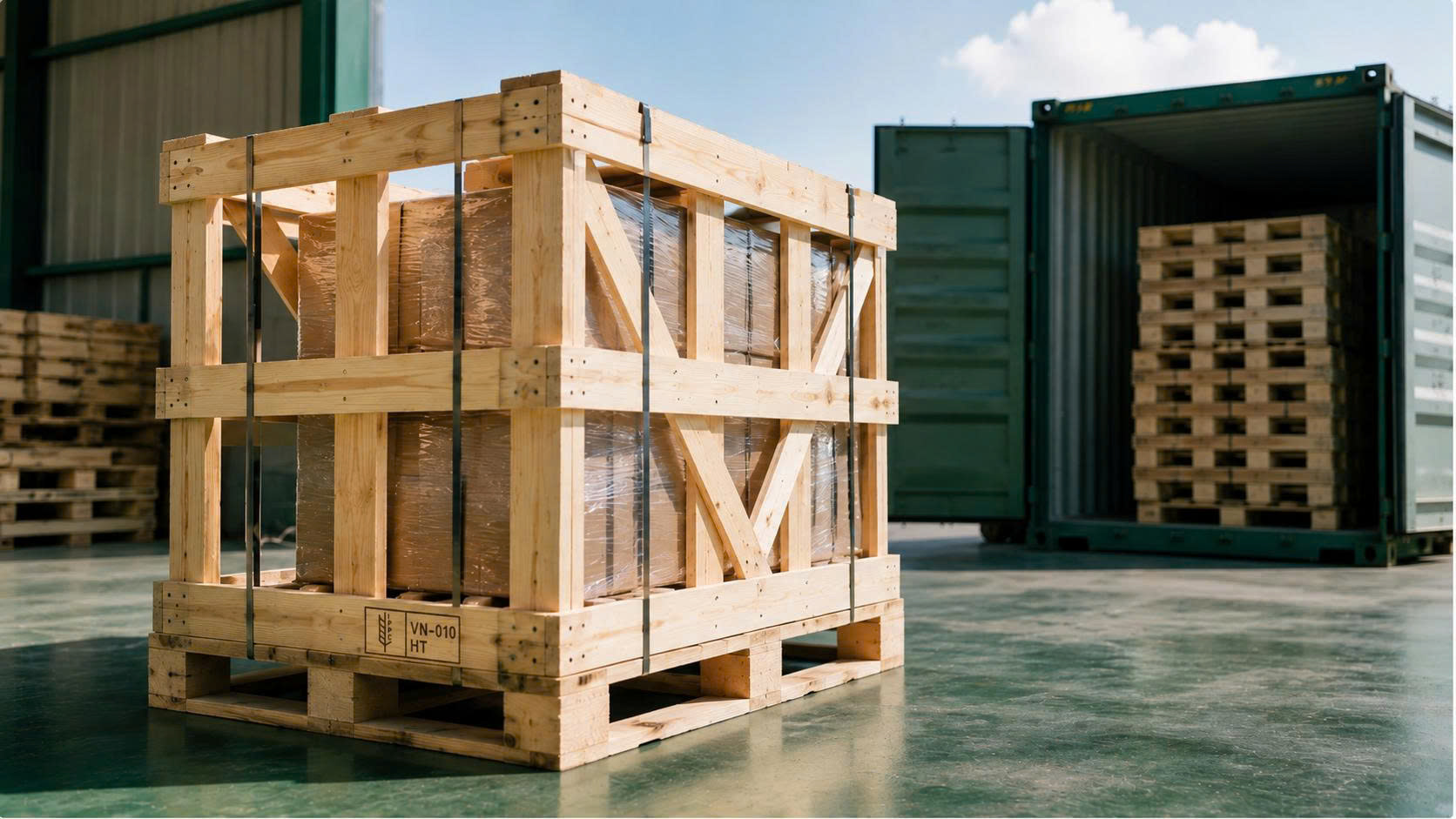
The most effective way to control this is to include pallets and wooden dunnage materials in the pre-loading checklist before stuffing the container. The responsible department needs to inspect the wood surface condition, signs of pests, remaining bark, and the ISPM 15 mark before cargo is placed onto pallets. Pallets are just one item in the pre-loading checklist. Businesses can view the 2026 export container fumigation guide to review additional cargo conditions, market requirements, treatment solutions, and certificates.
This inspection becomes even more meaningful for shipments of furniture, machinery, mechanical goods, agricultural products, and other commodities that use large quantities of pallets or dunnage wood. When a container holds high-value cargo, risks from packaging materials should not become an overlooked weak point.
Businesses need to clearly distinguish between treatment of wood packaging materials and treatment of the cargo itself. ISPM 15 focuses on pallets, wooden packages, crates, and dunnage wood. If the cargo inside the container is also subject to quarantine or carries pest risks, businesses need to further assess a separate treatment plan for the entire shipment.
See more: Export container fumigation service
VFC Fumigation accompanies businesses from WPM treatment to pre-export control
With experience in fumigation and treatment of wood packaging materials, VFC Fumigation supports businesses in controlling requirements related to pallets, wooden packages, and dunnage wood used in export operations.
Instead of only handling treatment when the cargo is already about to leave the port, businesses can proactively check market requirements, choose the appropriate treatment method, and review the condition of packaging materials before container loading. This approach helps detect non-compliant points early and reduces the need for retreatment when the delivery schedule is already approaching.
A pallet accounts for only a very small part of the total value of a container, but it is still a link that must be controlled in the export journey. Checking properly from the beginning helps businesses protect not only the pallet, but also the delivery schedule and the value of the shipment behind it.
Contact VFC Fumigation for consultation on pallet treatment, wood packaging materials, and ISPM 15 requirements for export cargo.
Featured Knowledge


Related Knowledge