





Category:
Standards & Regulations

Published date:
17/07/2026
Share




Plant quarantine is one of the key requirements for many types of exported and imported goods, especially agricultural products, timber, wood packaging materials, and raw materials that may carry harmful organisms. Proper compliance not only helps shipments meet the requirements of the importing country but also helps protect the supply chain, reduce customs clearance risks, and avoid storage charges or re-export costs. Businesses need to clearly understand the process, documentation, and technical requirements to proactively plan their import-export operations.
What is plant quarantine?
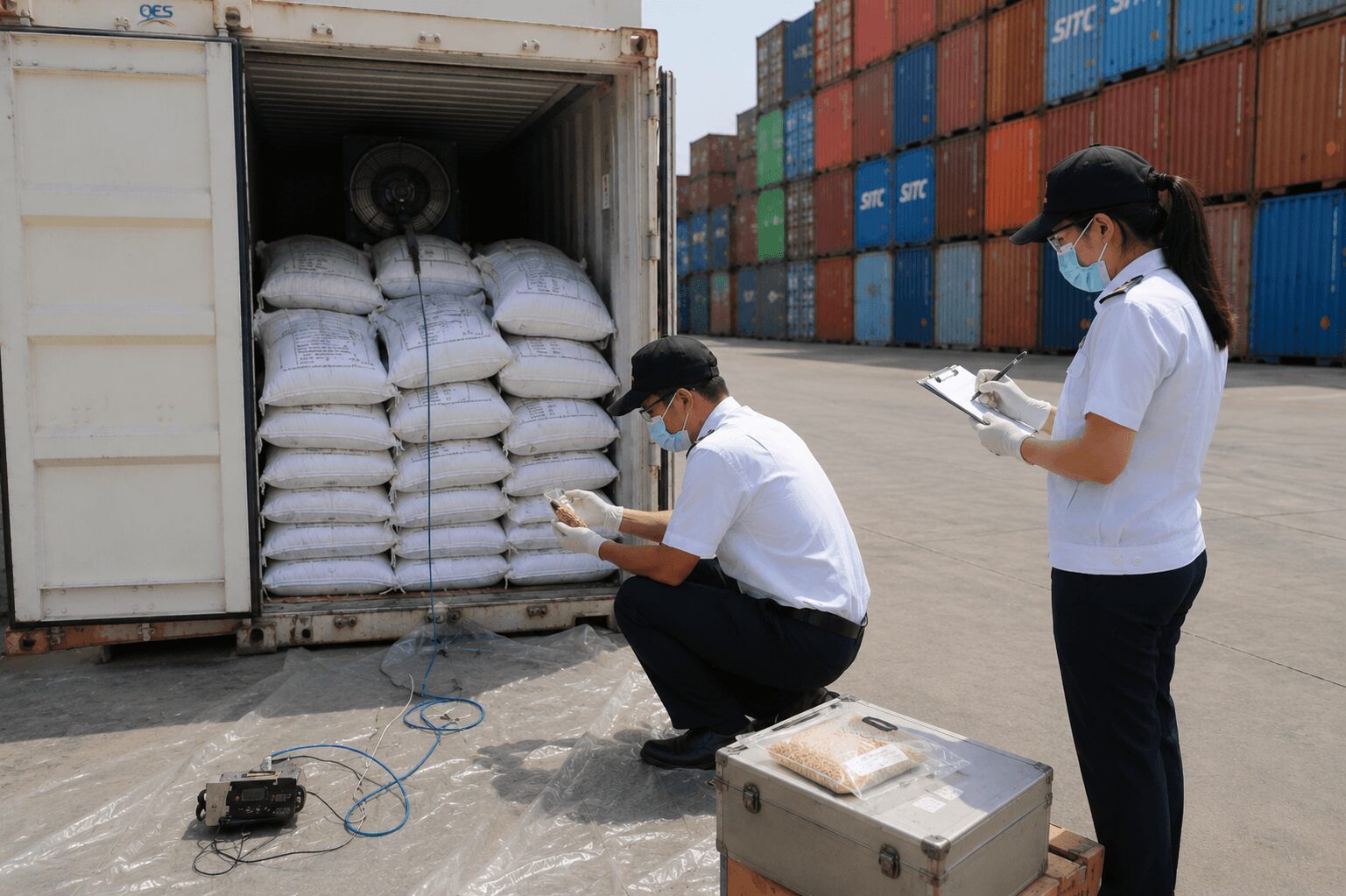
Plant quarantine refers to the inspection, monitoring, and application of technical measures to prevent dangerous harmful organisms from entering, spreading, or being disseminated through goods, means of transport, and materials of plant origin. This activity is carried out in accordance with Vietnamese law and aligned with international standards on plant protection.
For import-export businesses, plant quarantine is not merely an administrative procedure. It is a confirmation step showing that the goods meet the biosecurity requirements of the importing country. When documentation and treatment procedures are fully prepared, businesses can clear customs more smoothly while reducing the risk of additional costs caused by further inspection or retreatment at the destination port.
Many markets such as the United States, Australia, New Zealand, Japan, South Korea, and countries in the European Union apply strict plant quarantine regulations to each commodity group. Each country may issue its own additional requirements beyond international standards, so businesses need to regularly update regulations before exporting goods.
Why is plant quarantine becoming increasingly important?
The growth of international trade increases the risk of invasive organisms moving from one country to another through goods. The introduction of just one insect species or pathogen can cause major damage to agricultural production, ecosystems, and biosecurity.
For this reason, most countries have established plant quarantine systems to detect and prevent risks directly at the border. This helps protect domestic agriculture, maintain biodiversity, and reduce economic losses caused by pests.
For businesses, compliance also helps protect their reputation with partners. A shipment found to contain quarantine pests may be required to undergo additional treatment, be re-exported, or be destroyed depending on the importing country’s regulations. These situations often lead to additional costs and affect delivery schedules and production plans.
These risks do not only arise from the detection of insects. They may also begin with an unsuitable treatment plan, documentation errors, or the wrong choice of service provider. See more: common mistakes in export cargo fumigation.
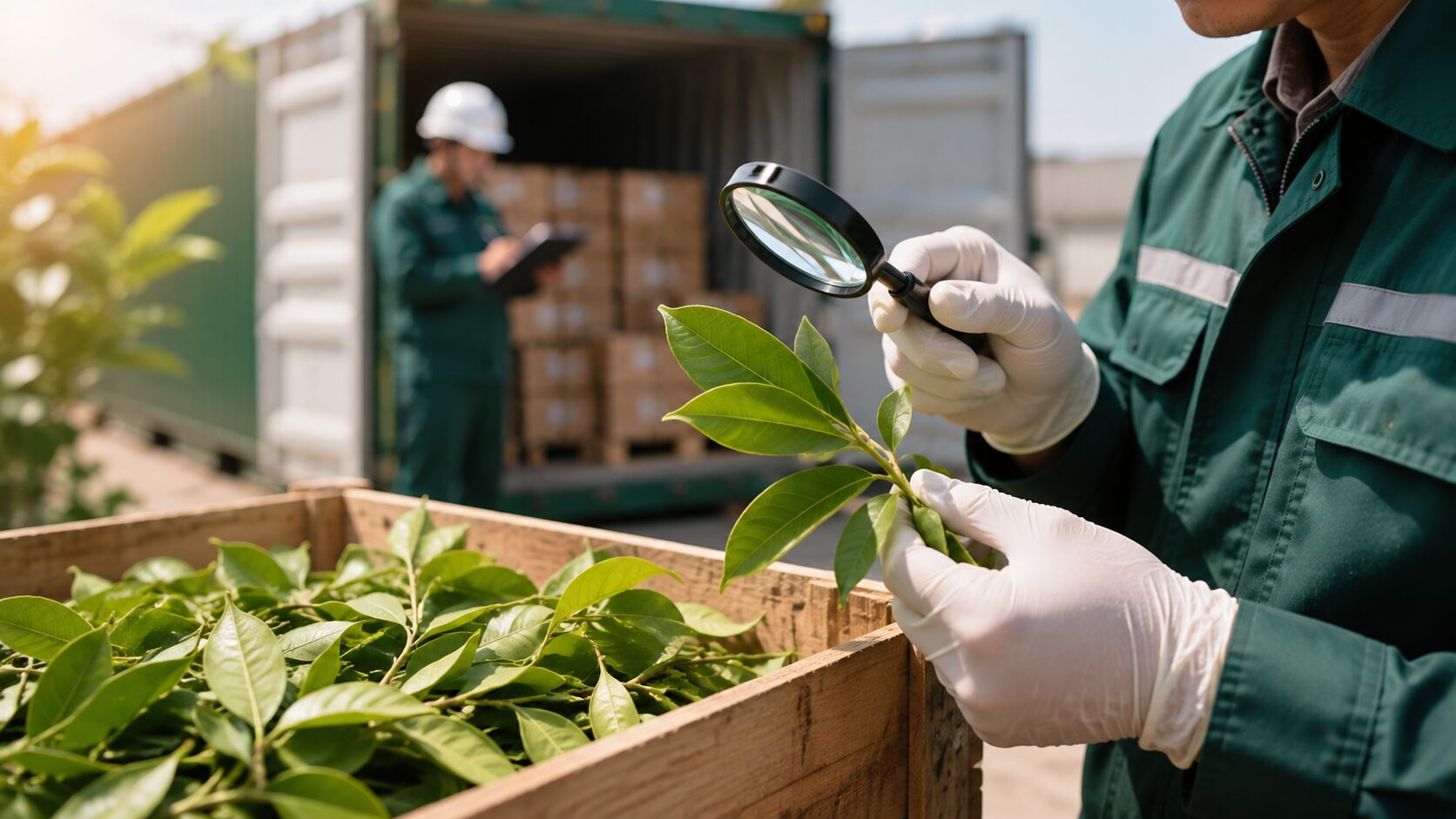
Types of goods that require plant quarantine
Not every shipment is subject to plant quarantine. However, many goods that may carry harmful organisms must complete quarantine procedures before export or import.
Common groups include:
- Fresh and dried agricultural products.
- Seeds, seedlings, and propagation materials.
- Roundwood, sawn timber, and wood that has not undergone deep processing.
- Wood packaging materials, including wooden pallets, wooden packages, wooden crates, wooden battens, and dunnage materials.
- Animal feed materials of plant origin.
- Certain bulk commodities stored for long periods that may carry a risk of insect development.
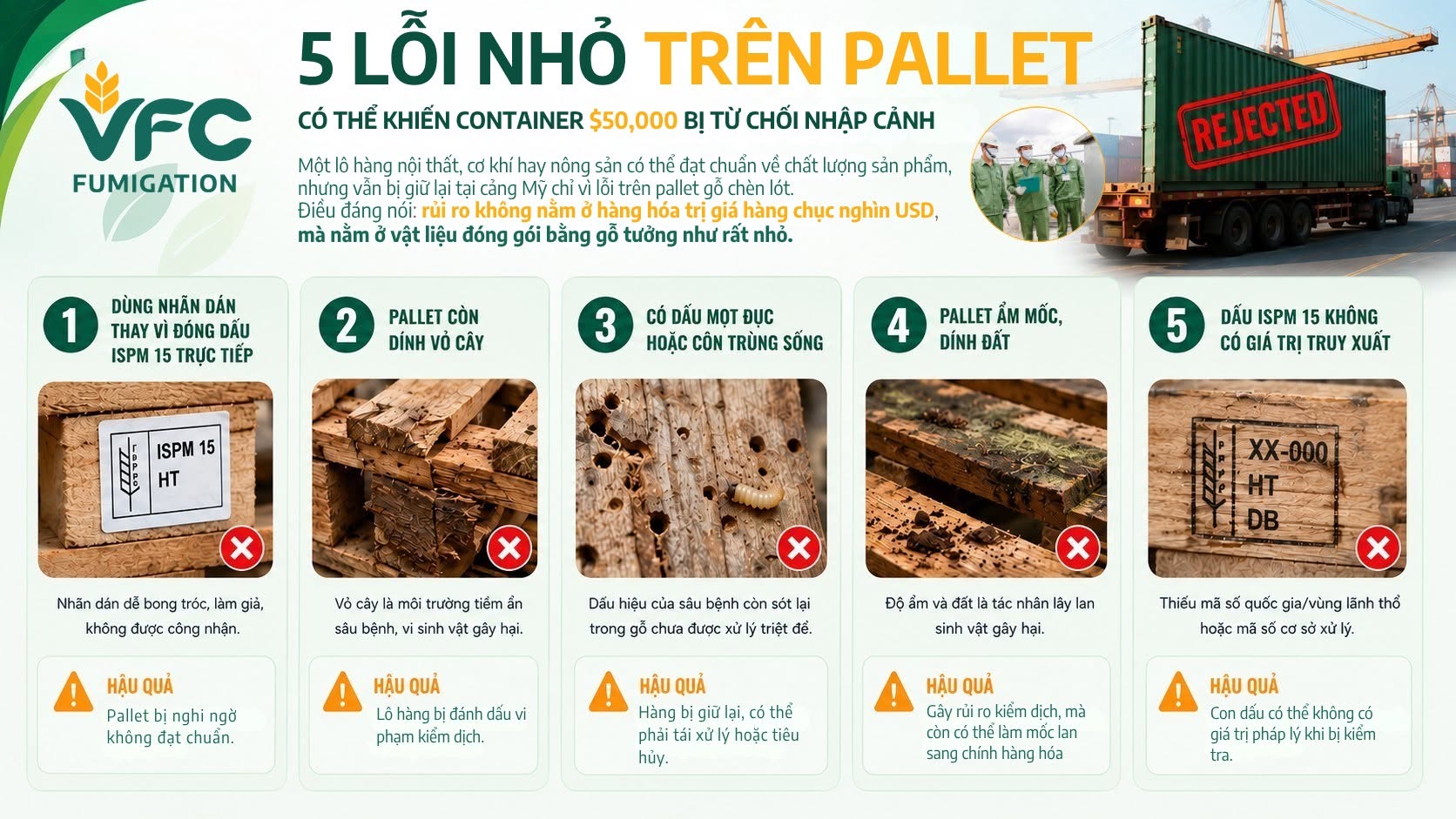
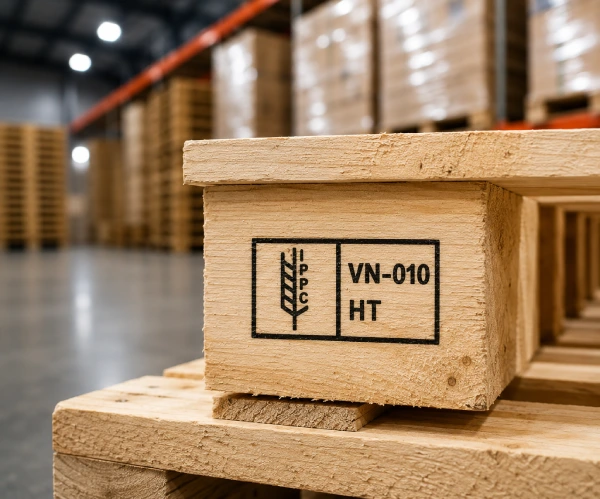
For wood packaging materials, many countries require treatment according to ISPM 15 standards prior to export. After heat treatment or fumigation using an appropriate method, the material will be stamped as required to prove compliance with international requirements. Businesses should note that the ISPM 15 stamp, although a small detail, can determine the customs clearance of an entire export shipment if errors occur or if it becomes smudged.
Before sealing the container, businesses should also review minor pallet defects, as last-minute pallet replacements, smudged stamps, or additional dunnage materials can introduce new risks. See more about 5 minor pallet errors that can put containers at risk upon entry.
How does the plant quarantine process work?
Depending on the type of goods, mode of transport, and regulations of the specialized management authority, the quarantine process may vary slightly. However, in general, import-export businesses will go through a standardized process consisting of the following 4 strict steps:
Step 1: Declaration and document receipt (quarantine registration)
The business declares shipment information on the National Single Window system or submits physical documents directly to the regional Plant Quarantine Sub-Department.
To register for plant quarantine, the business prepares documents according to the regulations applicable to each type of goods and the purpose of export or import. In addition to the plant quarantine registration form, the quarantine authority may request additional shipment-related documents to support inspection and information cross-checking in specific cases.
Step 2: Physical inspection of goods and sample collection for analysis
After the documents are accepted as valid, the quarantine authority will assign specialized officers to the inspection site, usually at the port, border gate, bonded warehouse, or the business’s own warehouse if permitted, to conduct a physical inspection of the shipment:
- External visual inspection: Assess cleanliness, packaging condition, moisture level, and check whether there are any signs of live harmful organisms.
- Sample collection for testing: Officers will take random samples according to the prescribed ratio for each commodity. For bulk agricultural shipments, seeds, or high-risk goods, samples will be sent to a laboratory for identification and analysis to accurately detect fungi, bacteria, or insects subject to strict control.
For agricultural products and dry raw materials, small organisms can still affect quality and inspection results. Businesses can see more about Grain Mite – a small but notable pest for export agricultural products.
Step 3: Apply technical treatment measures, if required
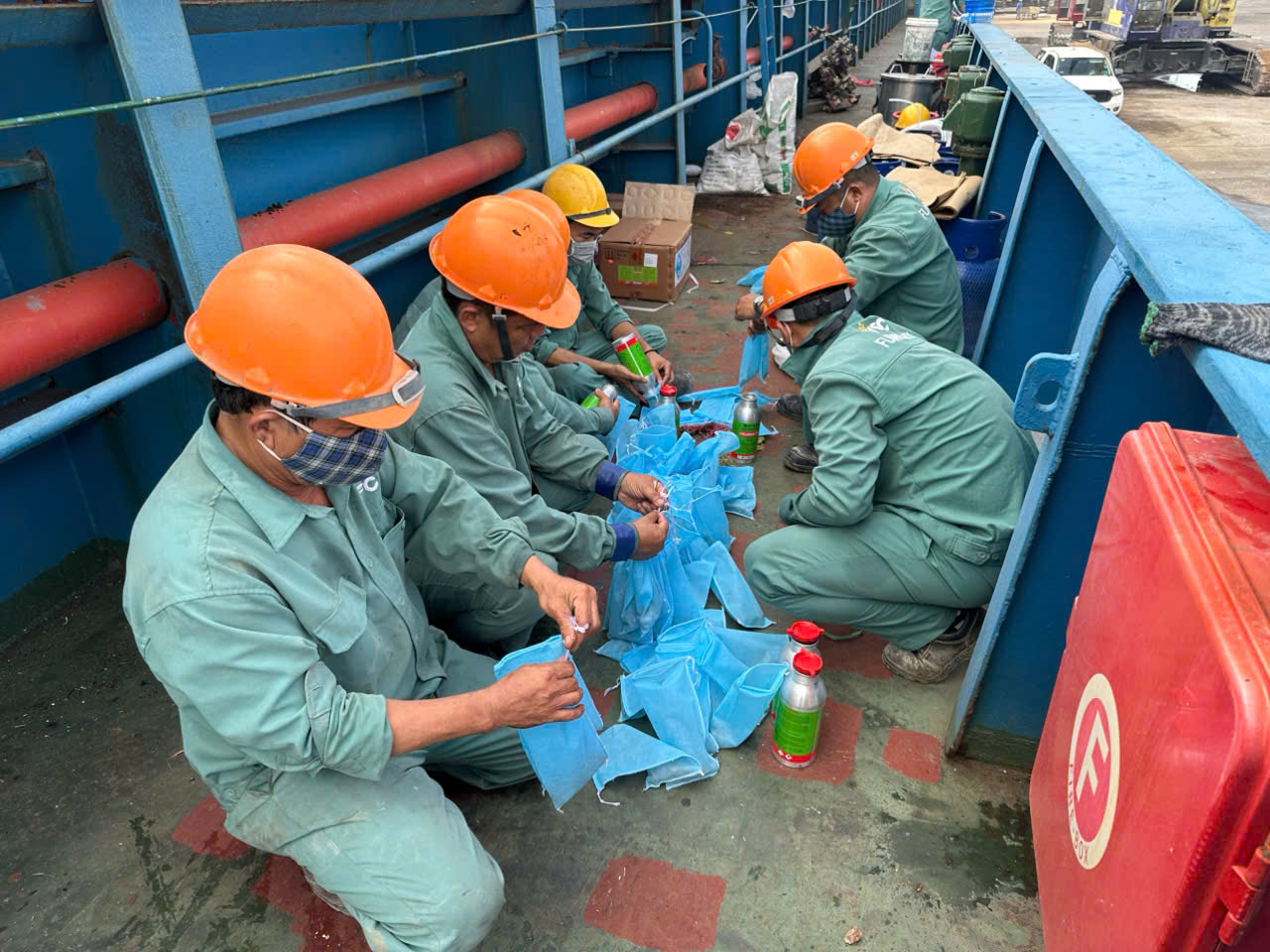
If inspection results detect pests that require treatment, or if the importing country requires treatment before export, the business will coordinate with a qualified provider to apply the appropriate treatment measure in accordance with regulations.
Depending on the type of goods and the requirements of each market, treatment measures may include:
- Fumigation: Commonly applied to commodity groups such as agricultural products, plant-based materials, animal feed, or wood packaging materials to treat pests according to quarantine requirements or importing country regulations. If you need to understand the complete process from receiving information and surveying to treatment and certificate issuance, refer to the 2026 export container fumigation guide.
- Heat Treatment or other technical measures according to importing-country regulations and applicable standards.
For wood packaging materials (WPM), after successful treatment under ISPM 15, the materials will be stamped according to regulations before being used in international trade.
Step 4: Result assessment and issuance of the Phytosanitary Certificate
After the inspection process is completed and plant quarantine requirements are met, the competent plant quarantine authority will issue the Phytosanitary Certificate in accordance with regulations.
The Phytosanitary Certificate is a document confirming that the shipment meets the quarantine requirements of the exporting country and is used in the export document set for shipments subject to quarantine. It is also sent to the partner to carry out procedures in the importing country according to the requirements of each market.
In cases where the shipment does not yet meet quarantine requirements or pests subject to treatment are detected, the quarantine authority will guide the business to implement appropriate treatment measures before considering the issuance of the Phytosanitary Certificate. For shipments undergoing fumigation, businesses also need to manage consistency between on-site information and the treatment certificate. See more about export commodity fumigation from cargo treatment to data and certificate management.
The relationship between plant quarantine and cargo fumigation
Many businesses often confuse plant quarantine with cargo fumigation. In reality, the two activities are closely related but serve different functions.
Plant quarantine is a regulatory activity conducted by a competent authority to assess whether biosecurity requirements are met. Cargo fumigation, meanwhile, is a technical treatment measure applied when goods need to be treated for harmful organisms before certification or before export.
For markets with strict requirements, fumigation must be carried out according to technical standards, with proper control of fumigant concentration, treatment time, on-site conditions, and supporting documentation. Clear operational data helps businesses more easily cross-check information with partners or regulatory authorities when needed.
You may also be interested in: ISPM 15-standard fumigation/treatment service for pallets and wooden packages by Vietnam Fumigation Joint Stock Company (VFC).
Special cases exempt from plant quarantine
Many businesses mistakenly believe that all goods of plant origin require quarantine. However, under current regulations, the following product types are often exempt from plant quarantine, or may only require food safety inspection, because they have undergone deep processing and no longer pose a risk of carrying live harmful organisms:
- Cooked or deeply processed agricultural products: Packaged roasted ground coffee, salted roasted cashew nuts, crispy dried fruits, and flours such as wheat flour and rice flour that have undergone industrial heat treatment.
- Treated bamboo and rattan handicrafts: Products that have been impregnated with anti-termite and wood-boring insect chemicals and finished with a glossy coating.
Note: The product itself may be exempt, but if the shipment uses raw wooden pallets or wooden battens for packaging, that packaging material must still undergo fumigation and comply with ISPM 15 stamp standards as usual.
Once the shipment needing treatment is identified, the next step is to evaluate the provider's execution capacity, documentation, and support capabilities. See 4 steps to selecting a reputable fumigation provider in the logistics supply chain.
Featured Knowledge

Related Knowledge