









 SECTION
01
SECTION
01
2026 Export Container Fumigation Guide: AFAS Standards, Technical Requirements & Faster Customs Clearance

Category:
Fumigation by Industry Sector

Published date:
11/08/2026
Share
In the context of international trade in 2026, phytosanitary compliance is becoming an increasingly critical link in export supply chains. Biosecurity authorities worldwide continue to tighten technical requirements to prevent the introduction and spread of invasive species. Even a minor oversight resulting in the detection of live pests inside a container or in wood dunnage at the destination port can lead to shipment delays, substantial additional costs, or even re-export. This guide from VFC FUMIGATION provides a standardized container fumigation solution to help businesses optimize costs and support safe, efficient customs clearance.
Table of Contents
1. What Is Export Container Fumigation and Why Is It Required?
1.1. What Is Export Container Fumigation?
Export container fumigation is a technical treatment method that uses specialized fumigants within an enclosed space to eliminate live pests at all stages of development-from eggs and larvae to pupae and adults-present inside the container, cargo, or dunnage materials.
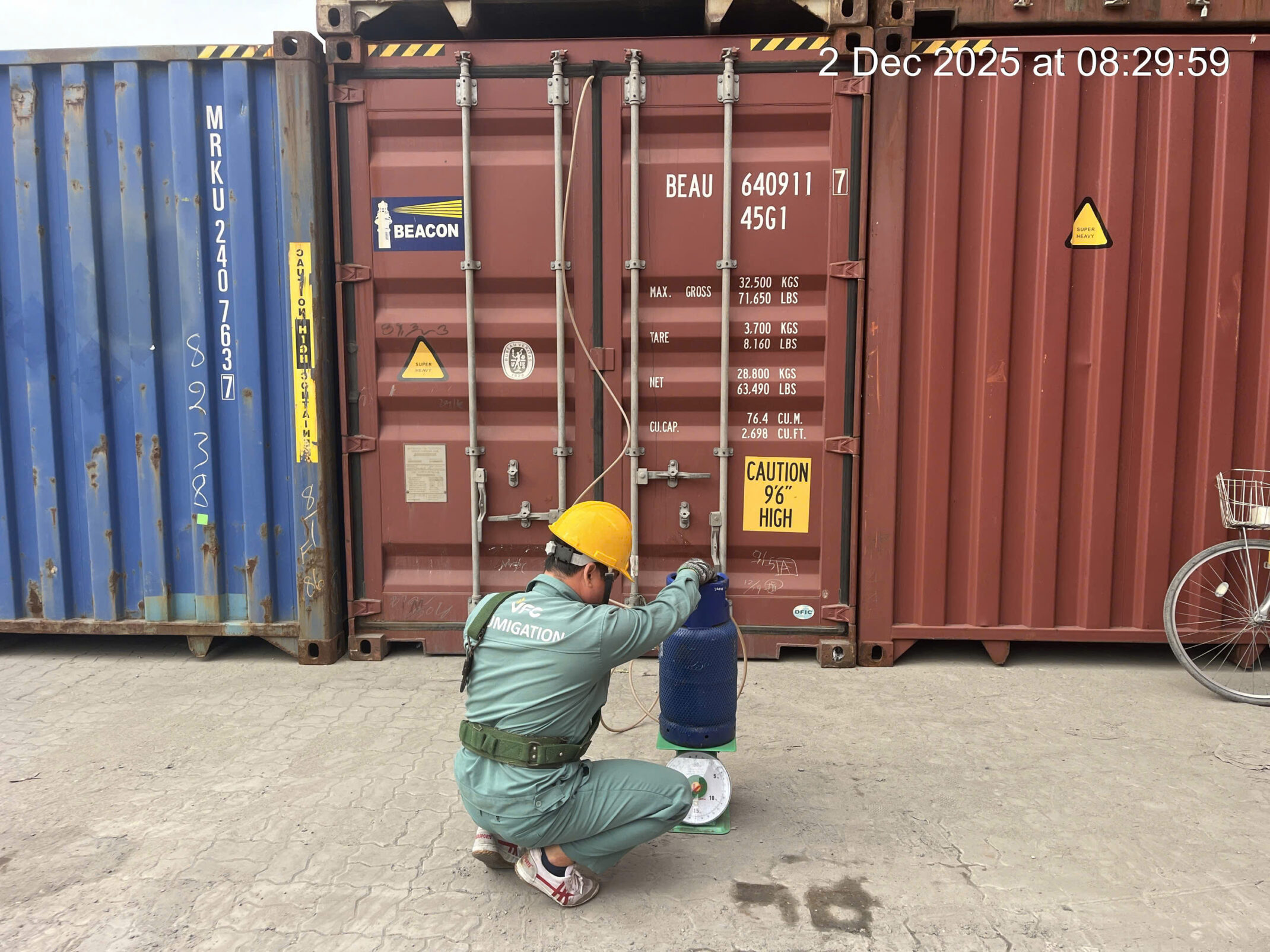
International-Standard Container Fumigation by VFC Fumigation
Clear Distinction Between Standard Industry Terms:
In day-to-day commercial practice in Vietnam, many businesses still commonly refer to this treatment as “hun trùng.” However, in formal phytosanitary terminology, “khử trùng” is the standardized Vietnamese term used by the industry, as it more accurately reflects the technical and regulatory nature of the service.
You can learn more about the difference between these two terms here!
1.2. Serious Consequences of Detecting Live Pests in Export Containers
When the shipment arrives at the destination port, the importing country’s quarantine authorities may carry out an inspection. If live pests are detected, or if wood packaging material (WPM) is found to be non-compliant with ISPM 15 requirements, the shipment may be subject to strict regulatory actions, including:
- Detention and mandatory treatment: The shipment may be held at the destination port and required to undergo re-fumigation, with treatment costs at the destination often significantly higher than those incurred in Vietnam.
- Mandatory destruction or re-export: In more serious cases, the competent authorities at the destination may order the shipment to be destroyed locally or require the entire container to be re-exported in its original condition to the port of origin.
- Severe financial and reputational losses: Businesses may incur substantial demurrage and storage charges that continue to increase over time, in addition to round-trip freight costs. More importantly, such incidents can seriously damage the reputation of Vietnamese exporters in international markets.
For agricultural commodities, the risks are not limited to fumigant application. They also involve the condition of the cargo, treatment records, and post-treatment certification. Learn more about the export agricultural fumigation process, from cargo treatment to certificate management.
2. Markets with Strict Phytosanitary Requirements, Especially Australia
2.1. Pest Control Requirements for Shipments to the United States
Export shipments to the United States, as well as to other markets with stringent phytosanitary requirements, must comply strictly with applicable pest control regulations. In the U.S. market in particular, quarantine authorities maintain especially rigorous surveillance for wood-boring insects. Businesses should therefore ensure that all technical requirements are followed accurately to minimize compliance risks. Actual requirements vary depending on the commodity, packaging materials, and import conditions. Businesses can also refer to whether fumigation is mandatory for cargo bound for the United States before determining the appropriate treatment method.
2.2. AFAS Standards for Exports to Australia
AFAS (Australian Fumigation Accreditation Scheme) is a fumigation accreditation program administered by the Australian Department of Agriculture, Fisheries and Forestry (DAFF). All treatment providers operating under this scheme must be assessed and accredited by DAFF and issued an official registration number.
- Target commodities and treatment procedures: Depending on the type of commodity, packaging material, or target pest, DAFF specifies different technical treatment requirements. In particular, for containers exported to Australia, the container must be positioned at the designated yard and opened so that technicians can carry out the required treatment procedures in accordance with the applicable standard.
- Approved fumigant: In Vietnam, under the AFAS standard, Methyl Bromide is the only fumigant approved for use.
- Brown Marmorated Stink Bug (BMSB) risk management: DAFF applies seasonal BMSB biosecurity measures from 1 September through 30 April of the following year. During this period, shipments originating from or transiting through BMSB risk countries may be required to undergo an approved treatment before import clearance.
For shipments subject to these requirements, businesses can refer to VFC Fumigation’s container fumigation services for Australia under AFAS/BMSB requirements to prepare an appropriate treatment plan. For businesses preparing a specific shipment to Australia, it is also advisable to review the 2026 guide to fumigation requirements for cargo exported to Australia in advance to check the applicable requirements for the commodity, AFAS, BMSB, and related documentation.
2.3. Treatment Requirements for Goods Exported to the European Union (EU)
Europe, particularly major gateway ports in countries such as the Netherlands and Germany, imposes stringent requirements on chemical safety.
Goods exported to this region must undergo fumigation and a compliant safe aeration process in accordance with applicable standards.
3. ISPM 15 Requirements for Wood Packaging Material (WPM)
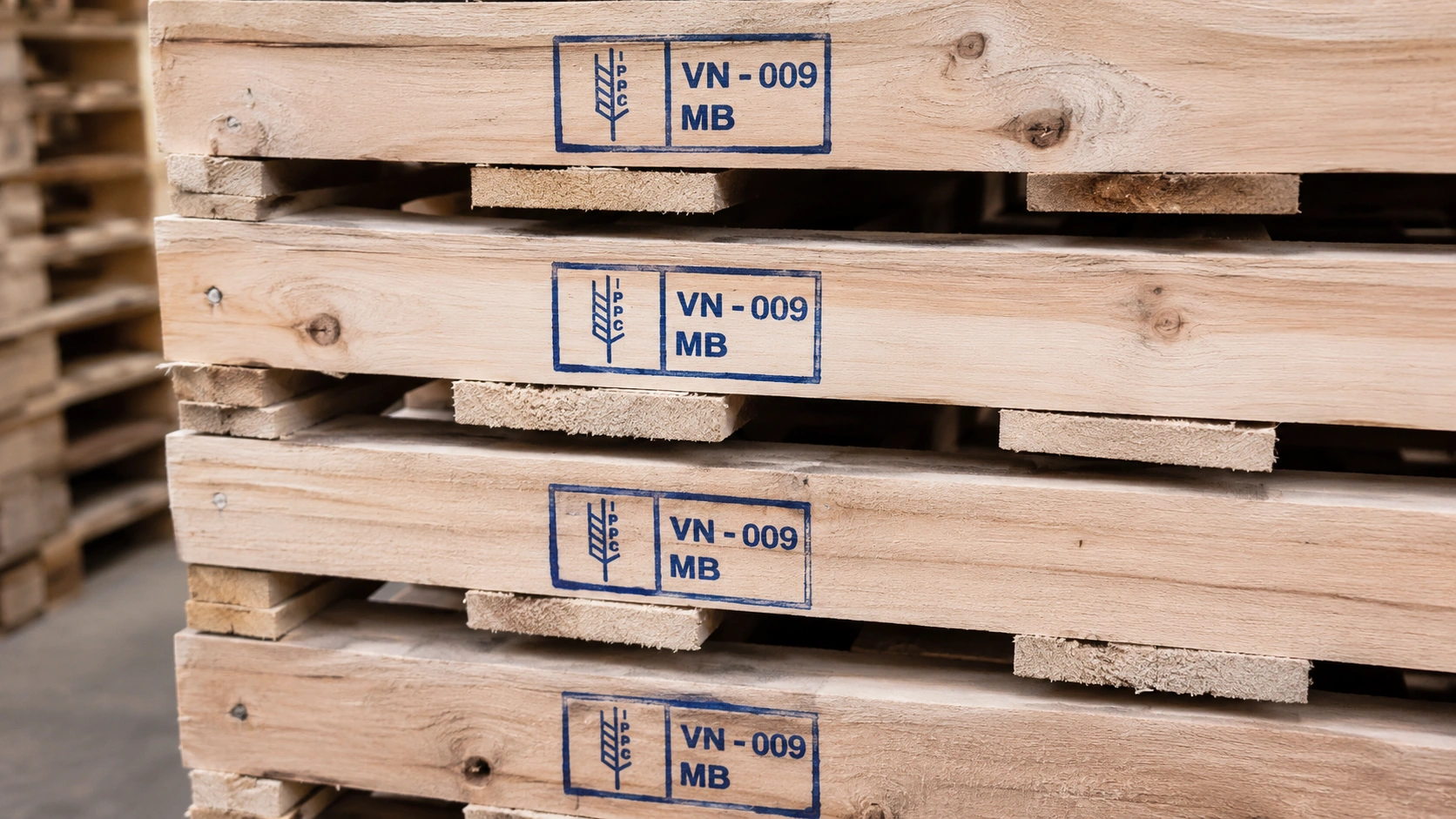
Requirements for a Valid ISPM 15 Mark on Wood Pallets and Container Dunnage
3.1. Requirements for Wood Packaging Materials (Pallets and Dunnage)
Wood packaging material (WPM), such as pallets, wooden crates, and dunnage, must meet stringent technical requirements for the wood material used:
- Debarked: The wood must be free from bark, except for any residual bark that falls within the permitted size limits.
- Wood quality: The wood must be properly dried to an appropriate moisture content, free from mold, and show no signs of wood-boring insect infestation.
3.2. Requirements for a Valid ISPM 15 Mark
The ISPM 15 mark serves as evidence that the WPM has been treated in compliance with international standards:
- The mark must be clear and legible, applied with durable, non-fading ink, and free from smudging or blurring.
- The mark must be placed in a clearly visible location and appear on at least two opposite sides of each wooden package or pallet.
3.3. Treatment Methods for Wood Dunnage Under ISPM 15 Standards
ISPM 15 recognizes two primary treatment methods:
- Methyl Bromide (MB) fumigation: Methyl Bromide is applied at a standard dosage of 48 g/m³, with a minimum exposure period of 24 hours.
- Heat Treatment (HT): The wood core temperature must reach at least 56°C and be maintained continuously at or above this temperature for a minimum of 30 minutes.
The two methods involve different treatment mechanisms and application conditions. Businesses can review the differences between Methyl Bromide fumigation and Heat Treatment (HT) under ISPM 15 before selecting the appropriate method for pallets or wooden packaging. If pallets, cases, crates, or wooden dunnage do not yet bear a valid ISPM 15 mark or require treatment before cargo loading, businesses can refer to VFC Fumigation’s ISPM 15 treatment services for pallets and wood packaging materials.
4. Standard Technical Procedure for Container Fumigation
4.1. Export Container Fumigation Procedure
This procedure applies to containerized export shipments destined for international markets such as the United States, Europe, and Asia, helping to effectively eliminate live pests present in the cargo or packaging materials.
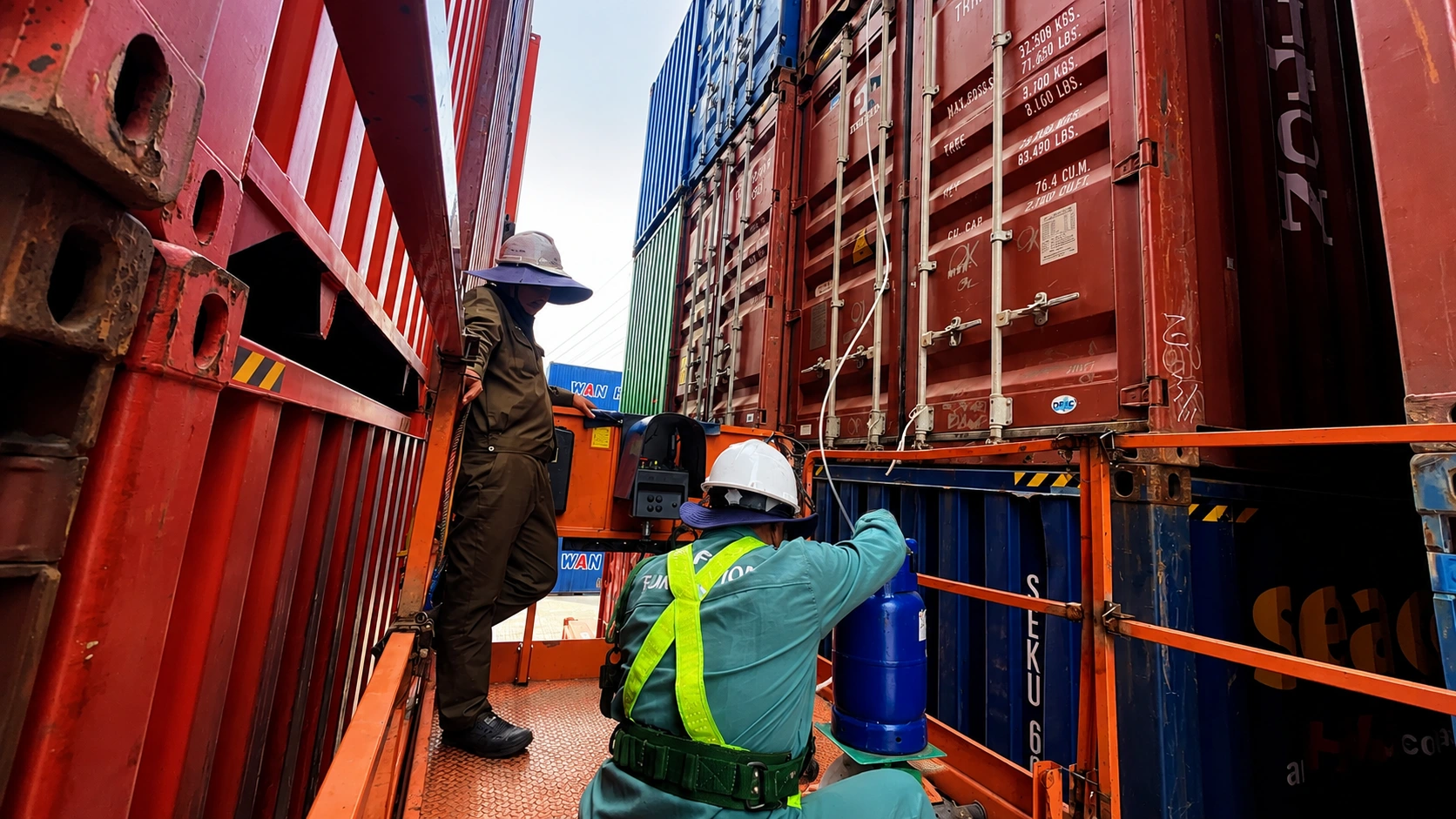
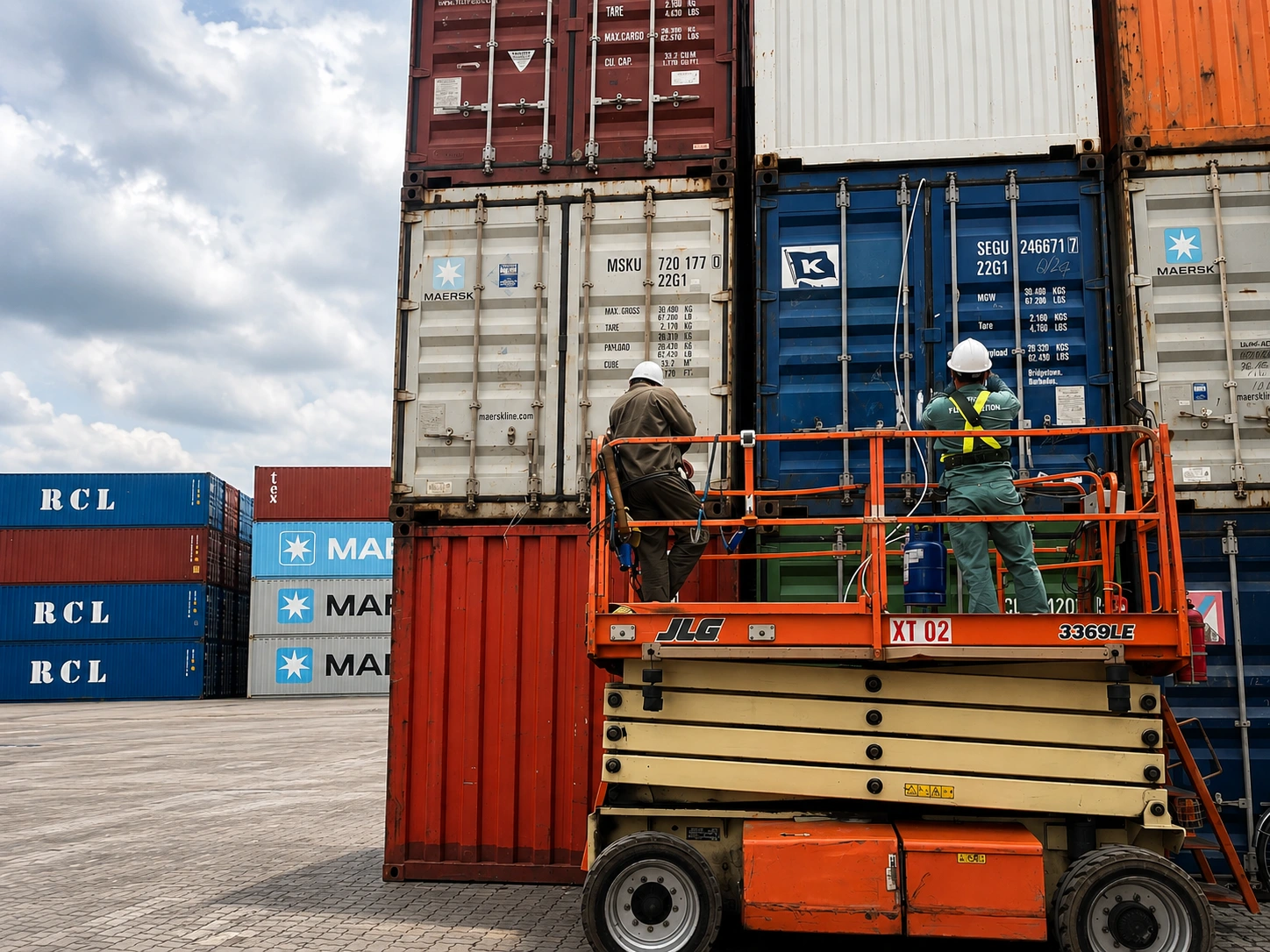
International-Standard Export Container Fumigation Process by VFC FUMIGATION
Summary of the 5-Step Operational Process:
| Step 1 | Request Intake & Site Assessment | Collect complete shipment information, including the commodity, container type, destination port, and vessel cut-off time. Technical personnel then assess the container’s gas-tightness and packaging materials to determine the appropriate treatment method. |
| Step 2 | Fumigation Execution | Install fumigant application lines, gas sampling lines, and circulation fans where required. Close the container doors and seal the ventilation openings and door gaskets using suitable specialized sealing materials. Apply the fumigant-Methyl Bromide or Aluminium Phosphide-at the prescribed dosage, place fumigation warning signs, and conduct leak checks. |
| Step 3 | Fumigation Exposure & Monitoring | The fumigation exposure period depends on the fumigant used, the target pest, and the applicable treatment standard. During the exposure period, technicians conduct periodic fumigant concentration measurements to verify that the required concentration is maintained and ensure effective pest control. |
| Step 4 | Safe Aeration & Handover | After the fumigation exposure period is completed, the sealing materials are removed to allow safe aeration. Specialized gas detection equipment is then used to verify that the fumigant concentration has fallen below the applicable Threshold Limit Value (TLV) before the container is inspected, accepted, and handed over. |
| Step 5 | Issuance of the Fumigation Certificate | Cross-check the on-site treatment records and issue an internationally recognized Fumigation Certificate for customs clearance procedures. |
For containers gated in at Ho Chi Minh City ports, businesses can refer to this practical guide on container fumigation at Cat Lai Port, gate-in schedules, and the required documentation.
4.2. Container Fumigation Procedure for Australia under AFAS (DAFF) Requirements
Australia applies the AFAS fumigation accreditation scheme, which is strictly administered by the Australian Department of Agriculture, Fisheries and Forestry (DAFF). The AFAS process includes mandatory technical requirements that differ significantly from standard fumigation procedures:
- Yard positioning and door-opening requirements: The container must be placed on a level, gas-tight treatment area, and the container doors must be opened so that technicians can carry out the treatment directly in accordance with the applicable AFAS requirements.
- Mandatory fumigant: In Vietnam, Methyl Bromide is the only fumigant approved for treatments carried out under AFAS requirements for cargo destined for Australia.
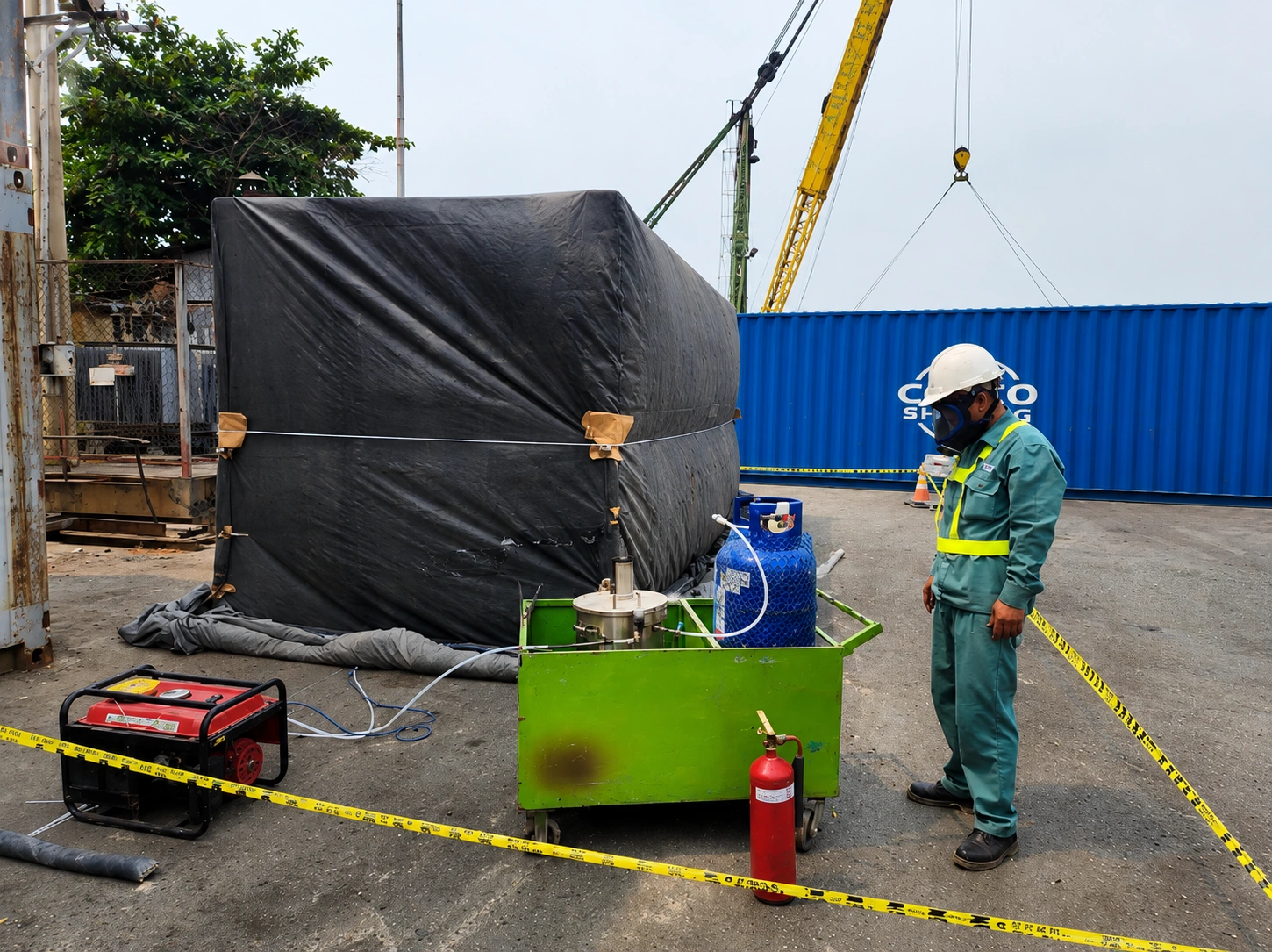
Technicians carry out container fumigation for Australia in accordance with AFAS requirements.
Summary of the Standard AFAS Treatment Process:
| Step 1 | Shipment Information Intake & Yard Assessment | Receive complete shipment order details. Assign technical personnel to assess the container placement area at the port yard or ICD, ensuring a level surface, adequate safety clearance from surrounding objects, and sufficient space for safe aeration. |
| Step 2 | Fumigation Execution | Place the container on the treatment yard and open the container doors to install the fumigant application lines, gas sampling lines for concentration monitoring, and circulation fans. The entire container is then covered with a gas-tight fumigation sheet, with the edges securely sealed to maintain gas-tight conditions. |
| Step 3 | Fumigation Exposure & Monitoring | After the fumigant is introduced, fumigant concentration measurements are taken to determine the required exposure period. A minimum standard exposure period of 24 hours is maintained in accordance with AFAS requirements. |
| Step 4 | Safe Aeration & Handover | Remove the fumigation sheet and open the container doors, then retrieve all treatment equipment and materials. Conduct safe aeration and use specialized gas detection equipment to verify that fumigant levels have fallen below the applicable Threshold Limit Value (TLV). The container is then handed over to the customer or port operations team. |
| Step 5 | Verification & Issuance of the AFAS Fumigation Certificate | Update the on-site treatment data in the internal FumiApp/BMSB Portal management system and issue the official AFAS-compliant Fumigation Certificate, integrated with a QR code for electronic verification. |
Businesses also need to prepare the required documentation, container gate-in schedule, data submission, and certification at each stage of the process. See the detailed A–Z fumigation process for goods exported to Australia.
5. Common Container Fumigation Mistakes That Can Lead to Cargo Being Held at the Port
- Container not gas-tight: Holes in the container walls or roof, leaking door gaskets, or damaged wooden flooring can cause fumigant to escape rapidly, preventing the required concentration from being maintained long enough to eliminate live pests.
- Fumigant-impermeable packaging: The use of packaging materials that prevent fumigant penetration into the cargo, such as nylon or polyethylene (PE), can reduce treatment effectiveness.
- Use of non-compliant WPM: Using poor-quality wooden pallets, wood with residual bark, WPM without a valid ISPM 15 mark, or marks that are smudged or illegible.
- Improper fumigation treatment: Insufficient exposure time or incorrect fumigant dosage compared with the requirements of the importing market.
- Choosing an unqualified service provider: Working with treatment providers that are not listed among DAFF-recognized providers under the AFAS/AusTreat programs for exports to Australia may result in the issued fumigation certificate not being accepted as valid by the relevant authorities.
These are among the most common mistakes. Businesses can also review the 7 common mistakes and risks in export cargo fumigation before confirming the treatment schedule.
6. VFC Fumigation Solutions: Safe – Compliant – Efficient Customs Clearance
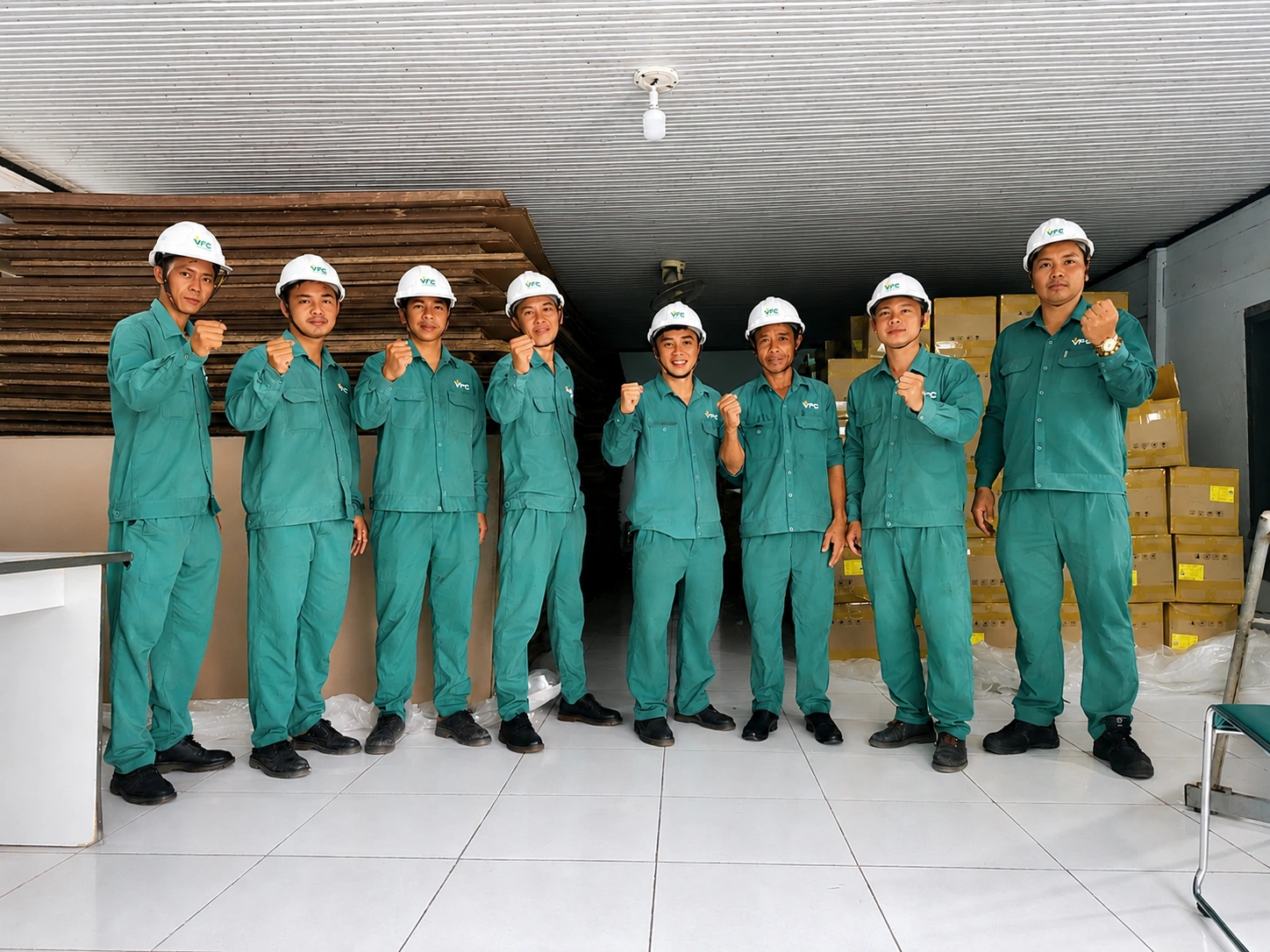
Reliable, High-Quality Container Fumigation Services by VFC Fumigation
6.1. Key Strengths of VFC Fumigation
Leading technical expertise: As a leading fumigation service provider in Vietnam with more than 50 years of experience, VFC holds official AFAS accreditation recognized by Australia’s DAFF and complies with stringent international requirements, including ISPM 15, U.S. EPA regulations, and DAFF requirements.
Two-Layer Transparent Process:
- Layer 1 – Internal Management (FumiApp): Centrally stores all actual treatment and operational data.
- Layer 2 – Electronic Verification (QR Code): A QR code integrated into the fumigation certificate allows shipping lines, freight forwarders, and overseas buyers to instantly look up and verify the validity of the original certificate online.
Comprehensive 24/7 Support: Fumigation certificates are issued promptly and accurately. VFC Fumigation’s technical experts are available to support document verification and provide technical data clarification if phytosanitary issues or claims arise at the destination port.
6.2. Container Fumigation Service Packages at VFC Fumigation
- Export container fumigation directly at major seaports and ICDs nationwide, including Cat Lai, Cai Mep, Hai Phong ICDs, Da Nang, and Quy Nhon.
- Fumigation under gas-tight sheets at the customer’s factory warehouse before container loading.
- In-depth technical consultation on fumigation solutions tailored to the specific requirements of each destination market, including Australia (AFAS), the United States, Europe, and New Zealand.
7. Optimizing Costs and Benefits with VFC Fumigation’s International-Standard Fumigation Services
- Minimizing the risk of re-export: Helps ensure that shipments comply with AFAS, ISPM 15, and stringent biosecurity requirements in markets such as the United States, Australia, and Europe.
- Optimizing customs clearance time: A nationwide network of technicians available 24/7 at major seaports helps ensure timely fumigation operations so containers can be gated in before the vessel cut-off time (closing time).
- Reducing operational costs: Accurate treatment from the outset helps businesses avoid unnecessary demurrage and storage charges at the destination port.
Don’t let a minor phytosanitary oversight disrupt your entire export supply chain!
Ensure your export containers comply with AFAS, ISPM 15, and applicable international phytosanitary requirements from the outset.
Contact VFC Fumigation today for a free technical consultation and a competitive quotation:
- Hotline 24/7: 0914.773.300
- Email: contact@fumigation.vn
- Address: VFC Tower, 29 Ton Duc Thang Street, Ben Nghe Ward, District 1, Ho Chi Minh City, Vietnam
SECTION
01