





Category:
Standards & Regulations

Published date:
30/03/2026
Share




The shipping schedule is set and the Bill of Lading is ready, but has your wooden packaging material truly "passed" international quarantine? In import-export, handling Wooden Packaging Material (WPM) is not merely about pest control; it is a mandatory requirement for customs clearance. Currently, many businesses are still confused between the two common treatment methods: MB and HT. This article will help you clearly understand and distinguish between these two methods to make the optimal choice for your shipment.
1. Why must wooden packaging materials (WPM) undergo quarantine treatment?
In international trade, wooden packaging materials (WPM) such as pallets, crates, and dunnage are widely used. However, natural wood is an ideal environment for pests like wood borers to hide. If not thoroughly treated, they can spread pests from one country to another.
Therefore, to be issued a phytosanitary certificate and ensure the smooth flow of goods, all WPM must undergo pest treatment. These regulations are standardized under the international ISPM 15 standard applied to countries globally. Currently, there are two main forms of treatment recognized in Vietnam: Methyl Bromide (MB) fumigation and Heat Treatment (HT).
>> You may be interested: ISPM - Pallet / Wooden Packing
2. What is Methyl Bromide (MB) Fumigation?
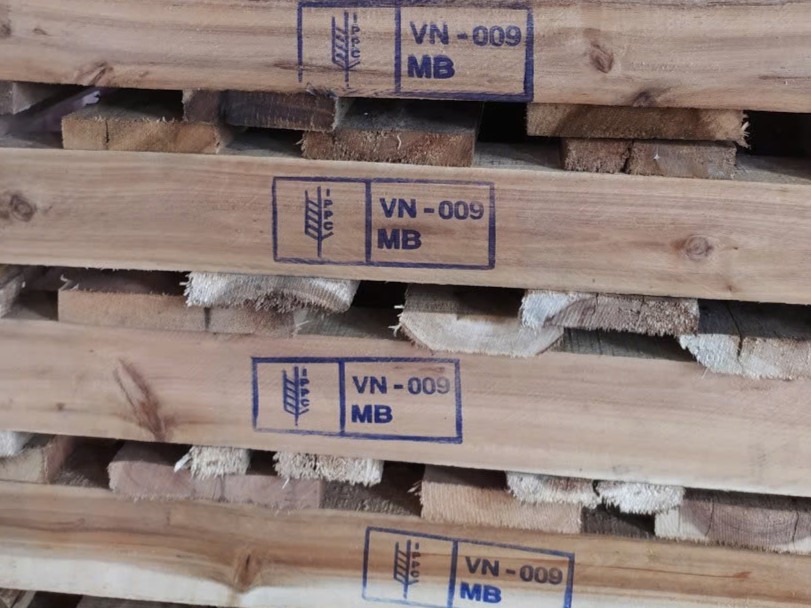
When treated with Methyl Bromide (MB) fumigation, WPM are stamped with the identification code VN-009 by VFC Fumigation, making it one of the most popular treatment methods.
Treatment Method
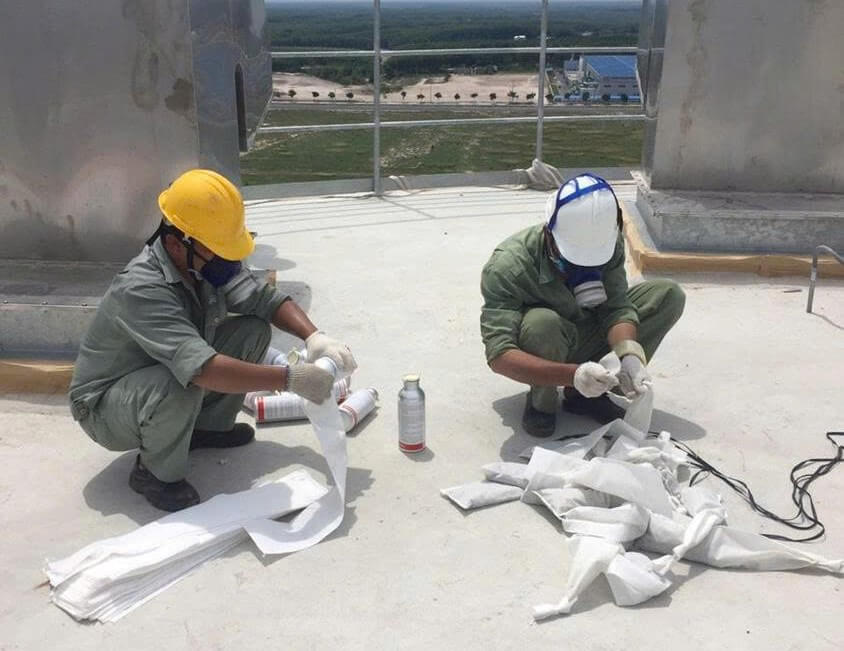
This method is carried out by fumigation: After sealing the treatment structure, Methyl Bromide gas is injected into that structure (container, chamber, or tarpaulin-covered shipment). The gas will diffuse and penetrate deeply into the wood fibers for a specific duration and concentration to eliminate pathogens.
Outstanding Advantages:
The biggest strength of the MB method is its flexibility. It is the "go-to" choice for shipments requiring urgent processing. The fumigation unit can perform the work right at the gathering yard or process it directly once the cargo is already packed on pallets.
Suitable Application:
The MB method is optimally indicated for:
- Shipments that need to be processed immediately at the customer's warehouse or the yard to meet vessel schedules.
- Businesses wanting to optimize operational processes and save on packaging and warehousing costs.
>> See more: Methyl bromide gas detector
3. What is Heat Treatment (HT)?
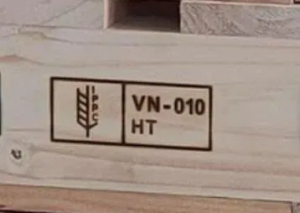
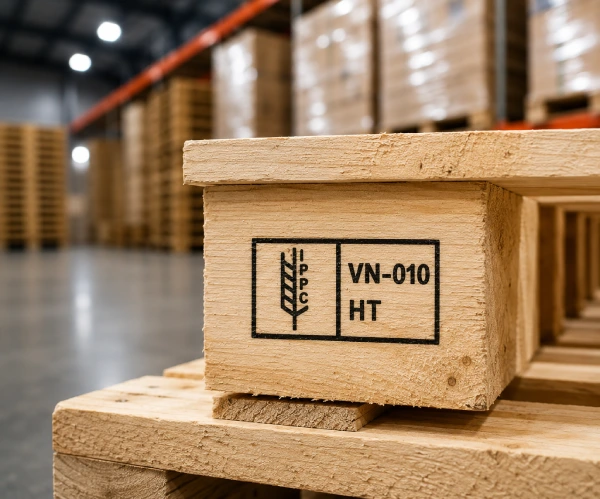
Completely different from MB, Heat Treatment (HT) is a high-tech, chemical-free solution. After treatment, WPM are stamped with the identification code VN-010 (by VFC Fumigation).
Treatment Method
As the name implies, this is a heat-based treatment method. Instead of using chemicals, wooden materials (pallets, crates, etc.) are placed into a specialized heat chamber (drying kiln). Here, the wood core temperature is heated and maintained at a minimum of 56°C for at least 30 minutes. This temperature level is sufficient to eliminate all pathogens, insects, and larvae hiding inside.
Outstanding Advantages:
HT is considered a premium standard, especially safe due to these advantages:
- Completely chemical-free: Ensures absolute safety for accompanying goods.
- Good moisture control: The heat-drying process removes excess moisture, making wooden pallets lighter.
- Mold prevention: By thoroughly removing moisture, the HT method effectively prevents the development of mold during long-distance shipping.
Suitable Application:
HT is a mandatory "passport" or strongly recommended for:
- Goods exported to markets with strict standards regarding the environment and safety, such as Australia, the U.S., and the European Union (EU).
- Goods exported to clients with high requirements regarding chemical usage.
See more: Fumigation for Australia/US/EU
4. Overview Comparison Table of MB and HT
To help businesses visualize and make decisions, here is a summary of the differences between the two methods:
| Criteria | MB (Methyl Bromide) | HT (Heat Treatment) |
|---|---|---|
| VFC Fumigation ID | VN – 009 | VN – 010 |
| Treatment Method | Fumigation with MB | Drying in a heat chamber, core temperature maintained at ≥56°C for ≥30 min |
| Chemical Use | Yes | No chemicals used |
| Key Advantage | Flexible, processed directly at the warehouse/yard where cargo is packed on WPM | Ideal for strict markets or clients with high requirements against chemical use |
>> Read more: Methyl Bromide or Phosphine: Which fumigation solution optimal for your cargo shipment?
5. MB and HT – Two methods, one goal of sustainable customs clearance
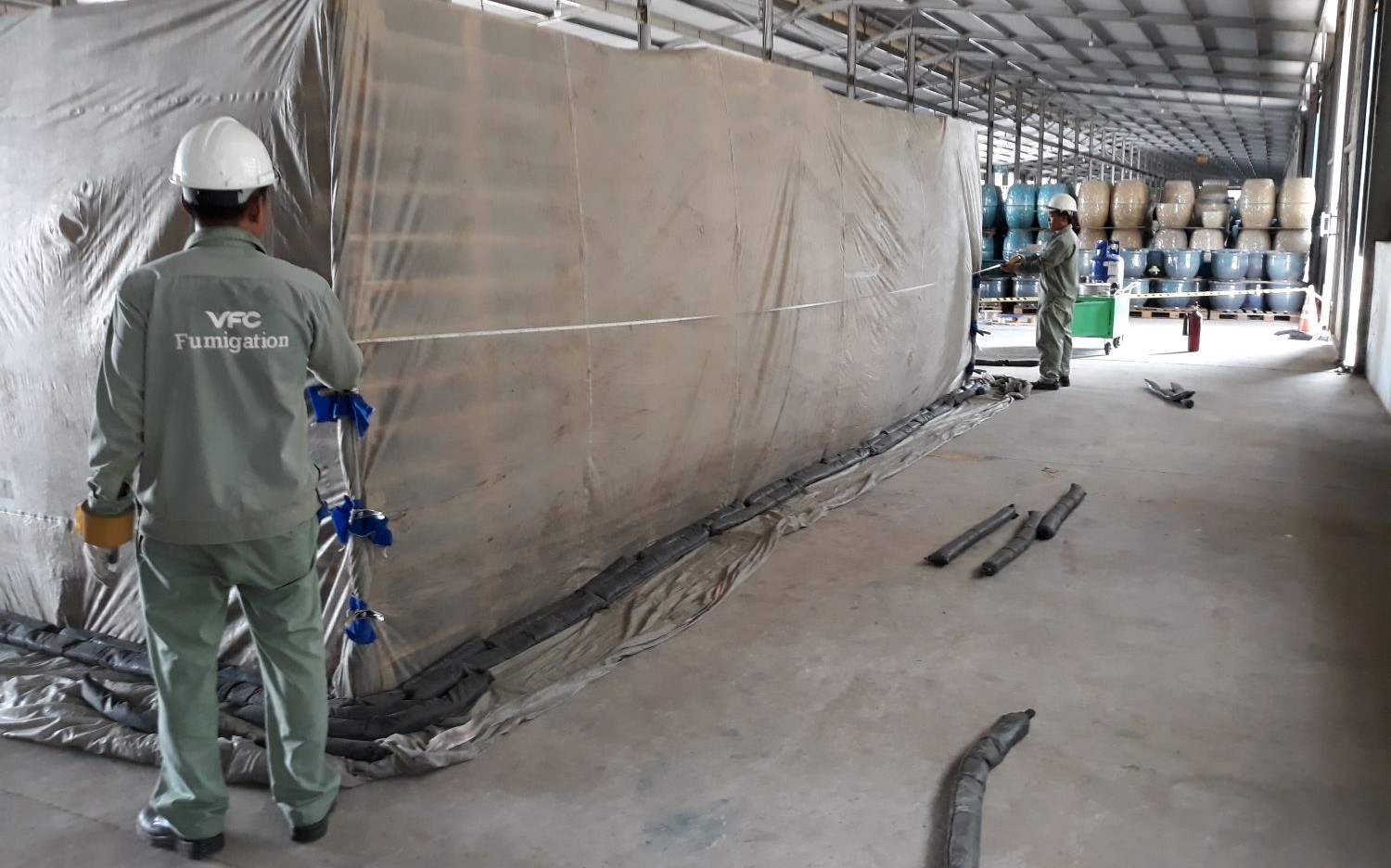
In reality, both Heat Treatment (HT) and Methyl Bromide (MB) are recognized under the ISPM 15 standard with equivalent legal value when applied to wooden packaging materials (WPM). Therefore, businesses can absolutely use either method for export, provided the execution process ensures proper technique and meets all phytosanitary requirements of the importing country.
In the export preparation process, the most important thing is not choosing between MB or HT, but ensuring that all wooden packaging materials have been thoroughly treated for pests and comply with phytosanitary regulations. Preparing ISPM 15-compliant pallets and wooden crates is the key factor that helps the packing and circulation process proceed smoothly, avoiding risks of being stopped at customs borders.
Depending on the specific shipment and operational conditions, businesses can flexibly apply the appropriate method. For shipments requiring fast, flexible processing, MB is a solution worth considering. Meanwhile, HT is often prioritized for markets with high requirements.
We hope that through this article, export-import businesses have a clearer view of the two most popular WPM treatment methods today. Thoroughly preparing international-standard packaging materials is a solid foundation for every shipment to have "fair winds and following seas."
See more: Why does improper fumigation lead to prolonged risks?
Tags
Featured Knowledge

Related Knowledge