





Published date:
29/06/2026
Share




Wooden pallets are packaging materials widely used in logistics and import-export activities. From consumer goods, agricultural products to industrial machinery, most shipments are fixed on pallets for convenient handling, warehousing, and transportation. However, when using export wooden pallets, businesses need to meet phytosanitary regulations, especially the Ipm 15 standard for Wpm (wood packaging material). Clearly understanding the requirements of each market will help limit the risks of cargo detention, reprocessing, or customs rejection.
What are wooden pallets?
A wooden pallet is a structure assembled from multiple wooden planks to create a supporting surface for goods during warehousing and transportation. This design helps forklifts or handling equipment easily access from multiple directions, shortening operation time and reducing the risk of cargo damage.
In the export sector, wooden pallets are also classified under the wood packaging material (WPM) group. Besides the load-bearing function, pallets must also meet phytosanitary requirements before being introduced into the international transport chain. This is the reason why many enterprises are concerned about the wooden pallet treatment process right from the cargo preparation stage.
The role of wooden pallets in cargo transportation
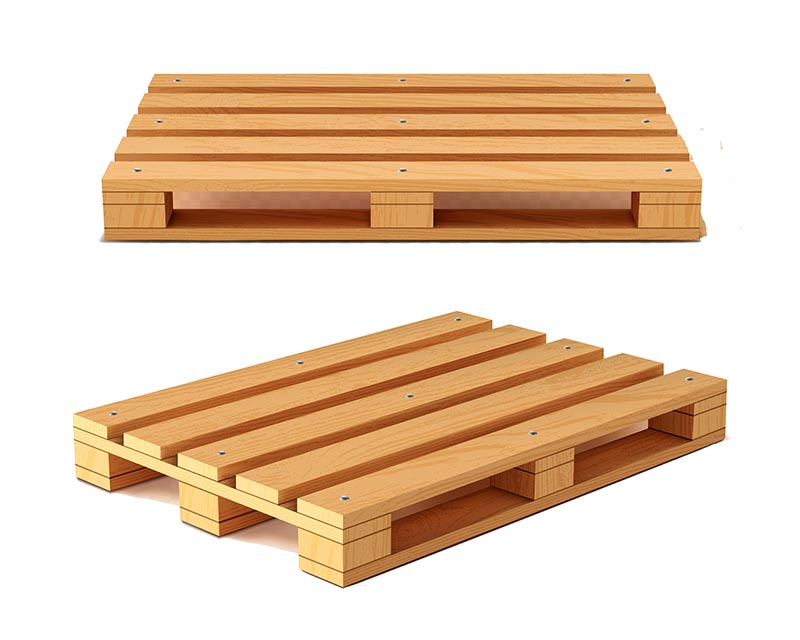
Wooden pallets contribute to standardizing the loading, unloading, and storage process of goods. When the entire shipment is placed on a uniform supporting surface, forklifts can move faster, reducing labor and limiting collisions during warehousing operations.
For export goods, pallets also help maximize container space. Arranging the correct wooden pallet dimensions helps increase the number of packages per shipment, while creating an appropriate distance between the goods and the container floor, limiting the impact of moisture.
Many businesses also combine pallets with wooden crates or pallet boxes to protect high-value machinery and equipment. This solution increases load-bearing capacity during sea transport, especially for international routes with extended transit times.
You may interested in: Export cargo fumigation in container
Popular types of wooden pallets today
Depending on cargo characteristics and market requirements, businesses can choose from many different types of pallets. Among them, pine wood pallets and acacia wood pallets are two commonly used lines thanks to stable raw material supplies and good load capacity.
Pine wood pallets have the advantages of light weight, relatively uniform surface, and are favorable for the heat treatment process according to ISPM 15 standards. This line of pallets is often used in the food, consumer goods, electronics industries, and many items exported to Europe or Japan.
Acacia wood pallets have a sturdy structure, competitive prices, and are suitable for many types of industrial goods. Thanks to high load-bearing capacity, acacia wood pallets are chosen by many businesses to transport machinery, equipment, or heavy cargo.
In addition to classification by wood type, pallets are also designed as single-faced pallets, double-faced pallets, or wooden pallet panels according to custom sizes. Choosing the right type of pallet from the start helps optimize production costs, reduce raw material waste, and improve stuffing efficiency.
Common wooden pallet sizes
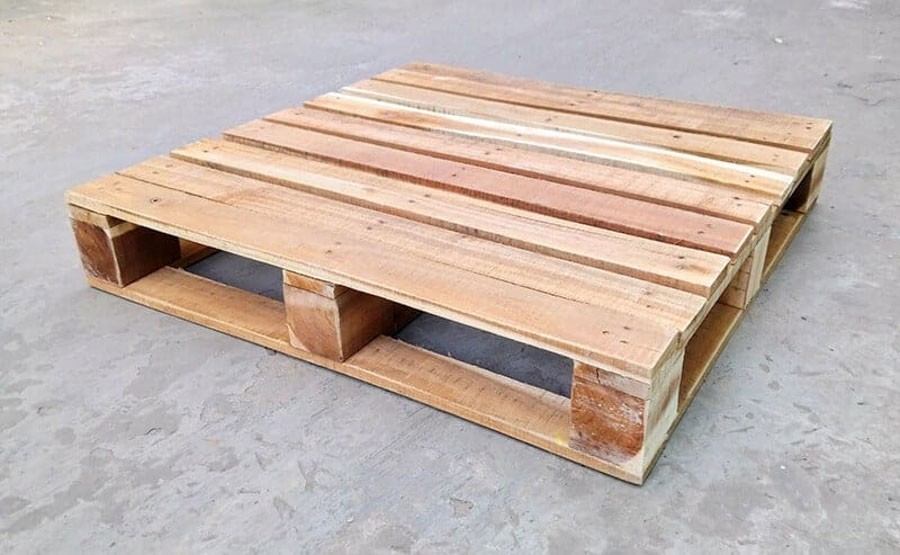
Wooden pallet sizes directly affect container loading capacity and transport efficiency. Each market or industry may use different specifications to suit warehousing systems and handling equipment.
Some common sizes include 1000 × 1200 mm, 1100 × 1100 mm, and 1200 × 1000 mm. In addition to standard specifications, many businesses choose to produce pallets according to custom dimensions to fit their products or packaging lines.
When choosing pallets, businesses care not only about length and width but also need to evaluate height, dynamic load, static load, and stackability. These factors directly affect the safety of goods during storage and transit.
How are pallet boxes, wooden crates, and wpm connected?
Besides wooden pallets, export activities also use many other types of packaging materials such as wooden crates, pallet boxes, and pallet wooden boards. All belong to the wpm (wood packaging material) group if manufactured from natural wood.
Wooden crates are often used to enclose machinery or equipment to limit impacts during transport. Meanwhile, pallet boxes are a solution that combines pallets and box structures to form a unified block, convenient for forklift handling and better cargo protection.
Due to belonging to the wpm group, all of these materials must be treated according to Ipm 15 standards before exporting to countries that apply phytosanitary regulations. After successful treatment, the wooden material will be stamped with the Ippc mark to prove completion of the treatment process according to international standards.
Export wooden pallet standards according to ISPM 15
The ISPM 15 standard is an international regulation issued by the International Plant Protection Convention (Ippc) to control the risk of spreading insects and pests through wood packaging materials. Currently, many countries such as the United States, Canada, Australia, New Zealand, Japan, South Korea, and countries in the European Union apply this standard to imported goods.
The applicable scope includes not only export wooden pallets but also extends to wooden crates, pallet boxes, pallet wooden boards, dunnage, and many other types of wpm. If the wooden material has not been treated properly according to regulations, the shipment may be required to be re-exported, destroyed, or additionally treated right at the port of destination. These situations often incur huge costs and affect the delivery schedule.
According to Ipm 15, wooden materials must be treated by the heat treatment (HT) method or a method accepted by the importing country. After completing the process, the wooden pallet will be stamped with the Ippc mark with full identification information of the treatment facility. This mark is the basis for the quarantine agency to determine that the material has met international requirements.
For businesses that frequently export, choosing a capable WPM (Wastewater Preservative) manufacturer and processor can significantly reduce risks in international trade. This is also a factor that many foreign partners consider when inspecting a supplier's packaging process.
Read more: ISPM 15 Mark: A Small Detail That Can Determine the Customs Clearance of an Entire Export Shipment
Treatment process of wpm for export wooden pallets
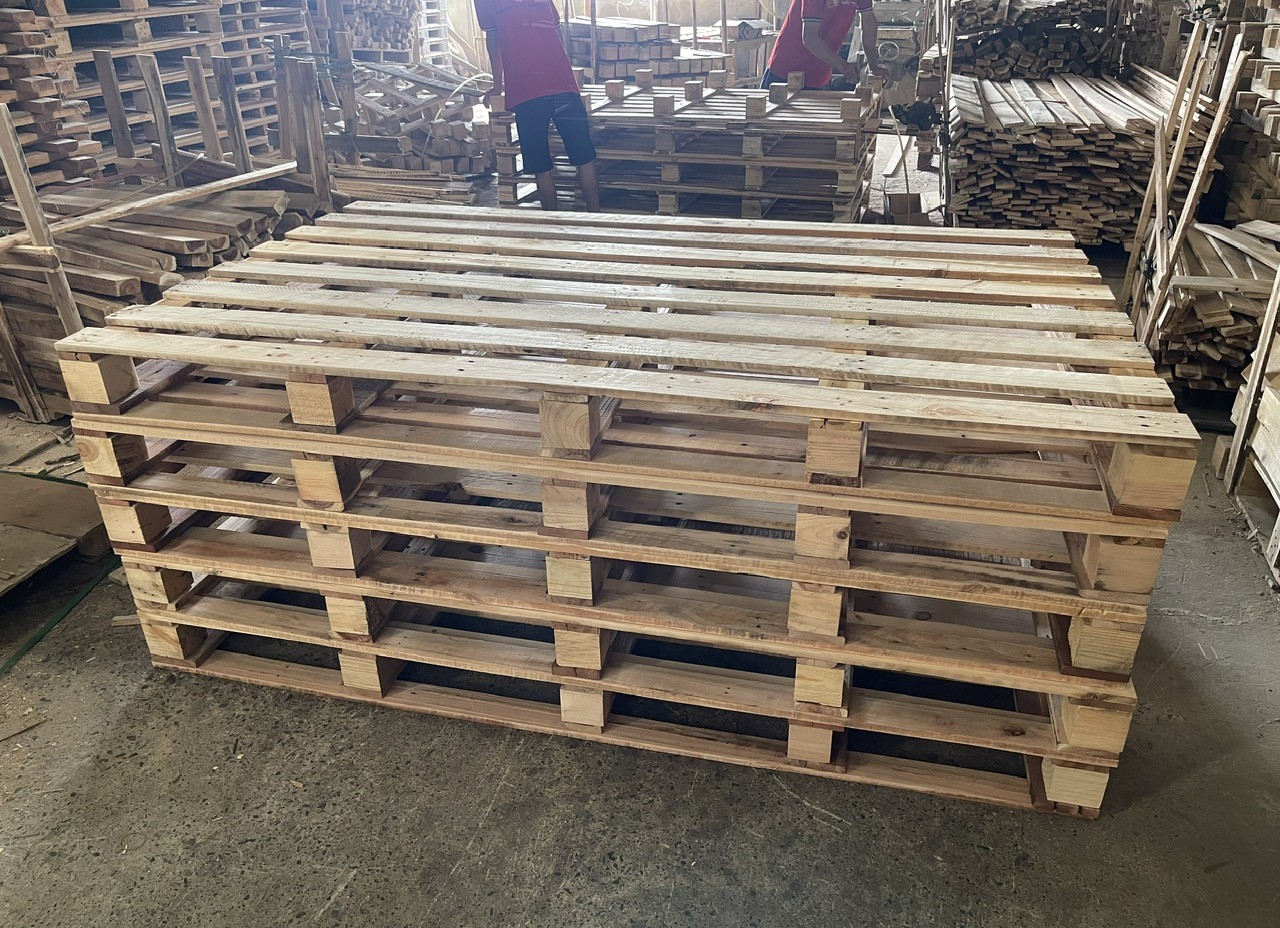
The WPM treatment process begins with selecting suitable wood raw materials. Wood used to manufacture pallets or pallet boxes needs to be debarked according to regulations and quality checked before being put into processing.
After completing the structure, pallets are heat-treated in a specialized system. This process must ensure that the wood core temperature reaches the specified level and is maintained for a period according to ISPM 15 standards. Each treatment batch needs to be monitored and recorded to serve traceability when necessary.
Upon ending the treatment, wooden pallets continue to undergo visual inspection and Ippc stamping. This mark shows the country code, treatment facility code, and the applied treatment method. Only units licensed by the competent authority are allowed to use the Ippc mark on wooden packaging materials.
Businesses should note that the Ippc mark is only valid when stamped properly on pallets or wooden crates. The use of fake marks, non-compliant marks, or untreated materials can all cause the shipment to be rejected by the quarantine agency.
What requirements do export wooden pallets to the United States need to meet?
The United States is one of the markets that strictly applies regulations on wooden packaging materials. Most wooden pallets exported to the United States must meet Ipm 15 standards and bear a valid Ippc mark before the goods arrive at the port.
In addition to wpm treatment requirements, pallets need to ensure a sturdy structure, with no signs of rot, cracking, or insect infestation. Used pallets that are not preserved properly may also be evaluated as non-compliant during the inspection process.
For shipments of machinery or industrial equipment, many businesses choose export pallet boxes to increase product protection. This solution helps limit the impact of vibrations during sea transport, while simultaneously being convenient for forklift handling at the port.
Before exporting to the United States, businesses should review all wooden packaging materials, including pallets, wooden crates, pallet boards, and dunnage materials. Synchronous control right from the start will reduce the risk of container detention costs or delayed delivery.
You may be interested in: ISPM 15 - Pallet/Wooden packing
What factors do export wooden pallet prices depend on?
Export wooden pallet prices do not have a fixed level but depend on many different factors. Wood type, wooden pallet size, design load, and order quantity all directly affect production costs.
If businesses choose pine wood pallets, the cost may differ from acacia wood pallets due to the characteristics of raw materials and processing procedures. Pallet models with large sizes or high load-bearing requirements usually use more materials, so the cost increases accordingly.
The cost of wpm treatment according to Ipm 15 standards is also a factor to be considered. For regular exporting businesses, combining pallet production and treatment at the same unit helps optimize time, reduce transport costs between stages, and is more convenient in document management.
In addition to price, businesses should care about raw material quality, dimensional accuracy, treatment record traceability, and the supply capacity of the manufacturer. These are factors that have a long-term impact on operational efficiency and reputation in export activities.
See more: Types of goods commonly required to undergo fumigation before export


Related Blogs