





Published date:
12/10/2026
Share




Does your business require quarantine treatment for a 20ft or 40ft container, or are you preparing to export a consignment of agricultural commodities or industrial machinery but remain unsure how service costs are determined? Even for identical commodities, market fumigation quotations can vary substantially depending on operational locations, selected active fumigants, and destination biosecurity import regulations.
To assist export-import enterprises, freight forwarders, and logistics providers in proactively optimizing budgets while mitigating unexpected operational risks, this guide clarifies fumigation pricing structures across containerized (FCL), volume-based (CBM for LCL), and bulk project shipments. It delivers an in-depth breakdown of key cost drivers and outlines technical data requirements for accurate quotations in 2026.
1. How is Export Cargo Fumigation Pricing Calculated in 2026?
In maritime pest management and international trade logistics, there is no one-size-fits-all flat rate for all cargo types. Depending on packaging methods, packaging material characteristics, and customs clearance standards, providers of cargo fumigation services will apply one of the three primary pricing units outlined below.
1.1. Container-Based Fumigation Pricing (20ft, 40ft, and 40HC)
Pricing per container unit is the standard charging method for Full Container Load (FCL) export consignments.
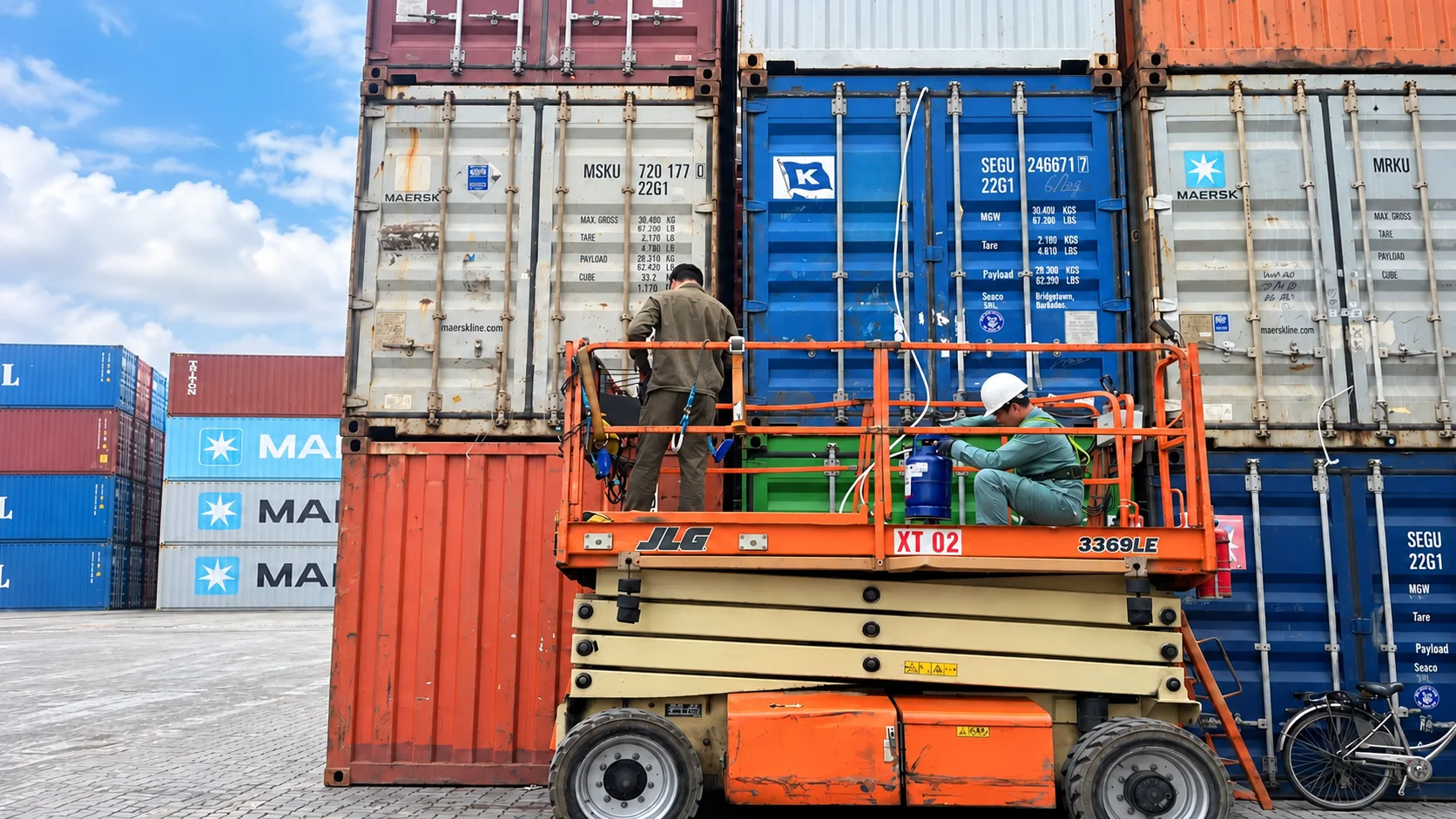
FCL shipments are typically quoted per container unit: 20ft, 40ft, or 40HC
- Why Container Dimensions Determine Unit Rates: The volumetric gas capacity of a 20ft container (approx. 33 m³), 40ft DC (approx. 67 m³), and 40HC (approx. 76 m³) varies by almost double. A larger spatial volume requires a higher quantity of fumigants to maintain standard concentration levels throughout the prescribed exposure period (Ct-product).
- Unit Rates Are Not Solely Based on Container Size: Within the same 40HC container, the cost of conventional agricultural fumigation using Phosphine differs completely from container fumigation for industrial goods bound for Australia using Methyl Bromide under AFAS standards or seasonal BMSB regulations. The actual rate is also tied to terminal yard conditions, gas exposure durations, and on-site concentration monitoring requirements.
- Differentiating container-based rates from cargo volume: Under an all-inclusive per-container rate, the entire internal volume of the container shell (encompassing cargo volume and technical headspace) is treated as a single, gas-tight enclosure. Shippers are billed per container unit rather than the precise volume of packed cargo inside.
1.2. Volume-Based Pricing (per CBM) for Less-than-Container Load (LCL)
For Less-than-Container Load (LCL) consignments, cargo consolidated at CFS warehouses, or machinery skids not shipped inside sealed containers, rates are calculated per cubic meter (CBM = Length × Width × Height in meters).
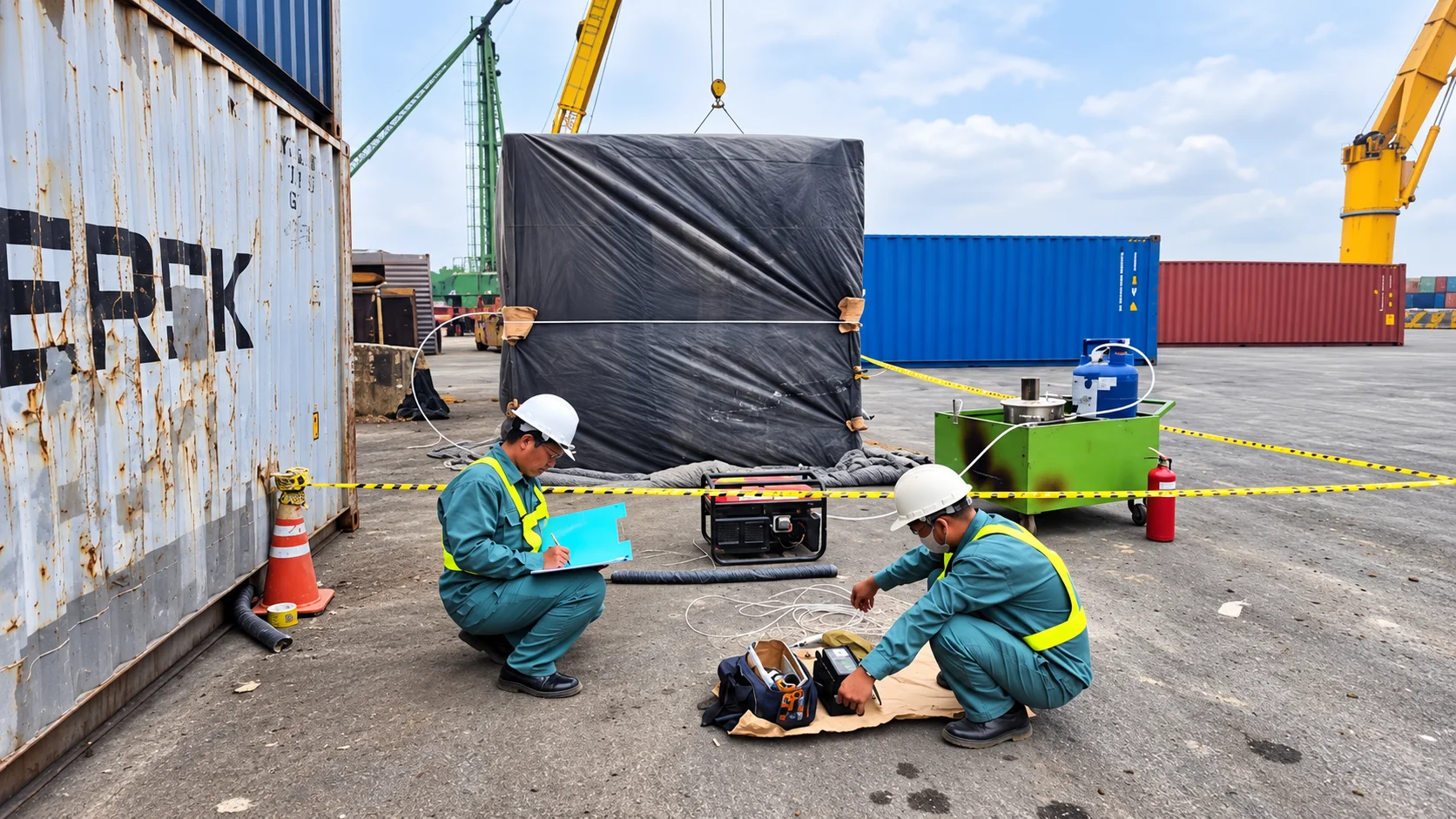
LCL cargo quotations are referenced per CBM based on the actual treated enclosure space
- Cargo volume versus actual treatment volume: Fumigant gases cannot diffuse safely or effectively around an individual package in an open warehouse environment. To treat 3–5 CBM of loose cargo, technicians must construct a timber/pipe support framework, seal the lot under specialized gas-proof tarpaulins, or transfer cargo into a dedicated fumigation chamber. Chemical dosages are calculated based on the total volumetric capacity of the sheeted enclosure or chamber, not solely the geometric cubic volume of the physical goods.
- Minimum Charges (Min Charge): Because every treatment mobilization incurs fixed overhead-certified technicians, gas-tight sheeting, safety consumables, scheduled concentration readings, and official certification issuance-professional fumigation providers maintain a standard minimum charge per mobilization (typically benchmarked against 5-10 CBM). If the actual cargo volume falls below this threshold, the minimum base fee applies.
1.3. Shipment-Specific Project Pricing
This customized pricing model applies to bulk vessel cargoes, specialized project cargo, bulk agricultural storage in flat warehouses or silos, and non-standard breakbulk freight.
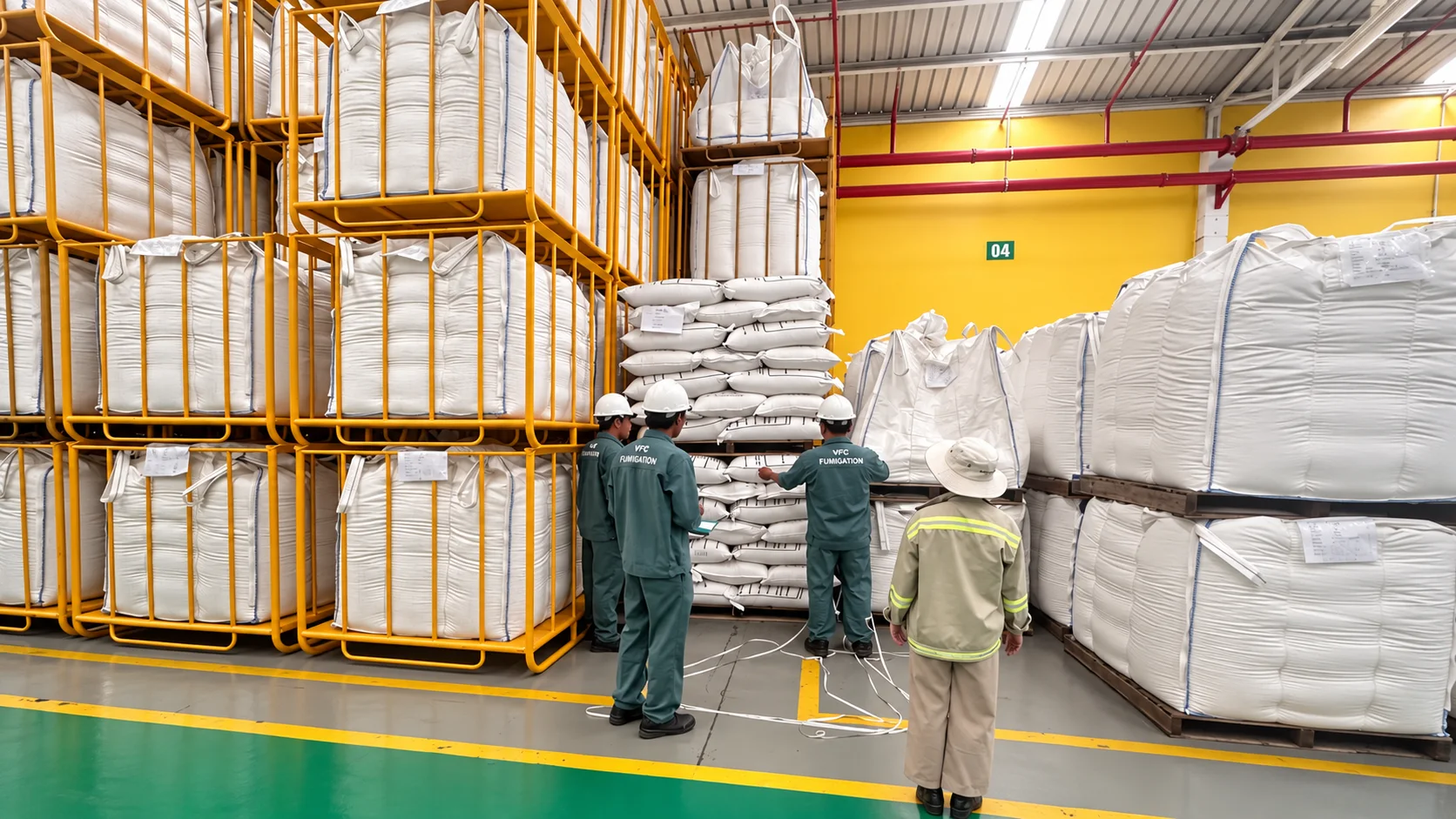
Bulk cargo, silos, and non-standard project consignments are quoted via custom technical proposals
- Complex gas-sealing challenges: Loose stockpiles in flat storage or complex industrial machinery configurations present intricate geometries and numerous dead zones that make airtight sealing difficult. Treatment protocols require thorough engineering surveys to design reinforced, wind-resistant tarpaulin setups or structural gas-proofing systems.
- Quotations based on on-site technical surveys: Rather than applying generic flat rates per ton or cubic meter, technical surveyors conduct field assessments. They evaluate gas leakage hazards, cargo depth, pest resistance profiles, and cargo release schedules before formulating an all-inclusive project proposal.
Get a Rapid Quote for Your Container or Shipment: Businesses can contact the VFC Fumigation technical team directly via Hotline: 0914 77 33 00 or submit inquiries by email to contact@fumigation.vn to receive a cost-optimized treatment plan and standardized documentation within the same day.
2. Key Factors Influencing Fumigation Service Pricing
A professional fumigation quotation represents more than the cost of chemicals; it reflects a comprehensive biosecurity risk-management protocol. Below are five pivotal factors driving service costs:
2.1. Nature and Category of Cargo
Physical and biochemical properties directly govern dosage rates and gas exposure requirements:
- Organic Agricultural Commodities & Grains (Rice, Coffee, Pepper, Cashews, Bulk Corn): As human-edible food products, treatments must eliminate pests across all biological stages (eggs, larvae, pupae, and adults) without exceeding destination Maximum Residue Limits (MRLs).
- Industrial Equipment, Machinery, & Precision Components: Intricate metal surfaces and internal cavities require high gas diffusivity alongside strict operational protocols to prevent chemical corrosion on sensitive electronics or copper components.
- Wood Packaging Material (Pallets, dunnage, crating/bracing): Mandatory compliance with international ISPM 15 standards, requiring deep penetration of the fumigant into the timber core to eradicate harmful nematodes and wood-boring insects.
2.2. Cargo Volume, Density, and Stowage Configuration
Stowage configuration dictates air circulation within the enclosure. Tightly stacked cargo leaving insufficient headspace beneath the container ceiling or within vessel holds impedes gas diffusion. Technicians must install supplementary gas distribution tubing, recirculation systems, or adjust chemical dosages to ensure uniform gas distribution and eliminate low-concentration blind spots.
2.3. Selected Fumigant and Treatment Methodology
The two most widely used fumigants today feature distinctly different operational characteristics and cost profiles:
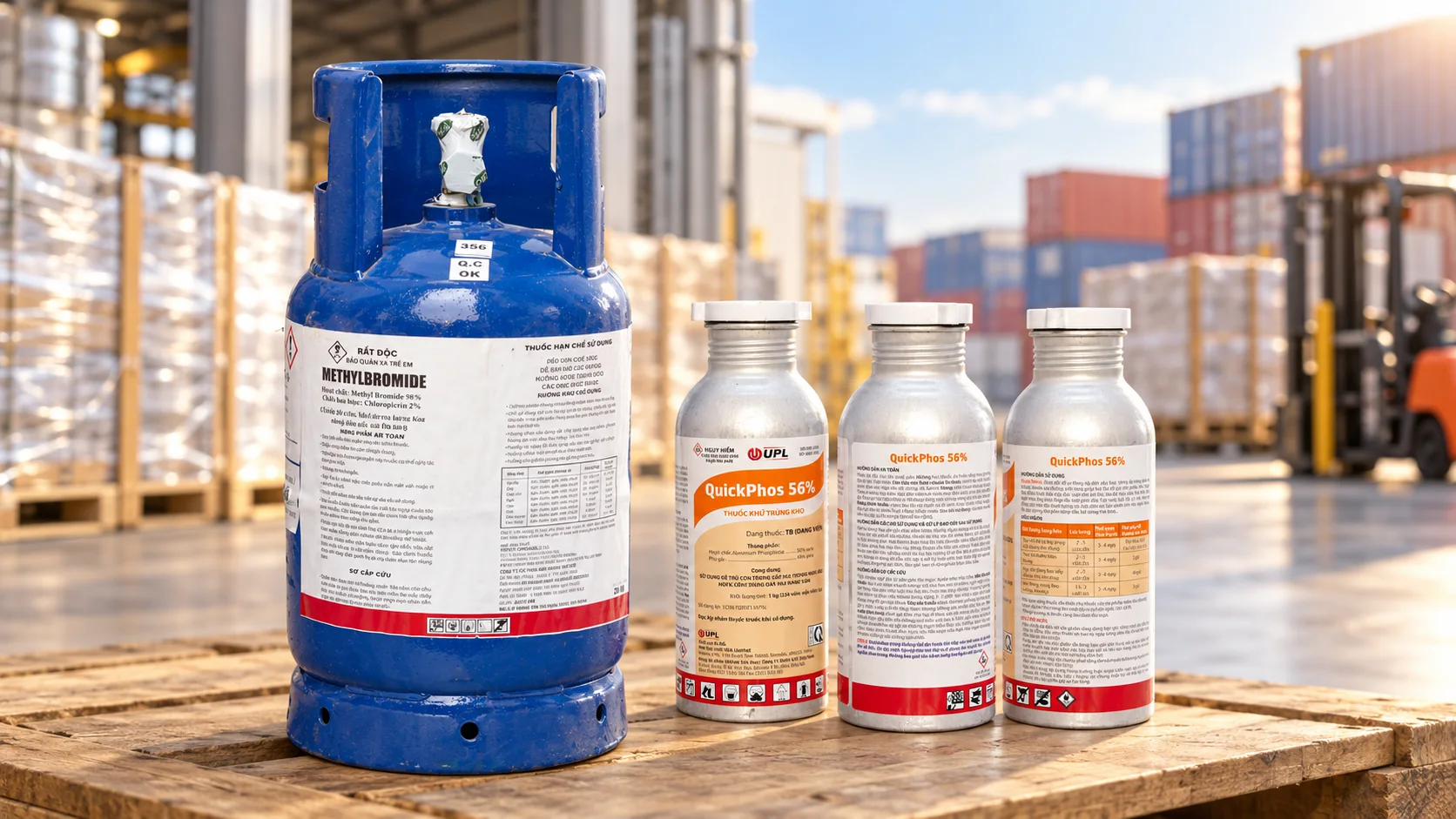
Phosphine and Methyl Bromide differ significantly in exposure durations, treatment scopes, and cost profiles
- Phosphine (PH3 – giải phóng từ Aluminium Phosphide): Thường dùng cho nông sản khô, ngũ cốc, hàng lưu kho dài ngày. Ưu điểm là chi phí thuốc tối ưu, thẩm thấu tốt nhưng thời gian ủ thuốc cần dài ngày (thường từ 7 đến 10 ngày tùy nhiệt độ môi trường).
- Methyl Bromide (CH3Br): Features rapid knockdown and broad-spectrum efficacy, eliminating target pests within a short exposure window (typically 24–48 hours). It is the mandatory active fumigant under stringent quarantine frameworks such as AFAS (Australia) or seasonal BMSB-AusTreat pest control schemes. Owing to higher chemical raw material costs and more demanding safety monitoring protocols, unit pricing for Methyl Bromide fumigation is generally higher than for Phosphine.
2.4. Operational Location and Field Site Conditions
- On-Site at Factory Warehouses: Offers flexible stuffing schedules but requires designated safety exclusion zones, level concrete floors, and strict isolation from active production areas.
- Container Fumigation at Seaports or ICDs: Container fumigation at port terminals (such as Cat Lai Port, Cai Mep Port, Hai Phong ICDs, etc.) is subject to additional constraints, including terminal yard regulations, container shifting charges, yard grounding inspection fees, and strict vessel closing times.
2.5. Operational Lead Times and Regulatory Documentation Standards
- Vessel Sailing Deadlines: Urgent consignments requiring rapid clearance prior to sailing cut-offs demand night-shift technician mobilizations or forced vaporization systems to accelerate equilibrium concentrations.
- Thị trường nhập khẩu mục tiêu: Các nước có hàng rào kỹ thuật cao như Úc, New Zealand, Mỹ, EU đòi hỏi hồ sơ kiểm dịch cực kỳ chi tiết, nhật ký đo nồng độ nhiều mốc thời gian và đơn vị thực hiện phải có mã định danh quốc tế hợp lệ (như mã AEI trên cổng thông tin DAFF của Úc).
3. Comparing Pricing Structures: Containers, LCL Cargo, and Bulk Shipments
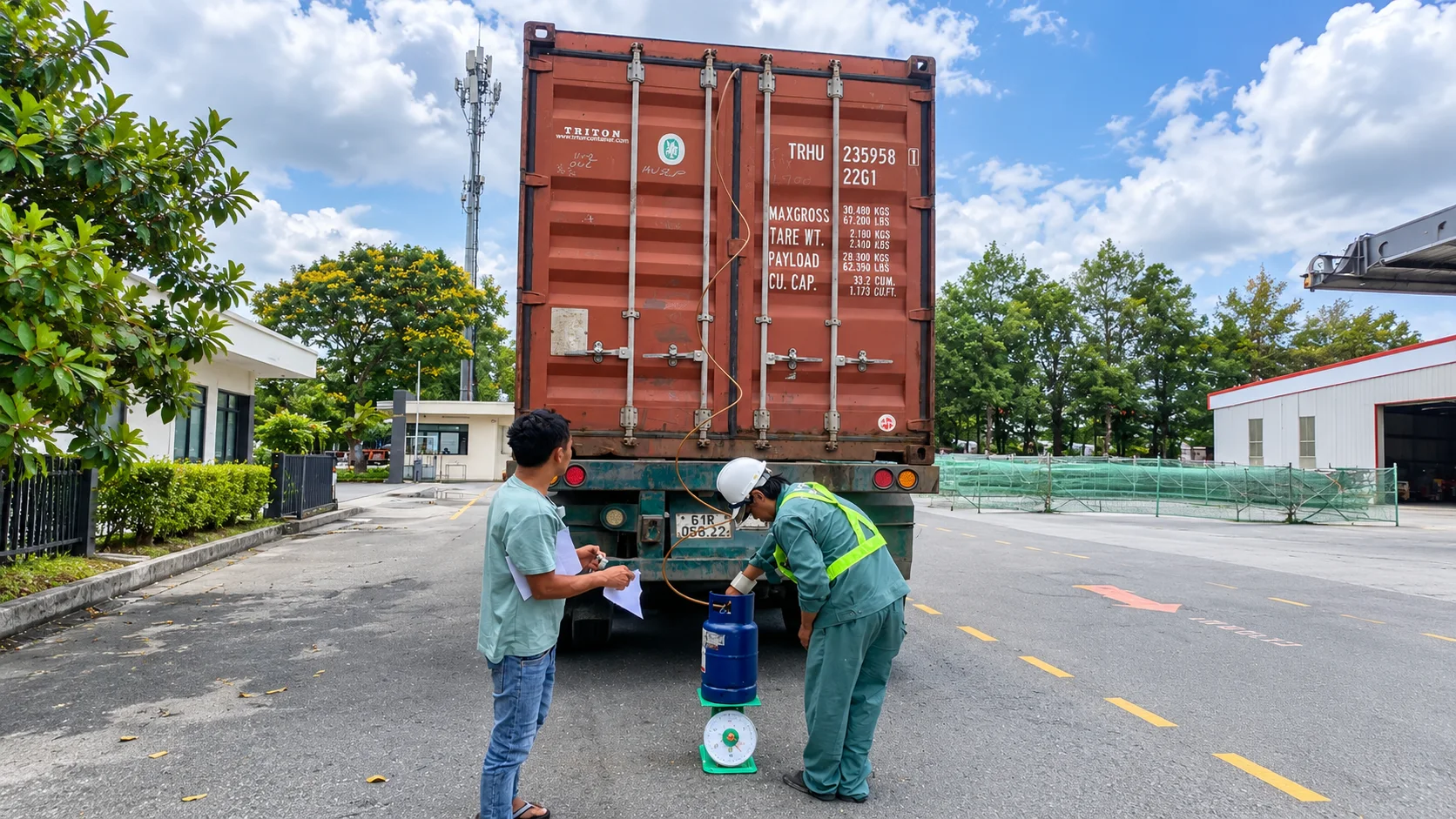
Containers, LCL shipments, and large-scale bulk cargoes require distinct operational methods and quotation structures
To budget logistics expenses accurately, enterprises should evaluate the operational distinctions across each cargo format:
3.1. Full Container Load (FCL) Fumigation
This routine operational service takes place daily across port container yards and packing warehouses. Technicians open container doors, position gas delivery lines and concentration sampling leads, close and seal door gaskets with gas-tight barrier materials, and inject the prescribed dosage. Quotations are structured as an all-inclusive flat fee per container shell (20ft or 40ft/40HC). Shippers should verify sealing protocols and certification validity prior to booking.
3.2. Less-than-Container Load (LCL), Palletized Goods, and Skids
For crated LCL cargo or palletized consignments assembled at CFS warehouses, treatment costs typically comprise two components: fumigation fees based on the sheeted enclosure volume and quarantine stamping charges (if wooden pallets require ISPM 15 compliance). A clear distinction must be made between fumigating the entire finished consignment and conducting Heat Treatment (HT) / MB fumigation to apply the certified ISPM 15 stamp onto empty pallets prior to cargo loading.
3.3. Bulk Vessels, Silos, and Flat Grain Storage
For tens of thousands of metric tons of grain stored in vessel cargo holds, barges, or industrial silos, fumigation pricing can by no means be determined through simple cubic-meter formulas. These large-scale projects require structural hold inspections and the deployment of advanced gas recirculation technology such as the J-System (facilitating uniform gas circulation across deep cargo holds of 15–20 meters) to prevent live insect survival at the bottom of the hold. Quotations for warehouse and silo fumigation services or vessel and barge fumigation services are always formulated as a comprehensive, project-specific technical cost estimate.
4. Line Items to Audit When Reviewing a Fumigation Quotation
Many B2B shippers encounter low preliminary quotes that escalate with unexpected surcharges after treatment completion. To safeguard your logistics budget, cross-check these essential items:
4.1. Scope of the Core Fumigation Service
A compliant quotation must include all requisite technical steps:
- Operational preparation, certified gas-tight sealing materials, and genuine active fumigants.
- Gas delivery tubing, sampling lines, and certified technical operators.
- Scheduled gas concentration monitoring throughout the exposure window, alongside leak-detection audits.
- Gas clearance, ventilation down to Threshold Limit Values (TLV), and application of compliant safety warning signage.
4.2. Fumigation Certificate Issuance Fees
The Fumigation Certificate serves as official proof that the cargo underwent certified biosecurity treatment.
- Verify whether the quotation includes the original physical certificate (embossed, signed, and stamped) or a digitally authenticated version with a secure verification QR code.
- Operational Note: A clear distinction must be made between a Fumigation Certificate issued by the fumigation service provider and a Phytosanitary Certificate issued by the government Plant Quarantine Sub-Department following documentary review and physical cargo sampling.
4.3. Potential Incidental Surcharges Outside the Base Quote
- Port / ICD Terminal Handling and Lift-on/Lift-off (Lo-Lo) Charges: If containers must be shifted to dedicated quarantine zones under biosecurity rules (such as AFAS requirements), these terminal infrastructure fees are billed by the port or shipping line directly to the cargo owner.
- Packing Delays and Waiting Time: Unplanned delays during cargo stuffing that require technicians to stand by or carry out work during night hours or public holidays.
- Supplementary Sealing Consumables: When container floors, walls, or client warehouse structures exhibit mechanical punctures, tears, or structural damage that compromise gas-tightness, requiring extra foam sealants or protective tarpaulins
5. Information Required to Receive an Accurate B2B Quotation
To facilitate an immediate, accurate quotation from technical and commercial teams without back-and-forth delays, prepare consignment parameters using the standardized intake table below:
Standard B2B Fumigation Quotation Intake Sheet
| Criteria | Required Information from Shipper | Practical Example |
|---|---|---|
| Type of goods | Commercial cargo description & packaging format | Green coffee beans in woven PP bags; industrial machinery wrapped in stretch film |
| Consignment Scale | Number of containers, total CBM, or metric tonnage | 03 × 40HC containers, or 1,500 metric tons bulk cargo in silo |
| Treatment Location | Warehouse address or port terminal / ICD name | VSIP Binh Duong Industrial Park warehouse, or Cat Lai Terminal yard |
| Destination Country | Target import market | Australia (AFAS/BMSB required), USA, EU, China, etc. |
| Technical Standard | Prescribed protocol or designated active fumigant | ISPM 15 heat treatment for pallets; Methyl Bromide fumigation |
| Operational Schedule | Cargo completion timestamp & carrier port cut-off time | Stuffing completed at 14:00 on Oct 15; Closing time at 22:00 |
Submit Cargo Details for an Optimized Quotation:
Provide your shipment parameters to VFC Fumigation specialists to receive certified biosecurity treatment plans that ensure customs clearance while reducing operational overhead.
6. Why Choose VFC Fumigation for Export Consignments?

VFC Fumigation engineers custom treatment protocols tailored to cargo profiles, destination standards, and logistics schedules
Established in 1976 with five decades of specialized expertise in biosecurity pest control and maritime fumigation, Vietnam Fumigation Joint Stock Company (VFC Fumigation) a member of The PAN Group serves as the trusted partner for over 15,000 domestic and multinational enterprises.
- Internationally Recognized Accreditations: VFC Fumigation holds registered national ISPM 15 compliance numbers (VN-009 MB and VN-010 HT) and is an official member representing Vietnam in the International Maritime Fumigation Organization (IMFO). The company is fully accredited by the Australian Department of Agriculture, Fisheries and Forestry (DAFF) under the AFAS and AusTreat offshore treatment provider schemes.
- Nationwide Operational Reach: Backed by more than 1,500 personnel and permanent branch offices stationed at all major seaports, inland container depots (ICDs), and agricultural production hubs, VFC Fumigation responds rapidly to align operations with carrier closing times.
- Advanced Technology and Process Transparency: Utilizing specialized J-System gas recirculation technology for deep-hold vessels, alongside the FumiApp digital platform, VFC provides clients with real-time access to temperature logs, gas concentration readings, and audit trails. This end-to-end transparency mitigates the risk of cargo holds, demurrage penalties, or re-export orders at destination ports.
7. Frequently Asked Questions (FAQ)
7.1. Are fumigation rates identical for 20ft and 40ft containers?
No. A 40ft container features more than double the volumetric capacity of a 20ft unit (approximately 67 m³ versus 33 m³). It requires a correspondingly higher chemical dosage and additional preparation materials to maintain required gas concentrations. Consequently, the unit rate for a 40ft container is higher than for a 20ft container.
7.2. Can LCL cargo be quoted strictly per CBM?
Yes, LCL cargo can be quoted based on CBM rates. However, professional providers enforce a minimum charge (typically benchmarked against 5–10 CBM) to cover fixed costs for technical deployment, specialized gas-tight sheeting, multi-stage gas readings, and certificate issuance.
7.3. Does the quotation include the Fumigation Certificate fee?
With accredited providers like VFC Fumigation, the service quotation already includes the issuance of an official Fumigation Certificate. However, shippers should note that this certificate does not serve as a substitute for the Phytosanitary Certificate issued by national plant quarantine authorities.
7.4. Does the price differ between Phosphine and Methyl Bromide treatments?
Yes, substantially. Phosphine generally offers lower chemical costs but requires an extended exposure period of 7 to 10 days. Methyl Bromide carries a higher unit price due to specialized raw material costs, thermal vaporization requirements, and rigorous monitoring standards, balanced by a rapid turnaround time of 24 to 48 hours.
7.5. Can shippers obtain an accurate quotation before cargo stuffing is complete?
Yes. Shippers only need to provide anticipated cargo parameters: container type and count, commodity description, stuffing facility location, and the destination country. VFC Fumigation will generate an itemized quotation so you can finalize your logistics budget ahead of packing.
Conclusion
Securing an effective fumigation quotation is not simply about selecting the lowest price on a sheet; it is about protecting consignments valued at tens of thousands to millions of dollars. Partnering with an accredited, transparent, and technically competent service provider safeguards your business against biosecurity non-compliance penalties, costly delays, and rejection at international borders.
For technical consultations on container treatments, ISPM 15 compliance, or an itemized service quotation, contact VFC Fumigation:
VIETNAM FUMIGATION JOINT STOCK COMPANY (VFC FUMIGATION)
- Hotline: 0914 77 33 00
- Email: contact@fumigation.vn
- Website: fumigation.vn


Related Blogs