





Published date:
15/10/2026
Share




VFC Fumigation (the Fumigation Division of Vietnam Fumigation Joint Stock Company) is an industry benchmark with over 50 years of specialized expertise in quarantine pest management and the preservation of import-export commodities. Two prominent real-world projects executed on the bulk carriers Golden Eagle and TAI SUMMIT bound for the United States highlight VFC Fumigation’s capacity to engineer specialized technical protocols: ranging from forced gas recirculation systems for massive bulk agricultural commodities to emergency hold treatments for finished steel cargo combined with wood packaging material (WPM).
1. Which US-Bound Export Fumigation Projects Has VFC Fumigation Executed?
VFC Fumigation delivers a specialized suite of fumigation solutions across diverse transport modes: shipping containers, ocean-going bulk carriers, barges, agricultural grain silos, and the treatment of import-export wood packaging material (WPM).
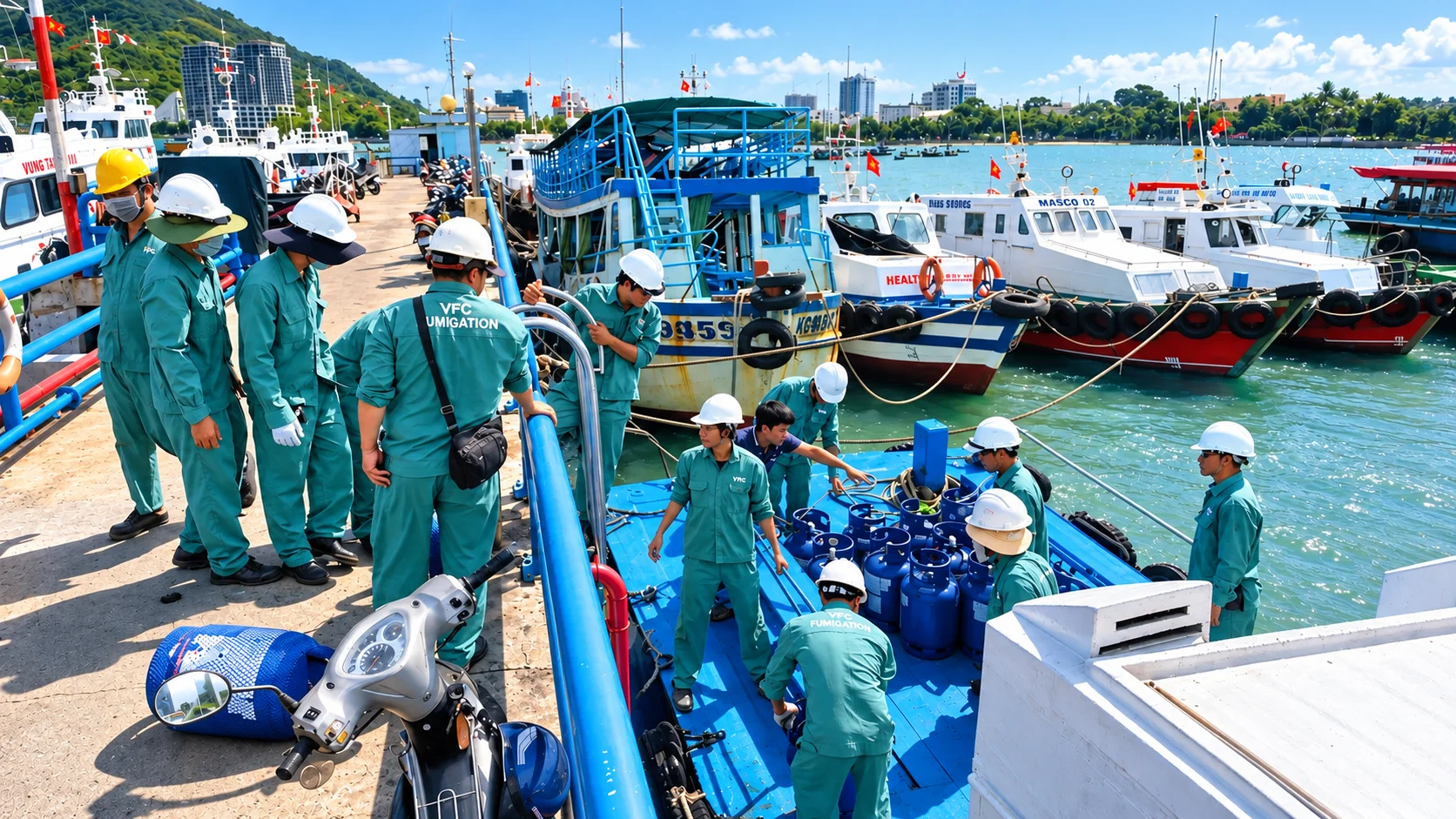
VFC Fumigation executes fumigation services across shipping containers, bulk carriers, grain silos, and wood packaging material
VFC's operational capacity for US-bound exports is demonstrated through two landmark maritime projects:
| Case | Golden Eagle | TAI SUMMIT |
|---|---|---|
| Commodity | 55,000 Metric Tons of Bulk Rice | Finished Steel Products and Wood Dunnage |
| Operational Scale | Deep cargo holds measuring nearly 20 meters | 74,904 m³ total cargo hold volume |
| Primary Challenge | Uniform gas distribution throughout a deep, compacted grain mass | Live pest infestation intercepted during loading; complex hold architecture requiring meticulous gastight sealing |
| Technical Solution | J-System closed-loop gas recirculation | Methyl Bromide (MB) applied via specialized heat-vaporization units |
| Operational Demands | Synchronizing forced gas recirculation, loading sequences, and statutory certification | Urgent on-site surveying, pest eradication, safety clearance, and documentation handover strictly aligned with vessel laytime |
These two projects represent the classic operational dilemmas encountered in vessel fumigation:
- Large-scale agricultural bulk commodities: Achieving complete mortality across all insect life stages depends on maintaining uniform gas concentrations throughout the vertical depth of the grain mass.
- Industrial and structural cargo: While finished steel is not a host material for pests, severe biosecurity risks stem from non-compliant wooden packaging material (pallets, dunnage, chocks) or nocturnal insect swarms attracted by terminal floodlights during night loading operations.
In both scenarios, VFC Fumigation’s execution relies on establishing the exact technical scope, physical site conditions, and operational milestones prior to chemical introduction.
2. The Golden Eagle Project: Fumigating 55,000 MT of Bulk Rice for the US Using the J-System
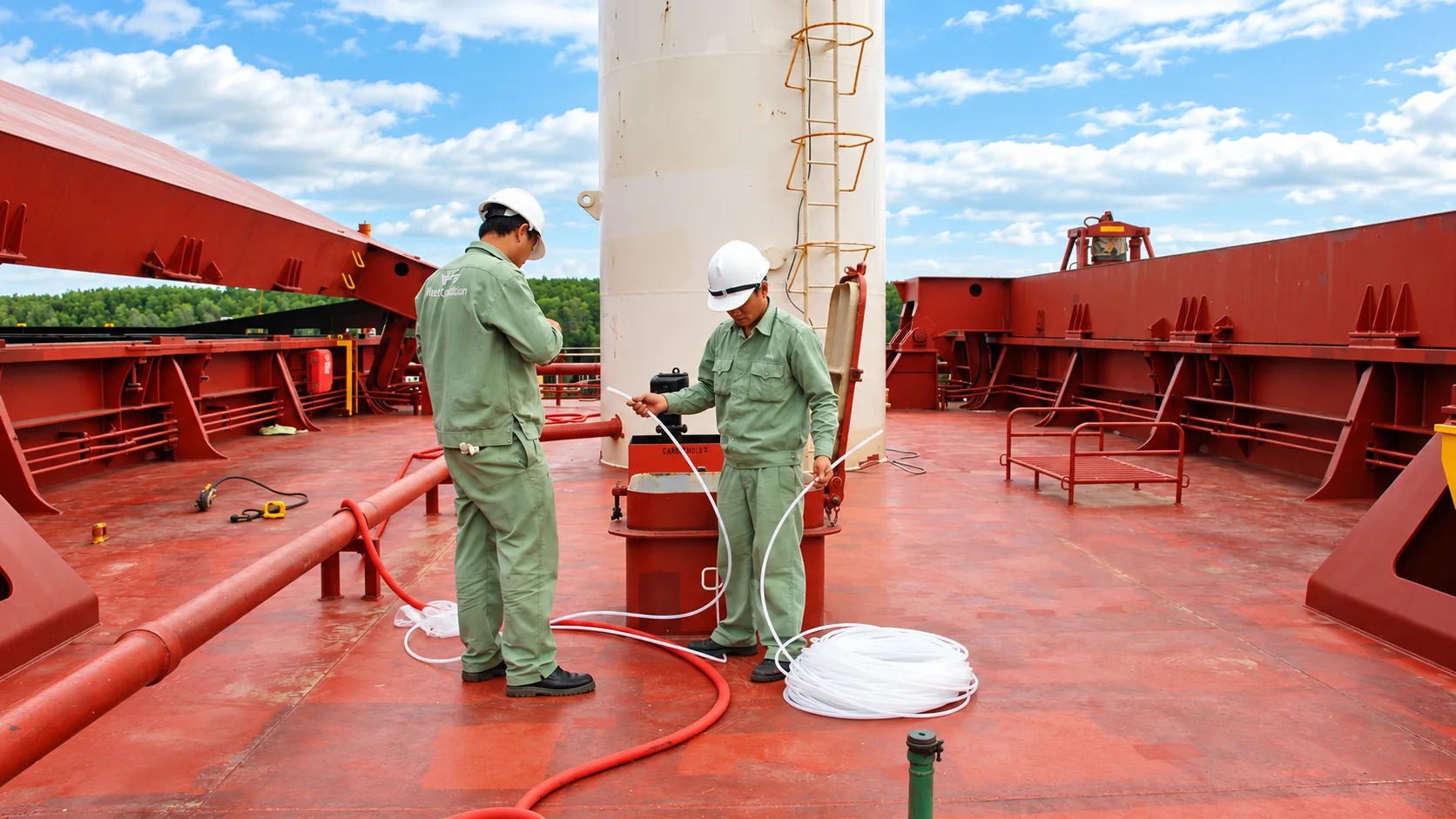
VFC Fumigation executing bulk grain fumigation for 55,000 MT of export rice on the vessel Golden Eagle bound for the United States
2.1. The Technical Challenge: Uniform Gas Distribution in Cargo Holds Nearly 20 Meters Deep
For bulk agricultural commodities, the material forms a continuous mass extending to substantial depths. The diffusion and penetration of fumigants are heavily governed by the internal structure of the cargo mass, airflow pathways, and the gastight sealing integrity of the vessel holds.
For the Golden Eagle project, VFC Fumigation was tasked with treating 55,000 MT of bulk white rice bound for the strict regulatory market of the United States, inside vessel holds reaching nearly 20 meters in depth.
This scale dictated three non-negotiable operational requirements:
- Penetration Across the Entire Bulk Mass: The fumigant must circulate into the deepest core and floor zones, eliminating low-concentration pockets that cause treatment failures.
- Rigorous Safety Management: In-transit and shipboard operations demand strict gastight sealing protocols, hazardous zone signage, and atmospheric leak monitoring to protect vessel crew.
- Stevedoring & Laytime Synchronization: Piping installation, gas injection, and certification workflows had to seamlessly integrate into the vessel's terminal loading schedule to prevent costly port delays.
Thus, the engineering problem transcended basic dosage calculations it required managing dynamic gas distribution within an immense agricultural bulk volume.
2.2. The Solution: Implementing the J-System Forced Recirculation Technology
For the Golden Eagle project, VFC Fumigation deployed the J-System – an active gas recirculation system developed by DETIA DEGESCH to facilitate uniform gas distribution throughout deep vessel cargo holds.
The project was executed through four synchronized phases:
- Pre-Loading Survey & Piping Installation: Prior to loading, VFC Fumigation technicians installed perforated collection ducting across the bottom floor of each cargo hold and routed intake riser pipes up along the hold bulkheads.
- Post-Loading System Integration: Once the 55,000 MT of rice was fully loaded, technicians connected the vertical conduits to explosion-proof recirculation blower units mounted above the grain surface.
- Fumigant Application, Sealing & System Operation: VFC Fumigation completed the chemical application, conducted gastight sealing of hatch covers and ventilation points, and engaged the J-System. Continuous low-pressure airflow drew the fumigant down through the grain mass, ensuring rapid equilibrium, eliminating dead zones, and containing gas within the cargo space.
- Documentation & Certificate Issuance: Treatment parameters, dosing metrics, and safety checks were compiled to issue official quarantine documentation matching USDA APHIS import protocols.
2.3. The Result: Total Quality Preservation Within Vessel Laytime Schedules
According to official project records, the J-System achieved rapid, uniform gas distribution across the entire 55,000-ton cargo mass. All operational steps were completed on schedule, allowing the vessel to depart the berth without laytime penalties.
Upon arrival at its US port of entry, the Golden Eagle completed phytosanitary inspection, cleared customs without delay, and discharged cargo smoothly.
For agricultural exporters moving high-volume bulk commodities, this project serves as a concrete case study in managing complex maritime biosecurity risks under tight logistics constraints.
View detailed project documentation and on-site photos at: Fumigation Project: 55,000 MT of Bulk Rice on Vessel Golden Eagle.
3. The TAI SUMMIT Project: Emergency Fumigation of 74,904 m³ of Vessel Holds Carrying Steel to the US
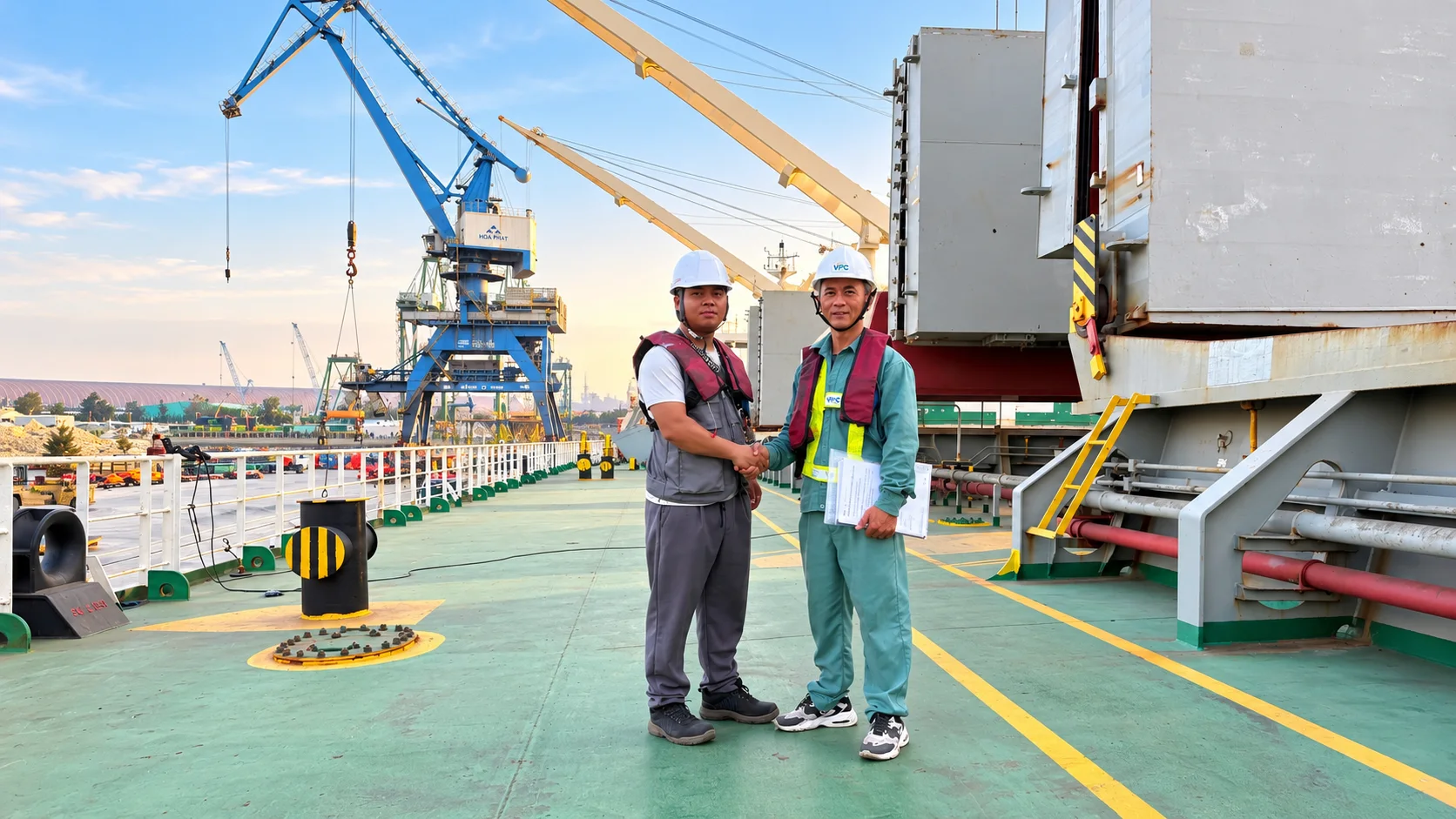
VFC Fumigation treating the cargo holds of vessel TAI SUMMIT carrying export steel to the US at Dung Quat Port
3.1. The Challenge: Live Pests Intercepted During Loading Operations
At Dung Quất Port (Quảng Ngãi Province), during the loading of finished structural steel destined for the United States, live insects were intercepted within the vessel cargo holds. The root cause was traced to either sub-optimally seasoned wooden dunnage used to brace the steel coils or flying insects attracted from surrounding port storage yards during night loading operations.
With a massive cavernous volume of 74,904 m³, complex mechanical hold geometry, and numerous structural recesses, any delay in containment carried severe financial risks, notably thousands of dollars per day in vessel demurrage charges.
3.2. The Solution: Methyl Bromide Fumigation with Forced Heat-Vaporization
Upon receiving the request, VFC Fumigation – Da Nang Branch dispatched a technical team to board the vessel for a survey and formulate a fumigation plan utilizing Methyl Bromide (MB).
The execution followed a disciplined five-step protocol:
- Structural & Gastight Inspection: Technicians surveyed cargo hold bulkheads, hatch covers, mechanical ventilation shafts, access coamings, and bilge wells to identify potential gas-loss routes and map delivery line placement.
- Delivery & Sampling Line Installation: Heavy-duty gas introduction lines and multi-point concentration sampling tubes were rigged throughout the upper, middle, and lower levels of all affected holds to monitor concentration-time (Ct) products.
- Gastight Sealing: Hatch skirts, access hatches, and natural draft vents were sealed using specialized gas-proof barrier materials and expanding adhesive foams to prevent atmospheric leakage and maintain target gas retention.
- Methyl Bromide Injection via Thermal Vaporizers: VFC Fumigation utilized specialized heat-exchanger vaporization units to convert liquid Methyl Bromide into hot gas before injection into the 74,904 m³ hold spaces. This technique accelerated molecular diffusion across the cavernous volume, achieving immediate insecticidal equilibrium.
- Aeration Clearance, Safety Testing & Handover: Upon completion of the required exposure period, technicians verified safety clearance using precision gas-detection units (measuring levels below permissible occupational exposure limits) and handed over the vessel to the Master to resume its voyage.
3.3. The Result: Swift Pest Eradication and Zero Demurrage
VFC Fumigation completed the emergency intervention without a single live pest detected post-treatment. The vessel departed on schedule, and upon arrival at the US port of discharge, the TAI SUMMIT passed US Customs and Border Protection (CBP) and USDA APHIS agricultural inspections cleanly, avoiding cargo rejection or quarantine holds.
The TAI SUMMIT project demonstrates VFC Fumigation’s readiness to manage unexpected biological contamination incidents within immense industrial spaces under urgent logistics deadlines.
View project details and on-site photos at: Fumigating MV TAI SUMMIT for US Export at Dung Quat Port.
4. What Technical Competencies Do These Projects Demonstrate?
While both the Golden Eagle and TAI SUMMIT involved vessels bound for the US market, their execution strategies were tailored to their cargo profiles and physical configurations.
These projects showcase four foundational competencies:
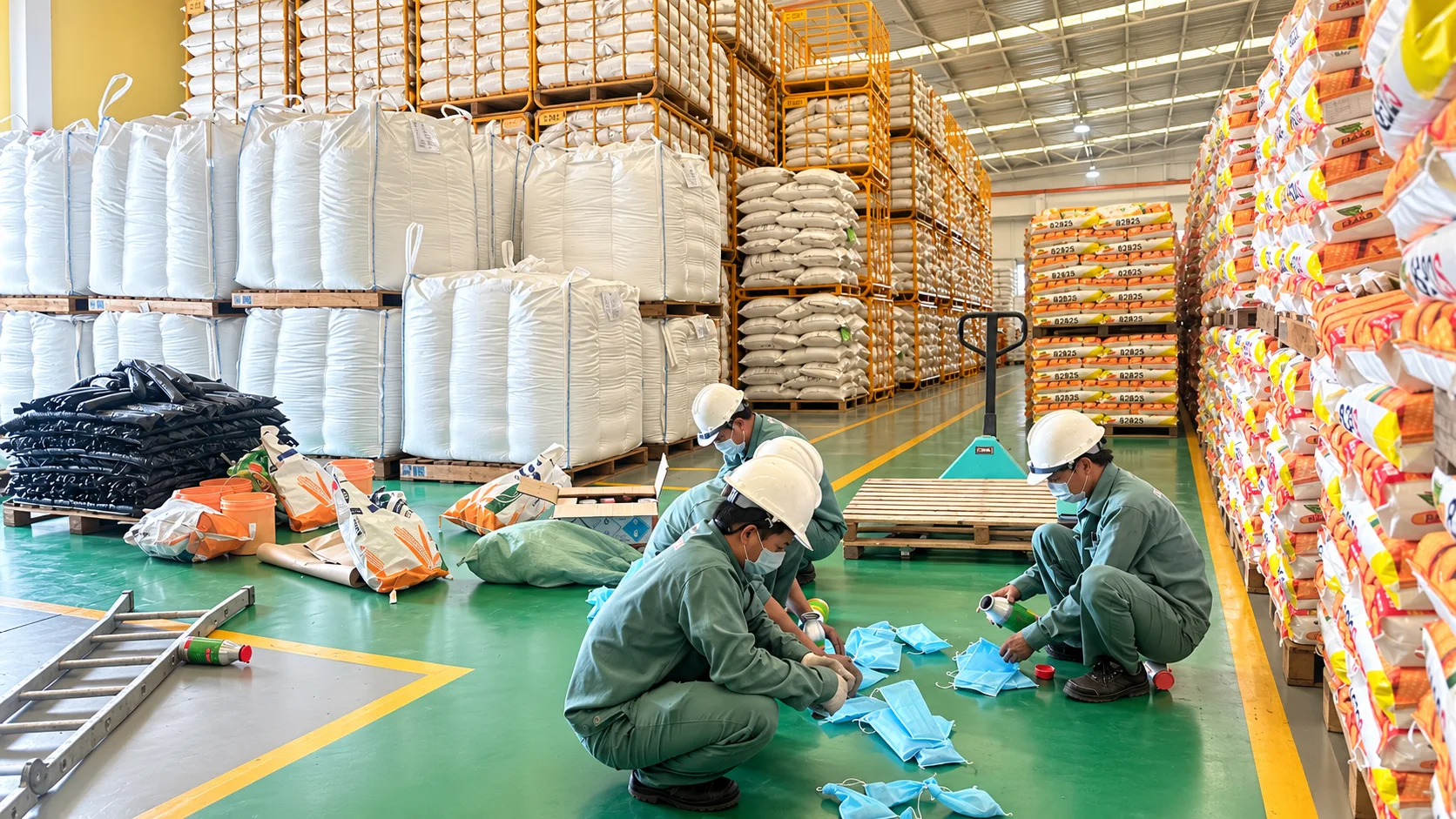
Both projects showcase VFC Fumigation's expertise in engineering design, technical execution, on-site safety, and documentation management
4.1. Custom Engineering Tailored to Cargo and Spatial Geometry
The Golden Eagle required controlling gas distribution throughout a deep bulk rice mass, while the TAI SUMMIT demanded pest eradication across cargo holds carrying finished steel and wooden dunnage.
Variations in cargo types, treatment scopes, and operational conditions dictate distinct requirements for system configuration, treatment methodologies, and safety protocols.
VFC Fumigation conducts on-site surveys to develop solutions tailored to real-world conditions, rather than applying a one-size-fits-all treatment configuration across all cargo types and vessels.
4.2. Mastery of Specialized Quarantine Technologies
Across these engagements, VFC Fumigation deployed specialized systems:
- The J-System: Mechanized closed-loop recirculation that drives fumigants uniformly through dense bulk grains.
- Thermal Vaporization Units: Equipment that transforms liquid fumigants into superheated vapor for rapid dispersion across immense cargo spaces.
- Calibrated Multi-Point Gas Sampling Lines: Instrumentation that tracks real-time gas concentrations and ensures statutory Ct-product compliance throughout the exposure period.
This underscores why on-site surveys and establishing precise technical requirements play a critical role in every project. Technology selection is strictly governed by treatment objectives and structural characteristics. The J-System is not automatically required for every consignment, just as Methyl Bromide is not universally appropriate for every commodity.
4.3. Seamless Synchronization with Port Terminals and Vessel Operations
A vessel fumigation project involves multiple key stakeholders: cargo owners, shipping agents, the vessel master, stevedoring contractors, port authorities, and the technical team.
In the Golden Eagle project, the gas recirculation system had to be prepared in strict alignment with the cargo loading sequence. With the TAI SUMMIT, pests were intercepted during loading operations, demanding urgent surveying and treatment execution coordinated with the vessel's scheduled departure.
This highlights the critical role of operational coordination: fumigation protocols must be synchronized alongside operational milestones while strictly adhering to mandatory treatment exposure periods and essential safety requirements.
4.4. Transparent Two-Layer Traceability and Certification Verification
Completing on-site operations and finalizing technical documentation are directly interconnected priorities. In export trade, fumigation certificates are routed through multiple stakeholders—from the service provider to cargo owners, freight forwarders, overseas buyers, and destination agents.
To enhance data verification and traceability, VFC Fumigation deploys a Two-Layer Transparent Fumigation Model, comprising:
- Layer 1 – Digital Field Logging via FumiApp: Technicians record real-time operational milestones, gas readings, site conditions, and geotagged photographic logs directly into VFC's internal FumiApp system for quality assurance and compliance oversight.
- Layer 2 – Tamper-Evident QR Code Verification on Certificates: Every official Fumigation Certificate issued by VFC is embedded with a unique, encrypted QR code. Customs brokers, overseas buyers, and shipping lines can instantly scan the code to verify certificate authenticity against VFC Fumigation’s secure database.
5. How VFC Fumigation Meets the Needs of Export Enterprises and Logistics Providers
Not every enterprise seeking fumigation for US-bound cargo requires treating a full-scale vessel. Many clients specifically require agricultural container fumigation, wooden pallet treatments, or technical assessments prior to container stuffing.
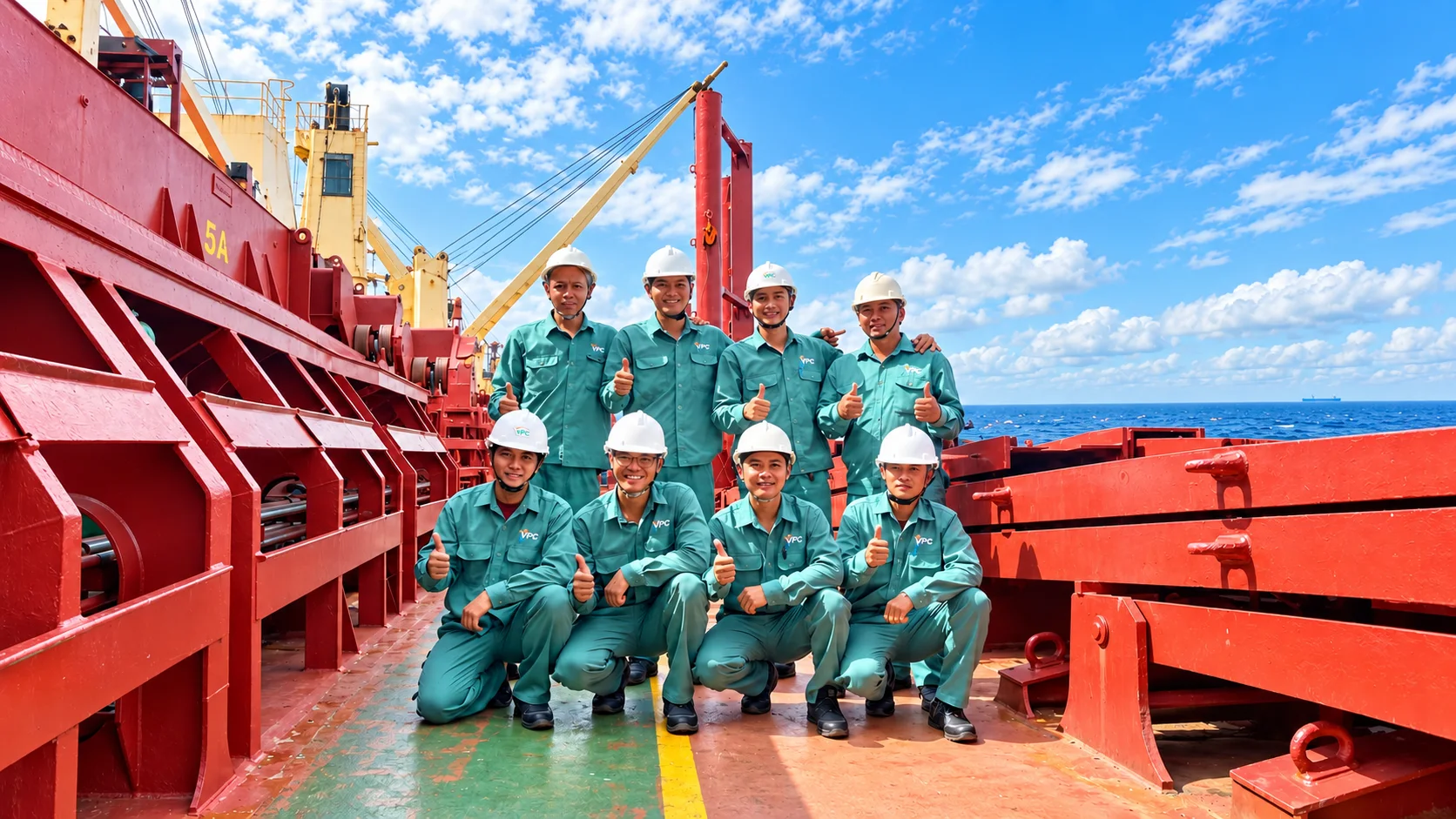
VFC Fumigation provides comprehensive treatments ranging from shipping containers and wooden pallets to bulk carriers and breakbulk cargo
Alongside extensive experience in vessel fumigation, VFC Fumigation provides a comprehensive suite of services supporting the import-export supply chain.
| Client Segment | Operational Requirements | Applicable VFC Service Scope |
|---|---|---|
| Agricultural Exporters (Rice, Coffee, Pepper, Cashews) | Complete eradication of stored-product pests in FCL containers or bulk vessels while observing Maximum Residue Limits (MRLs). | Container Fumigation, Ocean Vessel Fumigation, Silo & Flat Storage Grain Protection. |
| Industrial Manufacturers (Machinery, Steel, Electronics) | Ensuring wood packaging materials (pallets, crates, dunnage) comply with strict import biosecurity standards. | ISPM 15 Treatment for Wooden Pallets & Packaging (Heat Treatment [HT] and Methyl Bromide [MB]). |
| Freight Forwarders & 3PLs | Punctual on-site intervention, coordination with container depot cut-off times, and verifiable clearance documentation. | Priority Container Fumigation, Depot/Yard Treatment Services, Instant QR Code Certificate Validation. |
| Shipowners, Shipping Lines & Bulk Charterers | Treating high-tonnage consignments, in-transit fumigation management, and emergency hold treatments. | Ocean-Going Bulk Carrier & Barge Fumigation, J-System Installations, Hatch Sealing & Gas Clearance. |
For Agricultural Commodity Exporters
VFC Fumigation surveys commodity characteristics, consignment volume, storage conditions, and treatment requirements to propose an optimal fumigation plan.
For containerized cargo, exporters should provide details regarding container stuffing schedules, sailing timelines, and specific requirements stipulated by the importing partner.
For Industrial Exporters Utilizing Wooden Packaging
Enterprises exporting machinery, equipment, components, or industrial goods to the US must pay close attention to requirements governing wood packaging material regulated under ISPM 15.
According to USDA APHIS regulations, regulated wood packaging material (WPM) must be appropriately treated and officially marked. This requirement applies specifically to wooden pallets, crates, and dunnage, and does not imply that all cargo supported on these pallets must undergo fumigation.
VFC Fumigation provides wood packaging material treatment services compliant with ISPM 15 standards, assisting enterprises in preparing compliant packaging prior to export.
Note: Full cargo hold fumigation upon pest detection, as conducted in the TAI SUMMIT project, does not automatically substitute for the ISPM 15 treatment and marking requirements for wood packaging materials.
View service: ISPM 15 – Pallets and Wooden Packaging.
For Logistics Providers and Freight Forwarders
Freight forwarders typically serve as the central liaison connecting cargo owners, packing facilities, shipping lines, and fumigation service providers.
Key operational factors to manage include container readiness for treatment, terminal gate-in schedules, shipping line cut-off times, documentation requirements, and specific information required by overseas partners.
VFC Fumigation accommodates scheduling plans and coordinates execution tailored to specific consignment conditions. Concurrently, the QR code-enabled certification system facilitates seamless post-issuance document authentication.
For time-sensitive consignments or shipments with specialized treatment requirements, early coordination enables all parties to determine viable solutions before finalizing logistics plans.
View service: Export Cargo Fumigation in Containers.
6. What Information Should Exporters Prepare Before Requesting a US Fumigation Quote?
Fumigation pricing and operational schedules depend directly on cargo specifications, volumetric scope, site access, and technical compliance standards.
To obtain an accurate B2B quotation, please prepare the following baseline parameters:
| Required Information | Practical Examples |
|---|---|
| Commodity Type | Rice, coffee beans, black pepper, finished steel, heavy machinery, electronic components. |
| Consignment Volume | Number of containers (20ft/40ft), metric tonnage (MT), cargo hold volume (CBM), or pallet count. |
| Treatment Location | Exporter's factory warehouse, packing station, ocean terminal, Inland Container Depot (ICD), or anchorage. |
| Logistics Timeline | Cargo stuffing dates, vessel berthing schedule, CY cut-off, and estimated time of departure (ETD). |
| Condition of Cargo & Packaging | Observed signs of insect infestation, packaging types (bulk, big bags, wooden crates), or container lining status. |
| Regulatory & Buyer Specifications | Specific buyer phytosanitary terms, USDA APHIS mandates, or destination port clearance protocols. |
Based on this preliminary information, VFC Fumigation can identify areas requiring further assessment, align on technical solutions, and formulate a quotation tailored to the actual scope of work.
Preparing an export shipment bound for the United States? Share your commodity details, stuffing location, and schedule so VFC Fumigation can advise on the optimal fumigation solution.
- Hotline: 0914 773 300
- Email: contact@fumigation.vn
Contact VFC Fumigation to request a consultation and quotation..
7. Frequently Asked Questions (FAQ) Regarding US Export Fumigation
7.1. Is fumigation mandatory for all export shipments bound for the United States?
No. Treatment requirements depend on the commodity type, origin, import regulations, and specific consignment conditions. According to USDA APHIS, certain imported plant commodities may require quarantine treatment using approved methods. Enterprises should verify requirements applicable to their specific commodity rather than assuming that all shipments require fumigation.
Specifically, wood packaging material regulated under ISPM 15 must comply with mandatory treatment and marking requirements.
Learn more: Latest Updates on US Quarantine Regulations
7.2. Does US export fumigation require the J-System for every shipment?
No. The J-System is a specialized forced recirculation technology designed specifically for deep bulk vessel holds and large grain silos. Standard containerized shipments or shallow breakbulk cargo do not require J-System installations; standard gravity diffusion or short-term recirculation fans are applied based on specific enclosure geometries.
7.3. Does VFC Fumigation exclusively service ocean-going bulk vessels?
No. While VFC maintains deep technical capabilities in maritime vessel treatments, containerized cargo fumigation, factory warehouse grain treatments, industrial silo fumigation, and ISPM 15 wooden pallet heat treatments account for a substantial portion of our daily operations nationwide.
7.4. Can VFC Fumigation Certificates be verified online by US customs brokers and buyers?
Yes. All official Fumigation Certificates issued by VFC Fumigation feature a unique, secure QR code. Scanning the code connects directly to VFC’s centralized verification portal, displaying the original electronic certificate data to confirm that the document has not been altered.
7.5. How far in advance should an exporter book fumigation services for US-bound cargo?
Exporters should contact VFC Fumigation as soon as container stuffing or vessel loading schedules are planned. Because fumigation requires minimum chemical exposure durations (ranging from 24 hours for Methyl Bromide up to several days for Phosphine) followed by mandatory gas aeration, planning early ensures that mandatory biological exposure times are never compromised to meet sailing deadlines.
8. VFC Fumigation: Proven Technical Expertise Across Every Consignment
From 55,000 tons of bulk rice aboard the Golden Eagle to 74,904 m³ of cargo hold volume on the TAI SUMMIT, VFC Fumigation’s U.S.-bound export projects demonstrate the company’s practical technical capability and operational scale.
With more than 50 years of industry experience, a well-established network across 34 provinces and cities, more than 1,000 employees, and 200 specialists, VFC Fumigation goes beyond conventional fumigation services to provide a comprehensive biosecurity risk management solution. By combining on-site assessment, specialized technical solutions, safe sealing procedures, and a 2-layer transparent documentation and data management model, VFC Fumigation supports Vietnamese exporters in meeting stringent quarantine requirements in the United States and other international markets.
VFC Fumigation receives requests for site surveys, technical consultation, and quotations for fumigation services for U.S.-bound export cargo, including containers, agricultural commodities, wood packaging materials, vessels, and related modes of transport:
- Hotline: 0914 773 300
- Email: contact@fumigation.vn
- Website: https://fumigation.vn/
What is the EUDR? What Coffee and Timber Exporters Need to Know


Related Blogs