





Published date:
29/09/2026
Share




If live stored-product insects are detected in a shipment exported to the United States, the container may be subject to inspection, treatment, re-export, or other actions by the competent authorities. Therefore, selecting a reliable fumigation company is an important part of managing shipment risks. Below are 5 key criteria that cargo owners and freight forwarders can use when evaluating a service provider, ranging from knowledge of USDA APHIS requirements and QR code-enabled certificates to moisture-control solutions and service availability at major seaports.
1. Why are pest and fumigation requirements for exports to the United States so strict?
The United States is a major export market with stringent quarantine and biosecurity requirements.
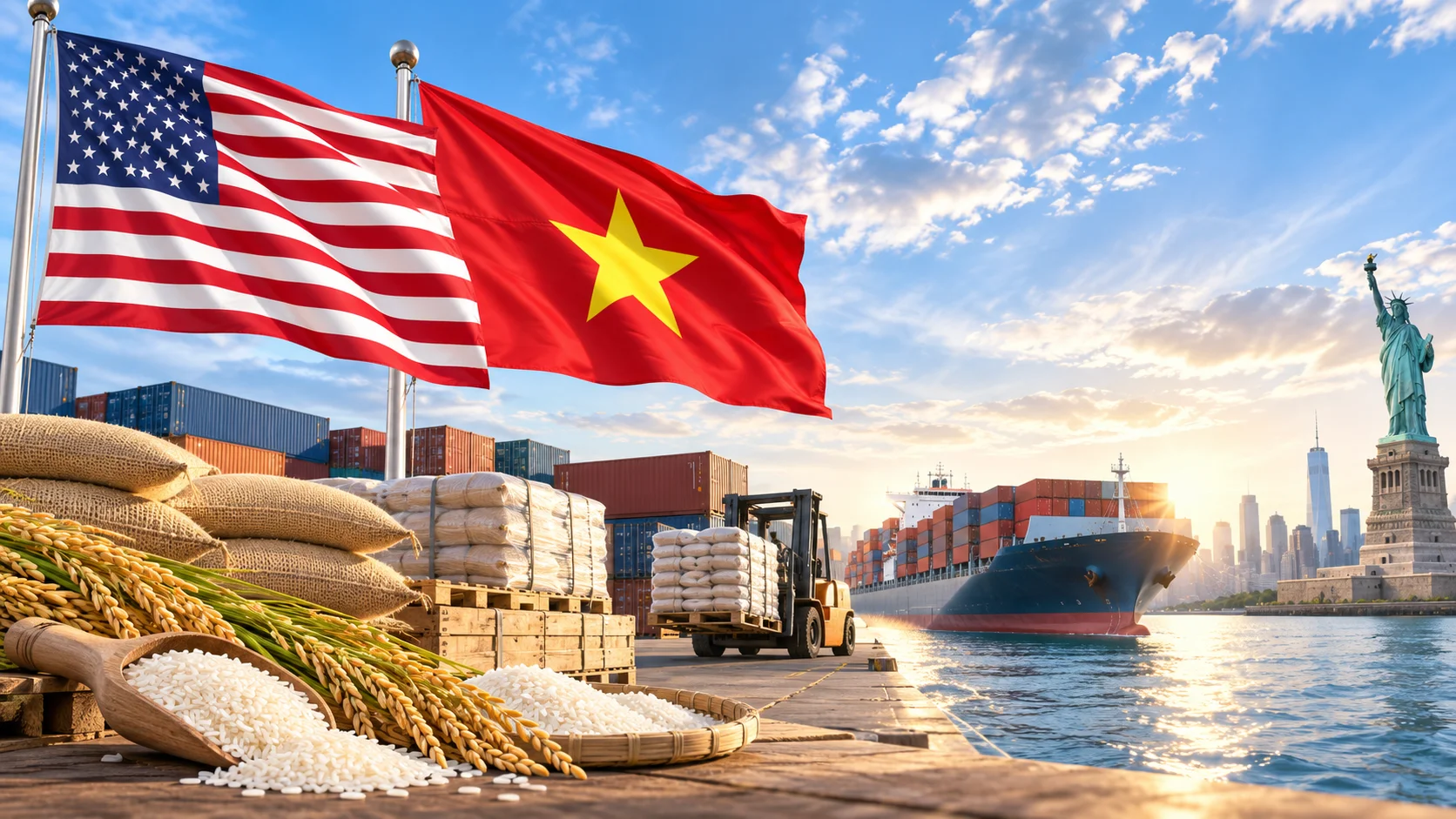
Imported goods into the US must meet strict quarantine and biosecurity requirements.
1.1 Quarantine requirements involving USDA APHIS and FDA for imported goods
The United States Department of Agriculture's Animal and Plant Health Inspection Service (USDA APHIS) and the U.S. Food and Drug Administration (FDA) are among the authorities involved in regulating imported goods entering the United States.
At U.S. ports of entry, regulated agricultural products and other imported goods may be subject to documentary or physical inspection. One important objective is to prevent the introduction and spread of regulated pests that could affect agriculture and native ecosystems.
1.2 Potential financial losses when a container encounters clearance problems at a U.S. port
- Re-export, treatment, or disposal measures: If live regulated pests are detected or wood packaging material (WPM) fails to meet the applicable requirements, the authorities may order treatment, re-export, disposal, or other corrective action. The resulting logistics and treatment costs may ultimately be borne by the responsible commercial parties.
- Rising demurrage, detention, and storage costs: When a container is held for additional inspection or documentation review, storage and equipment-related charges can increase rapidly, particularly if the delay extends for several days.
- Higher inspection risk for subsequent shipments: A history of non-compliance may affect the risk profile applied to future shipments and may result in increased scrutiny or inspection.
2. Top 5 criteria for selecting a reputable fumigation company for exports to the United States in Vietnam
To better manage risks for U.S.-bound export shipments, cargo owners and freight forwarders should evaluate fumigation providers against 5 key technical and operational criteria:
Criterion 1: Strong knowledge of USDA APHIS requirements and ISPM 15
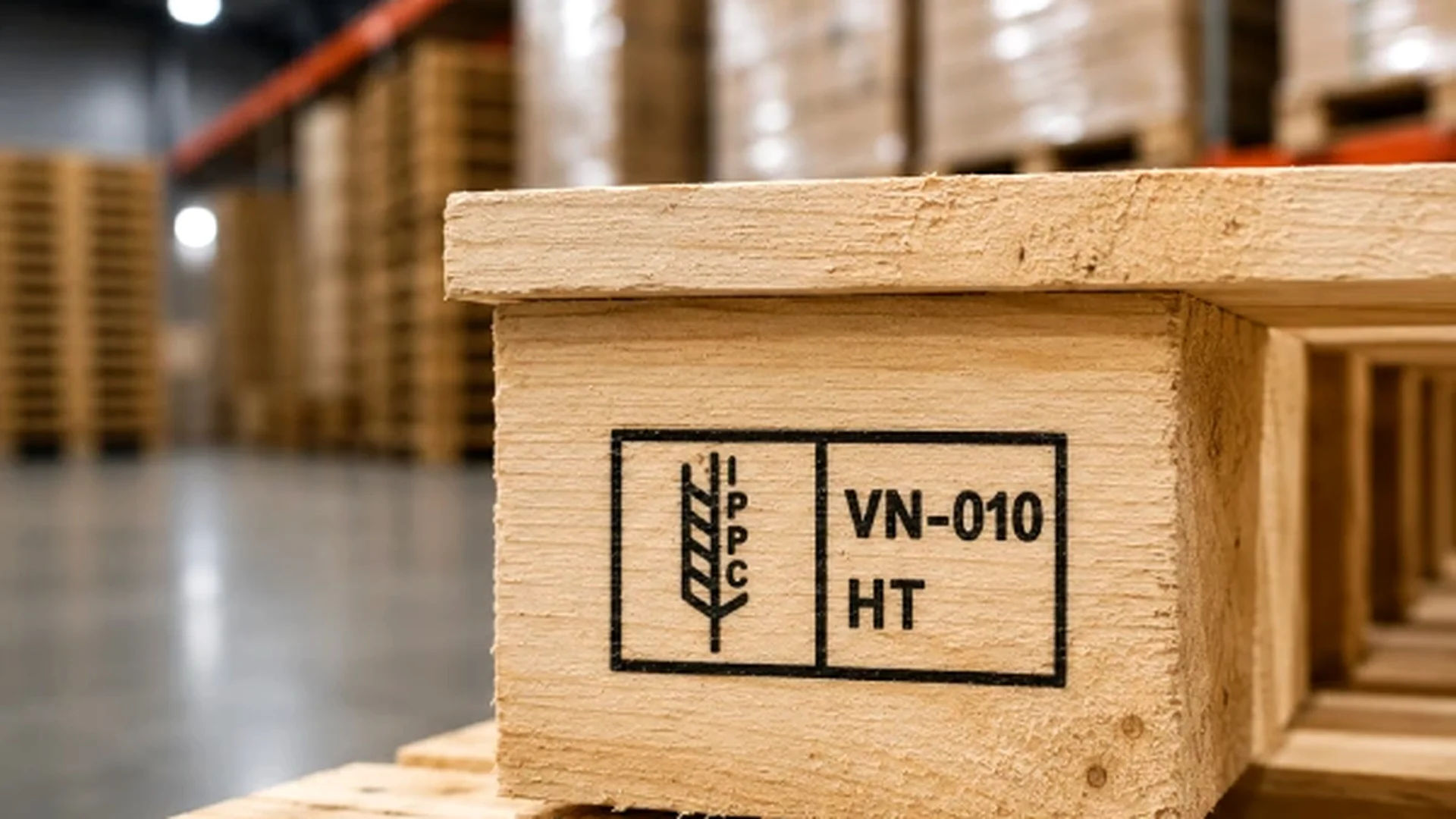
The ISPM 15 mark on wood packaging material should be clear, legible, and compliant with the applicable marking requirements.
The service provider should have practical knowledge of the phytosanitary requirements applicable to wood packaging material (WPM), including pallets, crates, boxes, and dunnage:
- Wood treatment requirements: Regulated wood packaging material such as pallets, wooden crates, and dunnage must meet the applicable ISPM 15 requirements, including debarking requirements and treatment using an approved method such as Heat Treatment (HT) or Methyl Bromide (MB), where permitted and applicable. Moisture condition should also be managed appropriately to reduce storage and mold risks.
- ISPM 15 marking requirements: The ISPM 15 mark should be legible, durable, non-transferable, and applied in accordance with the applicable marking rules, including the appropriate treatment code such as HT or MB.
Criterion 2: Technical capability and appropriate fumigation methods
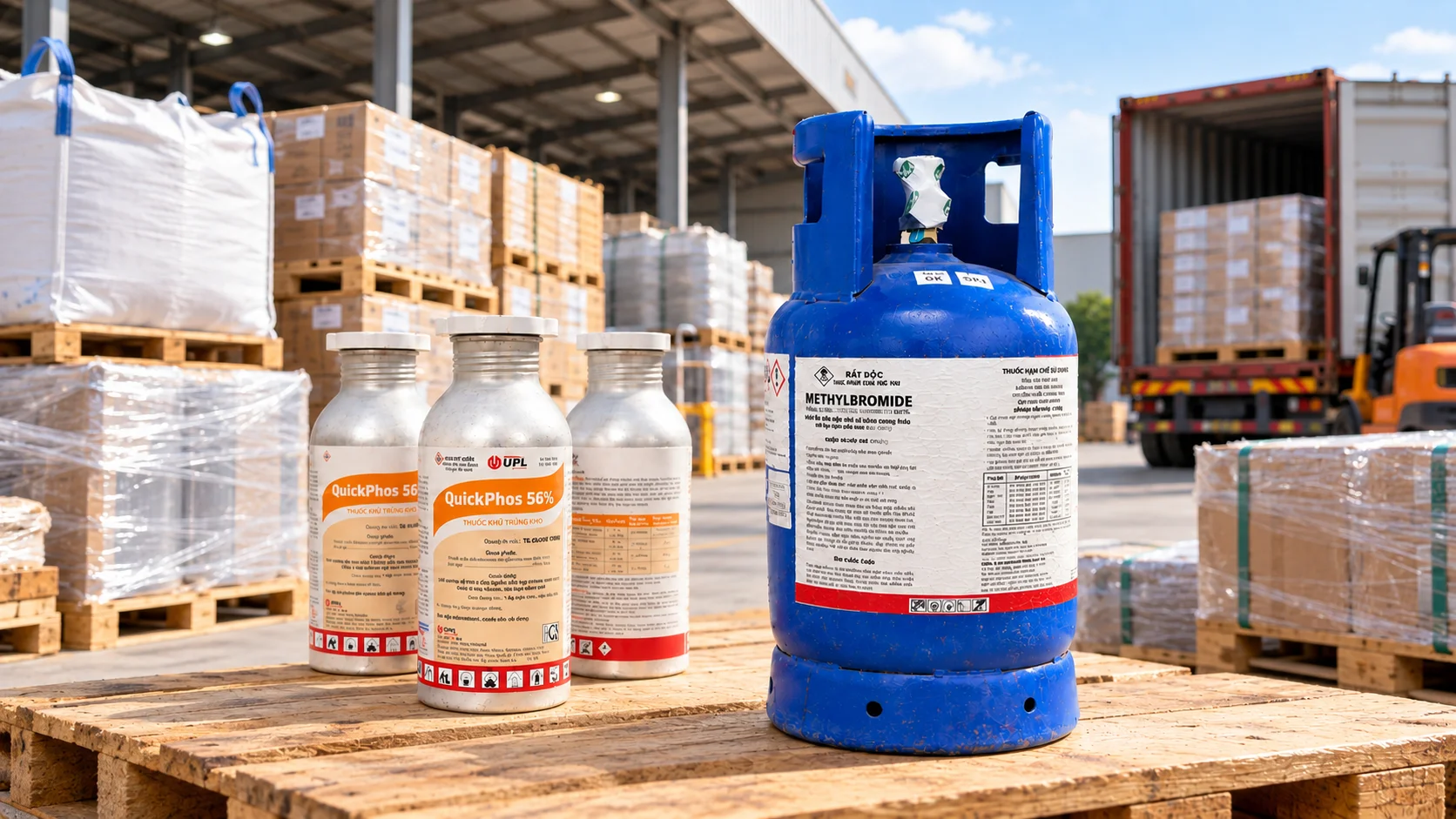
A professional fumigation provider should select the treatment method according to the commodity, target pest, treatment environment, and destination-market requirements.
A professional fumigation company needs to master suitable technical solutions for each type of commodity:
- Flexible application of fumigants: Deploy Phosphine fumigant (PH3) with standard exposure times for dry agricultural products (rice, coffee, cashew nuts, pepper) to preserve flavor and germination capacity; use Methyl Bromide fumigant (CH3Br) with appropriate dosage and a minimum exposure time of 24 hours for wooden dunnage materials and exported machinery.
- J-System air recirculation technology for bulk cargo: For loose agricultural products carried in vessel holds nearly 20m deep, the application of the J-System air recirculation system helps distribute the fumigant evenly from the surface to the bottom of the hold, eliminating all insects without leaving "dead spots" lacking chemical concentration.
Criterion 3: Application of 2-layer transparent fumigation model and digital data traceability

2-layer transparent model combining field data and traceable certificates
The fumigation process should be supported by verifiable operational data rather than relying solely on the final certificate:
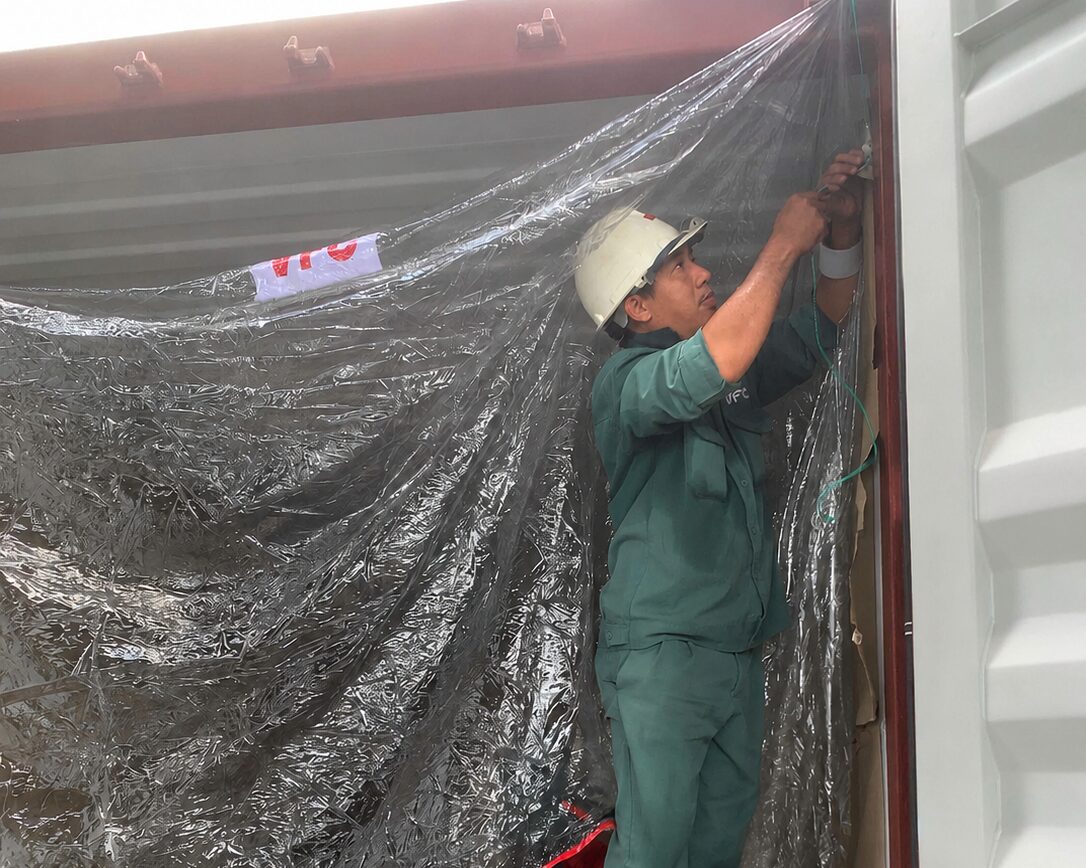
- Layer 1 – transparent field operations: Sealing activities, fumigant concentration monitoring, exposure-period records, and safety checks are documented during treatment. Operational data are managed through VFC Fumigation's internal FumiApp system.
- Layer 2 – transparent export documentation: The Fumigation Certificate is integrated with a QR code that allows import partners, shipping lines, and other relevant parties to access the online verification record and cross-check the certificate information.
- Documentation consistency: Key shipment information such as the container number, seal number, commodity description, means of conveyance, and loading/discharge ports should be consistent with the B/L, Commercial Invoice, and Packing List.
Criterion 4: Combining fumigation with container moisture-control solutions
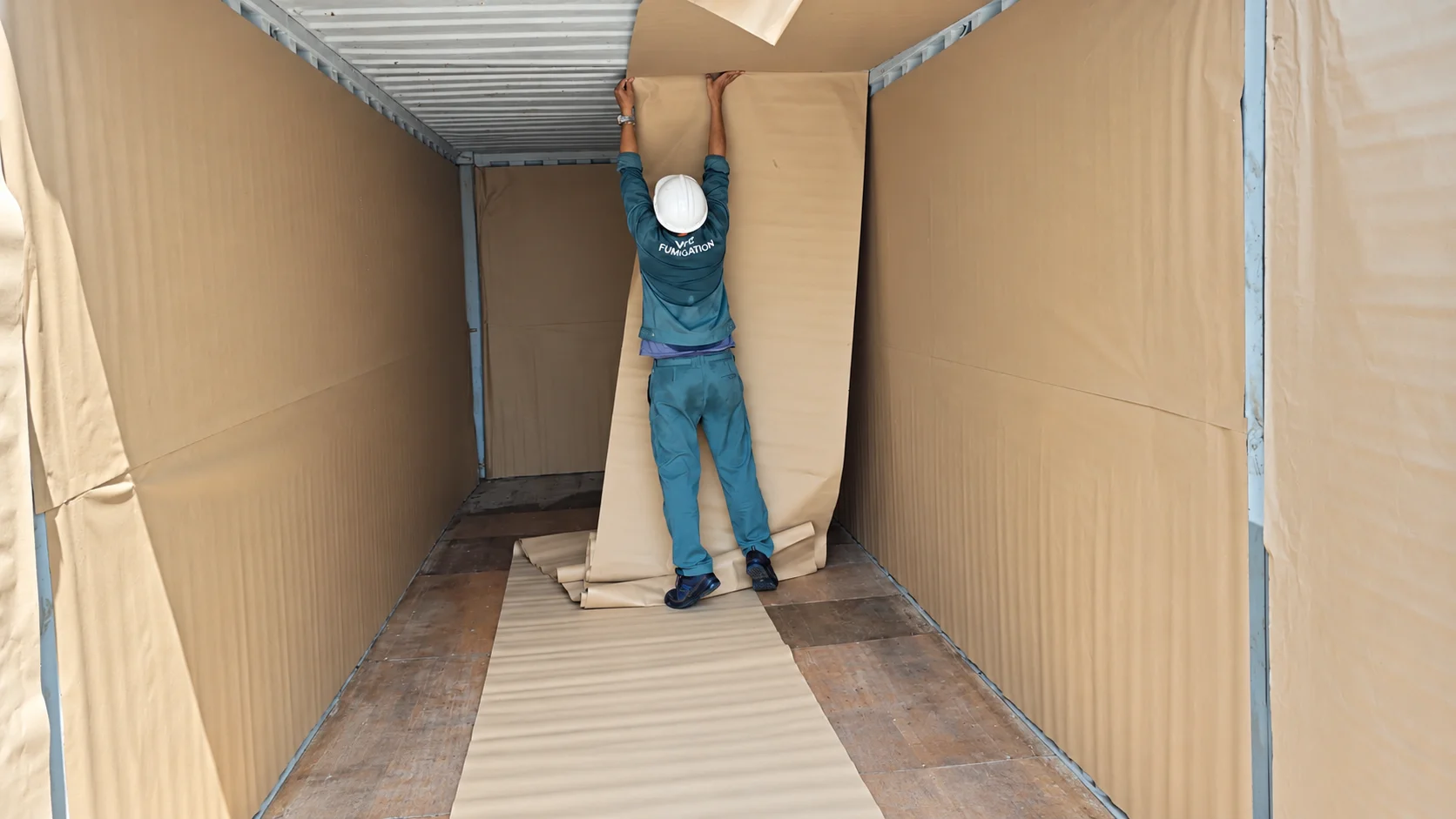
Kraft paper lining beneath the container roof can help reduce the risk of condensation dripping directly onto the cargo.
Ocean transit from Vietnam to the United States can extend over several weeks. During the voyage, changes in temperature and humidity can cause condensation to form on internal container surfaces, particularly the roof.
- Condensation dripping onto the cargo can wet upper layers of packaging and increase the risk of moisture damage, mold, and odors.
- A reputable processing provider must have the capacity to offer a comprehensive paper lining and industrial desiccant bag system installation solution specifically designed to control air humidity throughout the transit.
Criterion 5: Service network and the ability to support post-treatment issues
- Coverage across major export hubs: A broad service network can help the provider respond to last-minute schedule changes at major export locations such as Ho Chi Minh City, Cat Lai, Cai Mep, Hai Phong, Quy Nhon, and Da Nang.
- International coordination capability: If a quarantine issue arises at a U.S. port, a professional fumigation provider should be able to supply treatment records and technical information to support data cross-checking and communication among the relevant parties.
3. Risk comparison: inadequate fumigation practices versus professional fumigation management
| Technical and operational criterion | Inadequate fumigation practice | Professional fumigation management |
|---|---|---|
| Sealing and fumigant application | Inadequate sealing may result in fumigant loss and insufficient treatment conditions. | Uses appropriate sealing materials, follows a technical application plan, and monitors fumigant concentrations where required. |
| ISPM 15 wood packaging material | May involve non-compliant marking, untreated or improperly prepared WPM, or materials with visible pest or bark issues. | Verifies applicable WPM requirements, treatment status, and legibility of the ISPM 15 mark. |
| Certificate data | Shipment information may be inconsistent with the B/L or supporting documents, with limited traceability. | Cross-checks key shipment information and can provide additional traceability or verification records. |
| Moisture control | Moisture-related cargo risks may not be considered. | Can assess whether container lining, desiccants, or other moisture-control measures are appropriate. |
| Destination-port issues | Limited original treatment data may make later verification more difficult. | Maintains operational records that can support technical cross-checking if an issue arises. |
4. VFC Fumigation solutions for U.S.-bound export cargo

VFC Fumigation - an experienced fumigation service provider
With more than 50 years of experience in fumigation and pest management for agricultural commodities and import-export cargo in Vietnam, VFC Fumigation provides technical solutions for businesses exporting goods to the United States:
Long-standing experience and IMFO membership
- VFC Fumigation is a member of the International Maritime Fumigation Organisation (IMFO).
- IMFO's international professional network can support industry connections and technical coordination across maritime fumigation activities.
2-layer transparent fumigation for stronger data and certificate verification
- Standardized technical process: The workflow covers information intake, site assessment, fumigant placement, sealing, exposure-period control, concentration monitoring, and safe aeration according to the applicable technical treatment plan.
- Digital certificate verification: The Fumigation Certificate includes a QR code that supports online verification and cross-checking of the certificate information by exporters, buyers, shipping lines, and other relevant parties.
Project case: fumigation of 55,000 tons of bulk rice for U.S. export on the Golden Eagle
- Project challenge: The Golden Eagle carried approximately 55,000 tons of bulk rice for export to the United States. With cargo holds nearly 20 meters deep, natural fumigant diffusion presented a significant technical challenge, particularly in ensuring that deeper sections of the commodity mass received adequate treatment.
- VFC Fumigation's solution: The project applied the J-System forced gas recirculation approach to support fumigant movement throughout the deep cargo mass and improve distribution conditions inside the vessel holds.
- Project outcome: The treatment was completed according to the project plan, and the shipment subsequently proceeded through the destination process in accordance with the voyage schedule.
View the full project case study here!
5. Frequently asked questions about fumigation for exports to the United States
Question 1: Does every shipment exported to the United States require fumigation?
Answer: No. Fumigation is not automatically required for every U.S.-bound shipment. The applicable treatment requirements depend on the commodity, pest risk, wood packaging material, phytosanitary conditions, and other relevant import requirements. Regulated WPM must comply with ISPM 15, but ISPM 15 itself does not mean that every wooden pallet must necessarily be fumigated, since approved treatments can include Heat Treatment and other permitted methods.
Question 2: What happens if an ISPM 15-marked pallet shows signs of insect activity at a U.S. port?
Answer: Treatment does not provide permanent protection against subsequent infestation. If WPM is later exposed to conditions that allow pests to re-enter or become active, signs such as fresh frass, live insects, or new galleries may trigger inspection and biosecurity action at the port of entry. The specific action will depend on the findings and the competent authority's decision.
Question 3: How long is the fumigant exposure period for a U.S.-bound container?
Answer: The exposure time depends on the active ingredient used according to the technical plan:
- If Methyl Bromide (CH3Br) fumigant is used, the minimum required exposure time is 24 hours.
- If Phosphine (PH3) fumigant is used, the exposure period must be maintained continuously for 7 to 10 days to ensure complete eradication of egg and pupal stages of pests.
Question 4: What information should businesses check on a Fumigation Certificate for a U.S.-bound shipment?
Answer: Businesses should cross-check the Fumigation Certificate against the B/L, Commercial Invoice, Packing List, and other applicable shipping documents. Key information may include the shipper and consignee details, container number, seal number, commodity description, fumigant used, dosage, treatment date, and exposure period.
Selecting a technically capable fumigation provider is an important part of managing financial, cargo-quality, quarantine, and logistics risks for shipments exported to the United States.
Businesses preparing to export agricultural commodities, wood products, furniture, or containerized cargo to the United States can contact VFC Fumigation for consultation on the applicable fumigation and technical requirements:
- Technical Support Hotline 24/7: 0914 773 300
- Customer Service Call Center: 1800 577 788
- Email: contact@fumigation.vn




Related Blogs