




Published date:
30/06/2026
Share




Within the maritime logistics chain, in-transit fumigation is a critical solution for export shipments of agricultural commodities and bulk cargo. Immediately after the technical treatment and sealing of the cargo holds have been completed at the port, a VFC Fumigation technical representative will work directly with the Master or Chief Officer. The purpose of this coordination is to provide detailed instructions, conduct an on-site safety inspection, confirm the vessel's safety status, and hand over the complete technical documentation before the vessel officially departs.
Key handover items for in-transit fumigation between VFC and the vessel's command team
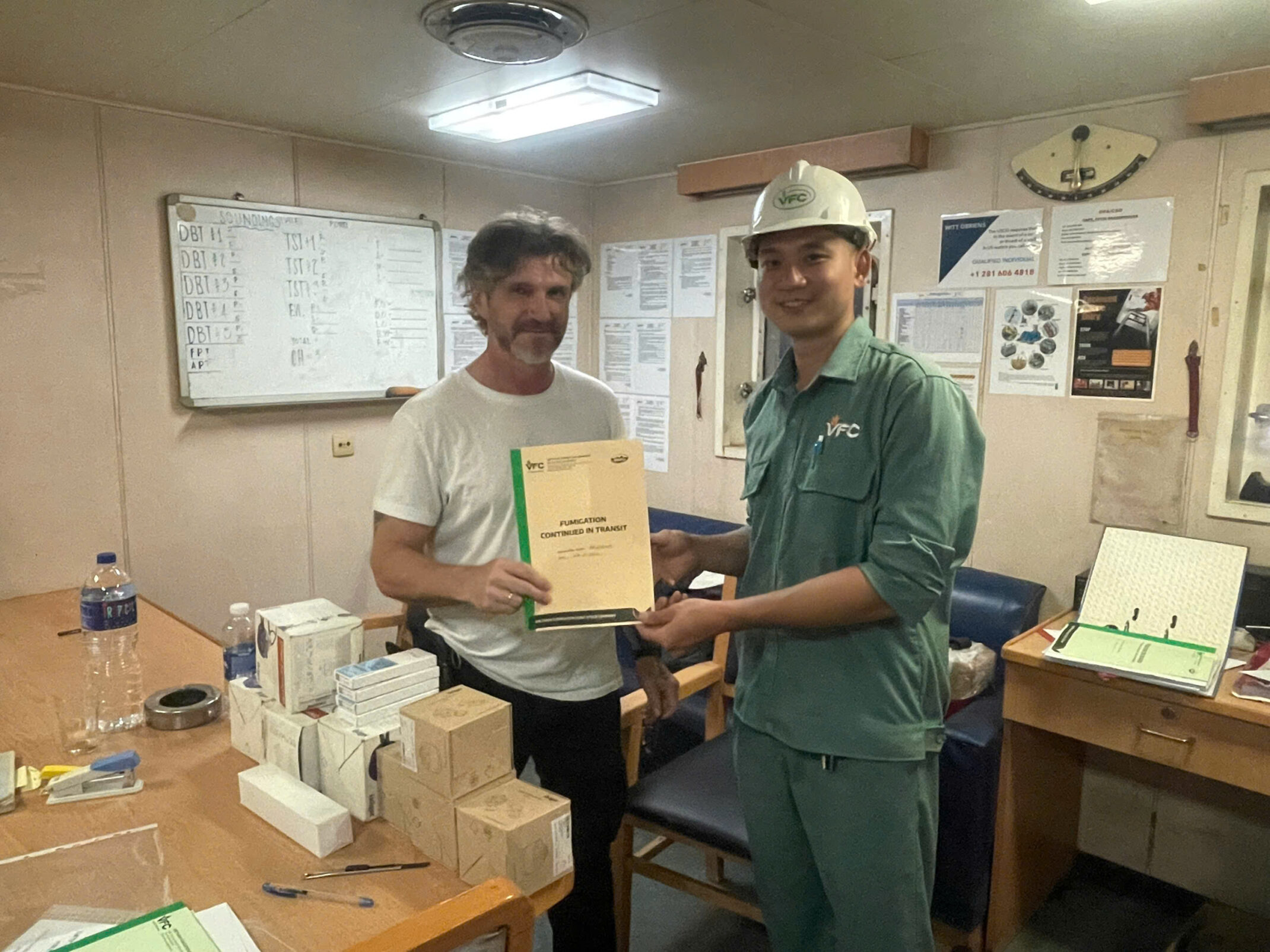
The technical handover process between VFC Fumigation and the vessel's command team focuses on three core areas:
First, detailed safety instructions are provided for the entire voyage, from the fumigant exposure period through to the aeration of the cargo holds before arrival at the discharge port. The crew is provided with guidance on identifying signs of fumigant leakage, maintaining restricted-area safety controls, and responding to incidents that may arise at sea in order to protect the safety of all personnel on board.
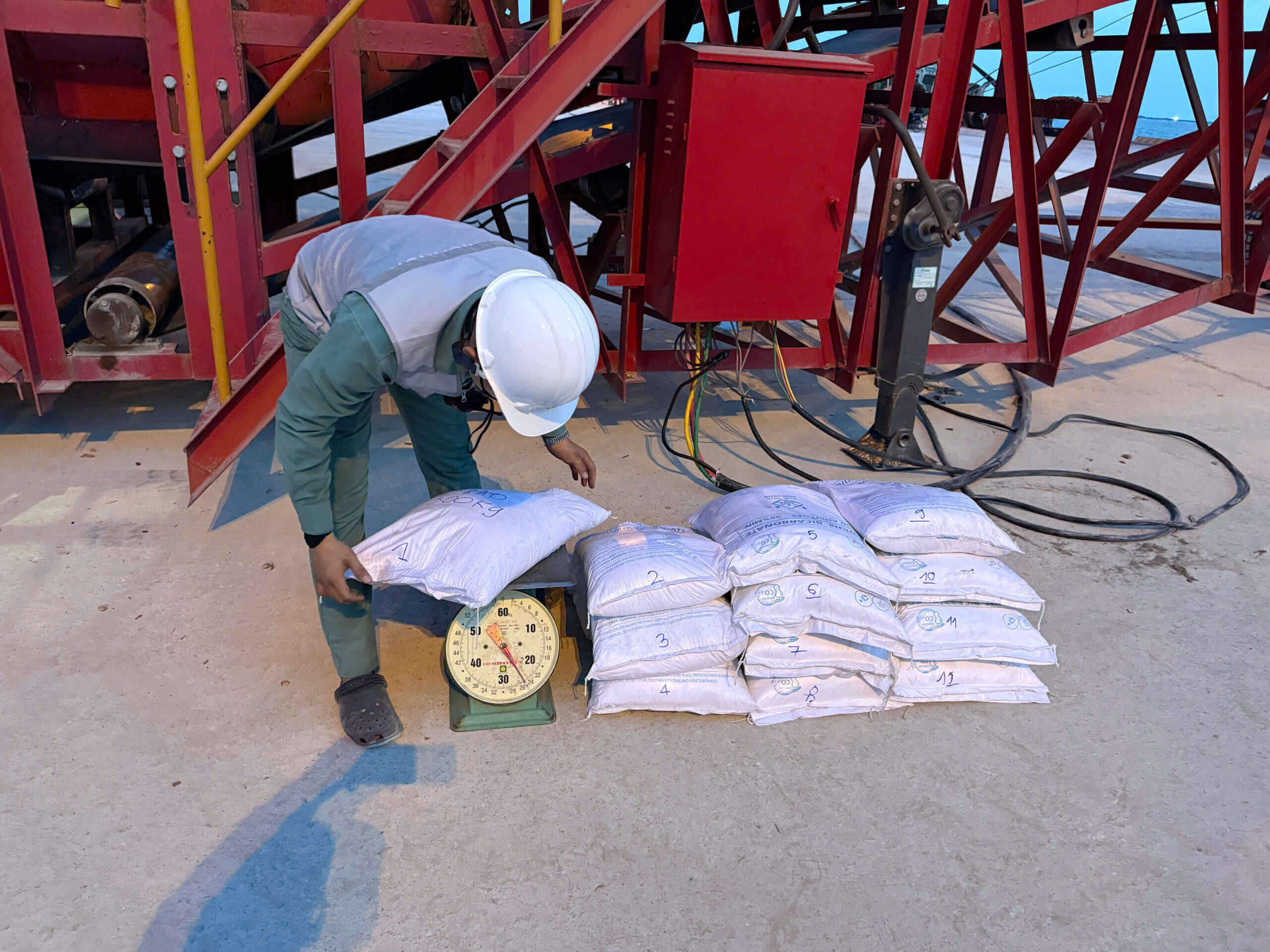
Second, an on-site safety inspection is conducted to confirm that the vessel is fit to proceed. VFC Fumigation technicians and vessel representatives carefully inspect critical points, accommodation areas, the engine room, and hatch covers using specialized gas detection equipment. The inspection is intended to verify that the fumigant concentration is maintained at the required level inside the cargo holds without migrating into crew working or living areas, confirming that the vessel is safe to depart.
For large treatment structures or cargo masses with significant depth, the fumigant distribution plan may require a gas recirculation system depending on actual site conditions. See J-System: an active gas recirculation solution for large-scale fumigation structures.
Third, both parties cross-check the operational data and sign the handover confirmation records. All parameters related to the fumigant used, applied dosage, structure of the treated cargo holds, and planned exposure period are recorded transparently. The in-transit fumigation handover record and vessel safety instructions are then completed, establishing a clear technical and documentary basis for the voyage. For shipments that may require post-voyage verification, the value of the data lies not only in the handover record itself but also in the ability to trace the actual fumigation operations performed on site.
See more: Transparent fumigation and how on-site data and certificates are managed using QR codes/strong>.
For dry agricultural commodities or bulk cargo requiring a longer treatment period, businesses can refer to the Phosphine fumigation process for dry agricultural commodities intended for export to better understand cargo conditions, exposure time, and fumigant concentration control.
Reinforcing professionalism, safety, and transparency
Through structured coordination between the VFC Fumigation technical team and the vessel's command team, cargo can be effectively protected throughout the fumigant exposure period while supporting smoother clearance procedures at the destination port. This process reflects the core values consistently pursued by VFC Fumigation: professionalism, safety, and transparency. For maritime fumigation projects, the ability to coordinate effectively with the Master, Chief Officer, vessel agent, and cargo owner is an important factor when evaluating a service provider.
See more: Criteria exporters use when selecting a fumigation service provider
With a strong technical foundation and extensive experience in maritime fumigation, VFC Fumigation continues to serve as a reliable partner in protecting cargo quality and supporting the reputation of cargo owners and vessel agents across international shipping routes. If your business is currently evaluating service providers for different types of export shipments, you can refer to the Top 5 reputable export cargo fumigation companies in Vietnam.
Exporters and maritime transport operators can learn more about technical fumigation solutions for vessels, barges, and export cargo by contacting VFC Fumigation at 0914 773 300 or sending an inquiry to contact@fumigation.vn for consultation on a treatment plan suited to each shipping route.

-
Blog (20)
-
Regulation updates (4)
-
Partnerships & Collaborations (4)
-
General News (15)
Featured News

Related Knowledge