





Published date:
09/09/2026
Share




Export dried agricultural commodities such as rice, coffee beans, cashew nuts, pepper, and cassava chips require strict pest control prior to customs clearance. Among these, Phosphine (PH₃) fumigation is widely utilized due to its deep penetration capability and minimal impact on the natural quality of the produce.
1. Why Phosphine Is Suitable for Export Dried Agricultural Commodities?
Phytosanitary treatment methods must be selected based on commodity characteristics, importing market requirements, and transit conditions. For many categories of dried agricultural commodities, Phosphine (PH₃) is utilized to control pests during warehousing and ocean transit.
1.1. Technical Characteristics of Phosphine for Dried Agricultural Commodities
Phosphine (PH₃) fumigant gas is generated through the reaction between metal phosphides, such as AlP (Aluminium phosphide) or Mg₃P₂ (Magnesium phosphide), and moisture in the ambient air.
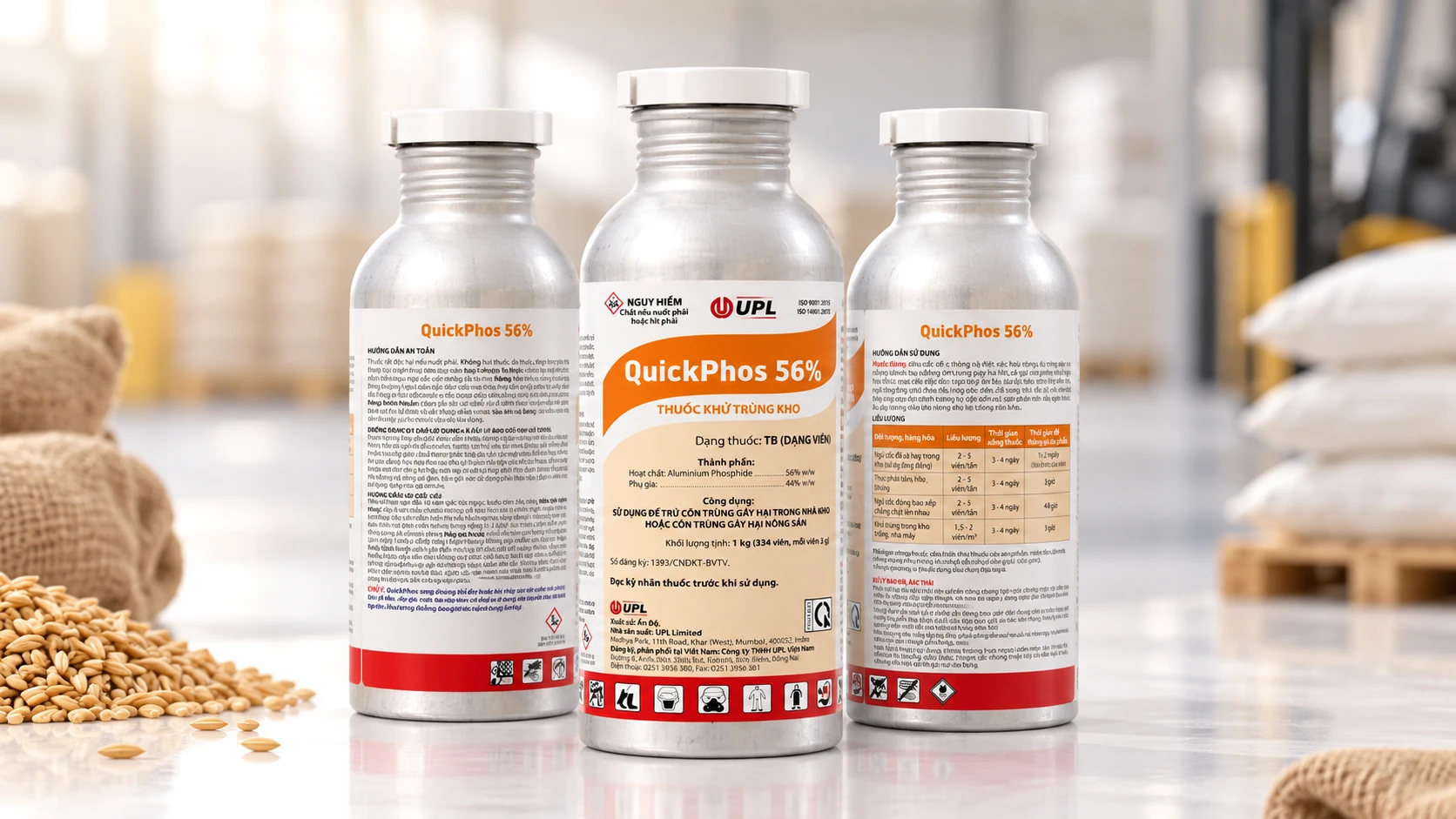
What are the characteristics of Phosphine fumigant?
- Deep penetration capability: Phosphine has a low molecular weight, allowing it to diffuse into bagged stacks and high-density grain bulks.
- Minimal impact on commodities: This method is utilized to control pests while minimizing adverse effects on seed germination rates.
- Broad scope of application: Applicable for the fumigation of export rice, coffee beans, cashew nuts, pepper, and cassava chips.
For export agricultural consignments, physical treatment is only one part of the process. Enterprises must also manage on-site field data and post-treatment certification. See more on export agricultural fumigation: from commodity treatment to data and certificate management.
1.2. Comparison Between Phosphine (PH₃) and Methyl Bromide (MB) Fumigation
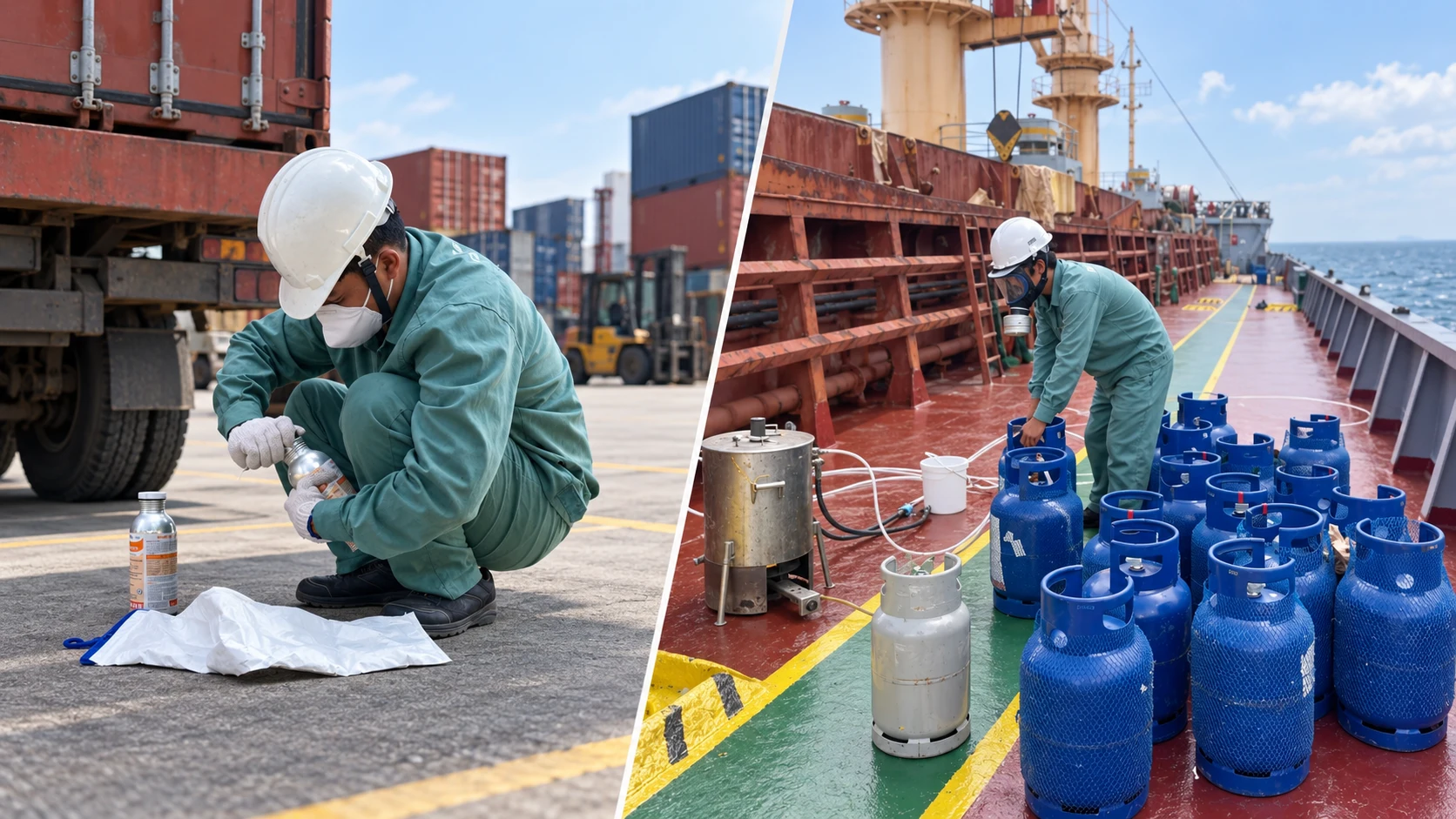
Differences Between Phosphine and Methyl Bromide Fumigants
Depending on consignment characteristics and treatment requirements, enterprises may need to weigh between Phosphine and Methyl Bromide. Key differences between the two fumigants are outlined below:
| Criteria | Phosphine (PH₃) | Methyl Bromide (CH₃Br) |
|---|---|---|
| Physical State during Treatment | Solid formulations in pellet or strip form react with atmospheric moisture to release gas. | Liquefied gas formulation, introduced into the fumigation enclosure (container, cargo consignment, etc.) via a vaporizer. |
| Fumigation Exposure Time | Typically ranges from 7 to 10 days. | Shorter, typically ranging from 24 to 48 hours. |
| Application | Commonly used for stored agricultural commodities, long-term bagged cargo, and export dried agricultural products. | Can be selected when rapid treatment turnaround is required or for compliance with specific standards such as AFAS and ISPM 15. |
The table above summarizes only the key differences. For a deeper evaluation based on commodity type, treatment duration, and consignment conditions, see comparing Methyl Bromide and Phosphine in export fumigation.
2. Technical Factors Determining the Efficacy of Phosphine Fumigation
The efficacy of Phosphine fumigation depends heavily on environmental conditions, consignment characteristics, and on-site operational execution. These factors must be strictly controlled to ensure uniform gas diffusion and sustain target concentrations throughout the treatment period.
2.1. Environmental Temperature and Humidity Requirements
The release rate of Phosphine is directly influenced by atmospheric humidity. As humidity rises, the gas release process typically accelerates.
Temperature also affects treatment efficacy. At higher temperatures, insect biological activity increases and chemical reactions occur faster. Conversely, at lower temperatures, the exposure time may need to be extended.
Therefore, temperature and humidity must be evaluated alongside commodity characteristics before determining the treatment plan. Humidity not only influences gas release, but is also directly linked to the risk of insect development or re-infestation in warehouses and containers. See more on why cargo return rates due to weevils surge during the rainy season.
2.2. Cargo Stacking and Stowage Techniques for Containerized and Bagged Commodities
- For containers: Bagged commodities must be properly stacked, leaving adequate free space for gas circulation. Overhead clearance (headspace) and gaps between cargo stacks facilitate effective Phosphine diffusion throughout the treatment enclosure. For containerized export consignments, refer to the export container fumigation guide to learn more about enclosure sealing, stowage, treatment application, aeration, and certification.
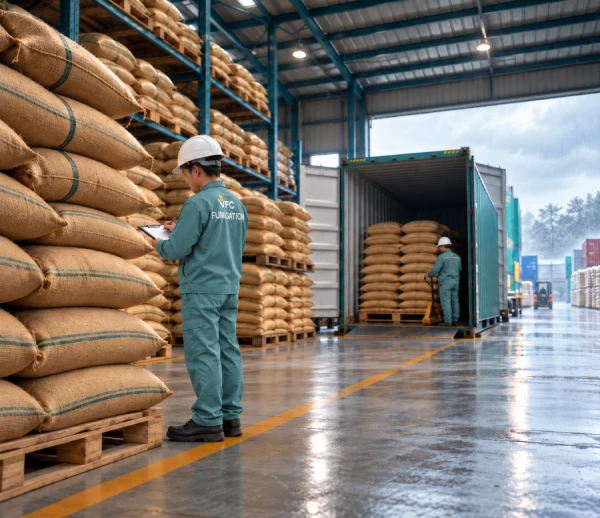
- For bagged cargo in warehouses: Cargo should be arranged into individual stacks with adequate clearance from walls and structural columns to facilitate routine inspection and fumigation operations. During treatment, specialized gas-proof sheets must completely enclose the cargo, and tarp skirts must be tightly sealed to the warehouse floor to minimize gas leakage throughout the exposure period. If the treatment scope involves agricultural storage facilities or large-scale sheeted stacks, refer to warehouse, silo, and ship hold fumigation—why every project requires a tailored technical plan.
The gastightness of the enclosure directly impacts the maintenance of Phosphine concentrations throughout the entire fumigation process.
2.3. Managing the 7 to 10-Day Exposure Period
Phosphine requires a longer treatment duration than several other fumigants. Typically, the exposure period lasts from 7 to 10 days.
Phosphine acts slowly on insects; therefore, this duration is designed to sustain treatment conditions long enough to control pests across various developmental stages, including eggs, larvae, pupae, and adults.
3. The 6-Step Phosphine Fumigation Process for Export Dried Agricultural Products
To ensure safety, effective pest eradication, and complete treatment documentation in compliance with technical fumigation standards, agricultural commodity fumigation at VFC Fumigation is conducted across six key steps:
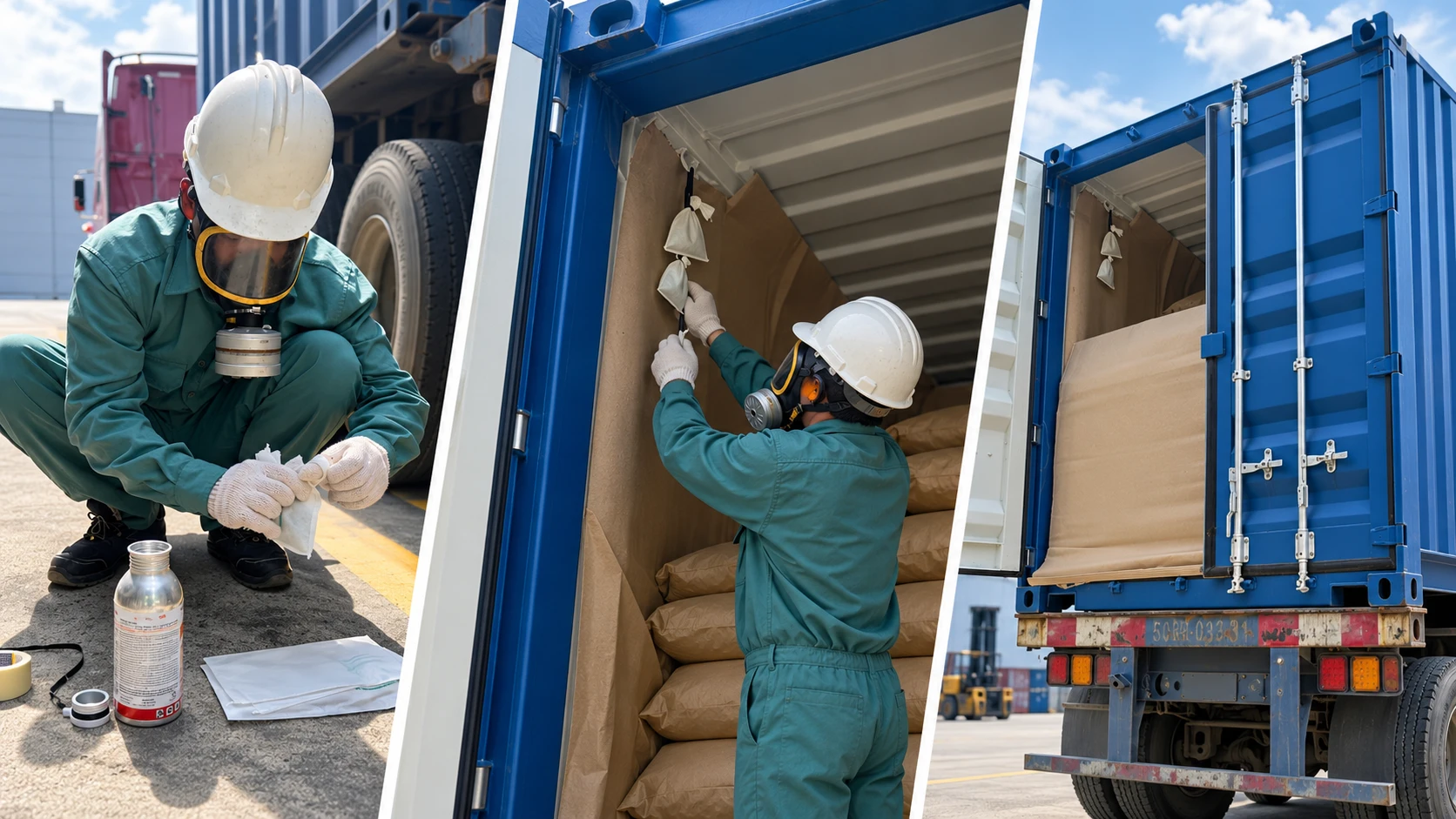
Phosphine Fumigation Process for Export Dried Agricultural Products
- Step 1: On-site survey and warehouse condition assessment: Technical specialists conduct an inspection of the agricultural consignment—such as rice, coffee, cashew nuts, pepper, or cassava slices—and examine warehouse flooring conditions along with the gastightness of the sheeted enclosure. The capability to conduct rigorous on-site surveys and engineer a pre-treatment plan is also a critical criterion when evaluating service providers. See key criteria for selecting an export fumigation service provider.
- Step 2: Technical planning and material preparation: Develop a detailed treatment plan based on commodity characteristics, cargo volume, temperature conditions, and target pests. Fully prepare all specialized materials and equipment, including: Aluminium Phosphide (AlP) fumigant, fumigation sheets, sealing materials, gas concentration monitoring devices, leak detectors, and personal protective equipment (PPE).
- Step 3: Sheeting, chemical application, and enclosure sealing: Place the AlP fumigant evenly from the inside out, avoiding damp or wet surfaces, while simultaneously installing the gas sampling tube system. Completely enclose the agricultural stack with specialized fumigation sheets, using sand snakes or approved sealing materials to anchor the tarp skirts tightly to the warehouse floor to ensure gastightness; post safety warning signs around the perimeter of the fumigation zone. Businesses evaluating providers with on-site warehouse execution capabilities can refer to a roundup of reputable warehouse fumigation companies in Vietnam to compare service scopes and operational capacity.
- Step 4: Exposure period and concentration monitoring: Strictly maintain the exposure period from 7 to 10 days. Throughout the exposure period, technicians conduct periodic measurements and checks of gas concentrations to closely ensure pest eradication efficacy.
- Step 5: Aeration and safety clearance verification: Remove sealing materials or tarpaulins to conduct safe aeration. Use specialized instruments to measure residual gas concentrations, ensuring levels drop to or below the permissible Threshold Limit Value (TLV) before cargo handover.
- Step 6: Acceptance inspection and fumigation certificate issuance: Treatment results are documented and verified based on actual operational records. VFC Fumigation issues a fumigation certificate featuring a QR code to facilitate online verification and cross-referencing.
4. Frequently Asked Questions About Phosphine Fumigation for Dry Agricultural Products
Below are some of the most common questions export enterprises ask when exploring Phosphine fumigation for agricultural commodities.
Q1: When exporting rice, coffee, and cashew nuts, are they typically treated with Phosphine or Methyl Bromide?
Answer: The choice of fumigant largely depends on the specific requirements of the buyer, the regulatory mandates of the destination market, applicable standards, and related compliance criteria. Exporters should thoroughly verify these requirements to select the most appropriate fumigant.
Q2: How many days is the Phosphine fumigation exposure period for containers of dry agricultural products?
Answer: The Phosphine exposure period typically ranges from 7 to 10 days. However, the specific duration may vary depending on ambient temperature, humidity, and the target pests to be controlled.
Q3: Does Phosphine react with metal components?
Answer: Phosphine can corrode certain non-ferrous metals such as copper, silver, and gold. Therefore, it is essential to assess commodity characteristics as well as any equipment and components present within the treatment area before selecting a fumigation method.
Q4: How can the authenticity of a fumigation certificate be verified?
Answer: Enterprises or importing partners can scan the QR code on the certificate issued by VFC Fumigation to cross-reference and verify information stored on the online management system.
A clear understanding of Phosphine properties and thorough control over treatment conditions during the 7 to 10-day exposure period will help enterprises proactively manage pest risks, preserve agricultural commodity quality, and streamline export documentation.
Enterprises in need of export agricultural commodity treatment can contact the expert team at VFC Fumigation for a consignment condition assessment and tailored technical consultation.
- Technical Support Hotline: 1800 577 788
- Email: contact@fumigation.vn





Related Blogs