






Published date:
10/09/2026
Share




The pressure to gate in containers before the shipping line's cut-off time often makes many enterprises anxious to shorten fumigation exposure periods. However, rushing this timeline leads directly to insufficient exposure, substantially increasing the risk of serious incidents at destination ports.
Therefore, proactively scheduling adequate time and correctly understanding the technical principles will help cargo owners safeguard a safe and seamless supply chain.
1. What is Fumigation Exposure Time, and Why Can’t You Rush the Process?
Fumigation exposure time is the mandatory period required to maintain the fumigant concentration within a sealed space, allowing the gas to penetrate deeply into the cargo and eradicate pests. For safe and effective control, enterprises need to clearly understand the following core technical principles:
- The Principle of the Cumulative C×T Product: Fumigation exposure time is calculated based on the product of gas concentration and exposure duration, known as C×T (Concentration × Time). If this duration is shortened, the accumulated C×T value will be insufficient to control and eradicate pests concealed inside the cargo. The exposure period is merely one phase within the overall process. To understand the operational relationship between enclosure sealing, gas dosing, concentration monitoring, aeration, and certification, enterprises can refer to the 2026 export container fumigation guide.
- Mandatory International Quarantine Standards: The fumigation exposure timeline is a technical requirement clearly stipulated in international phytosanitary standards such as ISPM 15, Australia's AFAS scheme, and U.S. biosecurity regulations (USDA). Any insufficient exposure duration is deemed a failure to comply with technical protocols.
- Physical Inspection at Destination Ports: Quarantine authorities at the port of discharge are fully equipped with specialized technical instruments and scanning devices to detect the presence of live insects. Inadequate fumigation exposure time significantly increases the risk of surviving pests being intercepted. Therefore, strict adherence to the prescribed exposure period is vital to protect the consignment from severe risks and disruptions at the destination port.
2. Classification of Fumigation Exposure Times by Active Ingredient and Applicable Regulations
Each fumigant possesses distinct chemical properties and modes of action, requiring different exposure times to achieve maximum pest control efficacy. Specifically, standard exposure timelines are categorized as follows:
2.1. The 24-Hour Benchmark: The "Gold Standard" for Methyl Bromide (CH3Br)

Standard Regulations on Methyl Bromide Fumigation Exposure Time
The 24-hour timeline is the standard and mandatory requirement for Methyl Bromide fumigation. It is currently the most widely used active ingredient for treating wood packaging material (WPM) such as pallets and crates to comply with international standard ISPM 15. To see where this 24-hour window fits within the overall operational workflow, enterprises can review the container fumigation process with Methyl Bromide, spanning site inspection and sealing through to aeration.
For cargo exported to strictly regulated quarantine markets such as the U.S., Australia (AFAS standards), or Europe, the treatment protocol requires technicians to perform periodic concentration monitoring and maintain compliant gas levels throughout the full 24 hours. Shortening this timeline results in technical non-compliance, failing to guarantee phytosanitary safety.
2.2. The 7–10 Day Timeline: For Phosphine (PH3)

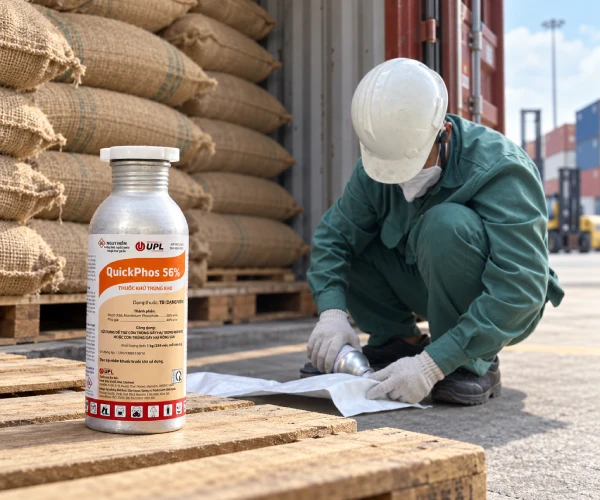
Container Fumigation Exposure Time with Phosphine (PH3)
Phosphine (PH3) is generated through the reaction of metal phosphides with atmospheric moisture and has a slow mode of action against insects. Due to these characteristics, the fumigation exposure time for Phosphine typically lasts from 7 to 10 days, depending on the specific commodity and target pests being treated.
Due to its low sorption by commodities, Phosphine is the preferred choice for bulk dry agricultural exports such as rice, coffee, cashew nuts, pepper, or cassava chips. Maintaining an exposure period over multiple days ensures the gas diffuses evenly throughout the entire cargo mass, effectively controlling surviving pests.
To understand why the treatment duration is longer and how factors such as moisture, cargo stowage, and gastightness impact efficacy, explore the Phosphine fumigation process for exported dry agricultural products.
Notably, enterprises are not required to hold containers at the origin yard for the full 7 to 10 days. For containerized agricultural products or large bulk exports, shipping lines typically permit in-transit fumigation (fumigation in transit), including direct treatment solutions inside vessel cargo holds.
Once technicians complete the fumigant placement, sealing, and posting of warning placards, the container or cargo vessel can depart to continue the exposure period throughout the voyage and undergo safe aeration upon arrival at the destination port.
3. Risks When Enterprises Fail to Comply with Fumigation Exposure Times
Driven by tight logistics deadlines, enterprises that fail to meet mandatory fumigation exposure times often face significant financial and procedural risks:
- Ineffective Pest Control: When the required exposure time is not met, the fumigant concentration is insufficient to effectively control and eradicate insect pests present within the cargo.
- Risk of Mandatory Re-treatment and Port Storage Penalties: Upon detecting live pests, destination quarantine authorities will issue a container hold order. The enterprise immediately incurs compounding daily Demurrage & Detention (D&D) charges, alongside the exorbitant cost of hiring local contractors to conduct mandatory re-treatment at the destination port.
- Risk of Re-exportation or Destruction: In markets with stringent biosecurity controls, if a consignment fails to meet phytosanitary requirements, competent local authorities may issue a mandatory order to re-export the cargo as-is or destroy it outright, resulting in severe financial losses and long-term damage to commercial reputation.
Cutting exposure time short is only one of several operational errors that can lead to treatment failure. Enterprises should also review the 3 common export fumigation mistakes before container loading.
4. Guidelines for Planning Cargo Stuffing and Fumigation to Meet Shipping Closing Times
To proactively manage export schedules and avoid the pressure of shipping closing times, logistics coordinators should schedule backward based on the following practical principles:

Planning Cargo Stuffing and Fumigation to Meet Port Closing Times
Differentiating the Schedule by Fumigant Type:
- Methyl Bromide Fumigation (under AFAS standards, ISPM 15, etc.): Depending on destination market regulations, applicable standards, or customer specifications, enterprises must calculate sufficient time for fumigation and proper aeration before containers are loaded onto the vessel. The minimum fumigation exposure duration is 24 hours.
- Phosphine (PH3) Fumigation: Depending on the target commodity and customer specifications, the exposure duration lasts from 7 to 10 days. Enterprises must proactively allocate lead time to complete treatment prior to container stuffing. Alternatively, the treatment can be conducted during the voyage (in-transit fumigation)—note that exporters must coordinate in advance with destination port authorities regarding the retrieval of spent Aluminum Phosphide (AlP) residues and safe disposal in accordance with local regulations.
Contingency Plans for Stuffing Delays or Traffic Congestion:
- Enterprises should proactively contact freight forwarders or shipping lines to request a Late Gate (a 3–6 hour gate-in extension) rather than cutting the fumigation exposure time short.
- If cargo stuffing is delayed too late and a Late Gate cannot be secured, enterprises should proactively roll the booking to the next vessel to ensure the shipment meets quarantine standards and avoid the risk of detention at the destination port.
For shipments gated in at major ports, refer to the container fumigation process at Cat Lai Port and how to coordinate around Closing Time to visualize on-site implementation steps.
Early Coordination with the Fumigation Provider:
Share booking details in advance (commodity type, container type, Closing Time) as soon as you start planning, enabling VFC Fumigation to proactively mobilize personnel, prepare materials, and keep pace with your cargo stuffing schedule.
5. Process-Compliant, On-Schedule Fumigation Solutions from VFC Fumigation
With over 50 years of experience in commodity preservation and import-export fumigation in Vietnam, VFC FUMIGATION remains steadfast in delivering the safest, most standardized solutions for export enterprises:

VFC Fumigation – A Highly Experienced and Reputable Container Fumigation Provider
- Internationally Certified Technical Competence: VFC Fumigation holds full official AFAS accreditation from DAFF (Australia), administers certified BMSB treatments, and strictly complies with ISPM 15 and USDA standards. For consignments bound for Australia during the BMSB season, exporters should review the complete BMSB-AusTreat regulations for exporting to Australia and New Zealand.
- Precise Operational Execution: We conduct thorough on-site inspections and develop tailored treatment plans suited to each fumigation structure and target commodity, ensuring effective pest eradication.
- Transparent Certificate Issuance: VFC Fumigation only issues fumigation certificates once the treatment process has been fully completed, ensuring the highest legal validity for your customs clearance documentation.
6. Frequently Asked Questions About Fumigation Exposure Time

Questions and Answers Regarding Fumigation Treatments
Question 1: The cargo is already stuffed, but the cut-off time is approaching. Is there any fumigation option faster than 24 hours?
Answer: For shipments requiring Methyl Bromide treatment under ISPM 15 or AFAS standards for Australia, the 24-hour exposure period is a mandatory technical requirement to ensure effective pest eradication. Intentionally shortening this timeframe places the consignment at an extremely high risk of detention at the destination port.
In critical, time-sensitive situations, rather than rushing, enterprises should proactively contact VFC Fumigation for flexible support, expert consultation on optimal solutions, or coordination to request Closing Time extensions and reschedule sailings aligned with destination market requirements.
Question 2: Does the fumigation exposure time include the aeration period?
Answer: No. The exposure time (e.g., 24 hours for Methyl Bromide) is the period during which the container must remain completely sealed for the fumigant to take effect. Safe aeration procedures are conducted only after the exposure period ends, continuing until fumigant vapor concentrations fall below the permissible Threshold Limit Value (TLV) before container handover. Enterprises must factor this additional timeframe into their logistics planning.
Question 3: Does Methyl Bromide affect the cargo?
Answer: Methyl Bromide operates in gaseous form. Once the exposure period and standard aeration protocols are properly completed, the gas dissipates completely from the cargo.
However, due to its solubility in organic substances, high sorption in finely powdered commodities, and tendency to impair seed germination, this fumigant is unsuitable (or requires extreme caution) for planting seeds, powdered agricultural goods, and sensitive cargo. VFC Fumigation technicians will assess your actual commodity characteristics to recommend the most suitable treatment protocol.
Facing a tight Closing Time deadline or need expert guidance on time-optimized fumigation protocols tailored to your export market (US, Australia, EU)? Contact the VFC Fumigation technical team today for schedule planning support and prompt on-site execution!
-
Blog (21)
-
Regulation updates (4)
-
Partnerships & Collaborations (4)
-
General News (15)
Featured News




Related Knowledge