





Published date:
06/11/2026
Share




When the new Robusta coffee crop begins arriving at the warehouse, enterprises must clearly distinguish between insects present within the commodity lots and those residing in the storage environment prior to deciding on a fumigation strategy. Weevils and borers existing within coffee bags must be evaluated for treatment using the tarpaulin (gastight sheet) fumigation method, whereas insects harbored in crevices, cracks, and along wall bases can be controlled via measures suitable for the warehouse environment. VFC Fumigation provides consultation on technical protocols based on the insect detection location, the baseline condition of existing inventory, and intake plans for the new-crop Robusta, assisting enterprises in treating the correct scope and proactively managing storage operations.
1. Insect Control in Robusta Warehouses: Accurately Identifying the Infestation Source to Select the Appropriate Treatment Approach
VFC Fumigation determines fumigation requirements based on the location where insects are detected and the actual condition of each batch of coffee. Because pests located inside bagged cargo and insects appearing on warehouse surfaces are two issues requiring different control measures.
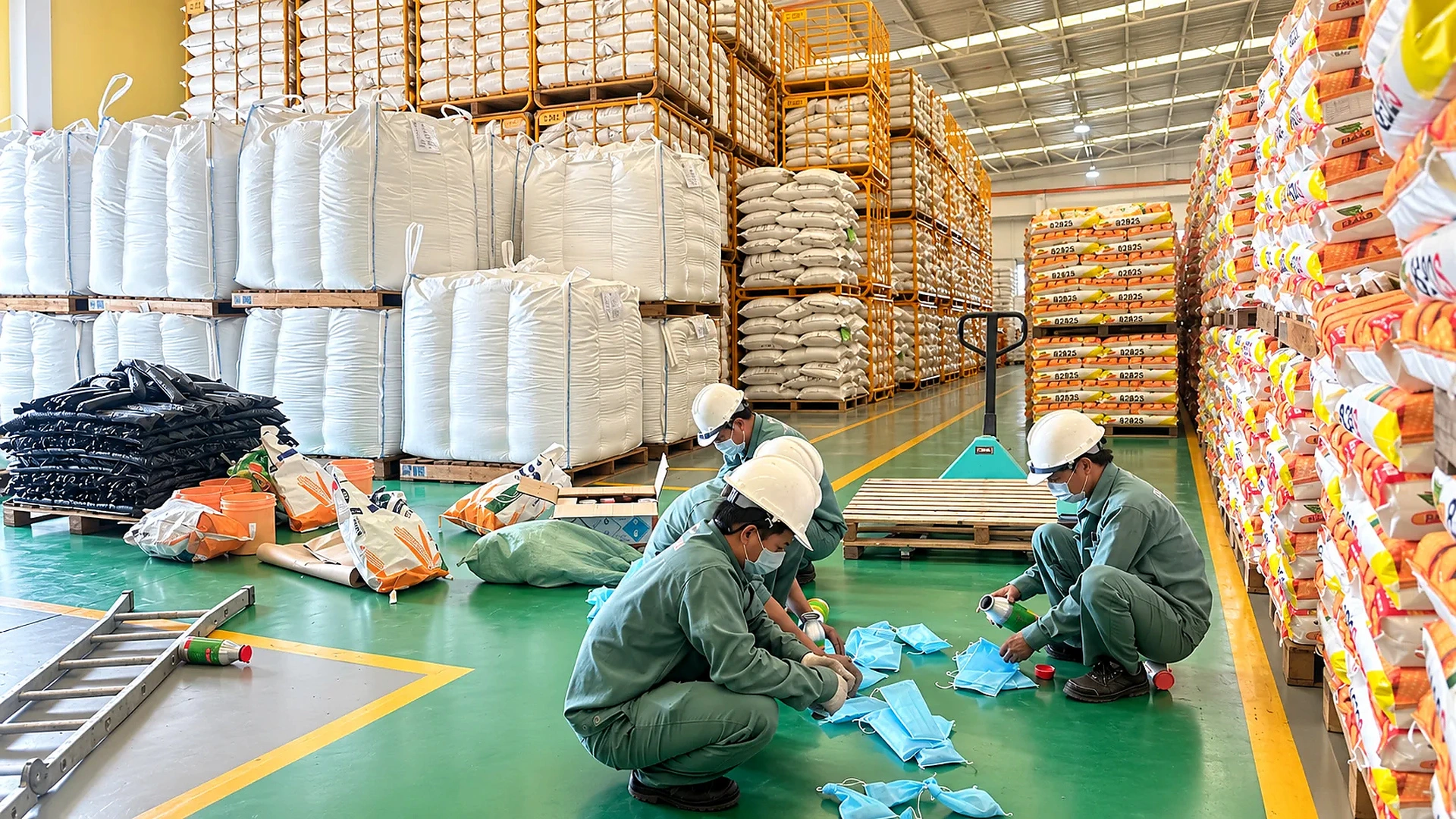
When weevils and borers are detected inside coffee bags, enterprises must assess the extent of infestation and consider direct phytosanitary treatment protocols for the consignment
For warehouse managers, making an accurate distinction from the outset helps determine the necessary treatment scope and allocate an appropriate operational timeframe. Particularly during the new-crop Robusta intake phase, this decision directly influences the arrangement of existing inventory and raw material receiving zones.
1.1. Detection of Weevils/Borers within Coffee Lots: Need to Evaluate Gastight Sheet (Tarpaulin) Fumigation
Fumigation under gastight sheets (tarpaulins) is the method utilized by VFC Fumigation to eradicate insect pests within coffee lots currently stored in the warehouse. Upon detecting weevils or borers inside bagged commodities, technicians must survey the infestation status, bagging specifications, and enclosure gastightness capabilities prior to formulating a technical plan.
Depending on inspection findings, VFC Fumigation can advise on sheeting the entirety of coffee lots requiring treatment or focusing selectively on lots confirmed to harbor insect infestations. The approach is selected based on the infestation perimeter and operational conditions, while strictly complying with technical specifications, gas monitoring protocols, and safety standards.
For warehouses still holding old-crop Robusta, eradicating pest sources within existing inventory before introducing new-crop commodities into the same area mitigates cross-infestation risks. If treatment is carried out only on selected lots, enterprises must maintain continuous monitoring of remaining lots, as the presence of internal hidden insect pests cannot be entirely ruled out.
1.2. Insects Emerging along Wall Bases and Crevices: Prioritize Warehouse Environmental Pest Control
Sanitation and insect control in the warehouse environment is a treatment approach to consider when pests are detected along walls, in crevices, or in areas where materials accumulate. In this case, there is not yet sufficient basis to conclude that all stored Robusta batches require fumigation.
Businesses need to remove dust, spilled coffee beans, and residual materials in hard-to-clean areas. Afterward, specialized units can evaluate contact spraying or thermal fogging in the warehouse and workshop areas.
It is critical to note that contact insecticide spraying in the warehouse environment does not substitute for fumigation targeted at weevils and borers residing inside coffee lots. Therefore, if insects are simultaneously detected within the commodity, enterprises must additionally evaluate gastight sheet fumigation protocols for the relevant consignments.
1.3. Sanitized Warehouses with No Detected Insects: Maintain Inspections and Contact Insecticide Spraying
A warehouse that has undergone proper mechanical sanitation, compliant inspections, and records no active insect sources does not necessarily require phytosanitary fumigation prior to every new Robusta intake batch. Enterprises should maintain sanitation routines, sustain pest monitoring, and consider preventive environmental pest control measures subject to expert professional assessment.
For fully dispatched warehouses holding no stored coffee lots requiring treatment, the primary operational focus lies in inspection and the preparation of proper storage conditions. Warehouse fumigation utilizing the tarpaulin method applies exclusively to specific commodity lots, rather than executing space fumigation across an entire empty warehouse facility.
Identifying precise technical needs during the preparatory phase prevents enterprises from deploying unnecessary fumigation operations. Concurrently, warehouse management can concentrate resources on sanitation, structural auditing, and floor-space allocation to receive the new coffee crop.
2. Receiving New-Crop Robusta with Existing Inventory On-Site: Operational Protocols to Mitigate Cross-Infestation
This represents a critical scenario that procurement and export enterprises must manage when intake volumes surge during peak harvest seasons. Old-crop and new-crop Robusta lots must be managed on a lot-by-lot basis, particularly when the warehouse still harbors uncontrolled insect sources.
For warehouses retaining coffee from previous seasons, VFC Fumigation advises warehouse management to prioritize three consecutive actions:
First, determine the baseline status of all existing inventory lots. Long-stored Robusta lots must be inspected for signs of weevils and borers prior to rearranging storage layouts. If active insect pests are detected within the commodity, enterprises should evaluate isolation requirements and arrange gastight sheet fumigation for the affected lots.
Second, control environmental pests and establish designated zoning for new cargo intake. Enterprises must sanitize the receiving zone, audit commodity accumulation areas, and segregate lots presenting infestation risks. This layout facilitates ongoing commodity condition monitoring and limits cross-infestation risks during daily logistics operations.
Third, inspect the condition of new-crop Robusta prior to warehouse intake. Cargo originating from diverse procurement points or primary processing facilities must be inspected under the enterprise's receiving standard operating procedures. Moving new stock into storage should proceed only when the storage zone satisfies proper sanitation baselines and pest control criteria.
The paramount principle is to avoid equating the presence of environmental insects in a warehouse with universal infestation across all stored coffee lots. The treatment perimeter must be determined by the condition of each individual lot, on-site survey findings, and the ability to execute operations safely.
For enterprises preparing to intake new-crop Robusta, early technical assessments provide greater operational control over storage zoning and intake scheduling. Furthermore, coffee lots requiring phytosanitary treatment can be scheduled according to an optimized plan, rather than discovering infestation sources when the warehouse is already operating at peak capacity.
3. VFC Fumigation Delivers Lot-Specific Consultation, Accurately Targeting Pest Sources
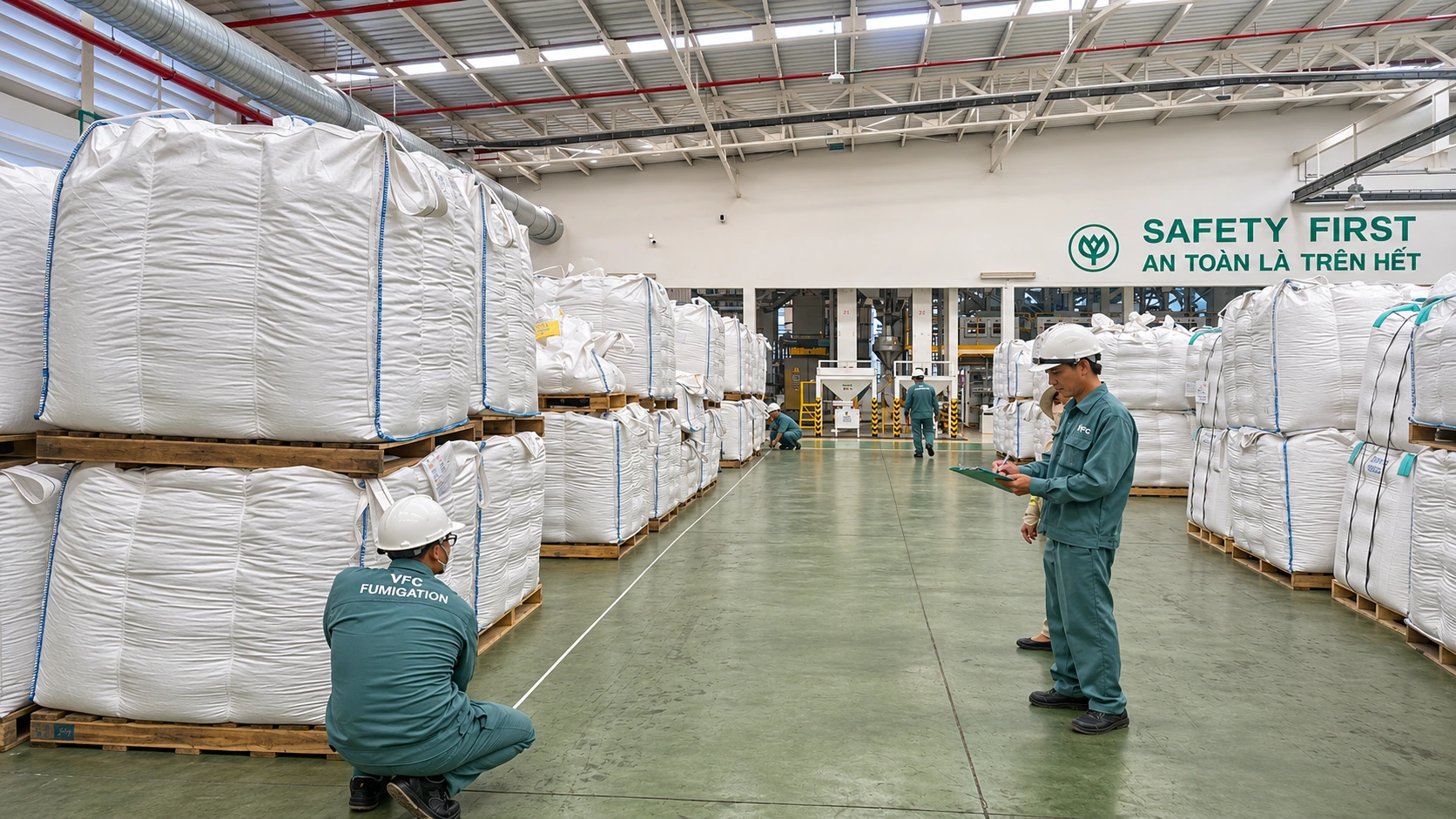
Fully dispatched warehouses should focus on sanitation, inspection, and environmental preparation prior to new crop intake
VFC Fumigation develops coffee warehouse treatment protocols based on on-site baseline surveys rather than solely calculating total warehouse floor space. Technical teams evaluate pest sources, commodity volume, stacking configurations, enclosure gastightness standards, and the operational window available for treatment.
3.1. Establishing a Treatment Scope Aligned with Operational Conditions
For warehouses holding multiple Robusta lots, VFC Fumigation clearly delineates lots requiring tarpaulin fumigation versus areas that only require environmental pest control. Each work item is defined according to treatment objectives, infestation status, and site-specific parameters.
Where fumigation is mandated, the protocol must satisfy sealing standards, exposure periods, gas concentration monitoring intervals, and safety control measures. Following the exposure period, technical teams execute aeration and ventilation, conduct safety clearance testing, and coordinate inspection and acceptance prior to handover.
This serves as the foundation for warehouse management to organize intake–dispatch operations and designate zones for continued storage. For Robusta enterprises, lot-by-lot evaluations clearly define the exact commodity volume requiring treatment and the operational timeframe required for execution.
3.2. Technical Foundation and Operational Management Systems of VFC Fumigation
VFC Fumigation has over 50 years of experience in the fumigation field and has served more than 15,000 customers throughout its operation. The system has over 200 experts with more than 10 years of experience, along with a network of branches and service stations in many regions nationwide.
Among these, the VFC Dak Lak Station serves as a central operational hub catering to fumigation demands across the Central Highlands coffee-growing region. Enterprises can share warehouse baseline conditions, intake schedules, and survey requests to assess deployment feasibility under real-world operational parameters.
Alongside technical capabilities, the FumiApp platform supports VFC Fumigation in work dispatching, field photographic documentation, and on-site operational data logging. The system enables teams to track operational progress, control technical parameters, and audit historical performance, particularly on complex projects involving multiple commodity lots or treatment zones.
The value delivered to clients is a customized protocol established on empirical field conditions, accompanied by verified execution and clear handover documentation. Requirements regarding certificates or compliance dossiers are agreed upon according to the contracted scope of service, ensuring environmental pest control workflows are not confused with commodity treatment certification.
Enterprises can refer further to the procedure and key notes when fumigating and preserving coffee warehouses to learn in detail about the technical options.
4. When Should Enterprises Request a Robusta Warehouse Survey from VFC Fumigation?
Businesses should contact VFC Fumigation when detecting pests in shipments, insects reappearing after sanitation, or when the source of contamination is unclear before importing new crop coffee. A site survey helps clarify the scope of treatment needed and the tasks that can be coordinated with warehouse operations.
To receive accurate baseline consultations, warehouse managers can prepare three primary groups of information:
- Commodity status: Volume of old-crop Robusta, number of lots currently in storage, packaging specifications, visible signs of borer infestation, and historical treatment logs, if available.
- Insect detection locations: Inside coffee bags, between cargo stacks, pallet bases, along wall perimeters, or near residual material accumulation points.
- New crop schedule: Projected arrival dates for new Robusta, intake volumes per delivery phase, and facility zones that can be isolated for treatment.
Utilizing this baseline data, VFC Fumigation identifies key survey parameters and advises on appropriate fumigation or environmental pest control protocols. For commodity lots requiring treatment, quotations are formulated based on volume, technical criteria, site locations, and the defined scope of work.
Contact VFC Fumigation for Robusta coffee warehouse surveys and technical consultation.
5. Frequently Asked Questions Regarding New-Crop Robusta Intake
5.1. Does a warehouse that has completely dispatched old-crop Robusta require fumigation prior to receiving new cargo?
Fumigation is not automatically required when a warehouse is completely empty and contains no stored commodity lots. Enterprises should execute thorough mechanical sanitation, inspect areas prone to harboring pests, and evaluate surface application of contact insecticides suited for the warehouse environment prior to intaking new crop consignments.
5.2. If weevils are detected in only a few Robusta lots, is it mandatory to fumigate all lots in the warehouse?
VFC Fumigation must conduct a physical survey to determine the appropriate treatment perimeter. Enterprises can evaluate targeted tarpaulin fumigation for lots confirmed to be infested, or expand the treatment scope if verified risk factors affect adjacent lots. Lots that remain untreated must still undergo continuous inspection and biosecurity monitoring.
5.3. Can contact insecticide spraying inside the warehouse eradicate weevils and borers inside coffee bags?
Contact insecticide surface spraying within the warehouse environment cannot substitute for fumigation when targeting pests concealed deep within commodity lots. Upon detecting insects inside coffee bags, enterprises must evaluate gastight sheet (tarpaulin) fumigation protocols executed strictly under required sealing and technical standards.
6. Entering the New Robusta Harvest: Accurately Identifying Pest Sources for Proactive Commodity Preservation
As the new Robusta crop commences warehouse intake, fumigation decisions must be grounded in actual pest infestation conditions rather than applying a generic protocol across all commodities. Weevils and borers inside coffee lots require evaluation for gastight sheet fumigation, whereas insects residing within the storage facility require appropriate environmental pest control measures.
With deep industry expertise, certified technical personnel, and a widespread service network across key production regions, VFC Fumigation partners with enterprises in conducting surveys, delineating treatment perimeters, and executing phytosanitary treatments for Robusta coffee warehouses. Enterprises can forward baseline site information and new-crop intake schedules to receive an optimized technical plan.
Contact VFC Fumigation for coffee warehouse surveys and service quotations
- Hotline: 0914 773 300
- Email: contact@fumigation.vn
- Website: https://fumigation.vn/en/





Related Blogs