




Published date:
29/10/2026
Share




Strict adherence to export procedures for cassava chips to China is a prerequisite for enterprises to maintain a seamless supply chain into this major agricultural consumption market. Because dried cassava chips feature high starch content and are highly susceptible to stored-product insect pests, the General Administration of Customs of the People's Republic of China (GACC) enforces stringent phytosanitary controls pursuant to the bilateral Protocol.
The article below provides detailed guidance on the documentation checklist, the phytosanitary treatment process, and the procedural steps for obtaining quarantine certification to ensure smooth customs clearance for consignments.
1. What Are the Prerequisites and Shipping Documentation Required for Exporting Cassava Chips to China?
When formulating plans to export cassava chips to China via sea freight or border checkpoints, import-export departments must master the biosecurity regulations of the importing country. Systematic preparation—from registration codes for planting areas/processing facilities to commercial documentation—enables enterprises to manage delivery schedules proactively and mitigate risks arising at destination ports.
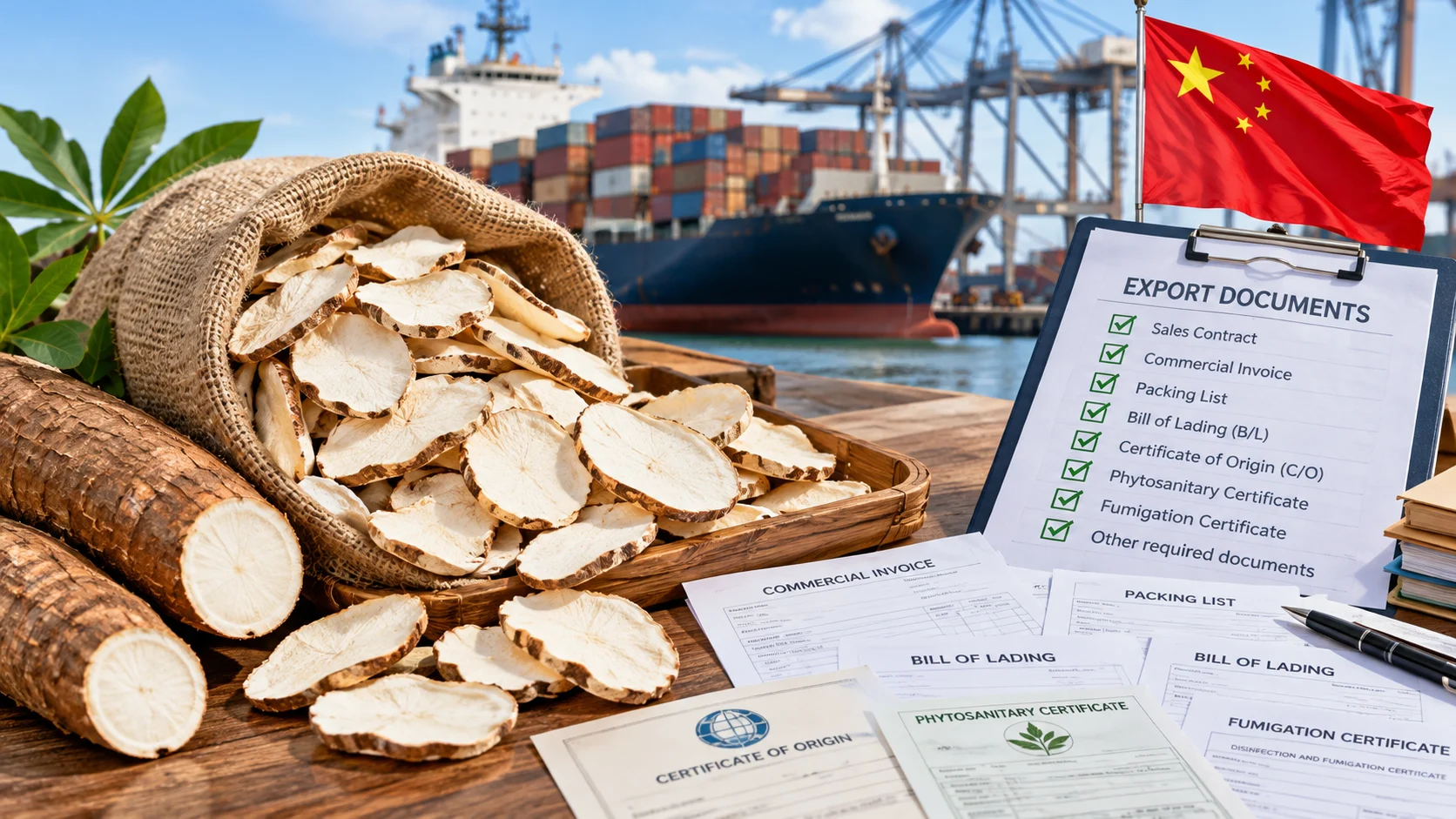
Enterprises must systematically prepare quarantine prerequisites and documentation packages prior to exporting cassava chips to China
1.1. Phytosanitary Quarantine Requirements under the Protocol with China
Under the regulatory framework governing agricultural imports into China, formal export consignments of cassava chips must strictly comply with the bilateral Phytosanitary Protocols executed between both nations. Specifically, cassava chip processing facilities and storage warehouses must be registered under valid management codes; concurrently, commodities must be completely free of soil, weed seeds, and live target quarantine pests.
How does this affect the cargo preparation phase of enterprises?
Dried cassava chips typically undergo extended sun-drying and accumulation phases in agricultural material zones, rendering them highly vulnerable to beetle and borer infestations. Failure to execute rigorous phytosanitary treatment protocols prior to dispatch causes pests to proliferate aggressively within vessel holds or containers, leading to the risk of customs clearance rejection by China Customs.
1.2. Checklist of Export Documentation Required for Cassava Chips
To complete export customs procedures at origin and facilitate customs clearance for importing partners at the port of destination, documentation personnel must collaborate to compile a complete suite of legal documents. Depending on commercial contract terms and international payment methods (L/C, T/T), a standard export document package for cassava chips comprises the following:
- Commercial Invoice and Packing List: Accurately stating packaging specifications (in PP bags or in bulk), net weight, and commercial value of the cassava chip consignment.
- Bill of Lading (B/L) and Certificate of Origin (C/O Form E): Serving as legal proof of transit routing and entitling Chinese importers to preferential tariff treatment under the ACFTA Agreement.
- Fumigation Certificate (Fumigation Certificate): Confirms that the cassava chip shipment has been treated with fumigants in accordance with the applicable technical plan and procedure.
- Phytosanitary Certificate: Issued by the competent plant quarantine authority on the basis of physical sample inspection results and a valid Fumigation Certificate.
Operational Note: Inexperienced personnel frequently confuse the Fumigation Certificate with the Phytosanitary Certificate when processing agricultural documentation. In reality, these two instruments serve entirely different functions and are issued by distinct authorities; they are not interchangeable, but must be submitted concurrently to provide complementary legal validity during customs clearance.
2. Selecting Phytosanitary Treatment Options for Cassava Chips Exported to China: Bulk Vessel or Container?
Cassava chips exported to China are usually transported in large volumes through two main methods: stuffing in containers or bulk loading directly into bulk carrier holds. Depending on the mode of transport, contract terms, and delivery schedule, businesses need to choose the appropriate fumigant to optimize time and costs.
2.1. Treatment Option Using Phosphine (PH3) Fumigant
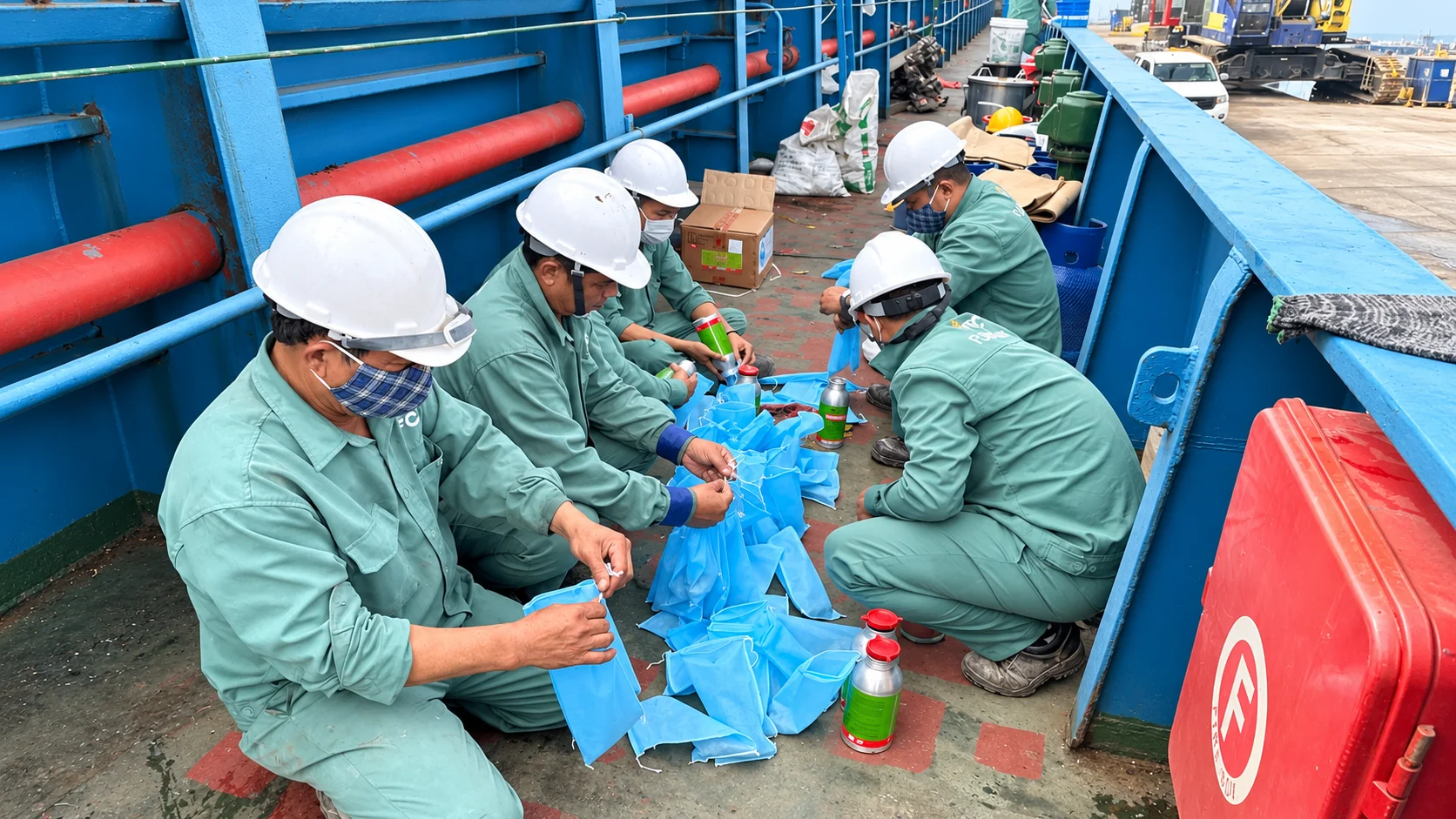
Phosphine is utilized in numerous cassava chip fumigation protocols due to its high penetrating capability deep into the bulk commodity mass
When applying the phosphine fumigation for exported dry agricultural products method, technicians use Aluminium Phosphide (AlP) tablets that react with moisture in the air to release PH3 gas. This fumigant has strong diffusion capabilities and penetrates very deeply into the gaps of the cassava chip bulk to control pests.
2.2. Treatment Option Using Methyl Bromide (CH3Br) Fumigant
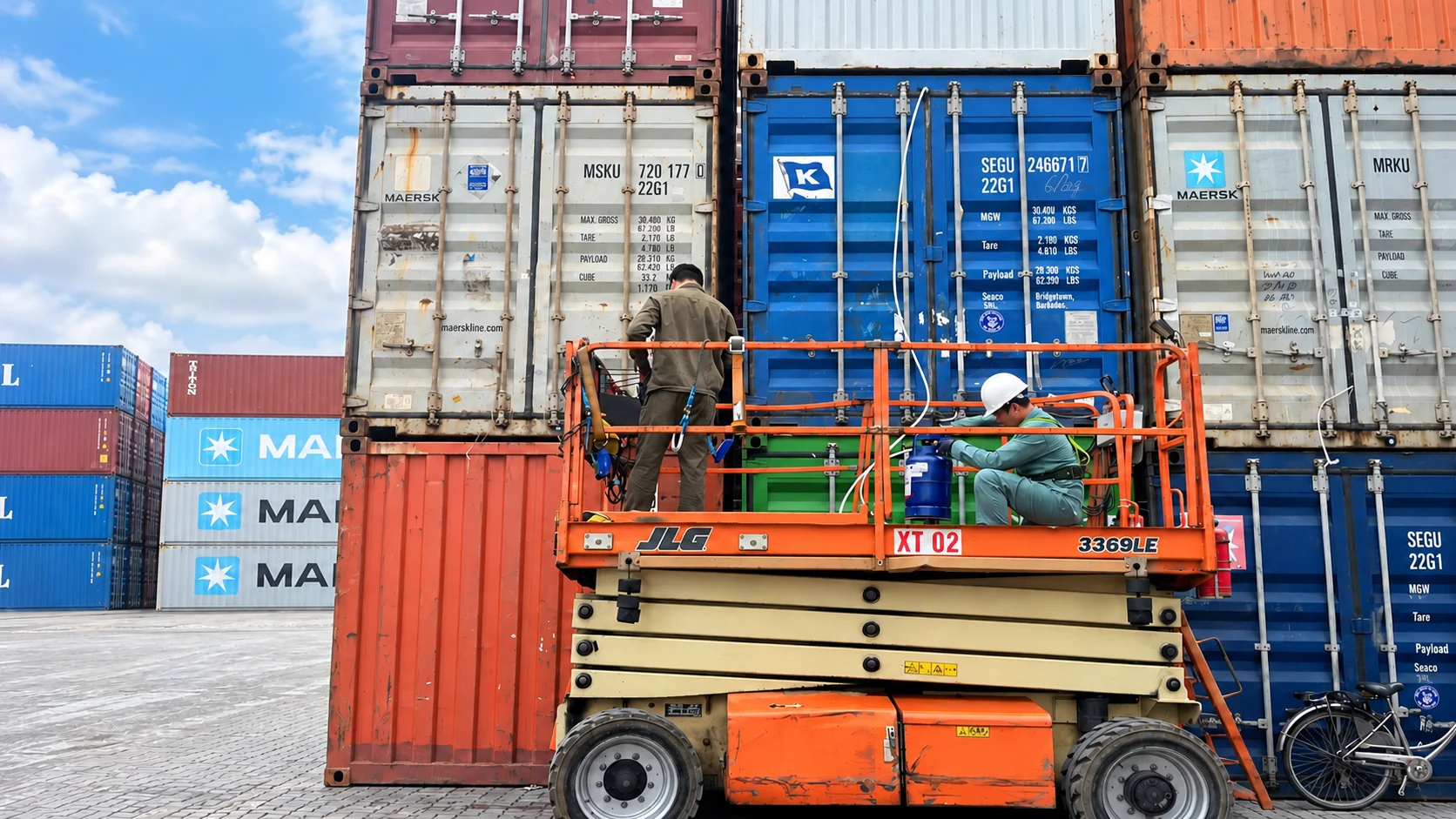
Methyl Bromide is routed through specialized vaporizers prior to introduction into the treatment enclosure
Besides Phosphine, the method of using Methyl Bromide fumigant is commonly applied when a shipment of cassava chips needs to be cleared urgently at the export port to meet the shipping line's cut-off time. With the advantage of a short exposure time ranging from 24 to 48 hours, the fumigant is delivered via specialized vaporizer equipment to help distribute it quickly into the container or vessel hold space.
Concurrently, in large-scale bulk vessel projects presenting specific technical requirements, the fumigation service provider can execute a combined protocol utilizing both Phosphine and Methyl Bromide. This flexible approach effectively controls target pests from the surface layer down to the bottom tiers of the cargo hold, rigorously satisfying entry inspection standards at Chinese ports.
Is your cassava chip shipment about to be stuffed into a container or prepared for bulk loading onto a vessel bound for China?
Hãy gọi ngay Hotline kỹ thuật 0914 773 300 hoặc Tổng đài 1800 577 788 để chuyên gia VFC Fumigation tư vấn phương án thuốc khử trùng khớp với lịch tàu thực tế.
3. Container Fumigation Protocol for Cassava Chips and Issuance of International-Standard Fumigation Certificates
The technical treatment plan and issuance of the Fumigation Certificate require synchronized coordination between on-site operations and documentation practices to ensure high legal validity for the shipment during international customs clearance. For export cargo fumigation in containers services, the standard process at VFC Fumigation is strictly controlled through the following 5 steps:
Step 1: Receiving information and identifying the container location
- A professional fumigation provider such as VFC Fumigation receives work orders directly from export cargo owners or freight forwarders.
- Verification details include: container type (20ft, 40ft), container number, seal number, commodity description, destination port in China, actual stacking position at the ICD/export port, and vessel cut-off time to organize an exact operational schedule.
Step 2: Airtight Sealing and Fumigant Application
- Technicians position gas delivery piping systems for Methyl Bromide (CH3Br) protocols or apply Aluminium Phosphide (AlP) formulations strictly according to the finalized technical plan.
- The field team installs gas sampling lines at critical zones within the container to monitor gas concentrations during treatment intervals.
- Subsequently, technicians close the container doors and seal ventilation openings and potential leakage points using specialized materials to ensure strict enclosure gastightness standards.
- Next, the technical unit injects the fumigant (for Methyl Bromide) and affixes safety warning notices in conspicuous positions on the container exterior to flag biosecurity hazards and prevent unauthorized entry into the operational area.
Step 3: Maintaining the exposure period and monitoring concentration
- The fumigation exposure time is strictly monitored depending on the type of fumigant applied, the target pest species, and the quarantine regulations of the importing country (ranging from 24 to 48 hours for Methyl Bromide; extending from 7 to 10 days for Aluminium Phosphide).
- Throughout this timeframe, technicians monitor gas concentration intervals in strict compliance with the technical protocol to manage gas concentration levels, guaranteeing effective eradication and control of target pests.
Step 4: Safe ventilation and on-site acceptance
- Upon completion of the required exposure time, technicians open the container doors and strip off ventilation sealing materials to commence aeration.
- The team uses specialized gas detection equipment to monitor clearance, verifying that residual gas concentrations decline below the Threshold Limit Value (TLV) before handover.
- The VFC Fumigation technical representative and the customer jointly conduct an on-site inspection, sign the record confirming the fumigation result, and hand over the treated container to the customer or port operations team for loading onto the vessel.
Step 5: Issuance of the Fumigation Certificate
- The documentation department finalizes and issues an official Fumigation Certificate integrated with a unique QR Code for the export documentation package. This document serves as the mandatory technical baseline for quarantine authorities to issue the Phytosanitary Certificate (Phyto) and facilitate seamless customs clearance at destination.
Note: The actual process can be flexibly adjusted according to the characteristics of the goods, the type of fumigant used, the condition of the transport vehicle (containers or vessel & barge fumigation), and the requirements of each commercial contract.
4. Four-Step Procedure for Phytosanitary Quarantine Processing for Cassava Chips Exported to China
To ensure the legal integrity of foreign trade documentation and fulfill the rigorous quarantine standards of the GACC (China), enterprises are mandated to obtain an official Phytosanitary Certificate. Administrative coordination with plant quarantine authorities follows the standardized 4-step sequence below:
Step 1: Declaration and Registration via the National Single Window (VNSW)
The enterprise registers an account and submits an electronic Application for Plant Quarantine via vnsw.gov.vn. The uploaded dossier includes: sales contract, Commercial Invoice, Packing List, Bill of Lading, and the Fumigation Certificate as the underlying technical proof of treatment.
Step 2: On-Site Inspection and Sampling:
Officers from the designated Regional Plant Quarantine Sub-Department report directly to the site to physically inspect the cassava chip consignment. Quarantine officers draw representative commodity samples in full compliance with National Technical Regulations (TCVN).
Step 3: Laboratory Analysis and Parameter Verification:
Cassava chip samples are submitted for professional laboratory analysis to screen for GACC-regulated quarantine pests. Concurrently, quarantine officers verify the technical parameters detailed on the Fumigation Certificate to confirm that the consignment was treated strictly in accordance with the importing nation's phytosanitary regulations.
Step 4: Issuance of the Phytosanitary Certificate
When all dossier requirements and laboratory testing parameters meet applicable criteria, the plant quarantine authority issues an official hard-copy Phytosanitary Certificate or electronic quarantine certificate (e-Phyto). Enterprises incorporate this certificate into the export package delivered to the Chinese importer for customs clearance.
5. Three Common Mistakes Leading to Cassava Chip Consignment Detention at Destination Ports
In agricultural logistics operations to China, an oversight in field execution or documentation matching can inflict severe commercial losses. Import-export and QA/QC departments must rigorously mitigate the three practical risk factors below:
- Substandard enclosure gastightness of vessel holds or containers resulting in pest survival: Execution of fumigation divergent from technical protocols or deployment of unqualified treatment operators creates significant risks of live target pests arriving at the destination port.
- Data discrepancies between Fumigation Certificates, Phytosanitary Certificates, and Bills of Lading (B/L): China Customs enforces strict scrutiny over documentation consistency. A single character discrepancy in container numbers, seal numbers, vessel names, or cargo weight metrics between the Fumigation Certificate and Bill of Lading will trigger suspension of customs clearance for identity verification, accruing costly demurrage and detention (DEM/DET) charges.
- Skipping the inspection and cleaning of ship holds or containers before cargo loading: Uncleaned ship holds or containers may retain residues or goods from previous voyages, increasing the risk of affecting the quality of cassava chips during transport. Businesses need to inspect and clean them before loading; if signs of pests are detected, please contact VFC Fumigation for survey consultation and suitable treatment option proposals.
6. VFC Fumigation - Leading Prestigious Partner for Export Cassava Chip Phytosanitary Treatment in Vietnam
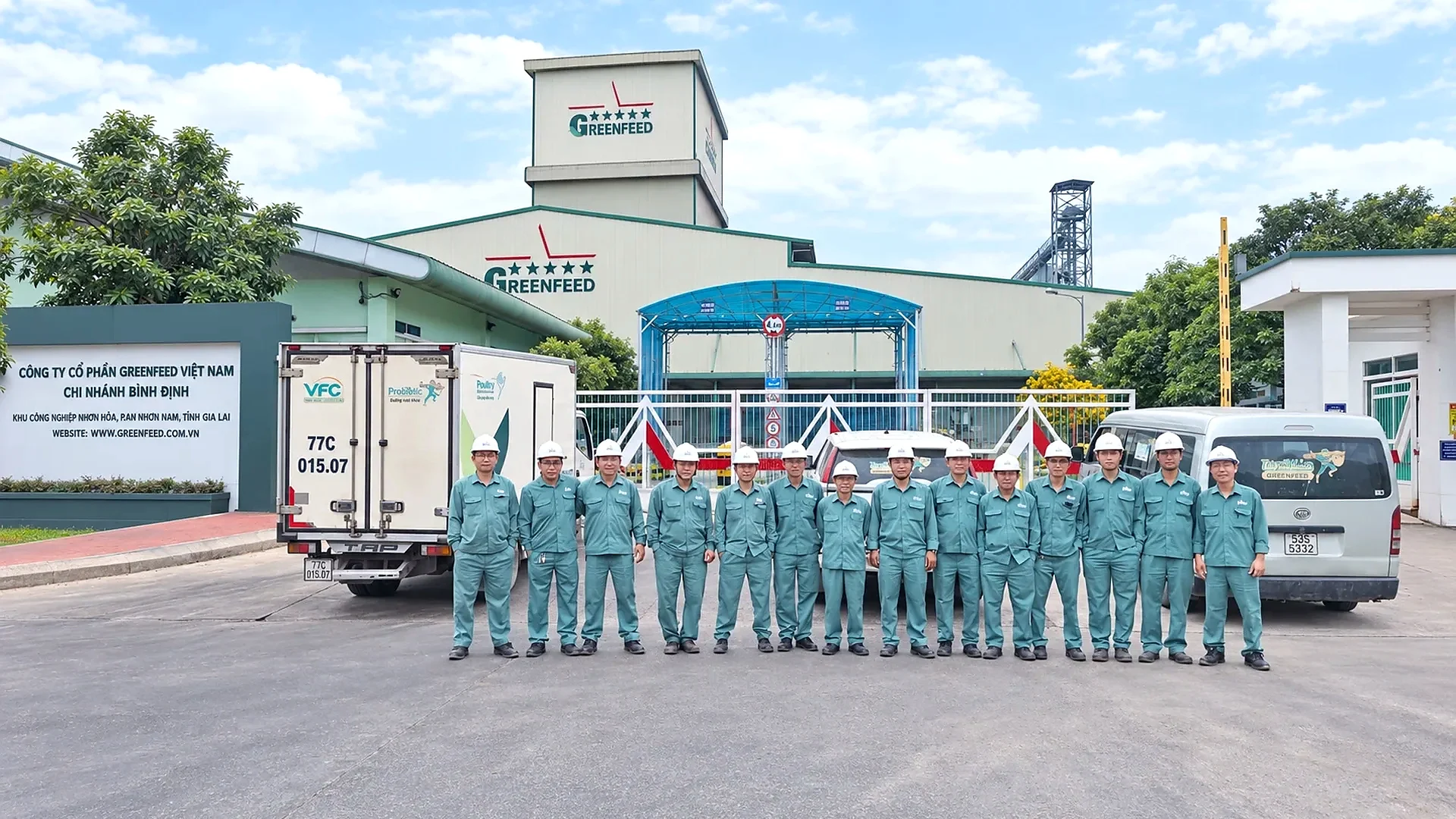
VFC Fumigation deploys cassava chip fumigation protocols from containerized cargo to bulk vessels tailored to real-world consignment parameters
To solve the pest control problem for cassava chip shipments ranging from dozens of containers to bulk vessels carrying tens of thousands of tons, businesses need a partner with proven execution capabilities. Vietnam Fumigation Joint Stock Company (VFC Fumigation) is proud to be a solid technical mainstay for agricultural export businesses nationwide:
- Industry-Leading Scale and Experience: Backed by over 50 years of operational experience, VFC Fumigation safely conducts phytosanitary treatments for more than 500,000 export containers annually, retaining the trust of over 15,000 domestic and international corporate clients.
- Robust Specialized Workforce and 24/7 Coverage: VFC Fumigation deploys a workforce of over 1,000 personnel, including more than 200 senior technical specialists possessing over 10 years of deep industry expertise. A nationwide network of branches and service stations operates 24/7 across key cassava chip export seaports (Quy Nhon, Hai Phong, Ho Chi Minh City, Ba Ria - Vung Tau, Da Nang) and major commodity production hubs.
- Capacity validation through practical cassava ship projects: VFC Fumigation is an official member in Vietnam of the International Maritime Fumigation Organization (IMFO). VFC Fumigation's capacity is clearly demonstrated through the project of fumigating export cassava on vessel RICH LAND at Quy Nhon Port, successfully implementing a combined Phosphine and Methyl Bromide method, safely controlling the crew cabin area and releasing the vessel on schedule.
- Two-Tiered Data Transparency with FumiApp & QR Code Certificates: Work assignment, surveying, sealing, and gas concentration monitoring are uploaded by VFC Fumigation field personnel directly into the proprietary internal management system, FumiApp. Each issued Fumigation Certificate integrates an exclusive QR Code, enabling cargo owners and Chinese import partners to scan and authenticate certificate validity online instantly.
7. Frequently Asked Questions Regarding Cassava Chip Export Fumigation Procedures to China
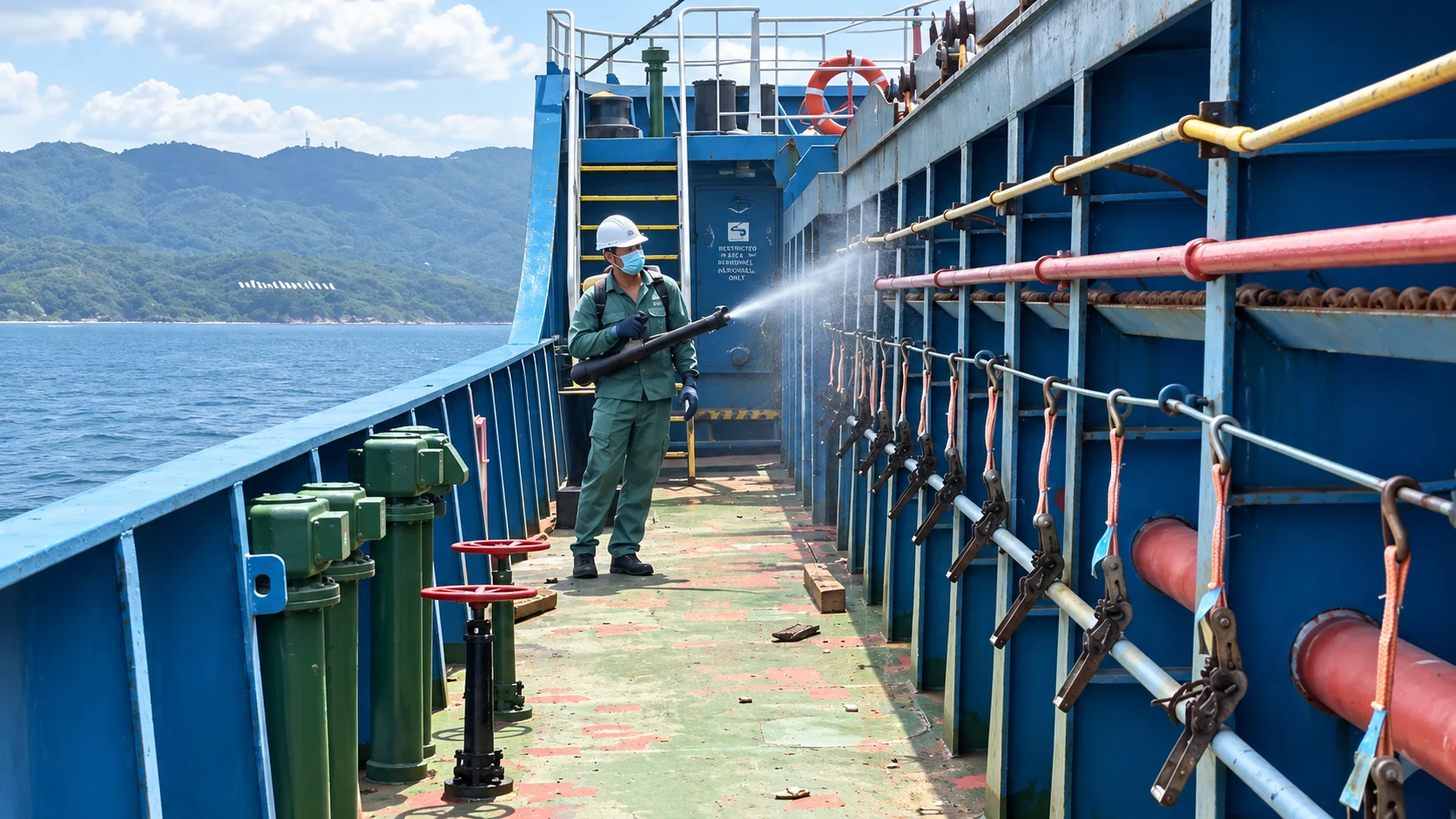
Q&A on phytosanitary export procedures for cassava chips to China
7.1. Should Phosphine or Methyl Bromide be Selected for Cassava Chips Bound for China?
The selection of the type of fumigant depends on the requirements of the commercial contract, quarantine regulations, and the delivery schedule of each shipment. Businesses are kindly requested to contact VFC Fumigation directly for experts to assess the current situation and advise on the most optimal treatment plan.
7.2. At What Point Does VFC Fumigation Issue the Fumigation Certificate for Cassava Chip Consignments?
Immediately following completion of field operations, VFC Fumigation technicians upload comprehensive operational parameters to the internal FumiApp system. Utilizing these field datasets in conjunction with the official Bill of Lading provided by the client, the documentation division reviews draft copies and promptly issues the official Fumigation Certificate to enable timely Phytosanitary Certificate issuance.
7.3. If a Cassava Chip Carrier Has Departed the Port without Undergoing Fumigation, Can a Certificate be Issued Retrospectively?
Absolutely not. A Fumigation Certificate is a strict legal instrument certifying an authentic, physical technical procedure, from initial structural surveys to the execution of an agreed treatment plan. Therefore, enterprises must proactively engage fumigation specialists prior to cargo loading to schedule safe, compliant treatment workflows.
Thorough preparation of export procedures for cassava chips to China and strict control of phytosanitary treatment protocols from origin ports represent practical solutions for enterprises to preserve enduring commercial prestige. Exporters, processing plants, and logistics service providers seeking technical consultation or quotations for silo, warehouse, container, or ship hold fumigation are invited to contact VFC Fumigation immediately:
- 24/7 Technical Advisory & Quotation Hotline 0914 773 300
- Customer Service Center: 1800 577 788
- Email: contact@fumigation.vn
- Headquarters Address: VFC Tower, 29 Ton Duc Thang, Saigon Ward, Ho Chi Minh City (alongside a nationwide network of branches and operational stations across all major seaports, ICDs, and agricultural production regions).





Related Blogs