





Published date:
29/08/2026
Share




To verify and select compliant treatment providers for Australia, businesses should access DAFF's official list of Treatment Providers, filter for Vietnam, and search by legal name or AEI code. It is essential to cross-check their current status, registered treatment methods, and certificate details. While a valid AEI code is a critical prerequisite, businesses must still verify full import conditions on BICON for each specific consignment.
What is an AEI Code and Its Role in Export Shipments to Australia?
In Australia's international trade administration, plant biosecurity regulations are directly overseen by the Australian Department of Agriculture, Fisheries and Forestry (DAFF). To manage the competency of offshore service providers, DAFF operates specialized registration schemes.
Distinguishing Between the AFAS Scheme and the AEI Code
Many businesses often confuse the two concepts of AFAS and AEI:
- AFAS (Australian Fumigation Accreditation Scheme): This is a program established by the Australian Department of Agriculture, Fisheries and Forestry (DAFF) to manage the competency, technical standards, and compliance of treatment providers conducting fumigation of goods outside Australia.
- AEI (Australian Entity Identifier): A unique identifier assigned by the Department of Agriculture, Fisheries and Forestry (DAFF) to each treatment provider after registration and fulfilment of the requirements of the relevant scheme, such as AFAS or BMSB-AusTreat.
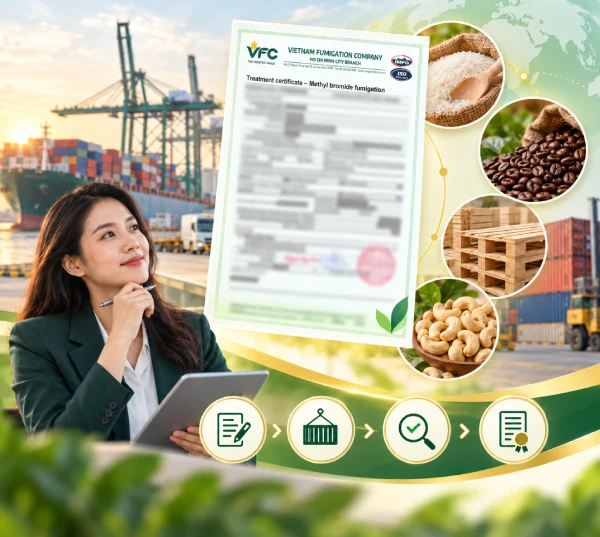
The AEI displayed on the Certificate of Fumigation enables the Australian biosecurity system to accurately identify the treatment provider that carried out the treatment for the consignment.
Risks of Using a Treatment Provider That Has Not Been Approved
If a treatment provider is placed by DAFF in a non-compliant status, such as Under review or Suspended, the treatment certificate issued by that provider may not be accepted at the time of assessment.
This incident may result in the consignment, including containers that are still in transit, being directed by DAFF for inspection or subject to additional biosecurity measures at Australian ports. This can increase container storage charges at the port (Demurrage) and container detention charges (Detention), while also affecting the delivery schedule to the consignee.
4-Step Guide to Checking an AEI on the DAFF Portal
Businesses can independently check an AEI online using the Australian Government’s publicly available database before entering into a treatment service agreement.

Cách tra cứu mã AEI trên cổng thông tin DAFF
Step 1: Access the DAFF Biosecurity Portal
Businesses can access the official website of the Australian Government Department of Agriculture, Fisheries and Forestry (DAFF) at agriculture.gov.au.
Note: The interface and website structure of the DAFF website may be updated over time. Businesses should search directly for the term “List of treatment providers” using the website’s search bar.
Step 2: Find the “List of Treatment Providers” tool
Within the pre-border treatment services section, businesses can access the List of Treatment Providers tool. DAFF now operates a centralised database for managing registered treatment providers, rather than maintaining separate lists as it did previously.
Step 3: Select Vietnam and Search
In the lookup tool interface:
- Country: Select Vietnam.
- Search/AEI: Enter the treatment provider’s registered business name in English or enter the AEI directly.
- Click Search to retrieve the relevant record.
Step 4: Review and Verify the Search Results
The system will display a detailed information table. Businesses must thoroughly cross-check the following data fields: Legal Business Name, AEI Code, Registered Treatment Method/Scheme (such as MB, HT, BMSB), and the Status column.
Decoding Table for Treatment Provider Statuses on the DAFF Portal
The status on the system indicates whether the provider is currently accepted by DAFF to perform the registered treatment method. Businesses must clearly understand the safe interpretation of each status:
| Status | Safe Interpretation Under DAFF Regulations | Recommended Action for Businesses |
|---|---|---|
Approved |
The provider is in an accepted status at the time of lookup. | Continue to cross-check the registered method, certificate details, and BICON conditions. |
Under review |
The provider is currently under review and capability reassessment by DAFF. | Do not assume the certificate will be accepted; contact the provider and check the latest updates from DAFF. |
Suspended |
The provider is temporarily suspended from operating under the scheme. | Do not select this provider for new shipments; review containers that have already been dispatched or are currently in transit. |
Withdrawn |
The provider is no longer operating within the corresponding registered scope. | Select another provider with an appropriate status on the system. |
Is a valid AEI code alone sufficient to guarantee biosecurity clearance?
An AEI code in Approved status is an essential prerequisite, but it is not sufficient on its own to confirm that the entire consignment meets import requirements. For a shipment to fully comply with Australian import conditions, businesses must collaborate closely with a qualified treatment provider for Australia to ensure the following factors:
- Strict compliance with BICON conditions: Commodity type, composition, intended use, origin, and packaging conditions must be cross-referenced against the applicable BICON case. HS codes may be used as supporting information, but should not serve as the sole basis.
- Proper execution of the treatment method: Use the permitted fumigant (such as Methyl Bromide for export containers under AFAS in Vietnam), ensuring accurate dosage and exposure time according to regulatory standards.
- Documentation accuracy: Container numbers, seal numbers, treatment dates, and shipped-on-board dates must match with absolute precision across the Bill of Lading (B/L), Packing List, and fumigation certificate.
- Freedom from live pests: Goods and packaging must be free from soil, plant debris, or live pests at the time of physical inspection by a biosecurity officer.
Key Criteria for Evaluating a Reputable Treatment Provider for Australia
In addition to verifying the AEI status on the DAFF website, businesses can establish practical technical criteria to select an appropriate treatment partner.
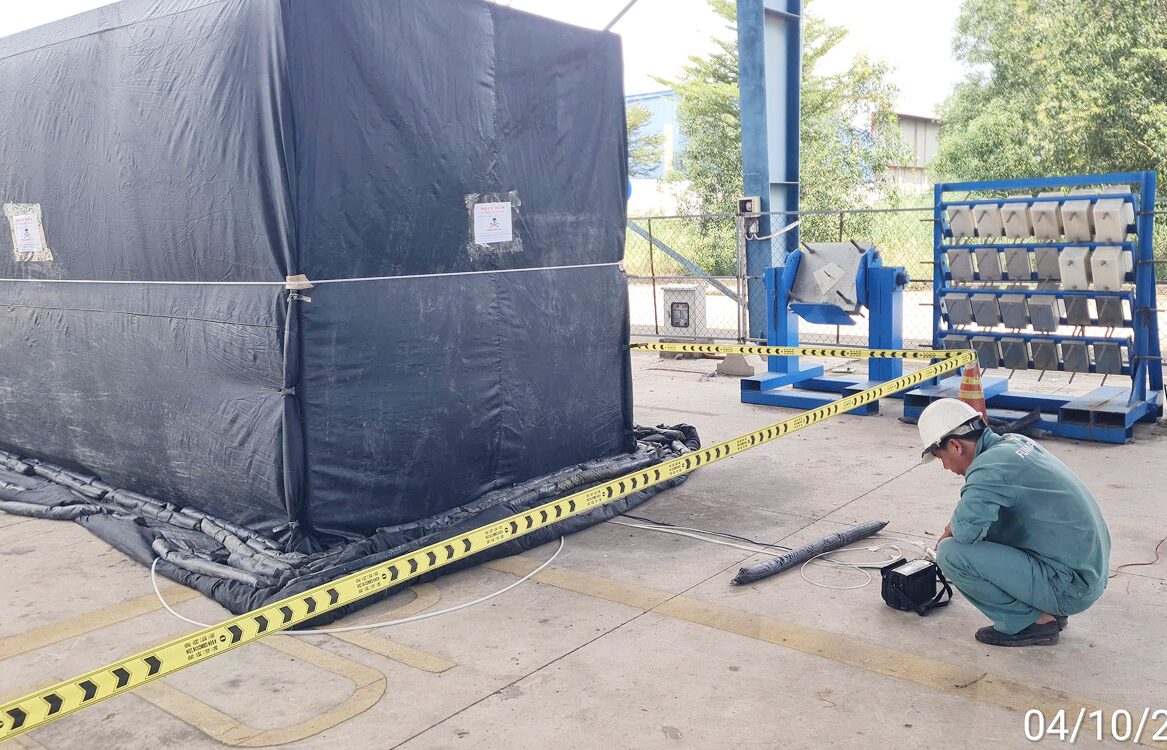
Fumigation for Containers to Australia – AFAS / BMSB
Comprehensive understanding of AFAS standards and the BMSB-AusTreat scheme
The service provider must employ a team of AFAS-trained and accredited technicians. The technicians must be well-versed in container gas-tightness testing, positioning gas sampling lines, and calculating the Methyl Bromide fumigant dosage based on ambient temperatures.
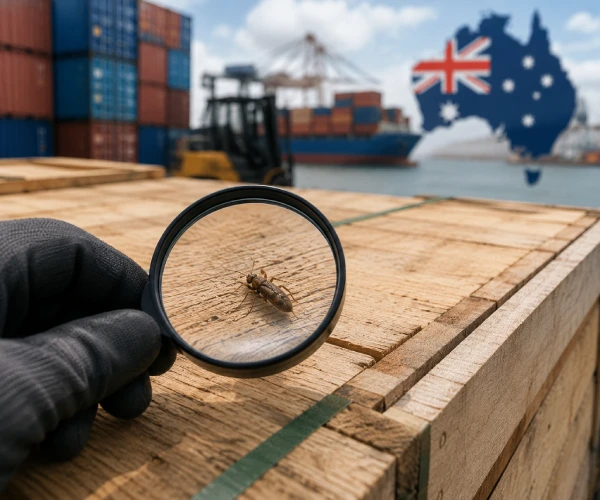
During the peak Brown Marmorated Stink Bug (BMSB) risk season (from 1 September to 30 April annually), treatment providers must fully satisfy the technical conditions of the BMSB-AusTreat scheme to treat target high-risk goods.
Technical Equipment
Treatment operations require a full suite of materials and equipment, such as: fumigant vaporizers, specialized gas concentration meters, and safety testing equipment. The efficacy of the treatment method must be controlled through measurement and monitoring to ensure concentrations remain at or above standard levels.
What should businesses do when a treatment provider's status changes?
A treatment provider's status on the DAFF portal may change depending on the periodic assessment results from the regulatory authority. Businesses must respond flexibly across each stage of the shipment:
- For consignments not yet packed or loaded on board: When a provider is transitioned by DAFF to
Under revieworSuspendedstatus, treatment certificates from that entity will not be accepted from the effective date of the status change, regardless of whether certificates were issued before or after this point. Consignments currently in transit may also be directed by DAFF to undergo additional management measures upon arrival in Australia. - For consignments in transit or already arrived at Australian ports: Businesses must coordinate closely with the importer to monitor DAFF notifications. Keep on-site operational logs, gas concentration monitoring records, and relevant supporting documentation readily available to provide explanations or carry out corrective measures as directed by the biosecurity officer.
Note: For treatment providers with multiple branches, DAFF issues and manages separate AEI codes for each operational branch or region. Businesses must accurately verify the AEI code of the specific legal entity or branch directly conducting the treatment for the consignment, ensuring that the active status (Approved) is valid at the time of fumigation.
Frequently Asked Questions About AEI Codes and Australian Biosecurity
What is the difference between an AEI code and an ISPM 15 code?
An AEI code is an identifier issued by the Australian Department of Agriculture, Fisheries and Forestry (DAFF) to treatment providers participating in schemes such as AFAS or BMSB-AusTreat. In contrast, an ISPM 15 code is managed by the competent plant protection authority in Vietnam and is displayed on the IPPC mark of certified wood packaging treatment or manufacturing facilities.
Which fumigant is used to treat Australia-bound export containers in Vietnam?
According to AFAS technical standards applicable to export containers from Vietnam, the currently accepted method is fumigation with Methyl Bromide (MB).
How long is an AFAS treatment certificate valid for?
Typically, AFAS standards stipulate a maximum window of 21 days from the completion of treatment until the goods are officially loaded on board the vessel. Businesses must verify the specific BICON import conditions applicable to each commodity category.

-
Blog-old (23)
-
Regulation updates (4)
-
Partnerships & Collaborations (4)
-
General News (15)
Featured News



Related Knowledge