






Published date:
30/10/2026
Share




Natural wood pallets used for export consignments from Hai Phong to the EU must comply with ISPM 15 standards, be treated using an approved method, and bear a valid IPPC mark. If pallets fail to meet these requirements, enterprises may face additional inspections, supplemental treatments, or material replacements, impacting shipment delivery schedules. This article assists manufacturing and exporting enterprises, QA/QC departments, import-export divisions, and freight forwarders in determining when pallet treatment is required, how to inspect ISPM 15 marks, and how to select a suitable wood pallet phytosanitary treatment company in Hai Phong aligned with EU container stuffing schedules.
1. Is ISPM 15 treatment mandatory for wooden pallets exported from Hai Phong to the EU?
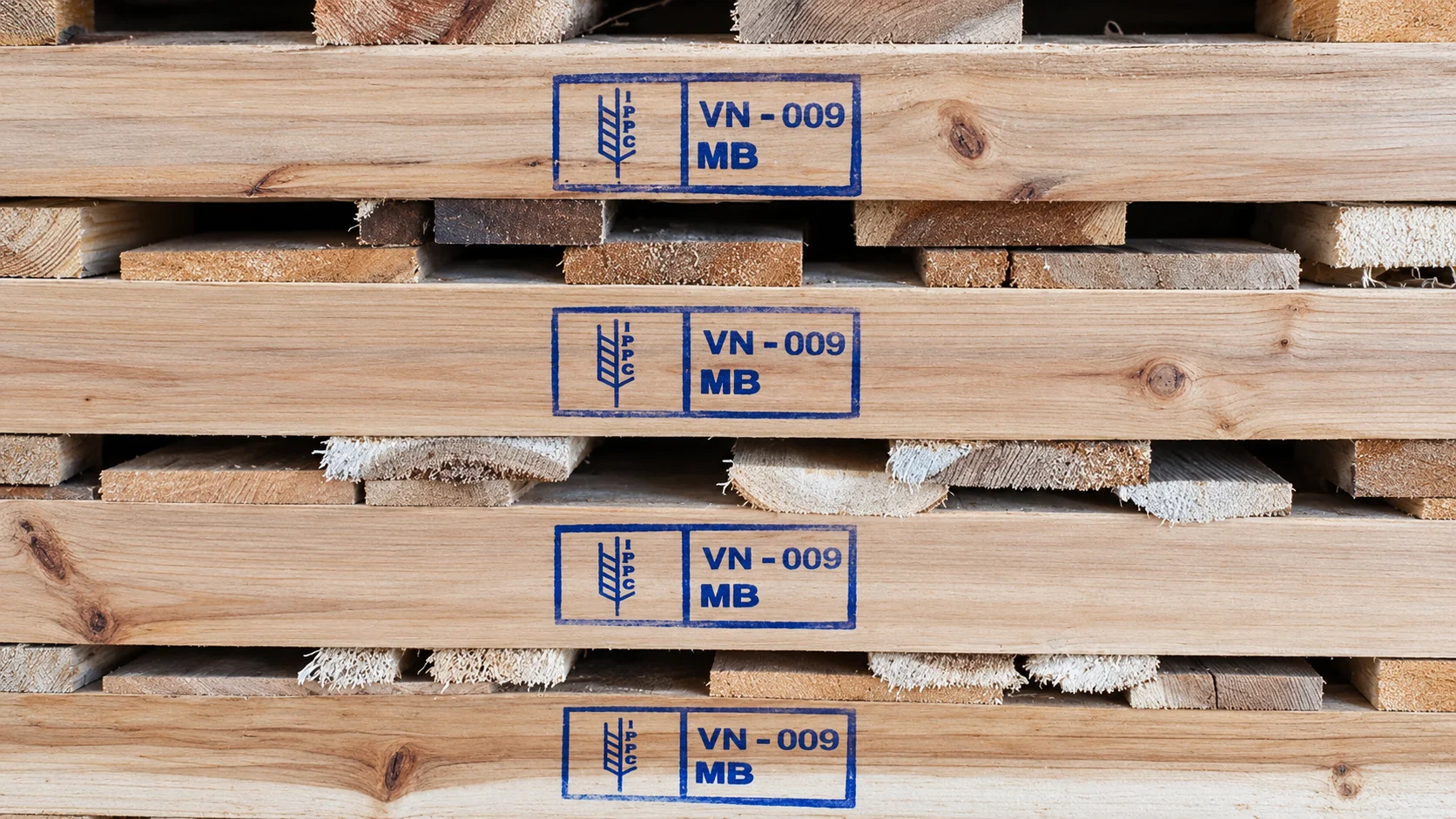
Pallets and natural wood packaging materials within the scope of ISPM 15 must be treated prior to export to the EU
Yes, for pallets made of raw wood falling within the scope of ISPM 15 when imported into the EU from Vietnam. According to European Union regulations, wood packaging materials must be treated using an approved method, meet debarking requirements, and bear a valid IPPC mark.
This regulation applies not only to pallets, but also encompasses wooden crates, boxes, packing cases, and dunnage used to secure cargo during transit. Therefore, enterprises exporting machinery, furniture, industrial goods, or agricultural commodities must inspect accompanying packaging materials, not solely the primary product.
Which materials require treatment under ISPM 15?
| Material Category | Requirement When Exporting to the EU |
|---|---|
| Natural wood pallets | Must be treated and bear a valid IPPC mark |
| Wooden crates, boxes, natural wood packing frames | Fall within the regulatory scope of ISPM 15 |
| Wooden dunnage, bearers, and cargo chocks | Must comply with ISPM 15 if belonging to regulated natural raw wood categories |
| Pallets fabricated entirely from plywood, OSB, or adequately processed engineered wood | Generally exempt under ISPM 15 |
For pallets constructed from a combination of engineered wood and natural timber components, enterprises must verify the physical construction prior to establishing treatment requirements. Newly manufactured pallets are not automatically exempt from ISPM 15, as the standard is governed by material composition and treatment conditions, rather than whether the material is new or used.
Official information on the scope of application is published at European Commission – Requirements for wood packaging & dunnage.
2. What must enterprises inspect on wooden pallets prior to container stuffing?
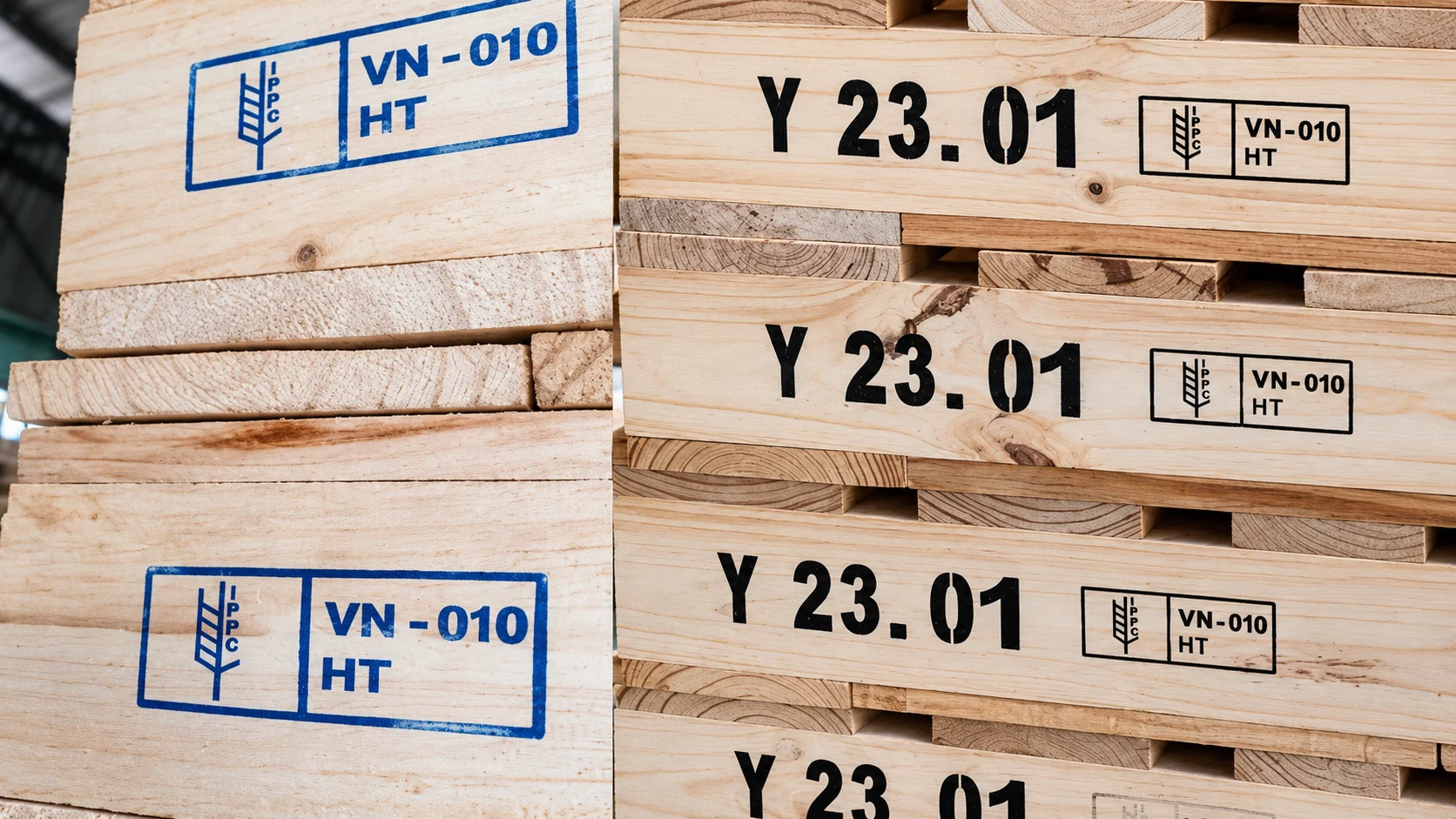
Pallets must be inspected for the IPPC mark, treatment method, timber condition, and repaired components prior to cargo stuffing
For warehouse and QA/QC personnel, pallet inspection should be conducted prior to final cargo stacking. If non-conformities are detected only when the container is about to be sealed, enterprises may need to mobilize additional personnel, replace pallets, or reschedule container stuffing.
The presence of an ISPM 15 mark does not justify omitting physical inspections of pallet conditions. The mark must be legible and valid, the wood must comply with standard specifications, and no abnormal indicators requiring further evaluation should be present.
| Inspection Checkpoint | Content Requiring Review by Enterprises |
|---|---|
| 1. IPPC mark condition | The mark must be clear, legible, and display all mandatory components |
| 2. Treatment method | Verify the code for MB, HT, or other officially recognized treatment methods |
| 3. Timber material condition | Check for residual bark tolerances, signs of insect infestation, and pallet structural defects |
| 4. Repaired pallets | Verify replacement wooden components and post-repair compliance status |
| 5. Supplemental dunnage material | Inspect additional timber bearers and chocks utilized during cargo stuffing |
Under ISPM 15, a valid mark comprises the IPPC symbol, the ISO two-letter country code, the unique registered facility code, and the treatment method code. For materials treated in Vietnam, the country code is designated as VN, accompanied by the accredited facility code and corresponding treatment indicator.
Furthermore, the standard permits minor residual bark tolerances within prescribed dimensions, rather than demanding an absolute absence of bark. However, pallets exhibiting signs of live insect pests, unverifiable marks, or non-compliant repairs must be evaluated prior to utilization.
For freight forwarders, verifying this information early helps prevent supplementary treatments once container stuffing schedules are confirmed. For cargo owners, this mitigates biosecurity risks from an auxiliary material that could disrupt the clearance of the entire consignment.
3. Methyl Bromide (MB) fumigation or Heat Treatment (HT): Which method is suitable for EU-bound cargo?
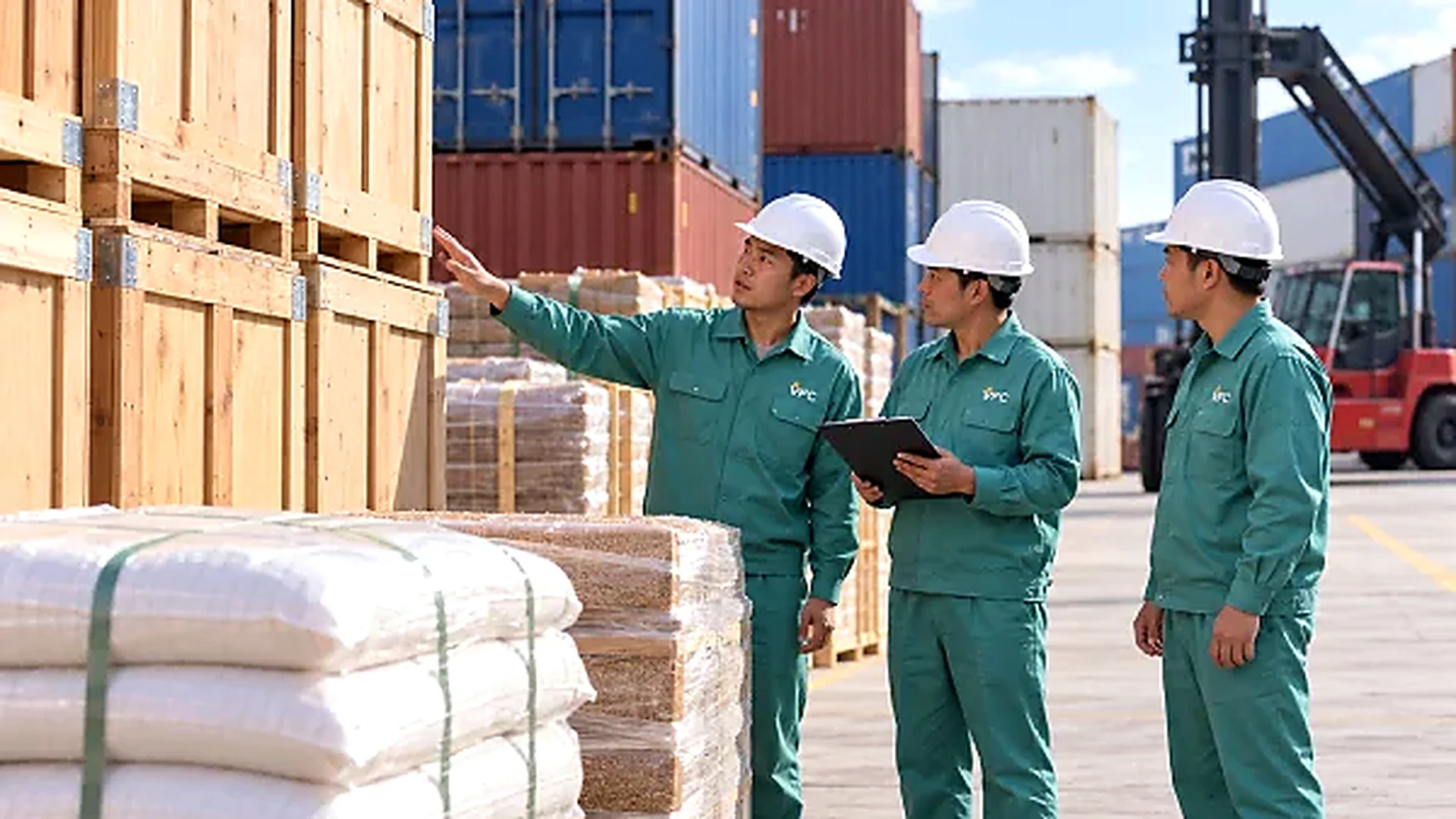
Both Methyl Bromide and Heat Treatment are recognized pallet treatment methods when meeting applicable technical conditions
The EU does not mandate that all imported wooden pallets undergo Heat Treatment (HT). Wooden packaging materials can be treated using methods recognized by ISPM 15 and accepted under applicable regulations, including HT or fumigation with Methyl Bromide (MB).
However, a clear distinction must be made between the EU accepting properly treated materials from overseas and chemical usage regulations within EU borders. Methyl Bromide is prohibited from use for pallet treatment within the EU; however, pallets treated with MB in non-EU countries can still satisfy ISPM 15 if fully compliant with all pertinent requirements.
| Criteria | Methyl Bromide (MB) Fumigation | Heat Treatment (HT) |
|---|---|---|
| Method | Phytosanitary treatment / Fumigation using Methyl Bromide | Thermal heating of timber material |
| IPPC Mark Code | MB | HT |
| Technical Standard | Fulfill gas concentration, temperature, and exposure time parameters per ISPM 15 | Entire timber cross-section, including core, reaches a minimum of 56°C continuously for at least 30 minutes |
| Execution Conditions | Requires an enclosure with verified sealing standards and safety controls | Requires an appropriate thermal heating chamber and temperature monitoring system |
| Factors to Consider | Site location, treatment conditions, safety controls, and buyer requirements | Thermal treatment facility capacity and pallet preparation lead times |
For MB, the standard requires continuous monitoring of gas concentrations and exposure periods under applicable technical specifications, rather than relying solely on the initial applied dosage rate. For HT, 30 minutes denotes the continuous duration the target temperature must be sustained throughout the entire wood cross-section, not the total cycle time of the treatment process.
Therefore, enterprises should consult with accredited specialists as soon as pallet counts, staging locations, and dispatch schedules are established. The decision between MB and HT also depends on field site conditions, timber characteristics, and the operational capacity of authorized treatment facilities.
To clearly compare the differences, businesses can refer to VFC Fumigation's article on distinguishing between Methyl Bromide fumigation and Heat Treatment (HT) under the ISPM 15 standard.
4. How does VFC Fumigation execute export wood pallet treatments in Hai Phong?
For enterprises preparing export cargo, selecting a phytosanitary treatment provider extends beyond basic technical execution. The service provider must accurately identify material requirements, operational conditions, and handover milestones to synchronize with container stuffing schedules.
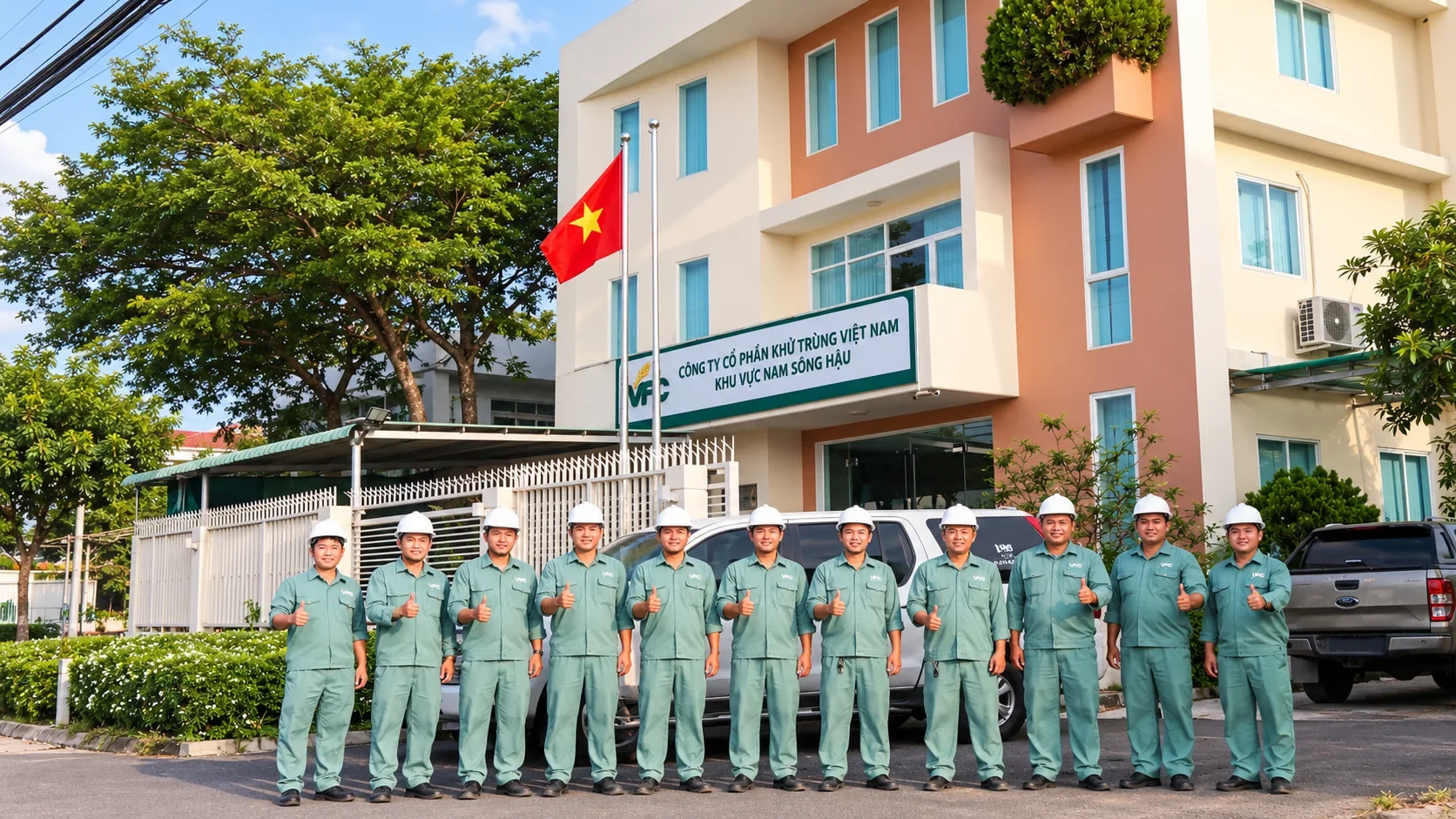
VFC Fumigation deploys wood pallet treatment under ISPM 15 based on materials, baseline status, and actual stuffing schedules
VFC Fumigation provides ISPM 15 wooden pallet and packaging treatment services, including receiving requests, conducting on-site surveys, preparing, and deploying plans. The service process is supported by the internal FumiApp system to manage task assignment, record data, and track operational progress.
Service Execution Workflow
| Phase | Operational Steps Executed by VFC Fumigation |
|---|---|
| Step 1. Request Intake | Record pallet types, quantities, material conditions, treatment locations, and stuffing schedules |
| Step 2. Survey & Consultation | Assess timber materials, existing treatment marks, and site conditions; propose an appropriate technical plan |
| Step 3. Preparation & Treatment | Mobilize technical personnel, materials, and equipment; execute treatment per the applicable protocol |
| Step 4. Inspection & Handover | Inspect treatment results, verify safety clearance, apply authorized marks under regulatory jurisdiction, and finalize documentation |
Under the MB method, the executing unit must strictly monitor enclosure gastightness, exposure periods, and post-fumigation aeration and ventilation. Under HT, the process must fulfill all standard-mandated thermal and temporal thresholds prior to verifying completion.
Applying the IPPC mark must be carried out strictly within the administrative management and registration system of the designated plant quarantine authority; fumigation service providers cannot apply marks without official accreditation. Enterprises must verify the validity of the registered facility code and treatment method on the mark upon pallet handover.
Does your enterprise in Hai Phong have an upcoming stuffing schedule for the EU?
If pallets remain untreated or display indistinct IPPC marks, enterprises should submit particulars prior to loading cargo onto pallets or stuffing containers. VFC Fumigation receives survey requests, assesses baseline site conditions, and provides consultations on ISPM 15 protocols tailored to technical specifications and export logistics schedules.
Enterprises can also review solutions for wooden furniture and wood-packaged cargo phytosanitary treatment provided by VFC Fumigation to determine the appropriate service scope.
Submit a request for technical consultation and quotations for wood pallet treatment in Hai Phong.
5. Why should enterprises select VFC Fumigation for wood pallet phytosanitary treatment in Hai Phong?
When seeking a service provider in Hai Phong, enterprises typically evaluate three core criteria: maintaining a local operational hub, possessing proven technical execution capacity, and demonstrating capability to coordinate with vessel cut-off schedules. These criteria should be verified via published capabilities and documented operational workflows.
VFC Fumigation is the specialized phytosanitary treatment and fumigation brand of Vietnam Fumigation Joint Stock Company. Operational deployment is backed by extensive industry expertise, an accredited technical workforce, and an nationwide service network.
5.1. Dedicated VFC Hai Phong Station and Northern Regional Coordination Hub
VFC Fumigation announces the VFC Hai Phong Fumigation Station within its nationwide service network, alongside the Northern branch in Hanoi. These are the focal points for businesses to discuss pallet and wooden crate survey needs and shipping schedules in the region.
VFC Hai Phong Fumigation Station
- Address: 23 Do Chinh, Gia Vien Ward, Hai Phong City
- Telephone: 0225 3838 081 - 0396 831 995
- Email: contact@fumigation.vn
For warehouses, manufacturing plants, and container stuffing depots in Hai Phong, execution schedules must be confirmed based on physical locations and specific technical parameters. Having a local operational station facilitates seamless communication, but does not replace the mandatory site survey and technical protocol confirmation.
5.2. Verified experience and operational capacity data of VFC Fumigation
VFC Fumigation possesses over 50 years of specialized industry experience in phytosanitary treatment and fumigation, serving cargo protection and international trade logistics. Documented capacity metrics reflect enterprise scale, personnel mobilization capabilities, and extensive field execution track records.
| Operational Metric | VFC Capacity Data |
|---|---|
| Industry Experience | Over 50 years of specialized experience in phytosanitary treatment and fumigation |
| Client Portfolio | Over 15,000 corporate clients served across operational history |
| Technical Specialists | Over 200 technical specialists with more than 10 years of experience |
| Annual Export Container Fumigation Volume | Over 500,000 containers/year, based on published VFC operational capacity data |
For export enterprises, operating scale and industry tenure provide a reliable benchmark for managing treatments across diverse commodity types, geographic sites, and tight operational timelines. Nevertheless, each individual pallet treatment order must be evaluated independently regarding timber characteristics, treatment method, field parameters, and delivery deadlines.
5.3. Operational management via FumiApp and digital certificate verification
Beyond physical on-site treatments, VFC Fumigation utilizes FumiApp to direct work assignments, capture field technical data, and oversee internal quality control. For Fumigation Certificates integrated with QR Codes, clients and overseas consignees can authenticate certificate validity online instantly.
It is necessary to distinguish fumigation certificates from ISPM 15 marks on wooden pallets. A valid IPPC mark is the method of identifying treated materials within the ISPM 15 system; a fumigation certificate does not automatically replace this mark. When purchasing partners request supplementary documentation, businesses should discuss the required content in advance.
This allows clients to evaluate both physical on-site execution capabilities and post-treatment documentation management. These factors represent essential considerations for regular exporters and freight forwarders coordinating documentation across multiple international parties.
6. Frequently Asked Questions regarding wood pallet fumigation in Hai Phong for EU export
6.1. Is Methyl Bromide (MB) fumigation mandatory for wooden pallets exported to the EU?
No. The EU mandates that regulated wood packaging materials must comply with ISPM 15, but does not require that all pallets undergo MB treatment. Heat Treatment (HT) is also an officially recognized method when satisfying technical specifications and proper marking requirements.
6.2. Do wooden pallets already bearing an ISPM 15 mark require retreatment before every shipment?
Not necessarily. Pallets that have been properly treated and marked do not automatically require retreatment simply because they are reused. However, timber conditions, repairs, remanufacturing modifications, and signs of target quarantine pests must be thoroughly inspected prior to integrating pallets into a new consignment.
6.3. Can a Fumigation Certificate substitute for the IPPC mark on wooden pallets?
No. For pallets within the regulatory scope of ISPM 15, a valid IPPC mark is the primary mandatory identification certifying treatment under the standard. A certificate may be provided upon request, but it does not substitute for compliant physical marking.
6.4. Can wood pallets be treated directly at warehouses or container stuffing depots in Hai Phong?
This can be evaluated depending on pallet volume, selected methodology, and site conditions. For fumigation, enclosure gastightness, isolation safety perimeters, and regulatory clearances must be assessed; for HT, a certified thermal heating chamber meeting standard specifications is required.
6.5. How far in advance should enterprises schedule pallet treatments prior to export?
Enterprises should contact the treatment provider once pallet quantities and projected container stuffing schedules are established. Lead times are determined by the treatment methodology, technical site conditions, and operational personnel mobilization at the designated facility.
7. Proactively inspecting wooden pallets prior to EU export dispatch
With EU export schedules finalized, enterprises must inspect wooden pallets prior to completing container stuffing. Auditing material conditions, treatment methods, and IPPC markings facilitates early detection of non-conformities that could disrupt cargo clearance at destination ports.
Backed by over 50 years of specialized industry experience, over 15,000 corporate clients, and a nationwide operational network, VFC Fumigation accepts requests for technical consultation, surveys, and ISPM 15 wood pallet treatment in Hai Phong. Enterprises can forward material specifications, site locations, and projected container stuffing timelines to establish an optimal treatment plan.
Contact VFC Fumigation to request technical consultation and quotations for wood pallet treatment:
- VFC Hai Phong Station: 23 Do Chinh, Gia Vien Ward, Hai Phong City
- Nationwide Hotline: 0914 773 300
- Email: contact@fumigation.vn





Related Blogs