





Published date:
31/10/2026
Share




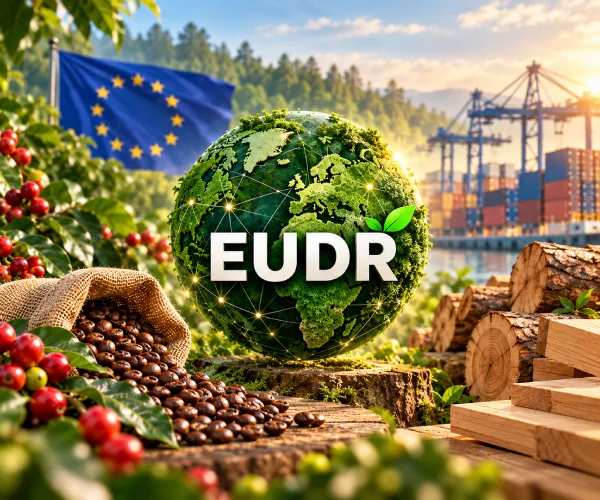
Starting December 30, 2026, numerous enterprises importing timber and wood-derived products into the EU must fulfill obligations under the EUDR. For Vietnamese manufacturers and exporters, the critical imperative is preparing traceability data, verifying legal provenance, and clarifying deforestation risks associated with raw materials. Concurrently, enterprises must maintain stringent controls over phytosanitary quarantine mandates and packaging materials when dispatching consignments. This article assists wood processing enterprises, furniture exporters, import-export departments, and freight forwarders in determining mandatory preparations prior to delivering consignments to the EU.
1. When does the EUDR apply to timber exported to the EU?
The EUDR (EU Deforestation Regulation) is Regulation (EU) 2023/1115 on deforestation-free products. For timber and wood products falling within its regulatory scope, the regulation mandates that commodities must not be associated with deforestation or forest degradation occurring after December 31, 2020. Simultaneously, raw materials must be legally harvested in accordance with the relevant legislation of the country of production.

Timber enterprises must verify raw material sources, legal compliance, and traceability data under the EUDR
Under the EUDR amendments adopted by the EU up to 2026, the application milestones are differentiated based on enterprise category within the EU. Vietnamese export enterprises must ascertain the specific enforcement timeline applicable to their importing clients, rather than assuming all commercial partners share an identical deadline.
| Enterprise Category within the EU | Enforcement Timeline |
|---|---|
| Large and medium-sized operators | 30/12/2026 |
| Small and micro-enterprises already falling within the scope of the EUTR for relevant wood products | 30/12/2026 |
| The majority of other small and micro-enterprises | 30/6/2027 |
Specific provisions govern harvesting dates, legacy inventory, and transitional products originating under the EU Timber Regulation (EUTR). Consequently, enterprises must cross-reference harvesting timelines, product classifications, and market-placement status within the EU when establishing applicable legal obligations.
Official timeline particulars are published by the European Commission – Regulation on Deforestation-free Products.
Which wood products fall within the scope of the EUDR?
The EUDR applies not only to raw timber but also encompasses a broad spectrum of wood-derived products. However, not every product containing wood components is automatically regulated, as the precise scope is delimited pursuant to Annex I and corresponding customs tariff codes.
| Product Category | Reference HS Code |
|---|---|
| Roundwood, raw industrial timber | 4403 |
| Sawnwood | 4407 |
| Particle board, oriented strand board (OSB), and similar industrial boards | 4410 |
| Fibreboard | 4411 |
| Plywood, veneered panels, and laminated wood | 4412 |
| Certain wooden furniture products | Falling within relevant subheadings of 9403 |
The list above merely illustrates common product groupings within the wood processing industry. When determining EUDR obligations, enterprises must verify exact HS/CN codes, commercial product descriptions, and the prevailing scope of Annex I, incorporating all 2026 regulatory updates.
2. Five information datasets wood enterprises must prepare to satisfy the EUDR
For wood export enterprises, the major obstacle does not lie in securing an isolated document immediately prior to dispatch. The practical challenge entails seamlessly connecting data across forest harvesting origins, raw material suppliers, manufacturing processes, and individual finished product batches.
Importing partners in the EU require verified, auditable data to execute due diligence obligations under the EUDR. Accordingly, Vietnamese enterprises should compile and govern the five data groups below from the moment raw materials enter the facility:
| Data Group | Required Data Elements | Operational Significance for Orders |
|---|---|---|
| 1. Timber origin and botanical species | Trade name, full scientific name of timber species, harvesting country, and supplier credentials | Clearly determines raw materials constituting the product |
| 2. Geolocation coordinates of harvesting plots | Geographic coordinates of all relevant plots of land where harvesting occurred, accompanied by harvesting dates or operational timeframes | Supports verification against deforestation and forest degradation risks |
| 3. Legal provenance documentation | Records verifying harvesting rights, forestry origin certificates, and corresponding legal compliance proofs | Validates legal harvesting compliance in the country of production |
| 4. Internal production traceability records | Raw material batch codes, warehouse intake/dispatch logs, manufacturing process checkpoints, and matching finished goods | Reconciles finished export products against raw material inputs |
| 5. Documentation dossiers provided to EU partners | Product technical specifications, net mass/volume, supplier profiles, and required verification instruments | Facilitates mandatory due diligence assessments and declarations by EU importers |
2.1. Traceability must extend to the harvesting plot, not terminate at the supplier
A single furniture piece may incorporate multiple wood species sourced from diverse suppliers. Enterprises must determine the authentic harvesting source for all raw materials falling within the scope of the EUDR, even when procuring through intermediary trading entities or processing imported timber in Vietnam.
A strict distinction must be drawn between the manufacturing country and the timber harvesting country. If raw timber is harvested in a third country and subsequently imported into Vietnam for furniture fabrication, the geographic data under the EUDR must correspond to the actual harvesting plots. Furnishing only the factory address in Vietnam is legally invalid.
Regarding geographic coordinates, documentation must fulfill regulatory standards for identifying relevant plots of land. Plots of land exceeding prescribed surface area thresholds must provide boundary data in polygon format, rather than a single point coordinate.
2.2. Does FSC certification replace an EUDR dossier?
No. FSC certification or equivalent forest management and chain-of-custody (CoC) certifications provide valuable supporting evidence, but do not automatically satisfy or replace mandatory EUDR obligations. The operator responsible for due diligence remains legally obligated to evaluate all mandatory conditions and verify the absolute completeness of the underlying data.
Enterprises must actively cross-reference third-party certificates against raw material logs, harvest geolocation coordinates, and internal production records. Maintaining certification serves as an administrative management aid, never as the sole benchmark to assert that an entire consignment satisfies the EUDR.
3. How should export enterprises, buyers, and forwarders coordinate?
Under the EUDR framework as revised in 2025, the primary obligation to compile and submit a Due Diligence Statement (DDS) rests upon the first operator placing relevant products onto the EU market. Downstream commercial traders bear differentiated obligations determined by their specific operational role and corporate size.
In conventional export transactions from Vietnam, Vietnamese enterprises must coordinate by furnishing datasets and verification evidence to the EU importer or responsible legal entity within the EU. It should not be assumed that all Vietnamese exporters are required to submit a DDS directly, as legal accountability depends on one's specific role within the supply chain.
| Stakeholder | Collaborative Responsibilities |
|---|---|
| Wood processing and export enterprises | Compile origin data, supplier records, raw material logs, product specifications, and relevant documentation dossiers |
| EU buyers or importing operators | Determine applicable EUDR mandates, perform due diligence evaluations, and file statutory declarations per their legal status |
| QA/QC and supply chain management | Audit continuity and alignment between raw material inputs, shop-floor production logs, and purchase orders |
| Freight forwarders and logistics providers | Reconcile transport data and coordinate associated logistics documentation within their assigned operational scope |
During execution, enterprises must establish formal alignment with the buyer regarding data types, digital formats, delivery schedules, and the designated verification officer. Early engagement prevents missing plot geolocations or failed material reconciliations when consignments are finalized for dispatch.
4. Distinguishing between EUDR, ISPM 15, and wood export phytosanitary treatment for the EU
This represents a critical distinction for wooden furniture manufacturers and exporters. The EUDR concentrates on legal provenance and environmental impacts on forest ecosystems, whereas ISPM 15 governs target quarantine pest risks associated with Wood Packaging Material (WPM). These mandates feature distinct objectives, regulatory perimeters, and compliance verification protocols.
Consequently, a furniture consignment possessing flawless EUDR documentation may still face customs rejection if supporting wood pallets or dunnage fail to comply with ISPM 15. Conversely, compliant phytosanitary treatment does not substantiate that timber was legally harvested or sourced from deforestation-free plots.
| Message | EUDR | ISPM 15 / Phytosanitary Treatment |
|---|---|---|
| Objective | Ensure legal provenance, deforestation-free harvesting, and prevention of forest degradation | Mitigate the introduction and spread of regulated quarantine pests in wood materials and commodities |
| Scope | Relevant products enumerated in Annex I of the EUDR | Wood packaging material (WPM) regulated under ISPM 15; commodities subject to specific treatment protocols |
| Verification Checkpoints | Harvesting plot coordinates, botanical species, legal production permits, supply chain tracing | Treatment methodology, timber material condition, authorized IPPC mark, and Fumigation Certificates when mandated |
| Executing Entities | Obligated operators under the EUDR and participating supply chain actors | Authorized treatment providers officially registered under phytosanitary quarantine regulations |
| Interchangeability | Does NOT substitute for ISPM 15 | Does NOT substitute for EUDR |
4.1. Do wooden pallets accompanying export shipments require an independent EUDR dossier?
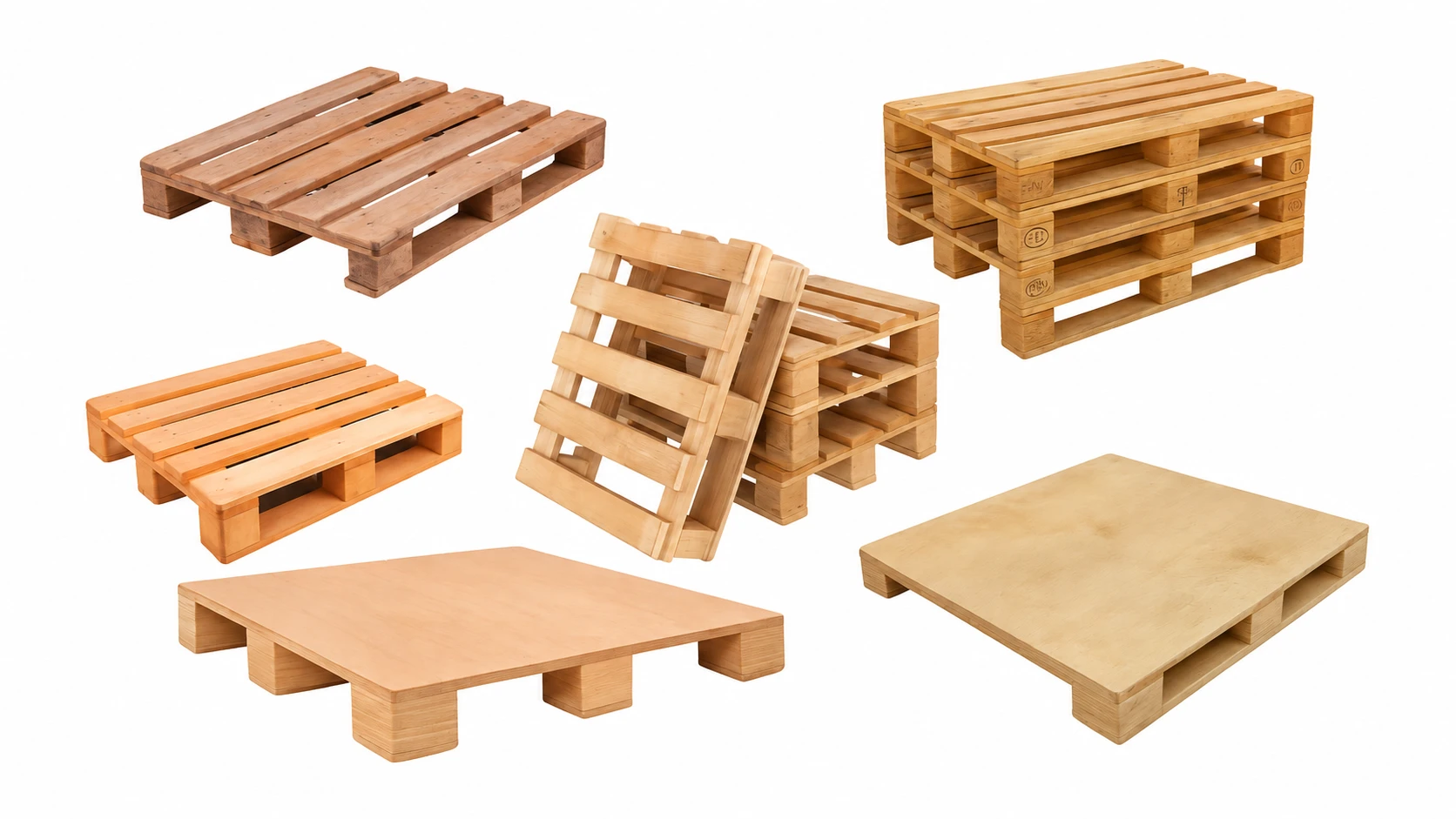
Pursuant to the scope and exemptions of the EUDR, wooden pallets and packaging materials classified under HS heading 4415 that serve exclusively as supporting platforms, protective packing, or conveyance containers for other commodities do not fall within the scope of the EUDR in their capacity as packaging. Conversely, pallets sold, traded, or imported as standalone commercial products fall squarely within the scope of the EUDR and must be assessed accordingly.
Even when pallets are exempt from EUDR due to their packaging function, ISPM 15 standards remain independently mandatory for natural raw wood components. Enterprises must verify valid IPPC markings, timber baseline conditions, and supplemental dunnage prior to container stuffing.
When deploying pallets or wooden crating for export, enterprises can utilize the Wood Packaging Material (WPM) under ISPM 15 standards solutions provided by VFC Fumigation. This specialized service oversees target pest eradication and packaging biosecurity compliance, distinct from EUDR regulatory certification services.
4.2. When is phytosanitary fumigation required for timber or wooden furniture prior to export?
Not every wood product exported to the EU is subject to mandatory phytosanitary fumigation. Treatment requirements are dictated by target pest infestation status, commodity characteristics, destination quarantine regulations, and contractual buyer specifications.
Upon detecting signs of pests or encountering fumigation requirements in the contract, businesses need to evaluate the site before choosing a method. For export cargo fumigation services in containers, VFC Fumigation receives shipment information to survey and determine appropriate treatment conditions.
Have you finalized raw timber provenance files but remain uncertain about fumigation protocols, export pallets, and wooden crates?
VFC Fumigation logs commodity specifications, stuffing depots, and container schedules to provide technical advisory services within its accredited scope.
Contact VFC Fumigation for export timber and wood packaging fumigation consultations.
5. How VFC Fumigation supports timber enterprises exporting to the EU
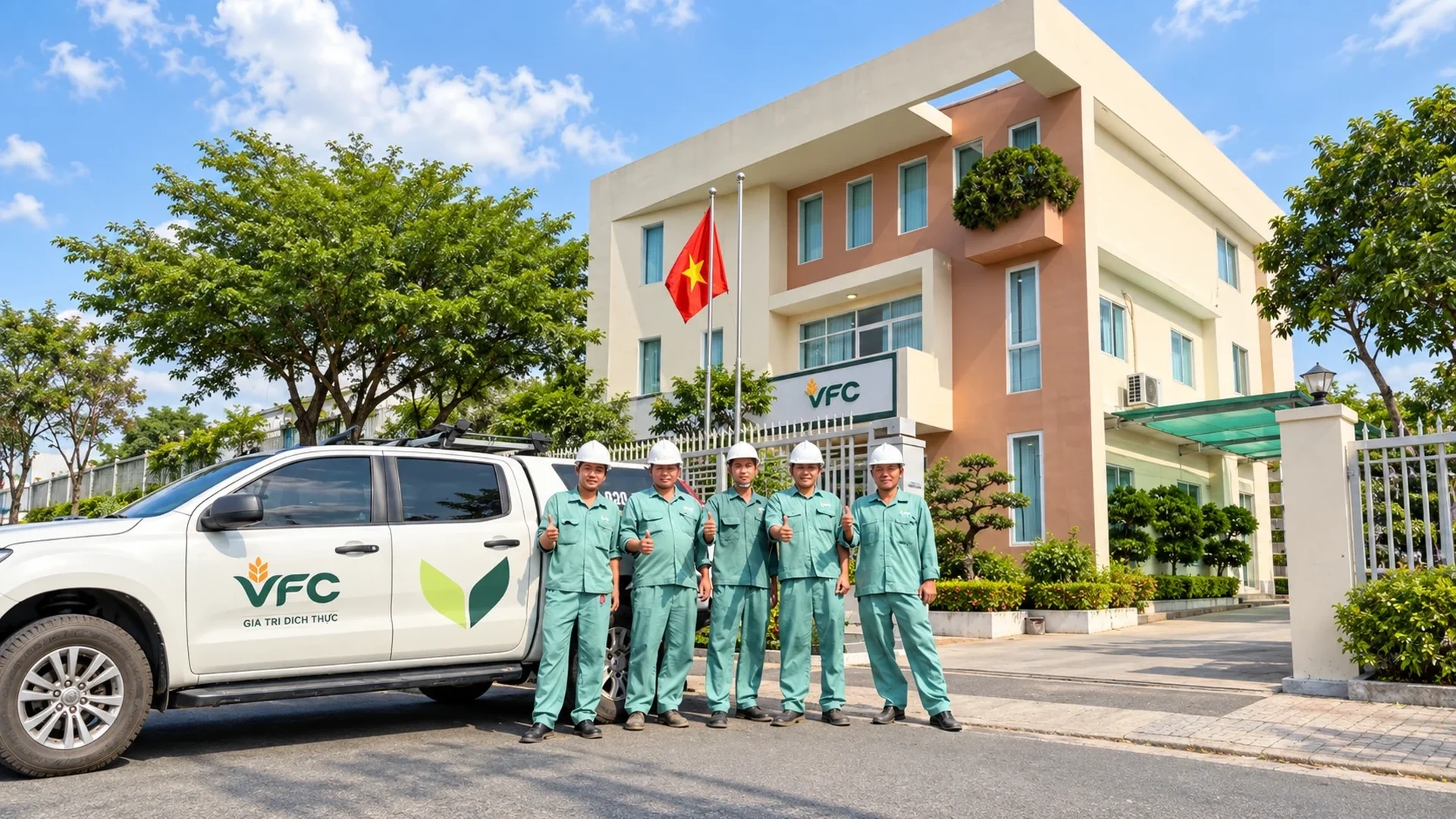
VFC Fumigation - An experienced treatment provider for export-import cargo
For wood processing and furniture manufacturing enterprises, EUDR compliance must be governed across upstream raw material sources and supply chain workflows. Approaching the dispatch phase, enterprises must concurrently verify warehouse preservation standards, pest infestation status, pallets, and treatment certification under applicable import protocols.
VFC Fumigation is the specialized phytosanitary treatment brand of Vietnam Fumigation Joint Stock Company, dedicated to import-export biosecurity and fumigation services. For the forestry sector, service competencies center on eradicating regulated pests, commodity fumigation, and wood packaging treatment within officially authorized parameters.
5.1. Specialized technical capabilities of VFC Fumigation
| Operational Metric | VFC Fumigation Capacity |
|---|---|
| Industry Tenure | Over 50 years of specialized experience in phytosanitary treatment and fumigation |
| Operational Scale | Over 500,000 export containers treated annually |
| Client Segment | Over 15,000 corporate clients served across operations |
| Technical Specialists | Over 200 technical specialists with more than 10 years of experience |
For B2B manufacturing and trading enterprises, this operational scale validates resource mobilization capabilities across diverse locations. Nevertheless, service execution for individual timber shipments must be finalized based on site conditions, the chosen treatment method, and actual export dispatch milestones.
5.2. Field operational control and certification via FumiApp and QR Code authentication
In treatment operations, VFC Fumigation utilizes FumiApp to direct work assignments, capture field technical data, and oversee internal quality control. Furthermore, Fumigation Certificates integrated with unique QR Codes enable clients and international stakeholders to authenticate certificate data online instantly.
For wood export enterprises, this operational system streamlines documentation management for the phytosanitary treatment phase, facilitating seamless coordination with freight forwarders and buyers during compliance audits. However, FumiApp datasets and Fumigation Certificates do not substitute for harvest plot geolocation records, legal harvesting deeds, or statutory Due Diligence Statements (DDS) mandated by the EUDR.
Businesses can contact VFC Fumigation to discuss ISPM 15 pallet and wooden packaging treatment services, or survey cargo fumigation solutions when needed. Accurately defining the scope of services helps the import-export department proactively coordinate between origin documentation and technical requirements prior to delivery.
6. Pre-dispatch compliance checklist for wood enterprises exporting to the EU
When an export order has an established delivery schedule, QA/QC and shipping documentation teams must reconcile production batch data against buyer specifications. This systematic audit identifies missing data points, ensuring all mandatory protocols are finalized prior to stuffing.
| Compliance Checklist Item | Verification Checkpoint |
|---|---|
| EUDR Scope | Do the finished products and HS/CN codes fall within the prevailing Annex I? |
| Enforcement Milestones | Which specific regulatory deadline governs the buyer or importing operator? |
| Timber Provenance | Have the production country, harvesting sub-regions, and botanical species been verified? |
| Geolocation Coordinates | Have complete point coordinates or polygon boundaries been secured for all relevant harvest plots? |
| Legal Provenance Proofs | Are legal harvesting deeds, concession rights, and transport permits fully documented? |
| Production Traceability | Can finished production lots be traced directly to specific raw material inputs? |
| EUDR Coordination | Has formal alignment been reached with the buyer regarding document formats, filing parties, and data cutoff dates? |
| Quarantine & Packaging | Have valid ISPM 15 marks, pallet baseline conditions, and commodity fumigation requirements been audited? |
For orders utilizing raw materials from multi-source supply chains, enterprises must prioritize verifying plot-level traceability from the procurement phase. Reconstructing backward tracing after commodities have undergone deep industrial processing and multi-batch blending is extraordinarily difficult.
Furthermore, enterprises must never postpone pallet, crating, and insect inspections until the day of container stuffing. These phytosanitary checkpoints must be integrated directly into production schedules, QA/QC milestones, and dispatch workflows.
7. Frequently Asked Questions regarding the EUDR for timber exports to the EU
7.1. Must Vietnamese timber and furniture exported to the EU comply with the EUDR?
Yes, provided the commodities fall within the regulated scope of the EUDR and the underlying commercial transaction triggers obligations under the relevant enforcement timeline. Enterprises must determine accurate HS/CN codes and coordinate with importers to compile origin dossiers, rather than presuming identical classifications across all wood categories.
7.2. If Vietnam is classified as a low-risk country, is providing timber harvesting geolocation coordinates still mandatory?
Yes, coordinates may still be required. Low-risk benchmarking permits simplified due diligence procedures under specific statutory conditions, but does not eliminate the core legal obligation to compile geolocation data and prove non-deforestation origin.
7.3. Does holding FSC certification automatically mean an enterprise complies with the EUDR?
Compliance cannot be established solely through FSC certification. Enterprises must still furnish geolocation coordinates, legal deeds, precise harvesting dates, and other statutory requirements under the EUDR; third-party certifications serve strictly as corroborating evidence.
7.4. Does a fumigated consignment possessing a Fumigation Certificate satisfy the EUDR?
No. A Fumigation Certificate (Certificate of Treatment) records technical measures executed to eradicate regulated pests; it provides no legal proof that commodities are deforestation-free or compliant with EUDR due diligence obligations. Enterprises must administer these compliance domains independently.
7.5. Must wooden pallets used for EU-bound shipments satisfy both EUDR and ISPM 15 simultaneously?
This depends on operational function and tariff classification. Pallets utilized solely as packaging materials to convey other products are generally excluded from the corresponding EUDR scope, but remain strictly obligated to comply with ISPM 15 if fabricated from regulated raw natural wood.
8. Early preparation ensures proactive compliance for timber exports to the EU
With the late-2026 EUDR enforcement milestone approaching, wood enterprises must prioritize consolidating raw material provenance datasets, harvest plot coordinates, and internal manufacturing traceability records. Early alignment with buyers clarifies mandatory deliverables, avoiding operational disruption when partners file statutory due diligence declarations under EU law.
In tandem with EUDR dossiers, enterprises must maintain storage hygiene, inspect wood packaging materials, and assess phytosanitary fumigation requirements for each individual consignment. These distinct technical functions must be synchronized with overarching delivery timelines.
With over 50 years of specialized industry experience and a client base exceeding 15,000 corporate partners, VFC Fumigation stands alongside enterprises in biosecurity pest control, phytosanitary treatment, and ISPM 15 wood packaging compliance for international trade. Our nationwide service network accommodates technical surveys, consultations, and field operations tailored to actual site conditions.
Contact VFC Fumigation for export wood fumigation and ISPM 15 pallet treatment consultations:
- Hotline: 0914 773 300
- Email: contact@fumigation.vn
- Website: https://fumigation.vn/en/




Related Blogs