





Published date:
04/11/2026
Share




Pepper exported to the US is not automatically subject to mandatory phytosanitary treatment for every consignment if the product has undergone deep processing and biosecurity pest control is well maintained. However, the majority of US importers still require fumigation within commercial contracts to prevent risks of insect proliferation over extended maritime transit voyages. Concurrently, natural wood packaging pallets used to support cargo are strictly required to be treated pursuant to Wood Packaging Material (WPM) under ISPM 15 standards, ensuring enterprises achieve safe customs clearance and avoid unexpected demurrage and detention costs at the port of destination.
1. Direct Resolution: Is Phytosanitary Treatment Mandatory for Pepper Exported to the US?
When structuring shipment plans to the United States, import-export divisions must strictly separate regulations governing black/white peppercorn commodities from regulations governing accompanying packaging materials. Developing an accurate understanding of these two distinct legal scopes enables enterprises to proactively assemble documentation dossiers from the outset, mitigating detention risks at destination ports.

Requirements for peppercorns and wood packaging materials must be inspected separately when exporting to the US
1.1. Phytosanitary Quarantine Regulations Governing Dried Peppercorn Commodities
According to regulations from the Animal and Plant Health Inspection Service (USDA APHIS), dried pepper belongs to the group of agricultural products subject to biosafety inspection upon arrival at the port. US authorities do not mandate a fixed fumigation order from the port of departure for all pepper shipments unless the goods contain live pests under the control list. Enterprises can cross-reference further in the analytical article on categories of goods bound for the US that strictly require fumigation to clearly understand this market's control list.
Why, then, do most pepper export enterprises bound for the US still execute phytosanitary treatment?
In B2B commercial practice, over 90% of sales contracts and letters of credit (L/C) from US partners require a fumigation certificate to be enclosed. The reason is that shipping routes to the US usually take 30 to 45 days, creating a favorable environment for pests hidden in pepper to develop. If US Customs and Border Protection (CBP) detects live pests in the shipment, it will be suspended from customs clearance for retreatment or forced re-export.
1.2. Mandatory Regulatory Standards for Wooden Pallets and Dunnage (WPM)
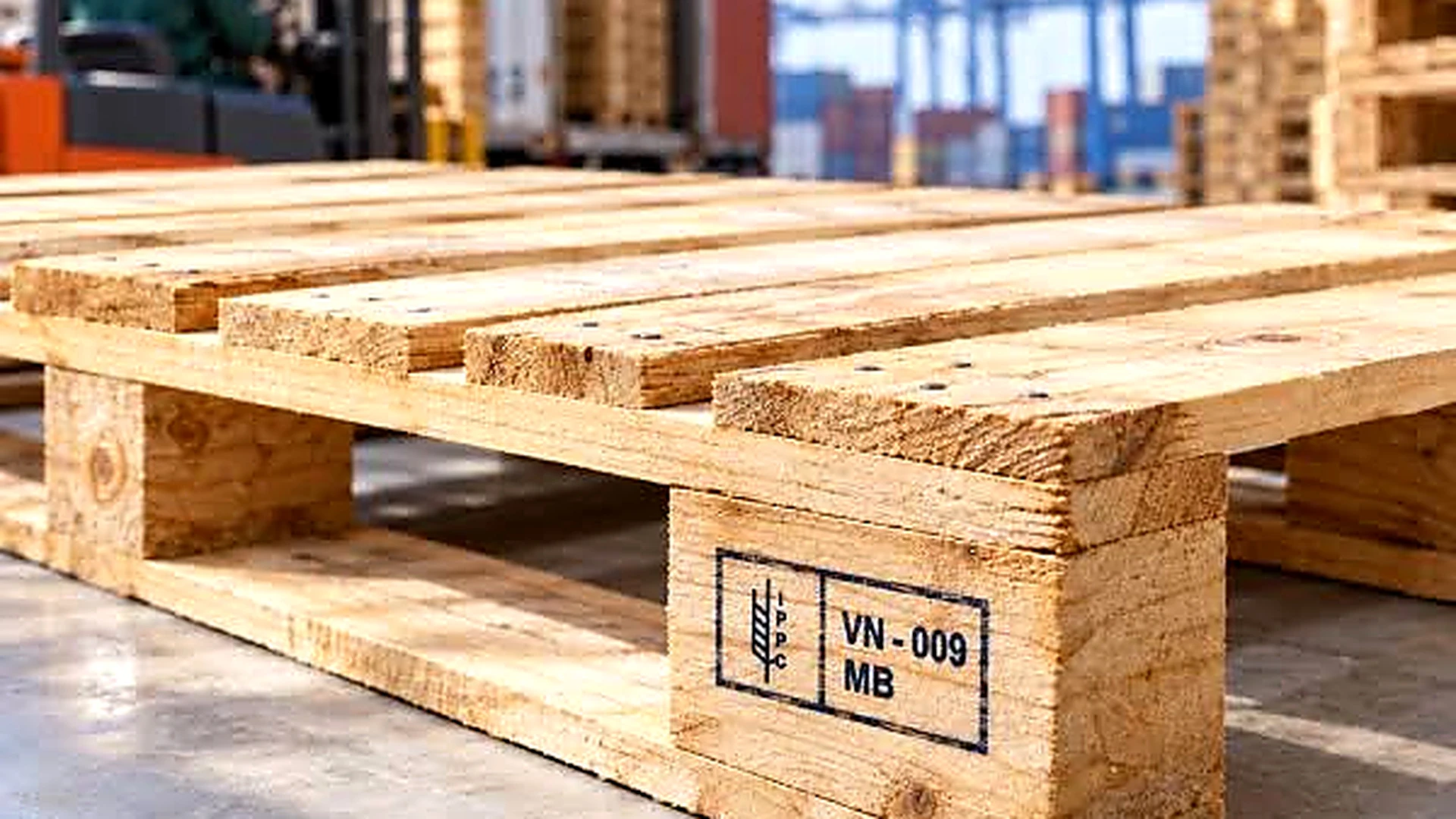
Pallets, crates, and dunnage fabricated from raw wood must be audited for ISPM 15 compliance prior to container stuffing for the US
Unlike the agricultural commodities inside, natural wood pallets, wooden crates, and dunnage used inside containers are strictly required to comply with ISPM 15 standards. This international quarantine regulation applies rigorously even if the enterprise's pepper has been sterilized, ground into powder, or vacuum-packed.
How does this impact an enterprise’s container stuffing operations?
Every natural raw timber pallet placed inside the container must undergo certified Heat Treatment (HT) or Methyl Bromide (MB) fumigation, accompanied by legible, permanent IPPC certification marks branded on two opposing vertical faces. If container loading crews utilize even a single non-compliant, untreated wooden dunnage bearer, the entire containerized pepper consignment faces immediate refusal of entry upon arrival at US border ports.
2. Pepper Phytosanitary Treatment Protocol and International-Standard Fumigation Certificate Issuance
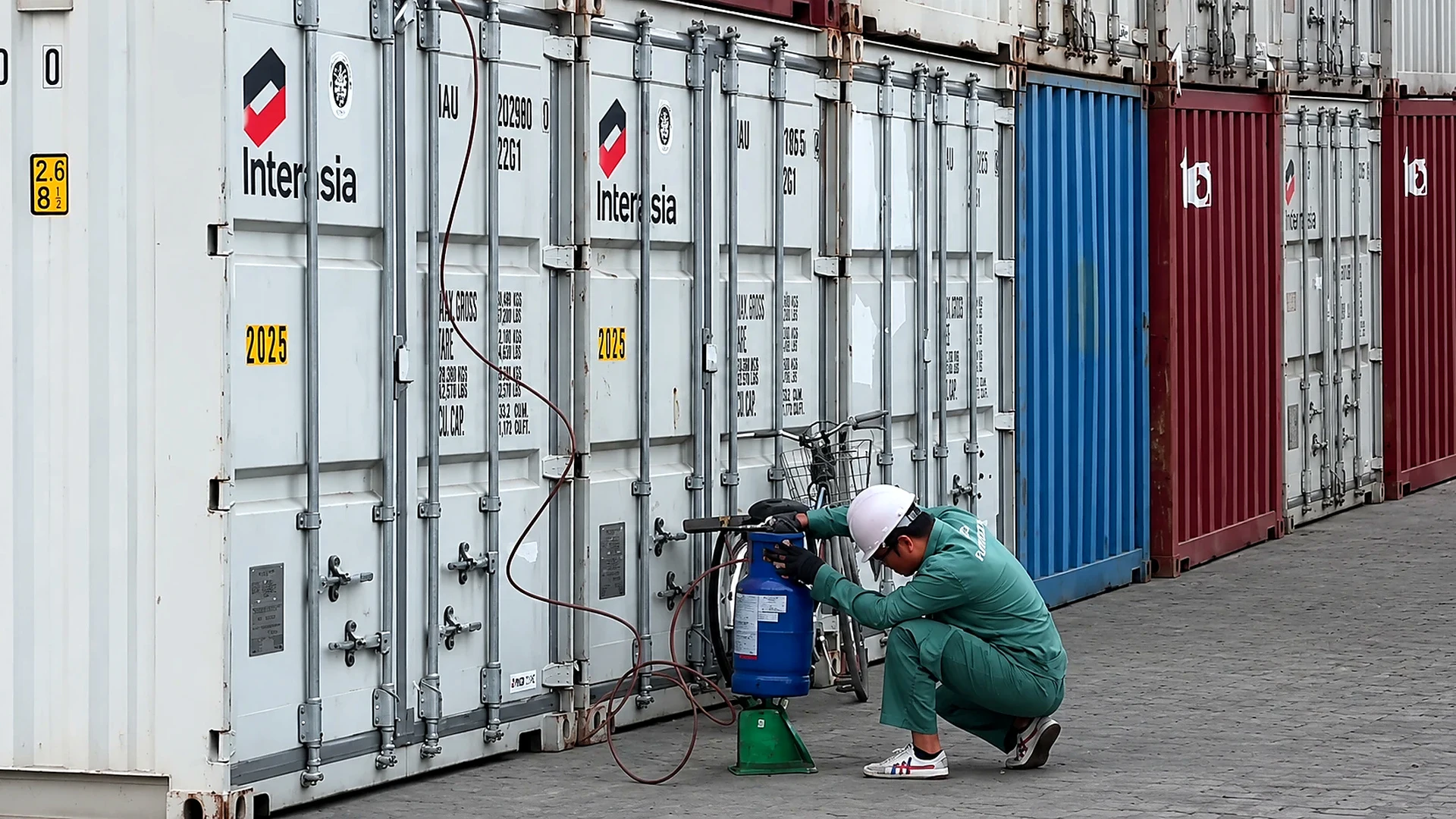
The pepper container fumigation workflow comprises request intake, sealing, treatment execution, monitoring, and certificate issuance
The technical treatment plan and issuance of the Fumigation Certificate (Fumigation Certificate) require synchronized coordination between onsite operations and foreign trade documentation procedures. The process of export cargo fumigation in containers at VFC Fumigation is strictly implemented through 5 steps to ensure high legal validity during international customs clearance:
Step 1: Receiving information and identifying the container location
A professional phytosanitary treatment provider such as VFC Fumigation receives operational booking orders directly from the exporter's shipping department or the coordinating freight forwarder. Audited data parameters encompass container dimensions (20ft, 40ft), container numbers, seal numbers, exact cargo manifest descriptions, destination ports, actual container yard stack coordinates at the ICD/export port, and official vessel cut-off timelines to organize an exact operational deployment schedule.
Step 2: Airtight Sealing and Fumigant Application
Technicians arrange the gas distribution pipeline system for fumigation methods using Methyl Bromide (CH3Br) or place Aluminium Phosphide (AlP) fumigant in accordance with the agreed technical plan. Simultaneously, the field team installs gas concentration monitoring lines at critical points inside the container to facilitate the inspection of fumigant concentrations.
Subsequently, technicians seal the container doors, hermetically sealing all container ventilation louvers and potential pressure-leakage apertures using specialized gastight sealing materials to secure maximum enclosure gastightness. Next, the technical team injects the fumigant active ingredient via specialized vaporizers (for Methyl Bromide) and affixes conspicuous biosecurity hazard warning placards across prominent exterior faces of the container to prevent unauthorized entry into the operational perimeter.
Step 3: Maintaining the exposure period and monitoring concentration
The exposure time / exposure period is strictly controlled based on the active ingredient deployed, the specific biology of target quarantine pests, and the statutory plant quarantine regulations of the importing nation (ranging from 24 to 48 hours for Methyl Bromide; extending from 7 to 10 days for Aluminium Phosphide). Throughout this operational timeframe, technicians conduct periodic gas concentration monitoring pursuant to the technical protocol to maintain proper gas concentration levels, guaranteeing 100% mortality across all pest life stages.
Step 4: Safe ventilation and on-site acceptance
Upon conclusion of the statutory exposure period, technicians unseal container doors and remove sealing materials covering ventilation louvers to initiate the aeration period / ventilation phase. Field personnel utilize calibrated, high-precision detection instruments to monitor gas clearance, ensuring residual fumigant vapors drop strictly below statutory Threshold Limit Values (TLV) prior to operational handover.
Following gas clearance, VFC Fumigation technical supervisors and client representatives conduct a joint on-site inspection, executing a formal treatment completion and handover protocol directly in the field. Once fully cleared and accepted, the container is formally handed over to the client or port yard terminal dispatchers for loading onto the export vessel.
Step 5: Issuance of the Fumigation Certificate
VFC Fumigation finalizes documentation and issues official fumigation certificates (Fumigation Certificate) integrated with QR codes to serve businesses' export documentation sets. This certificate serves as the technical basis for quarantine authorities to consider issuing a Phytosanitary Certificate (Phyto) and supports shipments in clearing customs smoothly at the destination port.
Technical Note: The actual process can be flexibly adjusted according to the characteristics of the goods, the type of fumigant used, the condition of the transport vehicle, and the specific requirements of each commercial contract.
3. Four-Step Procedure for Obtaining a Phytosanitary Certificate (Phyto) for Pepper Exported to the US
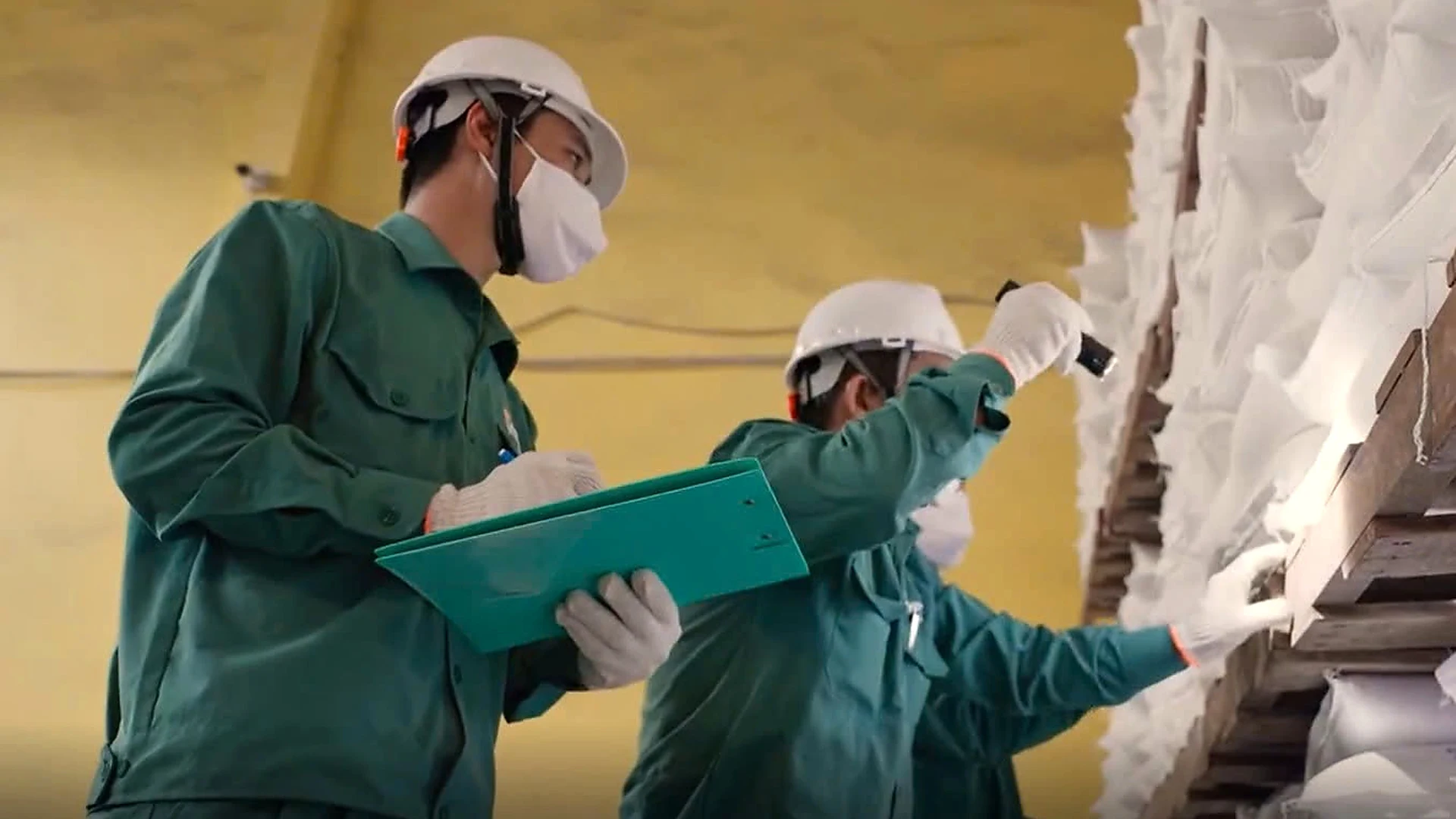
The plant quarantine process comprises electronic registration, physical sampling, lab analysis, and Phytosanitary Certificate issuance
To ensure the legality of foreign trade documentation and meet the quarantine standards of USDA APHIS (United States), businesses need to carry out procedures for obtaining a Phytosanitary Certificate (Phytosanitary Certificate). The coordination process with state quarantine authorities is carried out according to the 4 standardized steps below:
Step 1: Declaration and Registration via the National Single Window (VNSW)
Enterprises establish a corporate account and submit an electronic Application for Plant Quarantine via the National Single Window portal (vnsw.gov.vn). Mandatory dossier attachments comprise the sales contract, Commercial Invoice, Packing List, Bill of Lading (B/L), and the official Fumigation Certificate as the underlying technical proof of treatment.
Step 2: On-Site Inspection and Sampling:
Accredited inspectors from the Regional Plant Quarantine Sub-Department report directly to the origin raw material warehouse or port terminal container staging yard to conduct physical inspections of the pepper consignment. Quarantine officers draw representative commodity samples in strict compliance with National Technical Standards (TCVN) for laboratory analysis.
Step 3: Laboratory Analysis and Parameter Verification:
Peppercorn samples are delivered to specialized plant quarantine laboratories to test for the presence of live regulated pests. Concurrently, plant quarantine officers audit the technical parameters recorded on the Fumigation Certificate to ensure the consignment was treated in strict accordance with the phytosanitary quarantine regulations of the destination nation.
Step 4: Issuance of the Phytosanitary Certificate
When all electronic dossier components and physical laboratory analysis results verify full biosecurity compliance, the plant quarantine authority issues an official hard-copy Phytosanitary Certificate or an electronic Phytosanitary Certificate (e-Phyto). The enterprise incorporates this certificate into the shipping documentation package forwarded to the US importer to finalize customs clearance.
4. VFC Fumigation: Documented Phytosanitary Treatment Capabilities for US-Bound Cargo

VFC Fumigation deploys export commodity phytosanitary treatments backed by nationwide engineering infrastructure and operational management
When exporting to an international market characterized by stringent biosecurity barriers such as the United States, partnering with an accredited phytosanitary treatment corporation represents an essential investment to safeguard supply chain continuity. Vietnam Fumigation Joint Stock Company (VFC Fumigation)—a proud member of The PAN Group—delivers verified biosecurity compliance for B2B enterprises through an audited operational track record:
- Over 50 Years of Specialized Tenure and Global Accreditation: VFC Fumigation is the leading phytosanitary enterprise in Vietnam and serves as the sole accredited member representing Vietnam within the International Maritime Fumigation Organization (IMFO). Certificates and ISPM 15 compliance stamps issued by VFC Fumigation (accreditation codes VN-009 MB and VN-010 HT) are officially recognized by quarantine authorities in the United States and globally.
- Operational Scale Exceeding 500,000 Export Containers Annually: A nationwide operational capacity supported by a network of branches spanning every major seaport and inland container depot (ICD) enables VFC Fumigation to accommodate urgent stuffing schedules for over 15,000 corporate clients.
- Technical Force of Over 1,000 Personnel Including 200+ Senior Specialists: A veteran engineering cadre possessing over 10 years of hands-on field experience ensures precise biosecurity risk assessments, accurate dosage rate calculations, and immediate operational problem-solving at port container terminals.
- Digital Operations via FumiApp & Dynamic QR Code Verification: Service delivery is governed by the proprietary internal FumiApp system, coordinating work orders, recording real-time field parameters, and maintaining operational consistency. Concurrently, Fumigation Certificates issued by VFC Fumigation feature a unique dynamic QR Code, allowing cargo owners and US trading partners to scan, verify, and authenticate certificate validity directly against VFC Fumigation's central database.
5. Frequently Asked Questions Regarding Pepper Export Phytosanitary Treatment to the US
5.1. How Long Does It Take to Fumigate a Container of Export Pepper Bound for the US?
Depending on the fumigant active ingredient utilized, the technical standard applied, statutory requirements of the importing country, and specific commercial contract terms, VFC Fumigation formulates optimized technical plans with appropriate exposure periods. Treatment schedules are engineered to optimize logistics turnaround times, satisfy quarantine standards, and align with vessel cut-off deadlines. Enterprises are invited to contact VFC Fumigation directly for customized technical consultation tailored to specific purchase orders.
5.2. Can a Fumigation Certificate Substitute for the ISPM 15 Mark on Wooden Pallets?
No, as these constitute two independent technical standards addressing distinct biosecurity vectors. An ISPM 15 mark is stamped directly onto the timber to certify that each specific wooden pallet has been treated pursuant to international standards. Conversely, a Fumigation Certificate / Certificate of Treatment validates the execution of a technical phytosanitary treatment across the entire commodity consignment, functioning as an essential technical document required for Phytosanitary Certificate (Phyto) issuance and port import clearance.
5.3. If Peppercorns Were Pre-Treated in the Raw Material Warehouse, Must They Be Re-Treated Upon Container Stuffing?
Fumigant active ingredients function exclusively to eradicate insect pests present within the enclosure at the time of application, leaving zero persistent chemical barriers to prevent subsequent re-infestation over time. Therefore, if pepper is stored in warehousing facilities for an extended duration post-treatment, risking borer re-infestation, or if the commercial contract stipulates a Fumigation Certificate explicitly listing ocean container and seal numbers, the enterprise must execute container fumigation upon cargo stuffing.
Proactively controlling pests according to proper technical standards and preparing a transparent set of documents right from the port of departure is a practical solution to help pepper shipments clear customs smoothly into the US market. To learn more deeply about all fumigation regulations for US-bound cargo or receive a quotation for professional container fumigation services, enterprises and logistics partners are cordially invited to contact VFC Fumigation immediately:
- 24/7 Technical Advisory & Quotation Hotline 0914 773 300
- Customer Service Center: 1800 577 788
- Email: contact@fumigation.vn
- Corporate Headquarters: VFC Tower, 29 Ton Duc Thang Street, Ben Nghe Ward, District 1, Ho Chi Minh City (alongside an extensive service network spanning all port clusters and raw material growing regions nationwide).




Related Blogs