










 SECTION
01
SECTION
01
Export Container Fumigation Process Using Methyl Bromide (CH₃Br)

Category:
Fumigation by Industry Sector

Published date:
17/03/2026
Share
In many export markets, cargo containers must be fumigated before loading onto vessels to eliminate the risk of pests being transported with the goods. To ensure treatment effectiveness and compliance with international quarantine regulations, VFC implements a strict container fumigation process using Methyl Bromide (CH₃Br), following controlled steps from survey and treatment to the issuance of a fumigation certificate.
Table of Contents
1. Scope of Application
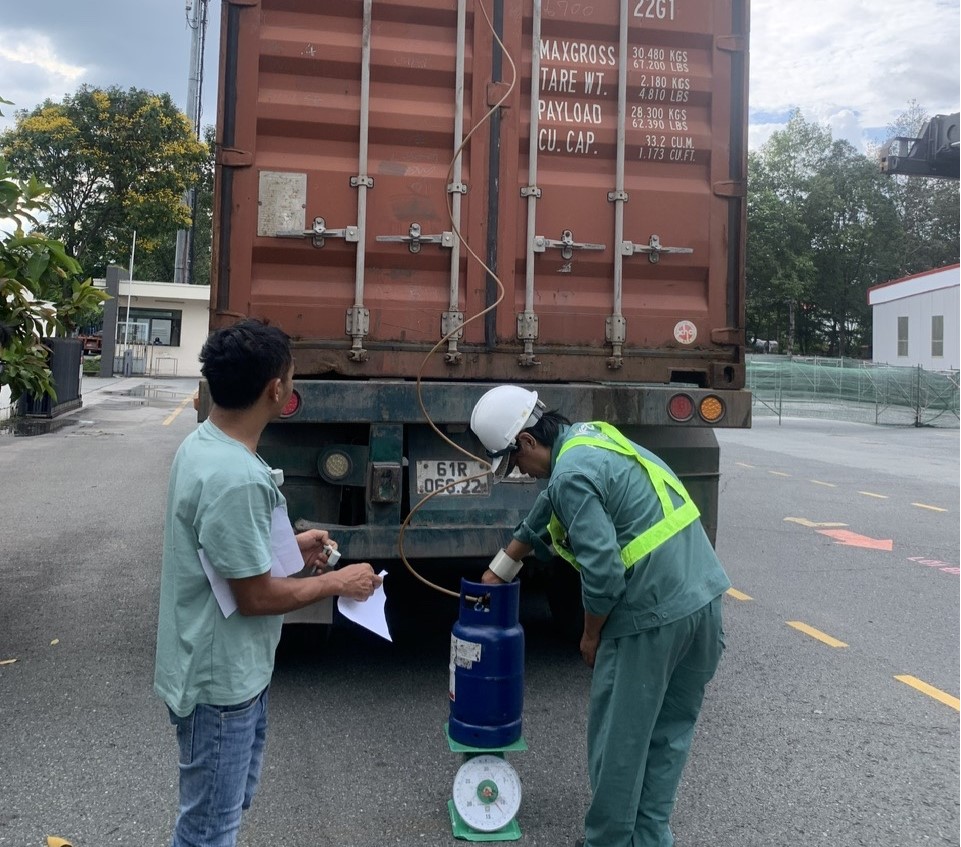
VFC's container fumigation process is applied uniformly to export shipments requiring pest treatment prior to international transport. Not all shipments have the same treatment requirements. Cargo owners should check types of cargo that usually require fumigation when exporting in advance to determine the appropriate method for their products and import markets.
Depending on the type of goods, destination market, and quarantine requirements, the treatment plan is adjusted to ensure:
- Compatibility with the nature of the goods.
- Compliance with the importing country's regulations.
- Safety during the treatment process.
For export shipments to Australia, the process is performed according to AFAS standards, fully complying with the phytosanitary requirements of this market. In case you are not yet familiar with AFAS, certificates, the BMSB season, and requirements for each commodity group, see more handbook on fumigating export goods to Australia in 2026.
2. Steps in the Container Fumigation Process
Step 1: Receiving Fumigation Request:
VFC receives requests with details such as:
- Type of goods
- Destination market
- Container type (20', 40', etc.)
- Schedule
- Technical requirements
This information helps the technical team prepare an appropriate treatment plan right from the start. For shipments to Australia, businesses can refer to the A–Z process for fumigating export goods to Australia to prepare the necessary documents, treatment schedule, certificates, and required data before stuffing the container.
Step 2: Survey and Treatment Planning
VFC technicians assess the shipment, including
- Suitability of the cargo for the fumigation method
- Packaging type
- Required fumigation duration
- Destination regulations (dosage, aeration, residue limits)
- Container integrity
Based on the survey results, a suitable fumigation plan will be developed for each shipment. The ability to survey, build a plan, and control documentation are important criteria when choosing an export cargo fumigation provider, as each type of goods and market has different requirements.
Step 3: Execution
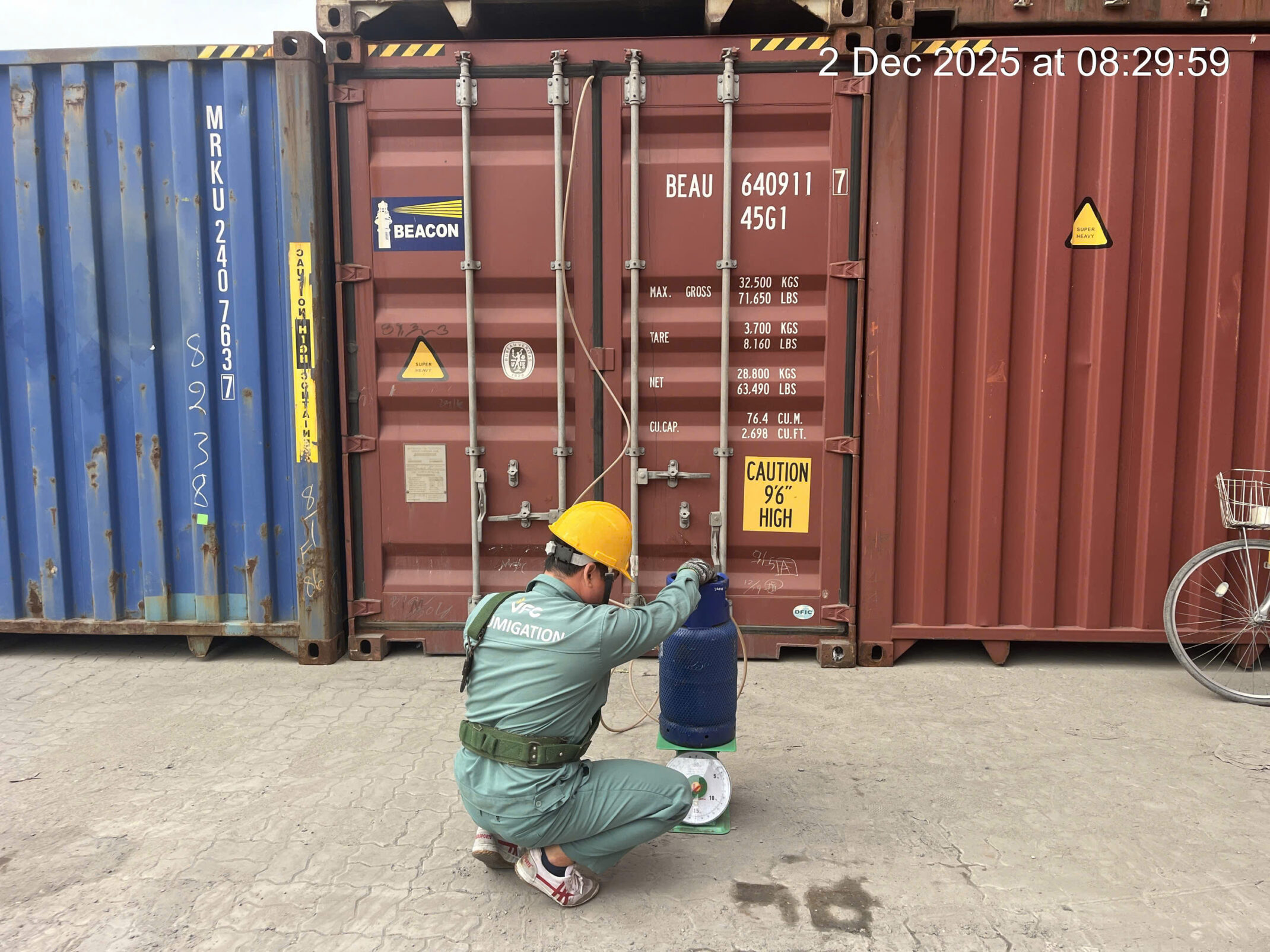
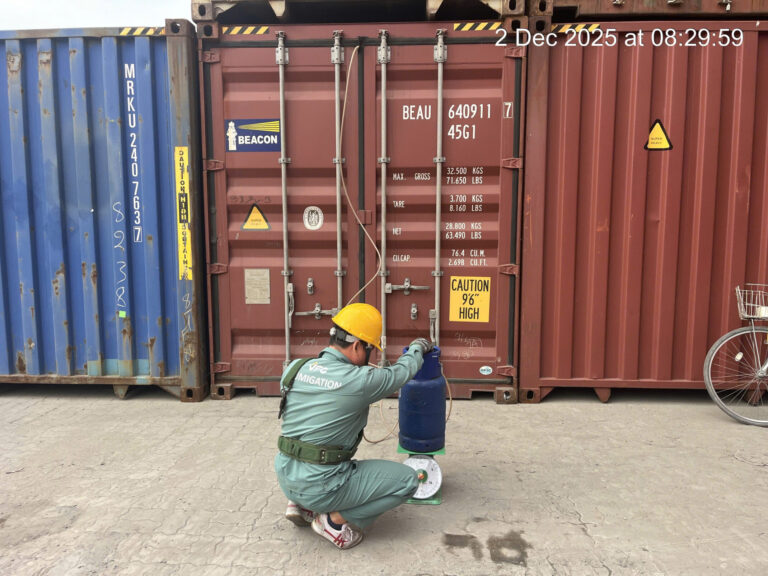
After the cargo is loaded into the container, VFC's technical team will perform fumigation according to the technical process:
- Install gas supply lines, concentration monitoring lines, and circulation fans.
- Close the container doors and seal ventilation holes or door gaskets (if necessary).
- Inject the fumigant CH₃Br – Methyl Bromide according to the prescribed dosage.
- Perform gas leak tests and rectify them if necessary.
- Post safety warning signs.
- Monitor and measure the gas concentration inside the container.
The layout of supply lines, monitoring points, circulation fans, and sealing solutions should be adjusted according to the structure of the shipment. Businesses should provide the loading diagram and container completion schedule to receive advice on an appropriate export container fumigation plan using Methyl Bromide.
Step 4: Fumigation Duration
After gas injection, the container will be kept sealed throughout the fumigation period.
The fumigation period typically lasts from 24–48 hours, depending on:
- Type of goods
- Customer requirements
- Importing market regulations
The actual treatment time needs to be determined based on cargo type, temperature, quarantine requirements, and approved plan. For shipments to Australia, businesses should also check notes on fumigating export goods to Australia before finalizing loading schedules and vessel schedules. Maintaining the container in a sealed state helps ensure the effectiveness of eliminating pests.
Step 5: Aeration and Safety Check
Upon completion of the fumigation duration and when the treatment concentration meets requirements, the container will be aerated.
The steps include:
- Open the container doors and remove sealing materials.
- Ventilate the air inside the container.
- Check the gas concentration using specialized equipment.
- Ensure the concentration reaches the safe threshold (TLV).
- Collect fumigation materials and remove warning signs.
After completion, the container is ready for the transport process.
Step 6: Issuance of Fumigation Certificate
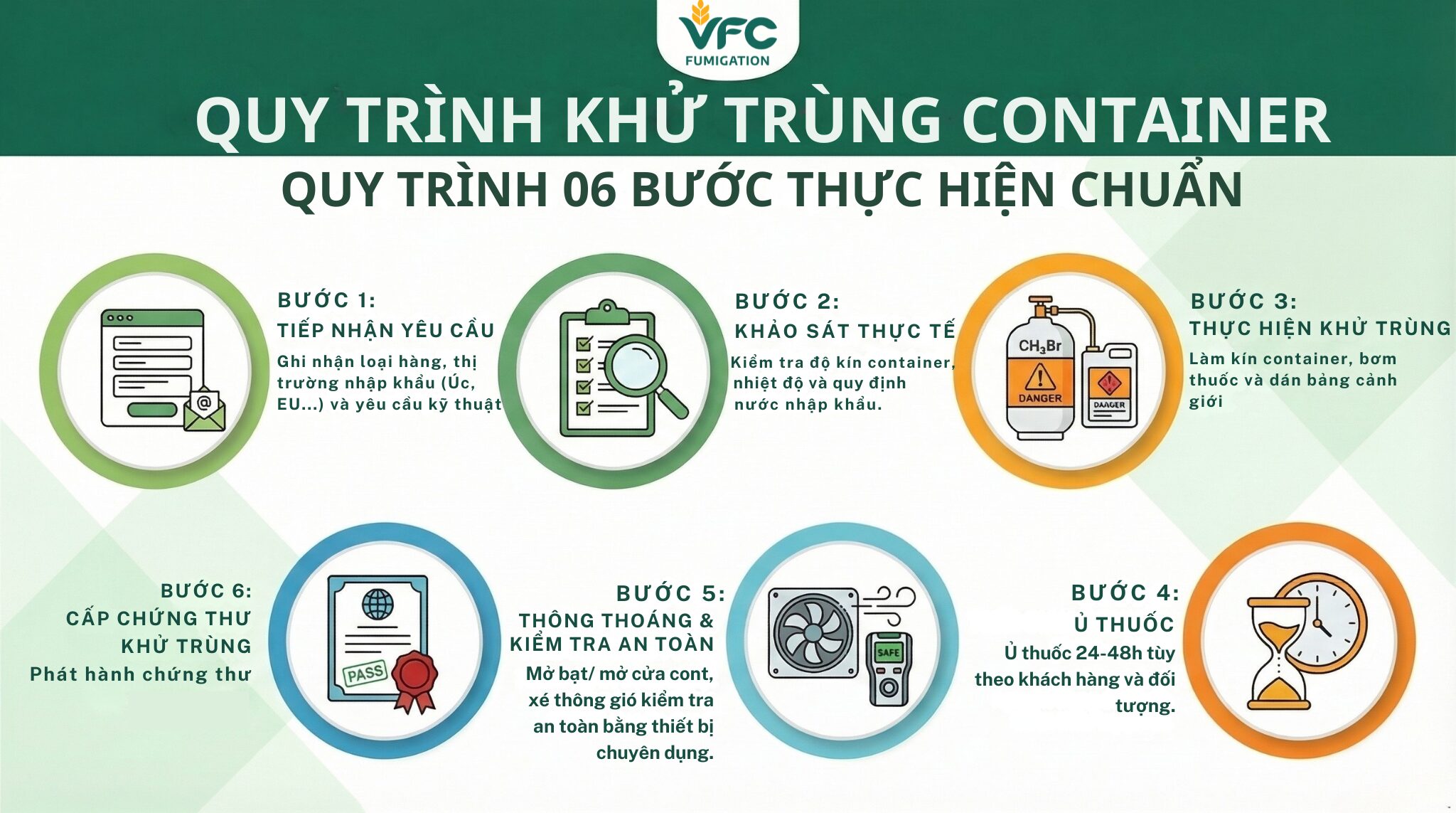
After the treatment process is complete and all technical requirements are fully met, VFC will issue a Fumigation Certificate according to the regulations of the importing market.
This certificate is an important part of the export documentation, helping goods be received and smoothly cleared through customs at the destination port. In addition to having a certificate, businesses need to ensure that the information on the documentation is consistent with the shipment and can be cross-checked during inspections. You can learn more about VFC Fumigation's transparent fumigation model and certificate authentication.
If you have not determined whether the shipment is subject to mandatory quarantine or treatment in the Australian market, businesses should check the list of export goods to Australia requiring quarantine before finalizing the documentation.
Each type of goods, packaging method, and import market may require a different treatment plan. VFC Fumigation receives shipment information, conducts surveys, develops plans, executes on-site, and issues documentation as required. See details of containerized export cargo fumigation services.
SECTION
01