





Category:
Fumigation for Australia/New Zealand-bound cargo
Fumigation by Market

Published date:
31/07/2026
Share




Australia is one of the most promising trade markets, but it also has one of the strictest biosecurity laws in the world, managed by the Department of Agriculture, Fisheries and Forestry of Australia (DAFF). Not every export product requires fumigation, but correctly identifying the commodity group, quarantine regulations, packaging materials, and import conditions is essential for businesses to prevent the risk of cargo detention, costly storage charges, compulsory retreatment, or re-export at the destination port.
1. Common groups of goods exported to Australia and DAFF quarantine requirements
The Department of Agriculture, Fisheries and Forestry of Australia (DAFF) classifies biosecurity requirements based on the level of risk each product group may pose in introducing invasive pests. Understanding the specific technical criteria helps cargo owners and forwarder/logistics companies proactively plan treatment methods and prepare accurate documentation before container drop-off.
1.1 Agricultural products, seeds, and dried food products (coffee, cashew nuts, pepper, rice, medicinal herbs)
Vietnam currently holds a leading position in the export volume of cashew nuts, coffee, pepper, rice, and raw medicinal herbs to Australia. Due to their natural plant origin, this group is always subject to strict biosecurity inspection.
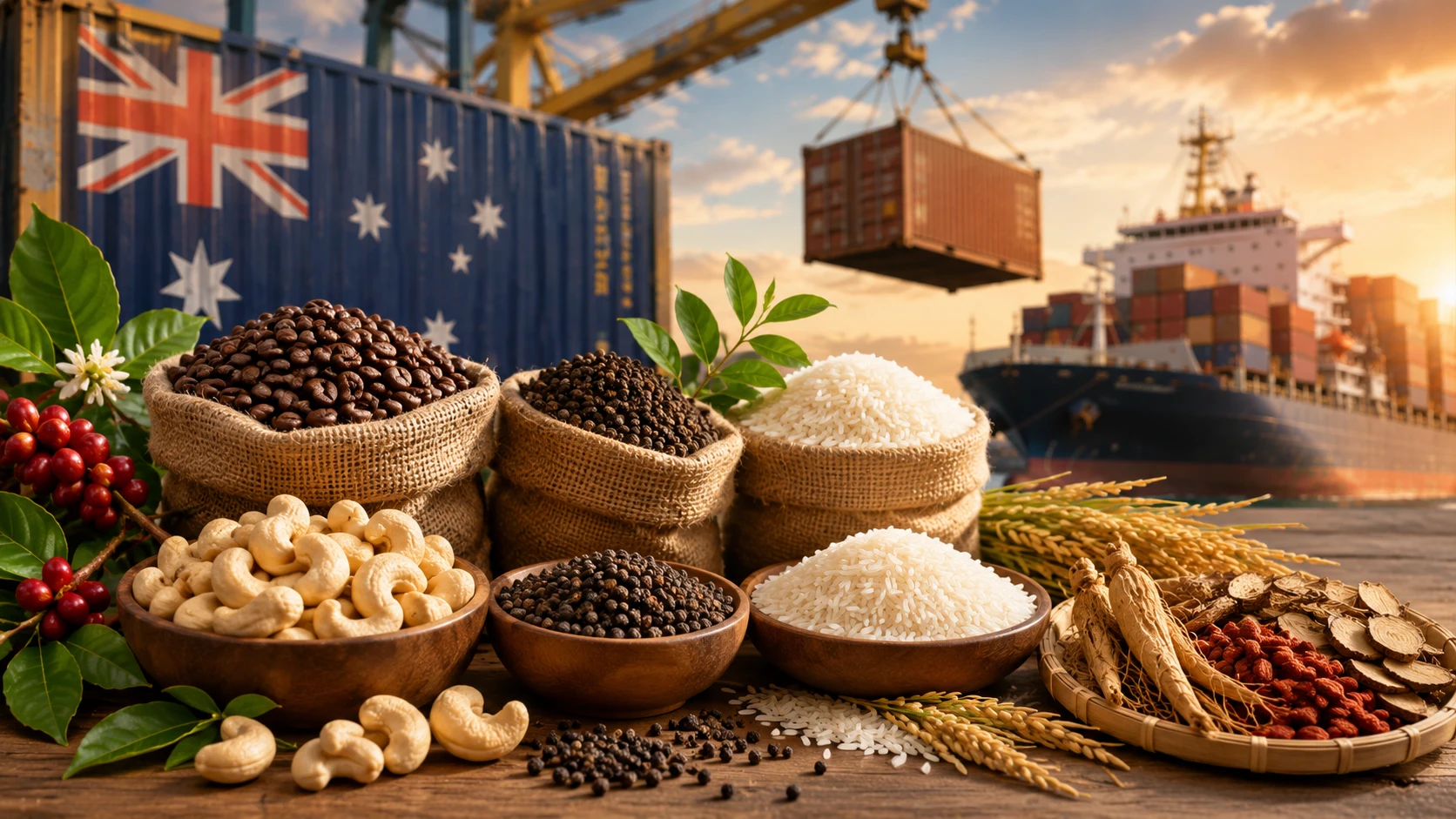
Nhóm nông sản, hạt, thực phẩm khô
- Pest eradication treatment: The shipment must undergo Methyl Bromide fumigation, which is the only active ingredient approved under AFAS standards in Vietnam. The treatment must be carried out by registered service providers holding an official AEI number.
- Sanitation standards and certificates: The shipment must be free from impurities, soil, sand, and weed seeds. It must be accompanied by a phytosanitary certificate issued by the Plant Protection Department of Vietnam and fully compatible with DAFF’s BICON database system.
For agricultural products and dried food products, businesses need to coordinate quarantine documentation, loading schedules, exposure time, and certificate issuance at the same time. You can refer to the A–Z process for fumigating export cargo to Australia to understand all the preparation steps required.
1.2 Bamboo and rattan products, sedge, water hyacinth, and handicrafts made from natural materials
Bamboo and rattan products, sedge mats, handicrafts made from water hyacinth, palm leaves, and raw bark are among Vietnam’s strong export products, but they are also considered very high-risk in terms of biosecurity.

Nhóm hàng mây tre đan, cói, đồ thu công mỹ nghệ làm từ nguyên liệu tự nhiên
- Potential risks: Natural plant fibers that have not been deeply processed provide an ideal habitat for stem-boring insects, weevil eggs, and mold spores.
- Treatment requirements: 100% of shipments in this group must undergo Methyl Bromide fumigation in accordance with the dosage, temperature, and exposure time required under AFAS standards before container loading.
The treatment plan also depends on the structure of the packages, tightness, and material characteristics. Businesses can refer to the Methyl Bromide container fumigation process before arranging the loading schedule.
1.3 Wood products, furniture, and wooden packaging/dunnage materials
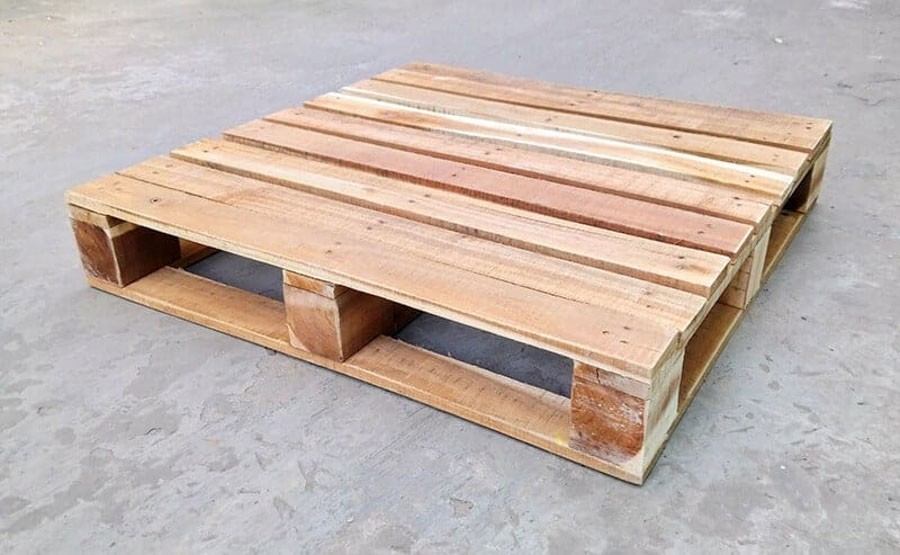
For wood products and wooden packaging exported to Australia, quarantine regulations clearly distinguish between two categories:
- Wood packaging materials (WPM): All wooden pallets, wooden crates, and raw wooden dunnage materials must be treated according to international standards. For the Australian market, VFC Fumigation always advises customers to apply synchronized treatment under AFAS standards using Methyl Bromide to minimize quarantine risks at the destination port.
- Finished wood products: Household furniture and wooden handicrafts must be completely free from bark and treated to prevent wood-boring insects and termites. If the amount of bark exceeds the threshold permitted by DAFF, the entire shipment will be refused customs clearance. (Note: Engineered wood such as plywood, MDF, and OSB that has undergone high-pressure heat processing is exempt.)
For pallets, wooden crates, and wooden packages, businesses should separately check the requirements for treating pallets and wooden packaging under ISPM 15 standards, rather than only checking the goods inside.
1.4 Machinery, equipment, metal goods, and mechanical spare parts
The export proportion of industrial machinery, equipment, transport vehicles, and mechanical spare parts to Australia is growing strongly. The quarantine risk of this group focuses on two key factors:
- Surface sanitation control: Machinery, especially used equipment, must be pressure-washed and completely cleaned of mud, soil, dirty grease, plant residues, and weed seeds.
- Brown Marmorated Stink Bug (BMSB) control requirements: If the shipment falls under the high-risk goods category and is transported during the BMSB peak season, from 1 September to 30 April of the following year, the cargo owner must carry out pest eradication treatment under the BMSB-AusTreat program before the vessel leaves the port of departure. The list of target goods, seasonal period, and requirements for treatment providers are presented in the BMSB-AusTreat regulation guide for exports to Australia and New Zealand.
1.5 Agricultural products and wood pellets exported by bulk vessel
In addition to containerized cargo, Vietnam exports large volumes of bulk rice, bulk agricultural products, and wood pellets to international markets by specialized sea vessels.
- Technical characteristics: Large cargo volumes located deep inside vessel holds may create blind spots if fumigant is only applied at the surface.
- VFC Fumigation solution: VFC applies a long-distance vessel fumigation process in accordance with IMFO standards. VFC Fumigation is the only representative in Vietnam belonging to IMFO and applies the J-System gas circulation system to ensure 100% uniform fumigant distribution down to the bottom of the vessel hold, eliminating weevils while ensuring absolute safety throughout the sea voyage.
1.6 Textiles, footwear, and consumer goods
Textiles, garments, footwear, plastic products, and general consumer goods are classified as low biosecurity-risk goods and are not required to be fumigated, except in the following cases:
- Products contain decorative details made from animal fur, rawhide, seeds, or natural shells.
- The shipment uses untreated raw wooden pallets for loading.
If the shipment contains multiple material types or the business has not yet identified which items require treatment, it can refer to common types of goods that often require fumigation before export..
2. Quarantine regulations under the BICON lookup system and AFAS / AusTreat standards
Australia does not apply a simple visual inspection process. Instead, all imported shipments must comply with a strict legal framework.
2.1 BICON import condition lookup system
BICON, or Biosecurity Import Conditions, is the official biosecurity import condition database operated by DAFF. Businesses enter the HS Code or scientific name of the product to determine import conditions and check whether the goods can be imported freely or require an import permit applied for by the buyer in Australia before the cargo leaves the port in Vietnam.
2.2 AFAS fumigation standard (Australian Fumigation Accreditation Scheme)
The Australian Government only recognizes quarantine certificates issued by service providers listed in the DAFF-approved provider list and holding a valid AEI number. AFAS certificates must fully and accurately record the actual technical parameters implemented, including dosage, ambient temperature, exposure time, ventilation time, and concentration monitoring results, according to the official form of the Australian Department of Agriculture.
See more: What is AFAS and 5 important things to know when exporting to Australia..
2.3 BMSB control regulations under the AusTreat program
- Fixed BMSB season: Applied from 1 September of the previous year to 30 April of the following year, based on the date the cargo is loaded onto the vessel.
- Requirement: High-risk shipments to Australia must be treated by a BMSB-AusTreat certified provider. In Vietnam, VFC Fumigation has the capability to register and implement standard-compliant BMSB treatment using Methyl Bromide.
Learn more: Complete BMSB-AusTreat control regulations when exporting to Australia.
3. Mandatory considerations to avoid penalties, cargo detention, or re-export at Australian ports
When containers arrive at major Australian seaports such as Sydney, Melbourne, Brisbane, or Fremantle, DAFF will review the documentation and conduct on-site inspection. Businesses need to pay special attention to the following:
- Accurately declare biosecurity information: All information on the Packing List, Commercial Invoice, and Bill of Lading must match the fumigation certificate 100%. Even a one-character discrepancy in the container number or seal number may invalidate the certificate, resulting in costly container detention and storage charges in Australia.
- Plan fumigation according to the shipping schedule: Methyl Bromide fumigation requires 24–48 hours of gas exposure, plus additional time for safe ventilation and inspection. Arranging fumigation too close to the cut-off time may increase the risk of missing the vessel schedule.
- Apply moisture and mold prevention solutions for sea transport: The voyage to Australia is long and can easily cause condensation, leading to mold on wooden products and agricultural commodities. Businesses should combine container wall/ceiling paper lining with specialized desiccant bags alongside fumigation to establish a comprehensive protection layer.
- Ensure data transparency and certificate verification via QR Code: VFC Fumigation applies the 2-layer transparent fumigation model, allowing Australian Customs to immediately cross-check the original certificate stored on the system and eliminate concerns over certificate forgery.
Cẩm nang tra cứu tổng thể: Tổng hợp những điều bạn cần biết về khử trùng hàng đi Úc mới nhất.
4. Frequently asked questions about quarantine and fumigation for cargo exported to Australia
Question 1: How can I check whether my agricultural product requires an import permit from DAFF?
Answer: Businesses can directly look up the HS Code or scientific name of the product on the BICON system of the Australian Department of Agriculture to determine whether the product can be imported freely or requires an import permit.
Question 2: Does Australia accept fumigation certificates issued by ordinary service companies?
Answer: Absolutely not. Australia only accepts certificates from providers with an AEI number listed in the AFAS system publicly approved by DAFF. Certificates issued by providers outside this system will be considered invalid, and the container will be held at the Australian port for retreatment at very high cost or may be re-exported.
Question 3: Do carton-packed garments exported to Australia on plastic pallets need to be fumigated?
Answer: If both the cartons and pallets are made from plastic or synthetic materials and the shipment is not transported during the BMSB peak season, fumigation is not mandatory. However, if the container contains even one untreated raw wooden dunnage piece, the entire container will be subject to biosecurity control.
Question 4: Is the BMSB peak season for Australia calculated based on the vessel departure date or the arrival date at the Australian port?
Answer: BMSB-AusTreat regulations are calculated based on the date the cargo is loaded onto the vessel at the export port.
Question 5: Which fumigation method is mandatory for bamboo and rattan handicrafts exported to Australia?
Answer: Bamboo and rattan products, sedge, and water hyacinth products must be fumigated with Methyl Bromide (MB) according to the standard AFAS dosage in order to eliminate live pests hidden inside natural fibers.
5. VFC Fumigation - A trusted provider of AFAS & AusTreat-compliant fumigation solutions
With more than 50 years of establishment and development, VFC Fumigation( Vietnam Fumigation Joint Stock Company) is a pioneering leader in high-tech fumigation. We provide exporters to Australia with comprehensive risk management solutions:
- International certification capability: VFC officially holds an AEI number under the AFAS program, is qualified to perform BMSB-AusTreat treatment for Australia-bound cargo, and applies advanced gas circulation technology.
- 2-layer transparent digital management:
- Layer 1 (internal management via FumiApp): All on-site images, exposure time, and actual gas concentration readings (ppm) are automatically recorded.
- Layer 2 (electronic verification via QR Code): Certificates issued by VFC Fumigation integrate a QR Code, allowing DAFF authorities in Australia to scan and directly cross-check the certificate, ensuring 100% smooth customs clearance.
CONSULTATION AND QUOTATION CONTACT INFORMATION:
- Hotline/Zalo: 0914.773.300
- Email: contact@fumigation.vn
![Cẩm nang khử trùng hàng đi Úc: Tất cả những điều doanh nghiệp cần biết [2026]](https://fumigation.vn/wp-content/uploads/2026/07/cam-nang-nhung-dieu-ban-can-biet-ve-khu-trung-hang-di-uc.webp)
Featured Knowledge

Related Knowledge