






Category:
Standards & Regulations

Published date:
17/03/2026
Share




In export operations, many businesses focus on controlling product quality, packaging, and documentation but overlook a seemingly minor factor: the ISPM 15 mark on pallets and wooden packaging materials. In reality, just one incorrectly formatted, blurred, or invalid mark can cause an entire container of goods to be refused entry at the destination port.
1. What is ISPM 15?
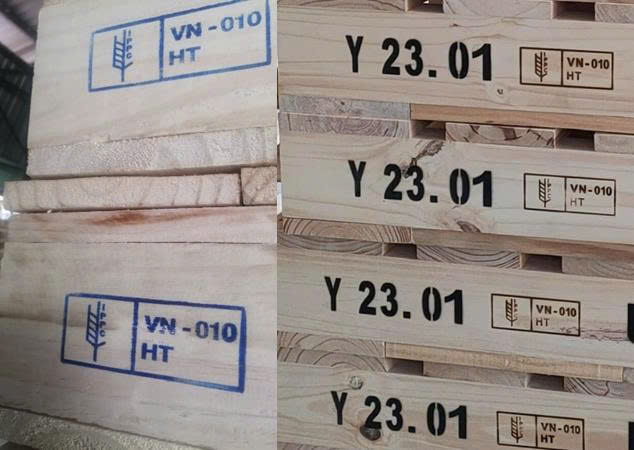
ISPM 15 stands for International Standards for Phytosanitary Measures No. 15 – an international standard for phytosanitary measures applied to Wood Packaging Material (WPM) in international trade.
This standard was developed to limit the spread of pests that can exist inside wood, such as wood borers, stem borers, or other pests capable of damaging the ecosystem of the importing country. In practice, wooden pallets, crates, or dunnage are very commonly used in logistics due to their durability and reasonable cost. However, if not properly treated, these materials can become "vehicles" for pests to travel between countries.
Therefore, ISPM 15 requires that all wooden packaging materials used in international transport must be treated to kill pests before export and be stamped with a certification mark according to international standards.
Businesses can also check the ISPM 15 standard for export wooden pallets to understand the applicable material scope, treatment requirements, and steps to prepare before loading containers.
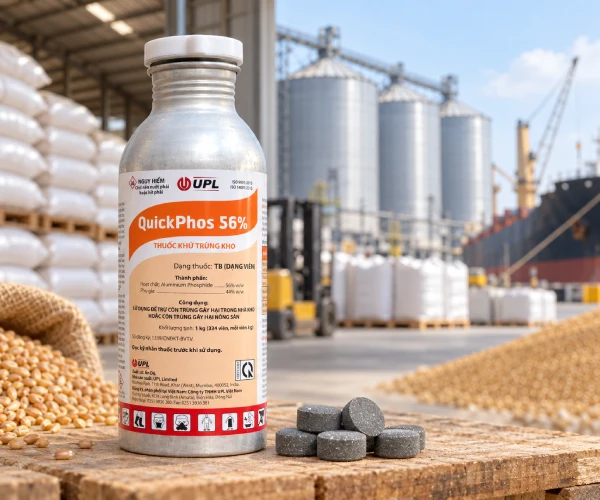
The ISPM 15 mark only confirms the treatment for pallets, crates, or wooden dunnage. If the goods inside are also subject to quarantine or pest treatment requirements, businesses need to separately check types of goods that usually require fumigation before export.
2. Wood treatment methods under ISPM 15
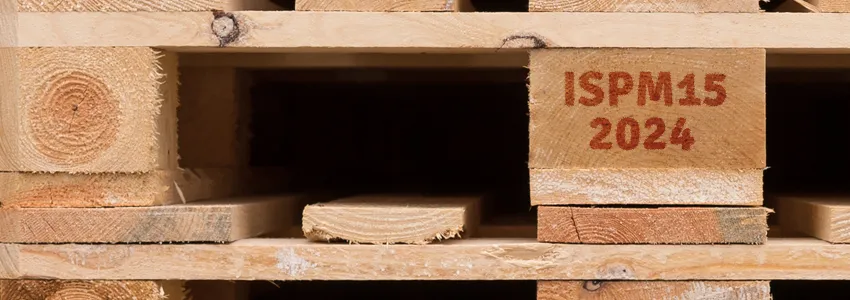
To meet ISPM 15 standards, pallets and wooden materials must undergo a treatment process to completely eliminate insects and larvae that may exist within the wood structure.
Currently, the two most common methods are: Heat Treatment (HT) and Fumigation using Methyl Bromide (MB).
With heat treatment, the wood is placed in a treatment chamber and heated to a standard temperature for a specific duration. This process kills eggs, larvae, and adult insects that may be hidden deep within the wood grain. This is a widely used method due to its stability and environmental friendliness compared to chemical fumigation.
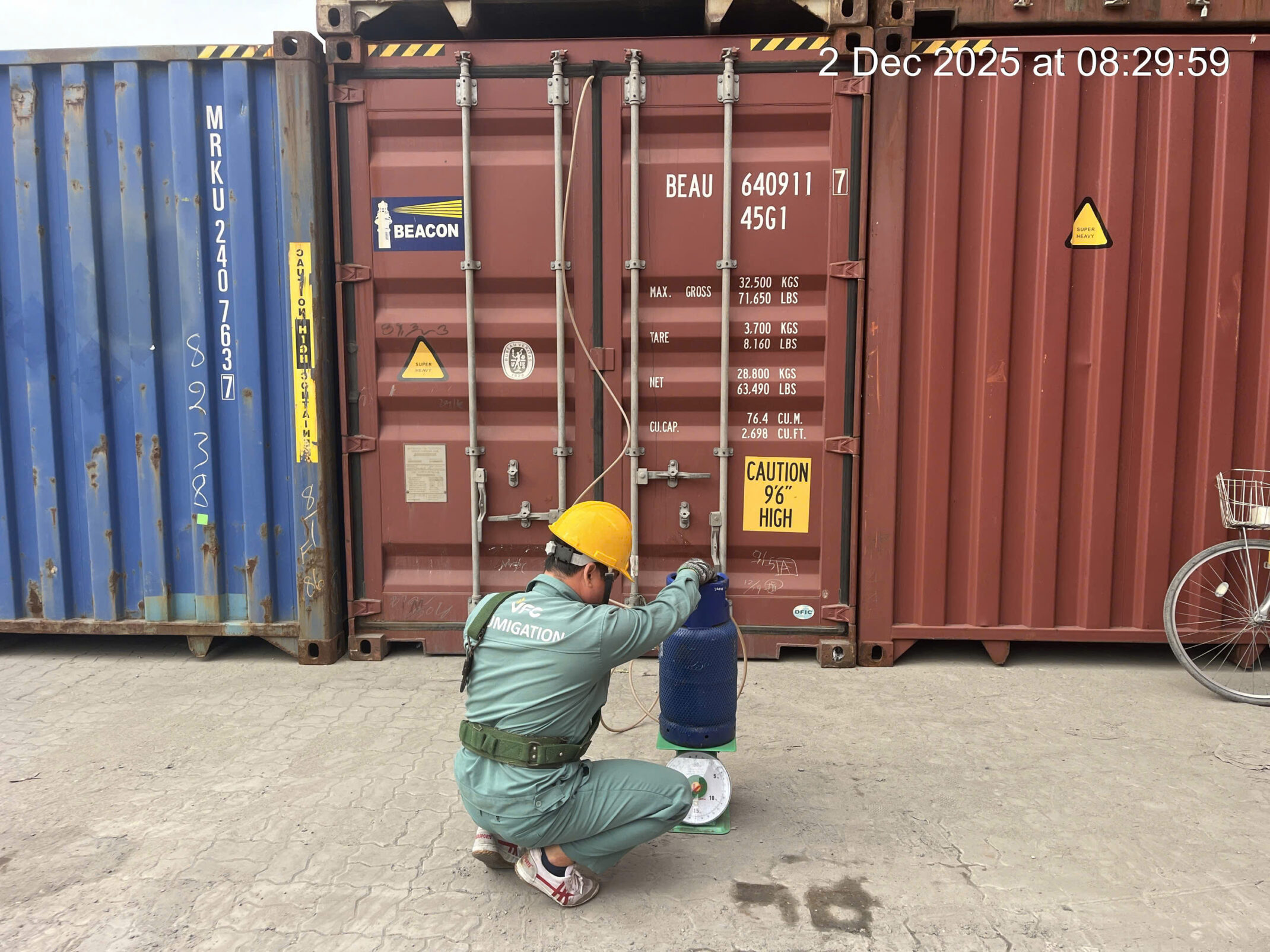
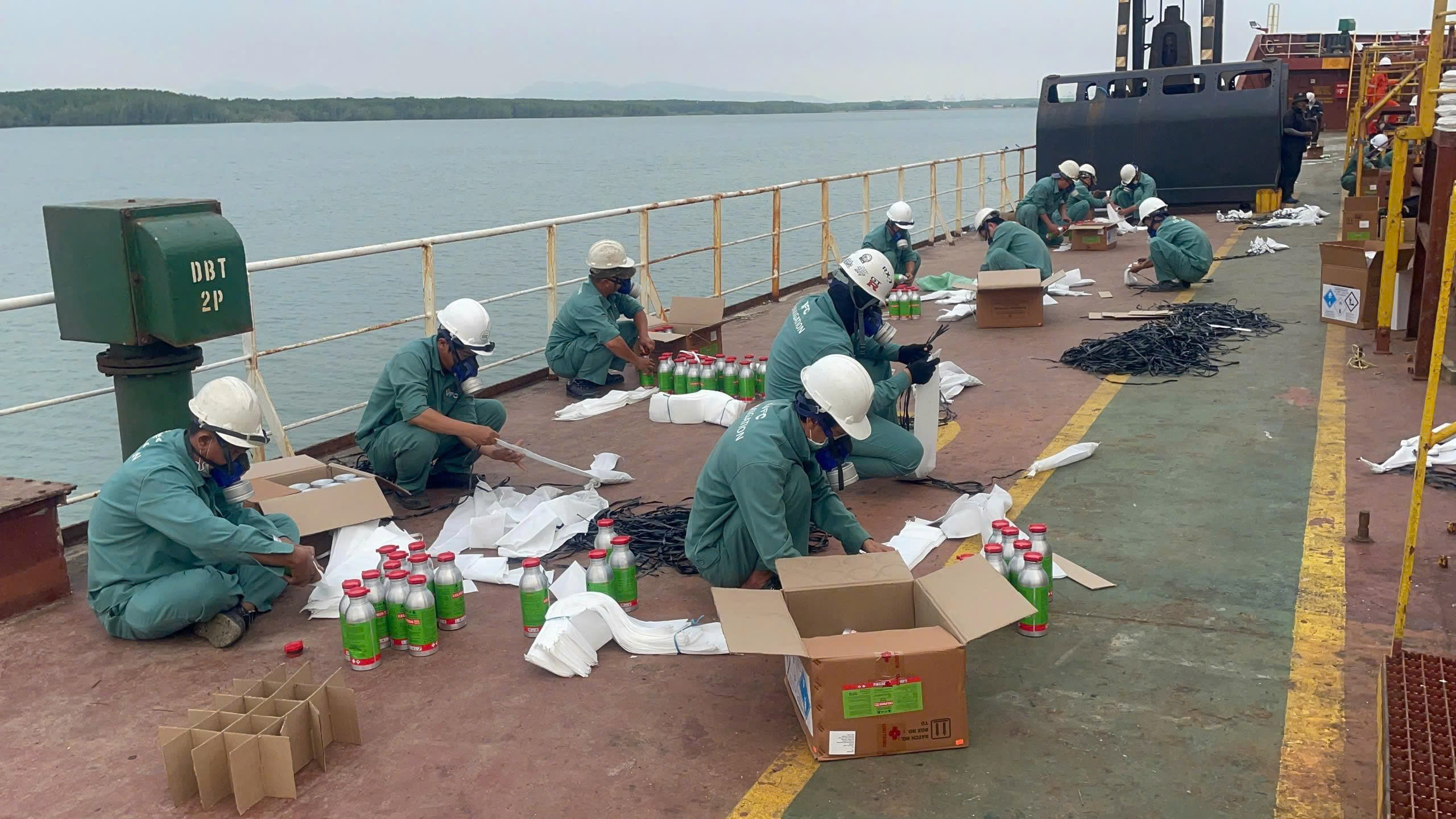
The second method is fumigation with methyl bromide, which is usually applied when wooden materials have not undergone heat treatment or require rapid treatment for export shipments. Methyl bromide gas has the ability to penetrate deeply into the wood structure, helping to eliminate remaining harmful pests. If wooden materials are treated using the fumigation method, businesses can review the container fumigation process using Methyl Bromide to understand the steps of surveying, sealing, gas injection, exposure period, aeration, and certificate issuance.
After the treatment process is complete and meets the standards, the wooden material is allowed to be stamped with the ISPM 15 mark to confirm that the treatment was carried out according to regulations.
Learn more: Methyl bromide gas detector
3. What information does the ISPM 15 mark display?
The ISPM 15 mark is not merely a symbol on the wood surface but is proof confirming that the phytosanitary treatment process has been performed correctly.
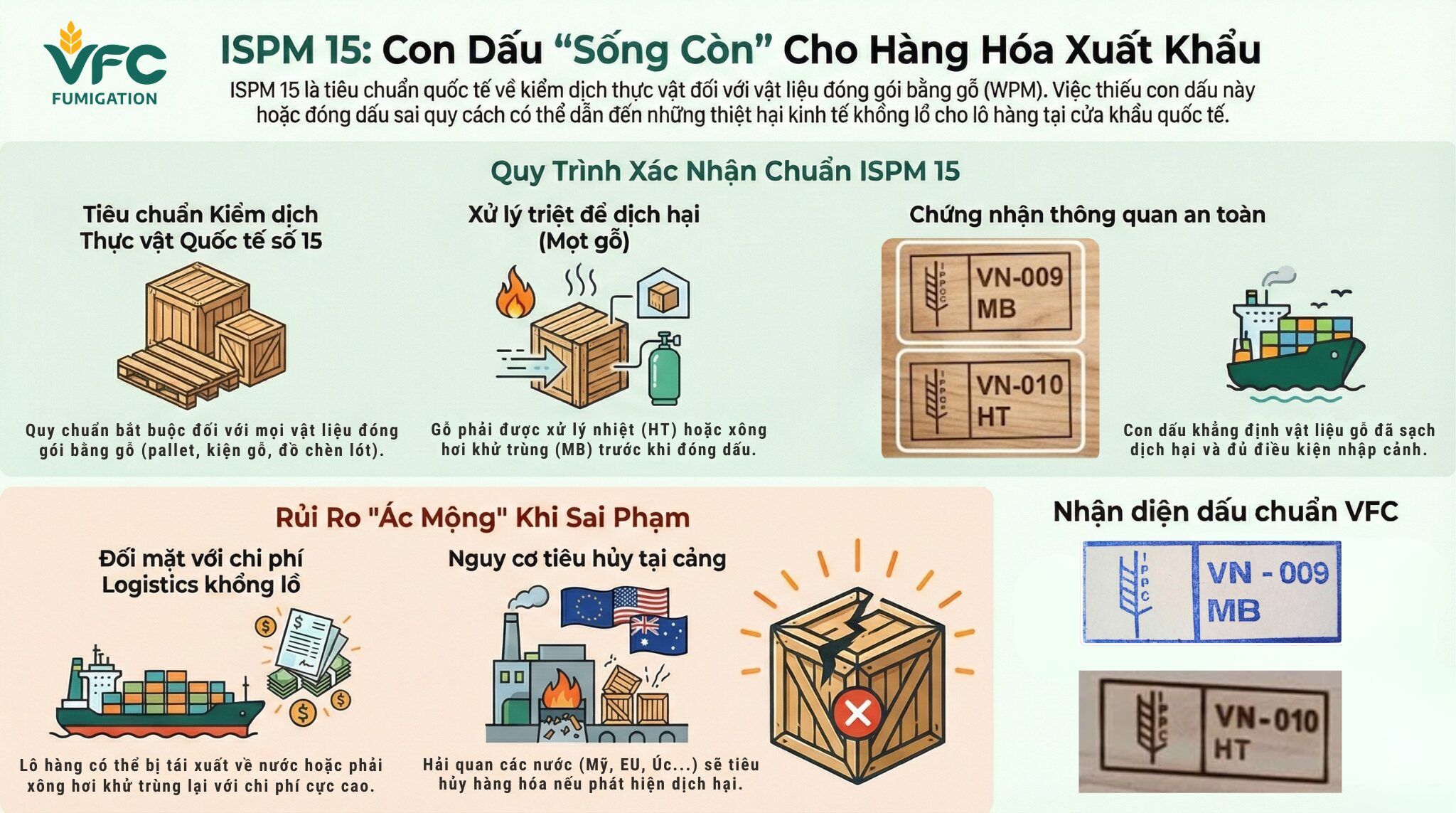
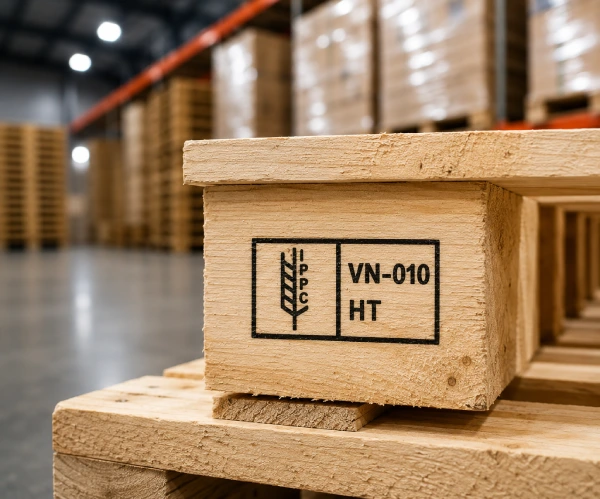
A valid ISPM 15 mark typically includes:
- IPPC Symbol (International Plant Protection Convention)
- Country Code where the treatment was performed (e.g., VN for Vietnam)
- License Number of the Treatment Facility
- Treatment Method (e.g., HT or MB)
If pallets, crates, or dunnage have not been treated, or if the current mark is blurred, incorrect, or difficult to verify, businesses should double-check with the provider of pallet and wooden crate treatment services according to ISPM 15 standards before loading containers.
Thanks to this information, the plant quarantine authority in the importing country can quickly determine that the pallets or wooden materials of the shipment have been treated in accordance with international standards. In addition to the issued code number, businesses should evaluate the implementation capacity according to the loading schedule, documentation quality, and how the service provider handles arising situations. These are criteria for selecting an export cargo fumigation provider that need to be checked prior to cooperation.
It can be said that the ISPM 15 mark acts as a "passport" for wooden materials in international trade.
4. Why can the ISPM 15 mark decide the fate of a shipment?
During container inspection at the destination port, pallets and wooden packaging are often among the first items checked by customs and quarantine authorities. If an invalid ISPM 15 mark is detected, the shipment may be immediately held for further inspection.
The most common case is that the container is required to be re-exported to the country of origin. This forces businesses to bear additional costs for transport, container demurrage, storage, and other related fees. Beyond financial losses, re-exporting disrupts delivery schedules and affects reputation with partners.
In more serious situations, if quarantine authorities detect signs of pests in pallets or wooden crates, the shipment may be destroyed immediately at the port of entry to prevent biological risks.
Some other cases may be required to undergo re-fumigation at the destination port. However, treatment costs at the port are often much higher than treating it from the beginning at the exporting country. Additionally, this process extends customs clearance time, causing delays for the entire supply chain.
5. What should export businesses note?
In reality, many incidents related to ISPM 15 do not come from businesses intentionally violating the rules, but from minor details such as the stamp being too blurred, covered by labels, or pallets being replaced at the last minute without being checked.
Therefore, before the container is sealed and transported to the port, businesses should carefully check that all pallets, wooden crates, and dunnage materials have been treated according to ISPM 15 standards and bear clear, compliant markings. Before sealing the container, re-check the pallet type, surface condition, IPPC mark, provider code, treatment method, and any last-minute added dunnage materials. See the guide on how to select and inspect export pallets before loading goods.
In international trade, seemingly small details can sometimes create huge risks. The ISPM 15 mark is a classic example of that. Full compliance with this standard not only helps businesses avoid legal risks but also ensures that the transport and customs clearance of goods proceed smoothly.
You may be interested in: ISPM 15 - Pallet/Wooden packing
Featured Knowledge


Related Knowledge