





Published date:
28/09/2026
Share




According to regulations of the Australian Department of Agriculture, Fisheries and Forestry (DAFF), machinery, iron and steel, and wood articles all belong to the Target High Risk Goods category subject to mandatory BMSB treatment if originating from or transiting through a target risk country during the seasonal measures period (1 September to 30 April). In particular, break-bulk cargo must strictly be treated prior to departure, as Australia prohibits the onshore treatment of break-bulk cargo at destination ports.
1. What Are Goods Subject to BMSB Measures? Classification under DAFF Regulations
The Brown Marmorated Stink Bug (Halyomorpha halys – BMSB) seasonal management program is a biosecurity measure applied during the timeframe from 1 September to 30 April of the following year, determined by the shipped-on-board date.
Target High Risk Goods – Mandatory Treatment
Comprises industrial, mechanical, and material commodity groups featuring numerous crevices and sheltered recesses favorable for insect harborage:
- Commercial timber, wood articles, and cork material.
- Carpets and other textile floor coverings.
- Articles of stone, plaster, cement, ceramic products, and glass.
- Iron and steel and fabricated structural iron and steel products.
- Non-ferrous metals (aluminium, copper, lead, zinc) and base metal tools.
- Boilers, mechanical machinery, electrical equipment, and industrial components.
- Railway rolling stock, motor vehicles, construction tractors, ships, and boats.
Target Risk Goods – Random Monitoring
- Comprises: Chemicals, plastics and rubber, paper and paperboard, textiles and garments…
- Applicable policy: Goods in this category are not subject to mandatory pre-export treatment, but will be subject to random probabilistic inspection upon arrival at Australian ports. If biosecurity officers detect live stink bugs, the entire container will be detained for treatment or directed for export (mandatory re-export).
2. Analysis of Technical Requirements for Specific Export Commodity Groups
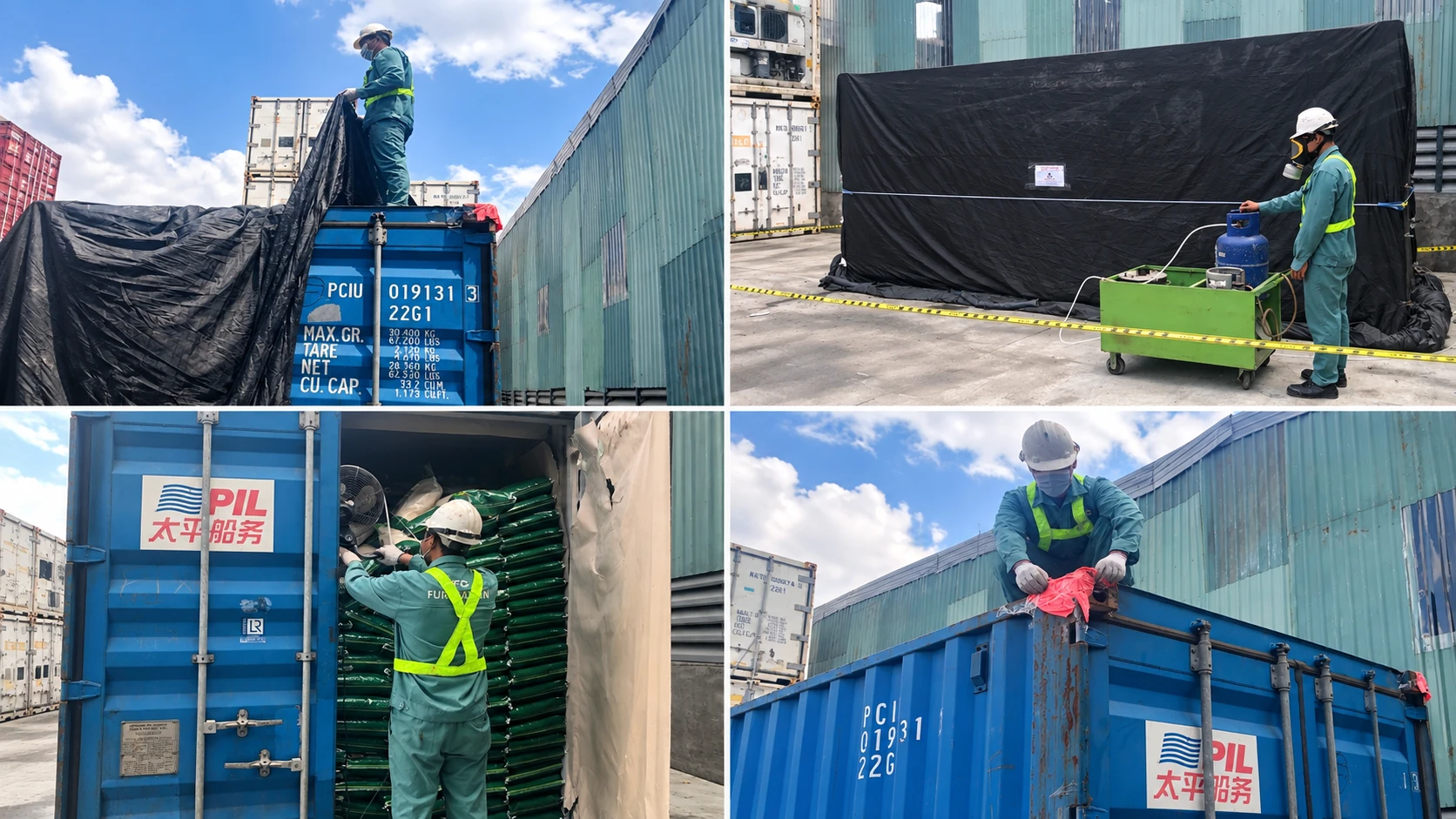
Break-bulk cargo subject to BMSB measures must be treated prior to loading onto vessels bound for Australia
Each commodity type possesses unique structural characteristics, requiring accurate risk-management treatment solutions.
2.1 Break-bulk cargo, equipment loaded on Flat Racks or Open Tops
- Mandatory offshore treatment requirement: Break-bulk cargo categorized under Target High Risk Goods must undergo compliant quarantine treatment prior to vessel loading.
- Prohibition of onshore treatment at destination: Australia strictly does not permit BMSB-regulated break-bulk cargo to arrive at ports for onshore treatment. Non-compliant cargo will be refused discharge and directed to turn back at sea.
- 120-hour window: For consignments treated between 1 September and before 1 December, all vessel loading operations must be completed within 120 hours following the completion of fumigation and safe ventilation.
2.2 Mechanical machinery, assembly lines, transport vehicles
- This commodity group ranks among the highest risk levels because machine housing structures, engine compartments, and control panels offer countless secluded shelter spots for stink bugs.
- Dual-cleanliness requirement: In addition to the BMSB certificate, the Australian Department of Agriculture requires machinery (especially used agricultural machinery and construction equipment) to be thoroughly cleaned of all soil, mud, grease, and weed seeds prior to fumigation and containerization.
2.3 Construction steel, steel pipes, steel coils, structural beams
- Section steel, hollow structural tubes, or bundled construction rebar have the potential to harbor insects within the narrow gaps between tightly bound steel bars.
- When subject to seasonal control, consignments must be treated using a DAFF-recognized method, accompanied by certificates synchronized on the importing country's management system.
2.4 Wooden furniture and wood handicraft products
- For commercial timber and wood products: Classified under Target High Risk Goods, they must adhere to standard phytosanitary regulations and BMSB mandates if risk factors exist within the supply chain.
- For wood packaging/dunnage materials: To ensure consignments clear customs safely and smoothly in Australia, VFC Fumigation advises enterprises to implement container and complete dunnage fumigation under AFAS standards. AFAS-standard fumigation performed by an AEI-registered entity is the optimal solution for synchronized quarantine records, minimizing cargo detention risks for physical inspection and preventing demurrage/storage charges at destination ports.
3. Are Shipments Exported from Vietnam Mandated for BMSB Treatment?

Shipments originating from Vietnam require reviews of component origins and shipping itineraries to determine BMSB requirements
Vietnam's Position on the DAFF Risk List
- Vietnam is not included in the list of target risk countries (Target Risk Countries) under the BMSB program (a list primarily comprising over 40 countries across the Northern Hemisphere: the United States, Europe, Japan, South Korea, China…).
- Consequently, commodities originating 100% in Vietnam, manufactured entirely from domestic raw materials, and containerized for direct export to Australia are, in principle, not subject to mandatory BMSB fumigation.
3 Cases Where Shipments Departing from Vietnamese Ports Are Still Mandated for BMSB Fumigation
- Case 1: Utilizing components and structural parts imported from target risk countries: Commodities processed or assembled in Vietnam (such as mechanical machinery, steel structures) that incorporate major components imported from Europe or the United States that have not undergone BMSB treatment.
- Case 2: Cargo in transit through Vietnam prior to entering Australia: Consignments manufactured in a target risk country but transhipped via Vietnamese seaports for packaging, consolidation, or awaiting vessel departure. A prominent example is the treatment project for wind turbine blades transiting through Vietnam for export to Australia.
- Case 3: Less-than-Container Load (LCL) consolidation or transhipment via target risk ports: Vietnamese cargo co-loaded in the same container with goods from a target risk country, or vessels calling at ports for loading/unloading operations or seal breaking in a target risk country during the peak season.
4. BMSB Treatment Measures for Break-Bulk Cargo, Machinery, Steel, and Wood in Vietnam
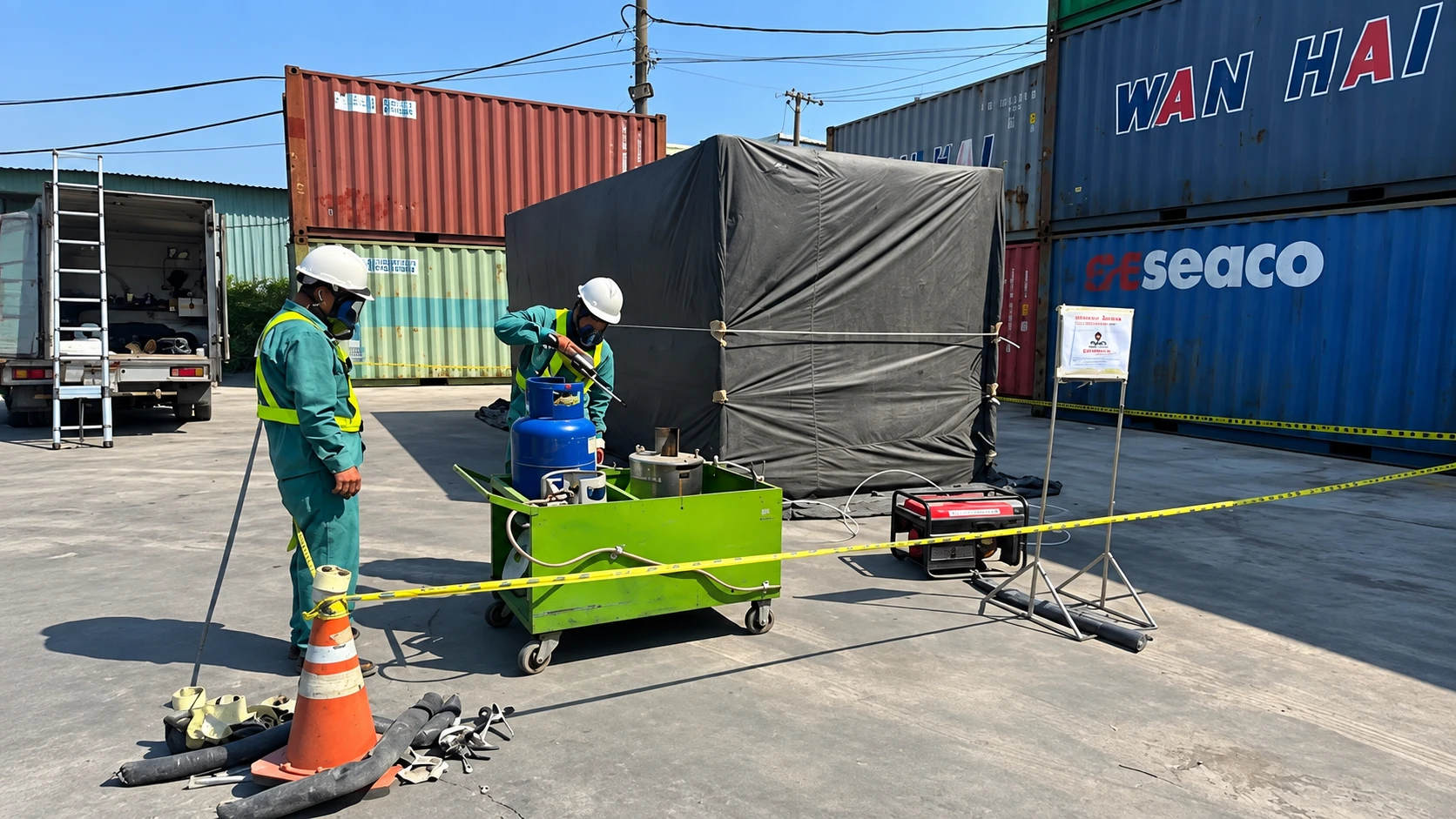
Methyl Bromide is the BMSB treatment solution applied in Vietnam
Fumigation using Methyl Bromide (MB) fumigant is the leading technical solution applied for industrial and mechanical commodity groups:
- Technical requirements: Fumigant dosage depends on the target commodity and the actual ambient temperature at the time of operation. Technicians must conduct standard gas concentration monitoring to guarantee that fumigant concentrations remain compliant throughout the treatment duration.
- In Vietnam: Vietnam Fumigation Joint Stock Company (VFC Fumigation) is the sole reputable entity registered and approved to perform BMSB treatments using Methyl Bromide fumigant for export cargo clearance.
5. Clearance Risk Control Checklist for Goods Subject to BMSB Measures
- Strict management of the 120-hour window: For break-bulk cargo or sealed containers treated prior to 1 December, goods must be loaded onto the vessel within 120 hours following the completion of fumigation. If the vessel is delayed beyond 120 hours, the consignment must undergo re-treatment from the beginning.
- Treatment provider must hold an active AEI code: Carefully verify the treatment provider's Agriculture Entity Identifier on DAFF's portal, ensuring the status is listed as "Approved".
- Data synchronization on the BMSB Portal: Ensure the treatment provider has directly uploaded treatment results and certification documentation to the Australian biosecurity authority's AusTreat system.
- 100% data consistency across shipping documentation: Container numbers, seal numbers, cargo descriptions, volume/weight, and Shipped on Board dates stated on the certificate must match the Ocean Bill of Lading (B/L) with 100% precision.
6. VFC Fumigation – The Sole Entity in Vietnam Licensed for BMSB Treatment for Exports to Australia and New Zealand
Faced with significant loss risks if consignments are denied port entry, selecting the right quarantine treatment provider is the decisive factor for every export enterprise:
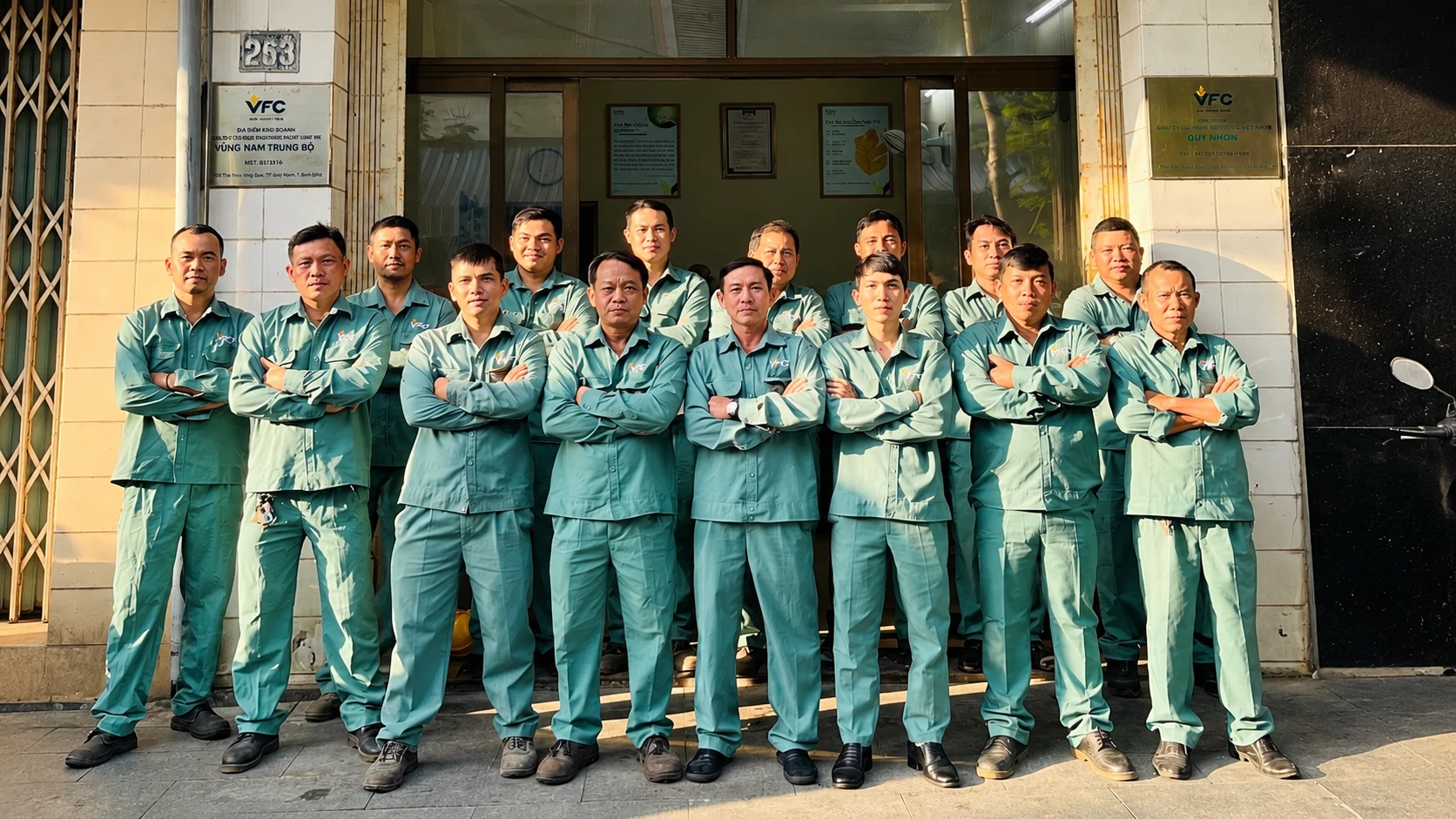
VFC Fumigation accompanies enterprises in BMSB treatment for goods exported to Australia and New Zealand
- Official accreditation from DAFF: VFC Fumigation is the premier entity in Vietnam approved by the Australian Department of Agriculture to participate in the BMSB-AusTreat scheme.
- International-standard treatment methodology: VFC Fumigation masters the BMSB treatment process utilizing Methyl Bromide fumigant.
- Guaranteeing customs clearance schedules: The technical team thoroughly commands every on-site operational parameter, directly handling the entry and synchronization of all valid data onto the BMSB Portal to ensure seamless cargo clearance.
- Extensive field experience: VFC Fumigation has directly executed treatments for thousands of containers containing wood furniture, machinery, industrial structural components, and out-of-gauge/project cargo across numerous rigorous BMSB seasons.
If your enterprise has not yet determined whether your consignment is subject to BMSB measures or requires AusTreat treatment, contact VFC Fumigation for tailored consultation based on your target export market, commodity classification, and shipping timeline. Our technical specialists will assist in checking treatment requirements, guiding documentation preparation, and arranging fumigation schedules aligned with your delivery plans:
- Hotline 24/7: 0914 773 300
- Email: contact@fumigation.vn
7. Frequently Asked Questions (FAQ) Regarding BMSB-Regulated Cargo
Question 1: Does steel exported from Hai Phong Port to Australia in sealed containers require BMSB treatment?
Answer: If the steel is produced in Vietnam from domestic billets and shipped directly to Australia, enterprises are not mandated to obtain a BMSB certificate. However, if the shipment incorporates components imported from a target risk country, or if shipping lines/buyers demand it to prevent supply chain risks, treatment should still be conducted.
Question 2: Why is break-bulk cargo governed more stringently than containerized cargo during the BMSB season?
Answer: Break-bulk cargo has a large surface area directly exposed to outdoor environments, making it highly susceptible to stink bug infestation and widespread dissemination during transit on deck or in open holds. Therefore, DAFF mandates that break-bulk cargo must undergo offshore treatment prior to loading and strictly prohibits onshore treatment at the destination port.
Question 3: How can one verify whether a treatment provider's AEI code is valid?
Answer: Enterprises should visit the List of treatment providers page on DAFF's official website (agriculture.gov.au) and search for the fumigation company's name to confirm that their AEI code holds an approved active status.






Related Blogs