





Published date:
25/08/2026
Share




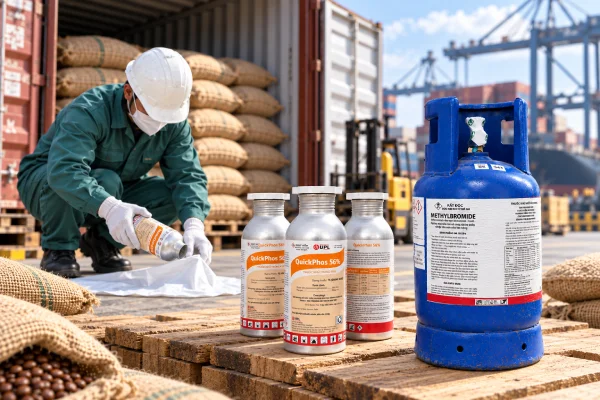
When shipping goods exported to Australia, enterprises must meet the strict biosecurity quarantine requirements of this market. In particular, AFAS standards play a crucial role and are a mandatory requirement for many commodity categories. Understanding the technical treatment specifications and preparing valid AFAS documentation will facilitate smoother customs clearance for goods exported to Australia, while minimizing the risk of cargo detention or forced re-export at the port of destination.
1. AFAS Standards and Quarantine Requirements for Goods Exported to Australia
- AFAS Definition: AFAS (Australian Fumigation Accreditation Scheme) is a fumigation accreditation program established and managed by the Australian Department of Agriculture, Fisheries and Forestry (DAFF). This scheme oversees the competence of treatment providers, the professional certifications of technicians, and the issuance of certificates for goods exported to Australia.
- Control and Inspection Mechanism: To maintain the integrity of the quarantine system, DAFF conducts periodic audits of AFAS treatment providers to assess their competency, equipment, and level of procedural compliance.
- Advisory Guidance from VFC Fumigation: Proactively complying with AFAS standards directly in the exporting country helps shipments of goods exported to Australia minimize the risk of intensive inspection or denied entry at the port of destination.
For shipments within the applicable scope, businesses should opt for container fumigation services to Australia under AFAS/BMSB performed by a provider holding a DAFF-recognized registration code.
2. Treatment Methods for Goods Exported to Australia Under AFAS Standards
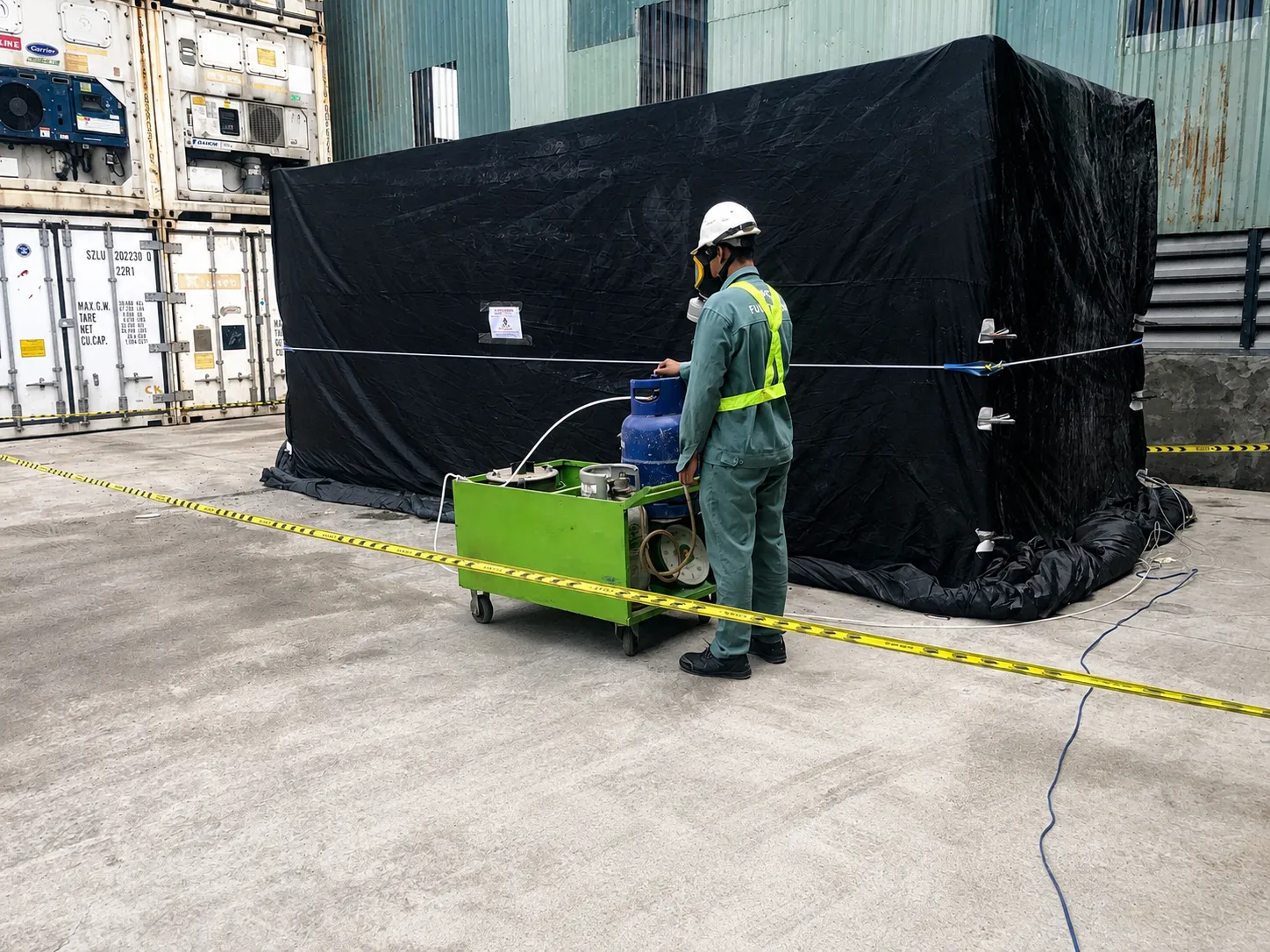
Methyl Bromide (MB) Fumigation Under AFAS Standards
- Applicable Method: In Vietnam, the currently approved treatment method under AFAS standards for goods exported to Australia is fumigation using Methyl Bromide (MB).
- Technical Characteristics: In vapor form, Methyl Bromide has high diffusion and deep penetration capabilities, helping control live pests hidden within goods across various developmental stages.
- Provider Identification Code: Upon completion of the treatment, the shipment's technical details are certified and linked to the identification code of the DAFF-accredited service provider. For example, VFC's system of ID codes includes: VN0001, VN0012, VN0016, VN0009, VN0014, VN0006.
3. Technical Container Fumigation Procedure for Goods Exported to Australia at the Yard
The container treatment procedure for goods exported to Australia under AFAS has distinct technical requirements compared to standard fumigation procedures:
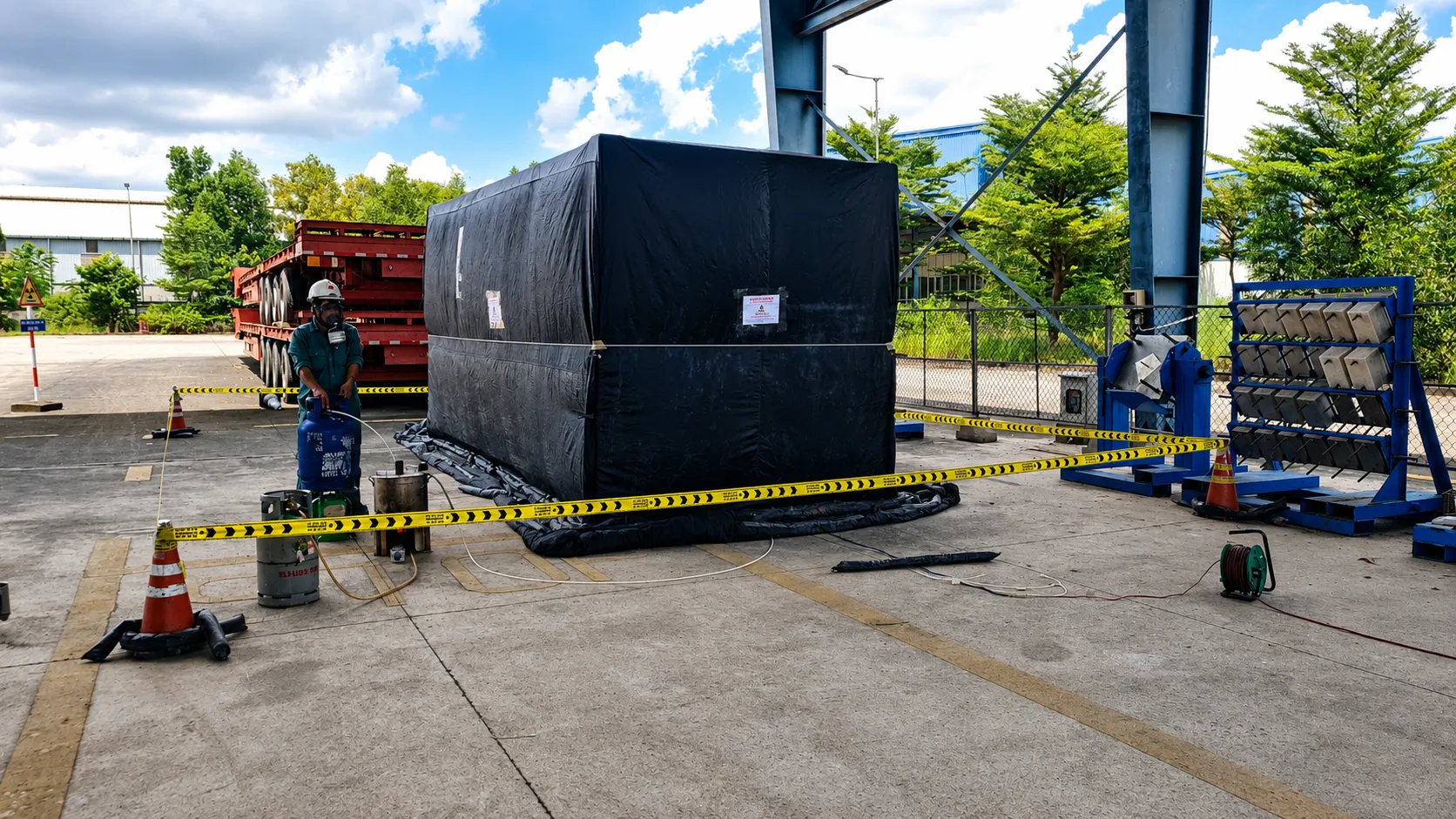
Container Fumigation Procedure for Goods Exported to Australia at the Yard
- Mandatory On-Site Operations: The container must be grounded at the yard on a flat, gas-tight surface. During fumigation, the container doors must be opened for technicians to install the fumigant supply line, gas circulation fan, concentration sampling lines, etc.
- Sealing Regulations: Enterprises may still apply a temporary seal at the warehouse to protect cargo during transport to the yard. However, when fumigation is conducted, the container doors must be opened to carry out all technical steps under AFAS standards. The official shipping line or customs seal can only be affixed after the exposure period is completed and the ventilation process reaches safe thresholds.
- Control: VFC Fumigation is responsible for controlling insects and pests, maintaining gas concentrations in accordance with standard requirements, and ensuring treatment records comply with regulations so that the shipment is eligible for customs clearance.
If you need to track all steps from document preparation to treatment and certificate issuance, businesses can view details of the A–Z fumigation process for goods exported to Australia.
4. Key Documentation Verification Factors for Smooth Customs Clearance of Goods Exported to Australia
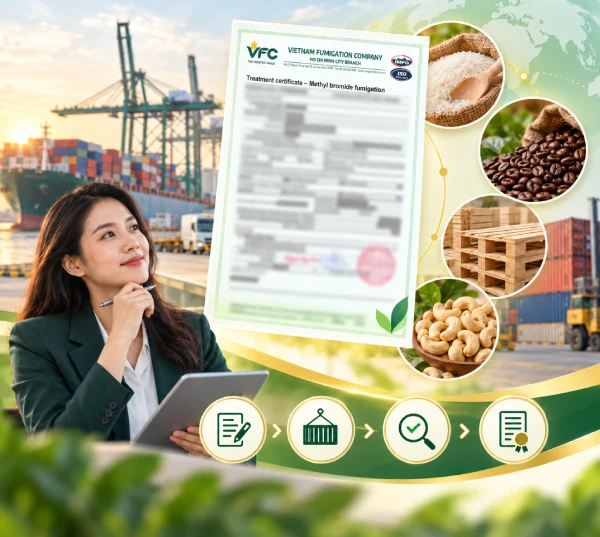
- Valid Service Provider Code: The AFAS certificate must be issued by a provider recognized on the DAFF-accredited list. If the certificate is not issued under the AFAS scheme, the shipment may be denied entry at the port of destination.
- Information Across Documentation Must Be Consistent: Identification data such as container number, seal number, cargo description, dosage rate, and treatment date on the AFAS certificate must strictly match the Bill of Lading (B/L) and Packing List.
5. Frequently Asked Questions About Fumigation for Goods Exported to Australia
Q1: Are there any other AFAS treatment methods available in Vietnam besides Methyl Bromide?
Answer: No. According to the current technical regulations of the AFAS scheme applied in Vietnam, Methyl Bromide (MB) fumigation is the recognized method.
Q2: Can we seal the container at the factory warehouse and bring it to the yard for fumigant injection without opening the doors?
Answer: Clients may apply a temporary seal at the warehouse to protect goods exported to Australia during transport. However, when fumigation is carried out at the yard, the container doors must be opened so technicians can install equipment in accordance with standard requirements. The official seal can only be affixed after the exposure period is completed and safe ventilation is achieved.
Q3: How does the Australian quarantine authority manage the quality of AFAS certificates?
Answer: DAFF conducts periodic audits of treatment providers accredited with an AFAS code. This activity aims to review documentation systems, operational procedures, and equipment capabilities, thereby assessing compliance with the scheme's requirements.
Q4: How can businesses verify if a service provider is AFAS-accredited for the Australian market?
Answer: Businesses can look up the name and accreditation code of the service provider on the official AFAS list published on the DAFF portal.
If businesses are preparing an actual shipment, it is recommended to review the 5 notes for fumigating goods exported to Australia to minimize errors related to containers, documentation, and treatment conditions.




Related Blogs