




Published date:
19/10/2026
Share




To ensure smooth export of cassava slices to South Korea, shipments must be accompanied by a Phytosanitary Certificate issued by the Plant Quarantine Agency of Vietnam based on a valid Fumigation Certificate. The Animal and Plant Quarantine Agency of South Korea (APQA) strictly enforces controls on stored-product pests; whether transported in containers or bulk vessels, dried cassava slices should be treated with Phosphine ($PH_3$), Methyl Bromide ($CH_3Br$), or integrated technical protocols to eradicate pests at all stages of development.
1. South Korea's (APQA) Phytosanitary Regulations for Imported Cassava Slices
South Korea is one of Vietnam's primary export markets for cassava slices, predominantly serving two vital industries: bioethanol production and animal feed manufacturing. However, major entry ports in the country such as Gwangyang, Busan, Incheon, and Ulsan maintain stringent biosecurity technical barriers under the comprehensive oversight of APQA.
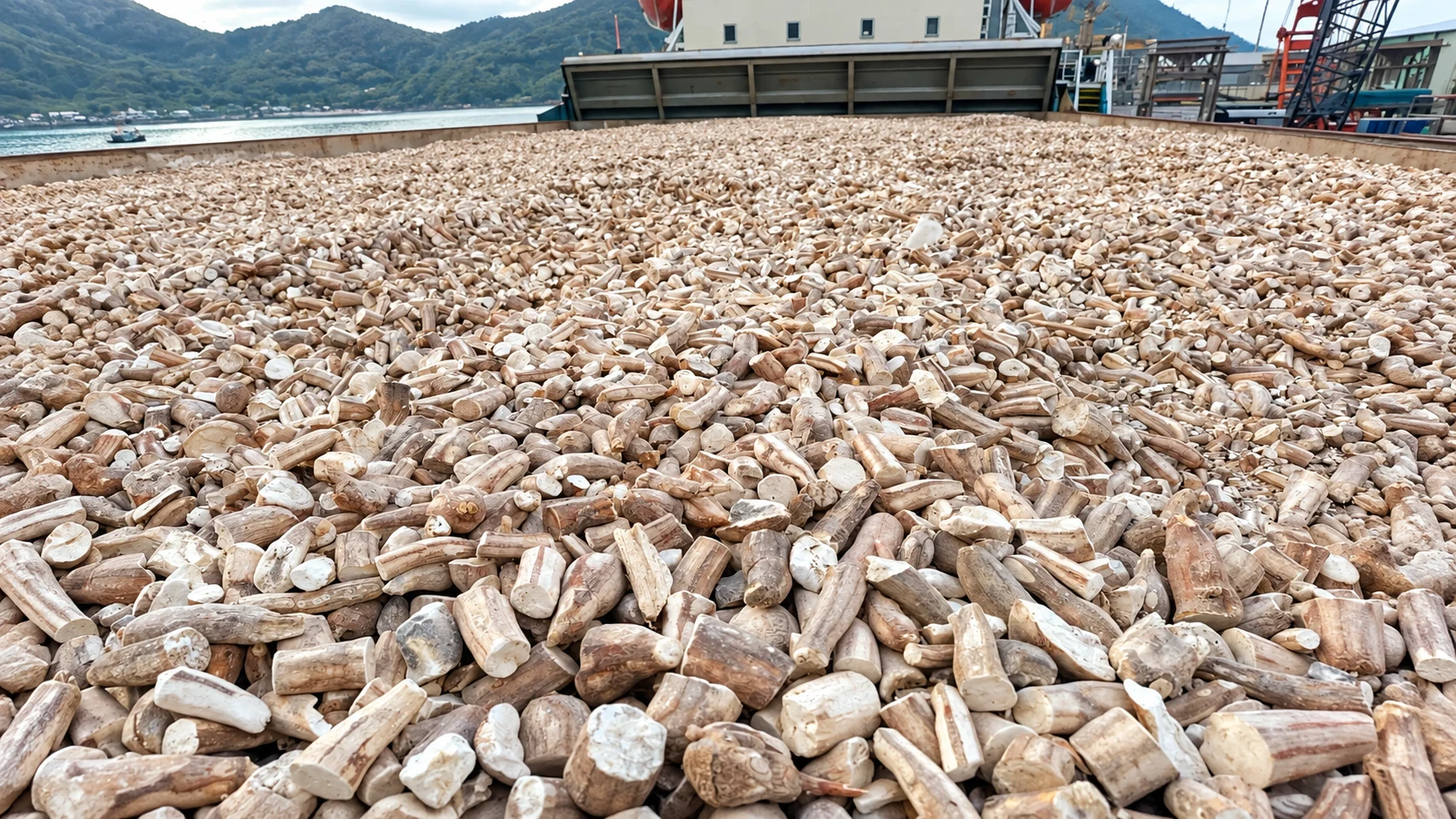
Cassava slices imported into South Korea must comply with APQA's phytosanitary and biosecurity requirements
1.1 APQA Biosecurity Standards
The Animal and Plant Quarantine Agency of South Korea (APQA) classifies dried cassava slices as an agricultural commodity carrying high potential risks of marine-transported stored-product pests. Upon vessel docking or container discharge, APQA reconciles documentation and conducts on-site inspections according to specific criteria:
- Mechanical cleanliness: The cargo mass must be free from soil, mud, extraneous straw, crop debris, invasive weed seeds, or animal carcasses.
- Infestation status: The consignment must be free of live pests at any developmental stage, including eggs, larvae, pupae/cocoons, and adults.
1.2 Primary Stored-Product Pests on Dried Cassava Slices
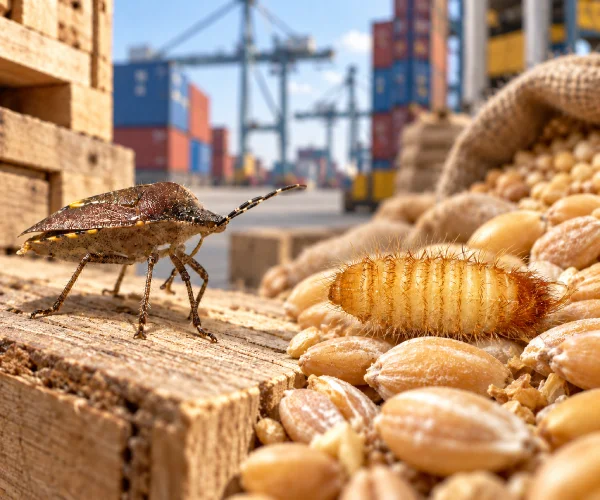
During collection from open-air drying yards and warehousing prior to port loading, cassava slices are frequently exposed to destructive pest species, such as:
- Araecerus fasciculatus: The most prevalent and destructive pest affecting dried cassava slices. This species bores into and breaks down the tuber structure within weeks of storage, resulting in severe weight loss and critical starch degradation.
- Rhyzopertha dominica: An insect with powerful biting mandibles that directly attacks the solid starch matrix of cassava slices, pulverizing the chips into frass and powdery debris.
- Secondary pest complex: Red flour beetle (Tribolium castaneum), flat bark beetle (Cryptolestes sp.), foreign grain beetle (Ahasverus advena), booklice (Liposcelis sp.), etc. This group proliferates rapidly in cargo with elevated moisture levels or heavy concentrations of dust and meal, escalating the risk of cargo deterioration and mold formation.
2. Phytosanitary Quarantine Procedures for Exporting Cassava Slices to South Korea
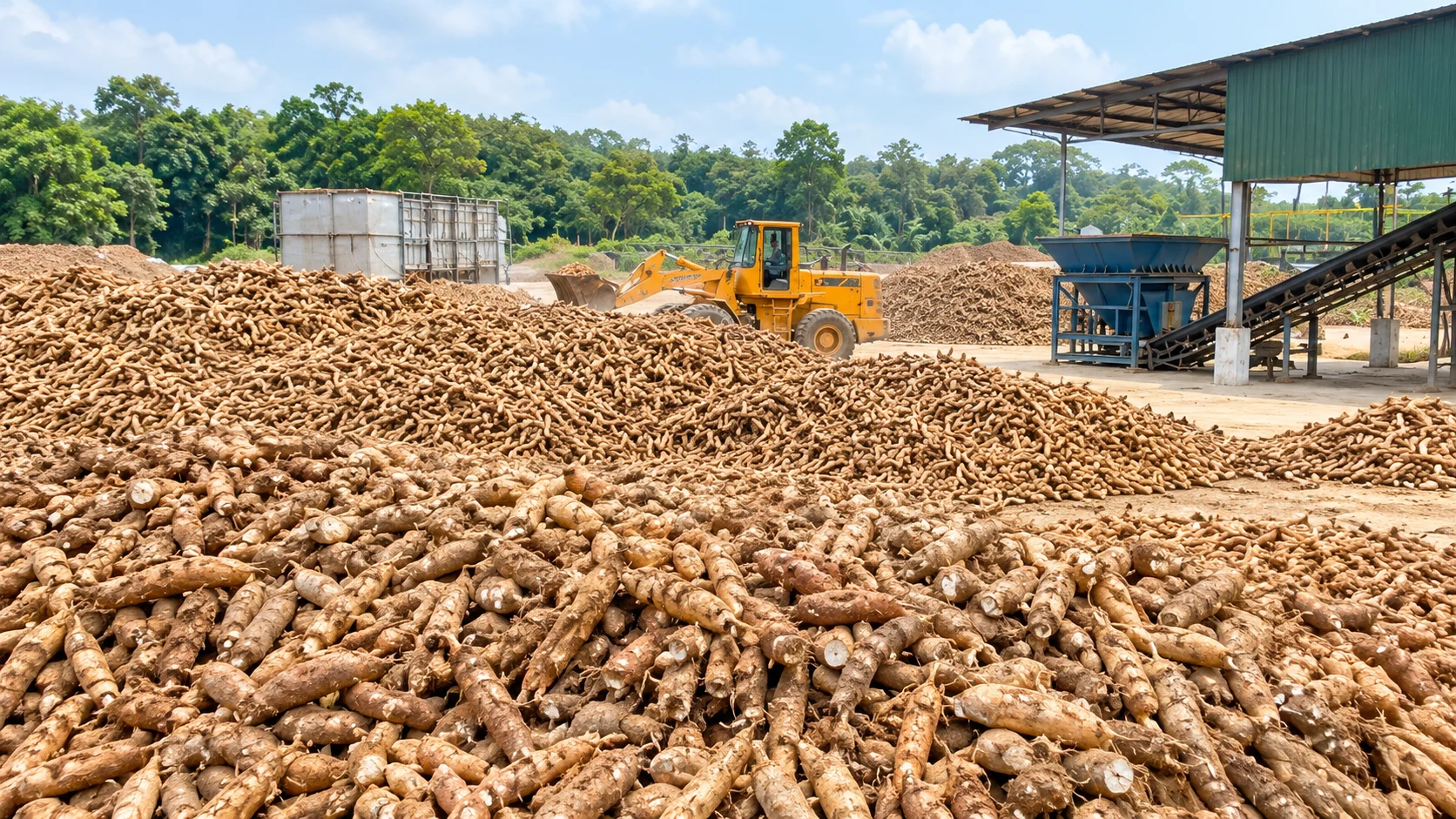
Cassava slice quarantine procedures include electronic declaration, sampling, laboratory analysis, and Phytosanitary Certificate issuance
To establish the legal validity of the foreign trade documentation and fulfill APQA's rigorous phytosanitary standards in South Korea, the application process for a Phytosanitary Certificate is carried out through four standardized steps:
Step 1: Declaration and Registration on the Vietnam National Single Window (VNSW): Enterprises create an account and submit an online Application for Phytosanitary Inspection at vnsw.gov.vn. Accompanying documents include: the Sales Contract, Commercial Invoice, Packing List, Bill of Lading, and the Fumigation Certificate as technical proof of treatment.
Step 2: On-Site Physical Inspection and Sampling: Officers from the Regional Plant Quarantine Sub-Department visit the site (raw material warehouses or port assembly yards) to inspect the cargo and draw representative samples according to national TCVN standards.
Step 3: Sample Analysis and Technical Verification: Samples undergo diagnostic evaluation in specialized testing laboratories. Concurrently, quarantine officers verify the technical parameters on the Fumigation Certificate to ensure the consignment has been treated in compliance with the destination country's phytosanitary mandates.
Step 4: Issuance of the Phytosanitary Certificate: Once all documentation and laboratory results satisfy requirements, the quarantine authority issues an official hard-copy Phytosanitary Certificate or an electronic phytosanitary certificate (e-Phyto), enabling the enterprise to complete its export documentation set.
3. Cassava Slice Fumigation Protocols and International-Standard Fumigation Certificate Issuance
Technical treatment protocols and the issuance of a Fumigation Certificate require seamless coordination between on-site field operations and documentation administration to ensure high legal integrity for consignments during international customs clearance.
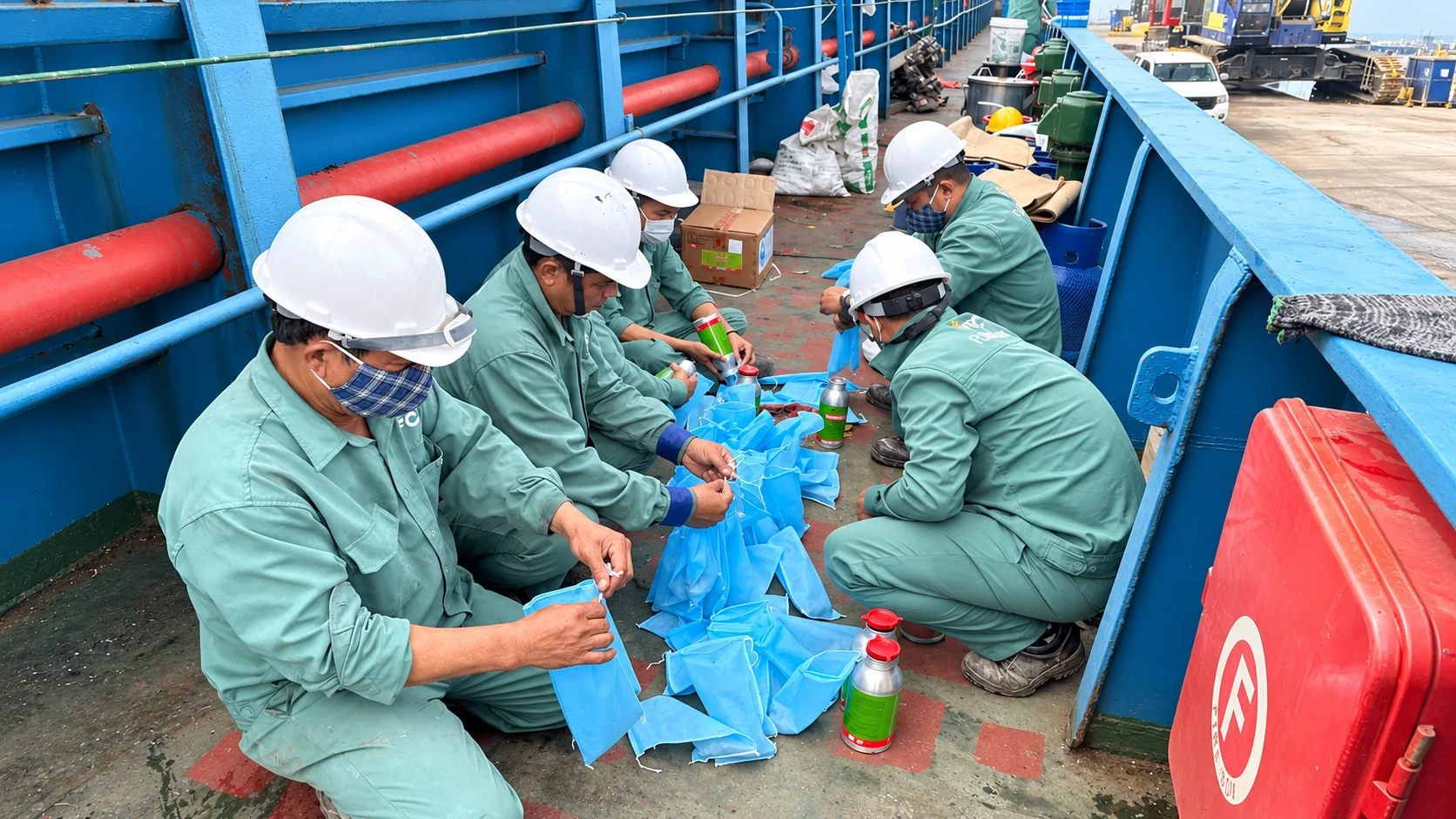
Cassava slice fumigation requires integrating field operations with export certificate management
Step 1: Receive shipment information & identify the container location
- A professional fumigation service provider (such as VFC Fumigation) receives shipment parameters from the client.
- The information checked includes container type (20ft, 40ft), container number, seal number, commodity name, destination port, actual yard location at the ICD/export port, and the vessel cut-off time to arrange an accurate operation schedule.
Step 2: Airtight Sealing and Fumigant Application
- Deploy gas introduction piping systems for Methyl Bromide (CH3Br) fumigation or place Aluminium Phosphide (AlP) formulations according to the approved technical protocol.
- Install gas sampling lines at designated critical monitoring locations inside the container to monitor gas concentrations.
- Close the container doors, seal the ventilation holes and potential leakage points with specialized materials to maintain maximum gas-tightness.
- Inject the fumigant for Methyl Bromide treatment.
- Affix standardized danger warning placards in conspicuous positions on the container to signal hazards and prevent unauthorized personnel from approaching the operational perimeter.
Step 3: Maintaining the exposure period and monitoring concentration
- The fumigation exposure time is strictly monitored depending on the type of fumigant applied, the target pest species, and the quarantine regulations of the importing country (ranging from 24 to 48 hours for Methyl Bromide; extending from 7 to 10 days for Aluminium Phosphide).
- Technicians perform gas concentration measurements according to the approved technical protocol to oversee vapor levels, ensuring complete eradication efficacy.
Step 4: Safe ventilation and on-site acceptance
- Upon completion of the required exposure time, technicians open the container doors and strip off ventilation sealing materials to commence aeration.
- Specialized gas detection instruments are used to measure residual gas concentrations, confirming that vapors fall below the Threshold Limit Value (TLV) before handover.
- The VFC Fumigation technical representative and the customer jointly conduct an on-site inspection, sign the record confirming the fumigation result, and hand over the treated container to the customer or port operations team for loading onto the vessel.
Step 5: Issuing the fumigation certificate (Fumigation Certificate)Fumigation Certificate)
- Complete and issue the official fumigation certificate (Fumigation Certificate) integrated with a QR Code for the export documentation set, serving as a basis for quarantine authorities to consider issuing the Phytosanitary Certificate (Phyto) and supporting smooth customs clearance at the destination port.
Note: The operational workflow may be adapted based on specific commodity parameters, the fumigant applied, transport conveyance specifications, and commercial contract requirements.
4. VFC Fumigation Operational Capability: Case Study of M/V RICH LAND Carrying Cassava Slices to South Korea
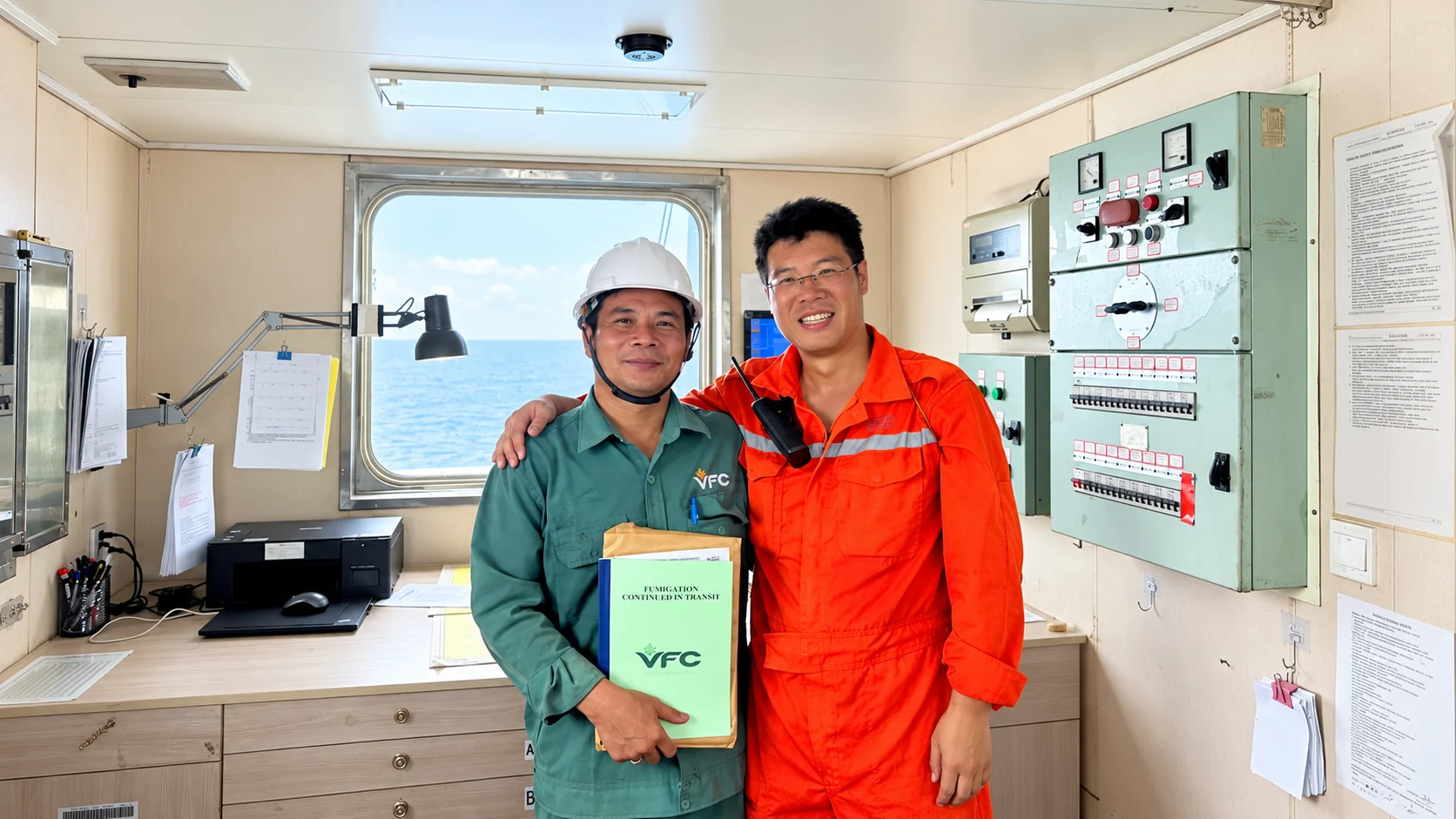
VFC Fumigation executing cassava slice fumigation aboard M/V RICH LAND bound for South Korea at Quy Nhon Port
The export cassava slice fumigation project aboard the vessel RICH LAND at Quy Nhon Port serves as a representative benchmark of VFC Fumigation's maritime risk control capabilities:
Scale and Operational Challenges: A large volume of bulk cassava slices destined for South Korea was loaded directly into the voluminous cargo holds of M/V RICH LAND. The cargo mass featured significant stowage depth, high compaction density, and the potential for pests deep within the bulk grain. The operational objective was to eliminate all target pests to clear APQA standards while adhering strictly to berth turnaround schedules at Quy Nhon Port.
Technical Protocol by VFC Fumigation:
- Survey & Sealing: VFC Fumigation's technical personnel inspected the structural integrity of each hold and cargo stowage conditions, applying specialized sealing materials to seal potential gas leakage points (hatch covers, ventilation housings, access hatches).
- Dual-Fumigant Integration: Positioned Aluminium Phosphide (AlP) formulations as agreed in the technical scheme, where AlP reacted with atmospheric moisture inside the holds to release Phosphine gas (PH3) during the exposure period; simultaneously injected Methyl Bromide into the holds via specialized vaporizers and delivery lines to enhance prompt pest knockdown and control efficacy.
- Safety Clearance: Conducted gas leakage measurements in areas adjacent to cargo holds and crew accommodation quarters using specialized detection devices, and delivered comprehensive safety instructions and monitoring protocols to the vessel's command.
Key Outcomes:
- Complete eradication of all target pests across all developmental life stages.
- M/V RICH LAND completed all safety protocols, departed Quy Nhon Port on schedule, and cleared quarantine seamlessly upon arrival at the destination port in South Korea without regulatory discrepancies.
- A Fumigation Certificate was issued featuring a unique QR Code, enabling stakeholders to cross-check and verify document authenticity directly against VFC Fumigation's database.
5. Frequently Asked Questions (FAQ) on Exporting Cassava Slices to South Korea
Question 1: Are pest control regulations different for feed-grade versus bioethanol-grade cassava slices?
Answer: From a phytosanitary standpoint, APQA enforces an identical biosecurity barrier across both grades: the entire consignment must be free of soil/foreign matter and free of live pests. Therefore, exporters must carry out an authorized fumigation process to obtain the Phytosanitary Certificate (Phyto) required for customs clearance.
Question 2: When is the Fumigation Certificate issued for bulk cassava vessels departing under in-transit fumigation?
Answer: For the in-transit fumigation method, the Fumigation Certificate is issued once technicians complete the on-site treatment procedure and submit operational records to the office.
Question 3: Do wooden pallets used for unitizing bagged cassava slices exported to South Korea require ISPM 15 markings?
Yes. If cassava slices packed in PP woven bags or jumbo bags are stacked on wooden pallets, all such wooden pallets must be completely debarked, heat treated (HT) or fumigated with Methyl Bromide (MB), and stamped with a valid ISPM 15 certification mark in compliance with international standards.
6. Book a Consultation for Cassava Quarantine and Fumigation with VFC Fumigation
Mastering APQA quarantine procedures and selecting the appropriate fumigation technical protocol are vital for cassava slice exporters to safeguard cargo value and maintain strong commercial credibility in South Korea.
Agricultural exporters, logistics providers, and freight forwarders requiring vessel hold surveys or international-standard cassava slice fumigation services are invited to contact VFC Fumigation:
- Hotline 24/7: 0914 773 300
- Customer Service Center: 1800 577 788
- Email: contact@fumigation.vn



Related Blogs