





Category:
Fumigation by Industry Sector

Published date:
26/07/2026
Share




Choosing a trusted fumigation provider in the logistics chain is an important decision that helps cargo owners and forwarding businesses ensure cargo safety and customs clearance progress. Even a minor mistake in the pest treatment process or an inaccurate certificate can lead to the risk of vessel schedule delays, container detention charges, and damage to the trust of international partners. Below are 5 structured steps to help businesses properly assess the capabilities of a fumigation partner.
Why does choosing a fumigation provider affect logistics costs?
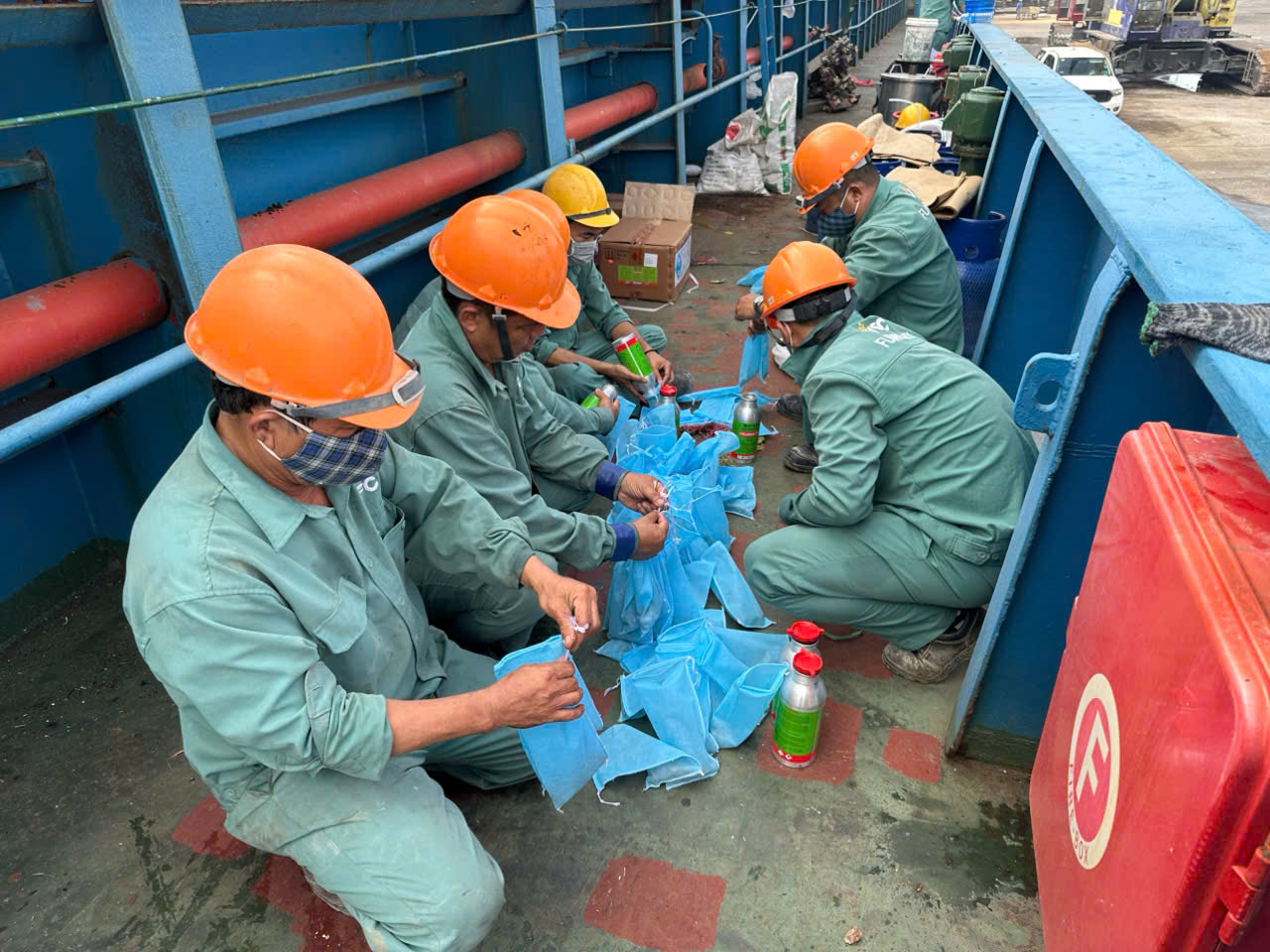
Many warehouse and logistics managers often compare initial service prices among providers before making a decision. A lower cost is not necessarily the most effective option if the technical process is reduced or the treatment is not carried out thoroughly.
In cases where live pests are detected upon arrival at the destination port or the quarantine documentation fails to meet the importing country's requirements, businesses will incur significant additional costs. Container demurrage and detention charges (DEM/DET), storage fees, re-treatment costs at the destination port, and losses due to delivery delays can be many times higher than the initial service price difference. The initial unit price difference is usually much smaller than the costs arising from errors in the treatment plan or documentation. Businesses should also review 7 common mistakes and risks when fumigating export cargo.
Choosing the right technical partner from the beginning helps businesses proactively control all risks related to timing and legal documentation. Transparency and accuracy in pest treatment are key solutions for protecting shipment value as well as brand reputation in the international market.
Step 1: Correctly identify fumigation needs
Each mode of transport and containment structure requires a distinct technical process. Businesses need to clearly determine cargo characteristics, packaging methods, and the structure to be treated before requesting a service provider to offer a treatment plan.
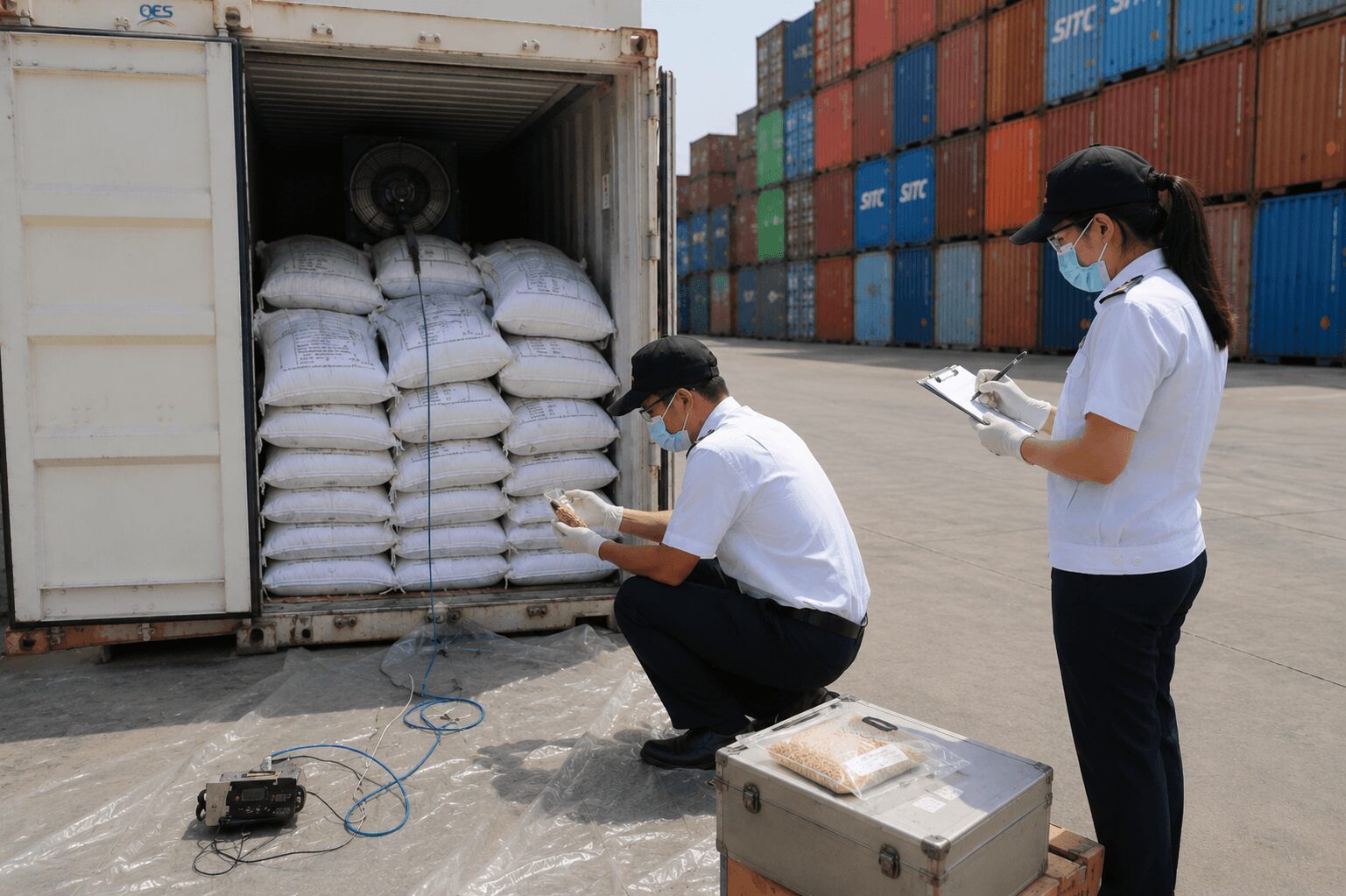
• Containers: Requires checking container airtightness and calculating stacking space to ensure proper gas circulation. For shipments with fixed loading or yard-drop schedules, see export cargo fumigation services in containers.
• Warehouses and bonded warehouses: Requires evaluating warehouse infrastructure, surface area, cargo stacking methods, and surrounding industrial sanitation conditions to prevent re-infestation risks from the external environment.
• Means of transport (Barges, bulk vessel holds): Requires technicians to conduct on-site surveys of hold structures and volume to establish appropriate technical plans rather than applying standard container formulas.
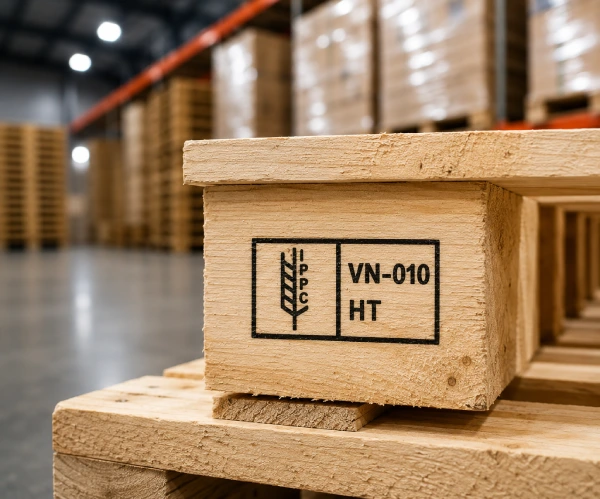
• Export cargo: Needs clarification on specific phytosanitary regulations of each destination market (such as AFAS standards for Australia or ISPM 15 standards for wood packaging materials).
A clear understanding of the cargo context helps businesses proactively work with technical partners, avoiding the application of ineffective, rigid solutions. If the primary need is containerized cargo, businesses can refer to the 2026 export container fumigation guide to understand everything from standards and treatment procedures to certificates.
Step 2: Evaluate technical capability and experience
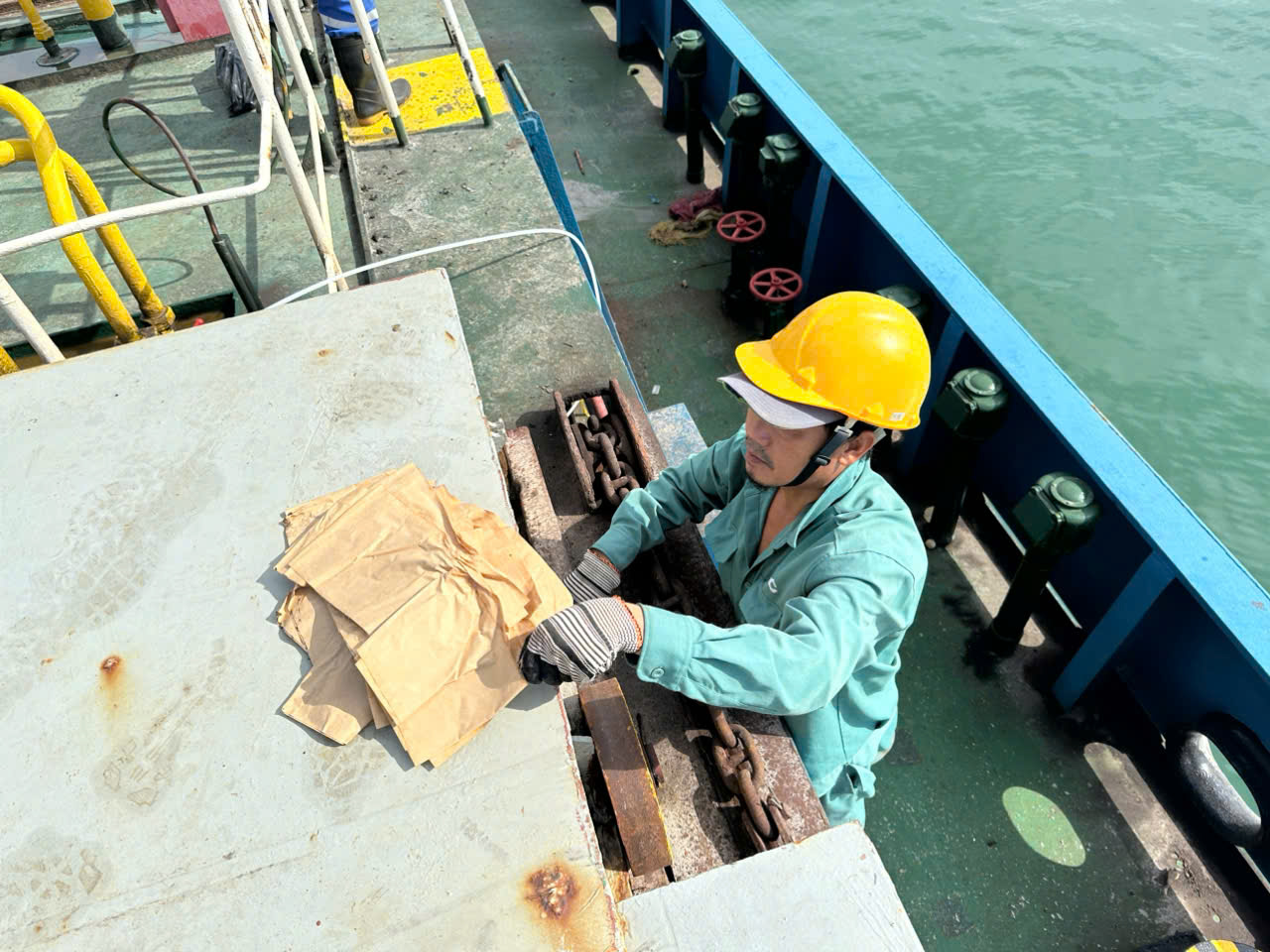
Cargo fumigation in the logistics supply chain requires technicians with in-depth knowledge of stored-product pest biology as well as maritime transport regulations. Businesses should review the provider’s capability profile and practical experience.
A reputable service provider will have a well-trained technical team, professional certification issued by specialized authorities, and a clear understanding of operational procedures at major seaports and ICDs. Technicians must be able to conduct field inspections, calculate requirements, and develop suitable plans to ensure thorough elimination of pests at every stage of development.
Besides, practical execution experience with logistics companies helps providers clearly understand the pressure of closing time. A professional unit will proactively coordinate with port dispatchers and cargo owners to smoothly implement the process, ensuring cargo safety without disrupting the transport schedule. Businesses needing to store and preserve large quantities of goods in warehouse systems can refer to Silo warehouse fumigation services for a comprehensive protection plan.
Step 3: Check documents and certificates
Quarantine documentation and the Fumigation Certificate act as the passport that determines whether a shipment is cleared for customs at the destination port. Businesses must pay special attention to the legality and authenticity of this document set. To understand the complete relationship between field execution, data, and documentation, see export agricultural commodity fumigation from cargo treatment to data and certificate management.
The certificate issued after treatment must follow the required format and contain complete information, including shipment name, container number or vessel name, approved fumigant used, dosage, and exposure time. The certificate handover timeline must be clearly committed so the cargo owner can complete the import-export document set in time for submission to the bank or overseas partner.
To thoroughly solve concerns regarding fraudulent certificates or suspicions from foreign quarantine authorities, pioneering units have adopted electronic verification systems. Notably, VFC Fumigation has implemented the 2-layer transparent fumigation system, where the second layer enables electronic certificate verification via QR Code. When scanning the QR code on the certificate, partners and regulatory authorities can immediately cross-check certification information, completely eliminating risks of information bottlenecks or document discrepancies.
Step 4: Evaluate after-service support capability
Logistics operations always involve unexpected variables, such as vessel schedule changes, bad weather, or containers being held for inspection. The ability of a fumigation partner to provide ongoing support and handle issues flexibly is an important safety anchor for businesses.
A professional service provider must have technical consultation channels available 24/7 and be able to quickly propose corrective solutions when unexpected issues arise at the port yard. For shipments that need urgent release, the provider must have sufficient personnel and equipment to meet urgent timelines while still fully complying with technical procedures.
Choosing the right fumigation provider is not merely about finding a technical service provider; it is about finding a trusted partner to manage supply chain risks together. A structured evaluation based on legal capability, technical equipment, document transparency, and long-term support capacity helps businesses protect cargo quality, minimize unreasonable additional costs, and ensure smooth operations for every shipment.
Established in 1976, VFC Fumigation now has a technical network across many major ports, factories, and production areas. The fumigation process is controlled from field operations to certificate issuance, while QR-integrated certificates help customers, partners, and relevant parties verify information when needed.
Businesses that need to build a plan for container fumigation, warehouses, or export shipments can submit information regarding cargo type, treatment location, stuffing schedule, and destination market. The VFC technical team will review requirements, provide solution advice, and offer quotations based on the actual scope of work.
Hotline: 0914 773 300
Email: contact@fumigation.vn
![Cẩm nang khử trùng hàng đi Úc: Tổng hợp những điều doanh nghiệp cần biết [2026]](https://fumigation.vn/wp-content/uploads/2026/07/cam-nang-nhung-dieu-ban-can-biet-ve-khu-trung-hang-di-uc.webp)
Featured Knowledge

Related Knowledge