





Category:
Fumigation by Market

Published date:
17/03/2026
Share




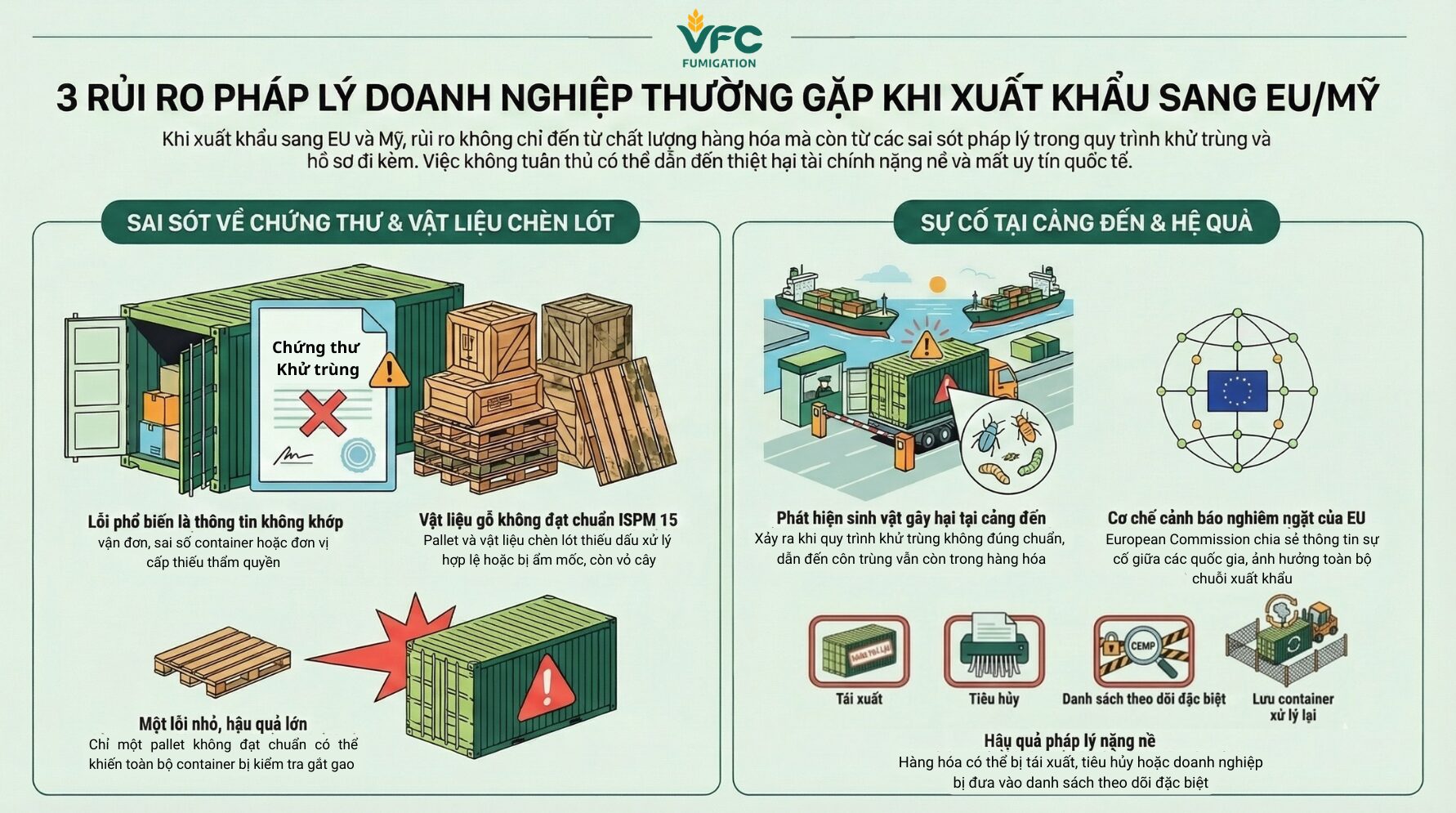
When exporting goods to the EU or the U.S., many shipments encounter issues not because of product quality, but due to errors in legal documentation and the fumigation process. Minor mistakes in certificates, wooden pallets, or treatment procedures can cause containers to be held at the port, require re-treatment, or even lead to import refusal.
1. Invalid or Incorrect Fumigation Certificates
In many cases, businesses view fumigation as a supplemental step in the export process. However, for the EU and U.S. markets, this is a mandatory requirement for many product groups, especially agricultural products or goods using wooden dunnage.
Common errors in fumigation certificates include:
- Information on the certificate does not match the Bill of Lading
- Incorrect product name or container number.
- The issuing authority lacks proper authorization
- Missing information regarding the treatment method and dosage
When these discrepancies are detected at the destination port, the shipment may be held for further inspection or required to undergo re-treatment. In serious cases, goods may be refused entry, resulting in significant costs and damaging the business's reputation with partners.
2. Wooden Packaging Materials Not Meeting International Standards
A common mistake among many businesses is focusing solely on controlling the goods inside the container while overlooking dunnage materials such as wooden pallets, crates, or support bars.
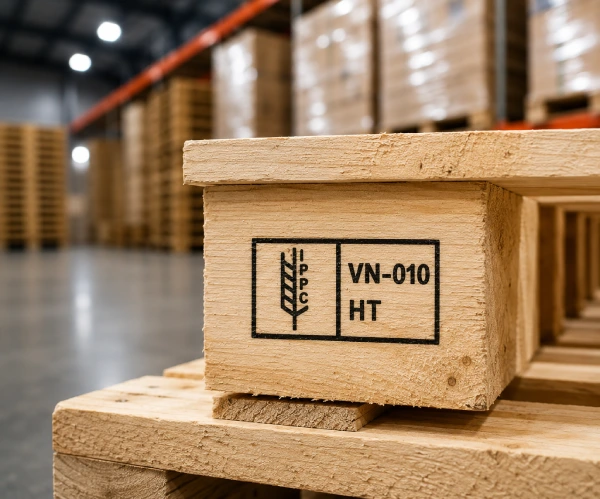
In reality, these materials are subject to international pest control regulations and musst comply with ISPM 15 standards.
Common risks include:
- Pallets lacking a valid treatment mark.
- The treatment mark is blurred or uses an incorrect facility code.
- Pallets still contain bark.
- Wood shows signs of mold or pest infestation.
A single non-compliant pallet can trigger a detailed inspection of the entire container at the port of entry, increasing storage costs and delaying customs clearance.
3. Detection of Pests at the Destination Port
Even when goods are treated prior to export, risks can still arise if the fumigation process is not performed according to technical standards or if monitoring is inadequate.
If quarantine authorities at the destination port detect live insects or pests, businesses may face strict measures such as:
- Mandatory re-treatment at the destination country.
- Forced re-export of the shipment.
- Destruction of the goods.
- Increased inspection levels for future shipments.
- Being placed on a special watch list.
In the EU, phytosanitary systems are strictly monitored by the European Commission, with alert and information-sharing mechanisms between member states. Therefore, a single minor incident can affect the business's entire future export chain.
In international trade, compliance capability is a key factor reflecting a business's professionalism. Effectively controlling the fumigation process, standardizing documentation, and ensuring packaging materials meet international standards not only helps shipments clear customs smoothly but also contributes to building long-term credibility in export markets.
See more: Why does improper fumigation lead to prolonged risks?

Featured Knowledge

Related Knowledge