





Published date:
27/07/2026
Share




Warehouse fumigation is a pest control solution for stored agricultural commodities, raw materials, and finished products affected by weevils and other insect pests. Compared with treating an individual container, warehouse fumigation requires a more comprehensive assessment of the building structure, treatment volume, cargo arrangement, sealing capability, and operating conditions. Below are 5 companies providing warehouse fumigation services in Vietnam that businesses can consider. The list is arranged based on experience, operational coverage, service scope, and capability to carry out large-scale projects.
What is warehouse fumigation?
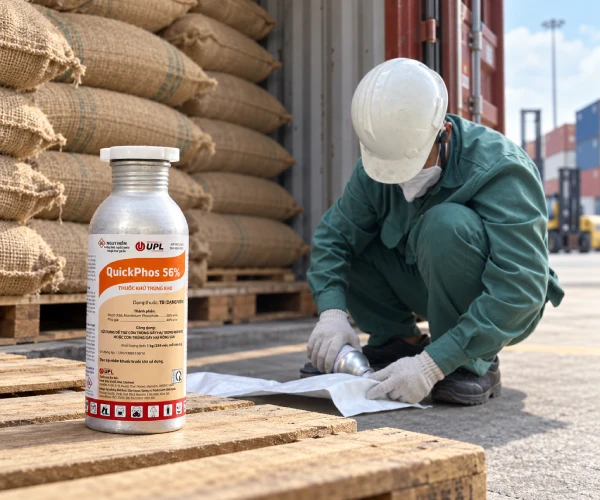
Warehouse fumigation is the process of applying a fumigant within a sealed treatment area to control weevils and other insect pests present in stored commodities or storage areas. This method is commonly applied to warehouses storing rice, coffee, corn, soybeans, cashew nuts, animal feed ingredients, and other commodities susceptible to stored-product insect infestation. For dry agricultural commodities kept in long-term storage, businesses often need to further consider the selection of the appropriate fumigant and exposure period. See the Phosphine fumigation process for dry agricultural commodities intended for export.
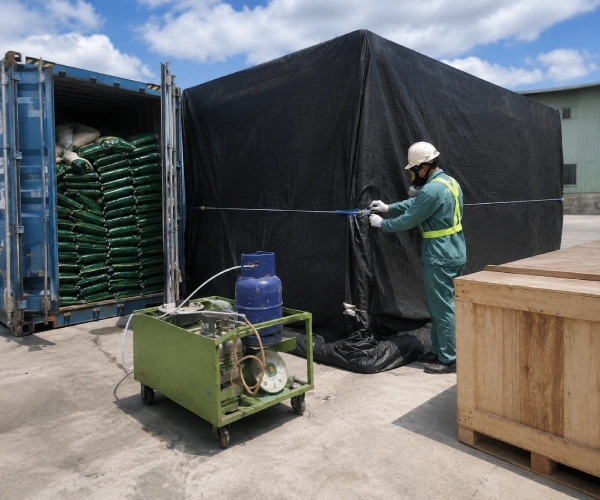
Depending on the actual conditions, the fumigation provider may fumigate the entire warehouse or treat individual cargo lots using tarpaulin fumigation. The appropriate method should be selected based on the commodity type, volume, stacking arrangement, warehouse structure, level of infestation, and the business's operational requirements. The choice between whole-warehouse fumigation and tarpaulin fumigation should not be based solely on shipment size; the structure, sealing capability, and operating plan must also be assessed.
See more: How to develop a dedicated fumigation plan for warehouses, silos, and large-scale cargo projects.
Fumigation primarily targets pests within the commodities and the sealed treatment area. For rodents, cockroaches, or insects active in surrounding areas, businesses generally need to combine fumigation with a separate pest management program to achieve more comprehensive control.
Why does warehouse fumigation require a technically competent provider?
Warehouses differ from containers in many important ways. Warehouse doors, structural joints, ventilation systems, pipelines, and areas connected to production lines can all affect sealing capability. The stored commodities may also be arranged in different configurations, including bagged cargo, palletized cargo, storage bays, or large bulk stockpiles.
If the treatment plan is not properly designed, the fumigant may be distributed unevenly throughout the cargo mass, particularly in deep sections, tightly stacked areas, or zones with high cargo density. This can reduce pest control effectiveness and increase the risk of continued pest activity during storage. For deep cargo masses, the issue is not simply increasing the fumigant dosage, but ensuring appropriate fumigant distribution throughout the commodity mass. This is also why some projects require an assessment of a gas recirculation system.
A warehouse fumigation project should therefore be developed from a site assessment, fumigant dosage calculation, selection of the sealing method, fumigant placement, determination of concentration monitoring points, maintenance of the required exposure period, and safe aeration before handover.
1. VFC Fumigation – Vietnam fumigation joint stock company
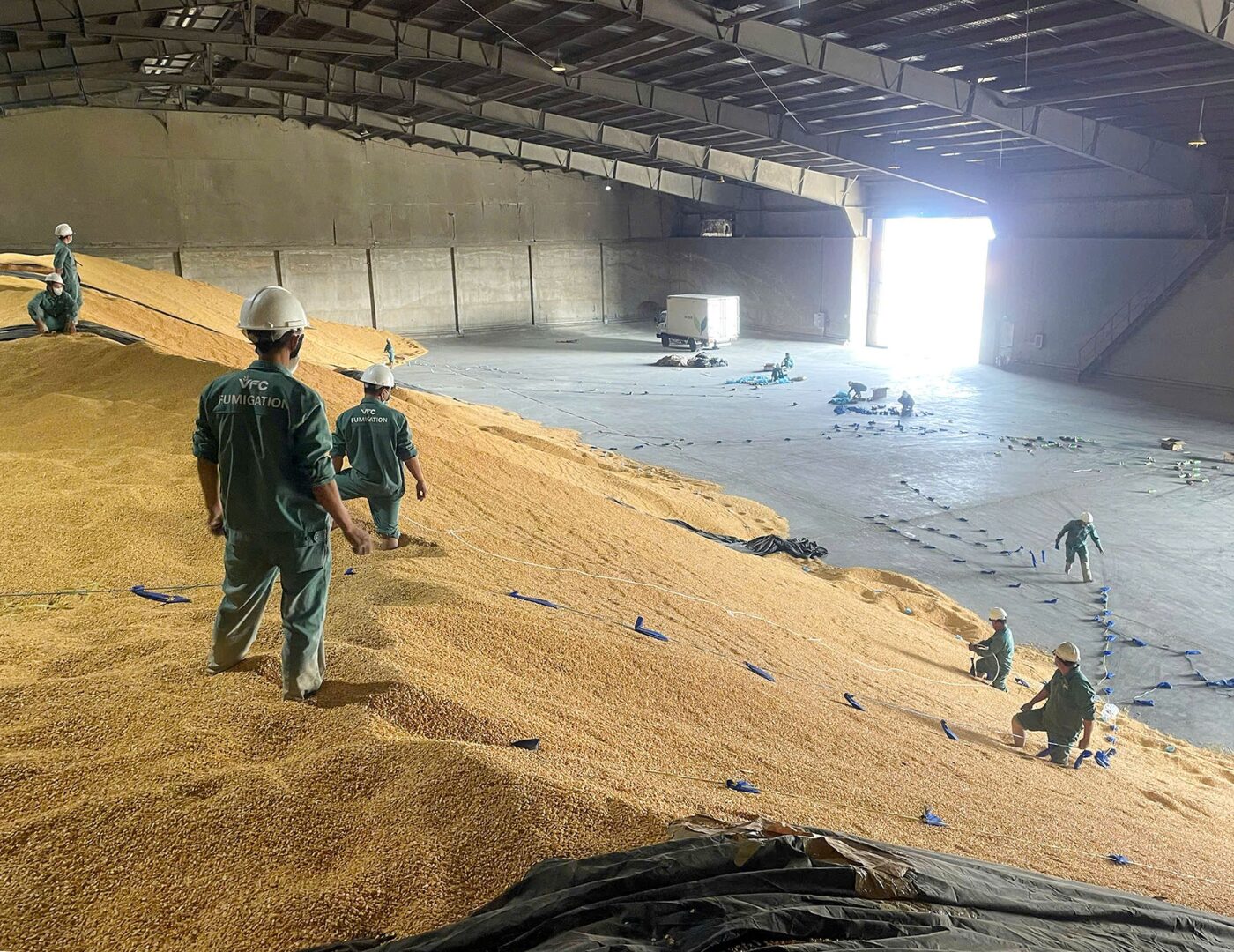
VFC Fumigation is one of the long-established brands with a large operating scale in Vietnam's fumigation industry. In addition to container, vessel, and silo fumigation, warehouse fumigation is one of VFC Fumigation's core service areas.
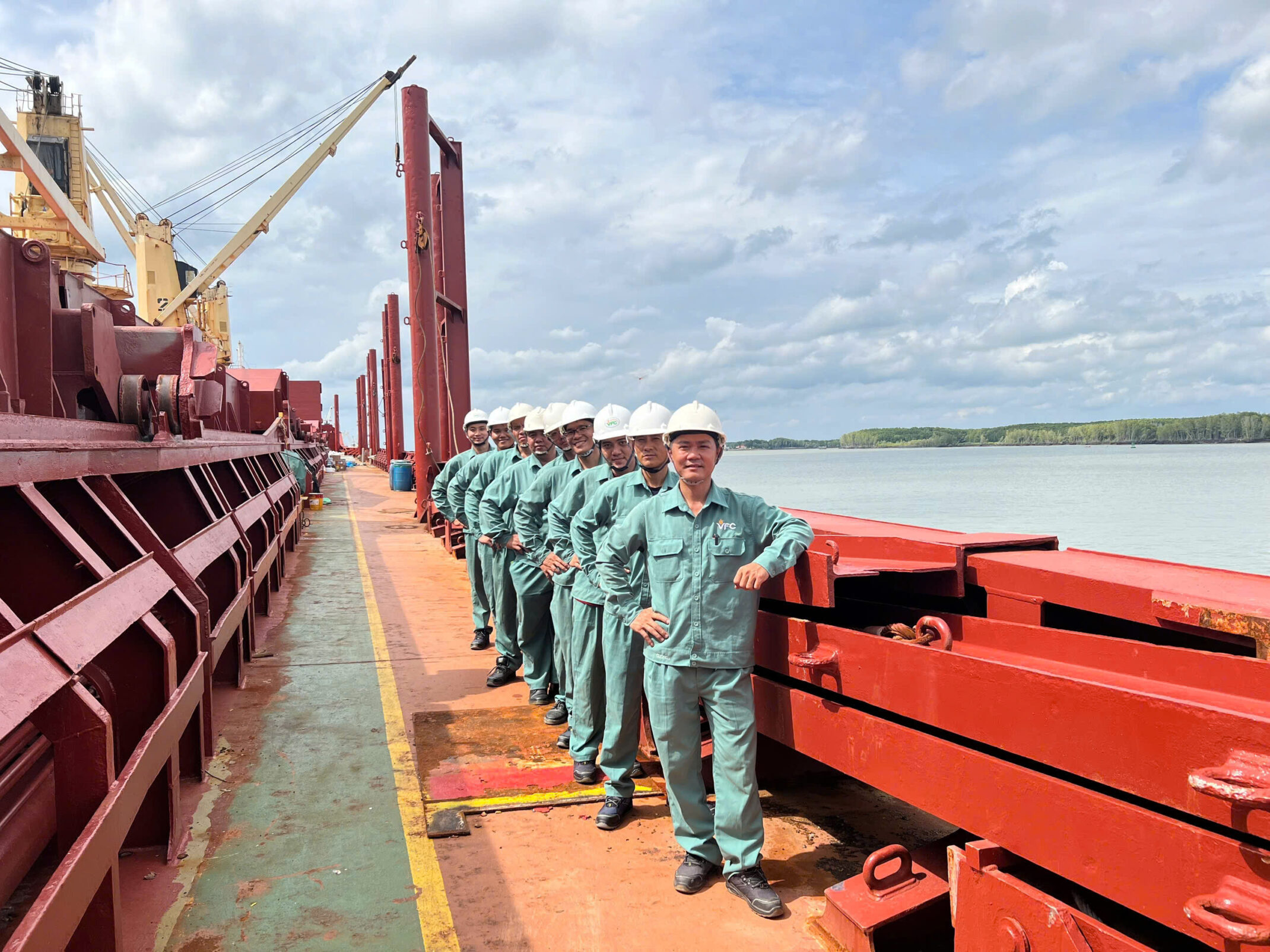
VFC Fumigation's extensive operational network enables service deployment across industrial parks, production regions, logistics hubs, and port areas throughout Vietnam. This is an advantage for businesses operating warehouses in multiple locations or seeking a single service provider for their entire storage network.
Experience with multiple warehouse types and commodities
VFC Fumigation carries out fumigation for warehouses storing rice, coffee, corn, soybeans, cashew nuts, animal feed ingredients, and various other agricultural commodities. Each commodity has different storage characteristics, packaging methods, and sorption properties, so a dedicated treatment plan needs to be developed.
For warehouses storing bagged commodities, the technical team needs to assess stacking density, spacing between cargo lots, and gas movement within the storage area. For commodities stored in large bulk masses, cargo depth and structure directly influence fumigant placement.
VFC Fumigation approaches each project according to actual site conditions rather than applying a single standard configuration to every warehouse. The process begins with an assessment of the structure, commodity type, volume, pest condition, and the customer's operating plan.
Applying the J-System where project conditions are suitable
For warehouses with large cargo masses or significant cargo depth, relying solely on natural fumigant diffusion may have limitations. Where conditions are suitable, VFC Fumigation may apply the J-System – a forced gas recirculation system to support fumigant distribution throughout the treatment area.
To understand how the system is installed and operated in practice, see application of the J-System in silo fumigation processes.
The system creates a continuous recirculation flow, allowing the fumigant to reach more areas within the cargo mass. The value of the J-System lies in its ability to support a pre-designed technical treatment plan, including equipment placement, gas circulation direction, and operating duration.
The J-System is not applied by default to every warehouse. Its effectiveness depends on the building structure, commodity type, cargo arrangement, and sealing capability. Therefore, the decision to use the system should be based on the results of an on-site assessment.
Control from the warehouse interior to surrounding areas
Fumigation focuses on controlling weevils and other insects present within the commodities or the sealed treatment area. However, re-infestation may originate from receiving areas, wall gaps, drainage systems, waste collection areas, or other cargo lots within the same facility. For agricultural commodities, the risk of re-infestation can increase further when ambient humidity and storage conditions are not properly controlled. See more about why the risk of export shipments being rejected due to weevil infestation increases during the rainy season.
VFC Fumigation can combine fumigation with a pest management program for surrounding areas. This approach allows businesses to treat the currently infested cargo while also assessing conditions that may lead to pest recurrence after warehouse operations resume.
Controlled safety procedures and clear handover
Before treatment begins, the treatment area needs to be surveyed, clearly demarcated, and prepared with an appropriate safety guarding plan. During the exposure period, VFC Fumigation uses specialized equipment to measure fumigant concentrations at predetermined monitoring points, supporting control of the fumigation process according to the technical plan.
After the treatment period, the warehouse is aerated and checked using specialized equipment before handover. This step is particularly important for warehouses located within operating factories, where production schedules, personnel, and connected production lines must be closely coordinated. If the stored commodities subsequently enter the export supply chain, treatment data and handover records also need to be managed together with shipment information. See more about export agricultural commodity fumigation: from cargo treatment to data and certificate management.
With its extensive experience, broad operational network, and capability to handle projects ranging from conventional warehouses to large-scale treatment sites, VFC Fumigation is ranked first on this list of 5 reputable warehouse fumigation companies in Vietnam.
Suitable for: Agricultural commodity warehouses, animal feed ingredient warehouses, factories, central warehouses, logistics centers, and projects involving large cargo volumes.
2. TCFC termite control and fumigation joint stock company
TCFC has many years of experience in fumigation, termite and wood-boring insect control, and commodity preservation. Fumigation of agricultural warehouses and stored commodities is one of its notable service areas.
TCFC has experience treating consumer goods warehouses, wood material warehouses, packaging materials, and various agricultural commodities. Depending on site conditions, the company may fumigate the entire warehouse or use tarpaulin fumigation for individual cargo lots to create separate treatment enclosures.
The ability to combine fumigation with termite and wood-boring insect control makes TCFC suitable for facilities that need to protect stored commodities while also controlling pests affecting warehouse or building structures.
Suitable for: Agricultural warehouses, consumer goods warehouses, wood and packaging storage facilities, and businesses requiring both fumigation and termite or wood-boring insect control.
3. FCC inspection and fumigation joint stock company3. FCC inspection and fumigation joint stock company
FCC operates in cargo inspection and fumigation. The company has experience serving bonded warehouses, logistics warehouses, CFS facilities, and storage areas for import and export cargo.
One notable aspect of FCC is its ability to combine fumigation with cargo inspection. This model can be convenient for businesses that need to inspect the cargo, determine shipment condition, and carry out treatment within the same service chain.
FCC also carries out monitoring, aeration, and safety checks before handing the warehouse back for operation. This is particularly important for logistics warehouses, where operational downtime must be closely coordinated with inbound and outbound schedules.
Suitable for: Bonded warehouses, CFS facilities, logistics centers, import-export businesses, and customers requiring both cargo inspection and fumigation.
4. Rentokil Initial Vietnam
Rentokil Initial is an international group operating in pest control and hygiene services. In Vietnam, the company provides pest management programs for factories, food warehouses, pharmaceutical warehouses, distribution centers, and other facilities with stringent hygiene control requirements.
Rentokil's strength lies in integrated pest management – IPM, with a focus on inspection, monitoring, prevention, and control of multiple pest groups throughout warehouse operations. This approach is suitable for businesses that need to maintain documentation systems for HACCP, ISO 22000, AIB, or customer audits.
It is important to distinguish between IPM and fumigation, as they are two different solution categories with different objectives and scopes. Rentokil is worth considering when a business requires an ongoing pest management program for the entire warehouse, particularly for rodents, cockroaches, crawling insects, and flying insects.
Suitable for: Food warehouses, pharmaceutical warehouses, FMCG facilities, distribution centers, and sites requiring an IPM program to support audit requirements.
5. International fumigation company limited – IFC
IFC provides fumigation services for cargo and warehouses, along with related logistics services, particularly in southern Vietnam.
The company can serve facilities ranging from medium-sized warehouses to large central distribution warehouses. On-site assessment allows IFC to determine the treatment scope, sealing method, treatment schedule, and coordination plan in relation to the customer's operations.
Flexible service scheduling can be an important consideration for small and medium-sized businesses or warehouses that require treatment on an occasional basis. Before selecting a provider, businesses should clearly discuss the commodity type, treatment volume, pest condition, and the period during which warehouse operations can be temporarily suspended.
Suitable for: Logistics warehouses, small and medium-sized warehouses, businesses in southern Vietnam, and customers requiring site assessments aligned with specific operating schedules.
What criteria should businesses use when selecting a warehouse fumigation company?
Experience with the stored commodity
A rice warehouse requires different treatment conditions from a coffee warehouse, an animal feed ingredient warehouse, or a finished-product warehouse. The fumigation provider needs to understand the commodity characteristics, packaging method, cargo depth, and post-treatment storage requirements.
Businesses should ask whether the provider has previously treated similar commodities. Practical experience allows the fumigation plan to be developed more closely around actual operating conditions and helps minimize unintended effects on the cargo.
If your fumigation requirements extend beyond warehouse treatment to export cargo, you can refer to the Top 5 export cargo fumigation companies in Vietnam to compare a broader range of service capabilities.
Site survey and sealing capability assessment
Sealing capability directly affects the fumigation process. Before providing a quotation and beginning treatment, the service provider should inspect warehouse doors, structural gaps, roofing, ventilation systems, pipelines, and areas connected to the external environment.
In some cases, sealing the entire warehouse may not be suitable for the building structure or operating plan. In such situations, tarpaulin fumigation of individual cargo lots can be considered to create separate treatment enclosures.
Fumigant distribution plan within the cargo mass
For cargo stacked to significant heights or with substantial depth, businesses should ask the provider to clearly explain fumigant placement and any measures used to support distribution. Increasing the dosage cannot replace a properly designed fumigant distribution plan.
If a gas recirculation system is used, businesses should also understand its scope of application, system layout, and technical objective. The technology delivers value only when it is compatible with the actual warehouse structure and cargo conditions.
Safety guarding, aeration, and handover procedures
Warehouses are often located within factories or logistics centers where personnel and vehicles remain active. Therefore, the safety guarding plan should be agreed in advance, including the restricted area, treatment period, and responsibilities of the parties involved.
After the required exposure period, the area must be aerated and checked using specialized equipment before personnel are allowed to return to work. Businesses should ask the provider to clearly explain the handover criteria and the method used to verify that the area is safe for re-entry.
Ability to manage re-infestation risks
Fumigation can control the existing pest infestation within the commodities, but the risk of re-infestation remains if the warehouse continues to receive infested cargo or maintains conditions favorable to pest activity.
A competent provider should support the business in identifying post-treatment risk sources, such as receiving areas, old inventory, warehouse sanitation conditions, structural gaps, and insect activity in surrounding areas.
Whole-warehouse fumigation or tarpaulin fumigation for individual cargo lots?
The choice between fumigating the entire warehouse and using tarpaulin fumigation for individual cargo lots depends on the building structure, cargo volume, infestation level, and the facility's ability to suspend operations temporarily.
Whole-warehouse fumigation is suitable when the treatment area can be effectively sealed and a large volume of cargo needs to be treated simultaneously. This method requires careful control of doors, structural gaps, and technical systems connected to the exterior.
Tarpaulin fumigation creates a localized treatment enclosure and is suitable when only selected cargo lots require treatment or when the warehouse structure cannot be completely sealed. However, sufficient clearance between the cargo, walls, columns, and surrounding areas must be maintained to allow proper implementation and inspection. For bagged dry agricultural commodities treated by individual lot, businesses can refer to the Phosphine fumigation process for dry agricultural commodities under tarpaulin to better understand stacking arrangements, sealing, and the required exposure period.
Both methods should be selected only after a site assessment. Businesses should not assume that the larger-scale treatment option will always deliver better results.
Why is VFC Fumigation a preferred choice for warehouse fumigation?
VFC Fumigation is placed first on this list because of its capability to serve different warehouse types, commodity groups, and treatment scales. Its extensive network supports service deployment across production regions, industrial parks, and logistics centers throughout Vietnam.
can assess the project and apply the J-System where actual conditions are suitable. In addition, combining fumigation with pest management in surrounding areas enables businesses to take a broader approach, from controlling the current infestation to reducing the risk of re-infestation.
The technical team manages the process from site survey and treatment planning through sealing, fumigation, concentration monitoring, aeration, and handover. This standardized process is particularly suitable for factories, agricultural warehouses, and storage facilities with continuous operational requirements.
If fumigation is also required after the cargo leaves the warehouse and is transferred into containers, businesses can refer to the list of container fumigation companies in Vietnam.
Choose the right fumigation plan to protect commodities throughout storage
Warehouse fumigation is not limited to controlling insects visible on the surface. A more important objective is to reach pests within the commodities, maintain control over the treatment area, and protect the quality of stored raw materials or finished products throughout the storage period.
Businesses should provide the fumigation provider with complete information on the commodity type, volume, stacking arrangement, warehouse dimensions, available operational downtime, and current pest condition. This information allows the treatment plan to be developed more accurately around actual operational needs.
If the stored commodities will subsequently be loaded into containers for export, businesses should continue reviewing the treatment requirements for the next stage of the logistics process in the 2026 export container fumigation guide.
Contact VFC Fumigation for a warehouse site assessment and a fumigation plan tailored to your commodity type, building structure, and operating schedule.
-
Blog (20)
-
Regulation updates (4)
-
Partnerships & Collaborations (4)
-
General News (15)
Featured News


Related Knowledge