




Published date:
27/07/2026
Share




Vessel fumigation is a technically demanding operation due to the large treatment area, complex cargo hold structures, and tightly controlled vessel schedules. For bulk carriers, the total cargo volume requiring treatment can reach tens of thousands of tons, making cargo hold surveys, fumigant distribution planning, concentration monitoring, and safety control particularly important. Below are 3 reputable vessel fumigation companies in Vietnam that cargo owners, shipowners, and logistics businesses can consider.
How does vessel fumigation differ from container fumigation?
Container fumigation is generally carried out within an enclosure of relatively standardized dimensions and construction. In contrast, a vessel may have multiple cargo holds, each with different volumes, depths, and sealing conditions. Cargo may also be loaded as bulk cargo or bagged commodities in very large quantities. For comparison with this more common treatment method, businesses can refer to the 2026 export container fumigation guide to better understand the differences in sealing, treatment, aeration, and certification.
Commodities such as rice, corn, wheat, soybeans, and animal feed ingredients may become infested with weevils and other insect pests during storage, loading, or transportation. When cargo is loaded deep within a vessel's hold, the fumigant must be able to distribute across multiple areas of the cargo mass and remain at the required concentration for an appropriate exposure period. For agricultural export shipments, treatment also involves cargo condition, on-site operational data, and post-fumigation certification. See more about agricultural export fumigation, from cargo treatment to data and certificate management.
Therefore, vessel fumigation is not simply a matter of increasing the fumigant dosage used for a container treatment plan. Each project needs to be surveyed and designed according to the vessel structure, commodity type, cargo volume, sealing conditions, shipping schedule, and the technical requirements of the shipment.
1. VFC Fumigation – Vietnam fumigation joint stock company
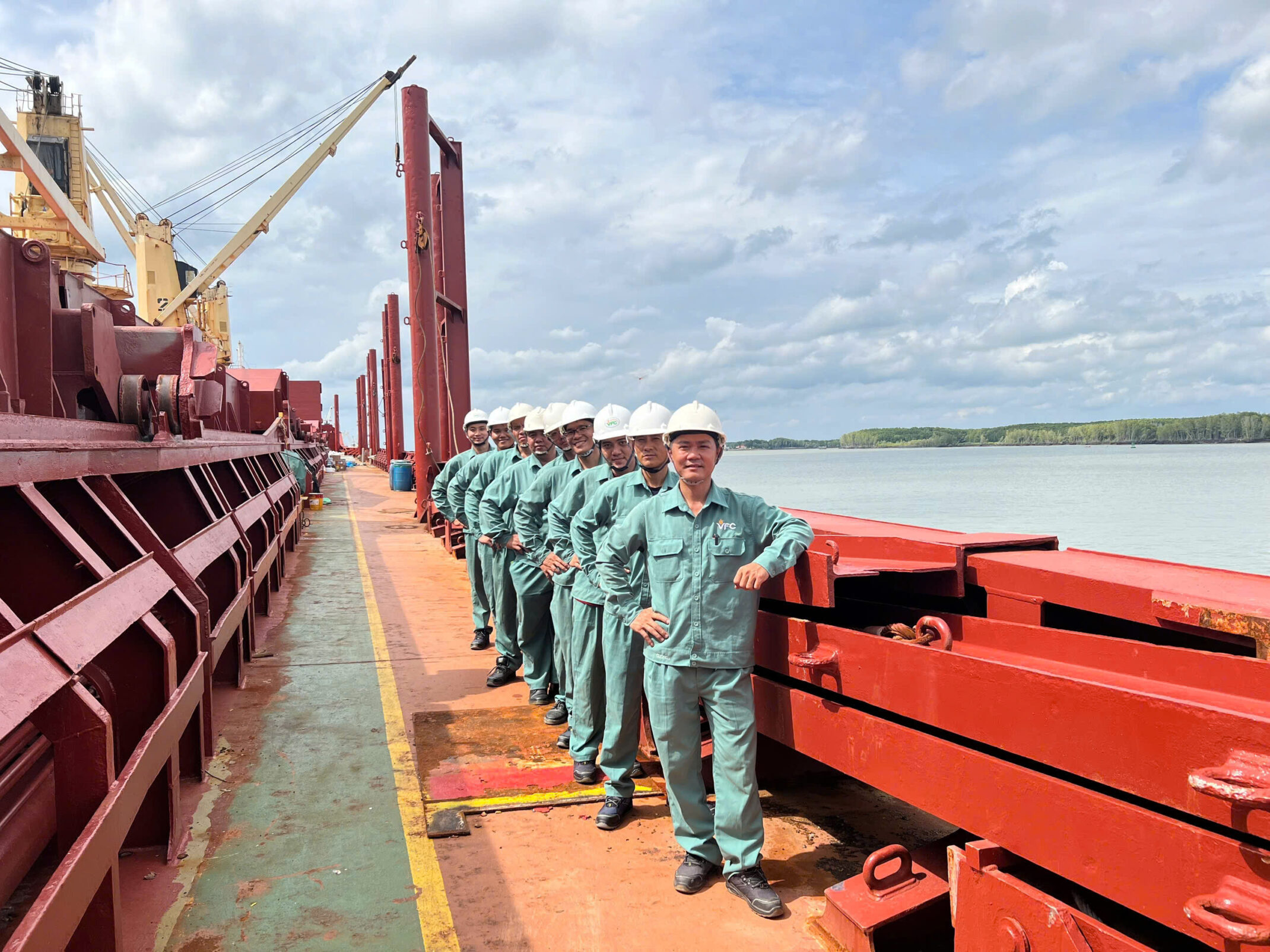
VFC Fumigation is one of the long-established companies with a large operating scale in Vietnam's fumigation industry. In addition to container, warehouse, and silo fumigation, VFC Fumigation has experience carrying out numerous vessel fumigation projects involving large cargo volumes.
Its experience ranges from bulk carriers and agricultural commodity vessels to cargo holds with complex structures, enabling VFC Fumigation to serve import-export businesses, cargo owners, and maritime partners across multiple port areas throughout Vietnam.
Capability to handle large-scale cargo vessels
For bulk cargo voyages, each hold may contain thousands of tons of cargo, while the total treatment volume can reach tens of thousands of tons. At this scale, the fumigation plan needs to be developed from actual survey data rather than based on a fixed treatment configuration.
Before implementation, the technical team needs to assess the structure of each cargo hold, commodity type, cargo volume, cargo depth, sealing capability, and loading plan. These factors form the basis for determining fumigant placement, the gas sampling system, exposure time, and the safety control plan. The survey data also determine fumigant placement, sampling points, and whether a gas recirculation system is required. See how to develop a technical fumigation plan for large-scale warehouses, silos, and vessel holds.
VFC Fumigation has experience treating a wide range of commodities transported by vessel, including rice, corn, wheat, soybeans, animal feed ingredients, and other agricultural products.
In-transit fumigation
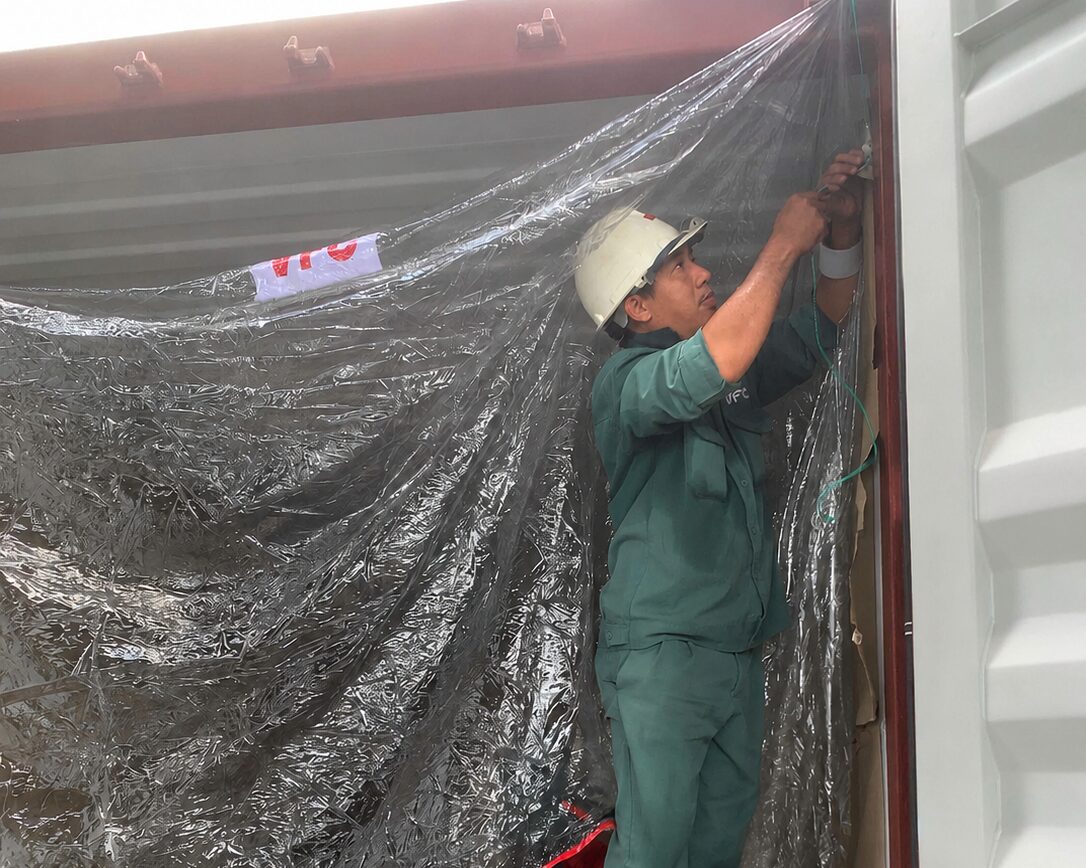
VFC Fumigation can carry out in-transit fumigation where the vessel and shipment conditions are suitable. Under this method, the fumigant exposure period continues after the vessel departs the loading port and during its voyage to the destination port.
This method uses the voyage time as part of the fumigant exposure period, thereby supporting the vessel's operating schedule. However, because the vessel remains in operation while the cargo holds are under fumigation, requirements for gas-tightness, safety controls, monitoring, and coordination with the Master must be clearly established.
Before the vessel departs, the fumigation provider must complete all required preparations, place the fumigant, establish gas sampling lines, and provide the necessary safety instructions. This operation requires practical experience in maritime fumigation.
Applying the J-System to suitable vessel holds
For cargo holds containing deep cargo masses, relying solely on natural fumigant diffusion may have limitations. Where project conditions are suitable, VFC Fumigation can apply the J-System – a forced gas recirculation system.
The J-System supports gas circulation within the treatment area, helping the fumigant distribute more effectively across different sections of the cargo mass. The system can be particularly valuable in cargo holds containing large quantities of agricultural commodities or bulk cargo.
To better understand the forced gas circulation principle, system installation, and concentration monitoring, see application of the J-System in large-scale fumigation processes.
To better understand the forced gas circulation principle, system installation, and concentration monitoring, see application of the J-System in large-scale fumigation processes.
The application of the J-System should be based on site survey results. Cargo hold structure, commodity characteristics, cargo depth, and operating conditions all influence the system design.
Service network across key seaports
Vessel fumigation must be closely coordinated with the vessel's port arrival, completion of cargo loading, and departure schedule. Even a minor schedule change can affect personnel planning, equipment allocation, and on-site execution timing.
VFC Fumigation operates across multiple seaport areas and logistics centers throughout Vietnam. Its ability to mobilize personnel and equipment in different locations provides greater flexibility in responding to the actual schedule of each vessel.
VFC Fumigation is also a member of the International Maritime Fumigation Organisation – IMFO, reflecting its professional focus on maritime fumigation.
Based on its experience, service network, and capability to carry out large-scale projects, VFC Fumigation is placed first on this list of 3 reputable vessel fumigation companies in Vietnam.
2. FCC inspection and fumigation joint stock company2. FCC inspection and fumigation joint stock company
FCC operates in cargo inspection and fumigation. Vessel and bulk cargo fumigation is one of the company's notable service areas.
FCC has experience treating vessels carrying agricultural commodities, grains, and animal feed ingredients for import and export. For these commodity groups, fumigation needs to be closely coordinated with cargo handling plans, vessel schedules, and port operations.
FCC's advantage lies in its ability to combine fumigation with cargo inspection. For shipments requiring multiple operations to be carried out at the port, this service model may simplify coordination among the parties involved.
The company also carries out cargo hold condition inspections, fumigation process monitoring, aeration, and safety assessments before the hold is returned to service.
Suitable for: Businesses importing or exporting grains, agricultural commodities, and animal feed ingredients, as well as customers requiring both fumigation and cargo inspection.
3. TCFC termite control and fumigation joint stock company
TCFC has many years of experience in fumigation, termite and wood-boring insect control, and commodity preservation. The company provides services for vessels carrying bagged agricultural commodities and bulk cargo at various port locations.
TCFC has experience with commodities such as rice, cassava, and various other agricultural products. Depending on the vessel type, cargo volume, and hold structure, the fumigation plan is developed to coordinate with the loading plan and vessel schedule.
In addition to treating cargo within the holds, TCFC also provides pest control services for certain other areas of the vessel. The ability to coordinate around vessel arrival and departure times is an important consideration for businesses handling shipments with tight schedules.
Suitable for: Exporters of rice, cassava, bagged agricultural commodities, or bulk cargo, and businesses requiring both fumigation and pest control on board vessels.
Criteria for selecting a vessel fumigation company
Experience with the specific vessel type and commodity
A provider with extensive container fumigation experience may not necessarily meet the requirements of a bulk carrier project. Cargo owners should review the vessel types, commodities, and project scales that the provider has previously handled.
Commodity type directly affects the treatment plan. Rice, corn, wheat, soybeans, and animal feed ingredients have different cargo mass characteristics and transportation requirements. The fumigation provider needs to understand these factors in order to develop an appropriate technical plan. For dry agricultural commodities, businesses can also refer to the Phosphine fumigation process for dry agricultural commodities intended for export to understand why commodity type, moisture conditions, stacking arrangement, and exposure time influence the fumigation plan.
Site survey and technical planning capability
A site survey is a critical step before vessel fumigation. The technical team needs to assess cargo hold structure, gas-tightness, cargo depth, ventilation systems, loading plans, and any points that may affect fumigant distribution.
Only after the survey can the provider determine fumigant placement, gas sampling points, the gas recirculation approach, and the required treatment period. A quotation prepared without sufficient technical information may not accurately reflect the actual scope of work.
Gas monitoring equipment and monitoring capability
For cargo holds containing large volumes of cargo, the fumigation process needs to be monitored using specialized equipment at predetermined monitoring points. Fumigant concentration data help the technical team assess gas distribution and verify that the required treatment conditions are being maintained.
Businesses should review the provider's ability to deploy monitoring equipment, establish gas sampling points, and record treatment data. These are important factors when assessing the provider's technical capability. For a deeper understanding of post-treatment data recording and traceability, see transparent fumigation and the management of operational data and QR code-enabled certificates.
Safety procedures and vessel coordination
Vessel fumigation involves multiple parties, including cargo owners, vessel agents, port operators, the Master, and the vessel crew. Each party needs to clearly understand its role and the applicable safety requirements during the treatment period.
For in-transit fumigation, the handover of information to the Master is particularly important because the vessel continues its voyage during the fumigant exposure period. The service provider needs to have clear procedures for safety warnings, monitoring, and incident response.
Ability to accommodate port and vessel schedules
Vessel schedules may change due to loading progress, weather conditions, or port operating plans. The fumigation provider needs to be able to coordinate personnel and equipment according to the actual treatment window. Schedule flexibility is only one of several criteria that should be reviewed. Businesses can also see criteria for selecting a fumigation provider in the export logistics chain.
A service network covering multiple port areas is an advantage for businesses with shipments departing from different locations or requiring fumigation services throughout the year.
Why is VFC Fumigation a preferred choice for vessel fumigation projects?
Vessel fumigation requires a combination of practical field experience, technical planning capability, and the ability to mobilize resources according to vessel schedules. VFC Fumigation addresses these requirements through its experience with large-scale bulk cargo projects, service network across multiple port areas, and ability to apply the J-System where project conditions are suitable.
For a real-world project reference, businesses can review the case study fumigation of 55,000 tons of bulk rice on the Golden Eagle vessel using the J-System.
In-transit fumigation capability is also an important consideration for projects where treatment time needs to be coordinated with the vessel's voyage. Rather than treating vessel fumigation as simply an expanded version of container fumigation, VFC Fumigation develops the technical plan based on the structure of each cargo hold, commodity characteristics, and actual operating conditions.
For vessels carrying thousands or tens of thousands of tons of cargo, selecting the right fumigation provider can help businesses maintain greater control over pest risks, cargo protection, and transportation schedules.
If your business already has information on the vessel type, commodity, cargo volume, and loading schedule, you can review VFC Fumigation's vessel and barge fumigation service to compare the service scope and implementation process.
Contact VFC Fumigation and provide information on the vessel type, commodity, cargo volume, loading port, and expected schedule so that the technical team can assess the project and recommend an appropriate fumigation plan.

Related Blogs