





Published date:
05/10/2026
Share




In commercial trade and logistics, chemical fumigants are substances capable of diffusing as toxic gases under ambient temperature and pressure, penetrating deeply into gastight commodity enclosures to completely eradicate insect pests across all developmental life stages (eggs, larvae, pupae, and adults). In Vietnam, the two chemical fumigants officially licensed for commercial circulation and phytosanitary quarantine operations are Phosphine (PH3) and Methyl Bromide (CH3Br).
1. What are Fumigants? Distinguishing Gaseous Fumigation from Microbial Disinfection
In international trade and supply chain management, a precise technical understanding of fumigants is a prerequisite for enterprises to select the correct treatment protocol, safeguard commodity quality, and fully comply with the statutory biosecurity mandates of destination markets.
1.1 The Nature of Chemical Fumigants
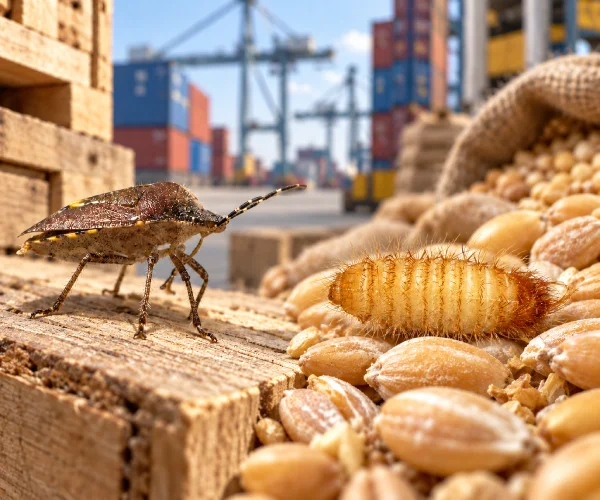
Fumigants diffuse within gastight enclosures, penetrating deeply into packaging, bulk grain kernels, timber fibers, and ship holds
Unlike conventional contact or stomach-action crop protection chemicals, fumigants operate via gaseous molecular diffusion:
- Deep Penetration Capacity: In a gaseous state, sub-microscopic fumigant molecules move freely, diffusing directly into the inner core of bulk grain masses, dense timber grain, tightly compressed packaging, and structural dead zones within shipping containers and bulk carrier holds.
- Biological Mode of Action: Fumigant vapors enter the target pest's biological system via respiratory spiracles or penetrate the cuticle, acting directly upon the central nervous system or terminating cellular respiratory enzyme pathways. This mechanism guarantees lethal efficacy across all growth stages: from eggs and larvae to pupae/cocoons and adults.
- Zero Residual Protection: Fumigants maintain insecticidal efficacy strictly during the active, gastight exposure period. Once the exposure duration concludes and safe aeration is performed, the gas dissipates completely into the atmosphere without leaving residual chemical barriers. Consequently, rigorous post-treatment warehouse hygiene and biosecurity isolation are mandatory to prevent re-infestation.
1.2 Clear Distinction: Gaseous Fumigation vs. Microbial Disinfection
First-time exporters and logistics personnel frequently conflate these two operations, resulting in compliance discrepancies in customs dossiers or the misapplication of mandatory biosecurity protocols:
| Comparison Criteria | Fumigation | Disinfection |
|---|---|---|
| Chemical Formulation | True toxic gases or gas-generating solid/liquid compounds (PH3, CH3Br). | Liquid chemical solutions, medical-grade alcohols, or surface chemical biocides. |
| Application Methodology | Molecular diffusion within gastight enclosures under sealed containment. | Surface spraying, cold/thermal fogging (ULV), or manual surface wiping. |
| Penetration ability | Penetrates deeply into packaging cores, timber grain, and bulk grain masses. | Acts exclusively on exposed surfaces; incapable of penetrating interior cargo structures. |
| Target organisms | Stored-product beetles, weevils, borers, nematodes, and timber pests. | Bacteria, viruses, yeasts, molds, and environmental microflora in warehouses. |
| Foreign Trade Legal Status | Issuance of an official Fumigation Certificate to facilitate import-export customs clearance | Used for internal sanitary hygiene; invalid as a substitute for phytosanitary quarantine procedures. |
2. The Two Most Widely Used Cargo Fumigants Toda
Pursuant to the statutory regulations of the Plant Protection Department (PPD), only two active fumigants are officially licensed for commercial cargo treatment and import-export phytosanitary quarantine in Vietnam:
2.1 Phosphine (PH3) Fumigant – Optimal for Dry Agricultural Commodities and Silo Storage
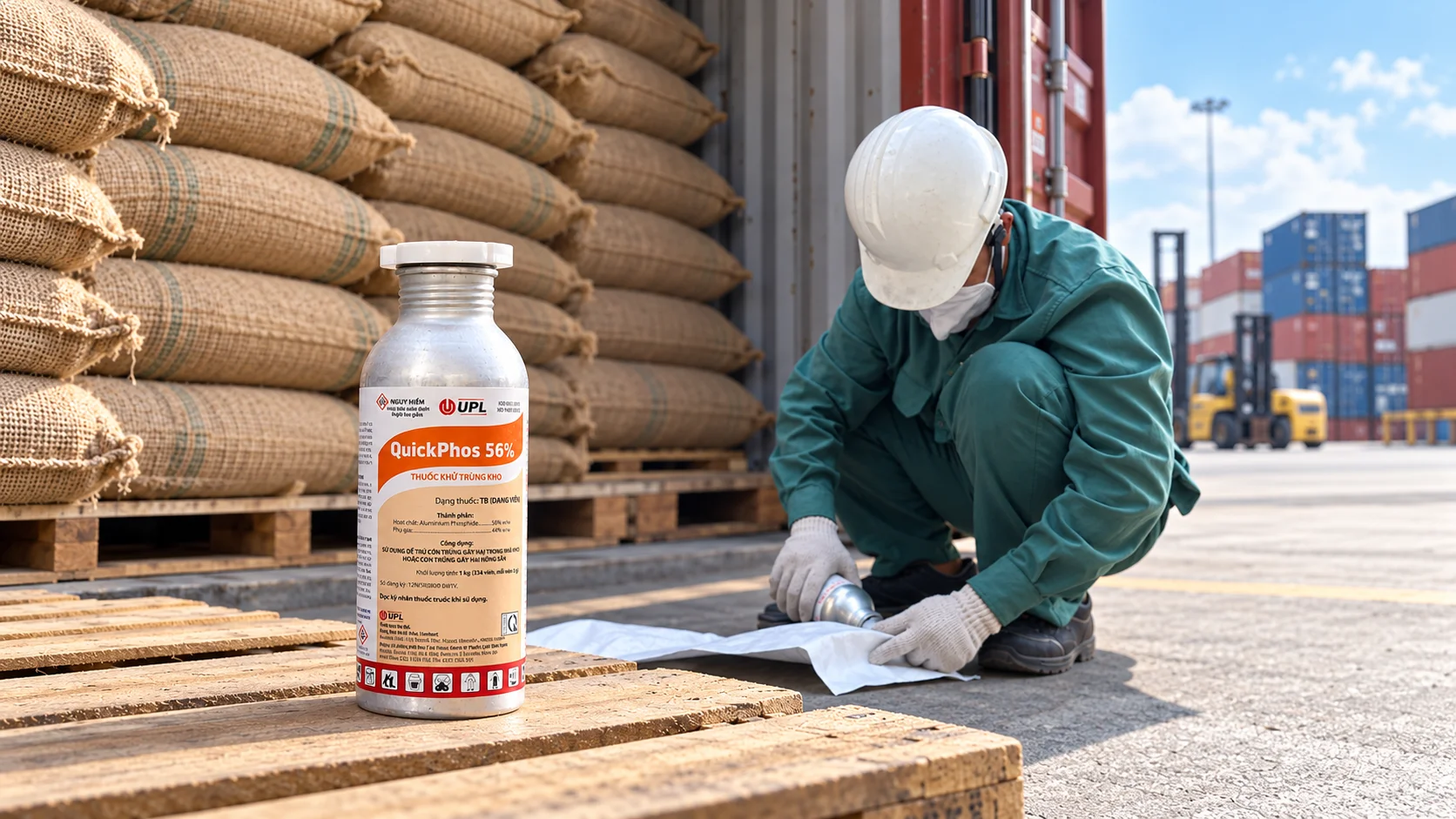
Phosphine is the standard fumigant widely utilized for dry agricultural commodities and warehoused goods
Gas Generation Mechanism: Colorless Phosphine (PH3) gas is generated through a natural chemical reaction between metallic phosphide compounds—such as Aluminium Phosphide (AlP in round tablets, flat pellets, or bag blankets/chains) or Magnesium Phosphide (Mg3P2)—and ambient atmospheric moisture.
Commercial formulations invariably incorporate Ammonium carbamate (NH2COONH4) to simultaneously release carbon dioxide (CO2) and ammonia (NH3), which mitigates flammability risks while improving insecticidal dispersion.
Eradication Mechanism: PH3 gas desorbs gradually under progressive concentration accumulation, entering through pest spiracles to disrupt metabolic cellular respiration.
Key Advantages:
- Preserves Commodity Quality: When applied and aerated in accordance with technical protocols, PH3 desorbs completely from agricultural commodities without altering taste, aroma, or processing attributes.
- Preserves Germination Viability: When executed correctly, Phosphine causes zero physiological damage to seed embryos, fully preserving seed germination capacity for planting stock.
- Environmentally Sound: Non-halogenated with zero ozone depletion potential (ODP).
Technical Limitations:
- Extended Exposure Duration: Due to its slow-acting physiological uptake, the minimum gastight exposure duration is 7 to 10 days (or longer in cooler ambient temperatures) to ensure complete mortality of tolerant egg and pupal stages.
- Corrosive to Non-Ferrous Metals: PH3 gas reacts aggressively with copper, silver, gold, and copper alloys (brass/bronze). Phosphine must strictly never be deployed on cargoes containing electronic circuit boards, technological devices, or precision electromechanical machinery.
2.2 Methyl Bromide (CH3Br) Fumigant – Rapid Treatment for Import-Export Quarantine
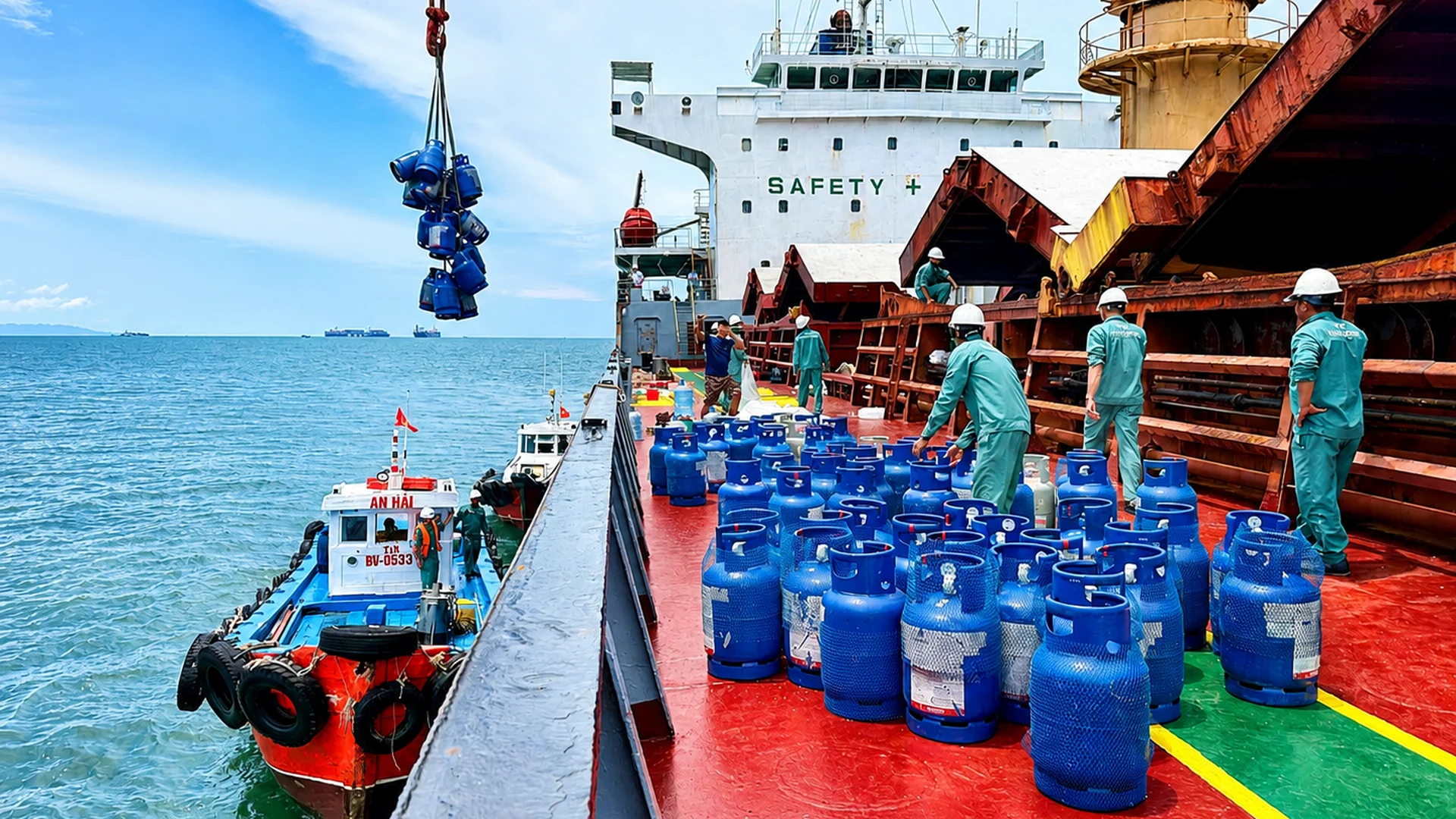
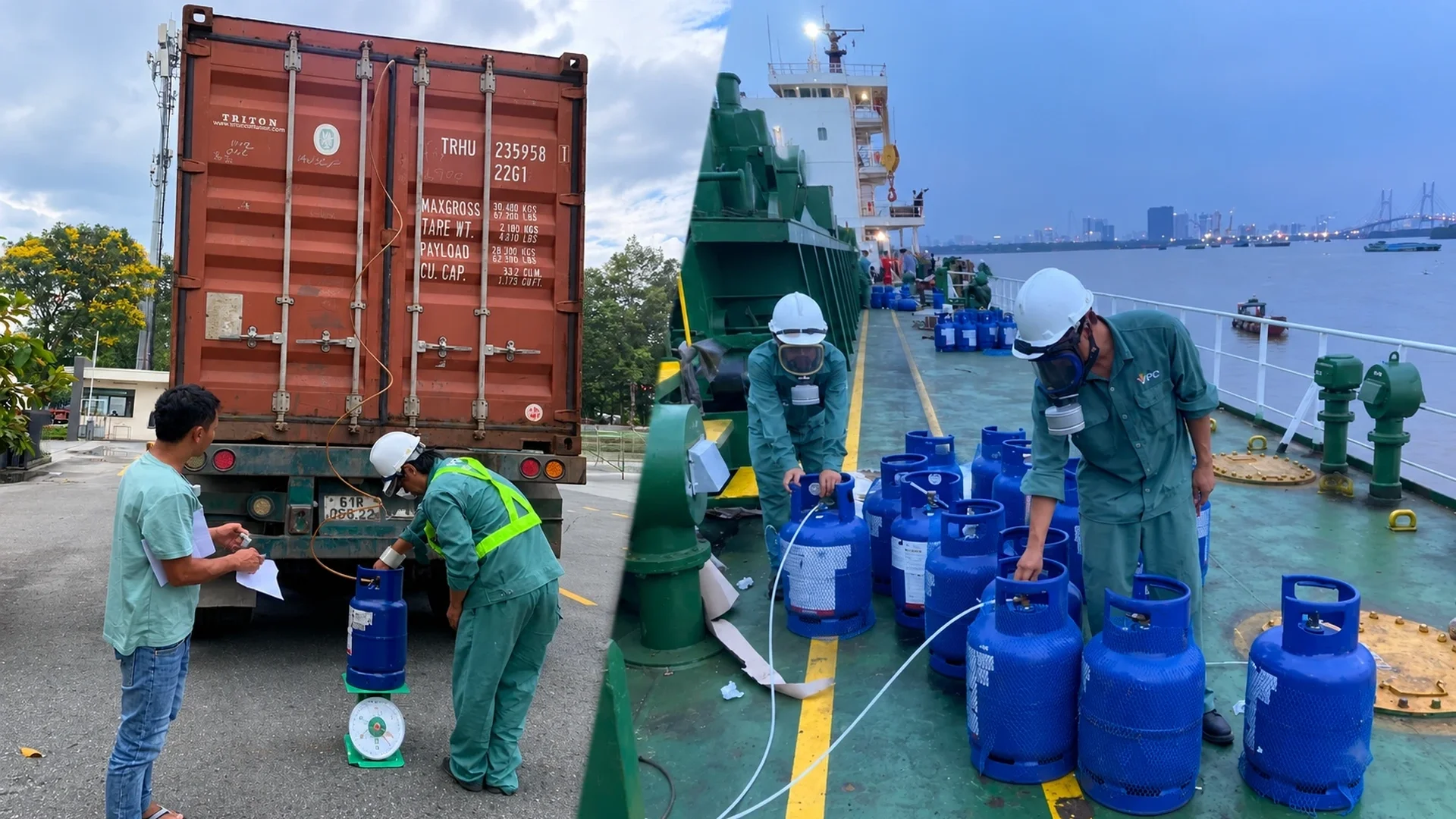
Methyl Bromide is stored under pressure in cylinders and injected into treatment areas via specialized delivery systems
Specifications & Vaporization Mechanism: The fumigant is compressed as a liquefied gas inside specialized pressurized steel cylinders. When injecting Methyl Bromide fumigant into containers, vessel holds, or commodity stacks, a specialized heating unit (vaporizer) should be deployed to fully vaporize the chemical.
Mode of Action: CH3Br gas acts acutely upon the central nervous system and cellular respiration of insect pests, delivering rapid lethality and broad-spectrum toxicity.
Key Competitive Advantages:
- Rapid Exposure Cycle: Standard exposure cycles require only 24 to 48 hours, resolving time-sensitive delivery schedules and meeting carrier cut-off times.
- Non-Corrosive to Metals: Completely non-reactive with gold, silver, and copper, making it safe for treatment of machinery, raw metal parts, and electromechanical equipment.
- Global Quarantine Standard: The sole active fumigant recognized under the AFAS program for exports to Australia in Vietnam, and the benchmark fumigation method under the ISPM 15 wood packaging standard.
Technical Limitations:
- Destroys Seed Viability: Kills or drastically impairs seed embryo germination; strictly unsuitable for planting seeds.
- Strict Regulatory Oversight: Classified as an ozone-depleting substance under the Montreal Protocol, Methyl Bromide is restricted exclusively to authorized Quarantine and Pre-shipment (QPS) operations under state regulatory control.
2.3 Regulatory Notice Regarding Sulfuryl Fluoride (SF)
International buyers and logistics partners frequently inquire about Sulfuryl Fluoride (SF) because overseas biosecurity agencies (such as Australia's DAFF) list it on their approved treatment schedules. However, within Vietnam:
- Sulfuryl Fluoride has not been registered, authorized, or commercially licensed for phytosanitary quarantine operations by the Plant Protection Department.
- Consequently, no fumigation provider in Vietnam is legally permitted to execute treatments using Sulfuryl Fluoride. Exporters must be aware of this statutory limitation to avoid requesting unauthorized treatments that could invalidate export documentation and create regulatory compliance liabilities.
3. Detailed Comparison: Phosphine (PH3) vs. Methyl Bromide (CH3Br)
| Comparison Criteria | Phosphine Fumigant (PH3) | Methyl Bromide Fumigant (CH3Br) |
|---|---|---|
| Initial Formulation | Solid formulation (tablets, pellets, degesch strips, bag blankets). | Liquefied gas compressed inside pressurized steel cylinders. |
| Application Method | Probed or placed on cargo surfaces and within the stow. | Injected through pre-laid delivery lines utilizing a vaporizer unit. |
| Minimum Exposure Time | 7 – 10 days (longer in colder temperatures). | 24 – 48 hours. |
| Impact on Seed Viability | Safe; does not impair seed germination rates. | Damages seed embryos; strictly contraindicated for seed stock. |
| Impact on Metals | Severely corrosive to non-ferrous metals (copper, brass, silver, gold). | Inert; completely non-corrosive to metals and electronics. |
| Interaction with Fatty Foods | Minimal sorption; leaves no off-odors or chemical residues. | Easily absorbed by fats/oils, causing lingering off-flavors in dairy, high-fat meals. |
| Optimal Application Scope | Long-term agricultural storage, grain silos, bulk commodities. | Export biosecurity quarantine, ISPM 15 wooden pallets, AFAS Australia shipments. |
4. The 5-Step Safe Operational Protocol for Container Fumigation
Gaseous fumigation is a high-risk technical operation governed by strict statutory criteria, demanding seamless precision between field execution and documentation control:
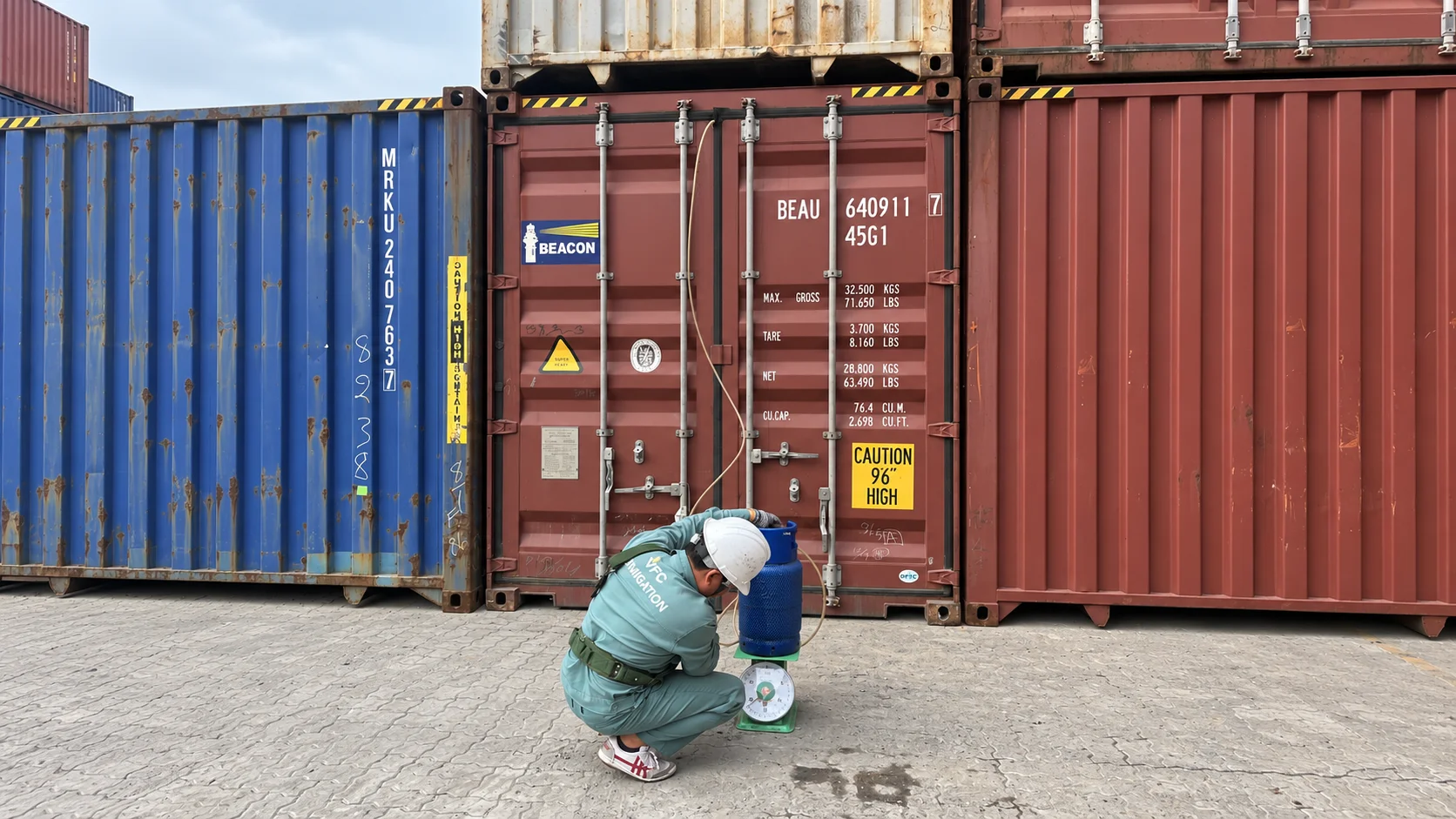
International-standard container fumigation techniques
Step 1: Booking Reception & Physical Container Survey
Receive and verify cargo parameters provided by the client: container type (20ft, 40ft), container number, seal number, commodity description, destination market, and terminal cut-off times. Technicians conduct an on-site structural inspection of the container at the depot/port yard, ensuring side panels are free of punctures, wooden flooring is intact, and door gaskets seal tightly without air gaps.
Step 2: Technical Setup & Gastight Sealing
Lay dedicated gas injection lines for Methyl Bromide treatments, or position Aluminium Phosphide formulations according to the validated treatment plan. Install gas monitoring lines at designated sampling points inside the container. Seal all external ventilation ports and front-door perimeter gaps using specialized gastight materials; mount official toxic gas warning placards.
Step 3: Fumigant Injection & Gas Monitoring
Inject the calculated Methyl Bromide dosage in strict compliance with the established operational schedule. Throughout the exposure period, technicians conduct periodic gas concentration readings using specialized detection instruments to confirm gas levels remain above lethal thresholds across all insect life stages.
Step 4: Safe Aeration & On-Site Handover
Upon completing the mandatory exposure duration, technicians open container doors and strip away vent sealing materials to initiate aeration. Specialized gas detectors verify that residual gas concentrations have dropped below the statutory Threshold Limit Value (TLV) before final site handover. Perform joint inspection and sign-off with the client.
Step 5: Issuance of Fumigation Certificate
Issue an official, valid Fumigation Certificate compliant with the designated regulatory templates and technical mandates of the importing nation. Each certificate integrates a unique QR code for real-time verification during customs clearance procedures.
Read more: Export Container Fumigation Procedure with Methyl Bromide
5. Export-Import Cargo Fumigation Capabilities of VFC Fumigation
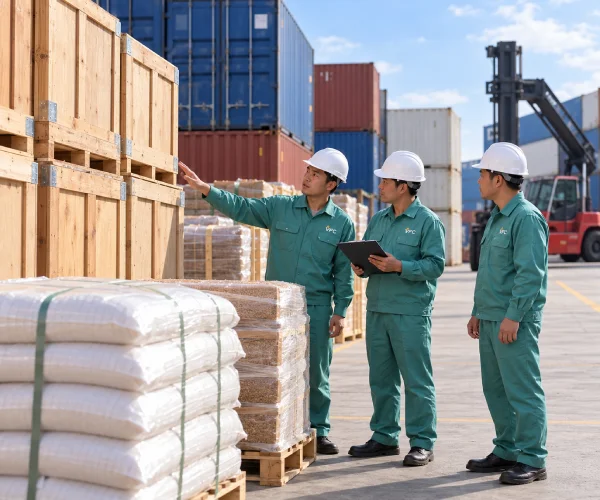
As the pioneer that established and continues to lead Vietnam's fumigation industry, Vietnam Fumigation Joint Stock Company (VFC Fumigation) provides a reliable safeguard for global trade and logistics supply chains:
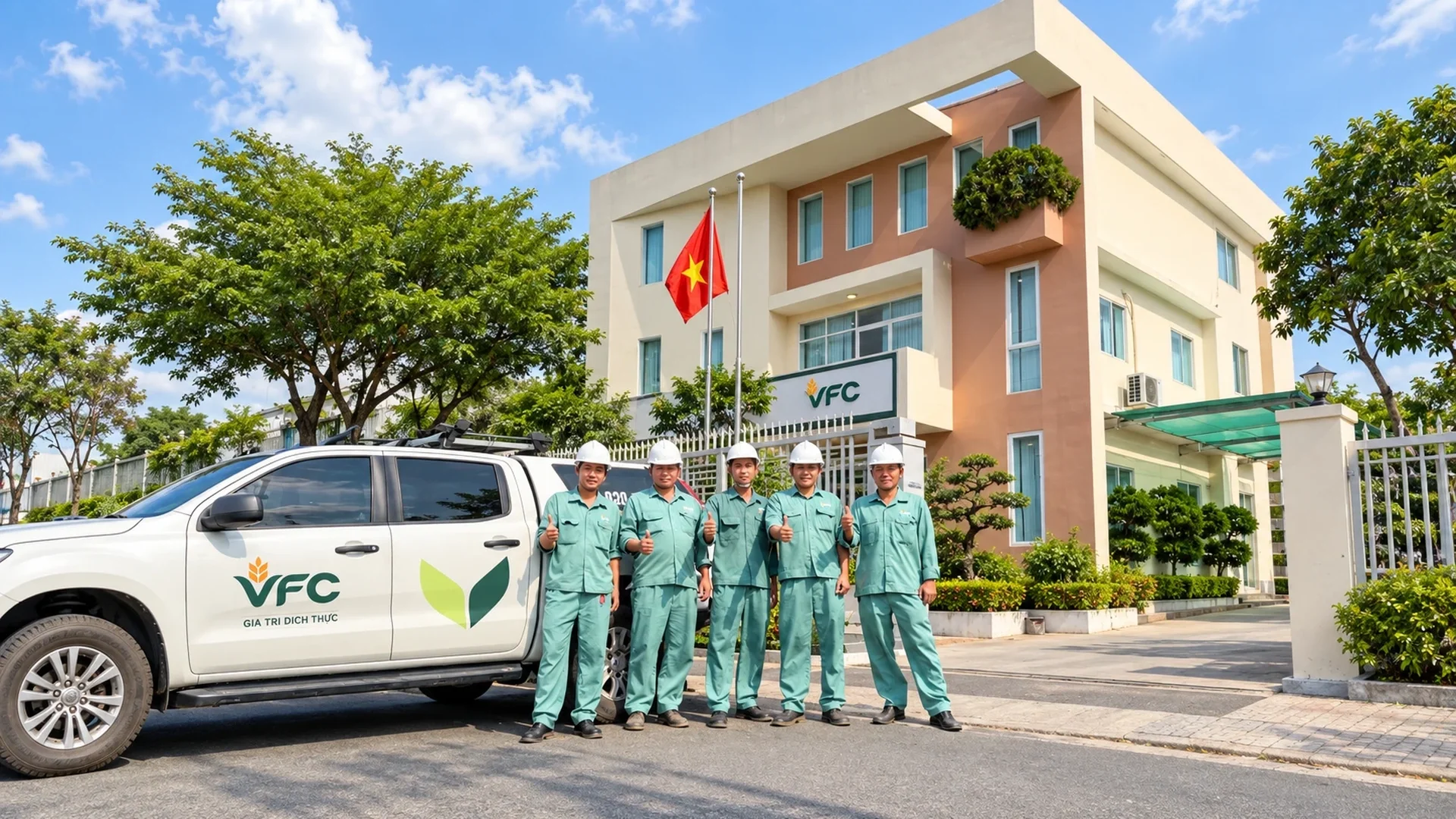
VFC Fumigation - An experienced treatment provider for export-import cargo
Over 50 Years of Industry Leadership: VFC Fumigation operates a nationwide network of technical operational stations across all major international seaport clusters (Hai Phong, Cat Lai, Cai Mep, Quy Nhon, Da Nang, Can Tho...) and core agricultural commodity hubs. Our operational technicians are formally trained and hold complete professional certifications and fumigation practice licenses issued by the Plant Protection Department.
International Biosecurity Accreditation from IMFO: VFC Fumigation is the sole official member representing Vietnam within the International Maritime Fumigation Organization (IMFO). VFC Fumigation strictly adheres to international maritime safety standards, IMO regulations, and global shipboard fumigation codes.
Two-Layer Transparent Operational Governance and Verification Model:
- On-Site Operational Governance via FumiApp: Every on-site operational phase is documented and synchronized in real time onto the proprietary FumiApp operational management platform by our technical teams.
- Digital Certificate Verification via QR Code: Every Fumigation Certificate issued by VFC Fumigation features an integrated QR code. Clients, overseas buyers, and shipping lines can instantly scan the QR code to cross-reference and verify certificate authenticity directly against VFC Fumigation's official central database.
6. Frequently Asked Questions About Cargo Fumigants
Q1: Can Phosphine be utilized for rapid 1–2 day fumigation of export wooden pallets?
Absolutely not. The international standard ISPM 15 does not recognize Phosphine (PH3) for export wood packaging material (WPM). In Vietnam, for export wooden pallets, international quarantine regulations exclusively approve Methyl Bromide (MB) fumigation or Heat Treatment (HT) as qualifying treatments to receive the official certification mark for customs clearance.
Q2: How must Aluminium Phosphide (AlP) formulations be stored to prevent fire and explosion risks?
Because AlP formulations react spontaneously with atmospheric humidity, chemicals must remain hermetically sealed inside the manufacturer's original aluminum flasks. The storage facility must be dry, cool, well-ventilated naturally, and strictly isolated from water sources, humid environments, and electrical or spark-generating sources.
Q3: Are commercial enterprises or warehouse owners permitted to purchase fumigants for self-treatment?
No. Chemical fumigants belong to a restricted-use biocide class exhibiting extreme inhalation toxicity. Under Vietnamese law, gaseous fumigation operations may only be executed by enterprises holding an official Certificate of Eligibility issued by the Plant Protection Department, and personnel directly conducting operations must possess valid Fumigation Practice Licenses.
7. Schedule an On-Site Survey and Technical Consultation with VFC Fumigation
Selecting the appropriate fumigant for specific commodities and target markets enables enterprises to optimize logistics costs and eliminate biosecurity rejections at destination ports.
Exporters, logistics providers, and freight forwarders requiring biosecurity compliance assessments or scheduling international-standard fumigation services for containers, warehouses, and grain silos can contact VFC Fumigation directly:
- Hotline 24/7: 0914 773 300
- Customer Service Center: 1800 577 788
- Email: contact@fumigation.vn




Related Blogs