





Published date:
29/09/2026
Share




During the rainy season, elevated ambient humidity causes stored rice grains to reabsorb moisture readily (often breaching the critical 14% safety threshold), triggering pest proliferation and escalating the risks of microbial spoilage. To prevent import clearance rejections caused by live pest interceptions and to mitigate container sweat during ocean voyages, export enterprises must enforce stringent control across 6 critical parameters: grain moisture content, fumigation withholding and aeration periods, container gastightness, wooden pallet standards, packaging integrity, and specialized desiccant solutions.
1. Critical Risks for Stored Export Rice During the Rainy Season: From Warehousing to Ocean Transit
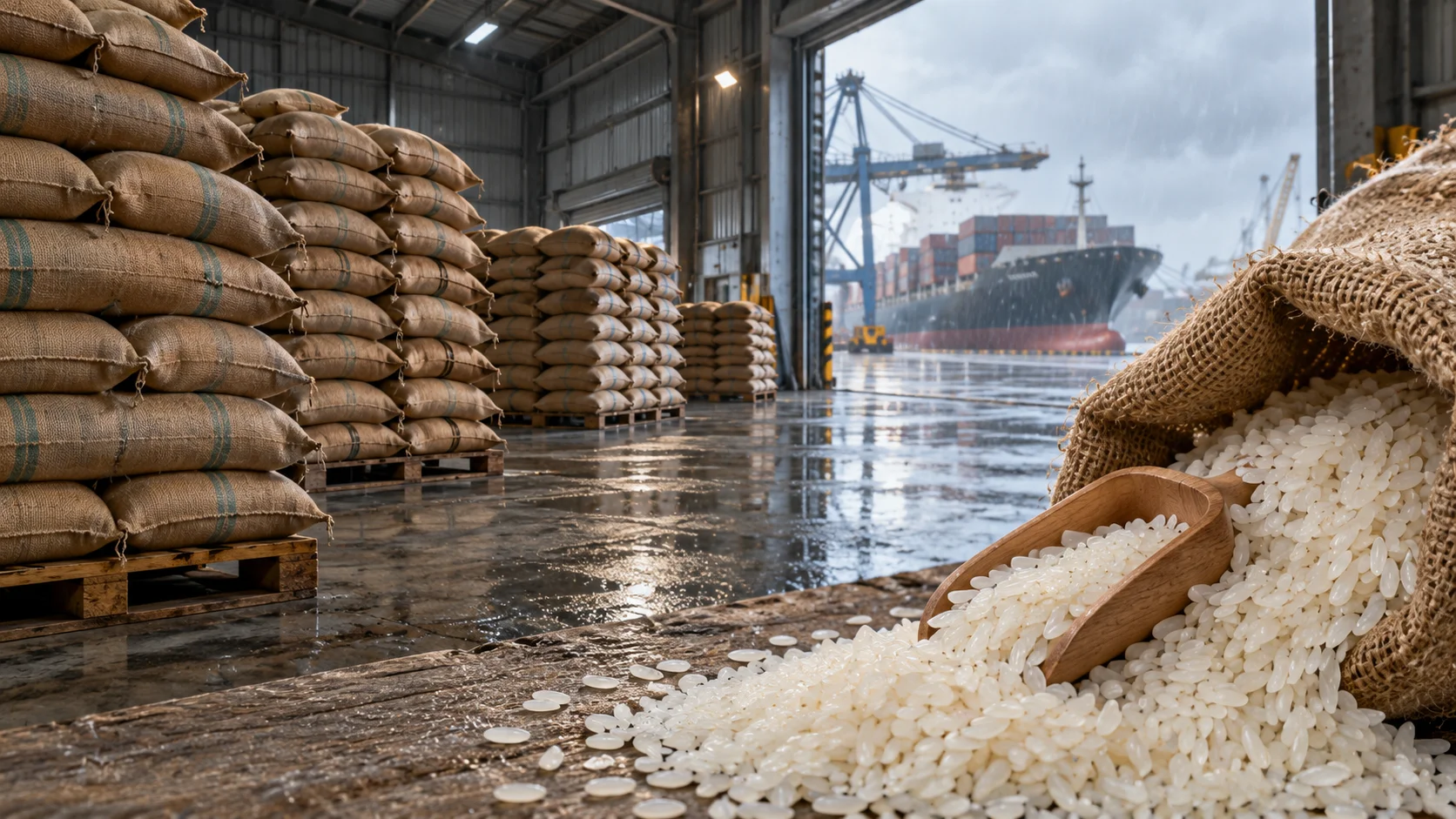
High humidity during the rainy season escalates moisture reabsorption, localized heating, insect infestation, and mold development in stored rice
Protracted rainy periods accompanied by relative ambient humidity fluctuating between 80% and over 90% pose direct threats to export-grade rice stocks:
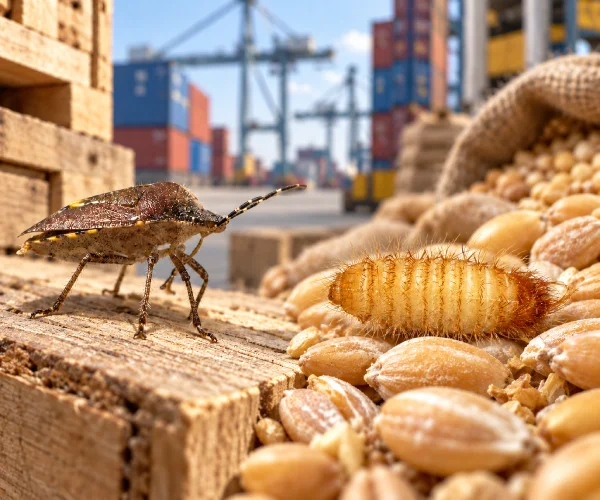
- Moisture reabsorption and outbreak of stored-grain pests: Rice is a highly hygroscopic agricultural commodity. When surrounding humidity exceeds safe thresholds, grain bulks rapidly reabsorb atmospheric moisture, driving moisture content beyond the critical 14% limit. Elevated moisture and ambient warmth accelerate the life cycle of stored-grain insects. Primary pests that bore directly into whole grain kernels (such as rice weevils and lesser grain borers), alongside secondary pests that feed on grain fragments and broken kernels (such as red flour beetles), proliferate aggressively, causing volumetric weight loss and severe grading downgrades.
- Localized heating (hotspots) causing souring and kernel discoloration: Excess grain moisture sharply elevates the respiration rate of the bulk, generating carbon dioxide, heat, and metabolic water. As moisture content rises, combined grain respiration and microfloral/insect activity produce localized heating. If left undetected and uncontrolled, these "hotspots" rapidly degrade grain quality, producing steam condensation, kernel yellowing, sweating, and sour odors that destroy export marketability.
- Container sweat hazards during ocean transit: Rice packed during the rainy season carries high internal moisture. When vessels transit ocean routes characterized by pronounced day-to-night temperature fluctuations, warm water vapor evaporating from the rice stack rises and condenses against cold steel container ceilings, dripping back onto the cargo surface. This phenomenon creates localized wet spots, promotes black mold development, and damages the top layer of bags.
- Financial liabilities from port demurrage, detention, and mandated retreatment: Phytosanitary authorities in major import markets (such as the Philippines, Indonesia, the European Union, and the United States) enforce zero tolerance for live regulated pests. The detection of live insects or moisture-induced mold triggers an immediate suspension of clearance, leading to mandatory retreatment or enforced re-export. Exporters face progressive demurrage and detention fees, along with contract default penalties.
2. Six Critical Pre-Stuffing Checkpoints for Export Rice in the Rainy Season
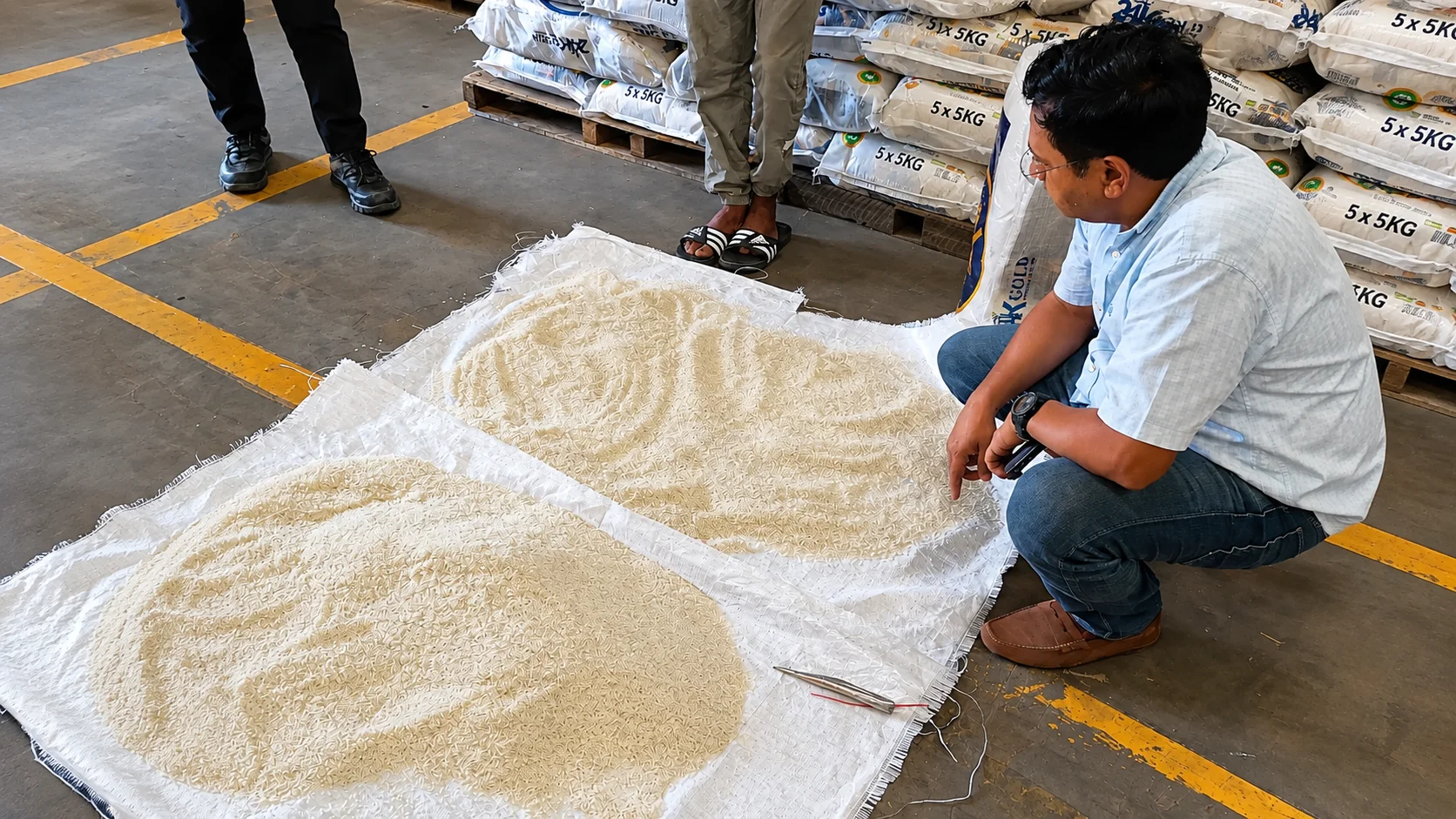
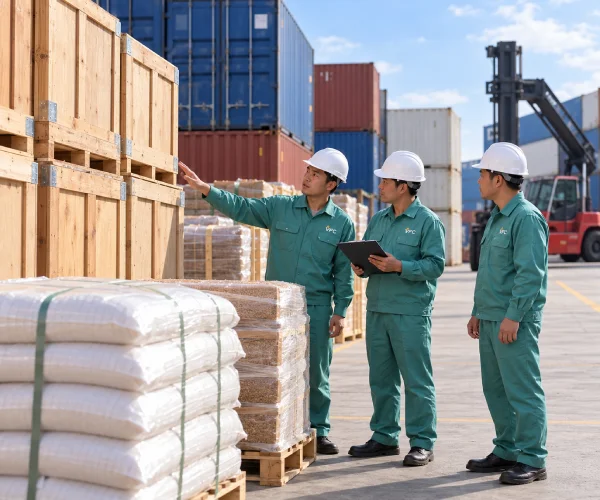
Six essential pre-stuffing checkpoints for export rice during the rainy season
To control biosecurity risks and maintain commodity grade, quality control (QC) and warehouse logistics teams must execute 6 checks:
Checkpoint 1: Verify actual grain moisture content: Use calibrated probe moisture meters to sample three representative positions: top layer, core center, and bottom bags. Grain moisture content prior to container stuffing should be maintained strictly below 14%.
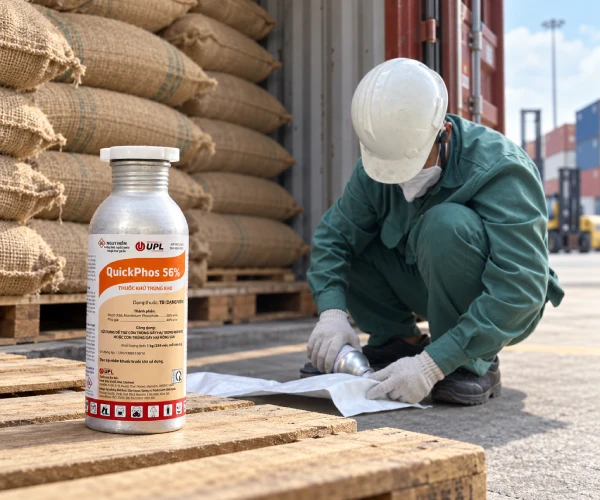
Checkpoint 2: Verify warehouse fumigation withholding and aeration periods: Confirm that the stored rice consignment has completed a minimum Phosphine (PH3) exposure period of 7 to 10 days and has undergone safe aeration.
Checkpoint 3: Inspect container gastightness and structural hygiene: Technicians must step inside the container and close both doors completely to check for light penetration through pinholes in roof panels or corroded side walls. Inspect the elasticity of rubber door gaskets to ensure they are free of tears, gaps, or brittleness, preventing rainwater ingress during transit.
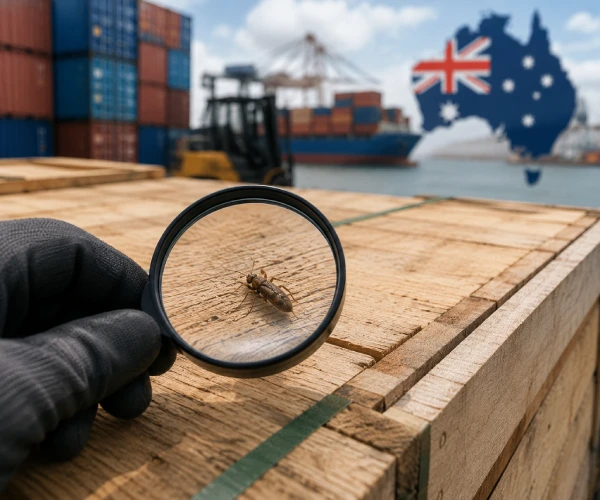
Checkpoint 4: Inspect wooden pallet quality and certification marks: All supporting wooden pallets must be dry, fully debarked, free of soil contamination, and show no signs of wood-boring pests. The ISPM 15 stamp must be clearly and legibly applied with permanent ink on at least two opposing sides.
Checkpoint 5: Assess packaging condition and floor moisture barriers: Polypropylene (PP) woven sacks, multi-wall Kraft paper bags, or Jumbo bags (FIBCs) must be completely dry and protected from rainwater during staging. Prior to loading, evaluate the installation of protective floor-lining materials based on packaging types, stacking patterns, and voyage conditions to prevent residual moisture in timber floorboards from migrating into bottom-tier bags.
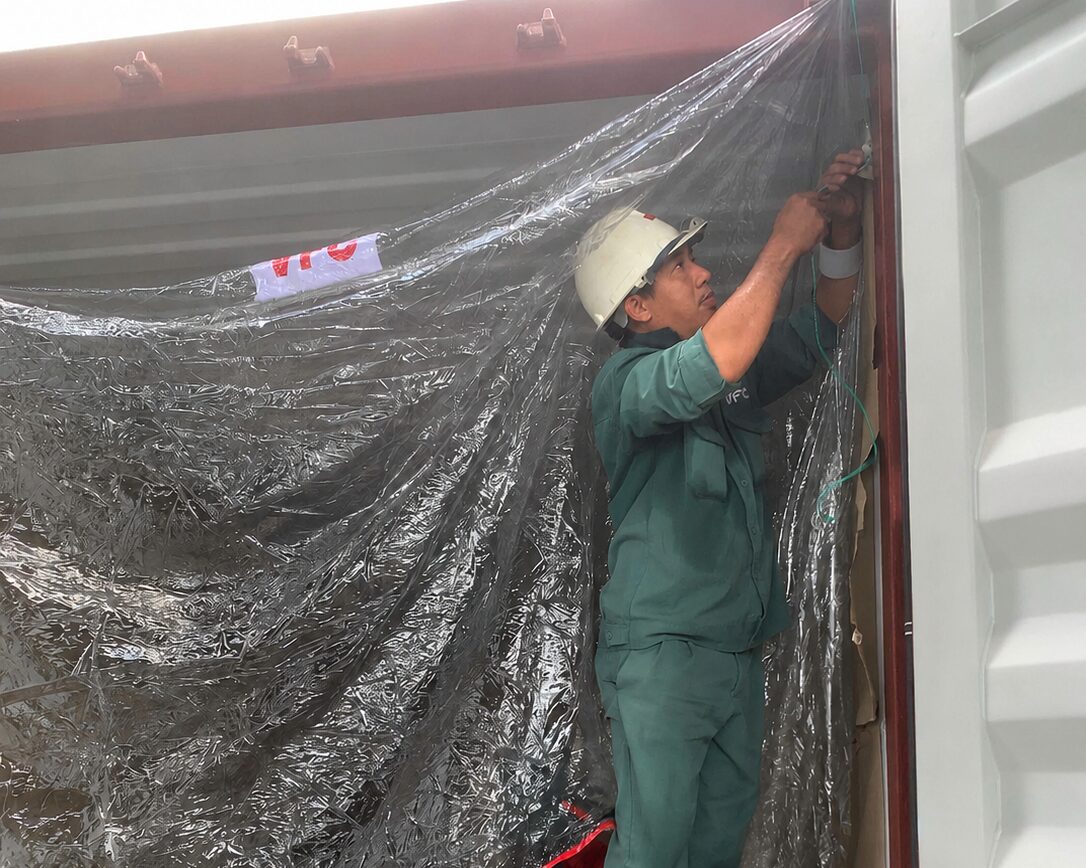
Checkpoint 6: Deploy industrial ceiling paper lining and desiccant solutions: Affix Kraft paper lining to the container ceiling to prevent condensation droplets from dripping directly onto packaging surfaces. Concurrently, specialized desiccant materials can be deployed in suitable quantities and strategic positions to support moisture control inside the container. The utilization of desiccant bags must be calibrated according to cargo type, volume, packaging specifications, transit duration, and climatic conditions to actively absorb ambient moisture within the container throughout the ocean voyage.
3. Export Rice Quality Control Solutions from VFC Fumigatio
Supporting rice processing and export enterprises through challenging weather conditions, VFC Fumigation delivers an integrated technical framework:
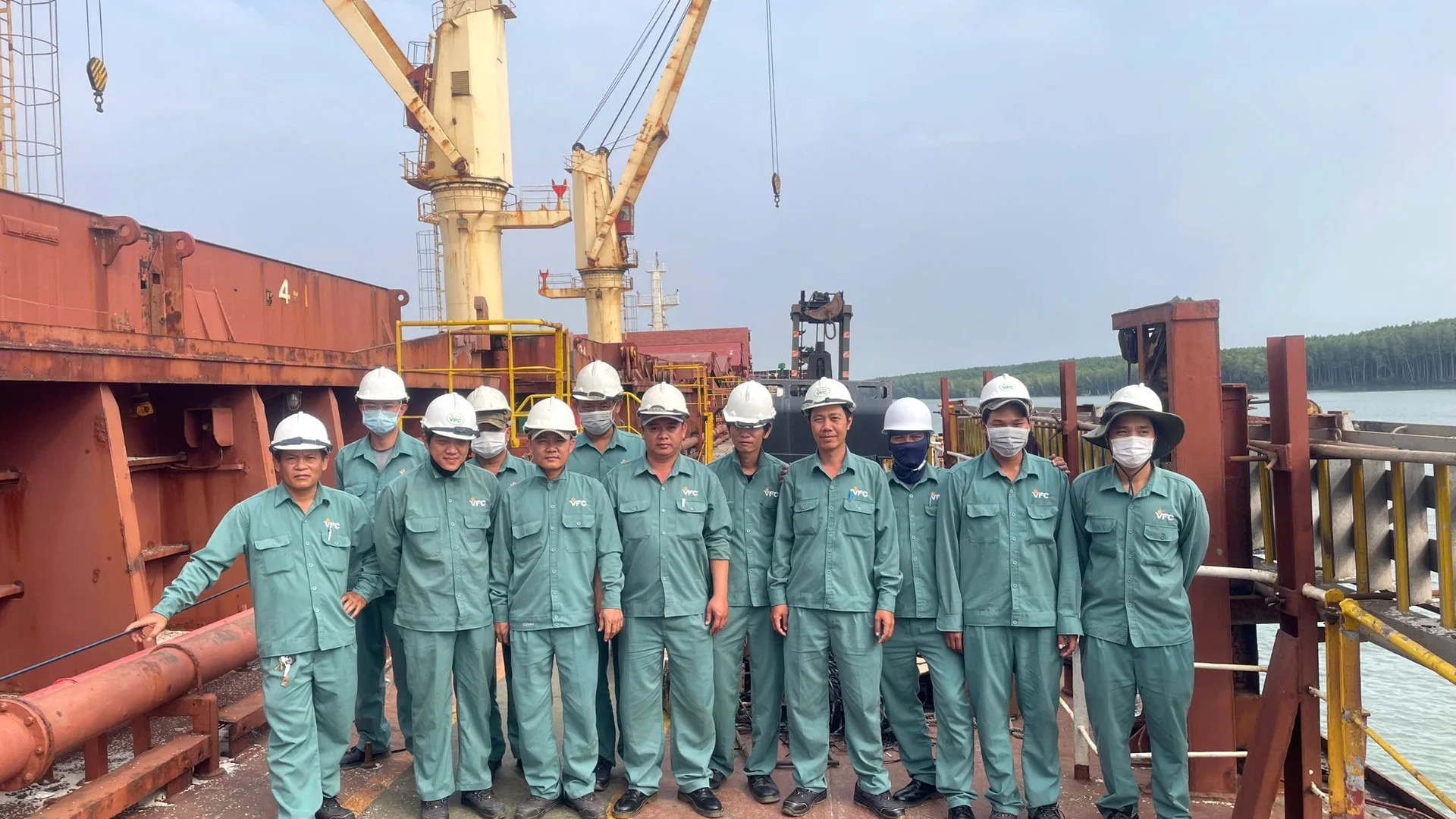
VFC Fumigation partners with agribusinesses to manage pest and moisture risks for export rice during the rainy season
Operational Management and Document Verification Model with Two-Layer Transparency:
- Real-time on-site logging via FumiApp: VFC technical teams employ specialized gastight sealing materials, calculate chemical dosages based on volume and temperature, and log technical operations, monitoring metrics, and photographic evidence directly to the dedicated FumiApp system.
- Document Verification via QR Code: Fumigation certificates issued by VFC integrate a QR code. Trading partners, shipping lines, and destination biosecurity authorities can easily scan the code to cross-check and verify the validity of the certificate directly on VFC Fumigation's database system.
Dual-Protection Methodology: Pest Eradication Combined with Anti-Condensation Solutions
VFC Fumigation provides complete moisture and sweat-prevention services: on-site installation of moisture-absorbing Kraft paper lining across container ceilings and walls, paired with high-absorption industrial desiccants to maintain dry microclimates within containers throughout maritime transit.
Operational Infrastructure Covering Raw Material Basins and Export Ports
- Permanent technical stations located directly across the Mekong Delta rice production hubs (Can Tho, Dong Thap, An Giang, Long An, and neighboring provinces).
- On-site teams stationed at major container gateway ports: Ho Chi Minh City (Cat Lai, Cai Mep), Hai Phong, Quy Nhon, Da Nang, and regional terminals.
- Round-the-clock (24/7) deployment readiness to align with terminal loading schedules and carrier cut-off windows.
Verified Field Experience and International IMFO Accreditation
As the official Vietnamese member of the International Maritime Fumigation Organization (IMFO), VFC Fumigation enforces international standards for bulk grain vessels and containerized general cargo. This operational capacity is demonstrated through successful treatments executed across thousands of bulk and containerized rice shipments bound for Asian, African, European, and American markets.
4. Frequently Asked Questions (FAQ) Regarding Rainy Season Rice Storage and Fumigation
Frequently asked questions regarding rainy season rice storage and fumigation
Question 1: Can vacuum-packed rice develop pest infestations during the rainy season?
Answer: Yes, risks remain. While vacuum packaging blocks external insect entry, if incoming raw grain contains undetected insect eggs or fungal spores prior to packaging, high ambient humidity and temperature fluctuations can induce grain respiration and gas production. This breaks package seals and creates conditions for pest proliferation inside the bag.
Question 2: Why are live weevils sometimes detected at destination ports despite completing full warehouse fumigation before export?
Answer: This issue typically stems from three primary factors:
- Vessel holds or container interiors were not swept and disinfected prior to stuffing, causing cross-contamination from insect populations remaining from prior voyages.
- Wooden dunnage or pallets were insufficiently dried, retained bark, or harbored stored-product pests within structural cracks.
- Re-infestation occurred from external depot sources during dwell times or at transshipment hubs.
Question 3: How is spent Aluminium Phosphide (AlP) residue collected and disposed of post-treatment?
Answer: Following the completion of the fumigation exposure window and safe aeration, technicians collect all spent Aluminium Phosphide residue contained within breathable retention sachets. The chemical residues are transferred back to dedicated VFC Fumigation facilities for authorized disposal according to environmental regulations.
For technical consultation on pest control and moisture management protocols for export rice during the rainy season, contact VFC Fumigation:
- Technical Support Hotline 24/7: 1800 577 788
- Service Consultation Hotline/Zalo: 0914 773 300
- Email: contact@fumigation.vn





Related Blogs