





Category:
Fumigation by Industry Sector

Published date:
13/07/2026
Share




Understanding what WPM is and the strict export fumigation regulations associated with it helps businesses proactively prevent risks, optimize costs, and protect brand reputation in the global market.
What is WPM? The role of WPM in the supply chain
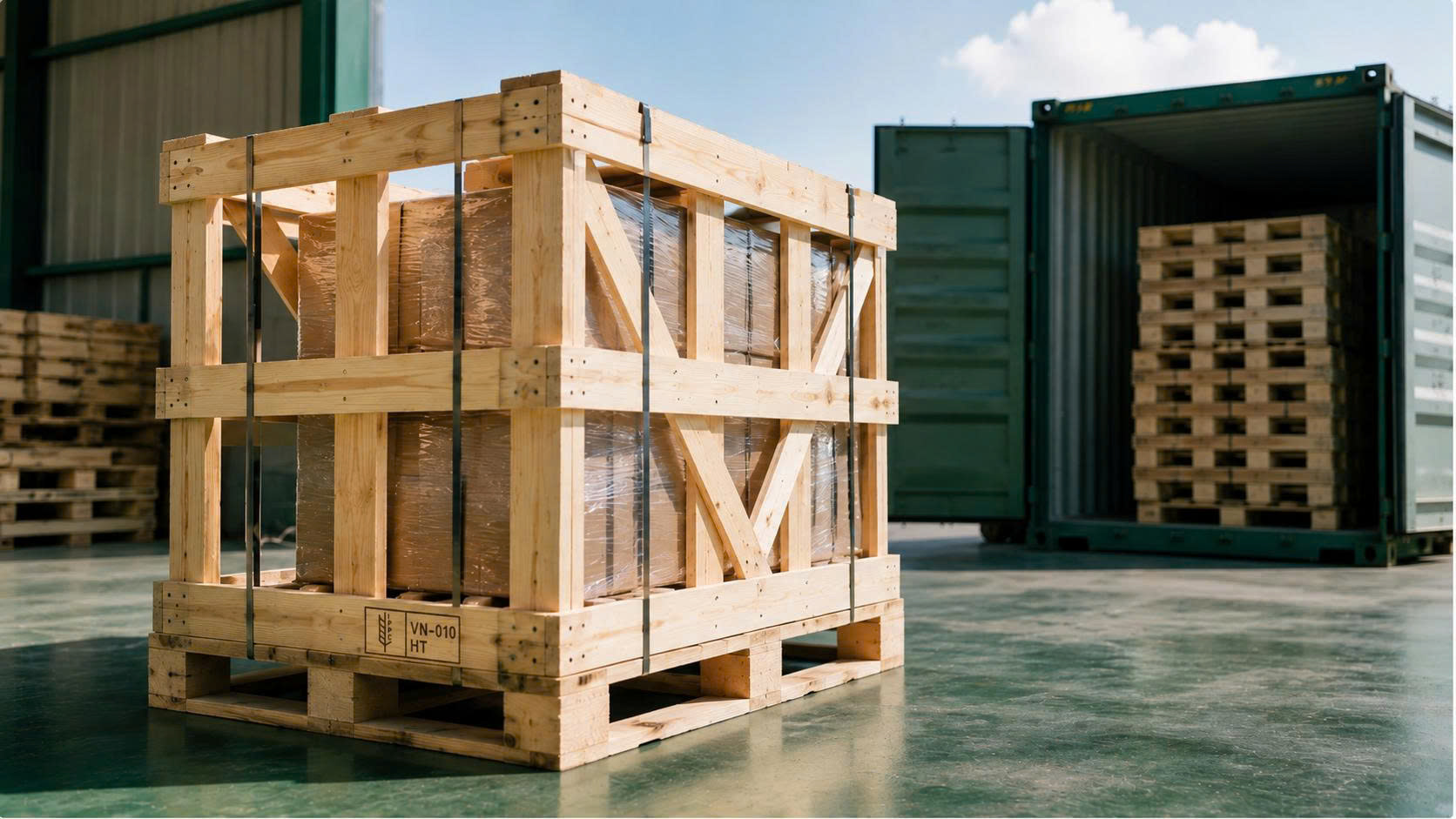
WPM stands for Wood Packaging Material. According to guidelines from the International Plant Protection Convention (IPPC), this refers to raw wood or wooden components that have not undergone deep processing and are widely used to support, protect, secure, or lift goods during cross-border transportation. WPM appears in almost every industry, from heavy industry and electronic components to export agricultural products, thanks to its low cost and strong load-bearing capacity.
The most common types of wood packaging materials today include wooden pallets, skids, pallet collars, crates, boxes, and other wooden containers. This group also includes battens, corner or edge dunnage materials used to secure cargo inside containers, as well as wooden cable reels or drums. All of these components are subject to strict supervision by quarantine authorities at destination ports.
If businesses use pallets for packing, they can also see types of export pallets, applicable standards, and how to choose the right ones for each shipment.
Businesses should note an important classification rule: WPM control standards only apply to raw wood materials with a thickness greater than 6 mm. Engineered wood products that have undergone deep processing under high temperature and pressure, such as plywood, MDF, HDF, or particle board, are completely exempt from these regulations. This is because the manufacturing process of engineered boards uses adhesives and heat treatment, helping eliminate pest organisms inside the wood core. For materials that fall within the scope of WPM, the next step is to check treatment status and identification marks.
See more: How to read and inspect the ISPM 15 mark on pallets and wood packaging materials
Why are wood packaging materials strictly controlled?
According to industry studies from the National Pest Management Association of the United States (NPMA PestWorld) and PCT Online, untreated raw wood provides an ideal shelter for harmful organisms. Wood-boring insects, termites, nematodes, and dangerous fungal pathogens can survive for long periods inside wooden pallet components. When shipments move across continents, wood packaging materials may unintentionally become carriers that spread these invasive organisms into new environments. This is also why WPM is considered within plant quarantine systems for import-export goods.
See more: What is plant quarantine, the inspection process, and when technical treatment is required
If invasive organisms successfully enter an importing country, they can damage local forestry ecosystems and cause economic losses worth billions of dollars. Therefore, countries with advanced agricultural and forestry sectors, such as the United States, Australia, Japan, and European Union (EU) countries, impose extremely strict technical barriers on wood packaging materials. Tight WPM control from the point of export is a mandatory measure to prevent potential biological crises.
To standardize and harmonize quarantine measures globally, the International Plant Protection Convention issued the international standard ISPM 15. This standard requires all wood packaging materials used in international trade to undergo strict treatment to completely eliminate pests before customs clearance. Failure to comply with this regulation means businesses may lose access to major markets and face serious administrative penalties.
Fumigation methods for export wood packaging materials
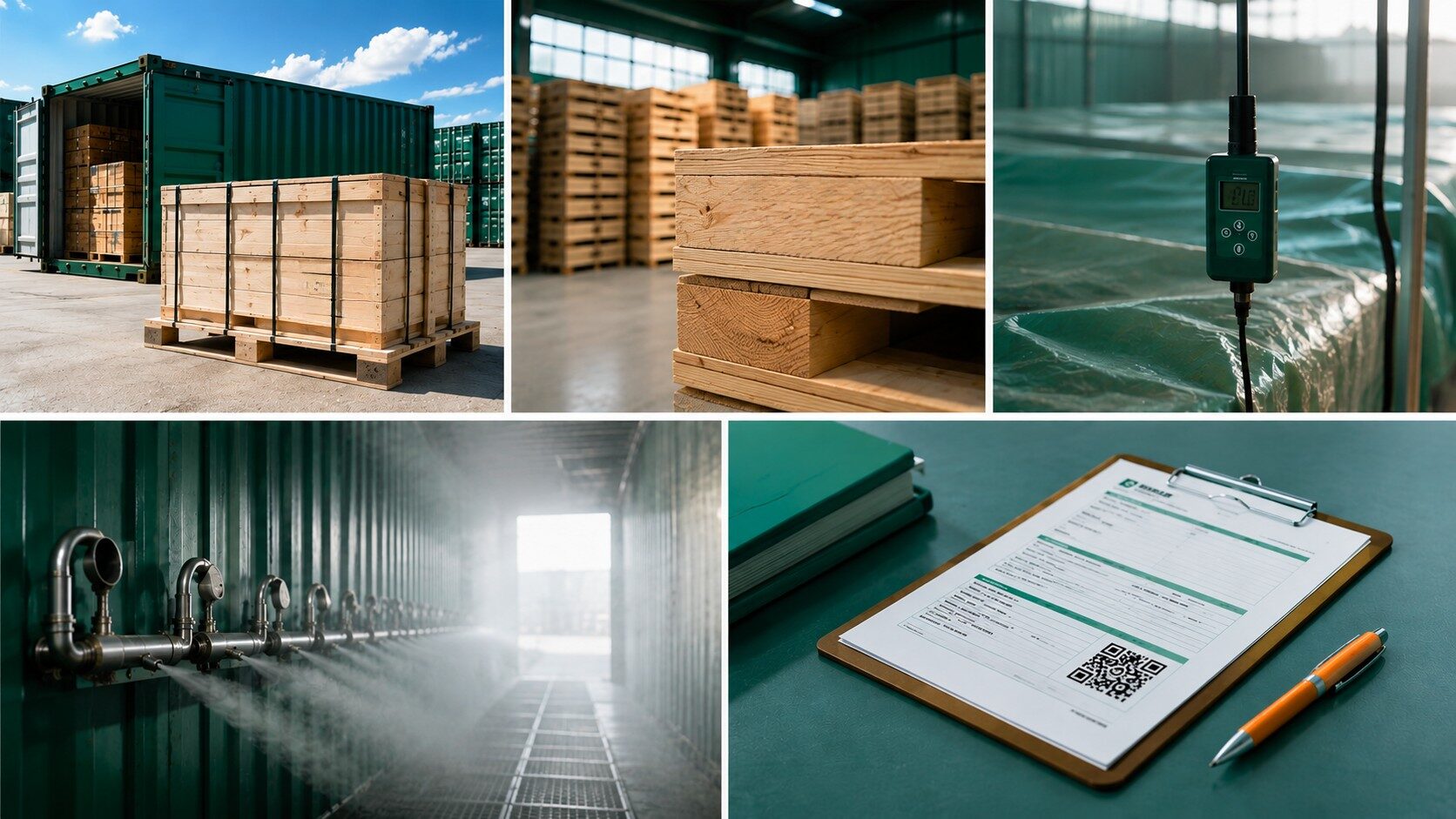
For a wood packaging material component to be legally certified for export, it must be treated using internationally recognized technical methods. According to the fumigation manuals of the Food and Agriculture Organization of the United Nations (FAO) and the Australian Department of Agriculture, heat treatment is one of the safest and most commonly used methods today. This process requires wood to be placed in specialized drying kilns and heated so that the temperature at the core of the wood reaches at least 56°C and is maintained continuously for at least 30 minutes.
Heat treatment not only eliminates larvae and insects hidden inside the wood fibers but also reduces pallet moisture, helping prevent mold during long sea voyages. This method is especially encouraged by strict markets such as Europe because of its environmental friendliness.
The second core method, with a long history of application and high effectiveness, is Methyl Bromide (MB) fumigation. The fumigation process requires wood packaging materials to be placed in a gas-tight space and treated with fumigant at a dosage of 48 g/m³ for a minimum exposure period of 24 hours.
The two methods have different mechanisms, implementation conditions, and operational characteristics. Businesses should see distinguishing between HT heat treatment and MB Methyl Bromide fumigation in ISPM 15 standards before selecting an option.
Plant quarantine process and how to identify compliant WPM
All shipments using wood packaging materials for export must go through the steps in the plant quarantine process at the regulatory agency. After the business submits a complete registration dossier including the contract, invoice, and packing list, the quarantine officer will conduct a physical inspection of the condition of the wooden pallets or crates. If the inspection results meet the requirements and the materials have been properly fumigated according to regulations, the competent authority will issue a phytosanitary certificate for the shipment to qualify for customs clearance.
For wood packaging materials, many countries require treatment according to ISPM 15 standards prior to export. After heat treatment or fumigation using an appropriate method, the material will be stamped as required to prove compliance with international requirements. Businesses should note that the ISPM 15 stamp, although a small detail, can determine the customs clearance of an entire export shipment if errors occur or if it becomes smudged.
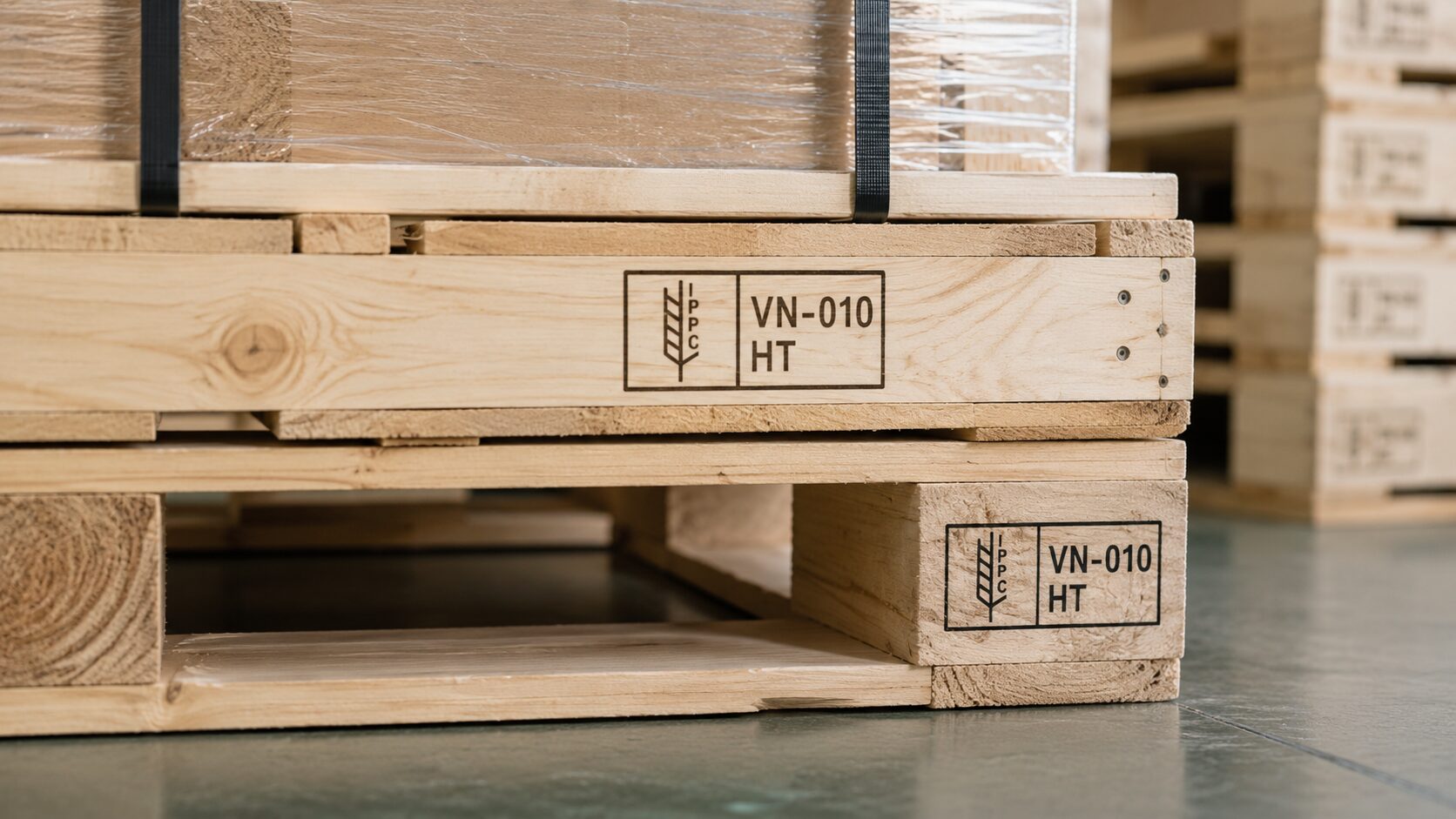
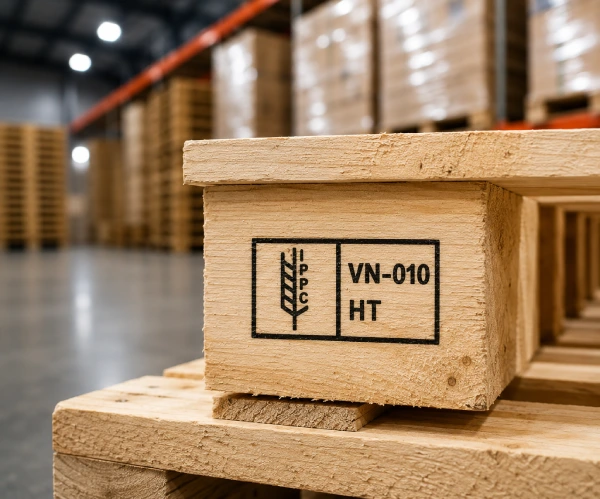
The structure of a valid mark must include the distinctive IPPC wheat symbol on the left, separated by a vertical line from the management information on the right. This information includes the country code of origin, for example VN for Vietnam, followed by a unique number code issued by the national plant protection organization to the wood treatment provider for traceability when needed. Finally, the mark must include the abbreviation of the treatment method applied, specifically HT for heat treatment or MB for Methyl Bromide fumigation.
If you need to understand the specific meaning of the symbol and how to read the codes on the mark, see what IPPC is and the meaning of the IPPC symbol on the ISPM 15 mark
Common risks and preventive solutions for businesses
Actual quarantine inspections at international seaports show that many Vietnamese businesses have suffered significant losses due to a lack of experience in managing wood packaging materials. The most common error is that the mark stamped on the wood surface is blurred, unclear, covered, or applied incorrectly, preventing customs authorities in the importing country from reading the information. In this case, the destination quarantine authority has the right to question the authenticity of the fumigation process and immediately suspend customs clearance for the entire container.
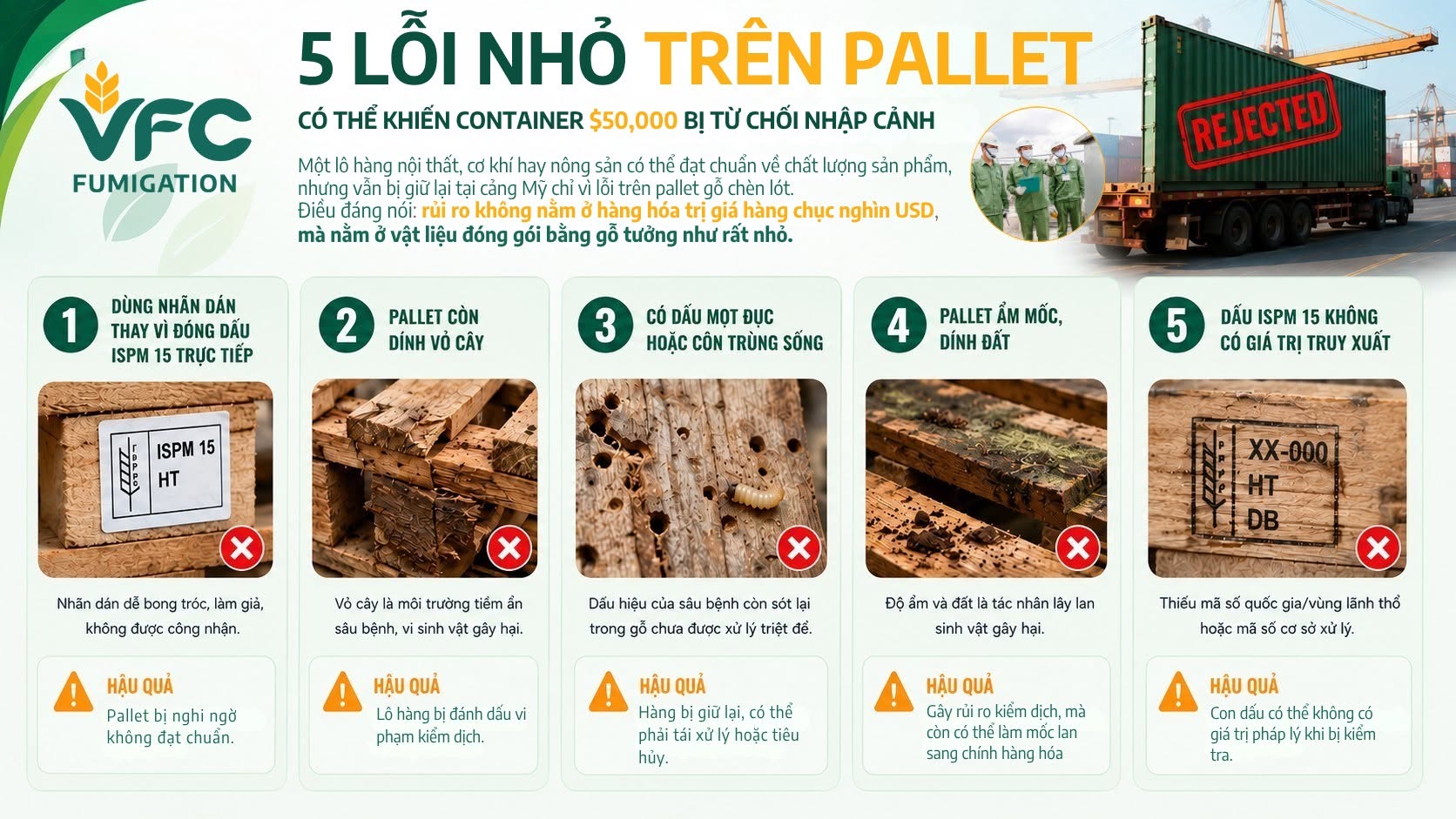
See more: 5 small pallet errors that may put a container at risk upon entry
Another serious mistake commonly made by exporters is the use of mixed pallets or wooden crates. This happens when businesses add new untreated wooden battens to old pallets that already have a mark, or mix compliant and non-compliant wooden packages in the same shipment. In addition, storing wood packaging materials in a damp and poorly ventilated environment after fumigation can create conditions for mold growth or attract reinfesting insects, leading to the detection of live organisms at the destination port.
To minimize these technical risks, exporters need to establish a strict material quality control process at the factory. Businesses should only purchase wood packaging materials from reputable pallet suppliers whose materials have been treated by a competent provider under ISPM 15 before container loading. The warehouse team should conduct a visual inspection of each pallet to ensure the wood is completely free from bark, dry, and clearly marked in an easily visible position.
Trends in replacement options and export packaging cost optimization
For industries that must use wood materials due to heavy load requirements, such as machinery, equipment, or bulk agricultural commodities, the application of technology and supply chain management is the key to cost reduction.
Businesses can sign long-term contracts with professional fumigation service providers to optimize costs per unit while ensuring a continuous supply of compliant materials. Proactively updating changes in quarantine regulations for each target market also helps businesses avoid additional warehousing and storage costs when shipments encounter issues.
When selecting a long-term treatment provider, businesses should not only compare unit prices but also evaluate implementation scope, technical capacity, documentation, and coordination ability according to shipping schedules. See criteria for selecting an export cargo fumigation provider.
WPM is only a part of the overall export container preparation process. Businesses can view the 2026 export container fumigation guide to review additional cargo conditions, market requirements, treatment solutions, and certificates.
In summary, wood packaging materials are not merely low-cost wooden dunnage pieces. They are an important link that determines the smooth flow of goods in international trade. Properly understanding what WPM is and carrying out export fumigation according to technical standards not only helps businesses eliminate legal risks at the destination port but also contributes to improving the competitiveness of Vietnamese goods in global markets.
With more than 50 years of experience in cargo fumigation, VFC Fumigation is trusted by many import-export businesses for the treatment of wooden pallets, wooden packages, and packaging materials according to international standards. The technical team at VFC carries out treatment in accordance with ISPM 15 requirements and supports businesses in completing documents and certificates to meet quarantine requirements in importing markets.
If your business needs to treat wooden pallets or crates before export, please refer to the ISPM 15 wood packaging material fumigation service. Or contact the hotline and email below:
Hotline: 0914 773 300
Email: contact@fumigation.vn
Featured Knowledge

Related Knowledge