









 SECTION
01
SECTION
01
A Comprehensive Guide to Cargo Fumigation for US Exports: Latest Standards, Techniques, and Certification

Category:
Fumigation by Market

Published date:
11/08/2026
Share
The U.S. market is known as one of the world’s most stringent trade destinations in terms of plant quarantine barriers. Although the United States does not apply a separate national fumigation treatment program similar to Australia’s AFAS system, plant quarantine inspections at U.S. discharge ports are conducted extremely strictly. This article provides comprehensive and accurate industry information on quarantine regulations, fumigation techniques for cargo exported to the U.S, operational procedures, and certificate documentation to help exporters ensure smooth customs clearance into the United States.
Table of Contents
1. Why does the U.S. market impose strict quarantine requirements on imported goods?
1.1 Risks from wood pests subject to quarantine control
For fumigation of cargo exported to the U.S, the country does not apply a separate treatment accreditation program similar to AFAS under the Australian quarantine system. Instead, U.S. authorities enforce strict plant quarantine controls at ports of entry to prevent the introduction of invasive pests. One of the greatest risks comes from insects and wood-boring pests that live in or hide inside wood packaging materials (WPM) such as pallets, wooden cases, and wooden dunnage.
The groups of insect pests subject to strict quarantine control by U.S. authorities include:
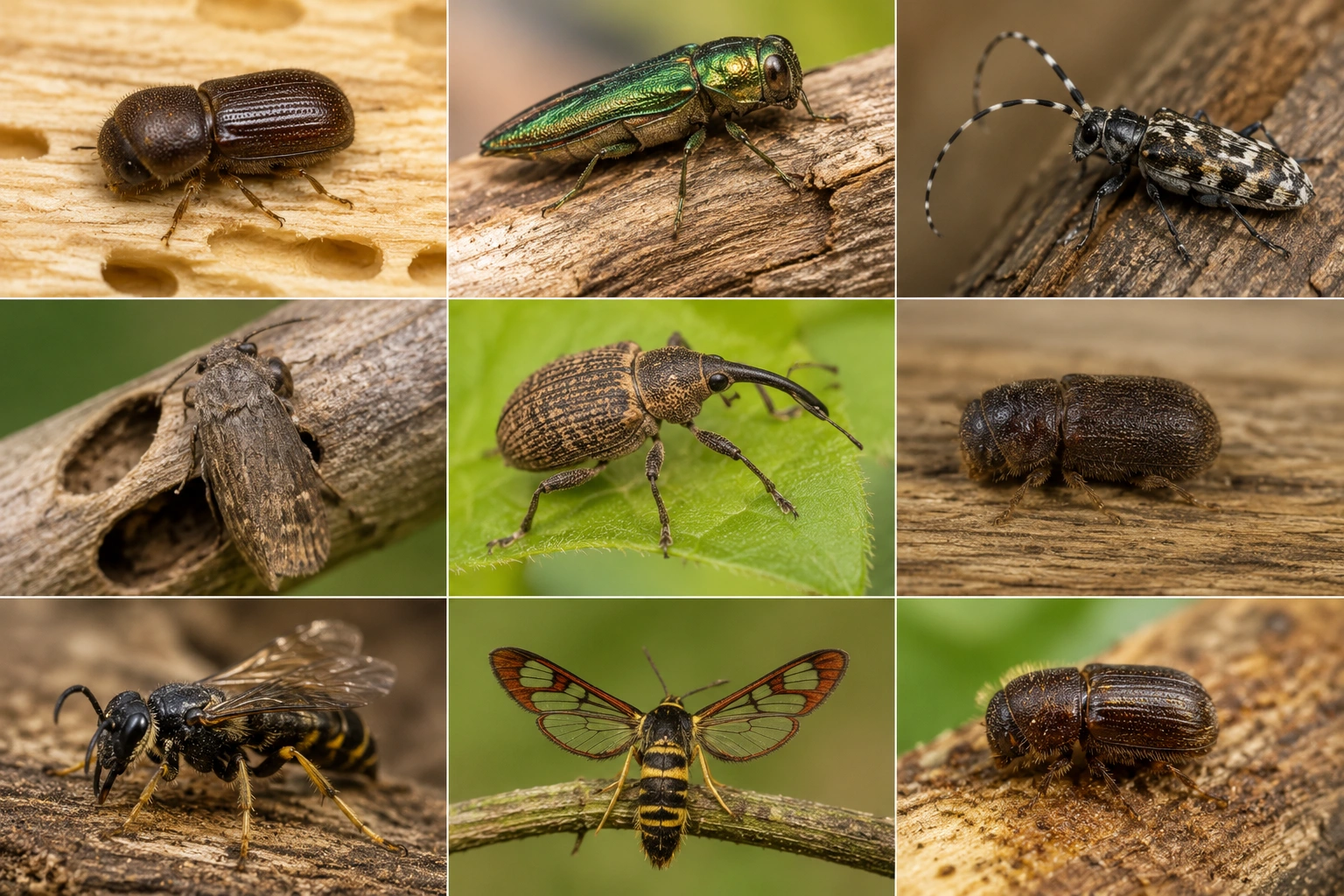
9 groups of wood pests that require control for cargo exported to the U.S.
- Bostrichidae (powderpost beetles)
- Buprestidae (jewel beetles)
- Cerambycidae (longhorn beetles)
- Cossidae (carpenter moths)
- Curculionidae (weevils)
- Platypodidae (ambrosia beetles)
- Siricidae (wood wasps)
- Sesiidae (clearwing moths)
- Scolytidae (bark beetles)
Just detecting the presence of a live representative from any of the above insect families will immediately put the shipment in serious violation of phytosanitary regulations. The risk depends not only on the insect species but also on the goods themselves and the packaging materials. Businesses can check types of goods that usually require fumigation before export to determine the treatment scope for the shipment.
1.2 Consequences when live pests are detected in a container
When quarantine officers at a U.S. discharge port detect live pests or find that wood packaging materials (WPM) do not comply with ISPM 15, the container may be recorded as non-compliant and subjected to strict enforcement measures:
- The container may be immediately held and sealed at the discharge yard for verification.
- Retreatment may be required if local infrastructure and regulations permit, or the wooden packaging materials may have to be destroyed under strict supervision.
- In many cases, the strictest measure may require the shipment or container to be re-exported to the original export port in Vietnam.
The resulting financial losses for exporters can be substantial, including storage penalties, delayed-clearance charges, two-way re-export transportation costs, and destruction expenses. Beyond financial losses, quarantine violations can also seriously damage a company’s reputation and commercial relationship with U.S. import partners. Many incidents at destination ports originate from errors made before the container is loaded onto the vessel, such as selecting the wrong treatment method, inadequate sealing, document discrepancies, or excessive focus on low prices.
See more: 7 common mistakes and risks in export cargo fumigation.
2. Quarantine regulations and ISPM 15 requirements for wood packaging materials (WPM)
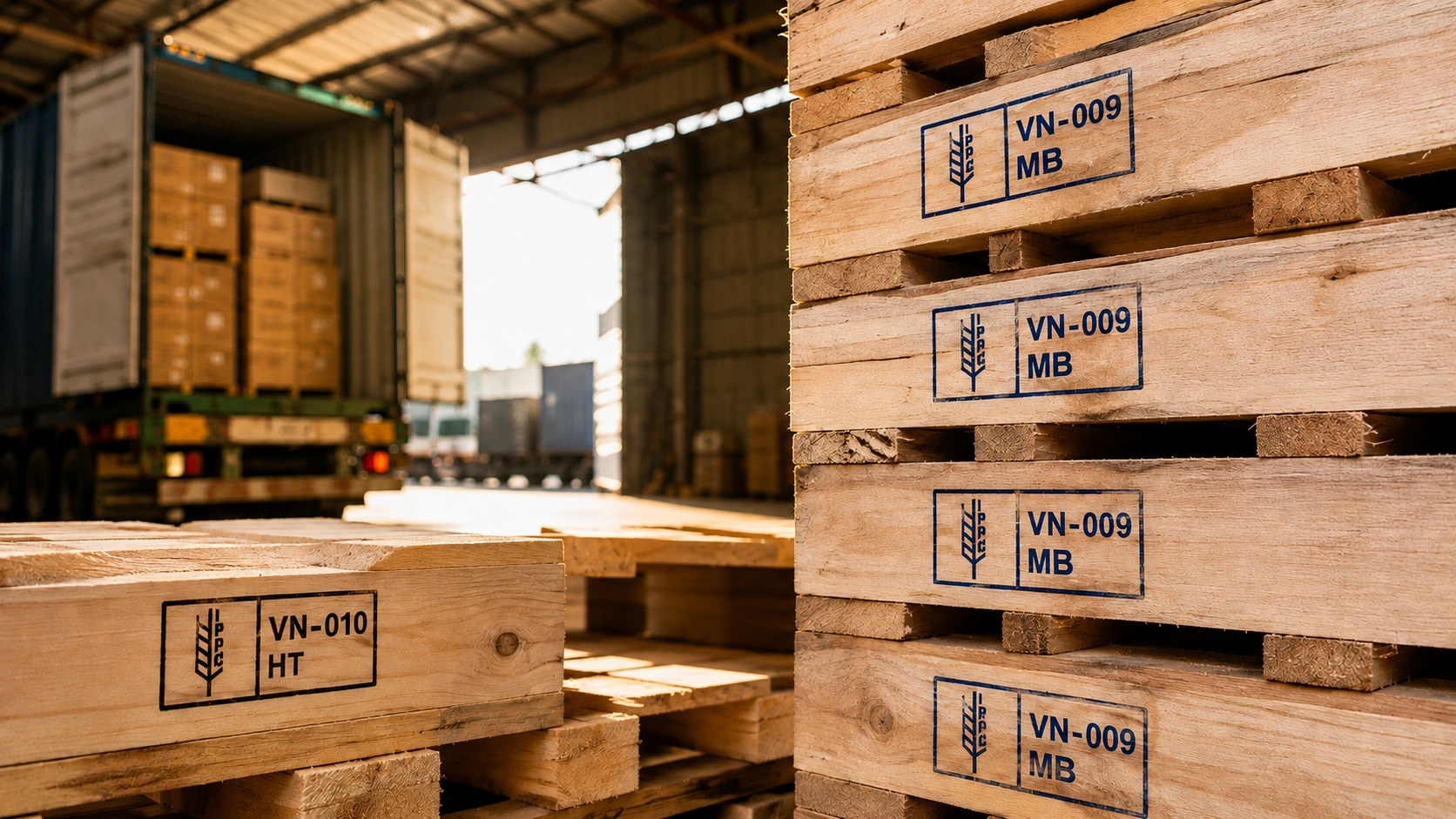
ISPM 15 mark applied to compliant wooden pallets exported to the U.S
2.1 Nature of the ISPM 15 standard
ISPM 15 is the International Standard for Phytosanitary Measures governing wood packaging materials used in global trade, issued under the International Plant Protection Convention (IPPC). Therefore, ISPM 15 is not a regulation created specifically by the United States, but an international standard widely applied by countries around the world. The U.S. applies ISPM 15 as the legal basis for inspecting and controlling wood packaging materials entering its territory.
2.2 Technical requirements for preparing pallets and wood packaging materials (WPM)
To ensure that fumigation for cargo exported to the U.S. complies with ISPM 15 and effectively eliminates insects, wood packaging materials (WPM), including pallets, wooden cases, and dunnage, must meet strict technical conditions before and during treatment:
- Debarked:Raw wood must be debarked to eliminate potential habitats and breeding areas for bark beetles.
- Free from pest signs:Wood surfaces and structures must not show signs of insect boring, mold, or insect infestation.
- Suitable moisture content:Wood must be dried to an appropriate moisture level in accordance with technical requirements.
- Ventilation during packaging:If PE film, PVC film, or carton packaging is used to cover the goods, WPM must not be completely sealed in a way that prevents fumigant penetration into the wood. If sealed materials are required, technical perforations must be created to allow fumigant circulation.
For shipments using wooden pallets, businesses should check ISPM 15 requirements for wooden pallets exported to the U.S. in advance, especially the condition of the wood and the IPPC mark prior to container stuffing.
2.3 ISPM 15 marking requirements
After wood packaging materials (WPM) have been treated using an approved technical method, the ISPM 15 certification mark must be applied correctly:
- The ISPM 15 mark must be complete, clear, legible, and not blurred or smudged.
- The mark must be placed in easily visible positions on the WPM and appear on at least two opposite sides of each pallet or wooden case.
- The certification mark must include the country code (VN), the registration number of the authorized treatment provider, and the treatment method, for example MB for Methyl Bromide or HT for Heat Treatment.
In cases where shipments use wooden pallets, crates, or dunnage materials that need treatment prior to container loading, businesses can refer to the ISPM 15 service for pallets and wooden crates by VFC Fumigation.
3. Steps in the fumigation process for cargo exported to the U.S.
The fumigation process for containers exported to the U.S. requires strict compliance with every operational step to achieve maximum pest control effectiveness while ensuring technical safety.
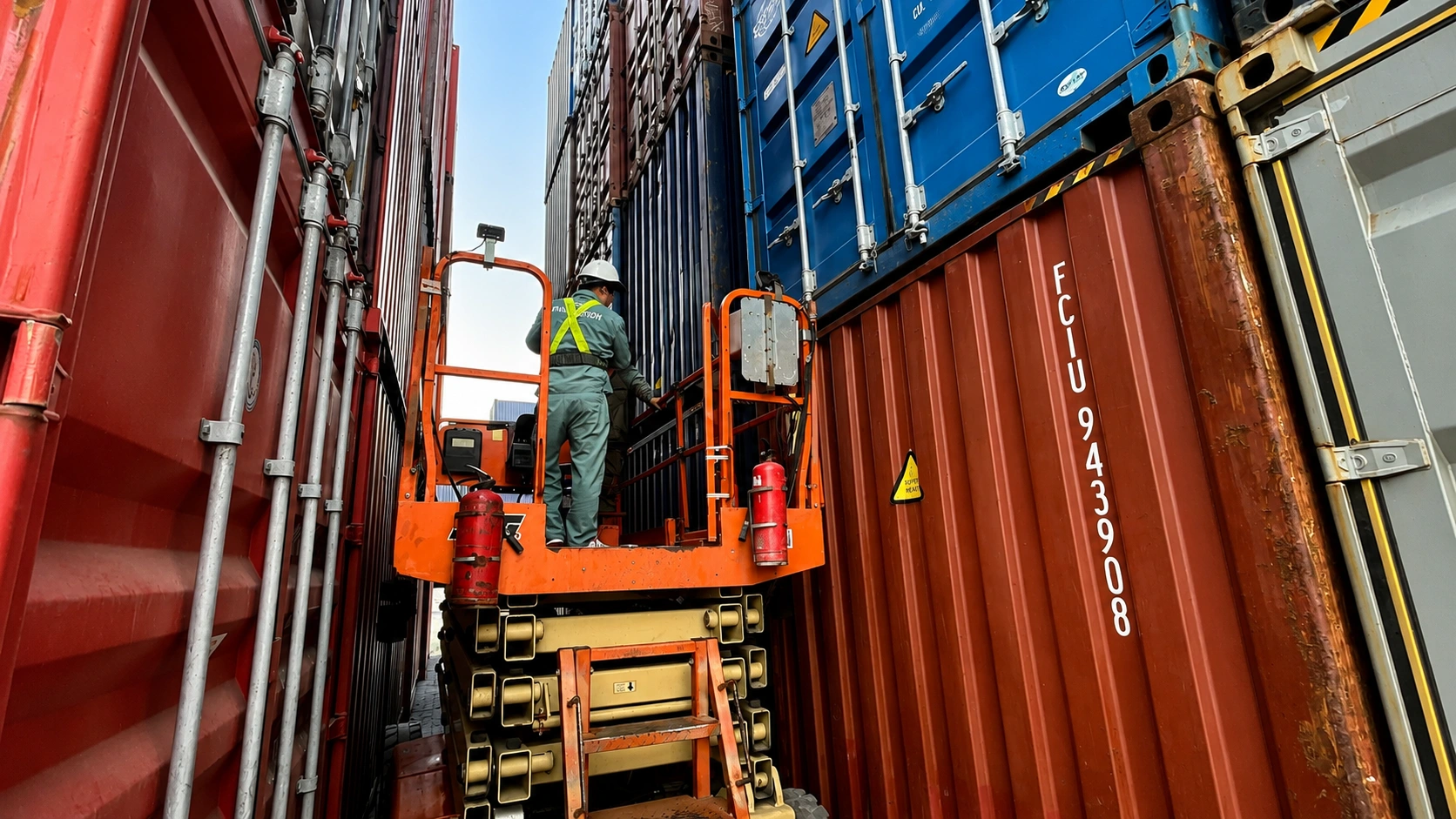
VFC technicians applying Methyl Bromide during fumigation for cargo exported to the U.S.
Step 1: Receive shipment information & identify the container location
A professional fumigation unit (such as VFC Fumigation) receives and verifies the exact shipment data set provided by the customer. Information includes: container type (20ft, 40ft DC/HC, reefer), container number, seal number, commodity name, destination port in the U.S., actual yard drop-off location at the ICD/export port, along with the cut-off time (closing time) of the vessel. For containers dropped off in Ho Chi Minh City, cargo owners and forwarders can see more about the container fumigation process at Cat Lai Port, yard drop-off schedules, and required documentation.
Step 2: Carry out the fumigation treatment
- Install fumigant delivery lines for Methyl Bromide treatment or place Aluminium Phosphide according to the approved technical plan.
- Install specialized concentration sampling lines at critical locations inside the container to support fumigant concentration monitoring throughout the treatment period.
- Close the container doors and seal ventilation openings and all potential fumigant leakage points using specialized sealing materials.
- Inject Methyl Bromide into the container when the selected treatment method uses Methyl Bromide.
- Attach fumigation warning signs in clearly visible locations on the container exterior to warn workers of potential hazards and prevent unauthorized access.
These two active ingredients have different properties and usage conditions, so selection should not be based solely on treatment time. See a comparison between Methyl Bromide and Phosphine in export cargo fumigation.
Step 3: Fumigation exposure period
- The exposure period depends on the fumigant used, the treatment target, and customer requirements. For Methyl Bromide, the minimum required exposure period is 24 hours.
- Technicians periodically measure fumigant concentration according to the technical plan agreed upon before treatment. This monitoring helps closely control the fumigant concentration inside the container and ensures effective elimination of pests present in the shipment.
Step 4: Safe aeration and handover
- After the fumigant exposure period is completed, technicians ventilate the container by removing the sealing materials from ventilation openings or opening the container doors.
- Specialized equipment, such as electronic gas detectors or low-range detection tubes, is used to confirm that the fumigant concentration has reached the permitted safe level before acceptance.
- VFC representatives and the customer jointly conduct an on-site inspection and sign the fumigation acceptance record.
- The treated container is then handed over to the customer or the port operations team.
Step 5: Issue the fumigation certificate for the container
The on-site operational records are transferred to the documentation department for review, completion, and issuance of the official Fumigation Certificate for the container or shipment based on the registered information.
Note: The actual process may be adjusted depending on the commodity type, fumigant used, container condition, loading schedule, and specific customer requirements.
With the Methyl Bromide treatment option, businesses can view the detailed container fumigation process using Methyl Bromide from preparation to inspection and certificate issuance.
4. Ventilation process & safe fumigant concentration inspection techniques
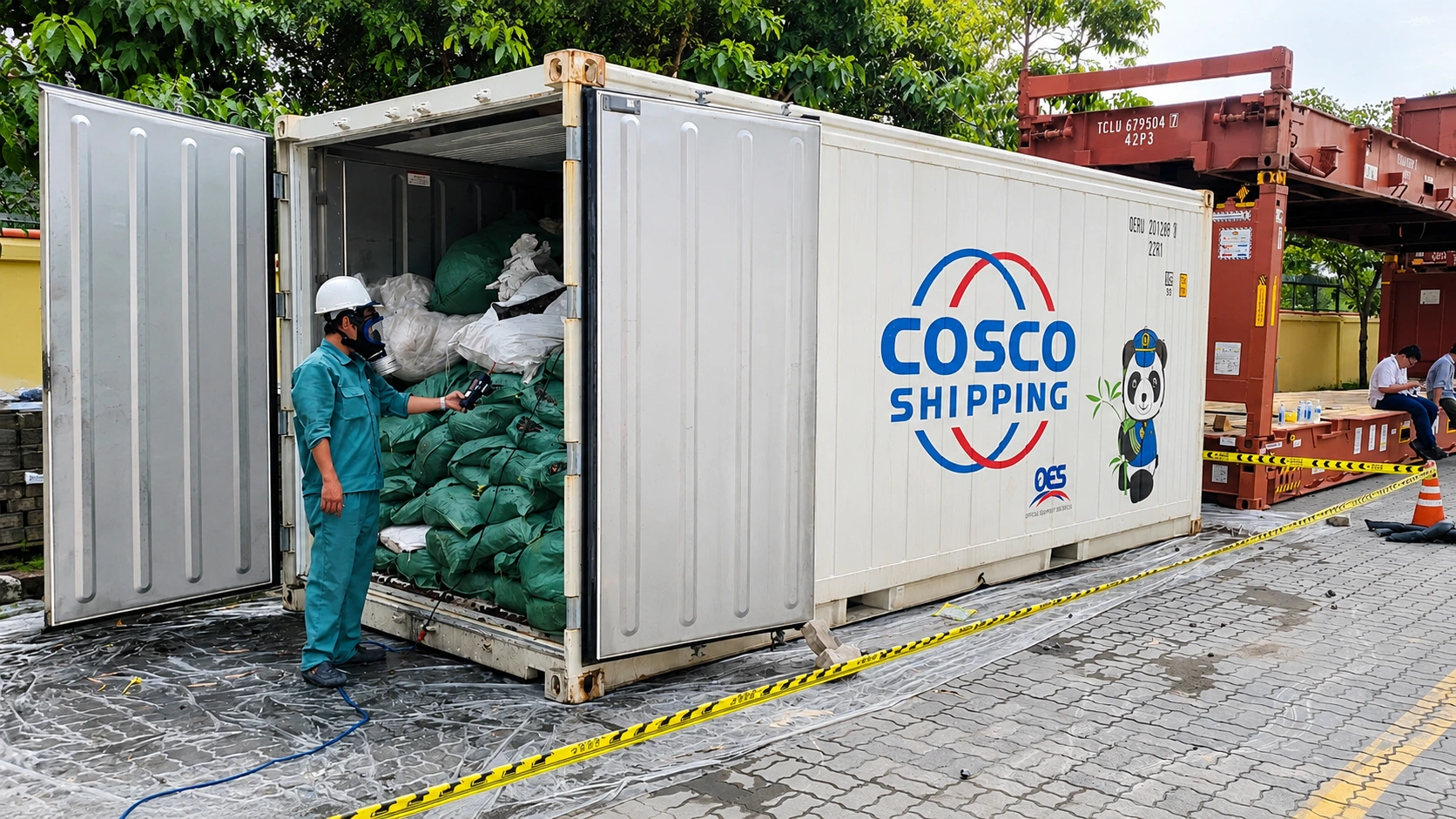
Checking safe fumigant concentration after ventilating a container exported to the U.S.
4.1 Importance of ventilation after the exposure period
Ventilation is a mandatory technical step after the fumigant exposure period has ended. Opening the container doors and removing sealing materials from the ventilation system or container doors allows the container to be properly ventilated. This step ensures safe access for workers involved in cargo handling and unloading.
4.2 Safety inspection using specialized equipment
To confirm that the container is safe, technicians must not rely on visual or sensory estimation. Specialized gas concentration measuring equipment must be used:
- High-sensitivity electronic measuring equipment.
- Low-range detection tubes for accurate concentration measurement.
Once the measurement confirms that the fumigant concentration has reached the permitted safe level, VFC representatives and the customer inspect and confirm the fumigation results.
4.3 Factors affecting ventilation time
The time required for a container to be fully ventilated depends on several actual conditions:
- Ventilation method: Natural ventilation by opening the container doors generally takes longer than ventilation supported by specialized exhaust or blower fans.
- Container size: A 40ft container has a larger internal air volume and therefore requires more ventilation time than a 20ft container.
- Commodity type and packaging method: Goods that absorb fumigant or are packed in multiple layers of sealed packaging may require a longer ventilation period.
- Weather conditions: Ambient temperature, humidity, and airflow at the container yard directly affect the release and diffusion rate of fumigant gas.
These factors also affect the entire treatment and container handover plan. Businesses can view the 2026 export container fumigation guide to understand the full process from cargo preparation to certificate issuance.
5. Important considerations to minimize risks at the destination port
To maximize the effectiveness of fumigation for cargo exported to the U.S. and ensure a smooth export journey while minimizing the risk of containers being detained at the destination port, businesses should pay attention to the following practical principles from the preparation stage at the export yard.
5.1 Conduct fumigation in accordance with technical standards
In the fumigation process for cargo exported to the U.S., operational techniques play a decisive role in eliminating live pests. Negligence in technical operations may cause goods to be refused customs clearance in the U.S. Businesses need to closely monitor the following:
- Ensure container gas-tightness: Before treatment, the container must be thoroughly inspected. Containers with damaged walls, torn door gaskets, or floor gaps should not be used. After the doors are closed, appropriate materials must be used to seal ventilation systems and gaps in order to maintain stable fumigant concentration throughout the exposure period.
- Ensure the required exposure period: The treatment period must not be shortened due to schedule pressure. If Methyl Bromide (CH₃Br) is used, the minimum exposure period must be maintained for a full 24 hours.
5.2 Control documentation and ensure complete certificate information
Documentation errors are one of the financial “traps” that can cause containers to be held at U.S. ports. A valid Fumigation Certificate should meet the following requirements:
- Complete and accurate information: All information on the certificate, including container number, seal number, commodity type, vessel name, voyage number, port of departure, destination port, and technical parameters such as fumigant type, dosage, and treatment time, must match the Bill of Lading (B/L), Invoice, and Packing List 100%.
- Legal consistency: Any incorrect or missing character may raise concerns with U.S. plant quarantine authorities, leading to cargo detention for verification and costly storage charges. Therefore, as soon as the draft Bill is available, businesses should send it to the fumigation provider for cross-checking before the certificate is issued.
Errors on the certificate are not merely administrative mistakes; they can also lead to inspection risks and clearance delays. See more about common legal risks when exporting goods to the U.S. and EU.
5.3 Plan ahead for the risk of early port transfer
It is necessary to arrange the fumigation time early because after completing export customs procedures, the container may be loaded onto a barge to move between ICDs and the main loading port before the estimated Closing Time. Proactively planning helps ensure sufficient exposure time according to technical standards before the container is moved. When the treatment schedule depends on closing time and yard drop-off location, field coordination capacity becomes an important criterion. Businesses should view criteria for selecting an export cargo fumigation provider before finalizing a supplier.
6. Frequently asked questions about fumigation for cargo exported to the U.S.
What fumigant is used for cargo exported to the U.S. and what dosage is required?
Answer: For export shipments to the U.S. that require fumigation, Methyl Bromide is commonly used, particularly for treating wood packaging materials (WPM) under ISPM 15 or when required by quarantine authorities or import partners. Dosage and treatment duration do not follow a single fixed level for every shipment. They depend on the treatment target and customer requirements.
Is ISPM 15 a standard specifically issued by the U.S.?
Answer: No. ISPM 15 is an international standard applied globally to wood packaging materials (WPM), not only in the U.S. market.
Do industrial goods without wood packaging materials (WPM) require fumigation?
Answer: Goods packaged in plastic, cartons, or metal without WPM generally do not require fumigation, except for agricultural products or goods with a risk of stored-product insect infestation. However, fumigation helps control insects and pests already present in the goods or container, minimizing the risk of insects being detected at the destination port.
What is the minimum fumigant exposure period for cargo exported to the U.S.?
Answer: If Methyl Bromide is used, the minimum exposure period is 24 hours.
7. Comprehensive & safe fumigation solutions for cargo exported to the U.S. from VFC Fumigation

VFC Fumigation - An experienced fumigation provider for cargo exported to the U.S.
7.1 Why is VFC a trusted partner for businesses exporting to the U.S.?
- Capability & experience: An experienced technical team with a strong understanding of U.S. and international plant quarantine regulations.
- Strict compliance with technical procedures: Treatment is carried out according to required standards to ensure effective control of insects present inside containers.
- Professional insect/pest control: VFC takes direct responsibility for controlling insects and pests in the shipment.
- Safety: Thorough inspection and sealing before and after fumigant application, combined with specialized measuring equipment to monitor fumigant concentration and ensure safety.
- Accurate certificate issuance: Accurate fumigation certificates are issued with integrated QR Codes, allowing partners and relevant authorities to verify information easily anytime and anywhere.
7.2 VFC fumigation service packages for cargo exported to the U.S.
- Container fumigation at ports / ICDs before Closing Time.
- Tarpaulin fumigation at factory warehouses before cargo loading.
- ISPM 15 - Treatment services for pallets / wooden cases / wood packaging materials.
- Technical consulting for pest control at factories.
8. Register for consultation & receive a fumigation quotation for cargo exported to the U.S. from VFC Fumigation experts
Do not let the risk of container re-export affect your costs and business reputation!
Ensure that your shipments exported to the U.S. comply accurately with quarantine requirements or the international ISPM 15 standard for wood packaging materials.
For technical consultation, container inspection, or to receive the fastest quotation for US-bound export fumigation services, please contact VFC Fumigation via the following channels:
- 24/7 consultation hotline: 0914773300
- Email: contact@fumigation.vn