





Published date:
31/07/2026
Share




Understanding key considerations when fumigating export cargo to Australi a is essential for businesses to proactively eliminate live pests and avoid unnecessary demurrage and storage costs.
Consideration 1: Strict compliance with AFAS standards regulated by the Australian Department of Agriculture
AFAS standards are directly managed by the Australian Department of Agriculture, Fisheries and Forestry (DAFF). For consignments to be accepted, the treatment process in Vietnam must undergo fumigation with Methyl Bromide (the only recognized method for AFAS in Vietnam). Businesses can view details of the container fumigation process with Methyl Bromide to understand how to arrange chemical supply lines, concentration sampling lines, circulation fans, gas-tight sealing, and verification of treatment results.
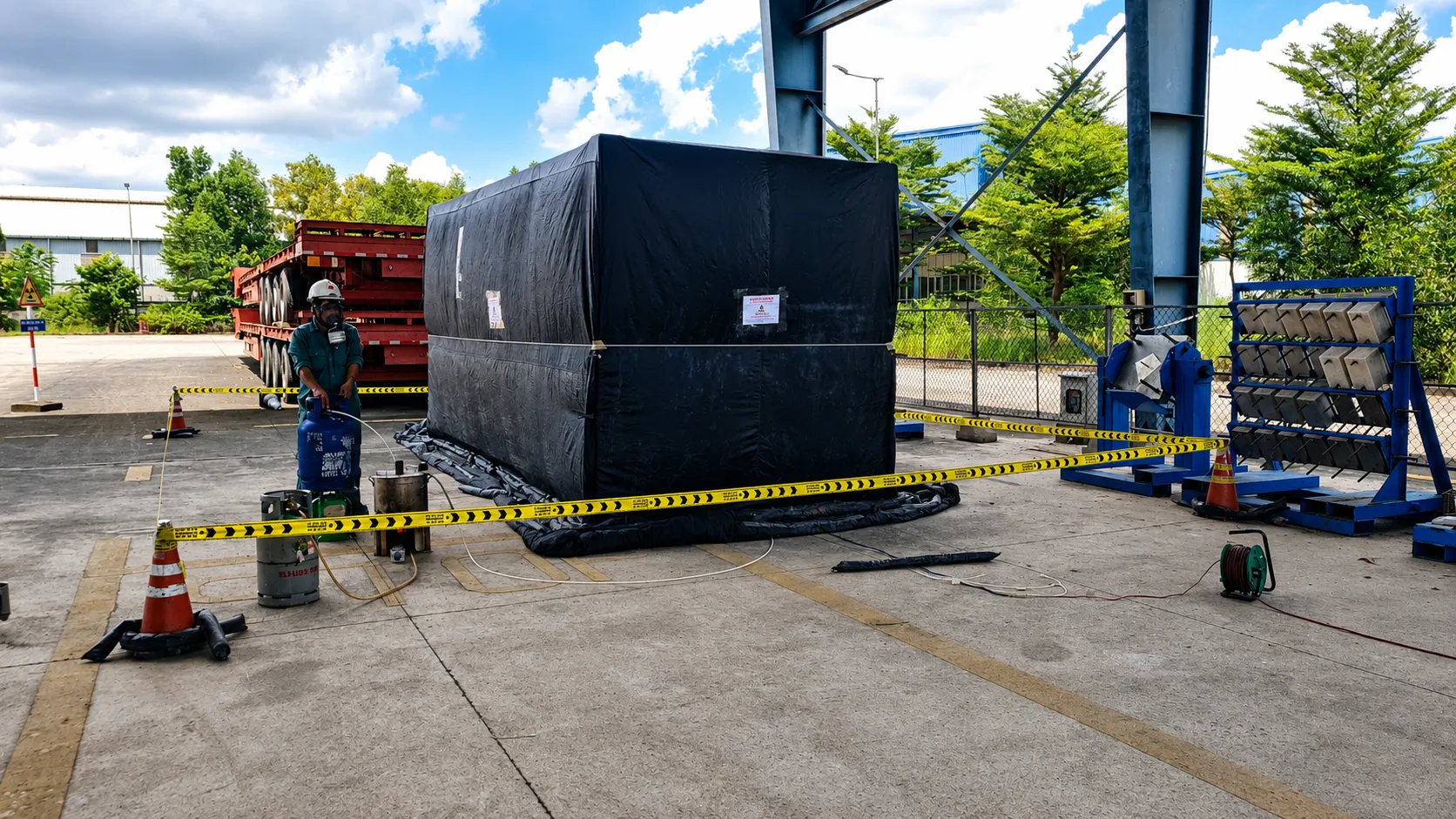
Container Fumigation Procedure for Goods Exported to Australia at the Yard
- Competency and documentation requirements: Technicians executing the treatment must hold valid AFAS accredited numbers issued by Australia. On-site operational records must fully log exposure periods and real-time field concentration measurement results.
- Preventing certificate rejection errors: Non-gas-tight container structures or tarpaulins cause fumigant leakage, leading to treatment failure and incomplete elimination of live pests. Furthermore, discrepancies in shipping marks or container numbers on documentation will result in AFAS certificate rejection at destination ports.
Substandard structural gas-tight sealing or providing incorrect container details also fall under the group of mistakes in export cargo fumigation that businesses need to avoid, as they can lead to substandard gas concentration or require certificate adjustments.
Consideration 2: Seasonal brown marmorated stink bug (BMSB) control under the AusTreat scheme
The Brown Marmorated Stink Bug is a dangerous invasive pest for Australian agriculture. BMSB control regulations are mandatory for cargo transported during the risk season, from 1 September to 30 April of the following year.

Brown Marmorated Stink Bug (BMSB) – The Dangerous “Stowaway” That Can Cost Exporters Billions
- Target commodities and treatment methods: Target high-risk goods such as machinery, equipment, components, and timber products must undergo BMSB treatment with Methyl Bromide according to technical guidelines designated by AusTreat Australia.
- Seasonal calculation timing: The application milestone is determined by the goods' onboard date. Businesses need to complete fumigation and achieve required gas concentrations prior to shipping line cut-off dates, while selecting valid AusTreat-certified providers to enable direct data transmission to international biosecurity systems.
BMSB is only one of several control layers applied to cargo exported to Australia. Businesses should also review what they need to know about fumigation for cargo exported to Australia in order to determine whether the shipment is also subject to AFAS, wood packaging, or other certificate requirements.
Consideration 3: Prioritize treating wood packaging material (WPM) under AFAS standards
Wood packaging materials (WPM) such as pallets, wooden crates, and wooden cases carry a high risk of harboring wood-boring insects. Although WPM treated under ISPM 15 is still accepted, Australian customs applies stricter practical inspection controls.
Before loading cargo, businesses should also review how to choose the right pallets for each export shipment, because the material type, load capacity, and condition of the pallet all affect the level of quarantine risk.
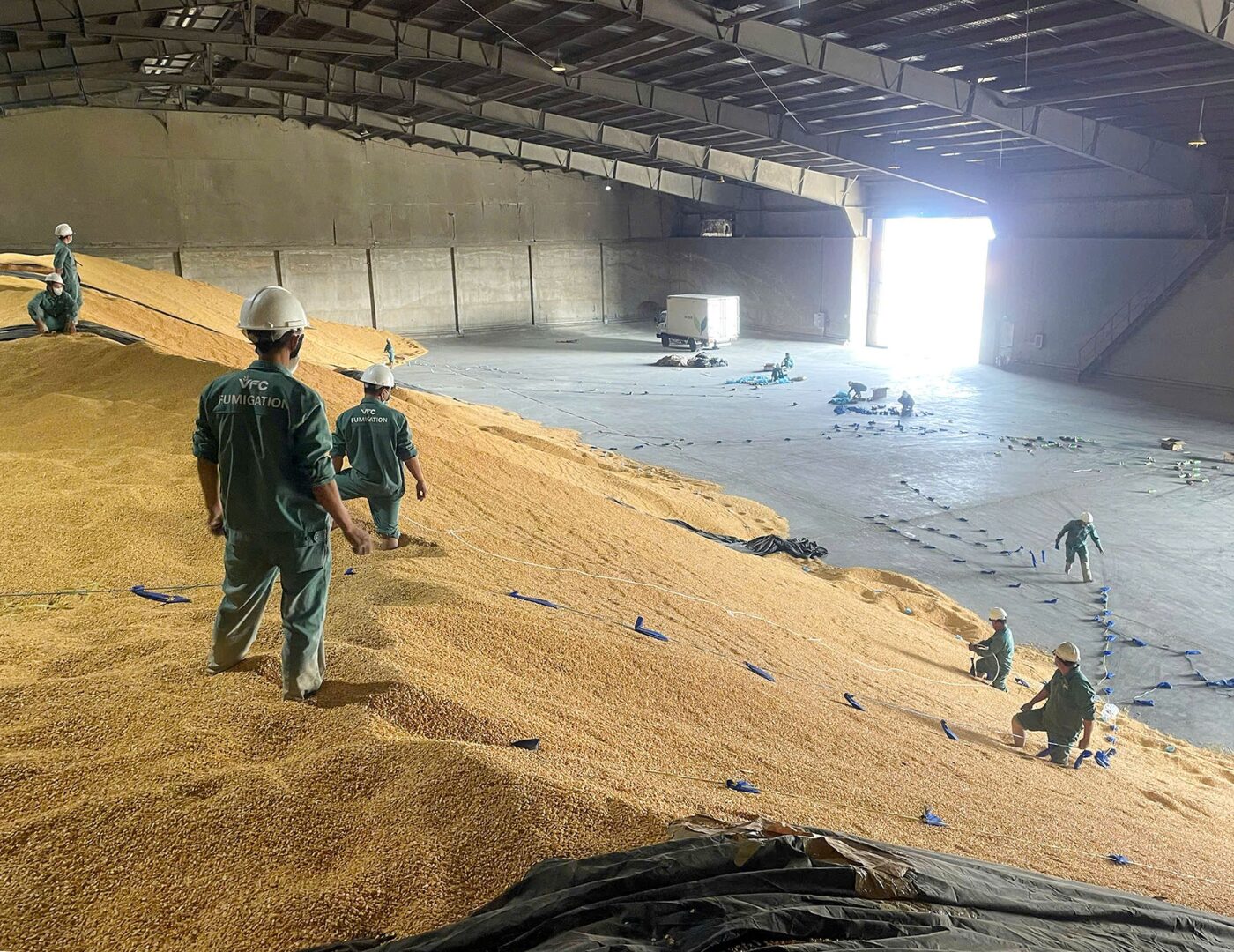
Therefore, VFC Fumigation consistently advises enterprises to implement integrated fumigation covering both WPM and full containers in strict compliance with AFAS standards using Methyl Bromide. This method guarantees deep chemical penetration into timber cores, completely eradicating internal live pests, facilitating smooth clearance, and minimizing destination biosecurity intervention.
Consideration 4: Manage certificate validity windows and align vessel schedules
Fumigation certificate validity duration directly determines consignment clearance feasibility.
- 21-day validity limit: AFAS certificates remain valid for up to 21 days from treatment completion date to vessel loading date. Consignments with expired certificates face entry rejection, mandatory re-treatment, or costly re-exportation.
- Coordinating export timelines: Businesses should book services at least 48 hours prior to cargo stuffing. Technical personnel manage gas injection, exposure retention, periodic concentration monitoring, and safe ventilation before issuing electronic certificates for customs declaration.
To avoid schedule misalignment or insufficient exposure time, businesses should first review the end-to-end process for fumigating export cargo to Australia, from receiving shipment information to concentration monitoring, ventilation, and certificate issuance.
Consideration 5: Proactively prevent container condensation and mold formation
Transit routes to Australia cross multiple climate zones, where rapid temperature fluctuations induce container rain (moisture condensing on steel roofs and dripping onto cargo), causing severe mold growth on agricultural goods, timber products, or carton packaging.
To protect commodity quality alongside biosecurity compliance, businesses should combine anti-condensation roof/wall lining paper with industrial desiccant bags to maintain proactive humidity control inside containers throughout the voyage.
Frequently asked questions regarding export cargo fumigation to Australia
1. What happens if Australian biosecurity authorities direct cargo re-treatment?
Businesses should request official documentation from Australian authorities specifying the underlying cause. Subsequently, field operational logs stored on VFC Fumigation's FumiApp platform are rapidly extracted for verification, proving procedural compliance and coordinating optimal remedial measures.
2. Is Phosphine fumigation accepted by Australia for AFAS consignments?
No. The Australian Department of Agriculture (DAFF) only recognizes Methyl Bromide fumigation for AFAS treatment implemented in Vietnam. The two active ingredients have different characteristics, treatment durations, and application scopes. Businesses can refer to the comparison between Methyl Bromide and Phosphine in cargo fumigation to avoid choosing a treatment option based only on the chemical name or cost.
AFAS-compliant export cargo fumigation services to Australia by VFC Fumigation
VFC Fumigation is a leading and trusted provider holding an official AFAS registration number and AusTreat capability certification. To provide legal assurance for our customers’ quarantine documentation, VFC Fumigation applies a 2-layer transparent fumigation model:
- Layer 1 – Field operational data management: All photographic records, gas exposure durations, and actual port-side concentration readings are captured in real-time and managed centrally via FumiApp software.
- Layer 2 – Electronic certificate authentication: QR codes are integrated into official AFAS certificates, enabling Australian biosecurity officers and trade partners to look up and verify original document validity online, completely eliminating certificate forgery risks.
With more than 50 years of experience, VFC Fumigation is committed to delivering safe, effective, and cost-optimized AFAS/BMSB fumigation services for businesses exporting to Australia.
-
- Hotline: 0914 77 33 00
- Email: contact@fumigation.vn
-
Blog (23)
-
Regulation updates (4)
-
Partnerships & Collaborations (4)
-
General News (15)
Featured News



Related Knowledge