





Category:
Fumigation for goods exported to the U.S
Fumigation by Market
Standards & Regulations

Published date:
14/09/2026
Share




The risk of containers being detained or ordered for re-export at US ports of entry continues to cause severe financial damage across commercial supply chains. Mastering the latest US quarantine regulations from USDA APHIS is an essential stepping stone for exporters to safeguard cargo and maintain healthy cash flows. Below is a comprehensive guide to help businesses understand inspection mechanisms and proactively implement internationally compliant fumigation protocols before shipments depart.
1. USDA APHIS Phytosanitary Inspection Mechanisms and Risks at US Ports of Entry
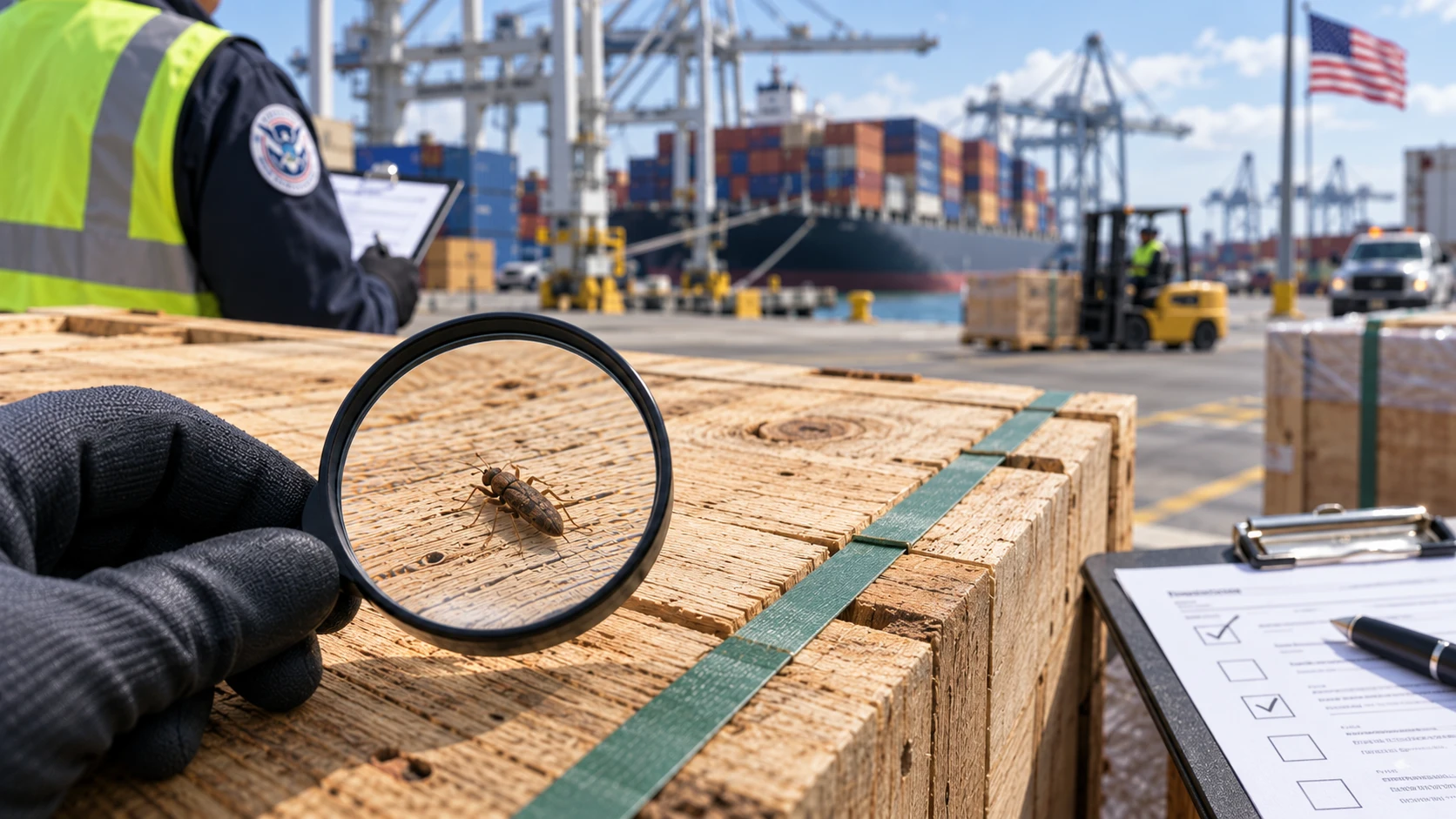
Pest Inspection on Packaging Materials at US Ports of Entry
- Regulatory Mechanism: Unlike Australia (which mandates that treatment providers hold an accredited AFAS registration number), the United States does not license or maintain an approved list of offshore fumigation providers. Instead, US border authorities (USDA APHIS and CBP) conduct rigorous physical inspections on the actual condition of consignments immediately upon arrival at ports of entry. Because not all shipments carry the same risk profile, businesses should proactively identify US-bound commodity groups that typically require pre-export fumigation.
- Technical Requirements: The United States does not prescribe a rigid fumigation method or chemical agent; however, the prerequisite requirement is the absolute control and eradication of target pests. Particular scrutiny is placed on stem- and wood-boring insects—such as powderpost beetles, longhorned beetles, bark beetles, and jewel beetles (Buprestidae)—present in wood packaging material (WPM).
- Financial Risks: If live pests or non-compliant wood packaging materials (WPM) are detected, container clearance will be suspended. Exporters will bear massive demurrage and detention fees (demurrage/detentiondemurrage/detention); most severely, the shipment may be forced to be re-exported or destroyed.
Before loading cargo, businesses should review 3 export cargo fumigation mistakes that often increase risks at the port of arrival.
2. Latest US Quarantine Regulations for Specific Export Commodity Groups
2.1. Mandatory Requirements for Wood Packaging Material (WPM) Under ISPM 15 Standards
The ISPM 15 standard, issued by the International Plant Protection Convention (IPPC), is the primary regulatory framework enforced by the United States to govern wood packaging material (WPM). This category encompasses items such as wooden pallets, crates, and dunnage. Under the latest US quarantine regulations, all WPM utilized in cargo transit must undergo Heat Treatment (HT) or Methyl Bromide (MB) fumigation to eliminate potential pest risks.
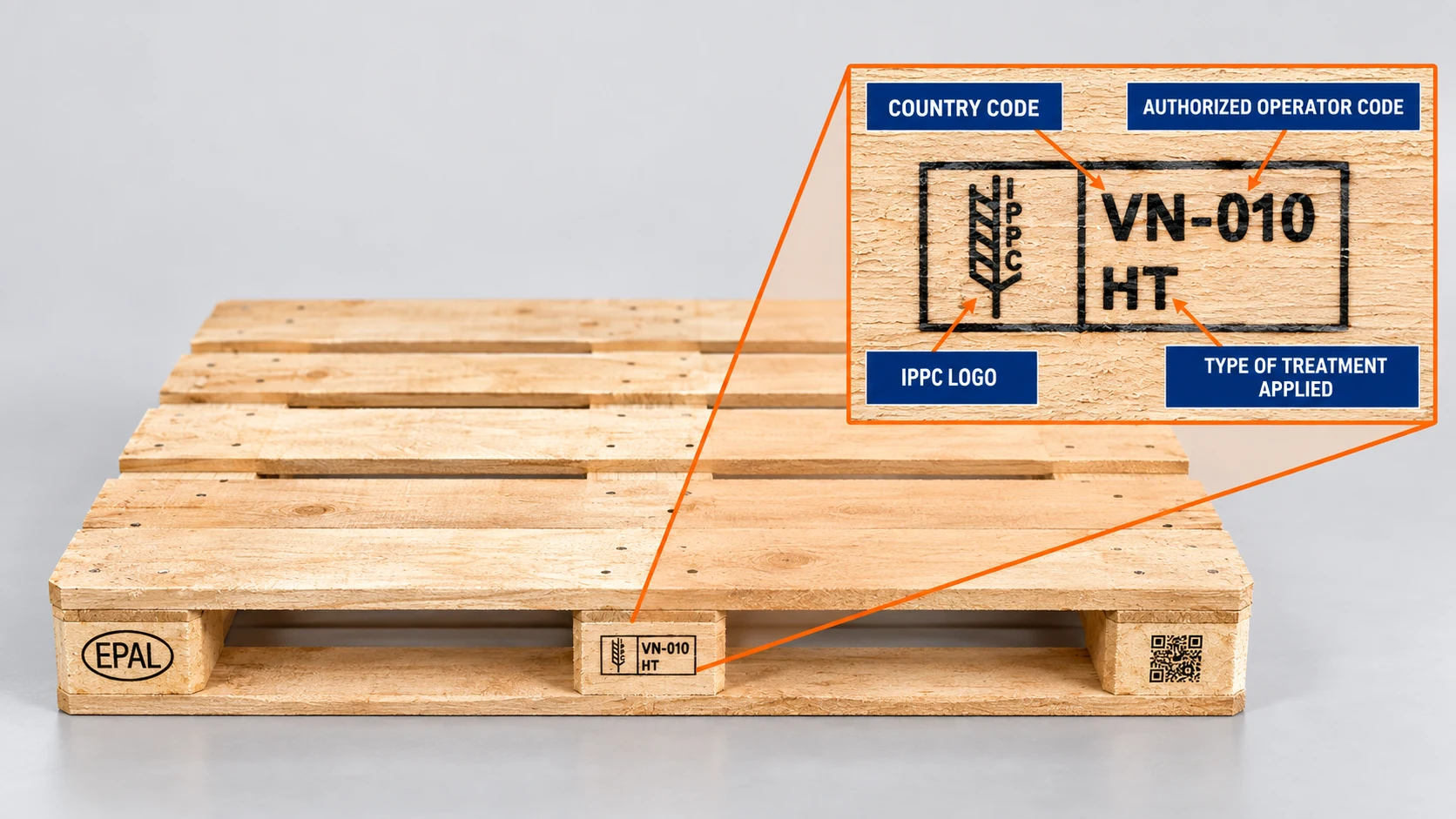
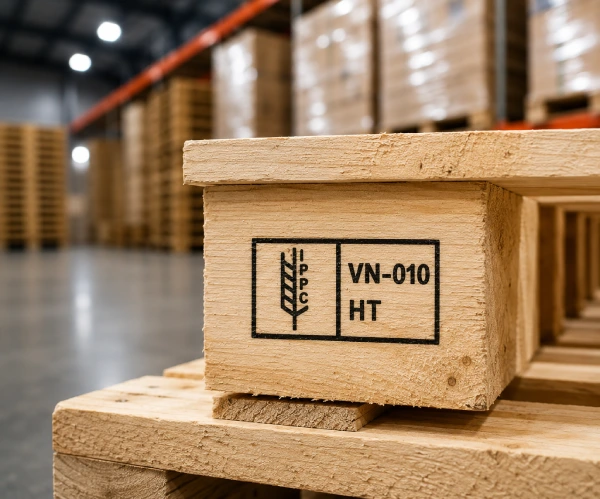
Structure of the IPPC ISPM 15 Mark on Export Wooden Pallets
All WPM must be made of debarked wood to eliminate breeding habitats for bark beetles. The lumber must maintain appropriate moisture content and be completely free of insect boreholes or mold. Following compliant treatment, the WPM must bear the IPPC/ISPM 15 mark stamped directly onto the surface in permanent, legible ink on at least two opposite sides. Prior to container stuffing, exporters should also audit the 5 minor pallet defects that can put containers at risk upon port entry, particularly residual bark, blurred stamps, live borers, and excessive moisture.
2.2. Regulations for Agricultural Commodities, Spices, and Plant-Derived Products
Agricultural commodities such as rice, coffee, cashew nuts, pepper, and various spices consistently remain under the high-risk surveillance of US quarantine authorities. Although the United States does not universally mandate a fumigation certificate for every consignment, the threat of stored-product pest infestation stemming from staging yards or cross-contamination during maritime transit is substantial. Storage pests such as the rice weevil (Sitophilus oryzae) and the red flour beetle (Tribolium castaneum) have the capacity to proliferate rapidly.

Agricultural Commodity Groups and Plant-Derived Products Exported to the US
For agricultural commodities, businesses can refer to agricultural export fumigation from cargo treatment to data management and certification to gain deeper insights into pest control protocols for the commodities themselves.
To mitigate the risk of entry refusal, agricultural exporters must proactively establish pest management protocols right from the container stuffing stage. Pre-shipment fumigation ensures thorough control over latent biological risks. Concurrently, a valid fumigation certificate serves as vital technical evidence, enabling US authorities to assess consignment biosecurity and safety more expeditiously.
2.3. Industrial Goods and Machinery Utilizing Wooden Pallets and Dunnage
Many manufacturers of industrial goods, electronic components, or machinery often assume their products fall outside the scope of phytosanitary quarantine. However, the most critical oversight lies in the secondary materials used for dunnage, bracing, and cargo support. Any non-agricultural shipment utilizing untreated wooden pallets or wooden crates faces high risks of detention at US ports. If businesses are uncertain about which pallets, crates, boxes, or dunnage fall under regulatory oversight, refer to what WPM is and regulations for wood packaging material in export shipping.
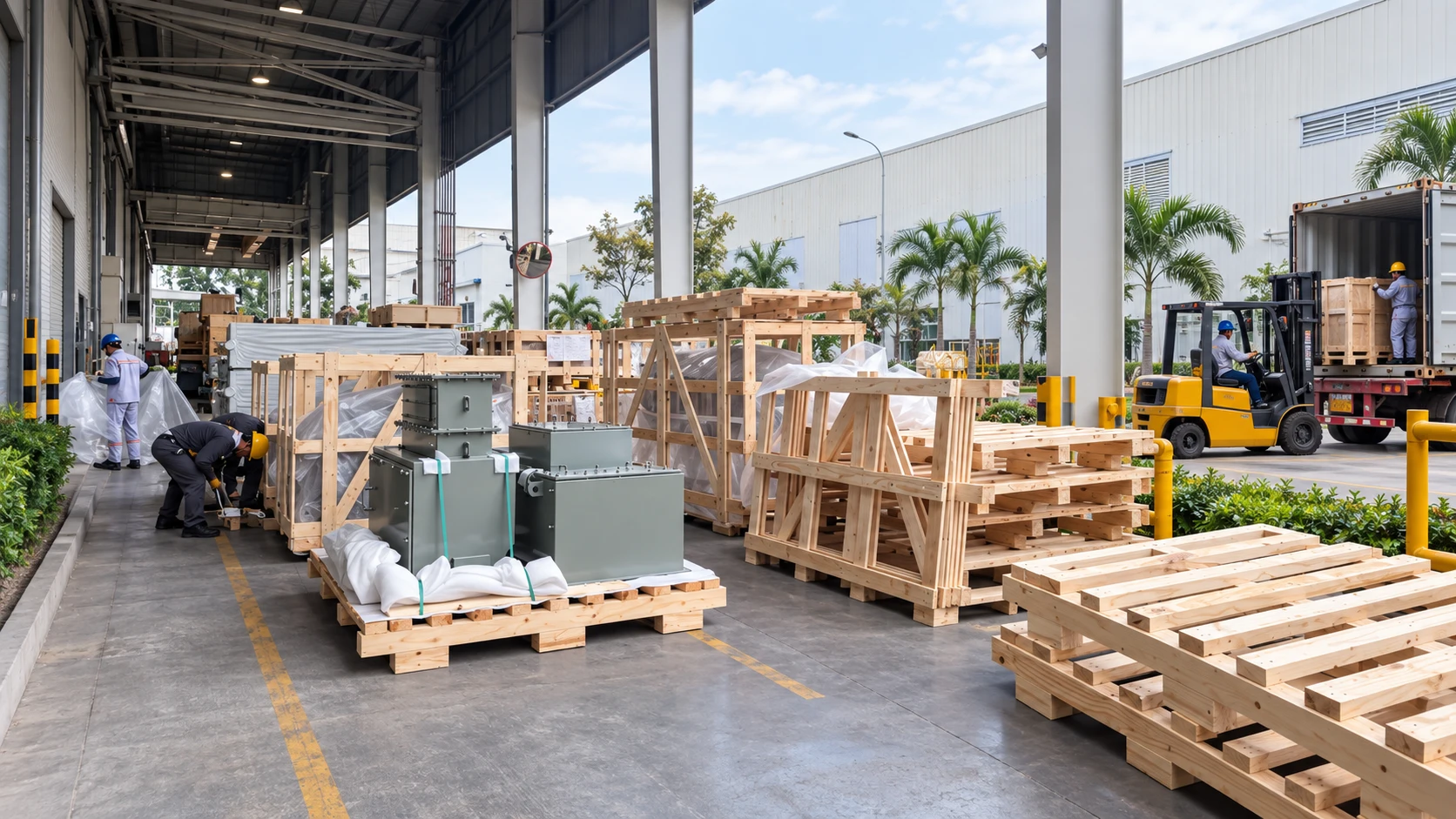
Industrial Goods Utilizing Wooden Pallets and Crates for US Export
CBP and USDA APHIS focus inspections on the presence of the ISPM 15 mark on wooden pallets. Using substandard packaging materials procured from unverified open-market sources without valid treatment certification can result in high-value industrial consignments being held up at customs clearance simply due to a few non-compliant pallets.
3. Common Mistakes Leading to Export Cargo Holds or Entry Refusal at US Ports
Supply chain disruptions often stem from minor oversights during material preparation and documentation:
- Using Counterfeit or Substandard ISPM 15 Marks: Pallets procured from unverified open markets that bear smudged ink stamps, utilize paper stickers instead of direct stamping, or lack valid treatment provider registration codes allow CBP to readily intercept untreated, non-compliant WPM.
- Documentation Discrepancies: Information recorded on the fumigation certificate—including container numbers, seal numbers, commodity descriptions, and treatment methods—must correspond exactly with the Bill of Lading and Packing List. Any discrepancy, even a single character error in the seal number, provides sufficient grounds for US quarantine authorities to flag the shipment and issue a container hold order.
- Partnering with Unqualified Treatment Providers: Working with inexperienced contractors frequently results in substandard technical execution, significantly increasing the risk of live insect interceptions at destination ports.
Businesses can review the key criteria for selecting a fumigation service provider in the export logistics chain prior to dispatching their shipments.
4. 5-Step Guide to Quarantine Control and Fumigation for Safe US-Bound Cargo
The operational workflow for fumigating US-bound export cargo demands strict adherence at every stage to achieve maximum pest eradication while ensuring complete technical safety.

Standard Technical Procedure for Fumigating Export Cargo Destined for the US
Step 1: Receive shipment information & identify the container location
A professional fumigation unit (such as VFC Fumigation) receives and verifies the exact shipment dataset provided by the customer. Information includes: container type, container number, seal number, commodity description, U.S. destination port, actual yard staging location at the ICD/export port, along with the vessel cut-off time. For consignments treated at the port, refer to the container fumigation procedure at Cat Lai Port and how to coordinate with vessel schedules..
Step 2: Execute the fumigation service
- Install gas introduction lines for Methyl Bromide (CH3Br) treatment or position Aluminium Phosphide (AlP) formulations inside the container in strict compliance with the approved technical plan. These two treatment methods differ in exposure periods and scopes of application. Refer to Methyl Bromide or Phosphine – Which Option Suits Each Consignment Type to gain a deeper understanding of both methods.
- Install dedicated gas sampling lines at critical locations inside the container to facilitate gas concentration monitoring throughout the exposure period.
- Close and secure the container doors, then thoroughly seal the ventilation vents and all structural seams using specialized materials to ensure gastightness and prevent fumigant leakage.
- Introduce the fumigant into the container (if treating with Methyl Bromide).
- Affix safety warning notices in conspicuous positions on the container exterior to signal hazards and prevent unauthorized personnel from approaching the treatment area.
Step 3: Fumigation exposure and gas concentration monitoring
- The exposure period depends on the type of fumigant used, the target quarantine pest, and specific phytosanitary requirements (for Methyl Bromide, the minimum prescribed exposure time is 24 hours; for AlP, the exposure period ranges from 7 to 10 days). If you need to schedule around carrier closing times, read container fumigation exposure times: 12h, 24h, or how long does it take to achieve compliance.
- Technicians conduct fumigant concentration measurements in strict accordance with the approved technical plan. This ensures close monitoring of gas levels inside the container, guaranteeing the effective eradication of all pests present.
Step 4: Safe aeration and final acceptance
- Upon completion of the exposure period, technicians open the container doors and remove sealing materials from the ventilation vents to initiate natural or forced aeration.
- Use specialized detection equipment to verify residual gas levels, ensuring concentrations fall safely below the Threshold Limit Value (TLV) prior to handover. To review the complete workflow—from sealing and application to exposure, aeration, and final release—consult the 2026 export container fumigation guide.
- A VFC Fumigation technical representative and the client jointly conduct an on-site inspection and sign the fumigation completion report.
- Hand over the treated container to the client or port dispatch department to proceed with vessel loading.
Step 5: Issuance of the Fumigation Certificate
The on-site operational records are forwarded to the documentation department for data verification and cross-checking, finalizing and issuing the official Fumigation Certificate for the container or consignment in strict accordance with the registered operational details.
Note: The actual procedure may be flexibly adjusted depending on the specific cargo characteristics, the fumigant used, container condition, packing schedule, and specific client requirements.
5. International-Standard Fumigation and Risk Management Solutions from VFC Fumigation

VFC Fumigation’s highly experienced technical team
Backed by over 50 years of industry experience, VFC Fumigation is a pioneer in delivering safe, compliant, and transparent fumigation solutions for export enterprises. With robust on-site operational capabilities and extensive nationwide coverage across major seaports and key ICDs (including Cat Lai, Hai Phong, Da Nang, and Quy Nhon), we bring proactive control and operational agility to your supply chain.
VFC Fumigation’s quality management system operates on our two-layer transparent fumigation model. All on-site operational data is fully digitized and centrally managed through our proprietary internal platform, FumiApp.
Notably, our electronic fumigation certificates feature an integrated QR code that allows international partners and US quarantine authorities to swiftly verify treatment data, significantly accelerating customs clearance for the consignment.
6. Frequently Asked Questions About Quarantine and Fumigation Regulations for US-Bound Cargo
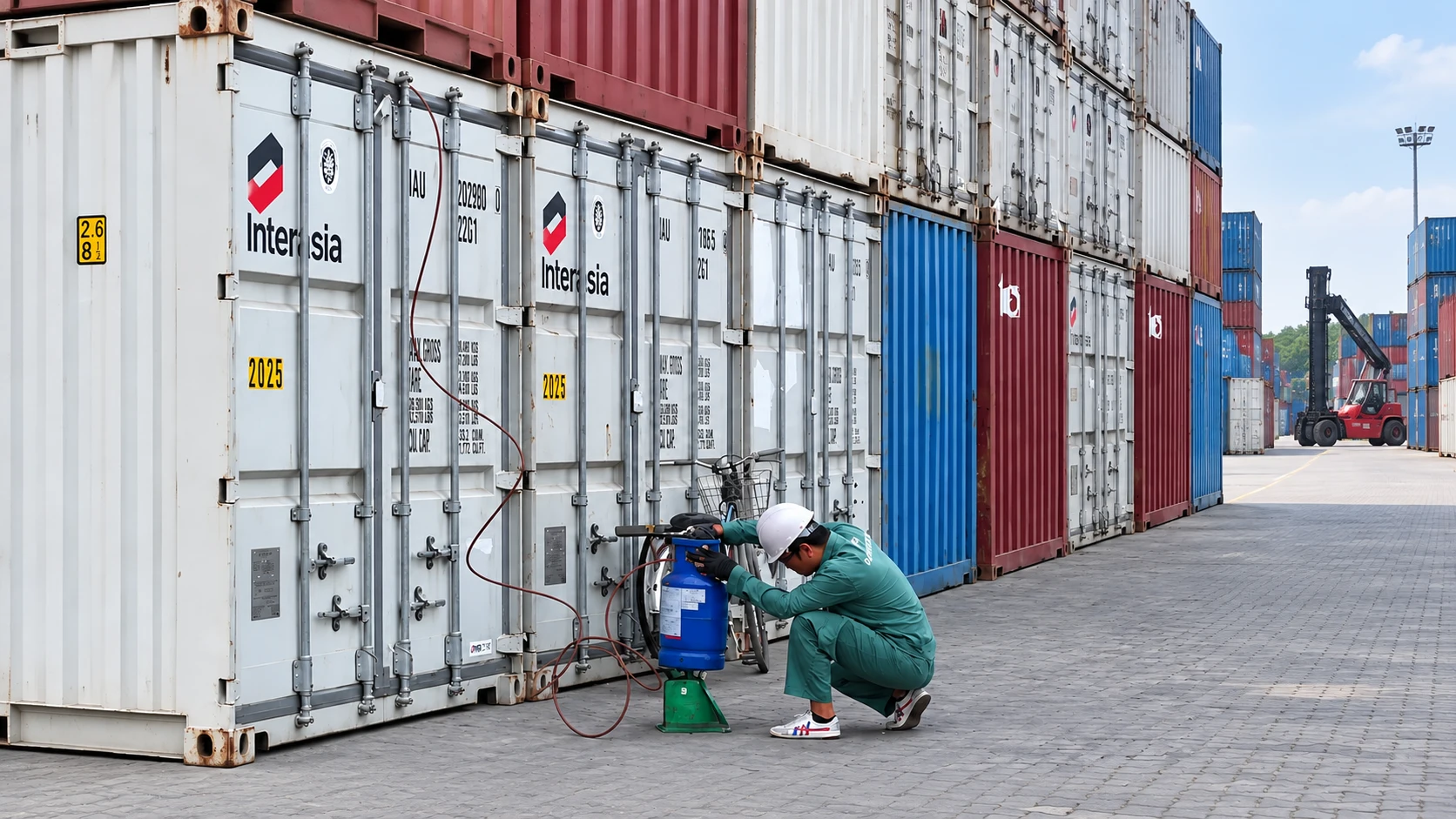
VFC Fumigation technicians fumigating an export container
Is full-container fumigation mandatory for US-bound cargo?
Full-container fumigation is not mandatory for all commodities exported to the United States. However, it is compulsory for consignments utilizing wood packaging material (WPM) governed by ISPM 15 standards, or for agricultural products and spices carrying a risk of stored-product pest infestation. Proactive fumigation enables exporters to minimize the risk of US port entry refusal resulting from pest emergence during transit.
What is the minimum exposure time required when fumigating US-bound cargo with Methyl Bromide?
The exposure period for Methyl Bromide depends on several factors, such as the target pest species, cargo characteristics, and applicable regulatory standards. Typically, the exposure time ranges from 24 to 48 hours.
What requirements must the ISPM 15 mark on wooden pallets meet to be accepted by US Customs?
A compliant IPPC ISPM 15 mark must be stamped or branded directly onto the surface of the wood packaging using indelible ink, remaining legible without smudging or alterations. The stamp must be displayed in clearly visible locations on at least two opposite sides of the pallet or wooden crate. Crucially, the mark must include the country code, the unique identification number of the accredited treatment provider, and the approved treatment abbreviation (MB or HT).
What happens at US ports if there is a single-character error in the container or seal number on the fumigation certificate?
Any discrepancy in the container number, seal number, or details on the certificate can trigger verification requests, increasing the risk of physical inspection and causing customs clearance delays. When information fails to match, US quarantine authorities will immediately flag the shipment as a risk and place a hold on the container for cross-verification, disrupting delivery timelines and incurring substantial demurrage and storage costs.
7. Recommended actions for exporters
Understanding and complying with U.S. quarantine requirements is not simply about overcoming administrative barriers; it is a proactive risk management strategy for protecting the supply chain. Exporters need to shift their mindset from treating fumigation as a compliance formality to closely controlling material standards and the transparency of the treatment process.

VFC Fumigation – Export cargo fumigation provider for the U.S. market
To ensure smooth and safe customs clearance in the US, businesses should proactively review packaging standards before scheduling shipments. Contact VFC Fumigation's network of experts immediately via Hotline 0914.773.300 or Email contact@fumigation.vn to receive accurate fumigation advice and internationally standardized certification.

Featured Knowledge



Related Knowledge