





Published date:
24/09/2026
Share




To export rice to the Philippines, enterprises must prepare a comprehensive documentation dossier comprising: Commercial Contract, Commercial Invoice, Packing List, Ocean Bill of Lading, Certificate of Origin, Phytosanitary Certificate, Fumigation Certificate, and a valid copy of the Sanitary and Phytosanitary Import Clearance (SPSIC) issued by the Philippine Department of Agriculture to the buyer prior to the loading date.
1. Mandatory Export Documentation Suite for Rice to the Philippines
The Philippines is currently Vietnam’s largest rice export market. However, Philippine regulatory authorities enforce stringent documentary scrutiny. Consequently, preparing an exhaustive, uniform, and fully reconciled set of documents is a prerequisite for seamless customs clearance.
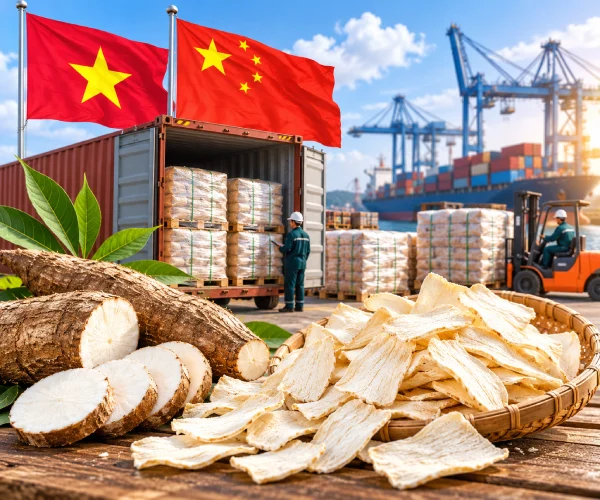
Required documentation suite for rice exports to the Philippines
1.1 Standard Commercial and Shipping Documents
- Foreign Trade Contract: Clearly specifies the rice grading (5%, 15%, or 25% broken), packaging specifications, delivery schedule, and agreed Incoterms.
- Commercial Invoice and Packing List: Must show identical numbers of bags, net weight, and gross weight. Export rice destined for the Philippines is conventionally packed in 50 kg PP bags or jumbo bags.
- Ocean Bill of Lading (B/L): Must accurately state the vessel name, voyage number, container numbers, seal numbers, and designated port facilities. Common loading ports in Vietnam include Cat Lai, Phu Huu, SPITC, Phuoc An, Cai Mep, Can Tho, Thot Not, etc.; major discharge ports in the Philippines include Manila, Cebu, Subic, Davao, and Iloilo.
1.2 Certificate of Origin in Rice Trade
Pursuant to commitments under the ASEAN Trade in Goods Agreement (ATIGA), Vietnamese rice exported to the Philippines utilizes C/O Form D (issued electronically via the ASEAN Single Window or as a physical certificate). This document entitles the consignment to preferential tariff treatment under the prevailing regulatory framework between member states.
1.3 SPSIC Import Clearance
The Sanitary and Phytosanitary Import Clearance (SPSIC) is a biosecurity and plant health clearance issued by the Bureau of Plant Industry (BPI) under the Department of Agriculture (DA) of the Philippines to licensed domestic importers.
The Non-Negotiable Rule Regarding SPSIC:
The SPSIC must be approved and issued strictly PRIOR to the actual loading of cargo onto the vessel (Loading Date / On Board Date on the B/L) at the Vietnamese port of origin. If the B/L date precedes the SPSIC approval date, Philippine Customs and Quarantine will reject clearance immediately, issuing punitive fines or mandatory re-export orders.
1.4 Summary Table: Rice Export Documentation Suite for the Philippines
| Document Name | Issuing Authority | Primary Operational Purpose |
|---|---|---|
| Commercial Invoice & Packing List | Prepared by Exporter | Two-way customs clearance; cargo weight and packaging reconciliation |
| Bill of Lading (B/L) | Shipping Line / Freight Forwarder | Document of title for cargo release at destination; banking presentation |
| C/O Form D | Agency of Foreign Trade (Ministry of Industry and Trade) | Claim preferential tariff rates under ATIGA |
| Phytosanitary Certificate | Regional Plant Quarantine Sub-Department (PPD) | Certifies freedom from quarantine pests; verifies compliance with importing phytosanitary requirements |
| Fumigation Certificate | Accredited Fumigation Company (e.g., VFC Fumigation) | Verifies standard-compliant gas treatment protocols and dosage |
| SPSIC Permit (Copy) | BPI – Department of Agriculture of the Philippines | Statutory legal prerequisite authorizing vessel discharge in the Philippines |
| Certificate of Inspection (CQ, CW) | Independent Survey Companies (Vinacontrol, SGS, Davicontrol...) | Certifies moisture content, foreign matter, broken ratio, and actual delivered weight |
2. Phytosanitary Inspection Procedures for Rice Bound for the Philippines
All milled, cargo, and rough rice consignments are regulated articles subject to mandatory quarantine inspection prior to departure from Vietnam.

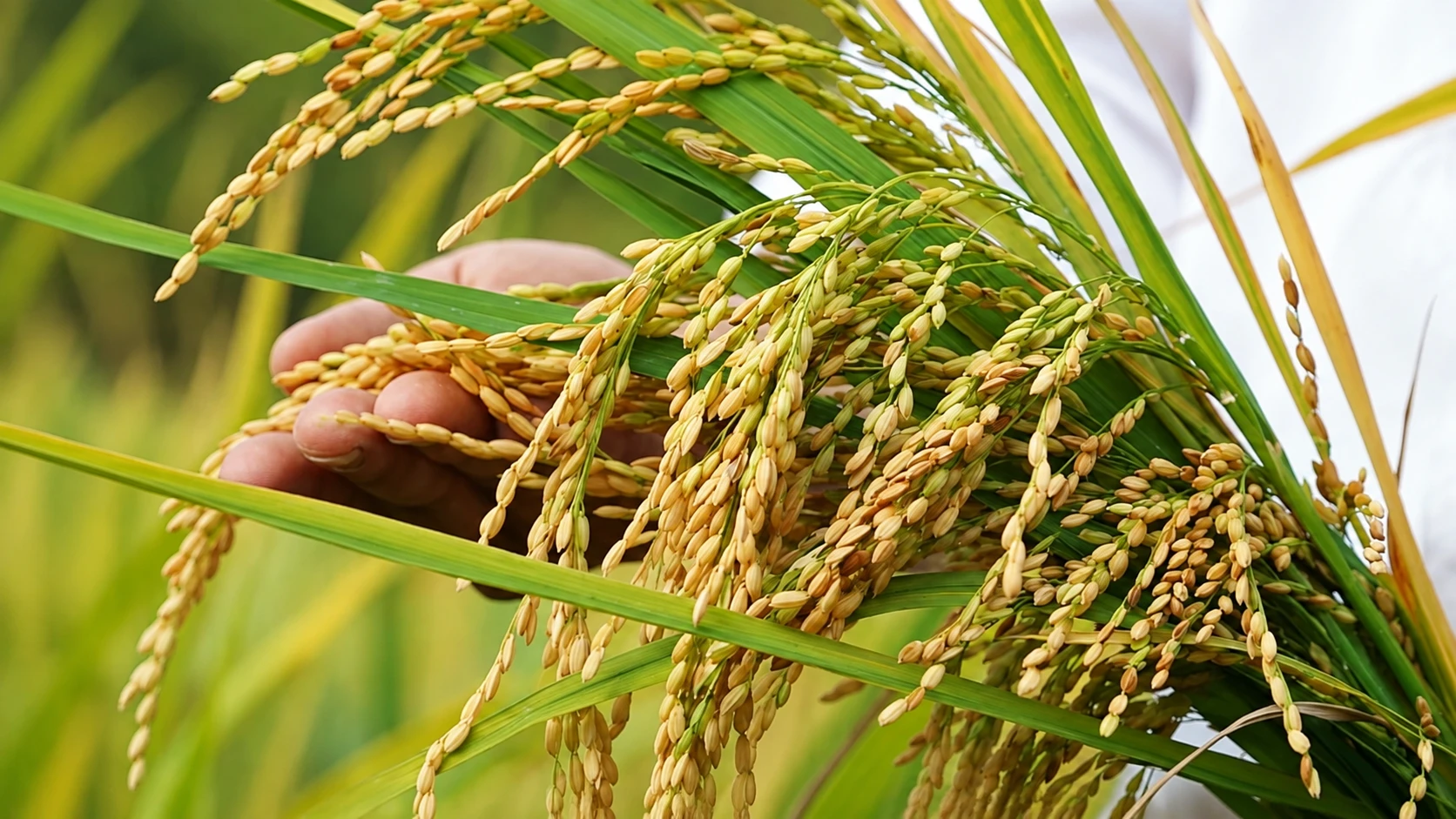
Philippine BPI inspects pests, packaging integrity, and safety requirements for imported rice
2.1 Phytosanitary Standards of the Philippine BPI
The National Plant Quarantine Services Division of the Bureau of Plant Industry (BPI–NPQSD) enforces strict quarantine inspections upon vessel arrival. Consignments must be completely free of live quarantine pests or signs of active stored-product insect infestation.
In addition to insect pests, quarantine inspectors inspect for storage molds, packaging cleanliness, and compliance with statutory chemical residue thresholds.
2.2 4-Step Phytosanitary Certification Protocol in Vietnam
Step 1: Electronic Dossier Registration via the Vietnam National Single Window (VNSW):
Exporters register the export phytosanitary inspection dossier online via the National Single Window at vnsw.gov.vn. The application dossier comprises: Sales Contract, Commercial Invoice, Packing List, a copy of the buyer's SPSIC permit, and the Fumigation Certificate issued by an accredited treatment provider to verify that the consignment has undergone or is undergoing standard-compliant pest control treatment.
Step 2: On-Site Inspection and Sampling:
Inspectors from the Regional Plant Quarantine Sub-Department draw representative samples directly at the storage warehouse or container yard in accordance with national TCVN sampling standards.
Step 3: Laboratory Analysis and Parameter Verification:
Drawn samples undergo entomological examination in accredited laboratories. Concurrently, quarantine officers cross-examine the technical parameters on the Fumigation Certificate to ensure treatments satisfy destination requirements.
Step 4: Issuance of the Phytosanitary Certificate:
Upon successful laboratory clearance and validation of treatment data, the official Phytosanitary Certificate is issued, clearing the cargo for customs and export.
3. Fumigation Certificate Regulations for Philippine-Bound Rice
Fumigation is a mandatory technical measure designed to eradicate target pests, preserve grain quality, and ensure passage through BPI biosecurity border controls.
Fumigation Certificate confirming rice cargo treatment prior to export
3.1 Why Is a Fumigation Certificate Mandatory for Rice Shipped to the Philippines?
The sea transit from Vietnamese ports to the Philippines typically ranges from 5 to 12 days. This duration, combined with ambient temperatures and commodity moisture, provides ideal conditions for dormant weevil larvae and beetles to emerge.
Without thorough pre-shipment treatment, infestations can escalate rapidly during transit. If live insects are detected by BPI upon arrival, containers are quarantined, incurring substantial Demurrage & Detention (D&D) costs and halting the downstream supply chain.
3.2 Technical Fumigation Standards for Export Rice
Fumigant Selection: The choice of fumigant is not static, but depends on several core variables, including commercial contract requirements, specific buyer instructions, plant quarantine regulations of the destination market, and the vessel transit schedule. Currently, two fumigants are officially authorized for use in Vietnam: Phosphine and Methyl Bromide.
Dosage Calculations: Formulated according to commodity volume, targeted pest species, and governing standard operating procedures.
Standard Exposure Period: Depending on the fumigant selected, the exposure duration extends from 7 to 10 days (for Phosphine) or a minimum of 24 to 48 hours (for Methyl Bromide) to guarantee effective pest eradication across all life stages. This operational difference directly impacts stuffing schedules and vessel bookings, as the container fumigation exposure time cannot be arbitrarily shortened merely to meet the port closing time.
3.3 Containerized Fumigation vs. Bulk Vessel Cargo
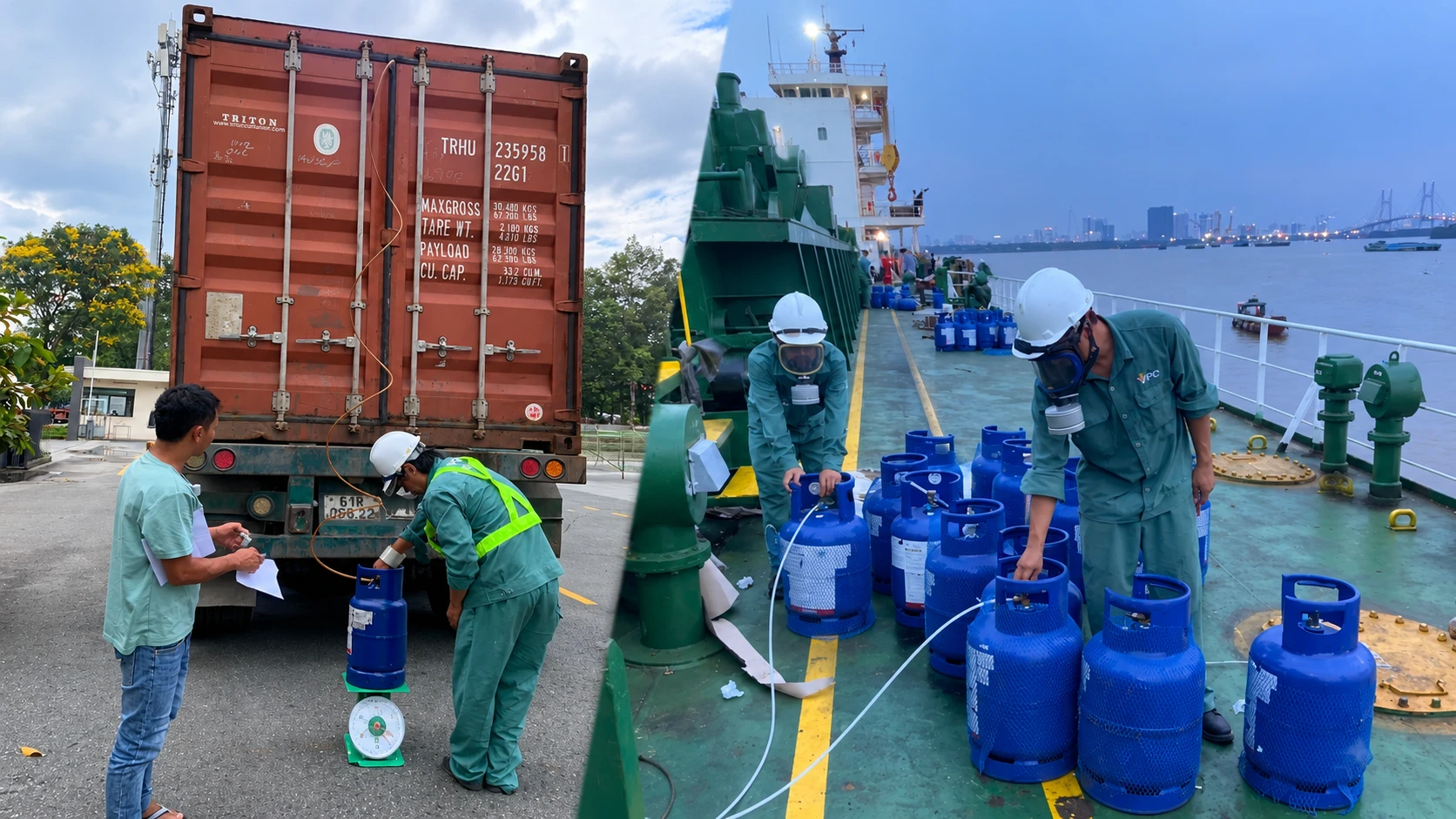
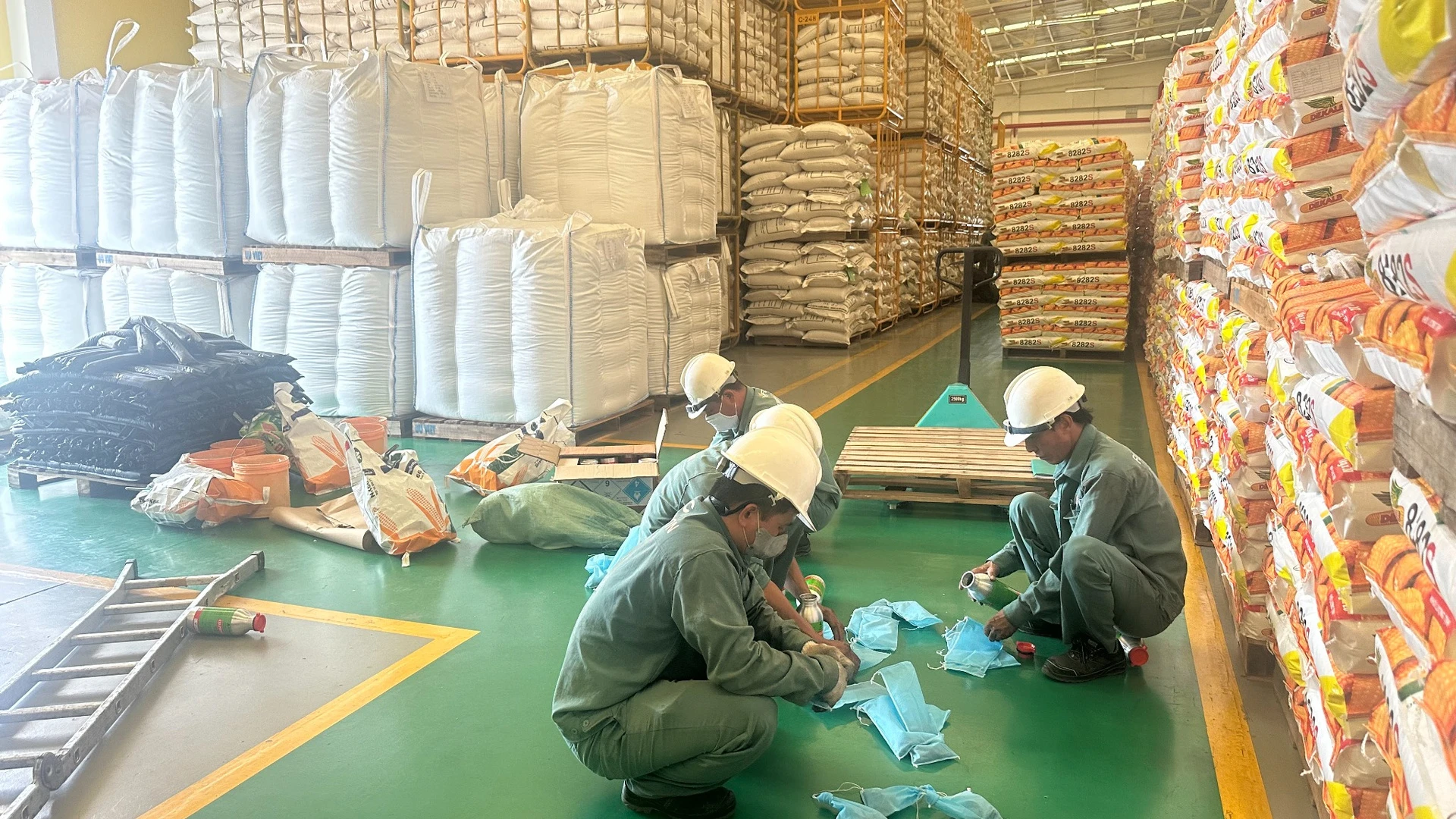
Container and vessel rice fumigation is executed using customized fumigants and treatment protocols
- Containerized Rice Shipments:
Aluminium Phosphide (AlP): Deployed via two methods:
- (1) In-Transit Treatment: Technicians apply the fumigant, inspect and seal the entire container to ensure complete gas-tightness, and subsequently hand it over to the client to maintain the required exposure period throughout transit.
- (2) Terminal Treatment & Aeration: The container is dosed, hermetically sealed, and held at the terminal for the 7–10 day exposure period. After exposure, technicians execute mechanical aeration/degassing, recover spent chemical residues for safe disposal, and test gas levels to ensure they fall below the Threshold Limit Value (TLV) before final delivery.
Methyl Bromide (MB): Conducted under a closed-circuit workflow: container sealing, gaseous injection, a minimum 24-hour exposure period, mechanical aeration, and TLV clearance testing before delivering the container for vessel loading.
- Break-Bulk / Bulk Vessel Shipments: Due to the massive volume and hold geometry, an on-site survey and ship-specific technical plan are mandatory:
Vessel Inspection & Engineering Plan: Surveyors evaluate hold volumes, cargo depth, and potential leakage zones (hatch covers, ventilation ducts, access trunks, bilge wells) to engineer a customized treatment protocol.
Deployment by Fumigant Type:
- Application of Aluminium Phosphide (AlP) Fumigant: The fumigant is uniformly distributed throughout the grain bulk in accordance with an engineered dosing pattern. For deep cargo holds, the treatment protocol may incorporate an active gas recirculation system (J-System) to assist in driving lethal gas concentrations down into deep commodity tiers, maximizing overall treatment efficacy.
- Methyl Bromide (MB) or Combination Regimens: Liquid MB is vaporized through specialized heat exchangers and introduced into holds via dedicated ducting networks.
Sealing Integrity and Gas Safety Monitoring: Complete sealing of hatch covers, booby hatches, and vents. Continuous monitoring of accommodation areas, crew quarters, and engine spaces is conducted using electronic gas detectors to ensure vessel safety before handing over safety dossiers and sailing directives to the Master (for in-transit vessel fumigation).
4. Critical Operational Pitfalls Resulting in Cargo Rejection
A clear understanding of these root causes enables enterprises to establish proactive and effective preventive control measures:
Bill of Lading (B/L) Date Preceding SPSIC Approval Date:
The most severe administrative violation. BPI matches clearance dates systematically. If the loading date or B/L issuance date precedes the SPSIC approval date, the cargo is deemed illegal and rejected outright.
Contracting Substandard or Unlicensed Fumigation Operators:
Engaging low-capability contractors often leads to operational failures, gas leakage, and surviving insect populations at destination ports. This causes vessel detentions, customs rejections, and commercial penalties.
Unverifiable Certificates Lacking Real-Time Data Logs:
Certificates issued without compliant technical protocols leave consignments vulnerable to live pest emergence. When destination authorities request telemetry logs or dose-monitoring records, inability to provide verifiable proof triggers quarantine penalties, reshipment mandates, and commercial blacklisting.
5. Verifiable Biosecurity Solutions from VFC Fumigation
As a pioneer in agricultural pest control in Vietnam, VFC Fumigation delivers comprehensive protection solutions for every export rice consignment:

VFC Fumigation deploys specialized treatment protocols on export commodities bound for global markets
- Deep Expertise in Agricultural Export Fumigation: Having accompanied the continuous development of Vietnam’s rice sector across various milestones, VFC Fumigation delivers technical treatments for millions of metric tons of export rice annually to critical international markets, including the Philippines, Indonesia, Africa, China, and the United States.
- International Standards Compliance: VFC Fumigation is the official Vietnamese member of the International Maritime Fumigation Organization (IMFO). All vessel and container treatment procedures adhere strictly to IMO codes and international maritime biosecurity frameworks.
- On-Site Operational Traceability via FumiApp: All on-site parameters, gas readings, and workflow milestones are logged in real-time on our proprietary FumiApp software, ensuring procedural transparency.
- Dynamic QR-Code Certificate Verification: VFC certificates feature dynamic QR codes, allowing exporters, shipping lines, and buyers to verify authentic treatment records online 24/7. Hard copies bearing full corporate and legal authority are promptly issued for submission to BPI.
- Nationwide Logistics Network: Comprehensive operational coverage across core Mekong Delta milling hubs (Can Tho, Sa Dec, Long Xuyen, My Thoi, Long An...) and major maritime gateways (Cat Lai, Cai Mep, Hai Phong...), supporting expedited loading schedules.
6. Frequently Asked Questions (FAQ)
Q1: Can Vietnamese exporters apply directly for an SPSIC?
Answer: No. The SPSIC is issued exclusively to accredited Philippine importers with valid legal standing and allocated import clearances. Vietnamese exporters receive a verified copy from the buyer to validate shipment timelines and cargo details before loading.
Q2: What is the validity period of an SPSIC for rice?
Answer: Under Philippine Department of Agriculture regulations, an SPSIC for rice is typically valid for 60 days from issuance (which may be shortened to 30 days depending on prevailing market stabilization policies). Loading at the origin port and arrival at the discharge port must be completed within this window.
Q3: What are the current import tariff rates for rice into the Philippines?
Answer: Consignments accompanied by an authentic C/O Form D receive preferential intra-ASEAN tariff rates under ATIGA. Under Philippine Executive Order No. 62, the Most Favoured Nation (MFN) tariff rate for rice imported from non-ASEAN sources was also modified to 15% to stabilize domestic staple prices.
Q4: What mandatory labeling information must be printed on export rice bags?
Answer: Packaging must display clear English markings containing:
- Product name and broken percentage (e.g., White Rice 5% Broken)
- Net weight
- Name and address of exporter and importer
- Crop year and packing date
- Country of origin: Product of Vietnam
A compliant documentation suite and technically sound fumigation execution provide the foundation for seamless customs clearance into the Philippine market.
Rice exporters, logistics providers, and freight forwarders in need of technical consultation on container fumigation, barge, or bulk vessel treatments destined for the Philippines, please connect directly with VFC Fumigation:
- Hotline 24/7: 1800 577 788
- Service Consultation Hotline/Zalo: 0914.773.300
- Email: contact@fumigation.vn



Related Blogs