





Published date:
09/10/2026
Share




Fumigation (technically defined as fumigation treatment) is a quarantine measure utilizing gaseous pesticides or specialized fumigants (most commonly Phosphine or Methyl Bromide) diffused within a sealed enclosure to eradicate live insects and target pests. Export cargo fumigation is a mandatory requirement for dried agricultural commodities, handicrafts, and wood packaging material (WPM) to comply with international phytosanitary regulations.
1. What is Fumigation? Distinguishing Fumigation from Surface Spraying
1.1. The Concept of Fumigation in Import-Export Logistics
In commercial trade and freight forwarding across Vietnam, industry practitioners colloquially refer to this treatment as "hun trùng." However, within standardized regulatory and biosecurity frameworks, the industry strictly uses the technical term Fumigation to reflect its scientific methodology and legal validity.
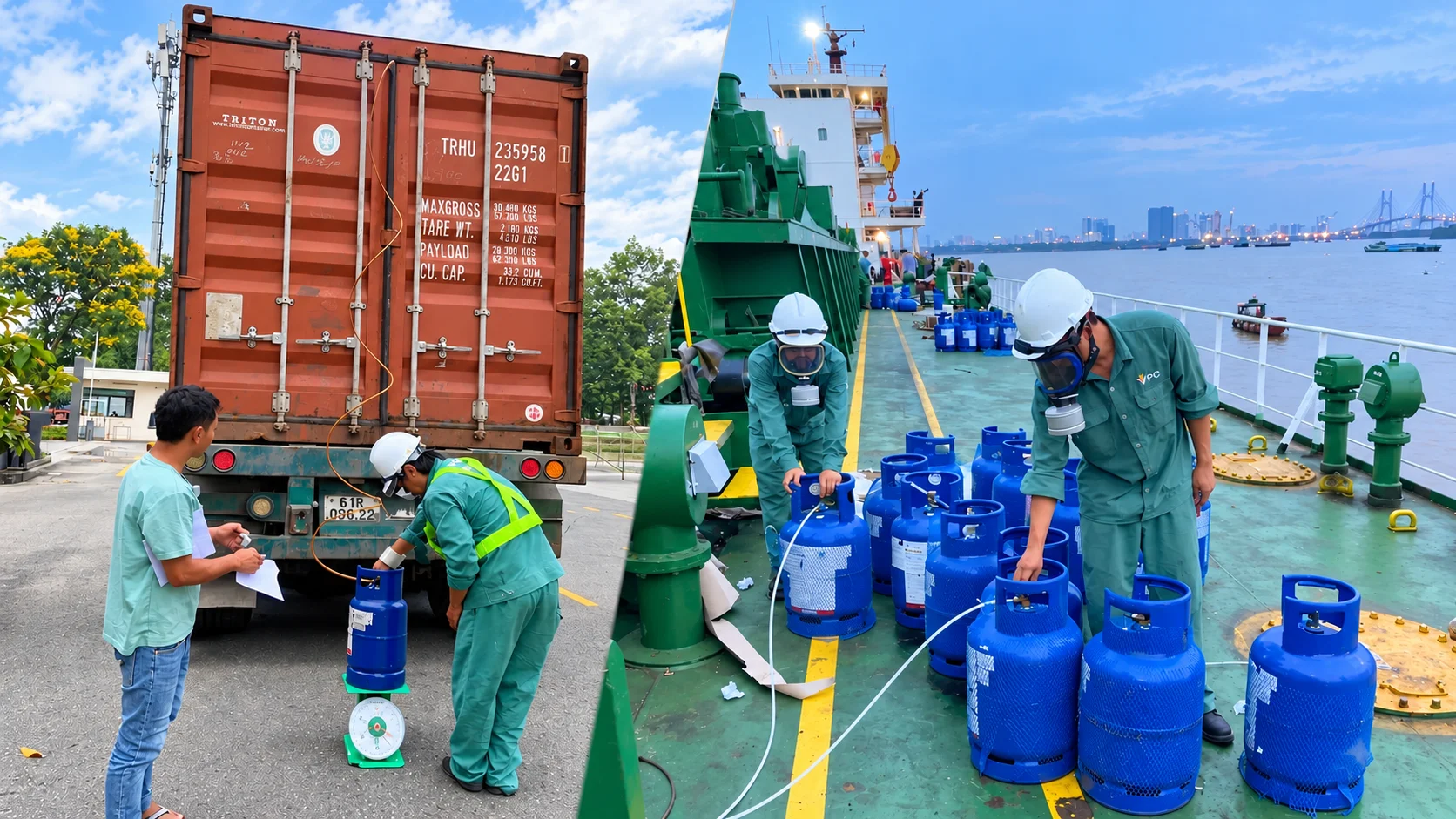
Standard technical terminology for fumigation in export logistics
Fumigation is the process of introducing a calculated volume of a chemical agent capable of releasing lethal gas into a sealed, gas-tight enclosure (such as shipping containers, storage silos, gas-proof sheeted stacks, or bulk vessel cargo holds). These gas molecules penetrate deeply into the capillaries of agricultural seeds and the cellular structure of timber, eradicating target pests across all biological life stages: eggs, larvae, pupae, and adults.
1.2. Distinguishing Fumigation from Surface Residual Spraying
- Residual Spraying: Employs hydraulic pressure to apply liquid pesticide solutions onto warehouse floors, container walls, or packaging surfaces. This method acts purely as an external contact insecticide to knock down crawling insects; it cannot penetrate the core of grain bulks or the interior of wooden pallets.
- Fumigation: Fumigants possess strong penetrating power, diffusing through tightly compressed packaging layers and timber structures to eradicate pest infestations concealed deep within.
1.3. Statutory and Regulatory Significance of Export Fumigation
Export fumigation protects the physical integrity of commodities while functioning as a critical legal gateway:
- Compliance with WTO SPS Guidelines: Satisfies biosecurity and phytosanitary import measures governed by the World Trade Organization’s Agreement on the Application of Sanitary and Phytosanitary Measures (SPS Agreement).
- Statutory Baseline for Phytosanitary Certification: Serves as the technical prerequisite for Plant Protection authorities (NPPOs) to inspect and issue Phytosanitary Certificates.
- Precondition for Port Clearance: Operates as a mandatory requirement for customs and quarantine authorities at the port of destination to grant import clearance.
2. Why is Export Cargo Subject to Mandatory Fumigation?
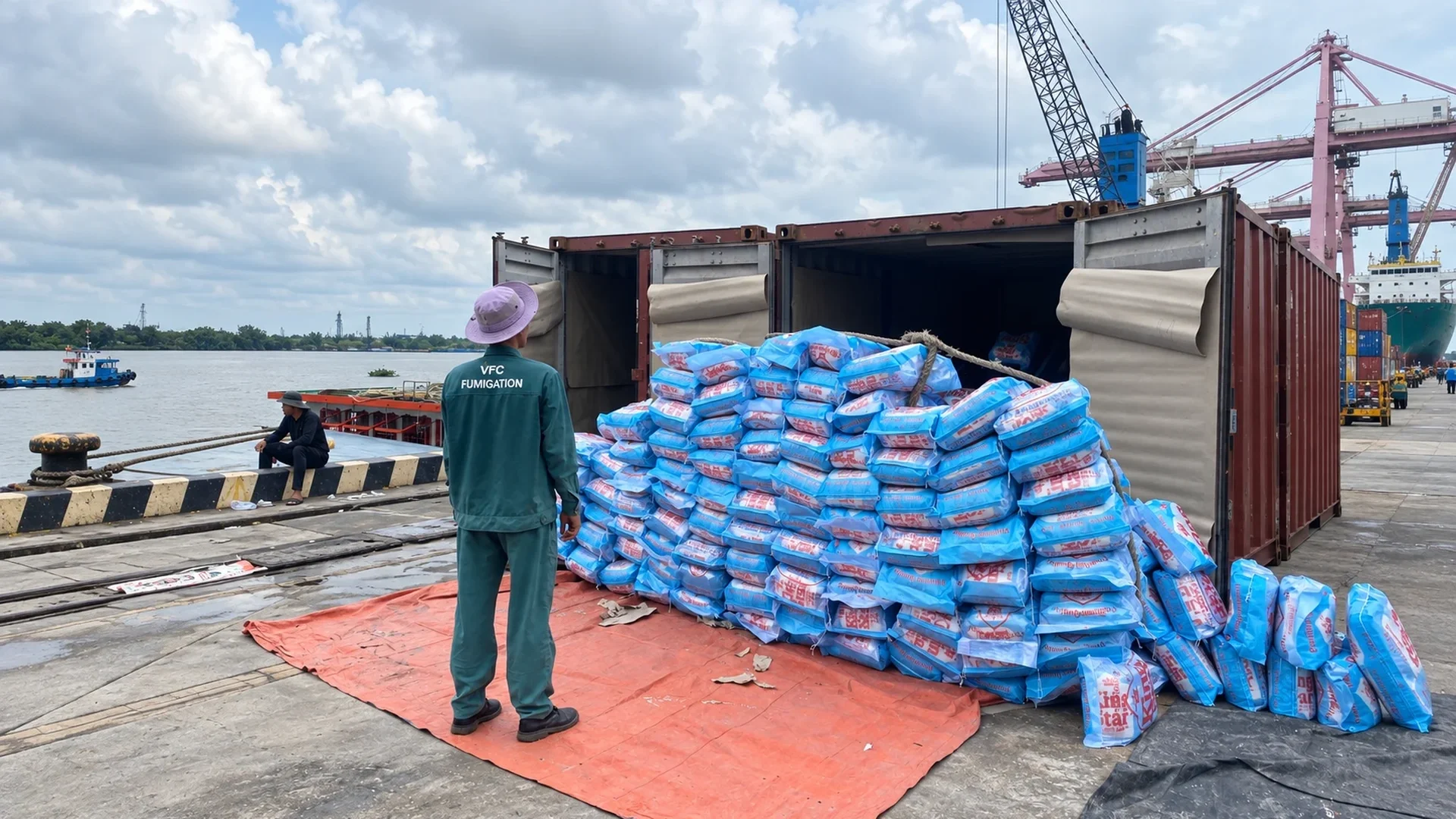
Fumigation controls pest risks before cargo embarks on international voyages
2.1. Preventing the Incursion of Dangerous Invasive Species
International maritime voyages often extend over several weeks, creating an incubator environment for pests within sealed cargo holds. Without treatment at the port of loading, invasive pests can establish populations and devastate the agriculture and native ecosystems of the importing country.
High-risk quarantine pests subject to zero-tolerance enforcement include:
- Khapra Beetle (Trogoderma granarium): A high-consequence quarantine pest of global concern.
- Red Flour Beetle (Tribolium castaneum) & Lesser Grain Borer (Rhyzopertha dominica): Destructive stored-product pests.
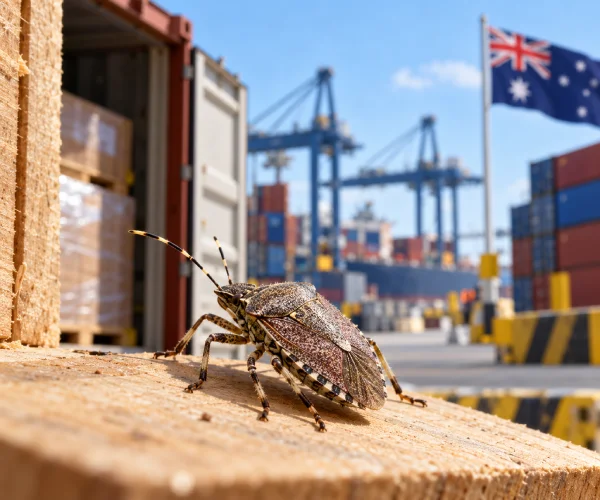
- Brown Marmorated Stink Bug (Halyomorpha halys - BMSB): High-priority seasonal hitchhiker pest.
- Longhorn Beetles (Cerambycidae) & Bark Beetles: Major timber-boring vectors transported in raw wood packaging.
2.2. Overcoming Biosecurity Barriers in Regulated Markets
Destination markets enforce stringent technical entry requirements:
- Australia & New Zealand Markets: Mandate compliance with AFAS standards and the AusTreat scheme to manage seasonal BMSB (Brown Marmorated Stink Bug) risks.
- United States, Canada, and EU Markets: Strictly regulate wood packaging materials (WPM) in accordance with ISPM 15 standards and enforce pesticide Maximum Residue Limits (MRLs) on food-grade agricultural produce.
2.3. Consequences of Substandard Export Treatment
Intercepting a single live insect at the discharge port triggers severe commercial and logistical liabilities:
- Consignments are placed on immediate biosecurity hold at the terminal berth.
- Port Demurrage and carrier Detention (DEM/DET) charges accumulate daily.
- Destination biosecurity authorities enforce corrective orders: mandatory onshore remediation at high local fee schedules, or an immediate Export Order forcing compulsory re-export back to Vietnam.
3. Commodity Groups Subject to Mandatory Export Fumigation
| Commodity Group | Representative Cargo | Primary Pest Hazards |
|---|---|---|
| 1. Dried Agricultural Commodities & Grains | Rice, green coffee beans, black pepper, cashew nuts, cassava chips, pulses, dried spices | Stored-product weevils, grain borers, coffee berry borers, mold fungi |
| 2. Wood Packaging Material (WPM) | Wooden pallets, raw timber crates, dunnage, wooden bracingdunnage) | Longhorn beetles, wood-boring insects, bark-associated larvae |
| 3. Handicrafts & Natural Fibers | Rattan, bamboo, seagrass, water hyacinth, natural wood carvings | Bamboo borers, powder-post beetles, fiber-boring worms |
| 4. Animal Feed & Bulk Cargoes | Feed corn, soybean meal, bulk cassava chips in vessel holds | High pest density, deep larval infestations within cargo depths |
| 5. Seasonal Industrial Cargo | Machinery, automotive components, structural steel shipped to Australia/NZ | Overwintering refuge for Brown Marmorated Stink Bugs (BMSB) |
4. Standard Export Fumigants and Treatment Methodologies
Treatment methods are determined by commodity characteristics, packing schedules, and importing country requirements:
4.1. Fumigation Using Phosphine (PH3)
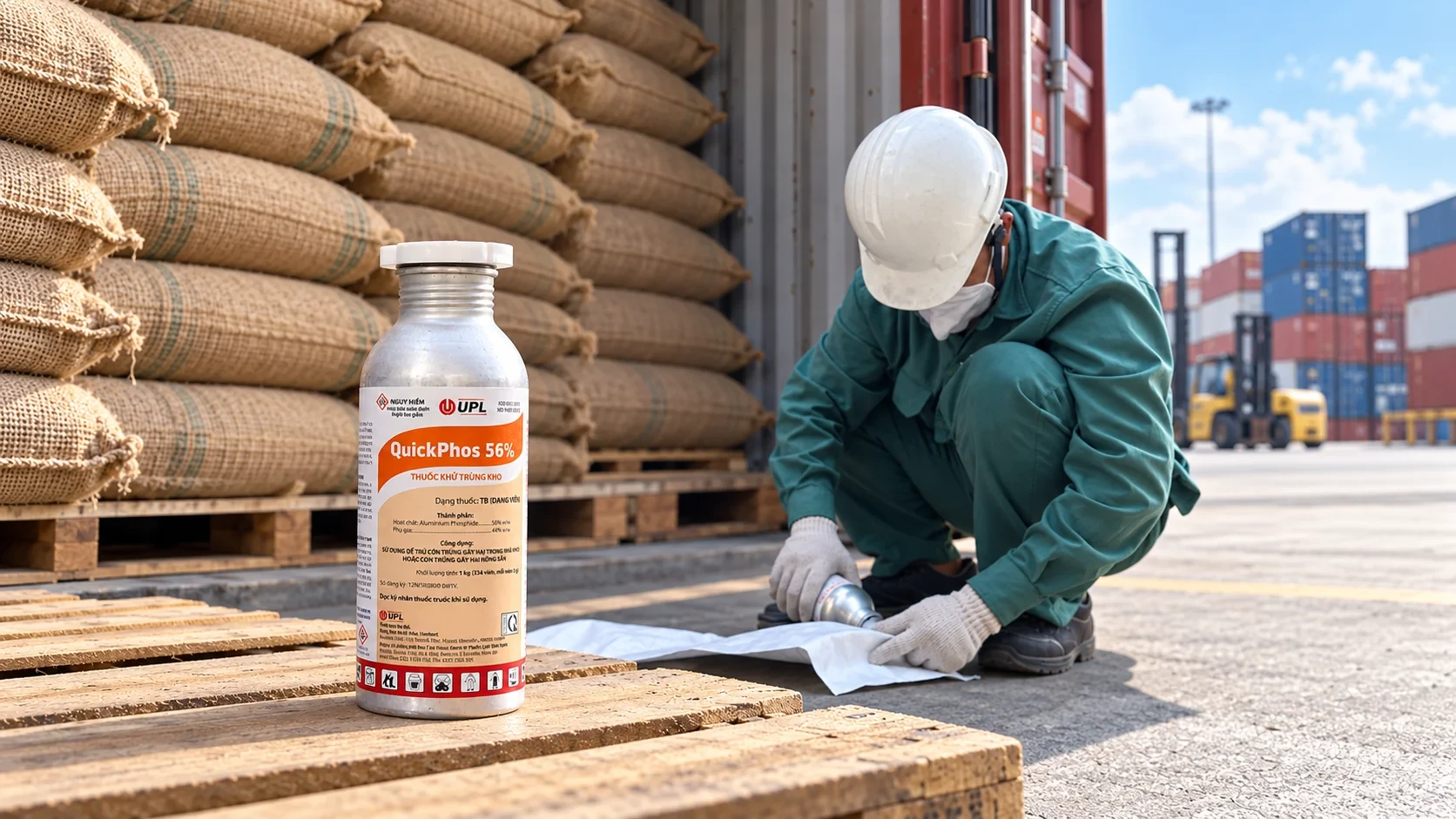
Phosphine is widely utilized for dried agricultural produce and commodities requiring extended treatment windows
- Mechanism of Action: Formulated as tablets, pellets, or bag blankets containing Aluminium Phosphide (AlP), which react with ambient atmospheric moisture to release Phosphine gas (PH3).
- Scope of Application: The standard treatment for food-grade agricultural commodities (rice, green coffee, pepper, cashews, grains) and bulk cassava chips stored long-term or moving on extended sea voyages.
- Advantages: Deep penetration capabilities; leaves no organohalogen residues; fully complies with strict MRL limits enforced across the EU, Japan, and the United States.
- Exposure Duration: Requires an unbroken exposure period of 7 to 10 days.
Safety Advisory: Phosphine gas is highly corrosive to non-ferrous metals (copper, brass, silver, gold). Never apply Phosphine to containers housing electronics, unshielded copper wiring, or electrical printed circuit boards (PCBs).
4.2. Fumigation Using Methyl Bromide (CH3Br)
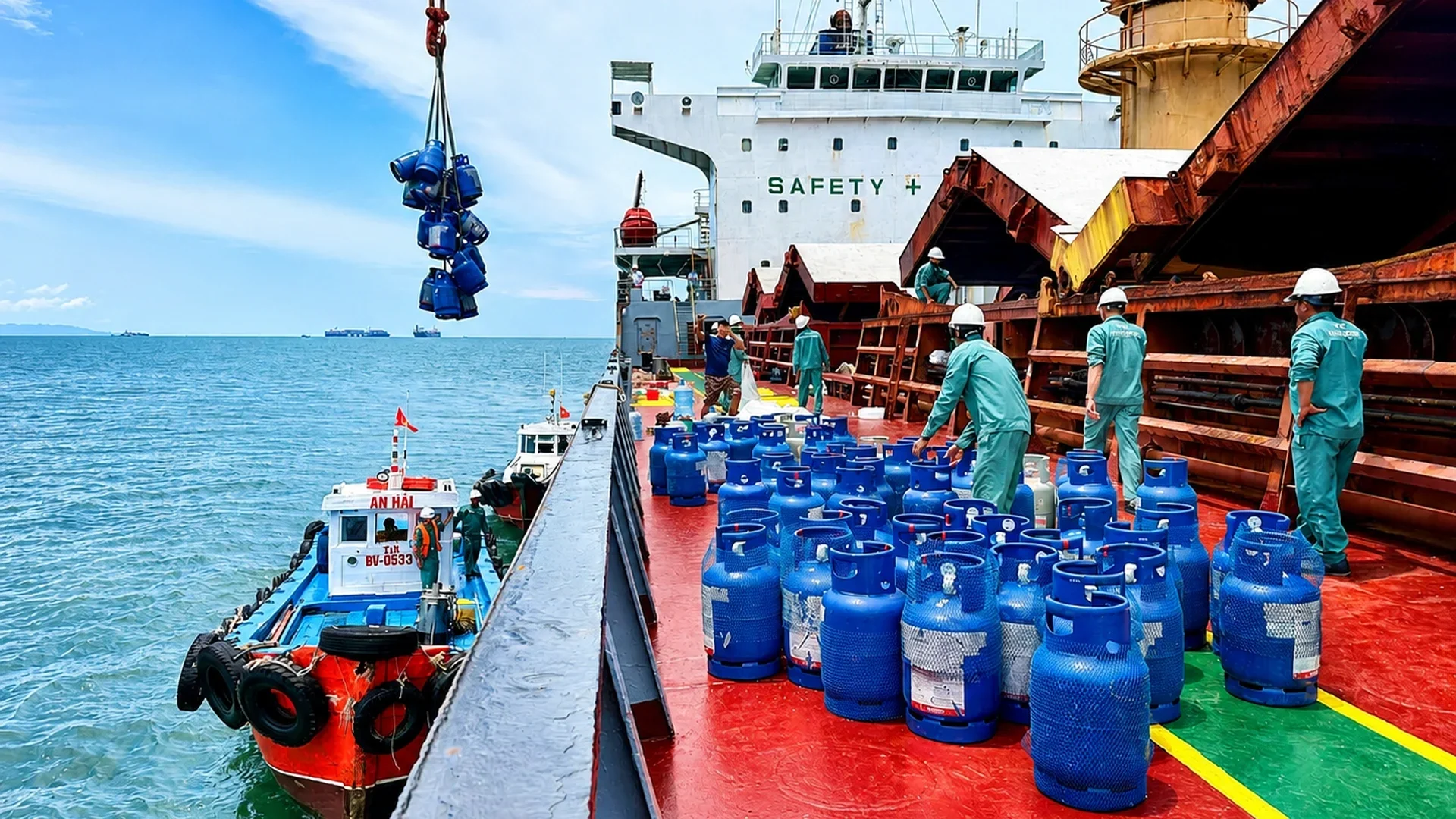
Methyl Bromide offers rapid treatment turnarounds and is standard for quarantine border control
- Mechanism of Action: Stored as a liquefied gas under pressure in cylinders. The liquid must be passed through a specialized heat vaporizer to convert fully into a gas prior to injection into the sealed enclosure.
- Scope of Application: Applied to Wood Packaging Material (WPM) under ISPM 15, bamboo and rattan items, industrial cargo bound for Australia under AFAS/BMSB, or shipments requiring rapid clearance at the port.
- Advantages: Broad-spectrum, rapid insecticidal eradication; standard exposure duration is only 24 to 48 hours.
4.3. Heat Treatment (HT) for Wooden Pallets
- Mechanism of Action: Raw wooden pallets are loaded into an industrial thermal chamber and heated until the timber core temperature reaches a minimum of 56°C continuously for at least 30 minutes.
- Advantages: A physical, chemical-free treatment favored by developed markets (EU, USA) for timber packaging.
5. Technical SOP: 5 Steps for Export Container Fumigation
To ensure the legal validity of export documentation and the safety of operational personnel, the container fumigation process at port yards and warehouse depots is executed across 5 rigorous steps:
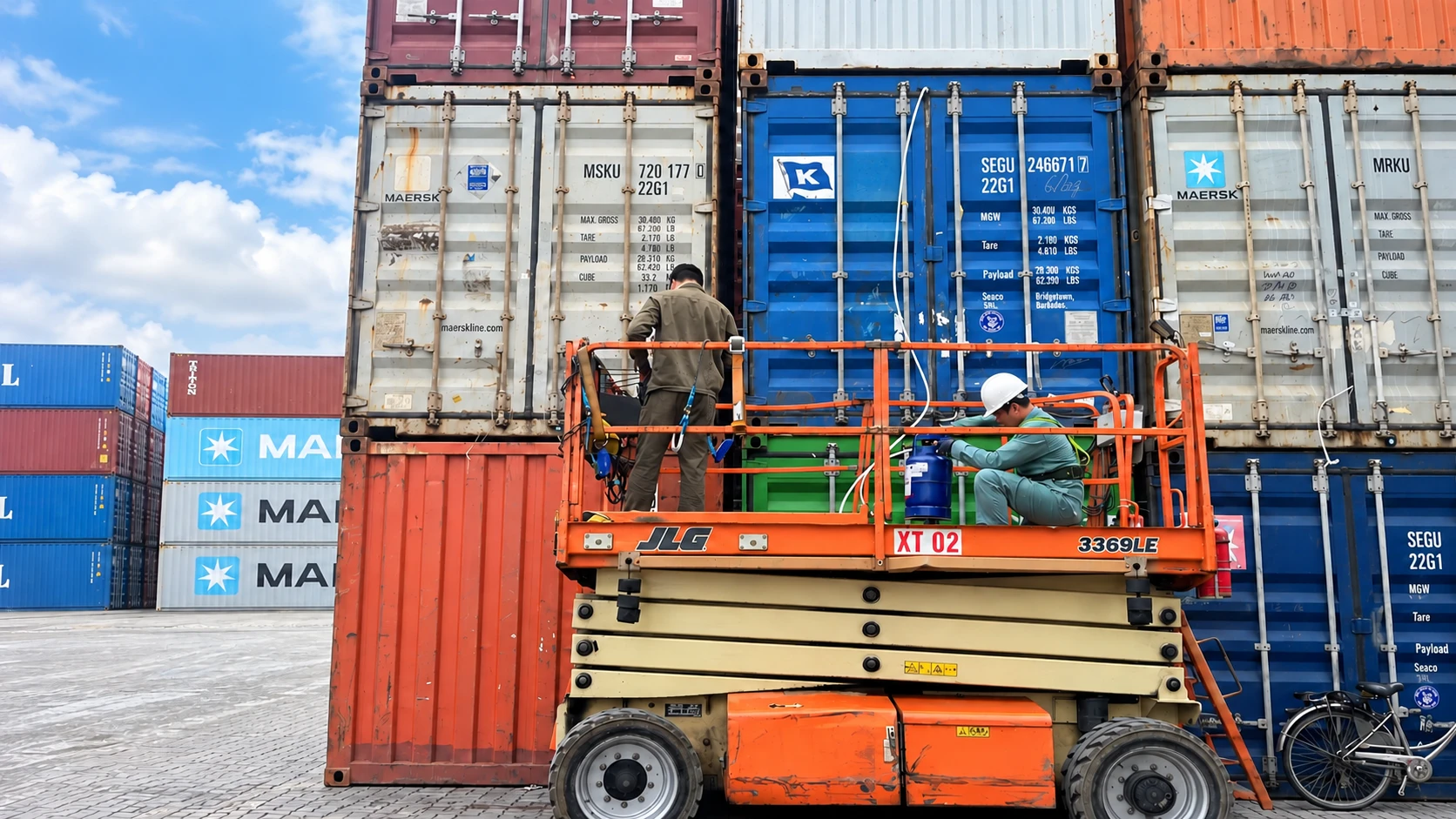
International standard container fumigation workflow
1. Information Verification & Container Structural Inspection:
Match container number, seal number, commodity description, and carrier port closing/cut-off time. Technicians conduct an inspection of container structural integrity (checking for panel punctures, floor integrity, and door rubber gasket seals).
2. Technical Planning & Dosage Calculation:
Calculate internal container volume, record ambient temperature, and determine target pest species to establish precise chemical dosages according to regulatory treatment schedules.
3. Enclosure Sealing & Fumigant Injection:
Seal all external ventilation openings using gas-proof tape. Install gas delivery lines and concentration sampling tubes through the door gaskets. Inject the fumigant (Methyl Bromide via an external vaporizer; Phosphine tablets placed inside safety trays/pouches).
4. Exposure Monitoring & Safe Aeration:
Maintain the enclosure under gas for the prescribed exposure period while logging concentration levels at scheduled intervals. Upon completion, open container doors for forced ventilation. Use electronic gas detectors to confirm residual gas concentrations drop below the Threshold Limit Value (TLV) before releasing the container.
5. On-Site Acceptance, ISPM 15 Stamping, and Certificate Issuance:
Technicians sign the on-site acceptance report alongside the client, apply the certified ISPM 15 mark onto wooden pallets (if applicable), and issue the official Fumigation Certificate.
6. Risk Prevention Checklist: 4 Critical Considerations for Exporters
6.1. Absolute Cross-Document Consistency
Container numbers, seal numbers, commodity names, and package counts listed on the Fumigation Certificate must align with the Ocean Bill of Lading (B/L) and Packing List. A single typographical error can prompt destination biosecurity officers to challenge consignment validity.
6.2. Moisture Management and "Container Rain" Prevention
Fumigants eradicate pests but cannot prevent moisture condensation on container ceilings as vessels transit maritime routes with drastic temperature fluctuations. Dripping condensation causes packaging mold and degrades agricultural produce. Exporters should integrate container ceiling insulation paper lining and specialized industrial desiccants.
6.3. Never Utilize Fraudulent Certificates from Unaccredited Entities
Procuring paper-only certificates without actual physical treatment introduces severe operational liabilities. Interceptions of live pests at destination ports trigger mandatory offshore re-treatment, substantial fines, or compulsory re-export orders, alongside the shipper being blacklisted on biosecurity watchlists.
6.4. Strictly Adhere to Exposure Durations Prior to Port Cut-O
Exporters must proactively schedule cargo stuffing to ensure the treatment achieves the standard exposure time (a minimum of 24 hours for MB, 7–10 days for Phosphine). Cutting short the exposure duration to meet vessel departure schedules compromises pest eradication efficacy, allowing insect eggs and larvae to survive.
7. Professional Export Fumigation Services by VFC Fumigation
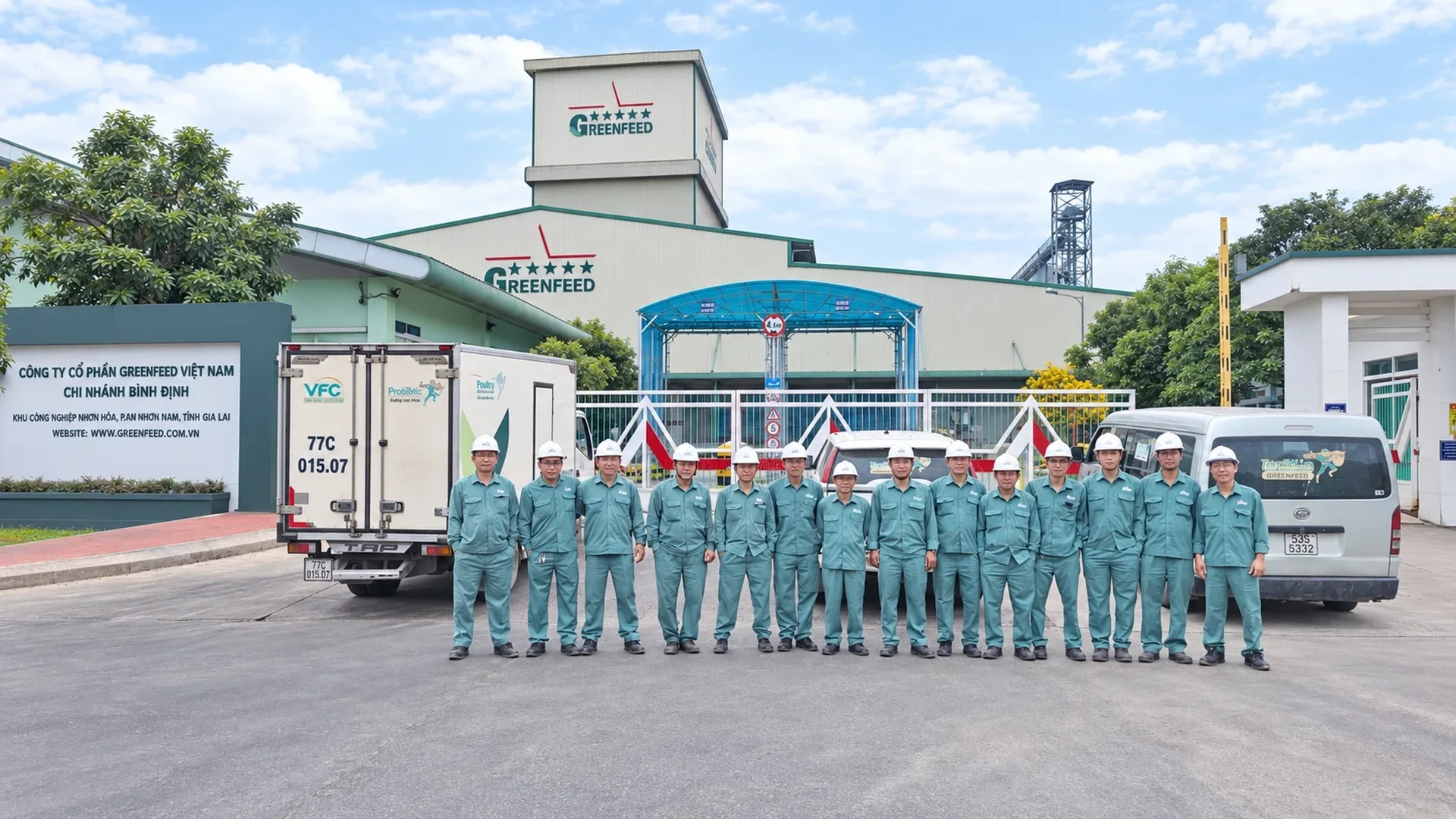
VFC Fumigation partners with enterprises to deliver certified biosecurity pest control for export goods
Established in 1976 as the pioneer of quarantine fumigation in Vietnam, Vietnam Fumigation Joint Stock Company (VFC Fumigation) a member of The PAN Group delivers comprehensive biosecurity treatment services for global trade:
50-Year Track Record & Global Standing: Official member representing Vietnam in the International Maritime Fumigation Organization (IMFO), adhering to international maritime safety standards.
Năng lực pháp lý vững vàng: Sở hữu đầy đủ mã số hành nghề ISPM 15 quốc tế (Mã cơ sở VN-009 MB và VN-010 HT) do Cục Bảo vệ Thực vật cấp phép; được Bộ Nông nghiệp Úc (DAFF) phê chuẩn mã AEI trong chương trình xử lý hàng xuất khẩu đi Úc.
Comprehensive Technical Capabilities:
- Container fumigation for cargo (FCL/LCL), barges, storage silos, and heavy-tonnage bulk carrier holds utilizing J-System gas recirculation technology.
- Treatment of wooden pallets, timber crates, and bracing (dunnage) certified with crisp, indelible IPPC marks.
- Dual-protection packaging solutions: Fumigation integrated with container ceiling insulation lining and industrial desiccant deployment for mold and moisture mitigation.
Operational Digitization & QR Code Verification: Real-time gas concentrations, treatment parameters, and on-site logs are captured digitally through the FumiApp platform. Every certificate issued by VFC Fumigation incorporates a secure QR code, enabling overseas buyers and biosecurity officers to cross-reference and authenticate treatment records directly on VFC’s central database.
8. Frequently Asked Questions (FAQ)
Question 1: Do pallets constructed from plywood or compressed sawdust require ISPM 15 stamping?
No. Under the ISPM 15 standard, processed wood packaging materials (plywood, particle board, oriented strand board - OSB, or veneer) created using high heat, glue, and pressure during manufacturing are exempt from quarantine treatments and do not require fumigation or the IPPC stamp.
Question 2: Does fumigation provide long-term residual protection against re-infestation?
No. Gaseous fumigants only eliminate pests present within the enclosure during the sealed exposure phase. They leave no active chemical barrier once aeration is complete. Following clearance, containers must remain securely sealed and isolated to prevent secondary re-infestation from ambient environments.
Question 3: Does vacuum-packed cargo require container fumigation?
Yes. Vacuum packaging only shields the product inside the bag. If the commodity falls under mandatory phytosanitary import lists (such as rice, cashew nuts, or coffee) or utilizes raw wooden pallets and timber dunnage, the consignment remains subject to container fumigation or wood packaging treatment according to destination phytosanitary regulations.
Question 4: Will a container clear customs if the ISPM 15 stamp on a wooden pallet is partially smudged?
This presents a substantial biosecurity risk. Import inspectors require the IPPC mark to be clear and completely legible—showing the country code (VN), facility registration code, and treatment method (HT/MB). An unreadable mark may prompt inspectors to hold the container for physical inspection, require costly pallet replacement, or direct onshore treatment.
Managing biosecurity compliance and executing standard fumigation protocols at the port of origin protects cargo integrity, minimizes logistics overhead, and ensures clearance across global markets.
For technical consultations on container fumigation, ISPM 15 wood packaging treatment, or formal service inquiries, contact VFC Fumigation:
- 24/7 Technical Hotline & Inquiries: 0914 773 300
- Customer Service Center: 1800 577 788
- Email: contact@fumigation.vn
- Operational Network: Stationed on-site across all major seaports, ICDs, and industrial zones nationwide.



Related Blogs


29/06/2026
29/06/2026
Which criteria are export businesses using to choose a fumigation unit?
Previously, cost was often the factor prioritized by many export businesses when choosing an export cargo fumigation unit. However, along with changes in quarantine requirements and standards from importing markets, the evaluation criteria have also gradually expanded. Besides the service price, businesses are now more concerned about operational capacity, document transparency, and the ability to accompany them throughout the export process.